
RIYADH — Saudi Arabia recorded 254 flight delays and 39 cancellations across its four busiest airports on Saturday as the Iran war’s airspace closures entered their fourth week, stranding hundreds of passengers during the Eid al-Fitr holiday and delivering the sharpest blow yet to the Kingdom’s $100 billion aviation ambitions under Vision 2030. The disruptions affected every major international carrier operating in the Gulf, with Flynas, Saudi Arabia’s largest low-cost airline, suspending flights to eight countries through March 31.
The scale of the breakdown marks the worst single-day aviation disruption in Saudi Arabia’s history, according to flight tracking data. While Saudi airspace itself remains open — unlike the airspaces of Kuwait, Bahrain, Iraq, and Iran, which are fully or partially closed — the cascading effect of regional closures has forced airlines to cancel routes, reroute flights through narrow corridors, and ground aircraft that have nowhere to fly. The result is a kingdom whose airports are technically operational but whose aviation network is functionally severed from the Gulf states it was designed to connect.
Table of Contents
- Which Saudi Airports Were Hardest Hit?
- How Are Saudi Airlines Responding to the Crisis?
- Which Gulf Airspaces Are Closed?
- Qatar Airways Sends Fleet to Storage in Spain
- What Should Stranded Passengers Do?
- Iran War Threatens Saudi Arabia’s $100 Billion Aviation Bet
- Ticket Prices Surge as Airlines Pass War Costs to Passengers
- International Airlines Extend Gulf Suspensions
- When Will Normal Flights Resume?
- Frequently Asked Questions
Which Saudi Airports Were Hardest Hit?
King Abdulaziz International Airport in Jeddah bore the heaviest burden on March 22, recording 111 delays and 9 cancellations across domestic and international routes. The airport, Saudi Arabia’s second busiest and the primary gateway for Hajj and Umrah pilgrims, saw multiple flights to Gulf destinations shelved entirely as neighboring airspaces imposed restrictions with little warning.
King Khalid International Airport in Riyadh followed with 82 delays and 18 cancellations — the highest cancellation rate of any Saudi hub. More than 200 flights at the capital’s airport had already experienced delays exceeding six hours the previous day, according to flight tracking services, suggesting the disruption was accelerating rather than stabilizing. Riyadh’s airport serves as the base for both Saudia and the forthcoming Riyadh Air, the new national carrier that Crown Prince Mohammed bin Salman positioned as a pillar of Vision 2030.
| Airport | IATA Code | Delays | Cancellations | Total Disrupted |
|---|---|---|---|---|
| King Abdulaziz (Jeddah) | JED | 111 | 9 | 120 |
| King Khalid (Riyadh) | RUH | 82 | 18 | 100 |
| Prince Mohammad bin Abdulaziz (Medina) | MED | 31 | 5 | 36 |
| King Fahd (Dammam) | DMM | 30 | 7 | 37 |
| Total | 254 | 39 | 293 | |
Prince Mohammad bin Abdulaziz Airport in Medina, which handles religious tourism traffic, reported 31 delays and 5 cancellations. King Fahd International Airport in Dammam — located in the Eastern Province, where Iranian drones and missiles have targeted oil infrastructure throughout the war — recorded 30 delays and 7 cancellations. Dammam’s proximity to the conflict zone has made it particularly vulnerable to short-notice airspace restrictions triggered by incoming missile warnings from Saudi Civil Defense.
How Are Saudi Airlines Responding to the Crisis?
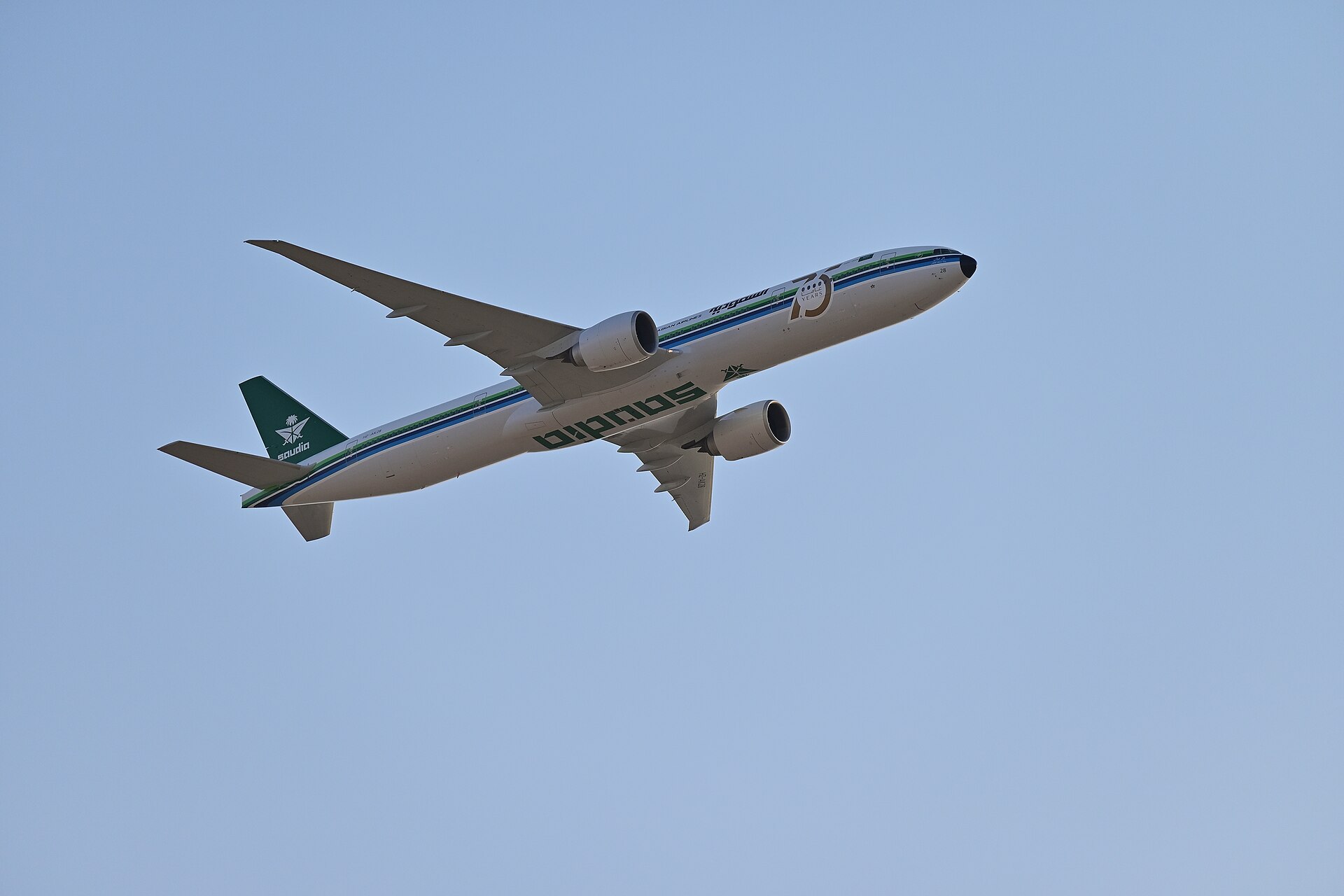
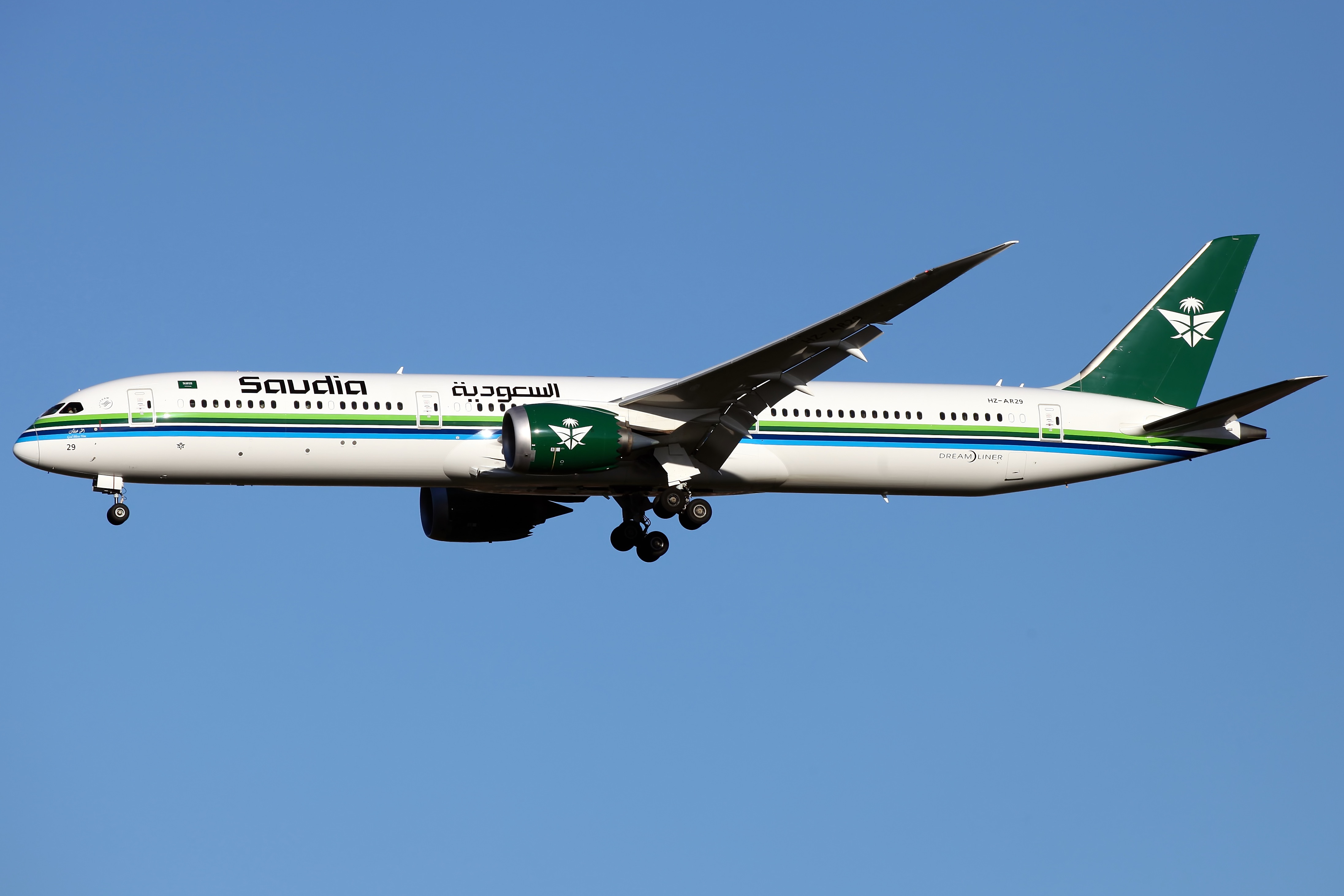
Saudia, the Kingdom’s flag carrier, reported 71 delays and one cancellation on Saturday — the highest delay count of any single airline operating in Saudi Arabia. The national carrier has maintained most of its domestic network but has been forced to suspend services to Amman, Baghdad, and other destinations where route airspace remains closed, according to advisories posted on the airline’s website. Saudia is offering passengers on cancelled flights free rebooking within 14 days of service resumption, or full refunds.
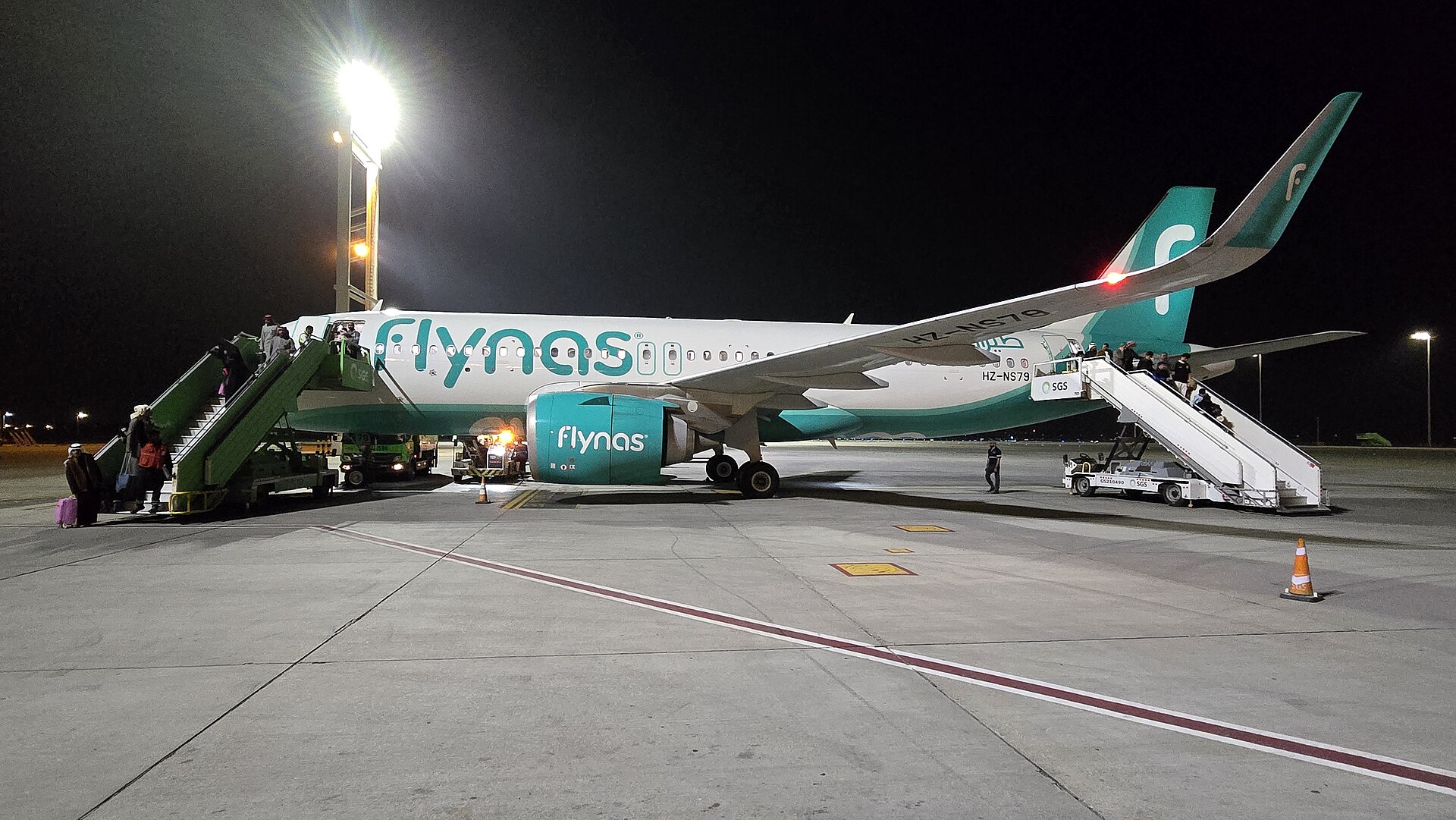
Flynas, Saudi Arabia’s largest low-cost carrier, took the more drastic step of suspending all flights to and from Abu Dhabi, Bahrain, Dubai, Doha, Kuwait, Iraq, Sharjah, and Syria through at least March 31. The suspension effectively severs the airline’s Gulf network, which in normal times accounts for a substantial share of its international traffic. The carrier, which operates a fleet of Airbus A320neo and A330neo aircraft, has not indicated when services might resume.
Gulf Air, the national carrier of Bahrain, recorded the highest cancellation rate of any airline in Saudi Arabia on Saturday with 19 cancellations against just 2 delays. The figure reflects the near-total closure of Bahrain’s airspace, which forces the airline to cancel outbound flights that have no cleared return corridor.
Which Gulf Airspaces Are Closed?
The flight disruptions stem not from Saudi Arabia’s own airspace — which has remained open throughout the conflict — but from the progressive closure of surrounding airspaces as Iranian missiles and drones continue to strike across the region. The patchwork of restrictions has turned the Middle East into the most complex civilian aviation environment since the Gulf War in 1991.
| Country/FIR | Status | Notes |
|---|---|---|
| Iran | Closed | All civilian traffic prohibited since Feb. 28 |
| Iraq | Closed | Full closure; military operations ongoing |
| Kuwait | Closed | All commercial flights suspended; airport shut |
| Syria | Closed | Full closure; Israeli strikes ongoing |
| Bahrain | Restricted | Only approved departures via NARMI corridor |
| UAE | Partially open | Limited flights from DXB, DWC, and AUH |
| Qatar | Restricted | Partially reopened March 6; short-notice closures common |
| Israel | Restricted | Military operations; civilian corridors limited |
| Saudi Arabia | Open | Frequent air traffic restrictions for missile threats |
| Oman | Open | Operating with increased caution |
The result is that Saudi airports can receive and dispatch aircraft, but many of the destinations those aircraft serve — Dubai, Doha, Bahrain, Kuwait — are either unreachable or reachable only through narrow and unpredictable routing corridors. Airlines must reroute through Omani and Egyptian airspace, adding hours and fuel costs to journeys that normally take less than 90 minutes.
Saudi Civil Defense has also contributed to disruptions by issuing shelter-in-place warnings during incoming missile and drone attacks. On March 22, the Saudi Ministry of Defence detected three ballistic missiles launched toward Riyadh Province, one of which was intercepted while two fell in uninhabited areas. Each alert triggers an automatic ground stop at nearby airports, suspending takeoffs and landings until the threat is cleared — a process that can take anywhere from seven minutes to several hours.
Qatar Airways Sends Fleet to Storage in Spain
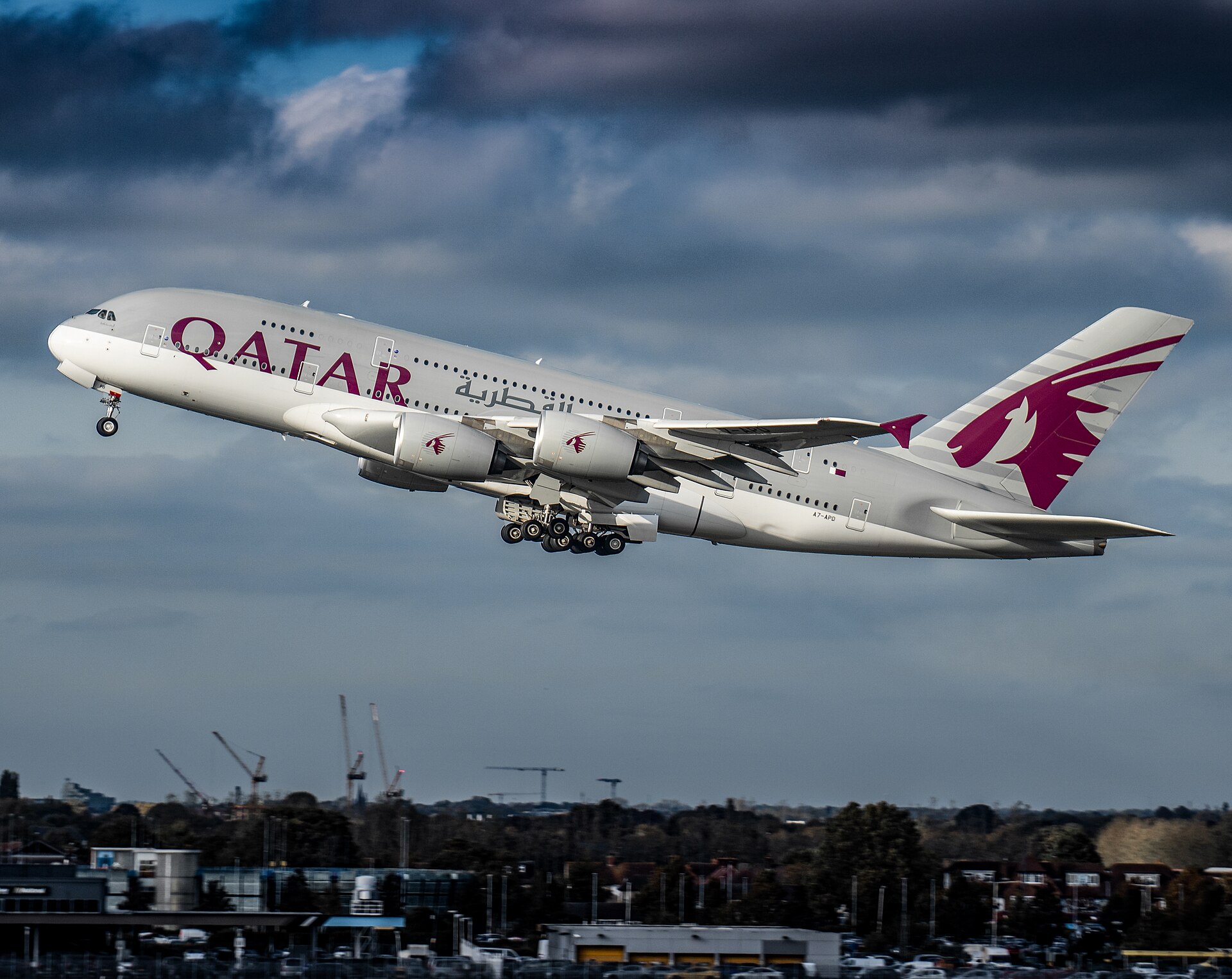
The aviation crisis extends well beyond Saudi borders. Qatar Airways, one of the world’s top-rated airlines, has cut its flight schedule by 68 percent and begun evacuating its flagship aircraft to long-term storage at Teruel Airport in the Aragon mountains of Spain, according to Flightradar24 and aviation analysts.
By Saturday, 17 Qatar Airways widebody aircraft — including A380 superjumbos and A350 long-haul jets — had been ferried to Teruel, with five more en route. The decision to park aircraft at a remote facility in southern Europe suggests the airline does not expect a resumption of normal operations in the near term. Qatar Airways also suspended 12 destinations, including Tokyo, Seoul, Moscow, and Zurich, according to aviation news service LoyaltyLobby.
The airline’s predicament is among the starkest illustrations of the Iran war’s economic ripple effects. Since the effective closure of Qatari airspace on February 28 — the day US and Israeli forces launched strikes on Iran — Qatar Airways has seen its primary business model, built on connecting East and West through a Doha super-hub, effectively paralyzed. Hamad International Airport, which handled over 46 million passengers in 2024, has been reduced to intermittent operations through narrow cleared corridors. The airline’s CEO, Badr Mohammed Al Meer, has not publicly commented on the fleet storage decision, but aviation analysts estimate Qatar Airways is burning through approximately $15 million per day in losses from grounded aircraft, crew costs, and refund obligations.
What Should Stranded Passengers Do?
Hundreds of passengers were stranded across Saudi airports on Saturday, many of them foreign workers and expatriates attempting to leave the Kingdom during the Eid al-Fitr holiday. The US Embassy in Riyadh, which has ordered the departure of non-emergency government employees and closed its offices through March 24, has encouraged American citizens to depart via commercial flights “if they can do so safely,” but cautioned that frequent air traffic restrictions mean flights may be delayed, rescheduled, or cancelled with little notice.
Passengers on cancelled Saudia flights can rebook without additional charges within 14 days of service resumption or request full refunds, the airline stated. Turkish Airlines announced free rebooking for passengers traveling to or from Bahrain, Iran, Iraq, Jordan, Kuwait, Lebanon, Oman, Qatar, Saudi Arabia (Riyadh and Dammam), Syria, and the UAE through March 31.
Air India has moved in the opposite direction, adding extra flights to the Gulf to assist with repatriation efforts. Several countries, including the United States, the United Kingdom, and India, have arranged charter evacuation flights from the region since the war began. The Indian government alone has repatriated over 8,000 nationals from Gulf states since March 1, according to India’s Ministry of External Affairs, making it the largest civilian evacuation operation India has mounted since the 1990 Kuwait airlift.
The U.S. Embassy encourages U.S. citizens to depart Saudi Arabia via commercial flights if they can do so safely. Saudi airspace remains open with frequent air traffic restrictions to address continued missile and drone threats.
U.S. Embassy Riyadh, Security Alert, March 20, 2026
Iran War Threatens Saudi Arabia’s $100 Billion Aviation Bet
The flight chaos strikes at the heart of one of Vision 2030’s most ambitious sectors. Saudi Arabia has committed more than $100 billion to transforming the Kingdom into a global aviation hub, anchored by three flagship projects: the $30 billion King Salman International Airport in Riyadh, the launch of Riyadh Air as a second national carrier, and a target of 330 million annual passengers by 2030.
Riyadh Air, which Crown Prince Mohammed bin Salman positioned as a cornerstone of Saudi Arabia’s tourism and connectivity strategy, revealed 15 initial international routes in mid-March, days before the airspace disruptions reached their current intensity. The airline had planned to begin commercial operations from King Khalid International Airport with connections across Asia, Europe, Africa, and the Middle East — precisely the network now fractured by the war.
The Kingdom’s target of attracting 150 million tourists annually by 2030 also depends on reliable air connectivity. The Future Aviation Forum, scheduled for Riyadh from April 20 to 22, is expected to proceed, but the event will take place against the backdrop of an aviation sector facing its most severe disruption since the COVID-19 pandemic grounded global air travel in 2020.
Ticket Prices Surge as Airlines Pass War Costs to Passengers
The disruption has translated directly into higher costs for passengers who can still find available seats. Aegean Airlines implemented fare increases across all Middle Eastern routes on March 21, citing fuel surcharges driven by the oil price spike. Brent crude has traded above $110 per barrel since mid-March, according to Bloomberg, with the effective closure of the Strait of Hormuz removing roughly 17 million barrels per day of Gulf oil exports from global shipping lanes.
Jet fuel prices have followed crude higher, and airlines rerouting around closed Middle Eastern airspaces burn significantly more fuel per flight. A European carrier flying from London to Singapore, a route that normally transits Iranian and Iraqi airspace, must now route south through Egyptian and Omani corridors — adding approximately 2,000 miles and 15 to 20 percent more fuel consumption per flight, according to OpsGroup, an aviation operations advisory service.
For passengers departing Saudi Arabia, the combination of reduced seat availability and higher operating costs has created a pricing environment that one travel industry analyst described to Arab News as the worst since the immediate aftermath of the COVID-19 pandemic. Booking data suggests a 25 to 35 percent increase in travel demand from the region as expatriates and foreign workers seek to leave, putting further upward pressure on fares.
Saudi Arabia’s domestic fuel prices remain subsidized — gasoline sells for SAR 2.18 per litre, roughly $0.58, well below the global average of $1.30 — but the Kingdom cannot extend those subsidies to international airlines, which price their tickets according to global fuel markets. The war’s inflationary pressure on aviation costs represents yet another channel through which the conflict is reshaping the global economy.
International Airlines Extend Gulf Suspensions
The disruption is not limited to Gulf-based carriers. Major international airlines have extended cancellations and reduced service across the Middle East, reshaping global route networks to avoid the region’s airspace risks.
British Airways recently announced a reduced schedule for Gulf services, according to The National. KLM, Air India, Emirates, and Egypt Air are among the carriers that cancelled flights from King Fahd International Airport in Dammam, where over 30 flights were disrupted on Saturday alone. Pegasus Airlines, the Turkish low-cost carrier, has cancelled flights to and from the Gulf “due to airspace restrictions in the Middle East” and offered free rebooking.
Aegean Airlines implemented ticket price increases across all Middle Eastern routes on March 21, citing unrelenting fuel surcharges — a reflection of the oil supply crisis feeding directly into aviation operating costs. US gasoline prices have risen above $3.94 per gallon, up more than a dollar from a month earlier, according to AAA, as the Strait of Hormuz closure removes roughly one-fifth of the world’s oil from global markets.
The pricing pressure is particularly acute for airlines operating long-haul routes that previously overflew Iran and Iraq. Rerouting through southern airspace corridors adds approximately 2,000 miles to flights between Europe and Southeast Asia, increasing fuel consumption by an estimated 15 to 20 percent per flight, according to aviation operations advisory group OpsGroup.
When Will Normal Flights Resume?
No airline or aviation authority has provided a timeline for the restoration of normal Gulf flight operations. The suspensions imposed by Flynas, Turkish Airlines, and other carriers run through at least March 31, but that date appears contingent on a reduction in hostilities rather than a fixed resumption plan.
The broader trajectory of the conflict suggests disruptions could persist well beyond that date. President Donald Trump’s 48-hour ultimatum to Iran on Saturday — demanding the full reopening of the Strait of Hormuz or facing strikes on Iranian power plants — introduces the possibility of further escalation. Iran’s military responded that the strait would be “completely closed” if such strikes occurred, a move that would almost certainly trigger additional airspace closures across the Gulf.
Kuwait International Airport remains fully shut with no announced reopening date. Bahrain’s airspace is effectively closed to all but specially approved departures. Qatar’s Hamad International Airport operates at a fraction of normal capacity. Until those three hubs reopen, Saudi airports will continue to absorb displaced demand from passengers who would normally transit through Doha, Bahrain, or Kuwait City — adding strain to a network already operating under war conditions.
Jeddah has emerged as the Kingdom’s most resilient aviation hub, positioned on the Red Sea coast far from the eastern front where Iranian strikes concentrate. Some airlines have rerouted Gulf traffic through Jeddah as an alternative, but the airport’s terminal capacity was not designed to absorb the overflow from an entire region’s aviation collapse. King Abdulaziz Airport handled 42 million passengers in 2024, and the additional load from redirected Gulf traffic risks overwhelming its gates, baggage systems, and ground handling during the busiest travel period of the Islamic calendar.
The timing compounds the disruption. Eid al-Fitr, which began on March 20, is ordinarily one of the peak travel windows across the Muslim world. Families travel to visit relatives, expatriates fly home, and religious tourists visit Makkah and Medina for Umrah prayers. In a normal year, Saudi airports would be operating at near-maximum capacity during this period. Instead, they are absorbing overflow demand while simultaneously coping with the operational constraints of a conflict zone.
For now, the Kingdom’s airports remain open — a distinction Saudi authorities have emphasised — but the connectivity those airports were built to provide has been shattered by a war Saudi Arabia did not start and cannot yet end.
Frequently Asked Questions
Is Saudi Arabia’s airspace open during the Iran war?
Saudi Arabia’s airspace has remained open throughout the conflict, unlike the airspaces of Kuwait, Iraq, Iran, and Syria, which are fully closed. However, the Saudi General Authority of Civil Aviation imposes frequent air traffic restrictions during incoming missile and drone threats, causing ground stops that delay takeoffs and landings for periods ranging from minutes to hours.
Which Saudi airlines have suspended Gulf flights?
Flynas has suspended all flights to Abu Dhabi, Bahrain, Dubai, Doha, Kuwait, Iraq, Sharjah, and Syria through at least March 31, 2026. Saudia has cancelled routes to Baghdad and Amman due to airspace closures but continues to operate domestic services and international routes where corridors remain open. Gulf Air has cancelled 19 flights in a single day due to Bahrain’s near-total airspace closure.
Can passengers get refunds for cancelled flights?
Saudia is offering passengers on cancelled flights free rebooking within 14 days of service resumption or full refunds. Turkish Airlines has announced free rebooking for passengers traveling to or from 11 Middle Eastern countries through March 31. Passengers should contact their airline directly or check the carrier’s website for the latest rebooking options.
How many flights were disrupted across Saudi Arabia on March 22?
Saudi Arabia’s four major airports recorded a combined 254 flight delays and 39 cancellations on March 22, 2026 — a total of 293 disrupted flights. King Abdulaziz Airport in Jeddah was hardest hit with 120 disruptions, followed by King Khalid Airport in Riyadh with 100 disruptions. The day before, more than 200 flights at Riyadh alone had been delayed by over six hours.
When are Gulf flights expected to resume?
No aviation authority or airline has announced a fixed date for the resumption of normal Gulf air operations. Current suspensions run through at least March 31, 2026, but resumption depends on the trajectory of the Iran war, the reopening of closed airspaces in Kuwait, Bahrain, and Iraq, and the reduction of Iranian missile and drone attacks targeting Gulf states.