
RIYADH — Iran declared twelve Gulf oil and gas facilities across five nations to be legitimate military targets on March 18, hours after Israeli warplanes struck gas processing plants at the South Pars field in southern Iran. Within twenty-four hours, ballistic missiles and drones hit Qatar’s Ras Laffan complex, Saudi Arabia’s SAMREF refinery and Jubail petrochemical plants, Kuwait’s Mina Al-Ahmadi and Mina Abdullah refineries, and the UAE’s Habshan gas facilities. Brent crude briefly touched $119 a barrel. European natural gas benchmarks surged 15 percent in a single session. The war that began on February 28 as a military campaign against Iran’s nuclear and missile infrastructure had, in the space of a single afternoon, mutated into something the global energy system was never designed to withstand: a multi-front assault on the production, processing, and export capacity of nations that collectively supply roughly a quarter of the world’s oil and a fifth of its liquefied natural gas.
The escalation represents the most consequential shift in the three-week-old conflict. Strikes against military bases, command centres, and even population centres carry devastating human costs, but their economic impact dissipates once the shooting stops. Strikes against energy infrastructure do not. A refinery hit by a drone takes months to repair. A gas processing train shut down by a missile requires years to replace. The war crossed a threshold on March 18 from which no ceasefire can provide a quick exit, and the calculus of every government, every oil trader, and every central banker changed with it.
Table of Contents
- The South Pars Trigger
- What Did Iran Hit and Why?
- The Energy Escalation Ladder
- How Does This Compare to the 1980s Tanker War?
- What Is the Combined Damage to Gulf Oil and Gas Output?
- Why Is the LNG Crisis Worse Than the Oil Crisis?
- Does International Law Protect Energy Infrastructure in War?
- Saudi Arabia’s Impossible Calculus
- Can Air Defense Systems Protect Oil Fields?
- The Permanent Market Repricing
- The Escalation Iran Wanted Israel to Trigger
- What Happens When the Shooting Stops?
- Frequently Asked Questions
The South Pars Trigger
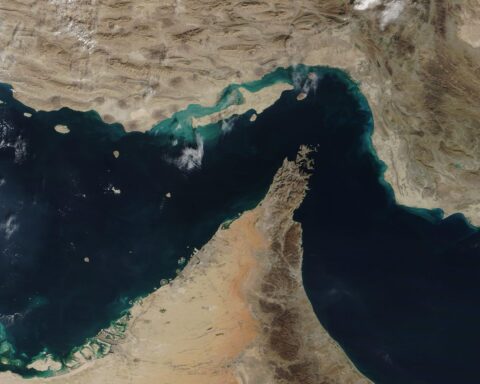
For nineteen days, the belligerents observed an unspoken boundary. Israel and the United States struck Iran’s nuclear enrichment facilities, ballistic missile launch sites, air defence radars, and Revolutionary Guard command bunkers. Iran retaliated against military bases across the Gulf, fired drones and missiles at cities, and choked the Strait of Hormuz with mines and naval patrols. The violence was immense, but it was largely confined to military and governmental targets. Energy infrastructure — the lifeblood of both Iran and the Gulf states — remained, with a few notable exceptions involving stray drones, outside the primary target sets.
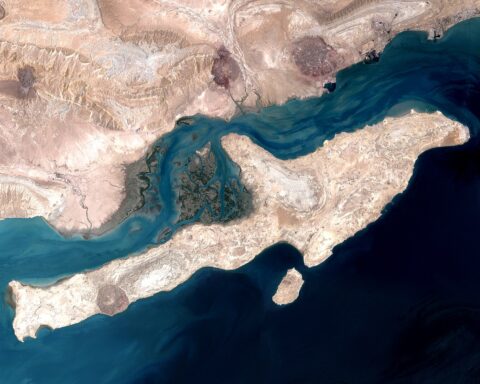
That restraint ended on March 18 when Israeli F-35s and US drones struck gas treatment plants at Assaluyeh, on Iran’s southern coast, that process output from phases 3, 4, 5, and 6 of the South Pars gas field. South Pars is not an ordinary energy asset. Shared with Qatar — where the same geological formation is called the North Dome — it contains an estimated 1,800 trillion cubic feet of recoverable natural gas, enough to meet global demand for thirteen years, according to the International Energy Agency. The field supplies roughly 70 percent of Iran’s domestic gas consumption, feeding power plants, residential heating networks, and the petrochemical complexes that anchor what remains of the country’s sanctioned economy.
The strike’s strategic logic was straightforward: degrade Iran’s ability to fund and sustain the war by crippling the energy production that generates the bulk of its non-oil revenue. But the operational consequence was immediate and devastating. Tehran had repeatedly warned that any attack on its energy infrastructure would trigger reciprocal strikes on Gulf energy assets. Within hours of the Assaluyeh strikes, the Islamic Revolutionary Guard Corps declared twelve named facilities across Saudi Arabia, Qatar, the UAE, and Kuwait to be “direct and legitimate targets” and ordered their immediate evacuation.

What Did Iran Hit and Why?
Iran’s retaliatory strikes were neither random nor indiscriminate. They followed a calculated target matrix designed to inflict maximum economic pain on the Gulf states that had provided basing, overflight rights, and logistical support for the US-Israeli campaign against Iran. The IRGC’s target list, broadcast on state television and distributed through its Telegram channels, named twelve specific facilities across five countries. Within twenty-four hours, strikes had been confirmed at the majority of them.
In Qatar, ballistic missiles struck Ras Laffan Industrial City, the sprawling complex north of Doha that houses the world’s largest LNG export terminal. QatarEnergy reported “extensive damage” and deployed emergency response teams to contain fires at the site, according to Reuters. Ras Laffan processes approximately 77 million tonnes per year of LNG — roughly 20 percent of global supply. Iran also targeted the Mesaieed Petrochemical Complex south of Doha. Qatar, which had attempted to maintain a diplomatic channel with Tehran throughout the conflict, responded by expelling Iranian diplomatic attachés.
In Saudi Arabia, drones struck the SAMREF refinery in Yanbu — the critical Red Sea port through which the Kingdom has been rerouting oil exports to bypass the closed Strait of Hormuz — and the Jubail petrochemical complex on the Eastern Province coast. The Saudi Ministry of Defence confirmed intercepting additional inbound projectiles targeting the Jubail industrial zone, which hosts dozens of petrochemical plants and is the Kingdom’s largest industrial cluster.
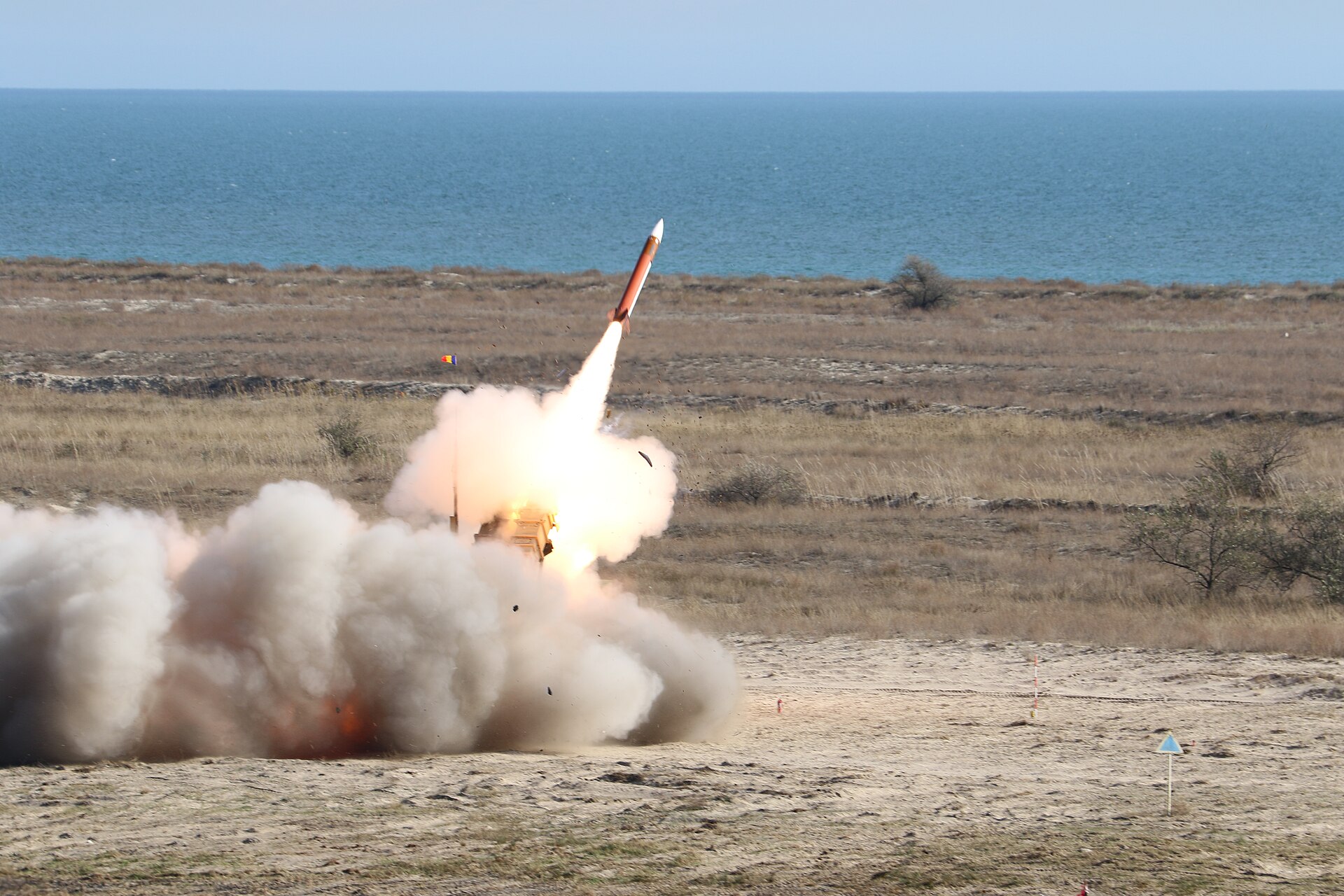
A Greek-operated Patriot battery stationed at Yanbu intercepted two Iranian ballistic missiles targeting the SAMREF facility, marking the first combat engagement by a NATO ally’s forces in the conflict.
In the UAE, debris from intercepted missiles damaged the Habshan gas processing facilities and the Bab oilfield, both operated by ADNOC in Abu Dhabi’s western desert. In Kuwait, drone attacks struck two of the country’s three operational refineries — Mina Al-Ahmadi and Mina Abdullah — forcing partial shutdowns. Even Oman, which had tried to preserve neutrality, reported a stray missile landing in the industrial zone near Sohar.
| Country | Facility | Type | Status | Capacity at Risk |
|---|---|---|---|---|
| Qatar | Ras Laffan Industrial City | LNG terminal | Hit — extensive damage | 77 million tpy LNG |
| Qatar | Mesaieed Petrochemical Complex | Petrochemical | Targeted | 14 million tpy |
| Saudi Arabia | SAMREF Refinery (Yanbu) | Oil refinery | Hit — drone strike | 400,000 bpd |
| Saudi Arabia | Jubail Petrochemical Complex | Petrochemical | Projectiles intercepted | Multiple plants |
| UAE | Habshan Gas Facilities | Gas processing | Debris damage | 1 billion scf/d |
| UAE | Bab Oilfield | Oil production | Debris damage | 400,000 bpd |
| Kuwait | Mina Al-Ahmadi Refinery | Oil refinery | Hit — drone strike | 466,000 bpd |
| Kuwait | Mina Abdullah Refinery | Oil refinery | Hit — drone strike | 270,000 bpd |
The Energy Escalation Ladder
The Iran war has climbed through five distinct escalation phases since February 28, each crossing a threshold that made the previous phase seem restrained by comparison. Understanding this progression reveals why the March 18 attacks represent a qualitative, not merely quantitative, shift in the conflict’s character.
| Phase | Dates | Primary Targets | Escalation Threshold Crossed | Global Economic Impact |
|---|---|---|---|---|
| Phase 1: Precision Strike | Feb 28 – Mar 3 | Nuclear sites, missile bases, air defences | Direct state-on-state warfare | Oil rises 15% on uncertainty |
| Phase 2: Retaliation Spiral | Mar 3 – Mar 8 | Military bases, government buildings, ports | Gulf states drawn in as targets | Hormuz closure begins; oil at $94 |
| Phase 3: Civilian Targeting | Mar 8 – Mar 14 | Cities, airports, residential areas | Civilian casualties escalate | Shipping halts; oil at $106 |
| Phase 4: Maritime Blockade | Mar 10 – Mar 18 | Shipping lanes, tankers, naval vessels | Hormuz effectively closed | 8 million bpd supply loss |
| Phase 5: Energy Infrastructure | Mar 18 – present | Refineries, gas fields, LNG terminals, pipelines | Mutual energy destruction | Oil at $119; LNG up 50% |
Phase 5 is fundamentally different from the preceding four. Military strikes destroy things that governments can rebuild with defence budgets. Maritime blockades can be lifted by changing naval dispositions. Civilian damage, horrific as it is, does not alter the structural capacity of national economies. Energy infrastructure destruction does all three: it kills and displaces, it disrupts trade, and it removes productive capacity that takes years and tens of billions of dollars to restore.
The shift also changes the conflict’s time horizon. A war confined to Phases 1 through 4 could, in theory, end with a ceasefire that restores the status quo ante within weeks. A war that has entered Phase 5 cannot. Even if every gun falls silent tomorrow, the physical damage to refineries, gas processing trains, and LNG terminals will constrain Gulf energy output for months to years. The permanent damage thesis — that the war’s economic legacy will outlast its military conclusion — became reality on March 18.
How Does This Compare to the 1980s Tanker War?
The closest historical precedent for energy infrastructure targeting in the Persian Gulf is the Tanker War of 1981 to 1988, the maritime theatre of the Iran-Iraq conflict. Over seven years, Iraq launched 283 attacks on merchant shipping while Iran was responsible for 168, according to Lloyd’s of London war risk registry data compiled by the US Naval Institute. More than 30 million tonnes of shipping were damaged. Oil prices initially spiked 25 percent before settling into a new, elevated range as insurers priced the risk into every barrel transiting the Strait.
The parallels are instructive, but they obscure how much more dangerous the current escalation is. The Tanker War targeted vessels at sea — mobile assets that could be rerouted, repaired, or replaced. The 2026 energy war targets fixed onshore infrastructure: refineries that took a decade to build, gas processing trains engineered to micrometer precision, and LNG liquefaction plants that represent the most capital-intensive structures in the energy industry.
The scale is also incomparable. At its peak, the Tanker War disrupted roughly 2 million barrels per day of seaborne oil trade. The combined capacity of the facilities Iran has targeted or struck in the current conflict exceeds 5 million barrels per day of oil refining capacity and 77 million tonnes per year of LNG processing — volumes that, if sustained, would dwarf any energy disruption in history, surpassing even the 5.7 million barrel per day outage caused by the 2019 Abqaiq attack.
The attacks fundamentally reshape the global LNG outlook. Disruption to global natural gas supply is now likely to last longer than two months.Wood Mackenzie, March 19, 2026
There is one more difference that the Tanker War precedent does not capture. In the 1980s, neither Iran nor Iraq possessed the ability to simultaneously strike energy targets across multiple countries. Iran’s drone and ballistic missile arsenal in 2026 gives it precisely that capability. The IRGC demonstrated on March 18 that it can hit facilities in five different nations within a twenty-four-hour window — a multi-vector energy attack with no precedent in the history of armed conflict.
What Is the Combined Damage to Gulf Oil and Gas Output?
Quantifying the exact production loss from the March 18-19 attacks requires separating confirmed physical damage from precautionary shutdowns and from the pre-existing Hormuz disruption. Even with incomplete data, the numbers are staggering.
Prior to the South Pars escalation, the Iran war had already removed an estimated 8 million barrels per day of oil supply from global markets through the Hormuz closure and associated production shutdowns, according to the International Energy Agency’s emergency assessment published on March 12. That figure included not just Saudi, Emirati, Kuwaiti, and Qatari output that could not reach Eastern markets, but also Iraqi exports through the Basra terminal and Iranian crude that could no longer transit its own blockaded waterway.
The March 18-19 strikes added a new layer of disruption. Kuwait’s state petroleum corporation, KPC, confirmed fires at two of the country’s three refineries and suspended all fuel exports pending damage assessments, according to Bloomberg. Saudi Aramco acknowledged a drone strike at the SAMREF refinery complex in Yanbu but said production continued at “reduced throughput.” QatarEnergy, the most severely affected, declared force majeure on all LNG shipments from Ras Laffan — a facility that alone handles roughly one-fifth of global LNG trade.
| Country | Oil Refining (bpd) | LNG (million tpy) | Gas Processing (bcf/d) | Status |
|---|---|---|---|---|
| Qatar | — | 77 | 16.5 | Force majeure declared |
| Saudi Arabia | 400,000 | — | — | Reduced throughput |
| Kuwait | 736,000 | — | — | Exports suspended |
| UAE | 400,000 | — | 1.0 | Damage assessment |
| Iran (South Pars) | — | — | 11.2 | Processing halted |
| Sources: KPC, QatarEnergy, Bloomberg, Saudi Ministry of Defence, ADNOC, IEA estimates | ||||
The combined refining capacity at immediate risk exceeds 1.5 million barrels per day. The gas disruption is even more severe: the simultaneous shutdown of South Pars processing in Iran and Ras Laffan liquefaction in Qatar has removed an estimated 27.7 billion cubic feet per day of natural gas processing capacity from the global system — roughly 7 percent of worldwide production.

Why Is the LNG Crisis Worse Than the Oil Crisis?
Oil has substitutes, alternatives, and strategic reserves. LNG has none of these in sufficient quantity. That asymmetry explains why the gas market’s reaction to the March 18 strikes was proportionally far more violent than the oil market’s, and why the long-term economic damage from the LNG disruption will likely exceed the oil disruption by a significant margin.
The International Energy Agency coordinated a record release of 400 million barrels from strategic petroleum reserves on March 11, providing a temporary cushion for oil markets. No equivalent mechanism exists for natural gas. Strategic gas reserves are minuscule compared to oil stockpiles — Europe’s gas storage facilities, filled to roughly 40 percent of capacity in mid-March according to Gas Infrastructure Europe data, would be depleted within weeks if Qatari LNG supply disappeared entirely.
Wood Mackenzie’s assessment, published on March 19, calculated that the attacks removed approximately 1.5 million tonnes of LNG per week from global markets. The consultancy projected that disruption to global natural gas supply would last at least two months, and likely longer given the extent of physical damage to Ras Laffan’s liquefaction trains. The under-construction North Field East expansion project, which was expected to add 32 million tonnes per year of new LNG capacity when it came online in November 2026, now faces potential delays extending into 2027 or 2028.
The gas crisis arrives at the worst possible moment for importing nations. Asian benchmark LNG prices surged 40 percent within hours of the Ras Laffan strike, while European gas prices jumped 50 percent, according to Bloomberg terminal data. Japan, South Korea, and Taiwan — nations that import virtually all their natural gas as LNG — face the prospect of power rationing within weeks if alternative supply cannot be secured. Pakistan and Bangladesh, already struggling with energy poverty, face humanitarian consequences.
The asymmetry extends to recovery timelines. A damaged oil refinery can often be partially restarted within weeks, with full capacity restored in months. An LNG liquefaction train is among the most complex industrial machinery ever built, with cryogenic heat exchangers, compressor turbines, and thousands of precision-welded joints. A single train at Ras Laffan represents roughly $5 billion in capital investment and four to five years of construction time. If any train suffered structural damage from the ballistic missile impact, replacement is not a matter of months but of years.
Does International Law Protect Energy Infrastructure in War?
The short answer is: insufficiently. The longer answer reveals a gap in the international legal framework that the Iran war has exposed with uncomfortable clarity.
Additional Protocol I to the Geneva Conventions, adopted in 1977, establishes the principle of distinction in Article 48: parties to a conflict must direct operations only against military objectives, not civilian objects. Energy infrastructure that primarily serves civilian populations — power plants, heating networks, water desalination facilities that depend on electricity — enjoys protection under this principle.
The protection, however, is riddled with exceptions. Article 52(2) of Additional Protocol I defines military objectives as objects that “by their nature, location, purpose or use make an effective contribution to military action and whose total or partial destruction, capture or neutralisation, in the circumstances ruling at the time, offers a definite military advantage.” Oil refineries that produce fuel consumed by military vehicles, gas processing plants that generate electricity for military installations, and LNG terminals whose revenue funds weapons procurement can all, under expansive interpretation, qualify as military objectives.
Iran’s characterisation of Gulf energy facilities as “direct and legitimate targets” invokes precisely this legal framework. Tehran’s argument, articulated by IRGC spokesperson Brigadier General Ramezan Sharif, is that Gulf oil and gas revenues fund the weapons, bases, and logistics that enable the US-Israeli campaign against Iran. The argument has a surface plausibility that makes it legally treacherous: if revenue-generating assets are military objectives, then virtually every productive asset in an oil-exporting nation becomes a target.
The International Committee of the Red Cross addressed this tension in an April 2023 analysis, noting that international humanitarian law “forbids attacks against pieces of energy infrastructure if the sole purpose is to degrade an adversary’s economic capacity, to force the adversary to the negotiating table, to influence the will of the population, or to intimidate political leaders.” The ICRC position, while clear, lacks enforcement mechanisms. No international court has adjudicated an energy infrastructure targeting case during an active conflict. The precedents from the 1991 Gulf War and the 2003 Iraq invasion — when US-led coalitions struck Iraqi power grids and refineries — were never formally challenged under international humanitarian law.
The practical implication is bleak. Energy infrastructure exists in a legal grey zone: protected in principle, targetable in practice, and subject to after-the-fact legal assessments that have no power to prevent destruction in real time. The Gulf states have petitioned the United Nations Security Council to declare energy infrastructure off-limits, but Russia’s veto power and China’s abstention have prevented any binding resolution.
Saudi Arabia’s Impossible Calculus
For Riyadh, the South Pars escalation forced a strategic reckoning that the Kingdom had spent three weeks trying to avoid. Saudi Arabia entered the Iran war as a reluctant participant — a nation whose territory hosted American bases and whose airspace was used for strike missions, but which had resisted direct military engagement with Iran. That posture became untenable when Iranian drones struck the SAMREF refinery at Yanbu, the linchpin of the Kingdom’s strategy to maintain oil exports despite the Hormuz closure.
The Yanbu strike was strategically precise. Saudi Arabia had successfully rerouted approximately half its oil exports through the East-West Pipeline — the 750-mile Petroline connecting Abqaiq in the Eastern Province to Yanbu on the Red Sea — reaching loadings of 2.2 million barrels per day by mid-March, according to Bloomberg shipping data. By striking SAMREF, Iran demonstrated that the Hormuz bypass was not a sanctuary. The Red Sea route that Saudi Arabia treated as its economic lifeline was now inside Iran’s targeting envelope.
Foreign Minister Faisal bin Farhan’s statement on March 18 reflected the new reality with diplomatic precision and barely concealed fury. “What little trust there was before has completely been shattered,” he told reporters in Riyadh. The Kingdom reserves its “full right to take military action against Iran if deemed necessary” and would “use every lever we have — political, economic, diplomatic and otherwise — to get these attacks to stop.”
The calculus facing Crown Prince Mohammed bin Salman is genuinely impossible. Retaliating militarily against Iran would formally make Saudi Arabia a combatant in the war, exposing the Kingdom’s remaining energy infrastructure — Ras Tanura, the Shaybah oilfield, the master gas system — to the full weight of Iran’s remaining missile and drone arsenal. Not retaliating sends a signal of weakness that could invite further escalation. The Kingdom is caught between the need to defend its economic sovereignty and the knowledge that doing so could accelerate the destruction of the very assets it is trying to protect.

Can Air Defense Systems Protect Oil Fields?
The March 18-19 strikes answered this question with uncomfortable finality: not reliably, not against the volume of threats Iran can generate, and not across the geographic spread of Gulf energy infrastructure.
Saudi Arabia operates one of the most expensive air defence networks in the world, anchored by Patriot PAC-3 batteries, THAAD systems, and a network of early warning radars. The Kingdom has invested over $100 billion in air defence procurement over the past decade, according to Stockholm International Peace Research Institute estimates. The system is optimized for defending high-value point targets: Riyadh, military bases, critical government facilities.
Oil fields and refineries present a fundamentally different defence challenge. They are sprawling industrial complexes, often covering dozens of square kilometres, with thousands of individual components — storage tanks, distillation columns, heat exchangers, compressor stations, pipeline junctions — any one of which, if struck, can force a facility-wide shutdown. Defending every component is physically impossible. A single Patriot battery can protect an area of roughly 20 square kilometres; the Jubail industrial zone alone covers more than 100 square kilometres.
The drone saturation problem compounds the difficulty. The Saudi Ministry of Defence reported that Iran launched nearly 100 drones at the Kingdom on the single busiest day of the conflict prior to March 18, far exceeding the previous daily average of fewer than 25. Each Patriot interceptor costs between $2 million and $4 million; each Iranian Shahed-136 drone costs an estimated $20,000 to $50,000, according to the Royal United Services Institute. The mathematics of attrition favour the attacker by a ratio of at least 40 to 1.
The interception rate, even for expensive ballistic missiles, is imperfect. The Saudi defence ministry confirmed that debris from an intercepted missile fell near a refinery south of Riyadh, causing minor damage. In Jubail, multiple projectiles were intercepted, but the system’s performance against a salvo of simultaneous inbound threats — Iran fired a mix of ballistic missiles, cruise missiles, and drones at the petrochemical complex — remains classified. Kuwait’s failure to prevent drone strikes on two of its three refineries suggests that smaller Gulf states lack the layered defence architecture needed to counter Iran’s multi-vector attacks.
The Permanent Market Repricing
Energy markets had already absorbed three weeks of war-driven volatility before the South Pars escalation. Brent crude rose from roughly $68 a barrel in late February to $94 by March 9, then climbed past $106 during the second week of the conflict as the Hormuz closure tightened supply. The March 18 strikes triggered a further 6 percent surge, with Brent briefly touching $119 — the highest level since the 2022 Russia-Ukraine price spike — before settling around $116, according to ICE Futures data.
The oil price reaction, while significant, understates the structural repricing underway. Traders and risk managers are no longer pricing a temporary supply disruption that will resolve when the war ends. They are pricing the possibility of permanent capacity destruction — the scenario in which a ceasefire arrives but Gulf production remains constrained for months or years due to physical damage to processing facilities.
The gas market repricing is even more dramatic. Asian spot LNG prices surged 40 percent in the first session after the Ras Laffan strikes, according to S&P Global Platts. European gas benchmarks — the TTF contract traded in the Netherlands — jumped 50 percent. Wood Mackenzie estimated that the Middle East conflict had driven European power price volatility to levels not seen since the 2022 Russian gas crisis, with the additional complication that Europe’s alternative suppliers (US Gulf Coast LNG, Norwegian pipeline gas) are already operating near maximum capacity.
Central banks face an impossible monetary policy dilemma. The US Federal Reserve held rates steady on March 18, citing “uncertain” impacts from the Iran war. But oil at $116 and natural gas prices at multi-year highs feed directly into consumer inflation — energy costs, transportation costs, fertiliser costs, and food prices. The spectre of stagflation — simultaneous inflation and economic contraction — has moved from a theoretical risk to a base-case scenario for several investment banks. Goldman Sachs warned on March 17 that the Gulf faces its worst recession in a generation.
The Escalation Iran Wanted Israel to Trigger
The conventional reading of the South Pars strike frames Israel as the escalator and Iran as the retaliator. That reading, while factually accurate in its sequence of events, may be strategically backwards.
Iran’s leadership — whether Mojtaba Khamenei, the IRGC commanders, or both — had compelling reasons to want the war to enter the energy infrastructure phase. For three weeks, Iran had been absorbing devastating strikes on its nuclear programme, its missile forces, and its military command structure while inflicting comparatively limited damage on its adversaries. The Hormuz closure was Iran’s most effective weapon, but it was an economic weapon whose costs fell on Iran’s own trading partners as much as on its enemies.
Attacking Gulf energy infrastructure offered Iran several strategic advantages. First, it imposed direct, visible costs on the Gulf states that had supported the US-Israeli campaign — punishing them for their complicity in a way that Hormuz mines and drone attacks on military bases did not. Second, it created a global economic crisis severe enough to generate external pressure for a ceasefire on terms favourable to Tehran. When oil reaches $119 and gas prices spike 50 percent, every government from Tokyo to Berlin has an urgent interest in stopping the shooting. Third, it established a deterrent framework for the future: any nation that permits its territory to be used for strikes on Iran’s energy assets will see its own energy assets destroyed in return.
The evidence that Iran sought this escalation is circumstantial but suggestive. Iran’s repeated warnings about “reciprocal” strikes on energy infrastructure — issued publicly, through diplomatic channels, and through intermediaries — created a clear red line that Israel chose to cross. Iran’s target list was pre-prepared, not improvised; the speed and precision of the retaliatory strikes indicated months of intelligence collection and targeting work. The IRGC’s language — “direct and legitimate targets” — was carefully chosen legal vocabulary, not the rhetoric of rage.
If this reading is correct, then the conventional wisdom that “Israel escalated and Iran retaliated” inverts the deeper strategic reality. Iran manoeuvred its adversary into crossing a threshold that unlocked Iran’s most potent non-nuclear weapon: the ability to hold the entire Gulf’s energy infrastructure hostage. The Trump administration’s subsequent threat to “blow up” the rest of South Pars if attacks continue may play directly into this dynamic, escalating the mutual destruction spiral further.
What Happens When the Shooting Stops?
Every war ends eventually. The economic wreckage of the energy escalation will not.
Reconstruction timelines for damaged energy infrastructure depend on the severity of the physical damage, the availability of specialised equipment and engineering talent, and the security environment during repairs. The 2019 Abqaiq attack offers a partial benchmark: Saudi Aramco restored the facility’s 5.7 million barrel per day processing capacity within approximately two weeks, a feat that reflected both the relatively limited damage (drone strikes hit specific processing units rather than destroying entire facilities) and Aramco’s extraordinary in-house engineering capability.
The March 2026 damage profile is almost certainly more severe. Ballistic missiles carry warheads measured in hundreds of kilograms, compared to the tens of kilograms carried by the Shahed-type drones used in most of the conflict’s earlier strikes. The impact on a liquefaction train or a distillation column is categorically different from a drone penetrating a storage tank. Wood Mackenzie’s pre-strike estimate of four to six weeks for Qatari LNG to reach full capacity assumed three days to restart upstream operations and a seven-day ramp-up per liquefaction train. That timeline, the consultancy acknowledged, would “extend significantly” depending on the extent of structural damage.
Beyond physical reconstruction, the energy infrastructure war creates a permanent risk premium that will outlast the conflict by years. Insurance rates for Gulf energy assets, already at multi-decade highs due to the war, will incorporate the demonstrated reality that onshore facilities are vulnerable to ballistic missile attack. Capital expenditure decisions for new energy projects in the Gulf will carry an implicit security discount. The North Field East expansion in Qatar, the Jafurah gas field development in Saudi Arabia, and dozens of smaller projects across the Gulf will face higher financing costs and longer decision timelines.
The geopolitical consequences may prove even more durable than the economic ones. The acceleration of the energy transition — away from Gulf hydrocarbons and toward renewable sources, nuclear power, and domestically produced energy — was already underway before the war. The demonstration that the world’s most important energy supply chain can be disrupted by a regional conflict will provide policymakers in importing nations with a powerful argument for accelerating diversification, regardless of the near-term cost.
For Saudi Arabia, the long-term implications extend beyond energy economics into the realm of national strategy. The Kingdom’s entire wartime posture has been predicated on enduring the conflict without becoming a direct combatant. The Yanbu strike challenged that strategy at its weakest point. If Iran can reach the Red Sea bypass infrastructure — the infrastructure that represents Saudi Arabia’s economic survival strategy — then Riyadh’s options narrow to two: accept permanent economic vulnerability to Iranian coercion, or acquire the military capability to eliminate the threat at source. Neither option is costless. Neither is risk-free. And both will reshape the Gulf’s strategic architecture for a generation.
Frequently Asked Questions
What is the South Pars gas field and why was it attacked?
South Pars is the world’s largest natural gas field, located in the Persian Gulf and shared between Iran and Qatar. It contains an estimated 1,800 trillion cubic feet of recoverable gas. Israel struck onshore gas treatment plants at Assaluyeh on March 18, 2026, to degrade Iran’s energy revenue and war-sustaining capacity. The field supplies roughly 70 percent of Iran’s domestic gas consumption.
Which Gulf energy facilities did Iran attack in retaliation?
Iran struck or targeted facilities in five nations: Qatar’s Ras Laffan LNG terminal and Mesaieed Petrochemical Complex; Saudi Arabia’s SAMREF refinery in Yanbu and Jubail petrochemical zone; Kuwait’s Mina Al-Ahmadi and Mina Abdullah refineries; the UAE’s Habshan gas facilities and Bab oilfield; and a stray missile struck near Oman’s Sohar industrial zone. The IRGC declared all twelve named facilities “direct and legitimate targets.”
How much oil and gas production has been disrupted?
The March 18-19 strikes put an additional 1.5 million barrels per day of refining capacity at immediate risk, on top of the approximately 8 million barrels per day already removed from global markets by the Hormuz closure. Qatar’s force majeure declaration on Ras Laffan shipments removed roughly 77 million tonnes per year of LNG from global supply — approximately 20 percent of the world total.
How long will it take to repair the damaged facilities?
Recovery timelines depend on the severity of physical damage. Wood Mackenzie initially estimated four to six weeks for Qatari LNG to reach full capacity but revised this upward after the attacks, projecting disruption lasting at least two months. Oil refineries may be partially restarted within weeks, but LNG liquefaction trains — among the most complex industrial machinery ever built — could take years to replace if structurally damaged.
Does international law prohibit attacking energy infrastructure?
International humanitarian law protects civilian objects under the principle of distinction in Additional Protocol I to the Geneva Conventions. However, energy infrastructure that makes an “effective contribution to military action” can qualify as a military objective under Article 52(2). Iran characterised Gulf facilities as legitimate targets, arguing they fund the military campaign against Tehran. The ICRC maintains that attacks solely to degrade economic capacity are prohibited, but enforcement mechanisms during active conflict are effectively nonexistent.
How did oil and gas prices react to the attacks?
Brent crude briefly touched $119 per barrel before settling around $116, a 6 percent single-session gain. European gas benchmarks surged 15 percent. Asian spot LNG prices spiked 40 percent, and European gas prices jumped 50 percent. Goldman Sachs warned on March 17 that the Gulf faces its worst recession in a generation, and several investment banks have flagged stagflation as a base-case scenario.
Is Saudi Arabia going to attack Iran directly?
Foreign Minister Faisal bin Farhan stated on March 18 that Saudi Arabia reserves its “full right to take military action” against Iran and that trust with Tehran has been “completely shattered.” However, direct Saudi military engagement would expose the Kingdom’s remaining energy infrastructure to the full weight of Iran’s missile and drone arsenal, creating a strategic dilemma that Riyadh has not yet resolved.