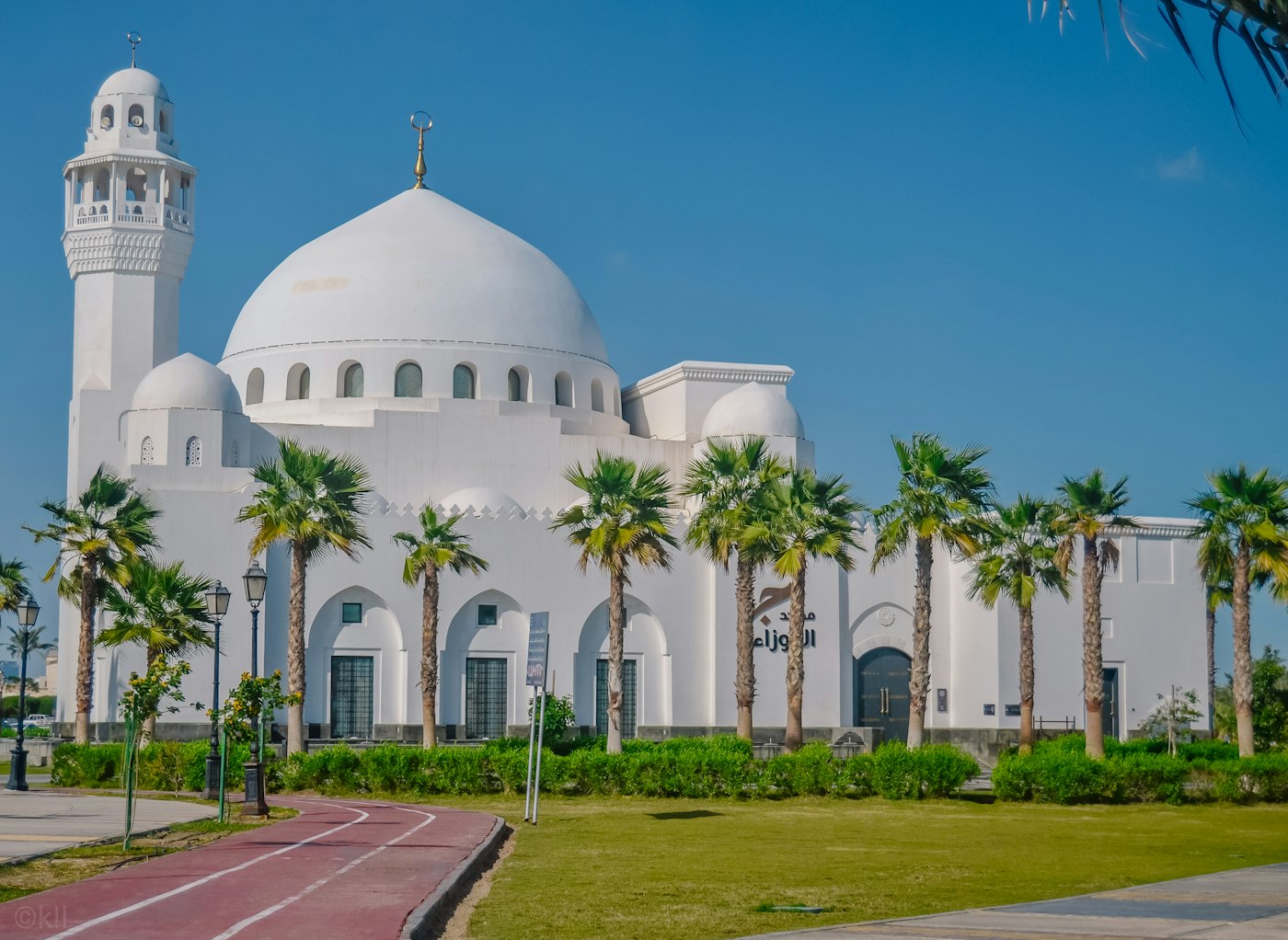

Saudi Arabia is home to eight UNESCO World Heritage Sites, a number that has doubled in the past decade as the Kingdom opens its doors to international tourism. From the monumental Nabataean tombs of Hegra in AlUla to the world’s largest oasis at Al-Ahsa, these protected landmarks span thousands of years of human history across deserts, mountains, and coastal plains. Whether you are planning a dedicated heritage itinerary or adding a UNESCO stop to a broader Saudi trip, this guide covers everything you need to know about visiting every inscribed site, plus the tentative list entries that may soon join them.
Quick Facts: Saudi Arabia’s UNESCO World Heritage Sites
| Site | Location | Year Inscribed | Type | Best For |
|---|---|---|---|---|
| Hegra (al-Hijr / Madain Saleh) | AlUla, Madinah Province | 2008 | Cultural | Rock-cut tombs, Nabataean archaeology |
| At-Turaif District | Diriyah, Riyadh Province | 2010 | Cultural | Najdi architecture, Saudi founding history |
| Historic Jeddah (Al-Balad) | Jeddah, Makkah Province | 2014 | Cultural | Coral-stone tower houses, merchant heritage |
| Rock Art in the Hail Region | Jubbah and Shuwaymis, Hail Province | 2015 | Cultural | Neolithic petroglyphs, ancient inscriptions |
| Al-Ahsa Oasis | Al-Ahsa, Eastern Province | 2018 | Cultural | Date palms, springs, archaeological villages |
| Hima Cultural Area | Najran Province | 2021 | Cultural | Rock art, ancient caravan wells |
| ‘Uruq Bani Ma’arid | Rub’ al-Khali (Empty Quarter) | 2023 | Natural | Arabian oryx, desert wildlife |
| Al-Faw Archaeological Area | Wadi Al-Dawasir, Riyadh Province | 2024 | Cultural | Pre-Islamic city ruins, trade route archaeology |
1. Hegra Archaeological Site (al-Hijr / Madain Saleh)
Overview
Inscribed in 2008 as Saudi Arabia’s first UNESCO World Heritage Site, Hegra is the largest conserved settlement of the Nabataean civilisation south of Petra in Jordan. Located in the AlUla valley of Madinah Province, the site contains more than 130 monumental rock-cut tombs with elaborately decorated facades dating from the first century BC to the first century AD. Unlike Petra, many of the tombs at Hegra retain their inscriptions identifying the owners and the stonemasons who carved them, making it one of the most epigraphically rich Nabataean sites anywhere.
The Nabataeans controlled the lucrative incense trade routes connecting southern Arabia with the Mediterranean world, and Hegra served as their southernmost outpost. Beyond the tombs, the site includes the Qasr al-Farid (the Lonely Castle), a single tomb carved into an isolated sandstone outcrop that has become one of Saudi Arabia’s most photographed landmarks, as well as the Diwan, a banqueting hall carved into the rock face where communal religious ceremonies were held.
What to See
The site is divided into several tomb clusters. Qasr al-Bint contains some of the most elaborate facades, while the Jabal Ithlib area features the Diwan and narrow siq-like passages between towering rock formations. The Qasr al-Farid stands alone in the desert, its facade left unfinished by its Nabataean builders, revealing the top-down carving technique they employed. Water channels and wells throughout the site demonstrate the sophisticated hydraulic engineering that sustained the ancient city.
How to Visit
Entry to Hegra is exclusively through official guided tours organised by Experience AlUla, the government tourism agency. Tickets can be purchased online at experiencealula.com or at the Winter Park Visitor Centre approximately five kilometres north of AlUla Old Town.
- Standard Day Tour: Approximately three hours, covering the main tomb clusters and Qasr al-Farid. Priced at 95 SAR per person.
- Vintage Land Rover Tour: A premium experience exploring the site in restored classic vehicles.
- Hegra After Dark: An evening tour with atmospheric lighting of the tomb facades.
- Children: Ages four and under enter free of charge.
- Parking: Free parking at the Hegra South Gate, which also serves as the tour meeting point.
- Best time to visit: Late afternoon through evening, when the mud-brick buildings glow in the sunset and are then illuminated after dark.
- Duration: Allow two to three hours for a thorough exploration of the district and museum.
- Dining: The Bujairi Terrace offers restaurants ranging from traditional Saudi cuisine to international options.
- Best time to visit: Early morning or late afternoon to avoid the midday heat and catch the best light on the rawashin facades.
- Transport: The Jeddah Metro Red Line has a stop near Al-Balad.
- Duration: Allow three to four hours for a thorough walk through the district, including museum visits.
- Tip: Several traditional coffee houses within the district serve excellent Saudi qahwa (cardamom coffee).
- Getting there: Hail Regional Airport receives domestic flights from Riyadh and Jeddah. From Hail city, Jubbah is roughly a one-hour drive.
- Duration: Allow at least half a day for Jubbah. A combined Jubbah and Shuwaymis visit requires a full day or overnight stay.
- Best season: October through March, when desert temperatures are manageable for extended outdoor exploration.
- Best time to visit: October through March, when daytime temperatures range between 20 and 30 degrees Celsius. Summer months regularly exceed 45 degrees.
- Duration: Two to three days to cover the main sites including the caves, palace, oasis farms, and lake.
- Local speciality: Al-Ahsa is renowned for its Khalas dates, considered among the finest in the world. Visit a date farm to taste them fresh.
- Getting there from other cities: Approximately 10 hours by road from Riyadh, 4.5 hours from Abha.
- Duration: A full day to explore the main petroglyph clusters and wells.
- Considerations: This is a remote site with limited tourist infrastructure. Bring water, sun protection, and a full tank of fuel. A local guide familiar with the petroglyph locations is highly recommended.
- Best season: November through February, when Najran’s climate is pleasant with clear skies.
- Location: The reserve lies in the southern reaches of the Empty Quarter, accessible from Wadi Al-Dawasir or Sharurah.
- Current status: Not open for general tourism. Visitors interested in the site should contact the National Centre for Wildlife for updates on access programmes.
- What you can do: The Empty Quarter’s western fringes are accessible for desert camping and dune experiences through licensed Saudi tour operators, offering a taste of the landscape without entering the protected zone.
- Getting there: Wadi Al-Dawasir Airport receives limited domestic flights. The drive from Riyadh is approximately six to seven hours.
- Duration: A full day for the archaeological site, ideally combined with exploration of the wider Wadi Al-Dawasir area.
- Tip: Visit the National Museum in Riyadh before travelling to Al-Faw. The museum’s pre-Islamic gallery displays many of the site’s most important finds, including the celebrated wall paintings, providing essential context for understanding the ruins.
- From Riyadh: At-Turaif District in Diriyah (30 minutes), Al-Ahsa Oasis (4 hours or 1-hour flight)
- From Jeddah: Historic Jeddah Al-Balad (city centre), AlUla and Hegra (1-hour flight)
- From Dammam: Al-Ahsa Oasis (1.5 hours by road)
- The Darb Zubaydah (Pilgrim Road from Kufa to Makkah): A serial nomination of nine sites along the historic Hajj pilgrimage route, including fortresses, wells, and road infrastructure built by Zubaydah, wife of the Abbasid Caliph Harun al-Rashid.
- Egyptian Hajj Road: The overland pilgrimage route from Egypt to the Holy Cities.
- Syrian Hajj Road: The caravan route from Damascus through northern Arabia to Madinah and Makkah.
- The Hejaz Railway: The Ottoman-era railway built on the order of Sultan Abdulhamid II to transport pilgrims to the Holy Cities, with stations, bridges, and rolling stock surviving across the Hejaz region.
- The Ancient Walled Oases of Northern Arabia: Including Dumat al-Jandal in Al-Jawf, one of the oldest continuously inhabited oases in the peninsula.
- Rijal Almaa Heritage Village (Asir Region): A cluster of approximately 60 stone-and-wood palaces on the historic trade corridor between Yemen and the Hejaz.
- Zee Ain Heritage Village (Al-Baha Region): A fortified mountain village with distinctive stone architecture.
- Water Management in Saudi Arabia — The Ancient Dams: Pre-Islamic and early Islamic hydraulic engineering across the Kingdom.
- Prehistoric Stone Structures in Saudi Arabia: Mustatils and other ancient stone formations visible across the northern deserts.
- The Oil Industrial Heritage in Saudi Arabia: Sites related to the discovery and early extraction of petroleum, including Dammam Well No. 7.
- The Rural Cultural Landscapes of Sarawat Mountains: Traditional terraced agriculture and village settlements in the southwestern highlands.
- Farasan Islands Protected Area: An archipelago of over 170 coral-reef islands off the Jazan coast, home to the largest population of idmi gazelle in Saudi Arabia and significant seabird colonies.
- Bioclimatic Refugia of Western Arabia: Mountain ecosystems in the Hejaz and Asir ranges with high biodiversity and endemism.
- Coral Reefs of the Gulf of Aqaba and the Red Sea: Some of the most pristine and heat-resilient coral reef systems on Earth.
AlUla is accessible by direct flights from Riyadh, Jeddah, and Dubai to AlUla Airport (formerly Prince Abdul Majeed bin Abdulaziz Airport). The drive from Madinah takes approximately three to four hours along well-maintained highways. The AlUla region also offers accommodation ranging from luxury desert resorts to boutique hotels in the restored Old Town.
Related: Complete Guide to AlUla
Photography Tips
The golden hour just after sunrise produces the warmest light on the tomb facades, with deep shadows accentuating the carved details. Qasr al-Farid is best photographed in late afternoon when the low sun catches its western face. Bring a wide-angle lens for the narrow passages around Jabal Ithlib and a telephoto for capturing inscription details on the upper registers of the tombs.
2. At-Turaif District in Diriyah
Overview
Inscribed in 2010, the At-Turaif District was the seat of the First Saudi State, founded in the fifteenth century on the banks of Wadi Hanifah northwest of Riyadh. This mud-brick citadel served as the political and religious capital of the Al Saud dynasty until its destruction by Ottoman-Egyptian forces in 1818. The district bears witness to the distinctive Najdi architectural style, characterised by geometric patterns, narrow alleyways, and defensive towers built from sun-dried mud brick reinforced with tamarisk wood.
The restoration of At-Turaif is one of the most ambitious heritage conservation projects in the Middle East, overseen by the Diriyah Gate Development Authority. The Salwa Palace, the largest structure in the district, once served as the administrative seat of Imam Muhammad bin Saud and contained multiple courtyards, audience halls, and residential quarters.
What to See
The district’s key structures include the Salwa Palace complex, the Bayt al-Mal (treasury), the Sbalat Mudi passage, and the At-Turaif Bathhouse. The modern visitor centre and museum feature multimedia presentations covering the history, archaeology, and restoration of the site. Across the wadi, the Bujairi Terrace has been redeveloped as a dining and cultural promenade with cafes, craft shops, and terraces overlooking the illuminated ruins.
How to Visit
At-Turaif is located just 25 kilometres from central Riyadh and is accessible via King Salman Road or Makkah Road. A Diriyah Pass is required for entry, providing access to both At-Turaif and the Bujairi Terrace. Paid parking is available at Bujairi Parking and Samhan Parking (30 SAR for three hours). Self-guided audio tours are available on personal mobile devices, and guided tours can be arranged for deeper historical context.
Related: Riyadh Travel Guide | Diriyah Visitor Guide
3. Historic Jeddah — Al-Balad
Overview
Inscribed in 2014, Historic Jeddah sits on the eastern shore of the Red Sea and served as the principal gateway for Muslim pilgrims arriving by sea on their way to Makkah for over a thousand years. From the seventh century AD, the city developed into a thriving multicultural trading hub where merchants from across the Indian Ocean, East Africa, the Levant, and Southeast Asia converged, each leaving their mark on the architectural fabric of the city.
The most striking architectural feature of Al-Balad is the rawashin — intricately carved wooden balconies that project from the upper floors of the coral-stone tower houses. These were not merely decorative. They provided shade, promoted natural ventilation in the hot coastal climate, and maintained privacy for the households within. The tower houses, some rising five or six storeys, were built by the city’s mercantile elite in the late nineteenth and early twentieth centuries using blocks of coral harvested from the Red Sea reef, bonded with a lime-and-shell morite.
What to See
Nassif House (Bayt Nassif) is the best-restored merchant residence, now operating as a museum and cultural centre. The building is notable for its Ottoman-influenced architecture and a tree growing inside its courtyard. Other highlights include the Al-Shafi’i Mosque (one of the oldest in Jeddah), the Al-Alawi and Al-Mi’mar souks, and the remnants of the old city wall and its historic gates. In line with Vision 2030, the Saudi Public Investment Fund launched the Al Balad Development Company, which has opened the first heritage hotels within restored merchant houses — Beit Jokhdar, Beit Al-Rayes, and Beit Kedwan.
How to Visit
Al-Balad is centrally located within modern Jeddah and is freely accessible with no entrance fee, though some museums and restored houses may charge a small admission. The district is best explored on foot, ideally with a local guide who can navigate the winding alleyways and provide context for the architectural details that are easy to overlook.
Related: Complete Guide to Jeddah
4. Rock Art in the Hail Region
Overview
Inscribed in 2015, this property encompasses two separate components in the desert landscape of Hail Province: Jabal Umm Sinman at Jubbah and Jabal al-Manjor and Raat at Shuwaymis. Together, they contain thousands of petroglyphs and inscriptions spanning more than 10,000 years of human presence in the Arabian Peninsula, making them among the most important open-air galleries of rock art in the world.
At Jubbah, the ancestors of present-day Arabs carved images of humans, cattle, horses, camels, ibex, lions, and ostriches into darkened sandstone outcrops that once overlooked a freshwater lake. The earliest carvings, dating to the Neolithic period (roughly 8,000 to 10,000 years ago), depict a landscape far greener and wetter than today’s arid desert. As the climate changed and the lake receded, subsequent generations added their own images and inscriptions in Thamudic, Nabataean, and early Arabic scripts, creating a layered visual chronicle of environmental and cultural change.
The Shuwaymis component, located approximately 250 kilometres south of Hail city, contains some of the best-preserved Neolithic rock art in the region, including rare depictions of human figures alongside large wild cattle. The surrounding desert landscape also offers excellent hiking opportunities.
How to Visit
Jubbah is located approximately 90 kilometres northwest of Hail city and is accessible by paved road. A refurbished visitor centre at Jubbah provides archaeological displays and orientation materials. The petroglyphs are viewable from designated walking paths with viewing platforms and shade structures. Shuwaymis is more remote, roughly 250 kilometres south of Hail, and requires a vehicle suitable for desert tracks in some sections.
Photography Tips
The petroglyphs are most visible in oblique light — early morning or late afternoon — when shadows fill the carved lines and make them stand out against the dark rock varnish. Bring a polarising filter to manage reflections on the polished rock surfaces. A macro lens is useful for capturing the finer inscription details.
5. Al-Ahsa Oasis
Overview
Inscribed in 2018, Al-Ahsa is the largest oasis in the world, covering approximately 85 square kilometres in Saudi Arabia’s Eastern Province. It contains an estimated 2.5 million date palms, fed by a network of natural springs, canals, and wells that have sustained continuous human settlement since the Neolithic period. Archaeological evidence links Al-Ahsa to ancient civilisations in Mesopotamia, the Levant, and the Indus Valley, reflecting its position as a crossroads of trade and migration.
The UNESCO-inscribed property is a serial site comprising twelve separate components: date palm groves, historic urban centres, archaeological sites, castles, mosques, springs, and a natural drainage lake. Among the most significant is the Jawatha Mosque, believed to be one of the earliest mosques outside Madinah where Friday prayers were held, and Al-Asfar Lake, a seasonal body of water surrounded by desert that creates dramatic landscapes for visitors.
What to See
Jabal al-Qarah (Al-Qarah Mountain) features distinctive wind-eroded limestone caves that maintain a constant interior temperature of around 20 degrees Celsius year-round, historically used as natural refuges from the extreme summer heat. The Ibrahim Palace, an Ottoman-era fortress in the heart of Hofuf, houses a mosque, a hammam (bathhouse), and military barracks. The traditional souks of Hofuf, particularly the Qaisariyah Souk, are among the oldest continuously operating marketplaces in Saudi Arabia.
How to Visit
Al-Ahsa is located approximately 150 kilometres south of Dammam and 360 kilometres east of Riyadh. Al-Ahsa International Airport receives domestic flights, and the city of Hofuf is well connected by road. The oasis components are spread across a wide area, so having a car or arranging a guided tour is essential.
Related: Dammam and the Eastern Province
6. Hima Cultural Area
Overview
Inscribed in 2021, the Hima Cultural Area in Najran Province is one of the largest and best-preserved rock art complexes in the world. Situated on an ancient Arabian caravan route, the site covers 557 square kilometres and contains an estimated tens of thousands of petroglyphs and inscriptions in multiple ancient scripts, including Musnad (South Arabian), Thamudic, Greek, and Arabic. The images and texts span roughly 7,000 years of continuous use, with travellers, merchants, and armies leaving their marks on the rock surfaces from prehistoric times through the late twentieth century.
The site’s centrepiece is the wells of Bi’r Hima, which have provided fresh water for at least 3,000 years and are still in use today. Their presence on a major north-south trade route made Hima a natural rest stop and, in later periods, an ancient toll station — one of the oldest known in the region. The rock art depicts hunting scenes, livestock, wild animals, human figures, and tribal symbols, providing a remarkably detailed visual record of life along the Arabian trade routes.
How to Visit
Hima is located approximately 120 kilometres northwest of Najran city, accessible by road. Najran Domestic Airport (EAM) receives daily flights from Riyadh and Jeddah. From the airport, the drive to the Hima site takes roughly two hours. The rock art sites are scattered across the landscape near the village of Hima. The historical wells are fenced but the gate is generally open to visitors.
7. ‘Uruq Bani Ma’arid Reserve
Overview
Inscribed in 2023 as Saudi Arabia’s first Natural World Heritage Site, the ‘Uruq Bani Ma’arid Reserve stretches across 12,658 square kilometres on the western edge of the Rub’ al-Khali (Empty Quarter), the world’s largest contiguous sand desert. This is a conservation success story. In 1986, the Arabian oryx — once extinct in the wild — was reintroduced to the reserve as part of one of the most ambitious species recovery programmes in the Middle East. By 2024, the population had grown to 116 individuals, alongside recovering numbers of Arabian sand gazelle and idmi gazelle.
The reserve harbours 526 recorded species at the time of inscription, including 118 plant species with high levels of endemism. Its towering linear sand dunes, some reaching heights of over 200 metres, create one of the most visually dramatic desert landscapes on the planet. The ecological integrity of the site is exceptionally high, with minimal impacts from grazing, hunting, or human activity.
Visiting Information
‘Uruq Bani Ma’arid is a protected reserve, and public access is restricted to preserve its ecological integrity. As of 2026, there is no regular tourism programme in place, though the National Centre for Wildlife occasionally organises guided visits and educational programmes. The reserve is managed jointly by the National Centre for Wildlife and the Saudi Green Initiative framework.
8. The Cultural Landscape of Al-Faw Archaeological Area
Overview
Inscribed in 2024 at the 46th session of the World Heritage Committee in New Delhi, Al-Faw is Saudi Arabia’s newest UNESCO site and its eighth inscription overall. Located in Wadi Al-Dawasir Governorate south of the Riyadh Region, the site encompasses the ruins of the ancient city of Qaryat al-Faw, which once sat at a strategic crossroads of the Arabian Peninsula’s major trade routes linking the incense-producing regions of southern Arabia with Mesopotamia, the Levant, and beyond.
The city was abruptly abandoned around the fifth century CE for reasons that remain a subject of scholarly debate. What it left behind is extraordinary: nearly 12,000 archaeological remains spanning from prehistoric stone tools to the vestiges of a prosperous Late pre-Islamic urban centre. The protected area covers 50 square kilometres with a 275-square-kilometre buffer zone, preserving the ancient city’s markets, temples, residential quarters, water management systems, and the sacred mountain of Khashm Qaryah with its rock carvings and funerary tumuli.
What to See
The archaeological remains include Palaeolithic and Neolithic tools from the earliest human inhabitants, tapered stone structures and circular constructions from later periods, the fortified caravanserai along the trade route, and the extensive ruins of the city itself with its sophisticated water management infrastructure. Wall paintings discovered at the site, now housed in the National Museum in Riyadh, depict scenes of daily life, trade, and warfare that provide a rare window into pre-Islamic Arabian urban culture.
How to Visit
Al-Faw is located in a remote area south of Riyadh Province, accessible from Wadi Al-Dawasir. As a newly inscribed site, visitor infrastructure is still being developed. The site is most commonly visited as part of an organised archaeological tour or through coordination with the Saudi Heritage Commission.
Planning a UNESCO Heritage Itinerary
The Two-Week Circuit
Saudi Arabia’s UNESCO sites are spread across a vast country, and distances between them are considerable. A comprehensive itinerary hitting all accessible sites requires careful planning and at least two weeks. Here is a practical route that minimises backtracking:
Days 1–3: Riyadh and Diriyah. Start in the capital. Visit At-Turaif District and the Bujairi Terrace in Diriyah. Spend a day at the National Museum to see artefacts from Al-Faw and other Saudi heritage sites. Use Riyadh as a base to acclimatise and handle logistics.
Days 4–5: Al-Ahsa Oasis. Drive or fly east to Al-Ahsa (approximately four hours by road from Riyadh). Explore Jabal al-Qarah caves, Ibrahim Palace, and the date palm groves. Take a sunset trip to Al-Asfar Lake.
Days 6–7: Jeddah. Fly from Dammam to Jeddah. Spend a full day exploring Al-Balad’s tower houses, souks, and museums. Enjoy the Jeddah Corniche and waterfront dining.
Days 8–10: AlUla and Hegra. Fly from Jeddah to AlUla. Dedicate at least two days to the region: a guided Hegra tour, the AlUla Old Town, Elephant Rock, and the Dadan and Jabal Ikmah sites. Consider adding a desert safari or glamping experience.
Days 11–12: Hail Region. Drive or fly from AlUla to Hail (approximately five hours by road). Visit the Jubbah rock art site and, if time permits, make the longer journey to Shuwaymis. Explore Hail’s A’arif Fort and traditional souks.
Days 13–14: Return to Riyadh. Fly from Hail to Riyadh for departure. Alternatively, extend the trip to include Najran for the Hima Cultural Area (add three to four days) or Wadi Al-Dawasir for Al-Faw (add two to three days).
The Compact Weekend Trips
If two weeks is not feasible, Saudi Arabia’s UNESCO sites can be visited as individual weekend trips from the Kingdom’s major cities:
Related: Saudi Arabia Itinerary Planner | Travel Hub
Best Time to Visit Saudi Arabia’s UNESCO Sites
The optimal window for visiting Saudi Arabia’s heritage sites is October through March, when temperatures across most of the country are comfortable for extended outdoor exploration. Within this window, conditions vary by region:
| Region / Site | Peak Season | Daytime Temps | Notes |
|---|---|---|---|
| AlUla (Hegra) | October – March | 18–28°C | AlUla Season events run Dec–Mar with cultural programming |
| Riyadh (Diriyah) | November – February | 15–25°C | Riyadh Season events add entertainment options |
| Jeddah (Al-Balad) | November – March | 24–30°C | Coastal humidity is lower in winter; summers exceed 40°C |
| Hail (Rock Art) | October – March | 12–25°C | Desert nights can drop below 5°C in December and January |
| Al-Ahsa | October – March | 20–30°C | Summer temperatures regularly exceed 45°C |
| Najran (Hima) | November – February | 18–28°C | Clear skies, pleasant climate in the southwest highlands |
The summer months (June through September) should be avoided for outdoor heritage exploration at all sites except the Hail Region, where elevation provides slightly cooler conditions. Ramadan timing shifts annually; during Ramadan, site opening hours and tour schedules may change, so check ahead.
Saudi Arabia’s UNESCO Tentative List
Beyond the eight inscribed sites, Saudi Arabia has 14 properties on its UNESCO tentative list, signalling the Kingdom’s ambition to expand its heritage portfolio significantly. These include both cultural and natural sites that may be nominated for inscription in coming years:
Cultural Sites on the Tentative List
Natural Sites on the Tentative List
Practical Tips for Visiting Saudi Heritage Sites
Visa and Entry
Saudi Arabia’s e-visa system allows citizens of over 60 countries to obtain a tourist visa online or on arrival. The visa is valid for one year with multiple entries and allows stays of up to 90 days per visit. Check visa.visitsaudi.com for current eligibility and application details.
Transport Between Sites
Domestic flights are the most efficient way to cover the vast distances between UNESCO sites. Saudia, flynas, and flyadeal operate frequent routes connecting Riyadh, Jeddah, Dammam, AlUla, Hail, Najran, and other regional airports. For road trips, the highway network is modern and well-maintained, with fuel stations and rest stops at regular intervals. Car rental is widely available at all major airports. Note that women can drive in Saudi Arabia, and an international driving permit is recommended for foreign visitors.
Accommodation
Each UNESCO site region offers accommodation options ranging from international hotel chains to boutique heritage properties. AlUla has seen the most dramatic hospitality development, with luxury resorts such as Banyan Tree AlUla and Habitas AlUla, alongside more affordable guesthouses — see our luxury travel guide for full reviews of these properties. Riyadh, Jeddah, and Dammam have extensive hotel inventories at all price points. In more remote areas (Hima, Al-Faw, Shuwaymis), accommodation options are limited and may require camping or staying in the nearest town.
Dress Code and Cultural Etiquette
Saudi Arabia has relaxed its dress code requirements for tourists significantly in recent years. Men and women should dress modestly, covering shoulders and knees. Women are no longer required to wear an abaya, though carrying a light scarf is advisable for visiting mosques and conservative areas. During Ramadan, eating, drinking, and smoking in public during daylight hours should be avoided out of respect.
Health and Safety
Carry ample water at all outdoor heritage sites, particularly between April and October. Sunscreen, a hat, and sturdy walking shoes are essential for desert sites. Most UNESCO sites have limited shade and involve walking on uneven terrain. Mobile phone coverage is generally reliable at the main sites but can be patchy at remote locations like Shuwaymis and Hima.
Frequently Asked Questions
How many UNESCO World Heritage Sites does Saudi Arabia have?
Saudi Arabia has eight UNESCO World Heritage Sites as of 2024. Seven are cultural sites (Hegra, At-Turaif, Historic Jeddah, Rock Art in the Hail Region, Al-Ahsa Oasis, Hima Cultural Area, and Al-Faw Archaeological Area) and one is a natural site (‘Uruq Bani Ma’arid Reserve). The Kingdom also has 14 sites on its tentative list for potential future inscription.
Which Saudi UNESCO site should I visit first?
Hegra in AlUla is the most visually spectacular and best-organised for tourism, with professional guided tours, excellent accommodation, and a wider region full of complementary attractions. It is the site most often compared to Petra in Jordan and is typically the highlight of any Saudi heritage itinerary.
Can I visit all Saudi UNESCO sites in one trip?
Visiting all eight inscribed sites in a single trip is technically possible but requires at least two to three weeks due to the vast distances involved. The six most accessible sites (Hegra, Diriyah, Jeddah, Hail Rock Art, Al-Ahsa, and Hima) can be covered in a well-planned two-week circuit. ‘Uruq Bani Ma’arid is not open to general tourism, and Al-Faw has limited visitor infrastructure.
Do I need a guide to visit Saudi UNESCO sites?
Hegra requires a guided tour — independent entry is not permitted. At-Turaif offers optional audio and guided tours. Historic Jeddah, Al-Ahsa, and the Hail rock art sites can be explored independently but benefit greatly from a knowledgeable guide. The remote sites (Hima, Al-Faw) are strongly recommended with a guide due to limited signage and scattered site components.
Are Saudi UNESCO sites accessible for people with mobility challenges?
Accessibility varies significantly between sites. At-Turaif in Diriyah has been designed with accessibility in mind during its recent restoration, with paved pathways and ramps. Hegra’s guided tours are vehicle-based for much of the route. Historic Jeddah’s narrow alleyways and uneven surfaces are more challenging. The desert and mountain sites (Hail, Hima, Al-Faw) involve rough terrain and are not wheelchair accessible.
What is the best time of year to visit Saudi Arabia’s heritage sites?
The best window is October through March, when temperatures across most of the country range from 15 to 30 degrees Celsius. AlUla’s cultural season runs from December through March with additional events and programming. Avoid June through September, when temperatures at most sites exceed 40 degrees Celsius and outdoor exploration becomes physically demanding.
How much does it cost to visit Saudi UNESCO sites?
Costs vary widely. Historic Jeddah’s Al-Balad district is free to enter. Hegra tours start at 95 SAR (approximately 25 USD). At-Turaif requires a Diriyah Pass. The Hail rock art sites, Al-Ahsa, and Hima have minimal or no entry fees. The main expense is typically transportation between sites, with domestic flights ranging from 200 to 600 SAR one way depending on the route and booking timing.
Is Saudi Arabia safe for tourists?
Saudi Arabia is generally considered very safe for tourists, with low crime rates and a strong security presence at tourist sites. The General Authority for Tourism actively supports and protects international visitors. Standard travel precautions apply, particularly regarding heat exposure at desert sites and driving on long highway stretches.