
Quick Facts: Diving in Saudi Arabia
- Coastline: 1,800 km (1,100 miles) of Red Sea coast
- Marine species: 1,200+ fish species, 300+ coral types, 10% endemic
- Water temperature: 22-30°C (72-86°F) year-round
- Visibility: 20-40 metres (65-130 feet), sometimes exceeding 50 metres
- Best season: Year-round; peak conditions September-May
- Top sites: Seven Sisters (Yanbu), Farasan Banks, Cable Wreck (Jeddah)
- Certification: PADI Open Water required for most boat dives; Discover Scuba available for beginners
Saudi Arabia’s Red Sea coast is rapidly earning a reputation as one of the world’s last great diving frontiers. While Egypt’s Sharm El Sheikh and Hurghada have drawn divers for decades, the Saudi side of the Red Sea — stretching 1,800 kilometres from the Gulf of Aqaba to the Farasan Islands — remains largely unexplored, its reefs in near-pristine condition and its dive sites blissfully uncrowded.
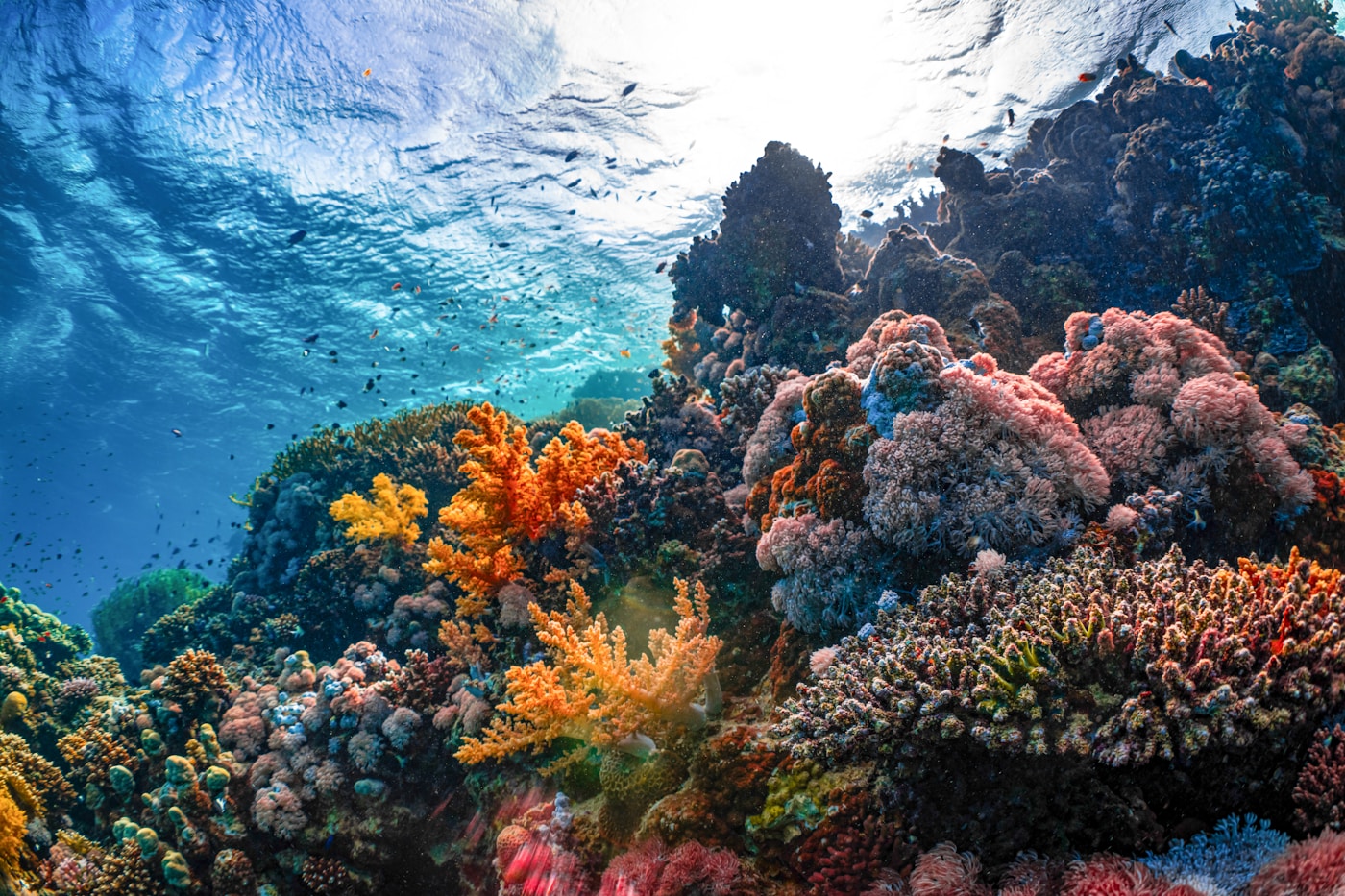
Jacques Cousteau, who sailed the Calypso through these waters in 1963, described the Farasan Banks as one of the most fascinating and unspoiled marine areas on the planet. Six decades later, that assessment still holds. Saudi Arabia’s Red Sea reefs boast superior live coral cover compared to more heavily trafficked regions, with 1,200 fish species, 300 coral varieties, and megafauna including whale sharks, manta rays, hammerhead sharks, and the world’s third-largest population of dugongs.
With Vision 2030 opening the Kingdom to international tourism and new infrastructure transforming once-remote stretches of coastline, now is the moment to discover Saudi Arabia’s underwater world — before the secret is fully out.
Why Saudi Arabia Is the Red Sea’s Best-Kept Diving Secret
The Red Sea is one of the most biodiverse marine environments on Earth, and Saudi Arabia controls nearly half its coastline. Yet while Egypt’s Red Sea resorts receive millions of visitors annually, Saudi Arabia’s dive sites see a fraction of that traffic. The difference is immediately apparent underwater: healthier reefs, larger fish populations, and the kind of solitude that diving pioneers experienced decades ago in destinations now considered mainstream.
Several factors make Saudi diving exceptional. The Red Sea’s high salinity and relatively stable temperatures support extraordinary coral growth. Saudi Arabia’s late entry into recreational diving tourism means its reefs have been spared the anchor damage, overfishing, and coral bleaching stress that have degraded reefs elsewhere. And the Kingdom’s 1,800-kilometre coastline offers remarkable geographic diversity, from the temperate northern waters near Haql to the tropical southern reaches of the Farasan archipelago.
For divers who have exhausted Egypt’s well-trodden sites, Saudi Arabia offers a genuine frontier experience. For first-time Red Sea visitors, it offers arguably the best introduction to one of the world’s most storied marine environments.
Top Dive Regions: A Coast-to-Coast Overview
Saudi Arabia’s Red Sea diving is concentrated in four main regions, each with its own character. Yanbu dominates in the north, Jeddah provides the most accessible urban diving, the KAEC-Rabigh corridor bridges the two, and the Farasan Banks in the south offer the most remote and spectacular diving in the Kingdom.
Yanbu: The Diving Capital
Yanbu, known as the “Pearl of the Red Sea,” is Saudi Arabia’s undisputed diving capital. Located roughly 350 kilometres north of Jeddah on the Medina Province coast, the city serves as the gateway to some of the healthiest reef systems in the entire Red Sea basin.
The star attraction is the Seven Sisters Coral Reef, a collection of reef islands lying approximately 18 miles offshore. The Seven Sisters are renowned worldwide for their pristine hard and soft coral formations, dramatic reef walls, and reliable hammerhead shark sightings. Divers regularly encounter schools of barracuda, dogtooth tuna, eagle rays, and occasional tiger sharks among the Sisters’ plateaus and drop-offs.
Abu Galawa, located within the Seven Sisters complex, is considered by many operators to be the most beautiful dive site in the Yanbu area. Its underwater grottos, sheer drop-offs, and dense concentrations of reef fish make it a highlight of any Seven Sisters itinerary.
Beyond the Sisters, Yanbu offers excellent diving at Marker 32, Marker 39, and Marker 41 — numbered navigation points along the coast that have become popular dive sites in their own right. These sites feature a mix of reef dives and drop-off dives with abundant schooling fish, red snapper, and the possibility of hammerhead and tiger shark encounters.
The Five Corals reef system, often combined with the Seven Sisters on liveaboard itineraries, adds further variety with its pristine coral gardens and excellent macro diving opportunities.
Jeddah: Wrecks, Reefs, and Urban Access
Jeddah offers the most accessible diving in Saudi Arabia, with multiple dive operators running daily boat trips to sites within 30-60 minutes of the city’s marinas. The combination of world-class wreck diving and healthy fringing reefs makes Jeddah a compelling destination for divers at all levels.
The Ann Ann wreck is Jeddah’s most famous dive. This large cargo vessel sits upright on the seabed, with its stern at 32 metres and bow at just 5 metres, making it accessible to divers across certification levels. The wreck is naturally illuminated from above, and its coral-encrusted propeller has become one of the most photographed underwater features in Saudi Arabia.
The Boiler Wreck (also known as the Cable Wreck or Staphonos) is a coal-powered vessel that sank in 1978 and now lies on its side at around 18 metres. Its interiors are partially explorable, with caves and a tunnel carpeted in pink and red soft corals — a favourite among underwater photographers.
For reef diving, Ala’s Reef stands out as one of the best shark sites on the Saudi coast. Large pelagics are the draw here: Napoleon wrasse, barracuda, eagle rays, and hammerhead sharks patrol the deeper sections. The Redmah Wall, claimed by local operators as the finest soft coral wall in Saudi Arabian waters, stretches 150 metres in length and is draped in vibrant gorgonians and whip corals.
Additional Jeddah wrecks worth exploring include the Miss Marie and the Marble Wreck, both offering interesting penetration opportunities for advanced divers.
KAEC and Rabigh: The Mid-Coast Corridor
The stretch of coast between Jeddah and Yanbu, centred on King Abdullah Economic City (KAEC) and the town of Rabigh, is an increasingly popular diving area. Located approximately 100 kilometres north of Jeddah, KAEC provides convenient access to healthy reefs that see very little dive traffic.
Rabigh’s reefs are characterised by abundant marine life including barracuda, sea turtles, and large schools of jackfish. The area’s coral formations are in excellent condition, benefiting from their position between the two main diving hubs. Yam Beach and Pure Beach at KAEC offer shore-entry snorkelling and diving options, though a KAEC visitor pass (obtainable online) is required for access.
Umluj and Al Wajh: The Emerging North
North of Yanbu, the towns of Umluj and Al Wajh are emerging as significant dive and snorkelling destinations. Often called the “Maldives of Saudi Arabia,” this region is defined by turquoise waters, vast archipelagos, and some of the clearest visibility on the Saudi coast.
Umluj serves as the gateway to an archipelago of over 100 islands, many surrounded by fringing reefs accessible directly from shore. The area’s waters host more than 200 types of coral and approximately 1,200 fish species, with visibility frequently reaching 40 metres. Al Wajh, further north, offers a more rugged and adventurous experience, with excellent soft corals around Fukha Bay and remote beach dive sites that see almost no other divers.
This region is also the location of the Red Sea Global tourism development, which is integrating marine conservation into its master plan. The development is expected to bring world-class dive infrastructure to the area while maintaining strict environmental protections.
The Farasan Banks: Saudi Arabia’s Premier Liveaboard Destination
The Farasan Banks represent the pinnacle of Saudi Arabian diving — a vast, remote coral reef system stretching 350 miles along the southwestern coast. Most of the Banks are accessible only by liveaboard, departing from the port of Al Lith south of Jeddah. This remoteness is precisely the point: the Farasan Banks offer diving of a quality that has largely vanished from more accessible parts of the Red Sea.
The Banks consist of thousands of small reefs and islands, many of which have never been dived. Gorgonian-covered pinnacles rise from deep blue water, surrounded by shoals of barracuda, tuna, and reef sharks. During the winter and spring months (December to May), the Banks attract spectacular pelagic life: schooling hammerhead sharks, whale sharks, manta rays, and oceanic whitetip sharks.
The Farasan Islands Marine Sanctuary, a protected area in the southern Red Sea, is home to dugongs grazing on seagrass beds, hawksbill and green sea turtles nesting on remote beaches, and an astonishing density of reef fish. Liveaboard itineraries typically run 7-10 days and include 16-18 dives, with three dives per day plus occasional night dives.
Best Dive Sites: At a Glance
| Site | Region | Depth | Level | Highlights |
|---|---|---|---|---|
| Seven Sisters | Yanbu | 5-40 m | Intermediate | Hammerhead sharks, pristine reef walls, soft corals |
| Abu Galawa | Yanbu | 5-30 m | All levels | Underwater grottos, drop-offs, dense reef fish |
| Ann Ann Wreck | Jeddah | 5-32 m | All levels | Upright cargo wreck, coral-encrusted propeller |
| Boiler Wreck | Jeddah | 10-18 m | Intermediate | Penetrable caves, pink and red soft corals |
| Ala’s Reef | Jeddah | 10-35 m | Intermediate | Hammerheads, eagle rays, Napoleon wrasse |
| Redmah Wall | Jeddah | 5-25 m | All levels | 150 m soft coral wall, gorgonians, whip corals |
| Marker 32 | Yanbu | 5-30 m | All levels | Schooling barracuda, red snapper, tuna |
| Farasan Banks | Al Lith (south) | 5-40+ m | Intermediate-Advanced | Whale sharks, mantas, hammerheads, dugongs |
| Umluj Archipelago | Umluj | 1-20 m | All levels | Crystal-clear shallows, 200+ coral types, turtles |
| Five Corals | Yanbu | 5-30 m | All levels | Pristine coral gardens, excellent macro life |
Marine Life: What You Will See
The Saudi Red Sea is a biodiversity hotspot, home to around 1,200 fish species — roughly 10 per cent of which are found nowhere else on Earth — and more than 300 types of coral. The Kingdom’s late entry to recreational diving means fish populations remain robust, and encounters with large marine life are common rather than exceptional.
Sharks
Hammerhead sharks are the signature species of Saudi diving, particularly around the Seven Sisters and the Farasan Banks. Scalloped hammerheads school in large numbers during the cooler months (November to April), often encountered at dawn on deeper reef walls. Oceanic whitetip sharks cruise the open water around the Banks, while reef sharks (whitetip and blacktip) are regular sightings at most offshore dive sites. Tiger sharks are occasionally spotted at the deeper Yanbu sites.
Whale Sharks and Manta Rays
Whale shark encounters are most reliable at the Farasan Banks in April and around Jabal Al Lith between February and May. These gentle giants, the largest fish in the ocean, aggregate near the surface to feed on plankton blooms. Reef manta rays, with wingspans reaching seven metres, are encountered at cleaning stations throughout the central and southern Red Sea.
Turtles and Dugongs
Green turtles and hawksbill turtles breed along the Saudi coast, and sightings are common at dive sites from Jeddah to the Farasan Islands. The Arabian Gulf and Red Sea combined host more than 5,000 dugongs — the world’s third-largest population outside Australia. These gentle “sea cows” graze on seagrass beds in the shallower southern waters and are a genuine highlight of Farasan diving.
Reef Life
Beyond the megafauna, Saudi reefs teem with the full spectrum of Red Sea marine life: clouds of anthias and damselfish, Napoleon (humphead) wrasse, moray eels, lionfish, nudibranchs, octopuses, and dense schools of fusiliers, surgeonfish, and butterflyfish. Night dives reveal a different world of Spanish dancers, hunting lionfish, and bioluminescent plankton.
Snorkelling: The Best Spots for Non-Divers
Saudi Arabia’s Red Sea is not exclusively the preserve of certified scuba divers. Many of the coast’s finest reef systems are accessible in shallow water, making snorkelling a rewarding alternative — particularly for families, beginners, and travellers who prefer to stay near the surface.
Jeddah
The fringing reefs north of Jeddah are among the best shore-accessible snorkelling sites on the Saudi coast. Several beach clubs north of the city offer private resort-style access to healthy reef systems, with entry fees typically ranging from SAR 75 to SAR 190 ($20-$50) per day. Khaleej Salman Beach and Al-Saif Beach are popular public options, while Silver Sands Beach offers calm, family-friendly conditions with easily accessible reef. Many dive operators also run dedicated snorkelling boat trips to offshore reef sites.
Umluj
Umluj is arguably the finest snorkelling destination in Saudi Arabia. The main beach prohibits motorised boats to protect its delicate fringing reef, meaning snorkellers can simply wade in from shore and explore extensive coral gardens in crystal-clear, shallow water. Al Alhasi Beach is particularly suited to beginners, with a sandy bottom providing excellent visibility and warm, calm conditions. The Umluj archipelago’s 100-plus islands offer further snorkelling opportunities accessible by boat.
Farasan Islands
Guided snorkelling trips from the Farasan Islands provide close encounters with dolphins, sea turtles, and vibrant reef systems in the protected waters of the marine sanctuary. The Islands are reached by ferry from Jizan on the southern coast.
Yanbu
Sharm Yanbu offers sheltered, shallow reef snorkelling that is ideal for families and novice snorkellers. Several operators run half-day snorkelling trips that include reef sites within the harbour area and further offshore, with equipment provided.
Liveaboard Diving: Exploring the Deep South
For serious divers, Saudi Arabia’s liveaboard scene is the main event. Liveaboard vessels provide access to remote reef systems — particularly the Seven Sisters and Farasan Banks — that are unreachable on day trips from shore.
Typical Itineraries
Most Saudi liveaboards depart from Yanbu (for the Seven Sisters and Five Corals) or Al Lith (for the Farasan Banks). A standard Seven Sisters trip runs 5-7 days, while Farasan Banks expeditions typically last 7-10 days. Combined itineraries covering both areas are available on some operators. Expect 3 dives per day plus occasional night dives, totalling 16-18 dives on a week-long trip.
Key Operators
| Operator | Vessel | Routes | Price From |
|---|---|---|---|
| Ocean Breeze Liveaboards | M/Y Almonda | Seven Sisters, Five Corals, Farasan Banks | EUR 1,650/person |
| Saudi Explorer | M/Y Typhoon | Seven Sisters, Farasan Banks | EUR 1,800/person |
| Dive Pro Liveaboard | Various | Five Corals & Seven Sisters combined | EUR 1,700/person |
Prices typically include accommodation, meals, tanks, air fills, and weights. Additional costs include a service charge (approximately EUR 15 per person per night) and local diving fees (approximately EUR 50 per diving day). Nitrox is usually available for an additional fee.
What to Expect on Board
Saudi liveaboards operate to international standards, with en-suite cabins, sun decks, and dedicated dive platforms. Dive briefings cover each site’s topography, currents, and marine life highlights. As Saudi Arabia prohibits alcohol, liveaboards do not serve alcoholic beverages — a point worth noting for divers accustomed to a post-dive sundowner. Equipment rental is available on all vessels, though experienced divers typically bring their own regulators, BCDs, and wetsuits.
Dive Operators and PADI Centres
Saudi Arabia has a growing network of PADI and SSI-affiliated dive centres offering courses, equipment rental, guided dives, and boat charters. The following are among the most established:
| Centre | Location | Affiliation | Services |
|---|---|---|---|
| Al-Haddad Scuba | Jeddah | SSI | Daily trips, charters, courses, gear sales |
| 17Sixty Diving | Jeddah | PADI | Boat dives, shore dives, courses |
| Saudia Scuba | Jeddah | PADI | Courses, guided dives, equipment rental |
| Sun & Sea | Jeddah | PADI | Beginner to advanced courses, local dives |
| Adventure Diver | Yanbu | PADI | Courses, trips, Seven Sisters access |
| Diving Bubbles | Yanbu | PADI 5-Star | Training pool, classroom, dive boat, snorkelling |
| Blue Diver Club | Yanbu | PADI | Courses, local dives, equipment rental |
| Mermates Scuba | Jeddah | PADI | Red Sea diving trips, courses, 10+ years experience |
Certification and Requirements
Diving in Saudi Arabia follows international certification standards. Most dive operators require a recognised certification (PADI, SSI, NAUI, BSAC, or equivalent) for boat dives and reef dives beyond snorkelling depth.
For Non-Certified Divers
All major operators offer Discover Scuba Diving (DSD) experiences — supervised introductory dives that require no prior certification. These typically include a pool or confined water session followed by a shallow open-water dive to a maximum depth of 12 metres, with a certified instructor maintaining direct contact throughout. A DSD experience takes approximately half a day and provides an excellent taste of scuba diving without the commitment of a full certification course.
Getting Certified in Saudi Arabia
Several Saudi dive centres offer the full range of PADI and SSI certification courses:
- PADI Open Water Diver: 3-4 days, approximately SAR 1,500-2,500 ($400-$670). Certifies you to dive to 18 metres worldwide.
- PADI Advanced Open Water: 2 days, approximately SAR 1,200-1,800 ($320-$480). Extends your depth limit to 30 metres and introduces specialties like deep diving, navigation, and night diving.
- PADI Rescue Diver: 3-4 days, approximately SAR 1,800-2,500 ($480-$670). Focuses on emergency management and diver safety skills.
- Specialty courses in wreck diving, nitrox, underwater photography, and deep diving are available at most established centres.
All courses include theory sessions, confined water (pool) training, and open-water dives. Equipment is provided during courses. Digital certification cards are issued immediately upon completion.
When to Dive: Season-by-Season Guide
Saudi Arabia offers year-round diving, but conditions vary by season and region. Here is what to expect throughout the year:
| Season | Months | Water Temp | Conditions | Best For |
|---|---|---|---|---|
| Winter | Dec-Feb | 21-24°C | Cooler water, excellent visibility, pleasant air temps | Hammerheads, pelagics, Farasan Banks liveaboards |
| Spring | Mar-May | 22-27°C | Warming water, plankton blooms attract whale sharks | Whale sharks, mantas, overall best conditions |
| Summer | Jun-Aug | 28-31°C | Very warm water, hot above surface (40°C+), calm seas | Warm-water comfort, reef fish activity, snorkelling |
| Autumn | Sep-Nov | 24-28°C | Warm water cooling, excellent viz, fewer crowds | Best all-round conditions, comfortable air and water temps |
The consensus among experienced Saudi divers is that September to November offers the best overall conditions: warm water, excellent visibility, comfortable air temperatures, and the transition toward the pelagic season. For whale shark and manta ray encounters, February to May is the window. For hammerhead sharks, December to April at the Seven Sisters and Farasan Banks delivers the most consistent sightings.
Summer diving (June to August) is perfectly viable — water temperatures are at their warmest and seas are generally calm — but air temperatures above 40°C make surface intervals uncomfortable, and the intense heat deters all but the most dedicated divers. For more on seasonal planning, see our best time to visit Saudi Arabia guide.
Costs: What to Budget
Diving in Saudi Arabia is moderately priced by international standards — cheaper than the Maldives or Galapagos, but more expensive than Egypt. Here is a breakdown of typical costs as of 2026:
| Item | Cost (SAR) | Cost (USD) |
|---|---|---|
| Single boat dive (2-tank) | SAR 400-600 | $107-$160 |
| Discover Scuba Diving (DSD) | SAR 500-800 | $133-$213 |
| PADI Open Water course | SAR 1,500-2,500 | $400-$670 |
| PADI Advanced Open Water | SAR 1,200-1,800 | $320-$480 |
| Full equipment rental (per day) | SAR 200-350 | $53-$93 |
| Snorkelling trip (half day) | SAR 150-300 | $40-$80 |
| Liveaboard (7 days, shared cabin) | SAR 6,200-7,500 | $1,650-$2,000 |
| Beach club entry (Jeddah, day pass) | SAR 75-190 | $20-$50 |
Budget-conscious divers can reduce costs by bringing their own equipment (saving on rental fees), booking multi-dive packages (most operators offer 5-dive or 10-dive bundles at discounted rates), and diving from Jeddah where competition among operators keeps prices competitive. For a broader view of travel costs, see our Saudi Arabia cost guide.
Saudi Arabia vs Egypt: Why the Saudi Side Wins
Egypt has long been the default Red Sea diving destination, and for good reason: cheap flights, established resorts, and decades of dive infrastructure. But for divers willing to look beyond Sharm El Sheikh and Hurghada, Saudi Arabia increasingly offers a superior underwater experience.
Reef health. Surveys consistently show that Saudi reefs have higher live coral cover than their Egyptian counterparts. Decades of heavy dive traffic, anchor damage, and coastal development have taken a toll on Egypt’s most popular sites. Saudi reefs, by contrast, have benefited from minimal commercial diving pressure.
Crowds. A popular Jeddah dive site might host two or three boats on a busy day. Egypt’s Ras Mohammed or Thistlegorm wreck routinely sees dozens. The difference in underwater experience is stark — on Saudi reefs, you are often the only divers in the water.
Marine life density. Healthier reefs and lower fishing pressure translate directly to more abundant fish populations. Large pelagics — hammerheads, whale sharks, mantas — are encountered more reliably on the Saudi side, particularly at the Farasan Banks.
The trade-off is infrastructure and accessibility. Egypt offers budget-friendly liveaboards, a wider choice of dive resorts, and direct international flights to Red Sea airports. Saudi Arabia requires a tourist visa (easily obtained online for most nationalities), has fewer dive operators, and demands more planning for liveaboard trips. For divers who prioritise reef quality over convenience, the Saudi side is increasingly the smarter choice. If you are flying in for a dive trip, our airport guide covers terminal layouts, ground transport, and SIM card kiosks at every major Saudi airport.
Practical Tips for Diving in Saudi Arabia
- Visa: Most nationalities can obtain a Saudi e-visa online before departure. The tourist visa is valid for one year with multiple entries. Ensure your visa is processed before booking dive trips.
- Getting there: Jeddah’s King Abdulaziz International Airport (JED) is the main gateway for Red Sea diving, with direct flights from major international hubs. For Yanbu, domestic flights from Jeddah or Riyadh take approximately one hour.
- Alcohol: Saudi Arabia prohibits the import and consumption of alcohol. Liveaboards and dive resorts do not serve alcoholic beverages.
- What to bring: Sunscreen (reef-safe preferred), rash guard or wetsuit (3mm for winter, lycra for summer), dive computer, and certification card. Most equipment is available for rental, but regulators and masks are best brought from home.
- Insurance: Comprehensive dive insurance (such as DAN or DiveAssure) is strongly recommended. Ensure your policy covers hyperbaric chamber treatment — the nearest chambers are in Jeddah.
- Respect the reef: Saudi Arabia takes marine conservation seriously. Do not touch, stand on, or collect coral. Maintain neutral buoyancy at all times. Spearfishing is prohibited in most areas.
- Photography: Underwater photography is welcomed, but avoid using flash near sensitive marine life. Drone photography near military installations or government buildings is prohibited.
- Currents: Some offshore sites (particularly the Seven Sisters and Farasan Banks) experience strong currents. Always dive with a surface marker buoy (SMB) and follow your guide’s instructions on current dives.
Frequently Asked Questions
Do I need a scuba certification to dive in Saudi Arabia?
For most boat dives and reef dives, yes — a PADI Open Water certification or equivalent is required. However, all major dive centres offer Discover Scuba Diving (DSD) experiences for uncertified beginners, which include a pool training session and a supervised shallow dive to a maximum of 12 metres. Snorkelling requires no certification.
What is the best time of year for diving in Saudi Arabia?
Saudi Arabia offers year-round diving. The best overall conditions are from September to November (warm water, excellent visibility, comfortable air temperatures). For pelagic encounters, December to May is the peak season — hammerhead sharks from December to April, whale sharks and mantas from February to May. Summer diving (June to August) is possible but hot above water. See our seasonal guide for more detail.
Is diving in Saudi Arabia safe?
Yes. Saudi dive operators follow international safety standards, and the relatively uncrowded conditions reduce the risk of boat traffic incidents common at busier destinations. The main safety considerations are strong currents at offshore sites (dive within your certification level and follow guides) and the distance from hyperbaric chambers when diving remote southern sites. Comprehensive dive insurance is essential.
How does Saudi Red Sea diving compare to Egypt?
Saudi Arabia’s reefs are generally healthier and less crowded than Egypt’s heavily dived sites. Fish populations are more abundant, and large pelagic encounters are more reliable, particularly at the Farasan Banks. Egypt offers better-developed tourism infrastructure, more budget options, and easier accessibility. For divers prioritising reef quality and solitude, Saudi Arabia is the stronger choice.
Can I see whale sharks in Saudi Arabia?
Yes. Whale shark sightings are most reliable at the Farasan Banks in April and around Jabal Al Lith between February and May. Encounters are not guaranteed but are more consistent during these months, when plankton blooms attract the sharks to surface waters. Some Jeddah-based operators run dedicated whale shark trips during the season.
What should I bring for a dive trip to Saudi Arabia?
Essential items include your certification card and logbook, a dive computer, mask (personal fit matters), reef-safe sunscreen, and a rash guard or wetsuit (3mm for winter, lycra skin for summer). Most operators provide tanks, weights, and BCDs, but regulators are best brought from home. For liveaboards, bring a dry bag for electronics and a surface marker buoy (SMB).
Are there good options for non-divers travelling with divers?
Absolutely. Snorkelling is excellent throughout the Saudi Red Sea, particularly at Umluj, Jeddah’s beach clubs, and the Farasan Islands. Many dive operators offer combined dive-and-snorkel boat trips where non-divers can snorkel the same reef while certified divers go deeper. Beach resorts in Jeddah and along the Red Sea coast offer plenty of non-diving activities including kayaking, paddleboarding, and island-hopping excursions. For the ultimate Red Sea experience, our luxury travel guide covers the overwater villas and private island resorts now open along the coast.
Do I need to book liveaboards in advance?
Yes. Saudi liveaboard capacity is limited compared to Egypt, and popular itineraries (particularly the Farasan Banks from December to May) book out months in advance. Booking 3-6 months ahead is recommended for peak-season liveaboards. Day trips from Jeddah and Yanbu are more readily available with shorter notice.
Planning your Red Sea adventure? Explore our guides to travel in Saudi Arabia, the Red Sea coast, and Saudi Arabia’s best beaches for a complete picture of what the Kingdom’s coastline has to offer.