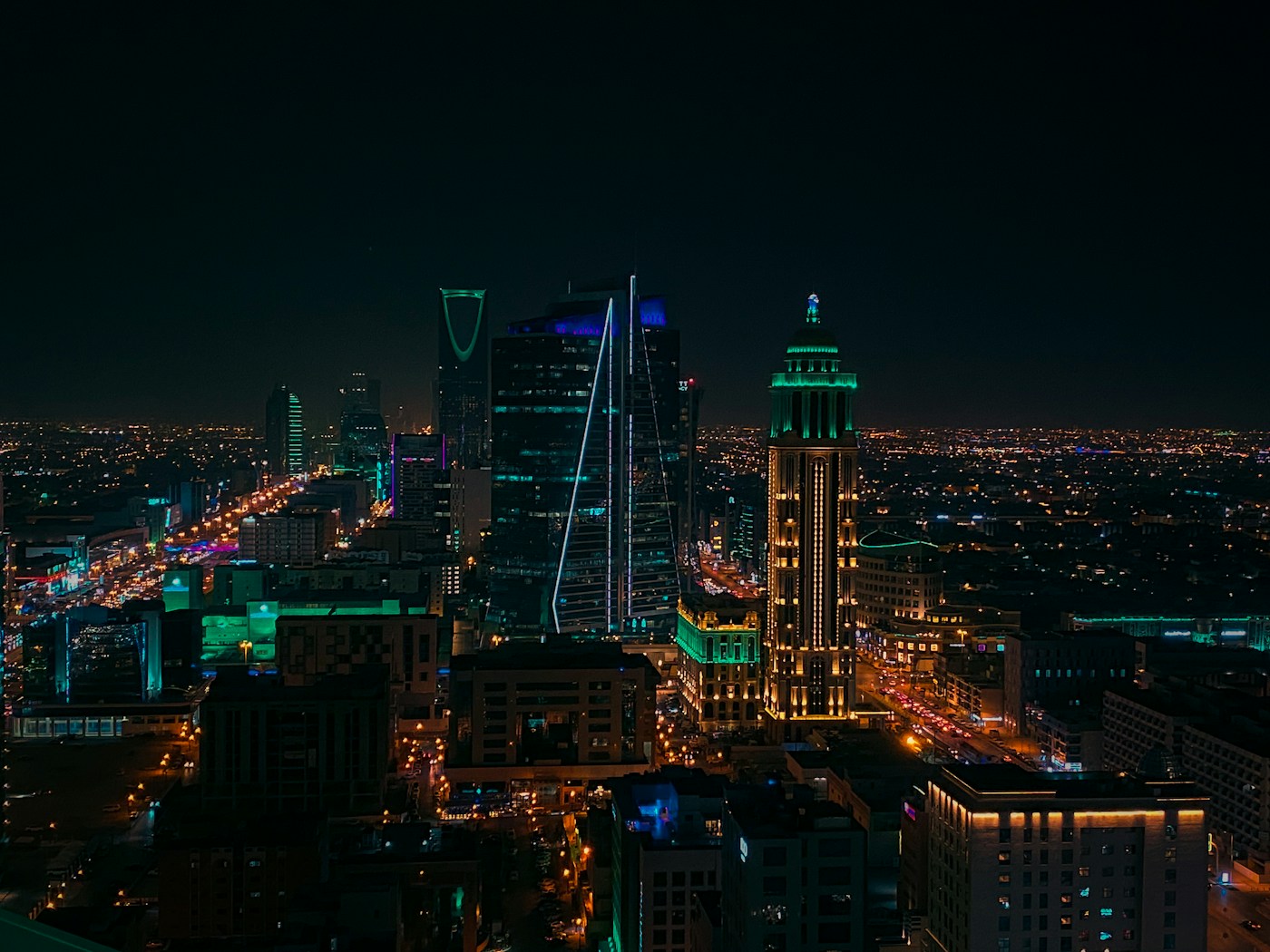
Saudi Arabia is engineering one of the most ambitious energy transitions on the planet. The Kingdom that built its global influence on petroleum is now channelling billions of dollars into solar farms, wind installations, and the world’s largest green hydrogen plant — aiming to generate half its electricity from renewable sources by 2030. With 14 gigawatts of new projects set for tender in 2026 alone, the scale and speed of the Kingdom’s renewable energy push has few parallels anywhere in the world.
This guide examines every dimension of Saudi Arabia’s renewable energy transformation: the solar and wind mega-projects reshaping the landscape, the green hydrogen gambit at NEOM, the institutional architecture driving investment, and what it all means for businesses, investors, and the broader Saudi economy.
The National Renewable Energy Program: From Ambition to Execution
Saudi Arabia’s renewable energy strategy operates through the National Renewable Energy Program (NREP), managed by the Saudi Power Procurement Company (SPPC) under the Ministry of Energy. Launched as part of Vision 2030, the programme has evolved from a policy aspiration into a functioning procurement machine awarding gigawatt-scale contracts at regular intervals.
The numbers tell the story of acceleration. By early 2026, SPPC had signed power purchase agreements (PPAs) covering more than 47.7 GW of renewable capacity with a mix of regional and international developers. Grid-connected renewable capacity has reached 12.3 GW — up from virtually zero in 2020. The Kingdom’s target is to reach 130 GW of installed renewable capacity by 2030, with renewables supplying 50 percent of total electricity generation.
The 2026 pipeline is the most aggressive yet. Saudi Arabia plans to award approximately 14 GW of new renewable energy projects this year through the NREP’s Round 7 tenders and parallel procurement tracks. Round 7 alone encompasses 5.3 GW of capacity across four solar PV projects and two wind projects:
- Tabarjal II (Al Jouf region) — 1,400 MW solar PV
- Mawqaq (Hail region) — 600 MW solar PV
- Tathleeth (Aseer region) — 600 MW solar PV
- South Al Ula (Madinah region) — 500 MW solar PV
- Blighah — 1,300 MW wind
- Shagran — 900 MW wind
- Net zero by 2060 — achieved through the “Circular Carbon Economy” framework, which prioritises carbon capture, utilisation, storage, and recycling alongside renewable deployment
- 278 million tonnes of CO2-equivalent emissions reduced annually by 2030
- 450 million trees planted and 8 million hectares of degraded land rehabilitated by 2030
- 9 million tonnes per annum of CO2 captured starting in 2027, scaling to 44 million tonnes by 2035
Twenty-two companies have been qualified as bidders for the solar PV projects, including global heavyweights such as Masdar, EDF, TotalEnergies, Marubeni, ENGIE, and Sembcorp, alongside domestic players like Alfanar and Saudi Electricity Company. The competitive tension between international developers has driven Saudi solar tariffs to among the lowest in the world — the Al Shuaibah 2 project achieved a record-low tariff of 1.04 US cents per kilowatt-hour.
Solar Power: The Kingdom’s Greatest Natural Advantage
Saudi Arabia receives an average of 12 hours of intense sunlight per day across most of its territory, making it one of the highest solar irradiance zones on Earth. Combined with abundant cheap land and proximity between solar-suitable desert and major population centres, the Kingdom possesses structural advantages that few countries can match.
The centrepiece projects already operational or nearing completion demonstrate the scale of ambition:
Sudair Solar PV (1.5 GW)
Located in the Sudair Industrial City near Riyadh, this $924 million project achieved full commercial operation in 2025 after ACWA Power received the Commercial Operation Certificate for its final tranche. At 1.5 GW, Sudair was Saudi Arabia’s largest single solar installation at the time of completion and supplies enough electricity to power approximately 185,000 homes while offsetting 2.9 million tonnes of CO2 emissions annually.
Al Shuaibah 1 & 2 (2.6 GW)
Situated south of Jeddah, the Al Shuaibah complex represents one of the largest solar developments in the Middle East, with a combined capacity of 2,631 MW. Al Shuaibah 2 alone, at over 2 GW, set a world record for the lowest solar energy tariff. The project is developed by a consortium involving ACWA Power and the Public Investment Fund’s renewable energy subsidiary, Badeel.
ACWA Power’s 2.7 GW Commissioning Milestone
In 2025, ACWA Power commissioned a combined 2.7 GW solar PV portfolio across three projects — Al Kahfah (1.4 GW), Ar Rass 2 (1 GW), and SAAD 2 (365.7 MW). These projects collectively marked the largest single-year solar commissioning by any developer in the Kingdom’s history.
Upcoming Solar Mega-Projects
The pipeline continues to expand. The Bisha Solar Complex in the Aseer region is deploying 2.25 GW of smart solar tracking systems. Desert Technologies, a Saudi manufacturer, is building a 5 GW annual production capacity solar panel factory in Jeddah’s third industrial city — a $200 million investment that signals the Kingdom’s intent to localise manufacturing, not just deployment.
Wind Energy: The Emerging Frontier
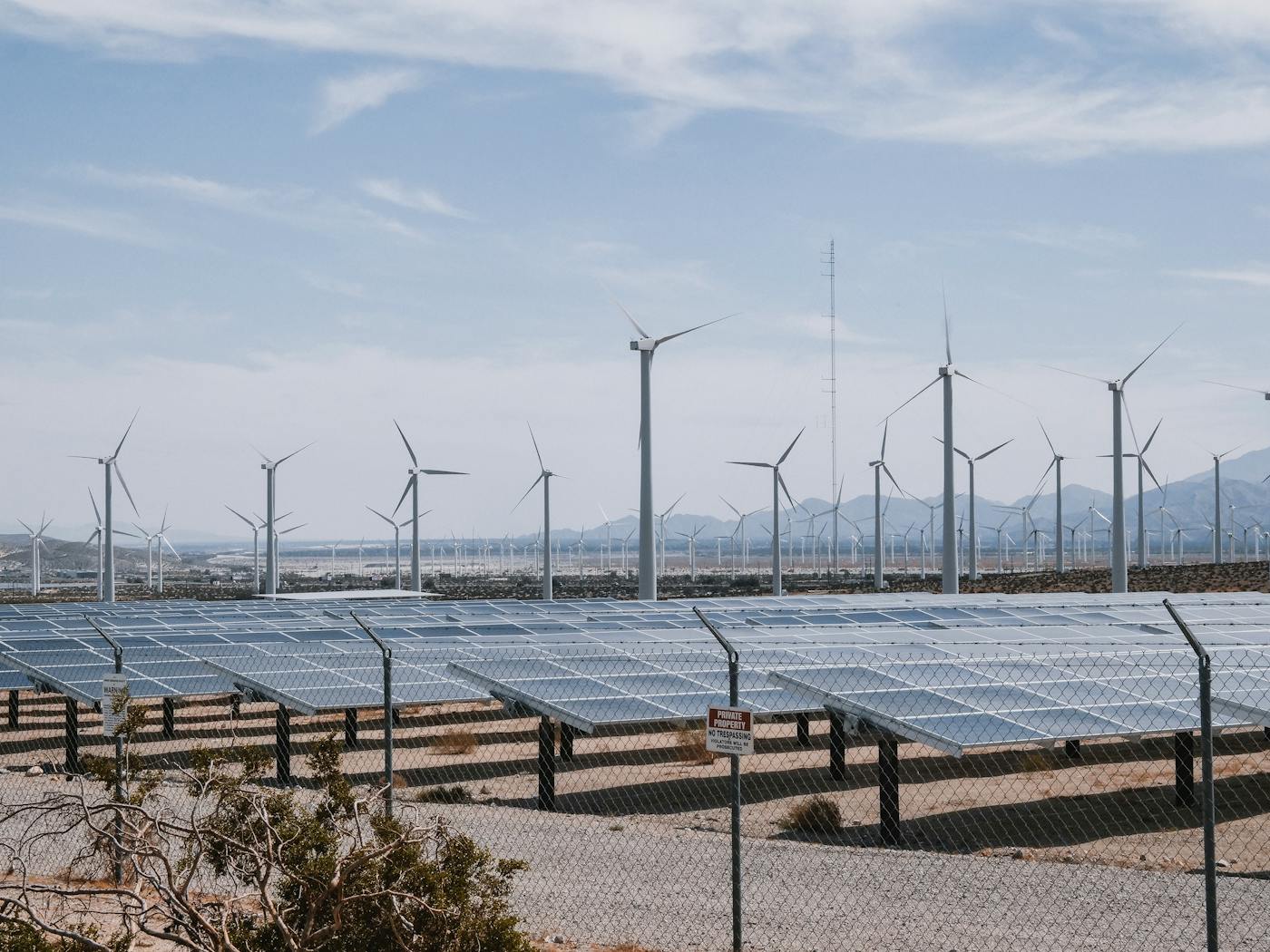
While solar dominates Saudi Arabia’s renewable energy portfolio, wind power is gaining strategic importance. The Kingdom targets 16 GW of installed wind capacity by 2030, and the 2026 tender pipeline includes significant wind allocations.
Dumat Al Jandal (400 MW)
Saudi Arabia’s first utility-scale wind farm, developed by Masdar and EDF Renewables in the Al Jouf region, became fully operational in December 2021. The 400 MW installation achieved a world-record wind energy tariff of 1.99 US cents per kilowatt-hour at the time of its award. Dumat Al Jandal proved the commercial viability of wind power in the Kingdom and established the template for subsequent projects.
Yanbu Wind Farm (700 MW)
The Yanbu wind project near the Red Sea coast represents the largest single wind development under construction in Saudi Arabia. With construction commenced and commercial operations expected in 2026, the project will transform the Madinah region from zero wind capacity to 700 MW — the highest growth rate of any Saudi province in the wind sector.
Round 7 Wind Tenders
The 2026 NREP Round 7 includes two major wind projects: Blighah (1,300 MW) and Shagran (900 MW). If awarded and completed on schedule, these projects alone would more than triple Saudi Arabia’s current installed wind capacity. Qualified bidders include China’s Goldwind, Envision Energy, and European developers with established wind portfolios.
Green Hydrogen: The NEOM Gambit
The NEOM Green Hydrogen Company (NGHC) — a joint venture between ACWA Power, Air Products, and NEOM — is building the world’s largest green hydrogen production facility. The $8.4 billion project represents Saudi Arabia’s most consequential bet on the hydrogen economy and positions the Kingdom as a potential global leader in clean fuel exports.
The facility will integrate up to 4 GW of dedicated solar and wind generation capacity to power industrial-scale electrolysis. At full capacity, the plant will produce up to 600 tonnes per day of carbon-free hydrogen, converted into green ammonia for export. The environmental impact is significant: the operation is expected to eliminate approximately five million tonnes of CO2 emissions per year.
Construction progress has been rapid. By early 2025, the project had reached 80 percent completion across all four sites — the hydrogen facility itself, the wind farm, the solar installation, and the transmission grid. The first major delivery of wind turbines arrived at the NGHC site in 2024, and the solar and wind power generation infrastructure is expected to be completed by mid-2026. Product availability is targeted for late 2026 to early 2027.
Air Products will be the exclusive off-taker for the green ammonia, distributing it globally for use in heavy-duty transportation, power generation, and industrial processes. The project establishes NEOM as a future hub for hydrogen export — a strategic complement to the Kingdom’s existing oil export infrastructure.
Key Players and Institutional Architecture
Saudi Arabia’s renewable energy ecosystem is shaped by a network of state-backed institutions, sovereign investors, and increasingly, private sector developers.
Public Investment Fund (PIF) and Badeel
The PIF — Saudi Arabia’s sovereign wealth fund — directly develops approximately 70 percent of the Kingdom’s renewable energy projects, primarily through its wholly-owned subsidiary Badeel. In 2025, ACWA Power, Badeel, and Saudi Aramco Power Company (SAPCO) signed PPAs for seven new projects totalling 15,000 MW (12,000 MW solar and 3,000 MW wind) with a combined investment of $8.3 billion. The three entities together sponsor projects with a cumulative capacity of 28.6 GW, representing over $17 billion in committed investment.
ACWA Power (now Acwa)
Rebranded as Acwa in January 2026, this Riyadh-headquartered company has grown into a global infrastructure platform managing over $115 billion in assets across 15 countries. In Saudi Arabia, its solar and wind portfolio stands at 21 projects representing more than 34 GW of combined capacity. Globally, the company’s renewable portfolio reaches 51.9 GW. Acwa is majority owned by the PIF and serves as the Kingdom’s principal developer of large-scale renewable and desalination projects.
Saudi Power Procurement Company (SPPC)
The SPPC is the designated principal buyer for all NREP projects, responsible for issuing tenders, evaluating bids, and signing long-term PPAs with successful developers. The company reports to the Ministry of Energy and operates as the commercial interface between the government’s renewable targets and private sector developers.
International Developers
The competitive tender process has attracted a global roster of developers: Abu Dhabi’s Masdar, France’s EDF and TotalEnergies, Japan’s Marubeni, Singapore’s Sembcorp, China’s Power China and Goldwind, South Korea’s KEPCO, and several others. This international participation has been a key factor in driving down tariffs and accelerating project timelines.
The Saudi Green Initiative and Carbon Strategy
Renewable energy deployment sits within a broader environmental framework articulated through the Saudi Green Initiative (SGI), announced by Crown Prince Mohammed bin Salman in 2021. The SGI encompasses three pillars: reducing emissions, reforestation, and land and marine conservation.
Key SGI commitments include:
The Circular Carbon Economy (CCE) approach is distinctively Saudi. Rather than positioning renewables as a replacement for hydrocarbons, the CCE framework treats carbon management as a parallel track — enabling continued fossil fuel production coupled with capture technology while simultaneously scaling up renewable generation. This pragmatic stance reflects the Kingdom’s economic reality: oil revenues still fund the infrastructure investments that make the energy transition possible.
Investment Opportunities
The scale of Saudi Arabia’s renewable ambitions has created a multi-layered opportunity landscape for investors and businesses.
Project Development and PPAs
The NREP tender process is open to international developers, with projects typically structured as Independent Power Producer (IPP) agreements backed by 25-year PPAs with the SPPC. The PIF’s 2026 Private Sector Forum highlighted investment opportunities in clean power generation, green hydrogen, distributed solar, and sustainable fuels.
Supply Chain Localisation
Saudi Arabia’s local content requirements are creating opportunities in manufacturing, engineering, procurement, and construction (EPC). Desert Technologies’ 5 GW solar panel factory in Jeddah exemplifies the trend toward domestic manufacturing. Companies specialising in solar tracking systems, inverters, balance-of-plant equipment, and grid integration technologies will find a growing addressable market.
Green Hydrogen Value Chain
The NGHC project at NEOM has catalysed interest in the broader hydrogen value chain — from electrolyser manufacturing and ammonia conversion to export logistics and end-use applications. As Saudi Arabia scales hydrogen production beyond the NEOM pilot, opportunities will emerge in electrolyser supply, hydrogen storage, pipeline infrastructure, and ammonia shipping.
Grid Modernisation
Integrating 130 GW of intermittent renewable capacity into the national grid requires massive investment in transmission infrastructure, battery storage, smart grid technology, and demand response systems. This presents opportunities for electrical equipment manufacturers, software providers, and energy storage companies.
Saudi Arabia vs Gulf Peers: A Regional Comparison
Saudi Arabia’s renewable energy push is part of a broader Gulf transformation, but the Kingdom’s approach differs from its neighbours in scale, strategy, and timeline.
The UAE was the early regional leader in renewable deployment, with Abu Dhabi’s Masdar established in 2006 as a dedicated clean energy company. The UAE’s Barakah nuclear power plant — four reactors delivering 5.6 GW — became fully operational in 2024 and now generates approximately 25 percent of the country’s electricity. The UAE targets 30 percent of power from clean sources by 2030.
Saudi Arabia started later but is moving faster and at larger scale. By 2030, the Kingdom’s installed renewable capacity is projected to be nearly twice that of the UAE. The critical difference is strategic focus: while the UAE has diversified into nuclear and pursued a balanced portfolio, Saudi Arabia is concentrating overwhelmingly on solar and wind, supplemented by green hydrogen — technologies that leverage its natural advantages of abundant sunlight, wind corridors, and vast land area.
Across the six GCC countries collectively, installed renewable capacity has surged from 196 MW in 2015 to 13.5 GW by 2024 — a nearly 70-fold increase in under a decade. Saudi Arabia now accounts for the largest share of this growth and is positioning itself as the Gulf’s renewable energy heavyweight.
There is a growing strategic rivalry. Both Saudi Arabia and the UAE are competing to become the region’s primary clean energy hub, with implications for foreign investment flows, technology partnerships, and influence in global climate negotiations. Saudi Arabia’s decisive advantage is scale — the Kingdom simply has more land, more sun, and a larger domestic market to justify the infrastructure investment.
Challenges and Risks
For all its momentum, Saudi Arabia’s renewable transition faces real obstacles that investors and policymakers must weigh.
Grid integration remains the most pressing technical challenge. The Kingdom’s electricity grid was built for centralised, dispatchable fossil fuel generation. Absorbing tens of gigawatts of variable solar and wind output requires substantial investment in transmission upgrades, energy storage, and grid management systems.
Water scarcity intersects with renewable energy in complex ways. Solar panel cleaning in desert conditions requires significant water resources, and green hydrogen production via electrolysis is water-intensive. Desalination — itself energy-intensive — may need to scale in parallel.
Execution risk is non-trivial at this scale. The Kingdom has committed to deploying more renewable capacity in a shorter timeframe than almost any country has attempted. Supply chain bottlenecks, skilled labour shortages, and permitting delays could slow the buildout.
The oil revenue paradox persists. Renewable energy investment is funded in large part by oil revenues. A sustained period of low oil prices could constrain the capital available for energy transition, even as it strengthens the strategic case for diversification away from hydrocarbons.
Outlook: 2026 and Beyond
Saudi Arabia’s renewable energy trajectory in 2026 is defined by three converging forces: the NGHC green hydrogen plant nearing commissioning, the largest-ever tender pipeline at 14 GW, and the institutional maturation of NREP as a world-class procurement platform.
If the Kingdom executes on its current pipeline, it will enter 2027 with a renewable portfolio that would have been unimaginable a decade ago — transforming from a country with zero renewable capacity in 2020 to one of the world’s largest clean energy markets. The implications extend beyond energy: every gigawatt of renewable capacity deployed reduces domestic oil consumption, freeing more barrels for export and extending the economic life of the Kingdom’s most valuable resource.
For businesses operating in Saudi Arabia, the renewable energy sector represents one of the most consequential investment themes of the decade. The combination of sovereign backing, competitive procurement, international developer participation, and massive domestic demand creates a market environment with few global parallels.
The Kingdom that defined the 20th-century energy order through oil is now positioning itself to shape the 21st-century order through renewables — and the speed of that transition is accelerating.