
DUBAI — An Iranian drone struck the Kuwaiti supertanker Al Salmi just after midnight on Tuesday inside Dubai’s anchorage zone, setting fire to a vessel carrying two million barrels of Saudi and Kuwaiti crude and marking the first attack on a commercial ship inside GCC port waters since the war began. More than 400 vessels were anchored in the same zone when the drone hit, according to Bloomberg shipping data, and the strike did not just damage a tanker — it eliminated the last stretch of Gulf water that insurers, shipping companies, and oil traders had treated as safe.
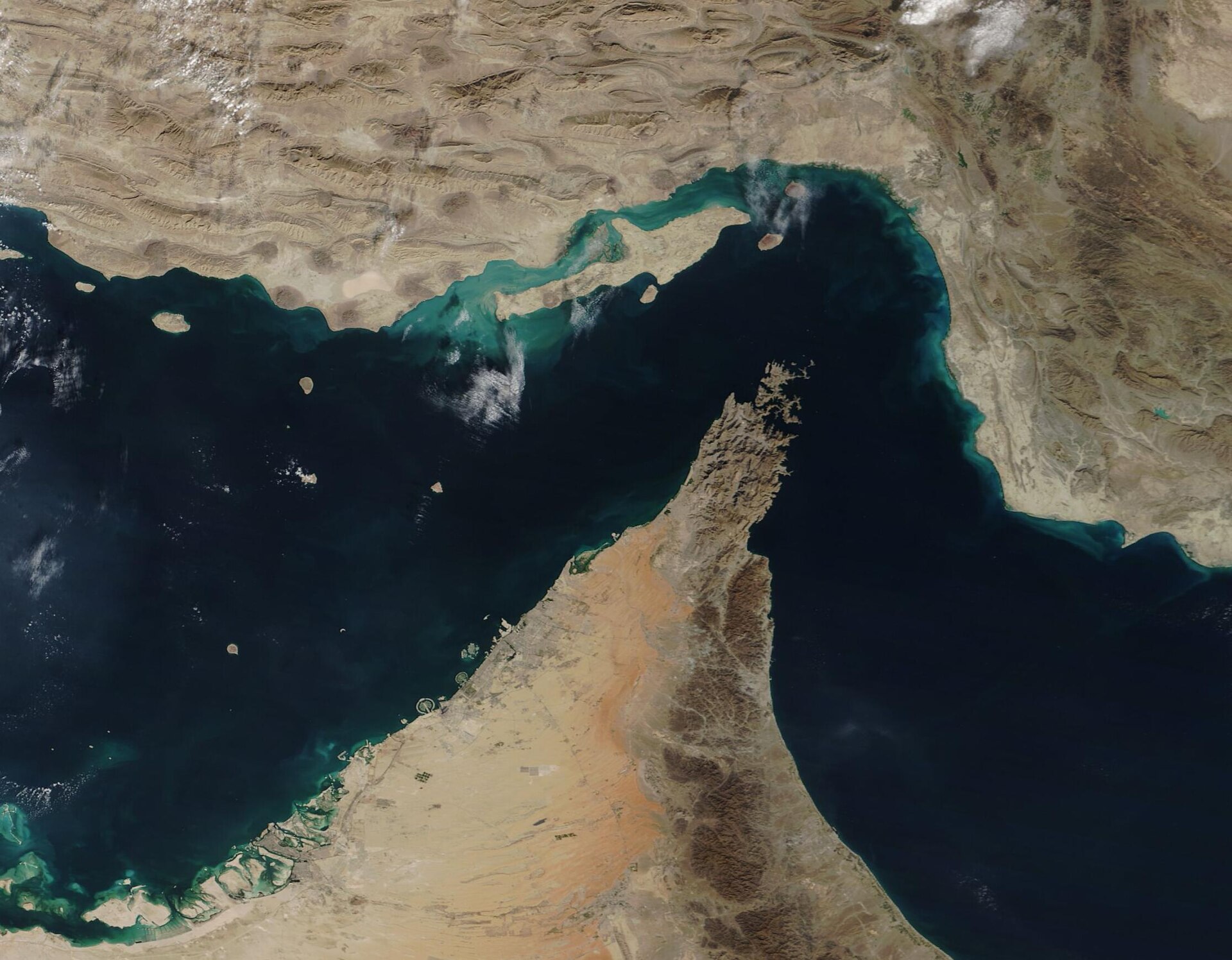
Until now, the maritime war had a geography that the industry could work with. The Strait of Hormuz was the kill zone. Dubai’s anchorage — the staging area where tankers waited to arrange war-risk cover and finalise routing before attempting a Hormuz transit — was the safe room. The Al Salmi attack collapsed that distinction. Iran has shown it can reach ships before they even begin the dangerous part of the voyage, and for an oil export chain that was already functioning on emergency bypass, the math moves from difficult to potentially unworkable.
Table of Contents
What Happened to the Al Salmi
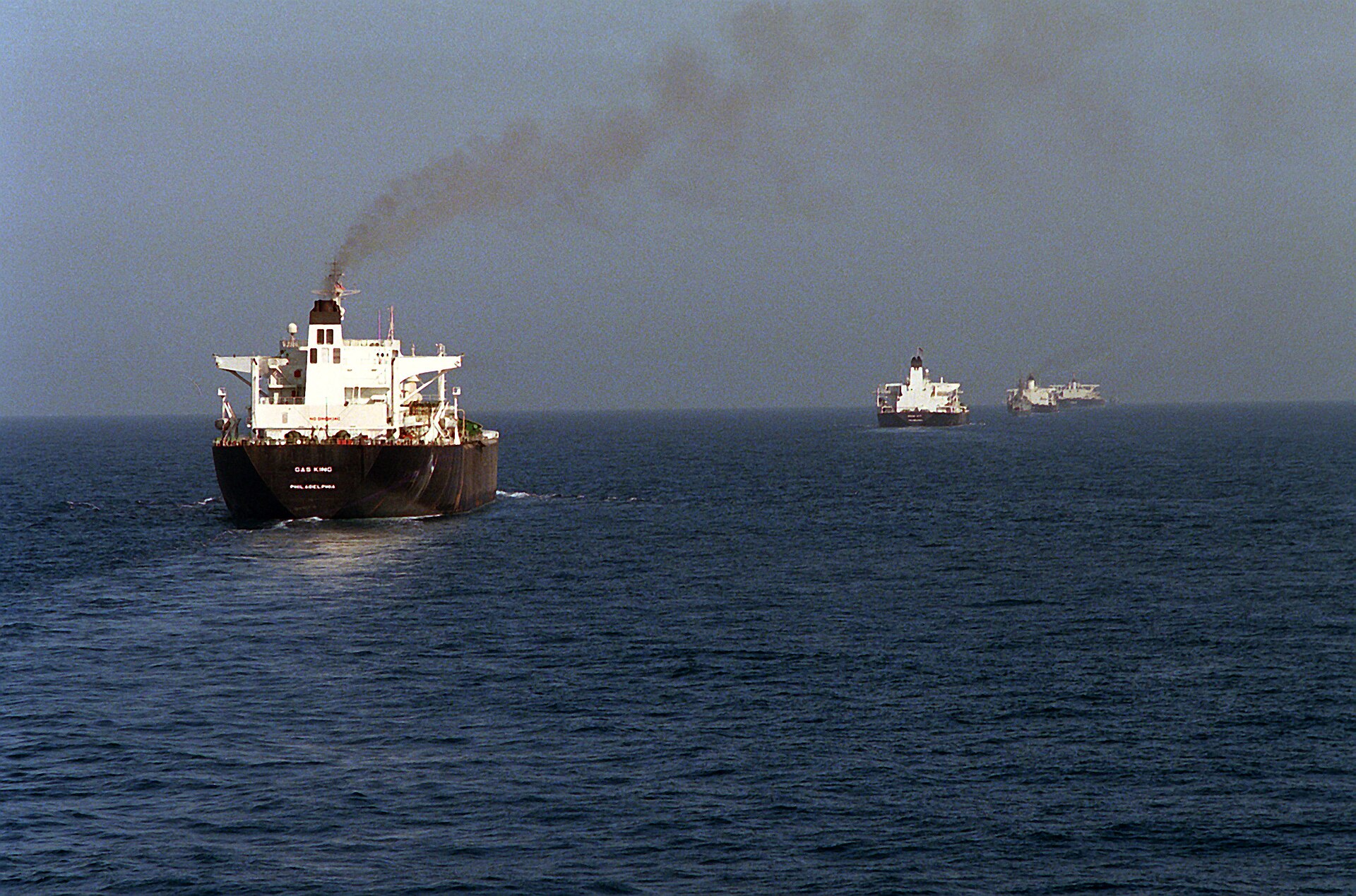
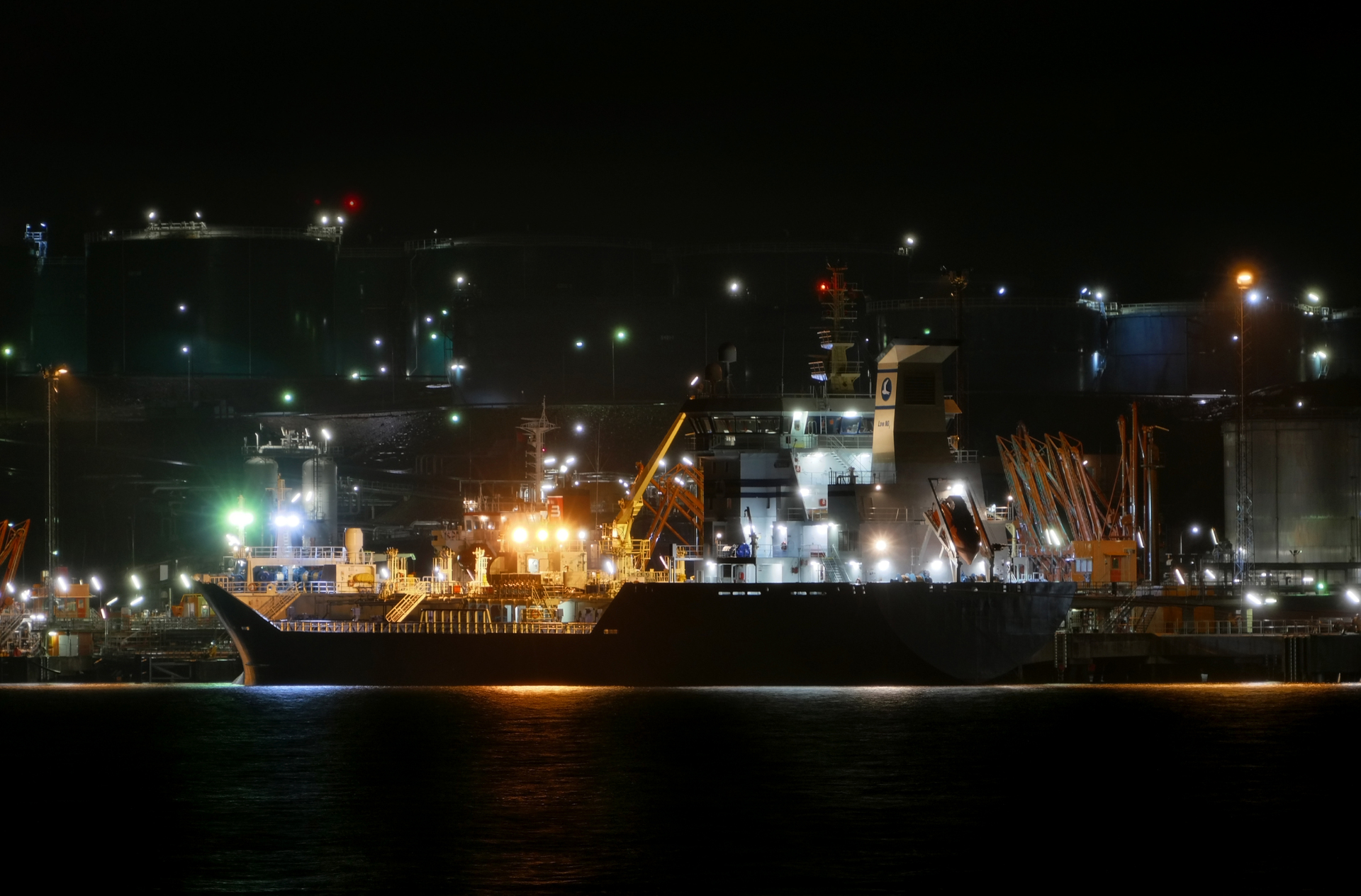
The Al Salmi is a Very Large Crude Carrier — 333 metres long, 60 metres wide, and carrying 319,660 deadweight tonnes at full load. She was built in 2011, flies the Kuwaiti flag, and is owned and operated by Kuwait Oil Tanker Company (KOTC), the shipping arm of Kuwait Petroleum Corporation. At approximately 00:10 local time on March 31, she was anchored 31 nautical miles northwest of Dubai, according to Bloomberg, loaded with 1.2 million barrels of Saudi crude and 800,000 barrels of Kuwaiti crude. Her destination was Qingdao, China. She never made it out of the anchorage.
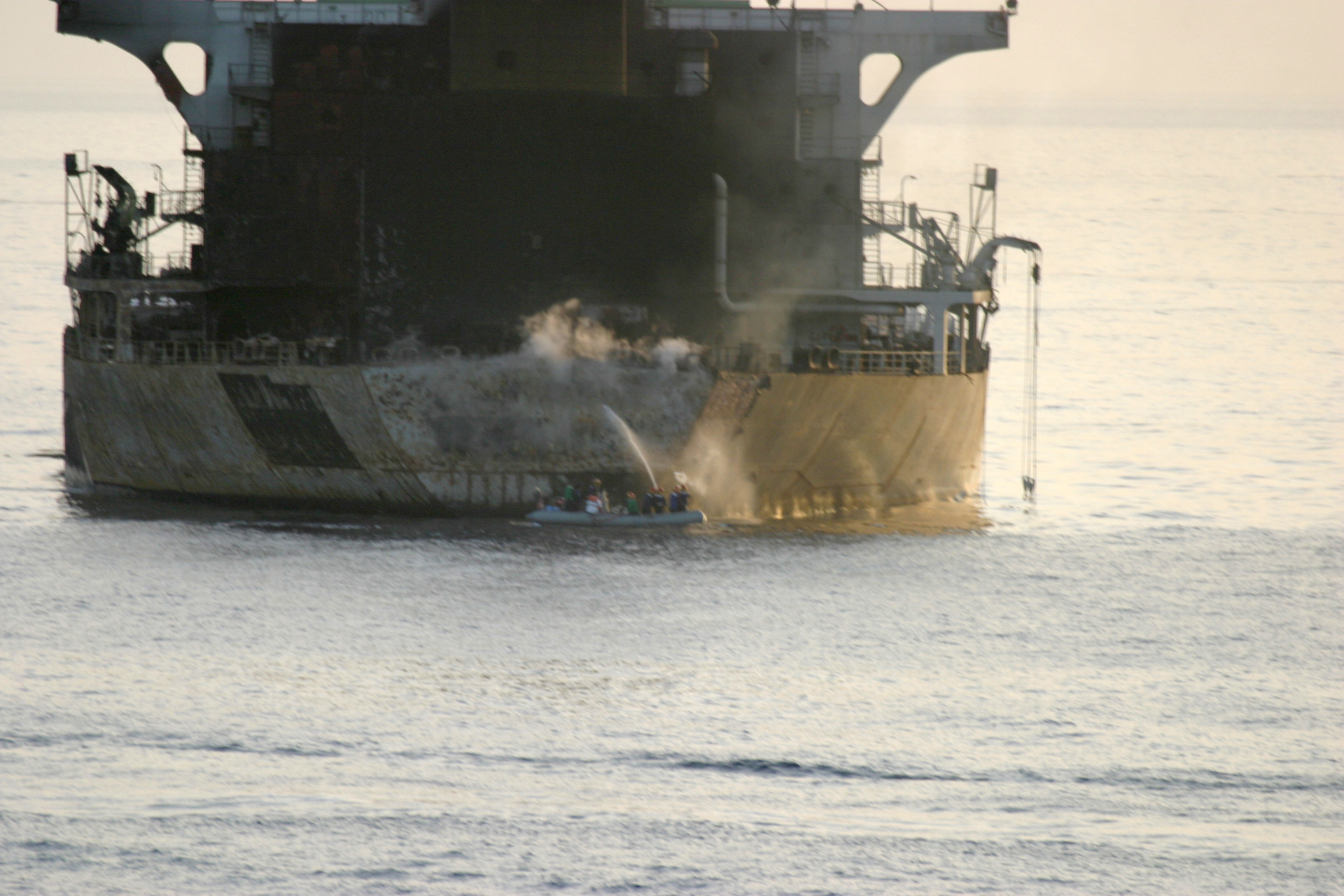
A security officer aboard reported that “an unknown projectile had struck their tanker on the starboard side,” according to The National. The drone — identified as Iranian by Kuwait Petroleum Corporation — punched through the hull and started a fire. KPC described the strike as a “direct, heinous Iranian attack” that caused “damage to the vessel’s hull and the outbreak of a fire onboard, with a potential oil spill in the surrounding waters.” Dubai Media Office confirmed the fire was extinguished after an overnight operation, with no oil leakage and all 24 crew members safe.
The cargo alone was worth an estimated $226 million at current Brent prices around $113.20 per barrel. The vessel itself is valued between $200 million and $300 million. Whether the Al Salmi can continue her voyage — or whether the hull damage forces her to offload two million barrels at an already overwhelmed Dubai anchorage — remained unclear as of Tuesday morning.
The attack did not happen in isolation. On the same night, Saudi Arabia intercepted 10 drones and 8 ballistic missiles, according to Al Jazeera. Qatar, Kuwait, and Bahrain all reported Iranian strikes. Four Asian nationals were injured by interception debris in Dubai’s Al Badaa neighbourhood, in the southern part of the city. Zein Basravi, Al Jazeera’s correspondent in Dubai, reported the atmosphere in the city: “These attacks seem to be getting closer, they’re getting louder… people certainly seem on high alert here again.”
The Middle East briefing 3,000+ readers start their day with.
One email. Every weekday morning. Free.
Why Does an Attack Inside the Anchorage Zone Change Everything?
Dubai’s anchorage is not just a parking spot for ships. It is the final link in the Gulf oil export chain — the place where tankers gather to secure war-risk insurance cover, coordinate with naval escorts, and finalise routing before attempting to exit through the Strait of Hormuz. Insurance Journal reported on March 31 that ships anchor off Dubai specifically to arrange the seven-day war-risk policies that underwriters now require for any Hormuz transit. Without the anchorage functioning as a safe staging area, the entire exit process breaks down.
Before this strike, the maritime war had operated within a set of unwritten boundaries that the shipping industry relied on. Iran targeted vessels in transit through Hormuz and in open Gulf waters. Iran’s two-tier maritime order at Hormuz imposed tolls and selective access on passing ships. But the anchorage zones at Dubai, Fujairah, and the other GCC ports remained untouched — they were the last pockets of notional safety that allowed the logistics of oil export to continue at all, even at massively reduced volumes.
The Al Salmi strike erased that line. A drone that can reach a ship at anchor 31 nautical miles from Dubai can reach any ship at anchor anywhere in the southern Gulf. The 400-plus vessels that were in the same anchorage zone when the drone hit are now sitting in an area that has been proven to be within Iran’s engagement envelope. For ships carrying crude oil, LNG, or refined products, the risk profile of simply waiting — engines off, at anchor, in what was supposed to be the safe zone — is now equivalent to the risk profile of transit.
The Insurance Collapse No One Priced In
The insurance industry had already been pushed to its limits by the Hormuz war. Within the first week of the conflict, five major Protection and Indemnity clubs — Gard, Skuld, NorthStandard, London P&I, and the American Club — cancelled war-risk coverage for the entire Persian Gulf, according to notices dated March 1 on their websites. New policies returned within days, but at staggering prices: war-risk premiums jumped from roughly 0.25% of a vessel’s hull value before the war to over 1%, according to Dylan Mortimer, an insurance broker at Marsh quoted by S&P Global. For a VLCC valued at $200-300 million, that translates to $2 million to $3 million per seven-day policy — and those policies only covered transit through Hormuz.
The anchorage was the one place that did not carry a war-risk premium, because no one expected it to be attacked. Ships could sit there for days or weeks, arranging their transit insurance, without incurring war-risk costs. The Al Salmi strike makes that assumption untenable. If underwriters now require war-risk cover for the anchorage itself — and the precedent for doing so was established at 00:10 on March 31 — the cost of simply waiting to export oil from the Gulf rises by millions of dollars per vessel, per week. The entire cost structure of Gulf crude exports, already pushed to extremes by Brent’s record monthly surge, gains another layer of expense before a single barrel moves toward Hormuz.
On March 14, an Iranian drone struck a Fujairah oil facility. Within one week, loadings from Fujairah — the UAE’s main bunkering and storage port on the Gulf of Oman side — dropped 66%, according to shipping data. That was a land-based facility, not a vessel. The Al Salmi attack targets the maritime equivalent: the staging infrastructure that oil export depends on. If anchorage utilisation at Dubai drops the way Fujairah loadings did, the bottleneck is no longer Hormuz — it is the inability to even reach Hormuz.
What Does Iran Say It Was Targeting?
Iran’s official position, maintained since the war began, is that its maritime operations target only American and Israeli military assets. The IRGC’s “True Promise 4” campaign, announced on March 1, described all strikes as hitting “American and Zionist targets.” PressTV, Iran’s state-run English-language outlet, reported that “three trespassing US and British oil tankers in the Persian Gulf and the Strait of Hormuz were struck” — characterising the vessels as military-adjacent by labelling them “trespassing.”
The Al Salmi does not fit that narrative at any point. She is a Kuwaiti-flagged civilian tanker, owned by a Kuwaiti state company, carrying Saudi and Kuwaiti crude oil to China — a country that Iran has been granting selective passage through Hormuz via bilateral negotiation since March 27, according to USNI News. The cargo was bound for Qingdao, not an American or Israeli port. The vessel has no military function, no Western flag, and no connection to the US-Israeli coalition that Iran claims to be fighting.
“Iran respects the Kingdom of Saudi Arabia and considers it a brotherly nation. Our operations are aimed at enemy aggressors who have no respect for Arabs or Iranians.”
Abbas Araghchi, Iranian Foreign Minister, via X, March 30
That statement from Iran’s foreign minister, posted hours before the Al Salmi was hit, sits in open contradiction with the attack itself. A Kuwaiti ship carrying Saudi crude is not an “enemy aggressor” by any reading of the term — unless Iran’s actual targeting criteria is not the flag or cargo of the vessel, but the fact that Kuwait and Saudi Arabia host American military forces. Ali Vaez of the International Crisis Group offered a blunter assessment of Iranian decision-making to Al Jazeera in March: “The only voice that truly matters is the IRGC’s,” he said, indicating that civilian officials like Araghchi lack the authority to constrain military operations.
Iranian President Masoud Pezeshkian’s earlier apology — “I personally apologise to neighbouring countries that were attacked by Iran… We didn’t intend to violate neighbouring countries’ [territory]. They are our brothers” — was reported by Al Jazeera on March 8. Three weeks later, the IRGC hit a Kuwaiti tanker inside UAE waters. The gap between what Tehran’s civilians say and what the IRGC does has never been wider, and the Al Salmi attack is the most visible evidence yet that Iran’s military operates on its own targeting logic, regardless of diplomatic statements.
From 1980s Transit War to 2026 Port War
The 1980s Tanker War between Iran and Iraq produced 451 attacks on commercial vessels over seven years, according to Lloyd’s of London — 283 by Iraq, 168 by Iran. Those attacks killed approximately 430 civilian sailors and damaged 546 ships. But they followed a consistent geographic pattern: both sides targeted vessels in transit, either in the shipping lanes of the central Gulf or near loading terminals like Iran’s Kharg Island. Neither Iran nor Iraq struck vessels inside the anchorage zones of neutral GCC states. The ports themselves were treated as off-limits, not by treaty but by the practical logic that attacking a neutral port would bring in new enemies.
The 2026 war has already exceeded the 1980s pace of attacks. As of March 12, the US Maritime Administration (MARAD) counted 21 confirmed attacks on merchant ships — in one month rather than seven years. The Al Salmi adds to that total, but the more relevant comparison is not the volume of attacks but their location.
In the 1980s, a ship was at risk during transit and safe at anchor. In 2026, with Hormuz effectively closed and tanker traffic collapsed from 138-153 vessels per day to as few as three commercial transits, the industry adapted by treating the anchorage as the one remaining functional node. The Al Salmi strike turned that node into another attack surface.
The escalation is not just geographic — it is temporal. On March 21, a bulk carrier had a near-miss near the Dubai anchorage, according to Insurance Journal. Ten days later, the Al Salmi was hit. The pattern suggests that Iran is testing and expanding its maritime engagement zone methodically, moving from open-water transits to near-port approaches to inside the anchorage itself.
If the pattern continues, the next step is an attack on a vessel inside port limits proper — at a berth or loading terminal, not merely at anchor. Dr. Sultan Al Jaber, CEO of ADNOC and UAE industry minister, described Iran’s attacks on Gulf energy infrastructure as “global economic warfare” in a March 19 statement reported by The National, and called the Hormuz closure “economic terrorism against every nation.”
How Does This Affect Saudi and Kuwaiti Oil Exports?
The Al Salmi was carrying 60% Saudi crude and 40% Kuwaiti crude — a common co-loading arrangement that reflects how the two countries’ export operations intertwine in the Gulf. Saudi Arabia has been running its East-West pipeline at 7 million barrels per day to bypass Hormuz entirely, routing crude to the Red Sea port of Yanbu. But Yanbu’s port ceiling caps that pipeline at roughly half its nameplate capacity, and not all Saudi crude grades can flow through the pipeline. Some cargoes still need to exit through the Gulf, which means they need the Dubai anchorage.
Kuwait has no pipeline bypass at all. Every barrel of Kuwaiti crude destined for export passes through Gulf waters and, until Hormuz reopens, depends on the anchorage-to-transit process that the Al Salmi was attempting when it was hit. The 800,000 barrels of Kuwaiti crude aboard the Al Salmi represent a meaningful share of Kuwait’s daily export capacity, and the loss — even if temporary — compounds a situation in which Aramco is already commanding a $40 premium per barrel because so little Gulf crude is reaching the market.
Oil prices reacted accordingly. WTI surged 3.7% to $106.70 per barrel on the news, reaching its highest level since July 2022, according to market data. Brent rose approximately 2% to $115.35, and for the month of March is on course for a 59% surge — the largest single-month increase on record, according to Bloomberg.
In the United States, gasoline prices crossed $4 per gallon on March 31, according to CBS News. The Al Salmi strike did not cause these prices by itself, but it removed one of the last reasons for anyone to believe the Gulf export situation might stabilise before a ceasefire.
The fire on the Al Salmi was contained without an oil spill, which counts as the best possible outcome for a drone hitting a ship loaded with two million barrels of crude. But the next strike might not be as clean. A VLCC measuring 333 metres carries enough oil to create an environmental catastrophe in an enclosed anchorage shared by hundreds of other vessels. The physical risk — dozens of fully laden tankers sitting in close proximity in what is now a confirmed strike zone — may drive shipping companies to avoid the anchorage entirely, collapsing the last viable route for Gulf crude that cannot reach a pipeline. This attack also reflects the broader GCC targeting escalation — Iran’s simultaneous pressure on Saudi, UAE, and Kuwaiti assets is draining not just oil logistics but the missile shield that protects the infrastructure behind it.
Frequently Asked Questions
Has Iran ever attacked a vessel inside GCC port waters before?
No. During the 1980s Tanker War, all 168 Iranian attacks on merchant vessels occurred in open-water transit lanes or near Iran’s own coastal infrastructure — never inside the anchorage zones or port waters of neutral GCC states. The May 2019 Fujairah incident, in which four vessels were damaged by limpet mines off the UAE coast, occurred below the threshold of open warfare and was not attributed to Iran’s conventional military. The Al Salmi strike on March 31, 2026 is the first confirmed Iranian drone attack on a vessel inside a GCC port anchorage during active hostilities. The following day, Iran escalated further by putting a cruise missile into a QatarEnergy tanker inside Qatari territorial waters — extending the threat from anchorage zones to sovereign waters of a GCC state.
Can ships bypass the Dubai anchorage entirely?
In theory, a vessel could transit Hormuz without staging at the Dubai anchorage, but the practical obstacles are severe. War-risk insurers require vessels to hold active seven-day policies before entering Hormuz, and those policies typically require coordination that happens at anchorage. Naval escort arrangements — where available — are also organised from staging areas. A ship attempting a solo run through Hormuz without pre-arranged insurance, escort, or routing data would be uninsured, unprotected, and operationally blind. Some Chinese and Indian vessels have reportedly arranged direct bilateral transit with Iran since March 27, but this route is not available to Saudi- or Kuwaiti-flagged ships or vessels carrying their crude.
What is the risk of an oil spill from a VLCC struck at anchorage?
A fully laden VLCC like the Al Salmi carries approximately two million barrels — roughly 318,000 cubic metres — of crude oil. A major hull breach at anchorage, surrounded by 400 other vessels in relatively shallow Gulf waters, would create containment and cleanup challenges far exceeding any open-water spill. The 1991 Gulf War oil spill, the largest in history at an estimated 4-8 million barrels, occurred in open water. An anchorage spill would affect port infrastructure, desalination intakes, and neighbouring vessels simultaneously. Dubai’s response teams contained the Al Salmi fire without a spill, but the margin between containment and catastrophe was measured in hours.
How much does war-risk insurance cost per Gulf voyage now?
Before the war, war-risk premiums for Persian Gulf transit ran at approximately 0.25% of a vessel’s insured hull value. By early March, rates had surged to 1-1.5%, according to Marsh broker Dylan Mortimer quoted by S&P Global. For a VLCC insured at $250 million, that translates to approximately $2.5 million to $3.75 million for a single seven-day policy — compared to roughly $625,000 before the conflict. These policies currently cover only the Hormuz transit corridor. If underwriters extend war-risk requirements to the Dubai anchorage zone following the Al Salmi attack, total per-voyage insurance costs could double, adding another $2-4 million before a ship even attempts the strait.
What happened to the Al Salmi’s cargo?
As of Tuesday morning, the full cargo remained aboard the vessel, and KPC confirmed no oil leakage. The Al Salmi’s ability to continue her voyage depends on a classification survey to assess the extent of structural compromise to the starboard hull — a survey that had not yet been announced. If the vessel is declared unseaworthy for the Qingdao run, offloading two million barrels at the Dubai anchorage would strain storage infrastructure already overwhelmed by the Hormuz disruption, and the crude would need to be reloaded onto another VLCC — assuming one is available and willing to enter the anchorage.