
No destination on earth carries the weight that Saudi Arabia carries for the world’s 1.8 billion Muslims. This is the birthplace of Islam, the land of the two holy mosques, the destination of Hajj and Umrah, and a country where every airport, shopping mall, and roadside stop pauses five times a day for prayer. For Muslim travellers, Saudi Arabia is not simply a country to visit — it is a spiritual obligation, a homecoming, and an experience unlike anywhere else. This guide is your complete resource for planning a Muslim-friendly trip to the Kingdom, whether you are making the pilgrimage to Mecca, exploring the Prophet’s city of Medina, or embarking on a broader Saudi Arabia journey that takes in the country’s extraordinary Islamic heritage from Jeddah to AlUla.
Best Time to Visit: October to March (cool, manageable temperatures; avoid July–August heat)
Getting There: Direct flights to Riyadh (RUH), Jeddah (JED), or Medina (MED) from most Muslim-majority countries and major global hubs
Visa Required: Yes — tourist e-visa for most nationalities; Hajj requires a separate Hajj visa
Budget: From $60–$100/day budget to $300+/day luxury; pilgrimage packages vary widely
Must-See: Masjid al-Haram (Mecca), Masjid al-Nabawi (Medina), Al-Balad (Jeddah), Dir’iyah (Riyadh), Hegra (AlUla)
Avoid: Visiting without accommodation booked during peak Hajj season; underestimating Ramadan prayer-time closures
Why Saudi Arabia Is the World’s Premier Muslim Destination
Saudi Arabia is the only country on earth where Islam is not merely practised — it is woven into every aspect of the state, the built environment, and daily life. The entire country operates on a halal basis: every restaurant serves only halal food, alcohol is not available anywhere in the Kingdom, and prayer is observed publicly and punctually from Fajr before dawn to Isha after nightfall.
For Muslim travellers, this creates a profoundly different travel experience compared to any other destination. You will never need to search for halal food. You will never miss a prayer because there is nowhere to pray. You will not feel your faith is a minority concern — it is the majority reality. Whether you are performing Umrah, visiting Islamic heritage sites, or simply exploring a modernising Gulf capital, Saudi Arabia offers a baseline of Islamic observance that Muslim travellers find deeply reassuring and spiritually nourishing.
Saudi Arabia welcomed 122 million visitors in 2025, spending $81 billion — making it the fastest-growing major tourism destination on earth. The Kingdom’s Vision 2030 programme has opened it substantially to international tourism, simplified the visa process, and invested heavily in cultural and heritage tourism sites that complement the traditional pilgrimage circuit.
Mecca: The Heart of the Islamic World
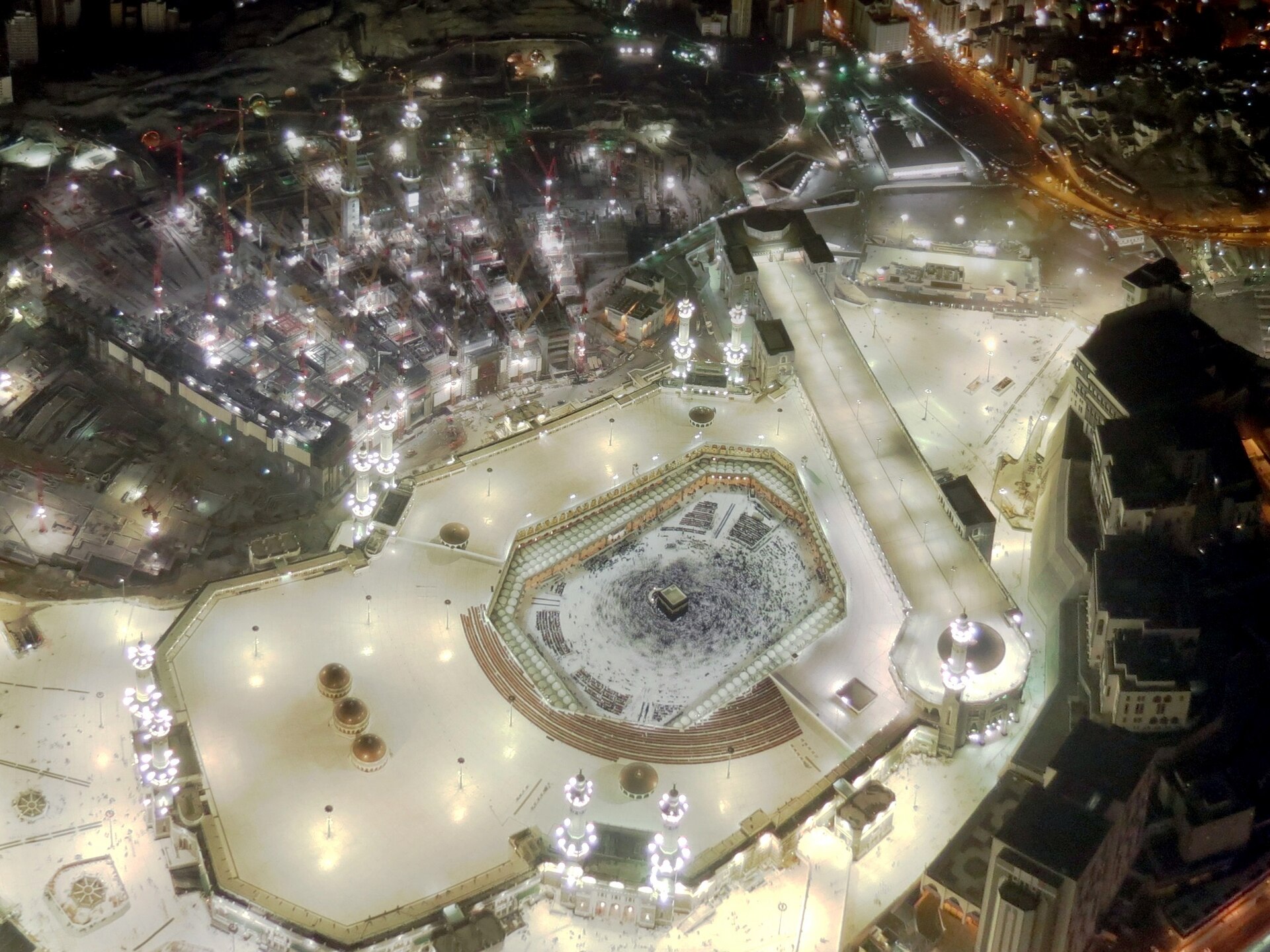
Mecca is the most sacred city in Islam and the destination of Hajj, one of the Five Pillars of Islam. At its centre stands Masjid al-Haram, the Grand Mosque, which contains the Kaaba — the cubic structure towards which all Muslims face in prayer. The mosque is the largest in the world, with a capacity exceeding two million worshippers during Hajj, and it has been expanded continuously since the 1950s.
Mecca is open to Muslim visitors only. Non-Muslims are not permitted to enter the city. If you are a Muslim travelling to Mecca, you will be asked to confirm your faith at checkpoints on the approaches to the city.
What to Do in Mecca Beyond the Grand Mosque
- Jabal al-Nour (Cave of Hira): The mountain where the Prophet Muhammad received the first revelation of the Quran. A 1.5 km climb with 1,600 steps — start before dawn to avoid the heat.
- Jabal Thawr: Where the Prophet sheltered during the Hijra migration to Medina. Less visited than Jabal al-Nour but deeply significant.
- Mina, Muzdalifa and Arafat: The three plains of Hajj, each with profound significance in Islamic history and ritual.
- Zamzam Well: Inside Masjid al-Haram, the sacred well whose water Muslims believe was revealed by God for Hagar and Ishmael. Water is freely available throughout the mosque.
- Masjid al-Jinn and Masjid al-Bayah: Smaller mosques in Mecca with significant historical associations.
- Masjid al-Nabawi: Visit the Rawdah (the area between the Prophet’s tomb and his minbar), considered one of the gardens of Paradise. Entry is managed by timed ticketing — book on the Nusuk app.
- Masjid Quba: The first mosque in Islam, where the Prophet prayed on his arrival in Medina. Praying two units (raka’at) here is equivalent in reward to performing Umrah, according to hadith.
- Masjid al-Qiblatayn: The Mosque of the Two Qiblas, where the direction of prayer changed mid-salah from Jerusalem to Mecca.
- Jannat al-Baqi: The historic cemetery adjacent to Masjid al-Nabawi containing the graves of the Prophet’s family and companions.
- Mount Uhud: Site of the Battle of Uhud (625 CE), containing the graves of the martyrs including the Prophet’s uncle Hamza ibn Abd al-Muttalib.
- Kabsa: The national dish — spiced rice with lamb, chicken, or camel, served on a communal platter. Found from street restaurants to five-star hotel buffets.
- Mandi: Slow-roasted meat over rice, common across Riyadh and the Eastern Province.
- Mutabbaq: Stuffed savoury pancake popular in Jeddah and the Hejaz region.
- Saleeg: White rice cooked in broth with milk — a Hejazi speciality often served with chicken.
- Jareesh: Crushed wheat stew — a traditional Najdi dish, earthy and filling.
- International cuisine: Riyadh and Jeddah have comprehensive international restaurant scenes — Lebanese, Egyptian, Pakistani, Indian, Turkish, and Southeast Asian cuisines are all well represented, all halal.
- Every shopping mall has dedicated, well-maintained prayer rooms with separate sections for men and women
- All petrol stations have prayer rooms
- Airports have prayer halls in all terminals
- Most restaurants have small prayer areas
- Mosques are present every few hundred metres in all urban areas
- Women: Full abaya and hijab are required. Hair must be completely covered. Shoes are removed at the entrance.
- Men: Clean, modest clothing is required. Shorts should reach below the knee. Many mosques request men to cover their heads with a kufi or similar.
- Everyone: Ensure clothing is clean and free of images or logos. Lower your voice inside the mosque. Mobile phones should be silenced.
- Ihram (for Mecca): When entering Mecca for Umrah or Hajj, men must be in ihram — two sheets of white unstitched cloth. The miqat points (boundaries outside Mecca where ihram is entered) are clearly marked on roads and at airports.
- Restaurants are closed from Fajr to Maghrib (approximately 5am to 6:30pm in winter months). Eating, drinking, and smoking in public during daylight hours is prohibited by law, with fines up to SAR 500 (~$133).
- Business hours shorten: government offices operate 9am–2pm; private businesses typically 10am–4pm.
- Evenings are festive: shopping malls extend hours until 1–2am, iftar tents appear in souks and public spaces, and the social atmosphere is exceptional.
- Taraweeh prayers are held every night in mosques after Isha — in Mecca and Medina, these are broadcast and attract enormous crowds. Attending Taraweeh at Masjid al-Haram or Masjid al-Nabawi during Ramadan is considered a once-in-a-lifetime spiritual experience.
- Laylat al-Qadr (the Night of Power, in the final 10 nights of Ramadan) sees the largest gatherings at both mosques. Expect extreme crowds and plan accommodation and transport well in advance.
- Download the Nusuk app: Saudi Arabia’s official pilgrimage and tourism platform. Essential for booking timed entry to the Rawdah in Masjid al-Nabawi, managing Hajj registration, and accessing official prayer time schedules.
- Zamzam water: You can bring up to 5 litres of Zamzam water from the mosque. Sealed Zamzam water bottles are also available in Jeddah and Medina for purchase.
- Currency: Saudi Riyal (SAR). 1 USD ≈ 3.75 SAR (fixed peg). ATMs and card payments are widely accepted.
- Photography in mosques: Taking photos inside mosques — including Masjid al-Haram — is generally permitted in non-restricted areas, but be discreet and respectful, particularly around the Kaaba and women’s sections.
- SIM cards: Available at airports on arrival. Stc, Mobily, and Zain offer visitor SIMs with good 5G coverage. Essential for navigation, prayer time apps, and ride-hailing.
- Health: Meningococcal meningitis vaccination (ACWY) is mandatory for pilgrims performing Hajj or Umrah. Many countries also require proof of vaccination for Saudi entry.
- Friday (Jumu’ah): Friday noon prayer is the most significant prayer of the week. In conservative areas, most businesses close from approximately 11:30am to 2pm. Plan accordingly.
- Saudi Arabia Travel Guide 2026 — The complete guide to visiting the Kingdom
- Hajj 2026 Guide — Dates, registration, costs, and everything you need to know
- Umrah for First Timers — Step-by-step guide to performing Umrah
- Mecca for Muslim Travellers — The complete Hajj and Umrah city guide
- Medina Travel Guide — The Prophet’s city for Muslim visitors
- Islamic Heritage Sites in Saudi Arabia — Beyond Mecca and Medina
- Saudi Arabia Visa Guide — Every visa type explained
Practical Note: Book accommodation in Mecca as early as possible — the best hotels near Masjid al-Haram book up many months in advance, especially for Ramadan and the Hajj season. The Abraj Al-Bait towers complex adjacent to the mosque houses several five-star hotels with direct Haram views.
Medina: The City of the Prophet
Two hundred kilometres north of Mecca, Medina is the second holiest city in Islam and the home of Masjid al-Nabawi — the Prophet’s Mosque, built by the Prophet Muhammad himself after the Hijra in 622 CE. The mosque contains the tomb of the Prophet, and visiting it (ziyarat) is considered among the most spiritually significant acts a Muslim can perform.
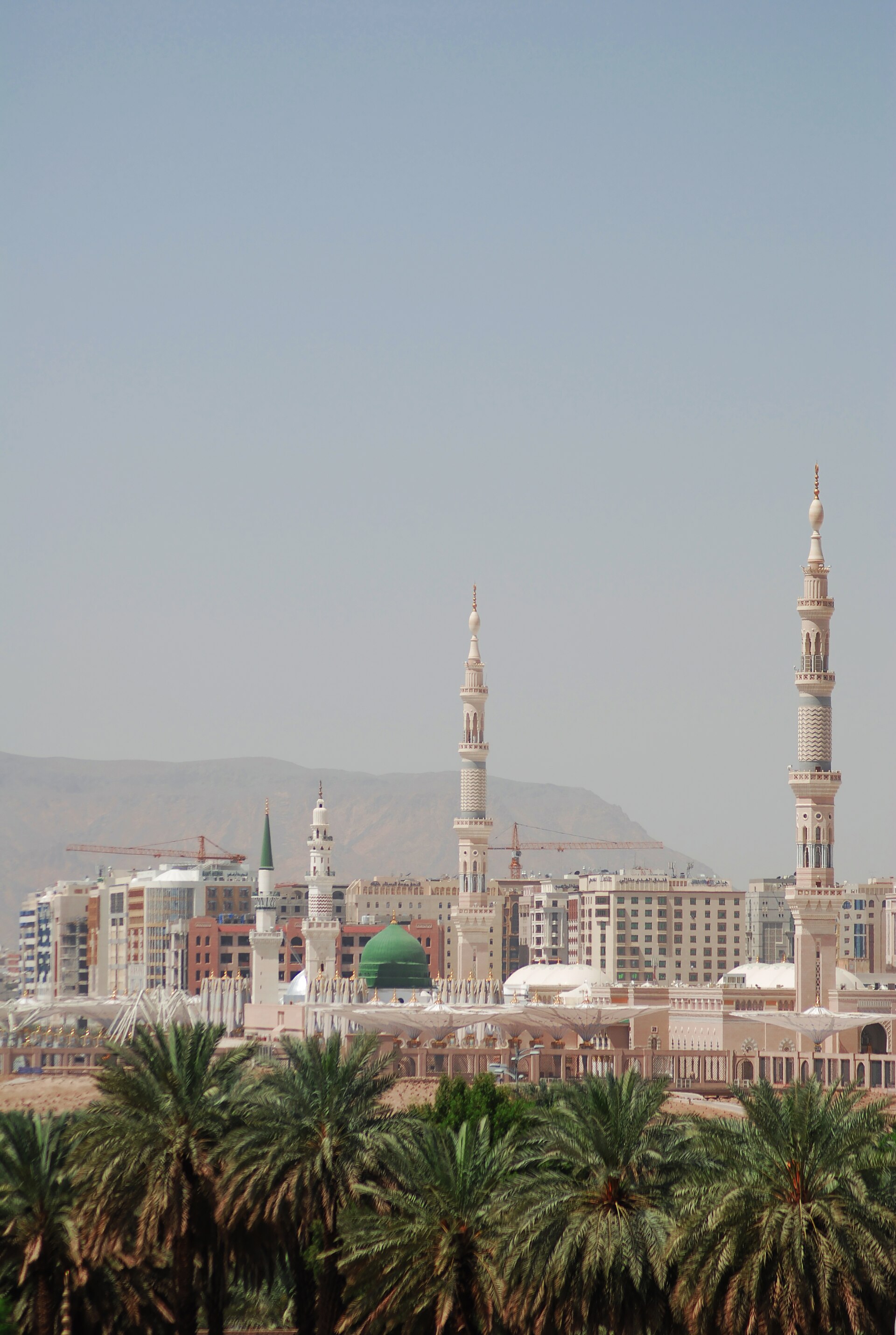
Unlike Mecca, Medina is open to non-Muslim visitors in most areas — though non-Muslims may not enter Masjid al-Nabawi itself. For Muslim travellers, the full Medina guide covers every site worth visiting, from the Quba Mosque (the first mosque ever built in Islam) to the battlefields of Badr and Uhud.
Key Ziyarat Sites in Medina
Umrah: Performing the Lesser Pilgrimage
Umrah — often called the lesser pilgrimage — can be performed at any time of year and takes a few hours to complete. It involves entering a state of ihram (ritual purity), performing tawaf (circling the Kaaba seven times anticlockwise), walking between Safa and Marwa seven times, and cutting or shaving the hair.
Since 2021, Muslims from most countries can perform Umrah on a standard tourist e-visa — no separate Umrah visa is required. See the full Umrah guide for first timers for step-by-step instructions, and the Umrah cost breakdown for a full budget guide. If you are planning what to bring, the Umrah packing list covers essentials for both men and women.
Important: While Umrah can be performed on a tourist visa, Hajj requires a separate Hajj visa. You cannot perform Hajj on a tourist visa. Hajj registration must be completed through the official Nusuk Hajj platform, and quotas apply by country. See the full Hajj 2026 guide for registration, costs, and what to expect.
Visa and Entry for Muslim Travellers
Saudi Arabia offers an e-visa valid for one year with multiple entries, allowing stays of up to 90 days. Citizens of 66+ eligible countries can apply online through the Visit Saudi portal in minutes. The tourist visa allows you to perform Umrah, visit Islamic heritage sites, and travel freely across the Kingdom — with the exception of performing Hajj, which requires a separate Hajj visa.
Female Muslim travellers no longer require a mahram (male guardian) to travel to Saudi Arabia or to perform Umrah — this rule was abolished in 2021. Women may travel independently, book their own accommodation, and move freely throughout the country.
Full details on eligibility, costs, and application: Saudi Arabia Visa Guide 2026.
Islamic Heritage Sites Beyond Mecca and Medina
Saudi Arabia’s Islamic heritage extends far beyond the two holy cities. The country contains some of the most significant sites in early Islamic history, from the battlefields of Badr and Uhud to the pre-Islamic lands mentioned in the Quran. A growing number of Muslim travellers are combining pilgrimage with cultural tourism, exploring sites that shed light on the origins and expansion of Islam.
Al-Balad, Jeddah — UNESCO World Heritage Site
Jeddah’s historic district is one of the most important Islamic heritage sites in Arabia. For over a thousand years, Al-Balad was the gateway through which pilgrims passed en route to Mecca, and its mosques, merchant houses, and coral-stone architecture reflect centuries of Islamic civilization. Al-Shafi’i Mosque, one of the oldest in Jeddah, and the stunning coral-and-timber merchant houses of Beit Naseef and Beit Baashan are among the highlights. The Jeddah travel guide has full coverage of the historic quarter.
Dir’iyah, Riyadh — Cradle of the Saudi State
The At-Turaif district of Dir’iyah, a UNESCO World Heritage Site northwest of Riyadh, was the first capital of the Saudi dynasty in the 15th century and the birthplace of the alliance between Mohammed ibn Saud and the scholar Mohammed ibn Abd al-Wahhab that shaped modern Saudi Arabia. The site has been extensively restored and offers a rich window into Najdi Islamic architecture and history. The Riyadh travel guide covers Dir’iyah in detail.
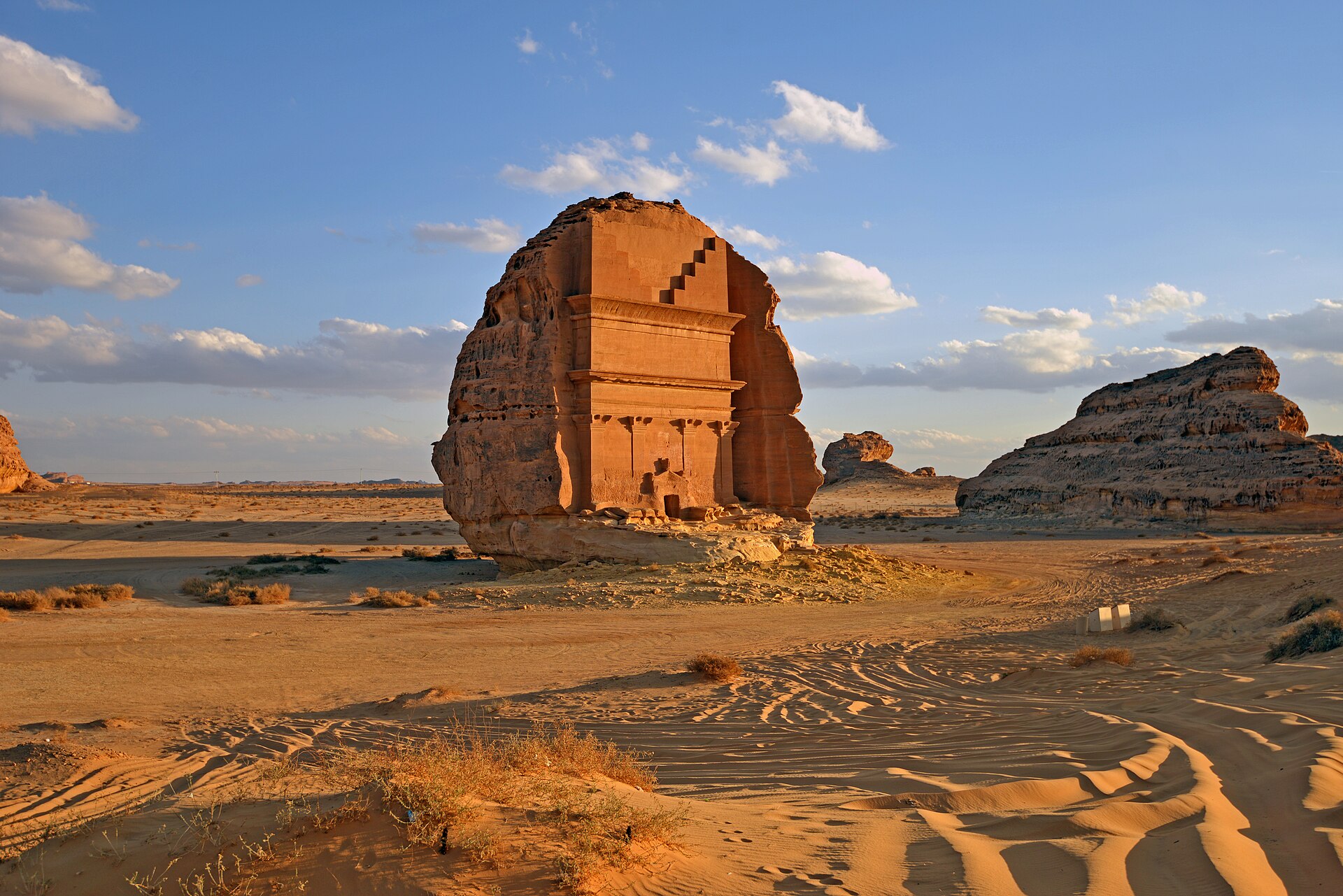
Hegra (Madain Saleh), AlUla — Saudi Arabia’s First UNESCO Site
Located in the AlUla region of northwest Saudi Arabia, Hegra is the country’s first UNESCO World Heritage Site. While it is primarily a Nabataean archaeological site, it also appears in Islamic tradition — the Quran mentions the Thamud people of the region in several suras. The extraordinary rock-cut tombs and desert landscape make Hegra one of the most memorable destinations in the Kingdom. See the AlUla travel guide for more.
Taif — City of the Prophet’s Trial
Perched at 1,879 metres in the Hejaz Mountains, Taif is where the Prophet Muhammad experienced one of the most difficult moments of his mission — rejected and pelted with stones when he sought support from the tribe of Thaqif. The city contains several significant mosques including Masjid Abdullah ibn Abbas (the Prophet’s cousin) and is a pleasant hill station escape from the summer heat.
The Wider Ziyarat Circuit
For Muslim travellers interested in the full map of sacred sites, the Saudi Arabia ziyarat guide maps over 30 sacred sites across the Kingdom, including companion graves, battlefield sites, and historically significant mosques. The Islamic heritage sites guide offers a deeper dive into the archaeology and history of the pre-Islamic and early Islamic periods.
Halal Food in Saudi Arabia
Saudi Arabia is, in the most literal sense, a 100% halal destination. Every restaurant, food stall, and supermarket in the Kingdom serves and sells only halal food — no separate certification search is needed, no questions to ask the waiter, no alternatives to arrange. Pork is not available anywhere. Alcohol is completely prohibited and unavailable.
Saudi cuisine is deeply varied and reflects the country’s regional diversity:
Ramadan Tip: During Ramadan, restaurants are closed in the daytime. Hotels serve suhoor (pre-dawn meal) and iftar (break-fast at sunset). The evenings during Ramadan are festive and social — souks, food markets, and restaurants come alive after Maghrib prayer.
Prayer in Saudi Arabia: What to Expect
Saudi Arabia is one of the few countries where prayer times genuinely shape the daily schedule. Five times a day, the adhan (call to prayer) rings out from mosque minarets across every city, town, and village. For Muslim travellers, this rhythm is one of the most distinctive and spiritually immersive aspects of visiting the Kingdom.
Prayer Times and Business Hours
Shops and restaurants in Saudi Arabia — particularly in traditional areas — pause during prayer times, typically for 20–30 minutes per prayer. Major shopping malls and large retail chains have largely moved away from closures, but in older commercial areas, souks, and smaller towns, closures remain common. Plan shopping and restaurant visits around prayer times, particularly Dhuhr (midday) and Asr (afternoon).
Prayer times vary by city and season. In Riyadh, Fajr is approximately 4:50–5:15am depending on the season, Dhuhr around 12:15–12:30pm, Asr around 3:30–3:45pm, Maghrib at sunset, and Isha about 1.5 hours after Maghrib.
Prayer Facilities
Prayer facilities are ubiquitous throughout Saudi Arabia:
Most prayer rooms provide prayer mats, but bringing your own compact travel mat is always appreciated for outdoor use. Wudu (ablution) facilities are available at all mosques and most prayer rooms.
Dress Code and Mosque Etiquette for Muslim Travellers
Saudi Arabia’s public dress code has relaxed significantly since 2019. Foreign women are no longer required to wear an abaya in public spaces, though modesty remains the cultural and legal expectation — shoulders, chest, and knees should be covered in all public settings.
For visiting mosques — including Masjid al-Haram and Masjid al-Nabawi — the rules are stricter:
Tip: Pack a lightweight, full-length abaya or cover-up in your carry-on luggage — you may need it immediately on arrival if your first stop is a mosque.
Travelling to Saudi Arabia During Ramadan
Ramadan is one of the most spiritually profound times to visit Saudi Arabia — particularly Mecca and Medina — but it requires specific planning. During Ramadan, the holy cities receive millions of visitors, accommodation prices peak, and the daily schedule shifts dramatically.
What Changes During Ramadan
Ramadan 2026
Ramadan 2026 began on approximately 17 February 2026 and ended around 18 March 2026, followed by Eid al-Fitr. For 2027 planning, Ramadan is expected to begin around 7 February. Always confirm exact dates through the official Saudi lunar calendar authority.
Accommodation for Muslim Travellers
Saudi Arabia offers accommodation across every budget, and virtually every hotel in the Kingdom is Muslim-friendly by default — halal food, prayer facilities, and alcohol-free premises are standard.
Accommodation in Mecca
The closest hotels to Masjid al-Haram are in the Abraj Al-Bait towers complex — the Fairmont Makkah, Swissotel Makkah, Hilton Suites, Mövenpick, and others offer direct Haram views and walking access to the mosque. These sell out months in advance. Budget options in Aziziyah, 2–4km from the mosque, are served by frequent shuttles.
Accommodation in Medina
The area directly adjacent to Masjid al-Nabawi (the Central Area) contains dozens of hotels ranging from budget to luxury. Anabres, Movenpick Hotel Madinah, and Al Noor Al Aqeeq are consistently well-reviewed. The further from the mosque, the lower the prices — the Bab Al Salam area offers reasonable mid-range options.
Accommodation in Riyadh and Jeddah
Both cities have extensive international hotel chains (Marriott, Hilton, Hyatt, InterContinental) alongside local Saudi hospitality groups. All are halal by default. Riyadh and Jeddah have grown significantly as destinations in their own right under Vision 2030, with new boutique hotels, heritage stays in Al-Balad (Jeddah), and resort developments across the Kingdom.
Getting to Saudi Arabia
Saudi Arabia is extremely well-connected internationally. Riyadh’s King Khalid International Airport (RUH) and Jeddah’s King Abdulaziz International Airport (JED) receive direct flights from most Muslim-majority countries and major global hubs including London, New York, Paris, Kuala Lumpur, Jakarta, Istanbul, Cairo, and Karachi. Medina’s Prince Mohammad Bin Abdulaziz International Airport (MED) receives direct flights from many countries specifically during Umrah and Hajj seasons.
Saudi Arabia’s national carrier, Saudia, and low-cost carrier flynas serve extensive international routes. Riyadh Air, a new Saudi airline, launched in 2024 and is rapidly expanding its network.
For visa requirements, eligibility by nationality, and application instructions: Saudi Arabia Visa Guide 2026.
Getting Around Saudi Arabia
Riyadh has a modern metro system (6 lines, opened 2024) connecting major districts including the airport, Al Diriyah, and the city centre. Taxis and ride-hailing apps (Uber and Careem) are widely available in all major cities. Car hire is straightforward and recommended for exploring regions like AlUla, Asir, and the Eastern Province.
The Haramain High Speed Railway connects Mecca, Jeddah, and Medina — reducing the Mecca–Medina journey to just over two hours. Trains run frequently and tickets can be booked at stations or via the Haramain app. This is the most convenient way to travel between the holy cities.
Best Time to Visit Saudi Arabia for Muslim Travellers
| Season | Months | Conditions | Best For |
|---|---|---|---|
| Winter | Nov–Feb | 15–25°C in Riyadh; 20–28°C in Jeddah; ideal | All destinations, outdoor heritage sites, Umrah |
| Spring | Mar–May | Warming; 25–35°C by May | AlUla, Asir highlands, Riyadh |
| Summer | Jun–Aug | 38–48°C on the plains; humid in Jeddah | Asir highlands (Abha, Taif — 20–25°C); avoid coastal cities |
| Autumn | Sep–Oct | Cooling; 28–35°C | Transition; good for Umrah, Riyadh |
| Ramadan | Varies | Spiritual peak; extraordinary atmosphere in holy cities | Mecca, Medina — book months in advance |
| Hajj | Varies (Dhul Hijjah) | Busiest period; enormous crowds in Mecca | Hajj pilgrims only; tourist access to Mecca is very limited |