
Saudi Arabia is home to some of the largest and most spectacular sand deserts on Earth, making it one of the world’s premier destinations for sandboarding. From the iron-oxide-red dunes of Ad Dahna just outside Riyadh to the towering mega-dunes of the Rub’ al-Khali (Empty Quarter), the Kingdom offers terrain that ranges from gentle beginner slopes to near-vertical faces that challenge even experienced riders. This guide, part of our Saudi Arabia Travel Guide 2026, covers everything you need to plan a sandboarding trip: the best dune locations, reputable tour operators, equipment and technique advice, seasonal timing, and practical tips for making the most of the desert.
Best Time to Visit: October to March (cooler temperatures, firm sand)
Getting There: Most dune sites are 30–90 minutes from Riyadh; AlUla and Empty Quarter require domestic flights
Visa Required: Yes — tourist e-visa available online
Budget: SAR 175–300 (USD 45–80) per person for a guided half-day desert trip including sandboarding
Must-See: Red Sand Dunes (Riyadh), AlUla desert, Rub’ al-Khali (Empty Quarter)
Avoid: Visiting between June and September — midday sand temperatures can exceed 70°C and cause burns
Why Saudi Arabia Is a World-Class Sandboarding Destination
Three major sand deserts define the Arabian Peninsula’s interior. The Rub’ al-Khali, covering roughly 650,000 square kilometres across the southern third of the peninsula, is the largest continuous sand desert on the planet. The Ad Dahna, a 1,200-kilometre arc of red dunes connecting the northern An Nafud to the Empty Quarter, passes within 80 kilometres of downtown Riyadh. And the An Nafud itself, spread across 103,600 square kilometres of Hail, Al-Jawf, and Tabuk provinces, contains some of the tallest dune formations in the region.
Unlike snowboarding resorts, where seasons are short and lift tickets expensive, Saudi Arabia’s dune fields are open year-round and mostly free to access. The real cost is getting a board and getting there. Most visitors book through licensed tour operators who handle transport, equipment, instruction, and food — a model that keeps prices low and logistics simple. For those who prefer a broader adventure, sandboarding pairs naturally with quad biking and dune bashing, camel riding, and overnight desert camping.
Best Sandboarding Locations in Saudi Arabia
Red Sand Dunes (Ad Dahna) — Near Riyadh
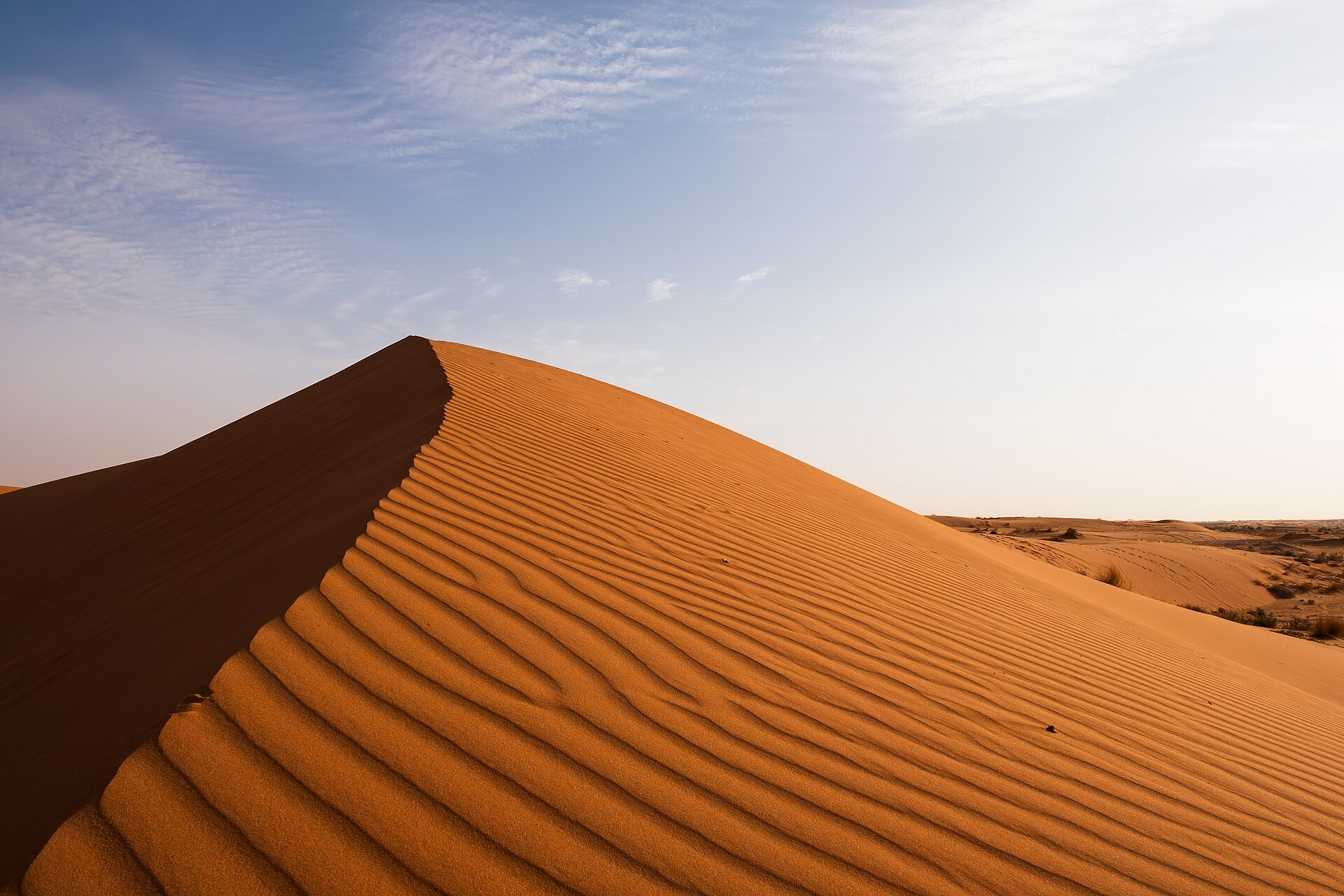
The Red Sand Dunes are the most accessible and most popular sandboarding destination in Saudi Arabia. Located roughly 30 to 45 minutes northeast of central Riyadh, these dunes are part of the Ad Dahna desert corridor — a vast band of reddish-orange sand that gets its distinctive colour from high iron oxide content. The crescent-shaped dunes here rise to moderate heights, making them suitable for both beginners and intermediate riders.
Two main areas draw visitors. The Thumamah area, near Thumamah National Park, features long, steep dune faces that provide extended runs. The Al Kharrarah desert, slightly further out, offers a quieter alternative with similarly rideable terrain. Both areas are accessible in a standard sedan to the parking zones, though a 4×4 is needed to drive onto the dunes themselves.
The Red Sand Dunes are a favourite weekend destination for Riyadh residents, who come for quad biking, drifting, picnicking, and sunset photography as well as sandboarding. Tour operators running trips here typically depart Riyadh in the late afternoon, time the session for sunset, and return after a barbecue dinner under the stars.
Practical tip: The best sandboarding conditions at the Red Sands occur in the early morning (before 10:00 AM) or late afternoon (after 3:00 PM), even in winter. Midday sun heats the sand surface rapidly, making it uncomfortable to sit on and reducing board glide. Bring a scarf or buff to cover your face — sand spray is constant during descent.
AlUla Desert
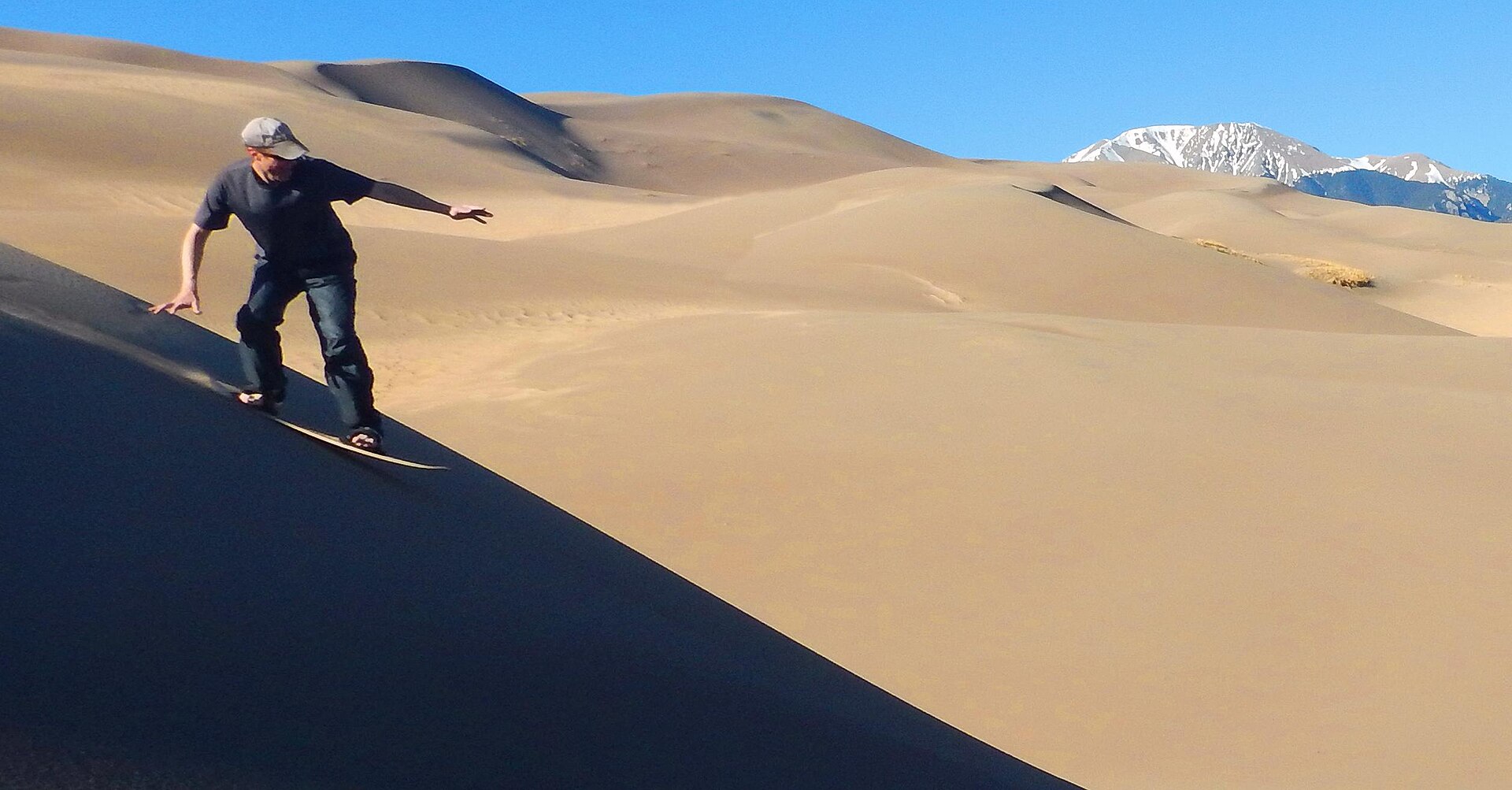
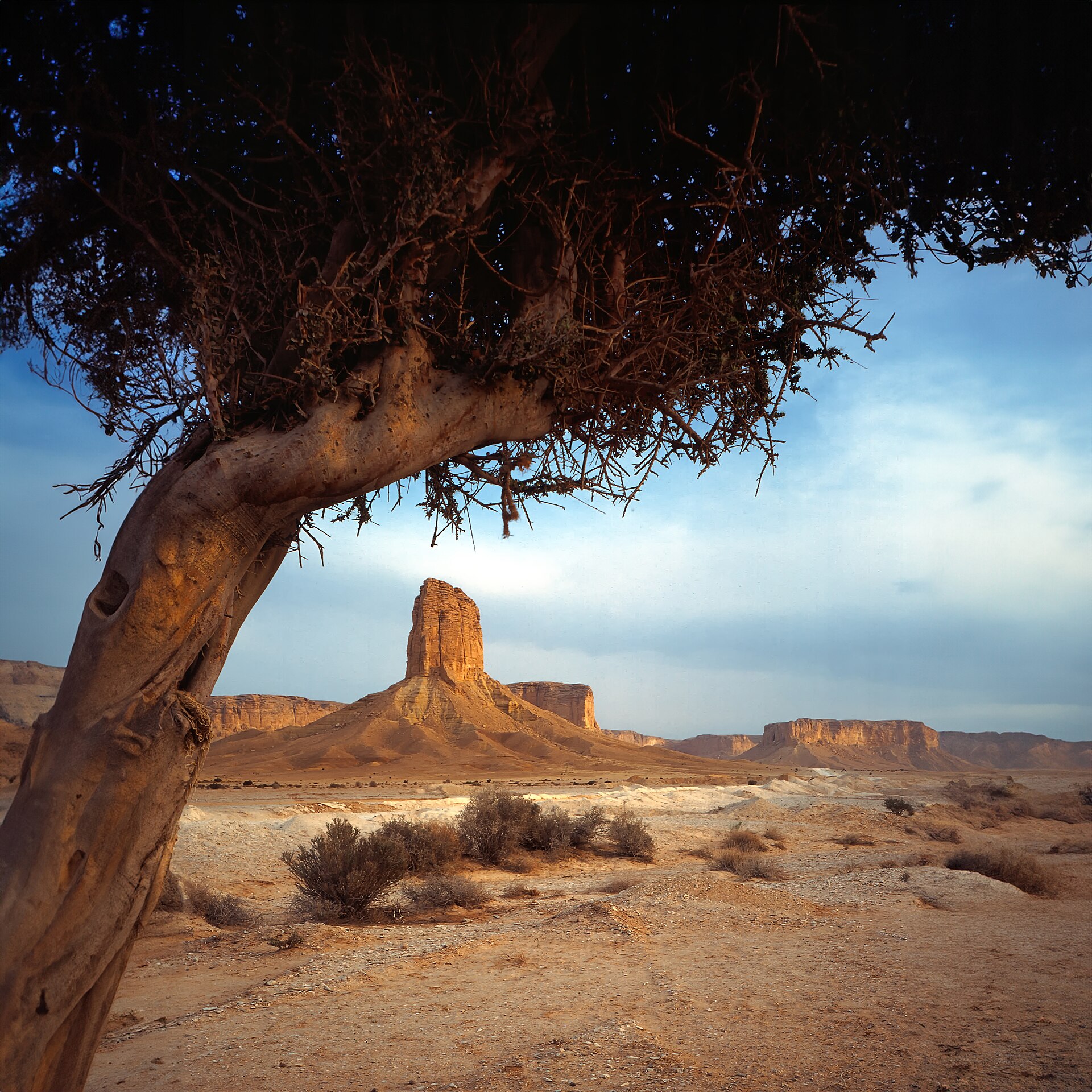
The desert surrounding AlUla, in Medina Province, offers a dramatically different sandboarding experience. Here, beige and golden dunes sit among sandstone canyons and ancient geological formations, creating a landscape unlike anything else in the Kingdom. AlUla’s dune fields lie roughly an hour’s drive from the town centre, in areas that remain clean and relatively uncrowded compared to the Riyadh dunes.
Sandboarding in AlUla is typically offered as part of a broader desert safari package that includes dune bashing in a 4×4, visits to Bedouin camps for Arabic coffee and dates, and sometimes a stop at the Sharaan Nature Reserve. The combination of adventure sport and cultural immersion makes AlUla a particularly attractive option for international visitors who want more than just a dune ride.
The Empty Quarter (Rub’ al-Khali)
For experienced sandboarders looking for the ultimate challenge, the Rub’ al-Khali delivers dunes on a scale that exists nowhere else on Earth. Some formations here exceed 250 metres in height — taller than most skyscraper runs. The sand shifts between deep orange and pale gold depending on the mineral composition, and the silence of the interior desert is profound.
Access to the Empty Quarter for sandboarding is more involved than the day-trip dunes near Riyadh. Most operators run multi-day expeditions departing from Sharurah or the Eastern Province, combining dune riding with overnight camping, stargazing, and sometimes visits to the mysterious freshwater lakes that appear seasonally amid the sands. The remoteness is part of the appeal — and part of the logistical challenge. A convoy of 4×4 vehicles, experienced guides, and satellite communication equipment are standard for any deep-desert trip.
Safety note: The Empty Quarter is genuine wilderness. Mobile phone coverage is non-existent beyond the fringes. Never attempt a self-guided sandboarding trip here without at least two vehicles, a satellite phone, and full recovery gear. Dehydration and vehicle entrapment are real risks.
An Nafud Desert — Near Hail and Tabuk
The An Nafud (also spelled Nefud) in northern Saudi Arabia is the Kingdom’s third major sand desert, covering a vast area across Hail, Al-Jawf, and Tabuk provinces. Its dunes are among the most photogenic in the country — deep red and sculpted by persistent winds into sharp crests and wide bowls. The area around Hail is particularly accessible, with paved roads bringing visitors within short off-road drives of rideable dunes.
Sandboarding in the An Nafud is less commercialised than at the Red Sands near Riyadh, meaning fewer operators but also fewer crowds. Visitors here often combine sandboarding with visits to the Jubbah rock art site (a UNESCO World Heritage Site) and the traditional markets of Hail city. The cooler northern climate extends the comfortable season slightly longer than in the central and southern deserts.
Dunes Near Jeddah and the Western Coast
While Jeddah is better known as a gateway to the Red Sea coast and its diving and snorkelling, desert safari operators based in the city do offer sandboarding experiences in the dune fields east of Jeddah, toward the interior. These trips are typically half-day affairs departing in the afternoon and returning after sunset. The dunes are smaller than those near Riyadh or in the Empty Quarter, but they provide a convenient option for travellers based on the western coast who want a desert experience without an inland flight.
Tour Operators and Booking
Several licensed operators run regular sandboarding trips across Saudi Arabia. Below are the most established, based on verified reviews and tourism ministry licensing records.
| Operator | Base | Main Location | Typical Price (SAR) | What’s Included |
|---|---|---|---|---|
| Ghazi Tours | Riyadh | Red Sand Dunes | 209 | 4×4 transport, dune bashing, sandboarding with instructor, hot/cold drinks, BBQ dinner |
| 365 Adventures | Riyadh / Jeddah | Nufud Al-Dahna (Red Sands) | 225–259 | Dune bashing, sandboarding, archery, Arabic coffee and snacks |
| Yalla Hike | Riyadh | Red Sand Dunes | 225 | Land Cruiser transport, sandboarding, hiking, group activities |
| ROAM (Experiences by ROAM) | Riyadh / AlUla | Riyadh Dunes / AlUla | Custom pricing | Electric quads, sandboarding, dune bashing, bespoke packages |
| Husaak Adventures | AlUla | AlUla desert | Custom pricing | Desert hikes, 4×4 tours, sandboarding, cultural experiences |
Booking tip: Most operators accept bookings through their websites, through aggregators like GetYourGuide and Viator, and through the Saudi platform Hala Yalla. Cancellation policies typically allow a full refund up to 24 hours in advance. During the peak winter season (December to February), popular sunset trips sell out quickly — book at least 48 hours ahead.
All of these operators are licensed by the Saudi Ministry of Tourism. Ghazi Tours, 365 Adventures, and Yalla Hike are the most budget-friendly options for visitors staying in Riyadh, while ROAM and Husaak cater to a more premium market with bespoke itineraries.
Equipment and Gear
The Sandboard
Sandboards look similar to snowboards but differ in several critical ways. The base is coated with a hard laminate (often Formica) rather than the waxed polyethylene of a snowboard, because sand destroys soft bases within minutes. Bindings, when present, are simpler — usually velcro straps rather than step-in mechanisms. Many tour operators provide boards without bindings, which beginners use sitting or lying down like a toboggan.
If you plan to stand and ride, look for a board with foot straps or bindings. Standing sandboarding requires significantly more skill than the seated approach, but it allows for carved turns and a much more dynamic ride. Some operators offer both types — ask when booking.
Board Wax
Wax is essential. Without it, the friction between board and sand is too high for any meaningful speed. Purpose-made sandboard wax (paraffin-based, harder than snowboard wax) should be applied before every run. The technique is simple: rub the wax block firmly across the base in long strokes until a thin, even film covers the entire surface. The key is to use the minimum amount needed — excess wax actually increases drag by collecting sand grains.
What to Wear
- Clothing: Lightweight, breathable long sleeves and long trousers. Sand abrasion on exposed skin is uncomfortable, and sunburn is a serious risk in the desert. Avoid dark colours that absorb heat.
- Footwear: Closed-toe shoes or boots are strongly recommended. Sand temperatures can reach 70°C in summer and remain hot well into the afternoon during shoulder months. Sandals with heel straps are acceptable but provide less ankle support for standing rides.
- Eye protection: Sunglasses at minimum; wraparound sports glasses or ski goggles are better. Sand spray during descent can be intense.
- Sun protection: High-SPF sunscreen, a wide-brimmed hat or headscarf, and a neck buff. The desert reflects UV radiation from all angles.
- Water: Minimum two litres per person. There are no facilities on the dunes. Dehydration onset is faster than most visitors expect.
- Snacks: Energy bars or dates. Most guided tours include refreshments, but bringing your own is wise.
- Phone/camera protection: A waterproof pouch or zip-lock bag for your phone. Fine desert sand penetrates charging ports and speaker grilles quickly.
- First aid: Basic kit with plasters, antiseptic wipes, and blister plasters. Minor scrapes are common.
- Dune bashing: High-speed 4×4 driving across the dunes is the most popular desert activity in Saudi Arabia. Nearly every sandboarding tour includes a dune bashing segment. See our full guide to quad biking and dune bashing.
- Quad biking: Many operators offer ATV/quad bike rentals at the dune sites, allowing visitors to explore the terrain independently before or after sandboarding.
- Camel riding: A more contemplative way to experience the desert. Several operators offer short camel treks as part of their sandboarding packages.
- Desert camping: Overnight stays in Bedouin-style camps, complete with traditional Arabic coffee, communal meals, and stargazing. The lack of light pollution in the deep desert makes Saudi Arabia one of the finest stargazing destinations in the Middle East.
- Hiking: For those who enjoy covering terrain on foot, the Saudi Arabia hiking trails around AlUla and the Asir mountains offer a different kind of adventure. In the dune context, simply climbing the dunes constitutes a serious workout.
- Book with a licensed operator — the Saudi Ministry of Tourism regulates adventure tourism operators, and licensed companies carry insurance, provide trained guides, and maintain safety equipment.
- Wax your board before every single run — sand abrades the wax coating rapidly, and an unwaxed board will barely move.
- Start small — resist the temptation to climb the tallest dune first. Build confidence on smaller slopes and work your way up.
- Carry more water than you think you need — the desert is deceptively dehydrating, especially when you are exerting yourself climbing dunes.
- Check your visa status before booking — the Saudi tourist e-visa covers adventure tourism activities, but confirm your visa validity and entry type.
- Don’t use a snowboard — the base will be destroyed within minutes. Sandboards have a hard laminate base designed for abrasive surfaces.
- Don’t go barefoot — hot sand causes burns, and hidden rocks or debris can injure unprotected feet.
- Don’t sandboard alone in remote areas — always go with at least one other person, and ensure someone knows your location and expected return time.
- Don’t ignore the wind — if a shamal (sandstorm) is forecast, postpone your trip. Visibility drops to near zero and conditions become dangerous.
- Don’t leave rubbish in the desert — pack out everything you bring in. The Saudi government has increased enforcement of environmental protection in desert areas under Vision 2030.
- Saudi Arabia Travel Guide 2026 — The complete guide to visiting the Kingdom
- Quad Biking and Dune Bashing in Saudi Arabia — The best dune driving operators and locations
- Rock Climbing in Saudi Arabia — The best crags and guides
- AlUla Travel Guide — The Kingdom’s most spectacular desert destination
- Saudi Arabia Hiking Guide — Trails, mountains and nature walks
- Saudi Arabia Visa Guide — Every visa type explained
What to Bring
Sandboarding Techniques for Beginners
If you have never sandboarded before, the learning curve is gentler than you might think — especially if you start with the seated or lying-down technique.
Seated Sliding (Easiest)
Sit on the board with your feet pointing downhill. Place your hands on the edges just in front of your hips. Push off gently and use your feet as rudders, pressing them into the sand to slow down or steer. This method is safe, controllable, and still provides a genuine thrill on steeper dunes. Most children and first-time adults start here.
Prone (Lying Down)
Lie face-down on the board with your chest over the front half. Hold the front edges or straps. Lift your feet off the sand and give a push to start. Drag your feet to brake. This position is faster than sitting because your weight is distributed more evenly, reducing friction. It is also the most popular technique in the Gulf region.
Standing
Standing sandboarding is the most rewarding technique but requires practice. Position the board pointing straight down the dune. Place your front foot near the nose and your back foot near the tail. Keep your knees bent, your back straight, and your arms out for balance. Lean slightly back to prevent the nose from digging in — this is the most common beginner mistake. Look where you want to go, not at the sand directly in front of you. Start on gentle slopes and progress gradually to steeper faces.
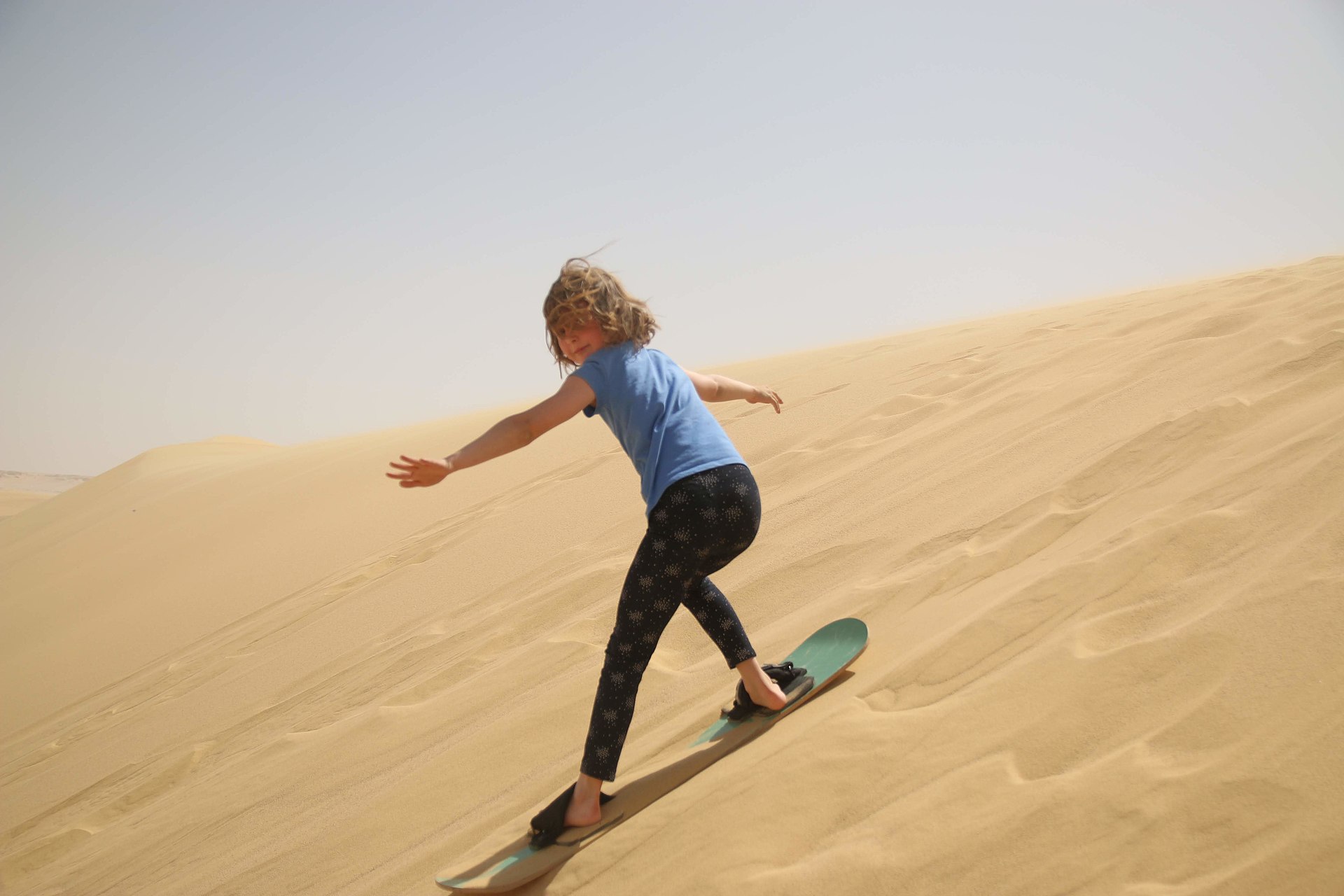
Pro tip: Unlike snowboarding, there are no chairlifts in the desert. Every run means climbing back up the dune on foot, which is exhausting in soft sand. Choose your dune height wisely — a 30-metre climb in loose sand feels like 100 metres on solid ground. Most people manage 5–8 runs before fatigue sets in.
Best Time to Go Sandboarding in Saudi Arabia
The optimal window for sandboarding runs from October to March, when daytime temperatures in the central deserts range from 15°C to 30°C. Within that window, the best months are November, December, and January, when the air is coolest and the sand is firmest — firm sand provides better glide than the dry, powdery sand of the hot months.
April and early May are borderline: mornings and late afternoons are still comfortable, but midday heat can be punishing. From June through September, daytime air temperatures regularly exceed 45°C, and sand surface temperatures climb even higher. Sandboarding in these months is inadvisable for most visitors.
Timing within the day also matters. Early morning (7:00–10:00 AM) and late afternoon (3:30–6:00 PM) offer the most comfortable conditions. Many operators run sunset trips specifically because the lower sun angle keeps temperatures manageable and produces spectacular light for photography.
Getting to the Dunes
From Riyadh
The Red Sand Dunes are the easiest to reach. Drive northeast on the Riyadh–Dammam highway (Route 40) and exit at the Thumamah or Al Kharrarah turnoffs, roughly 50–70 kilometres from the city centre. The drive takes 30–45 minutes in normal traffic. If you book with a tour operator, pickup from central Riyadh hotels is standard. For self-drivers, a 4×4 rental is recommended for driving onto the dunes, though you can park a sedan at the desert edge and walk in.
To AlUla
AlUla is approximately 1,100 kilometres northwest of Riyadh. The most practical route is a domestic flight to AlUla Airport (ULH), served by Saudia and flynas from Riyadh and Jeddah. Flight time from Riyadh is roughly 90 minutes. Once in AlUla, desert safari operators provide all transport to the dune fields.
To the Empty Quarter
Entry points to the Rub’ al-Khali include Sharurah in the south (reachable by domestic flight from Riyadh) and the Eastern Province via the Haradh road. Multi-day expeditions are the norm here — day trips are not feasible given the distances. Operators handle all logistics.
To the An Nafud
Hail, the gateway to the An Nafud, has a regional airport with flights from Riyadh and Jeddah. The city itself is a 9–10 hour drive from Riyadh via Route 65. From Hail, the dune fields are accessible by 4×4 within 30–60 minutes.
Combining Sandboarding with Other Desert Activities
Most visitors do not come to the desert solely for sandboarding. The sport pairs well with several other activities that are commonly offered in the same packages.
Practical Tips and Common Mistakes
Do
Don’t
Sandboarding for Families
Sandboarding is one of the most family-friendly adventure activities available in Saudi Arabia. Children as young as five or six can safely ride the seated or prone techniques on gentle slopes under supervision. Most tour operators welcome families and provide smaller boards for children.
The Red Sand Dunes near Riyadh are the best location for families due to the short drive, gentle terrain options, and the presence of multiple operators with family-oriented packages. Trips that include a barbecue dinner and campfire are particularly popular with families, as they turn a sport outing into a full evening experience.
Costs and Budgeting
Sandboarding in Saudi Arabia is remarkably affordable compared to other adventure sports. Here is a typical cost breakdown for a guided trip from Riyadh to the Red Sand Dunes.
| Item | Cost (SAR) | Cost (USD approx.) |
|---|---|---|
| Guided half-day trip (including sandboarding, dune bashing, meal) | 175–300 | 45–80 |
| Self-drive (petrol + board rental at site) | 80–120 | 20–32 |
| Premium AlUla desert safari (full day) | 500–900 | 130–240 |
| Multi-day Empty Quarter expedition (2–3 days) | 2,000–4,000 | 530–1,060 |
| Own sandboard purchase | 200–600 | 55–160 |
| Sandboard wax (per block) | 15–30 | 4–8 |
For travellers looking to combine sandboarding with other Saudi adventures, consult our main Saudi Arabia travel guide for comprehensive budgeting advice and itinerary suggestions. Those interested in rock climbing or snorkelling can often add these to a multi-destination trip without significantly increasing transport costs.