
Saudi Arabia sits on one of the most geologically active landscapes in the western Arabian Peninsula, and beneath its deserts, lava fields and limestone plateaus lies a cave network that is only now opening to visitors. From the 1,481-metre Umm Jirsan lava tube near Khaybar — the longest in Arabia — to the turquoise sinkhole lake of Ain Heet outside Riyadh, the Kingdom offers underground experiences found nowhere else on the Arabian Peninsula. This guide, part of our Saudi Arabia Travel Guide 2026, covers the major cave systems, what you need to explore them safely, and how to plan a trip around this emerging adventure frontier.
Best Time to Visit: October to March (cooler surface temperatures; cave interiors stay 20–26 °C year-round)
Getting There: Most caves require a 4×4 and GPS; Ain Heet is reachable by sedan from Riyadh; Al Qarah Mountain has paved access from Al Hofuf
Visa Required: Yes — tourist e-visa available for 63 nationalities
Budget: USD 50–200/day depending on guided vs self-drive; Al Qarah entry SAR 55 (~USD 15); Khaybar heritage tours from SAR 270 (~USD 72)
Must-See: Umm Jirsan lava tube (Harrat Khaybar), Ain Heet sinkhole (Riyadh), Al Qarah Mountain caves (Al Ahsa)
Avoid: Entering any remote cave without a guide, adequate lighting and someone on the surface who knows your plan
Why Saudi Arabia Is a Caving Destination
The Kingdom possesses 109 caves formally designated for tourism, according to the Saudi Ministry of Tourism and the Saudi Geological Survey. These fall across two principal geological types: volcanic lava tubes in the western harrat (lava fields) and solutional limestone caves on the central and eastern plateaus. The Saudi Geological Survey, in partnership with speleologist John Pint and the Austrian Academy of Sciences, has been mapping these systems since the 1980s, and systematic surveys continue to identify new passages.
What makes Saudi caving distinctive is the climate inside the caves. While surface temperatures in the Empty Quarter or Harrat Khaybar can exceed 50 °C in summer, cave interiors remain between 20 and 26 °C year-round, with some caves on the Summan Plateau dropping as low as 15 °C. This thermal contrast was exploited by human populations for at least 7,000 years, as confirmed by archaeological evidence published in PLOS ONE in April 2024.
For visitors already exploring the northwestern heritage corridor on an AlUla trip, the Khaybar lava fields are a natural day-trip extension. For those based in the Eastern Province around Dammam and Al Khobar, Al Qarah Mountain in Al Ahsa is under two hours away.
The Major Cave Systems
Umm Jirsan Lava Tube — Harrat Khaybar
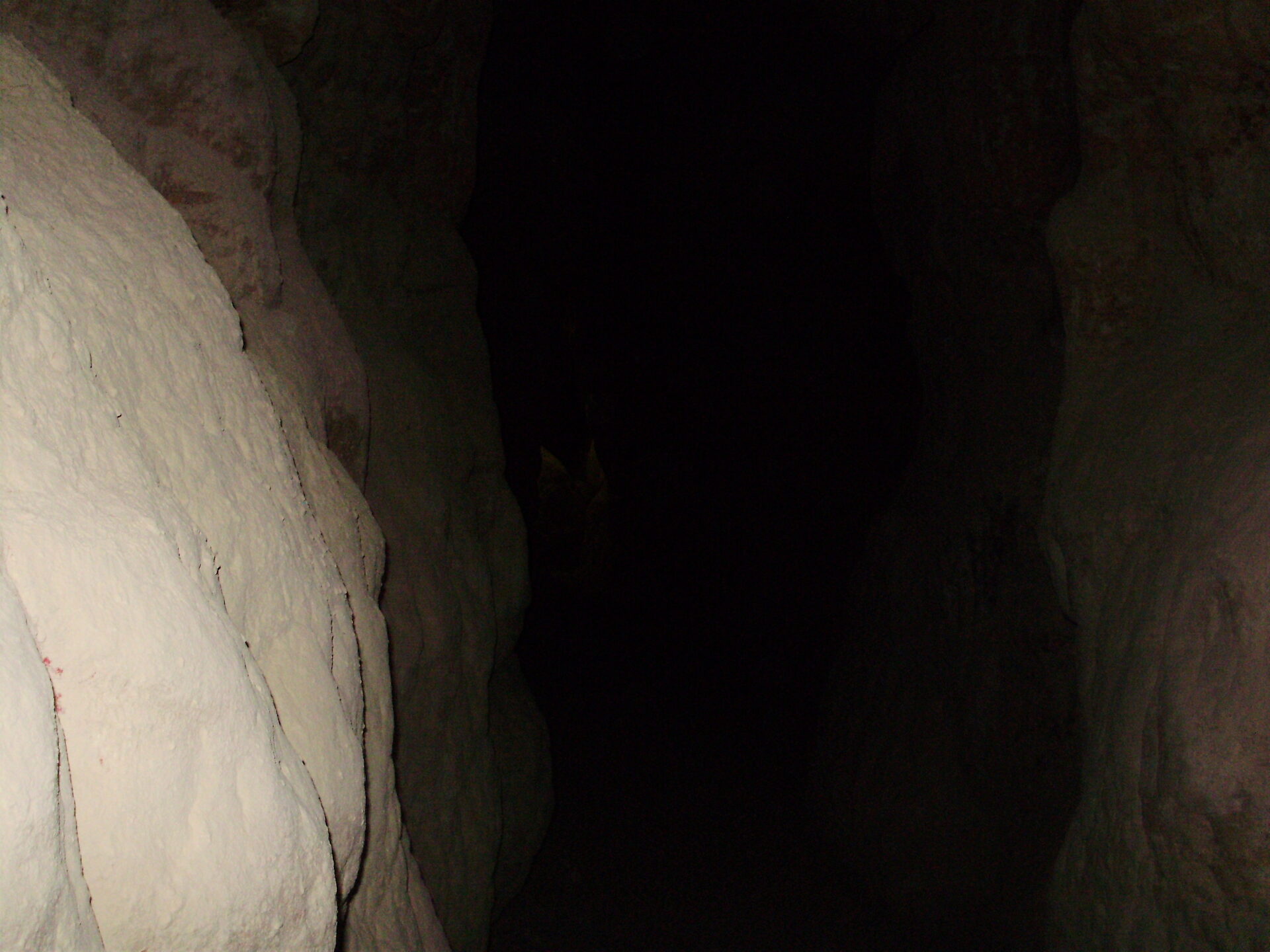
Umm Jirsan is the longest lava tube system in Arabia, stretching 1,481 metres beneath the Harrat Khaybar volcanic field, approximately 153 kilometres north of Medina. The tubes were formed roughly three million years ago when basaltic lava flows crusted over on the surface while molten rock continued to drain below, leaving behind tunnels up to 12 metres tall and 45 metres wide.
In 2024, a team led by researchers from the Max Planck Institute and King Fahd University published findings showing continuous human occupation of Umm Jirsan from the Neolithic through the Chalcolithic and Bronze Age — approximately 10,000 to 3,500 years ago. Rock art, animal bone deposits and stone tool assemblages were recovered from the tube interior.
Access requires a 4×4 vehicle and navigation across the basalt terrain. In 2017, the Saudi Commission for Tourism and National Heritage built a perimeter wall around the main collapse entrance and installed a large staircase, making the primary chamber more accessible. Guided tours are available through the Experience AlUla platform, which runs Khaybar Heritage Tours departing daily at 10:00 AM from AlUla, priced from SAR 270 (approximately USD 72) per person including transport and lunch.
Ghar Al Hibashi — Harrat Nawasif/Al Buqum
Located east of Mecca in the Harrat Nawasif/Al Buqum lava field, Ghar Al Hibashi is a 581-metre lava tube notable for its mineralogical richness. The cave contains at least 19 identified minerals, including three extremely rare organic compounds — pyrocoproite, pyrophosphite and arnhemite — formed by the combustion of bat guano deposits. These compounds have been documented in only a handful of caves globally, all in Africa.
The main gallery stretches over 400 metres and reaches 15 metres in width. Access is through a small vertical pit leading to a side corridor. A human skull dated to approximately 425 years old and a man-made wall were found inside. This cave requires proper vertical equipment and is suited to experienced cavers rather than casual tourists.
Ain Heet (Dahl Hit) — Near Riyadh
Ain Heet is a solutional cave and sinkhole located approximately 30 kilometres southeast of central Riyadh, near Al Kharj, at the base of Mount Al Jubayl in the village of Heet. The cave descends through limestone to a vast underground lake situated roughly 120 metres below the surface. Divers who have explored the submerged passages report water clarity exceeding 30 metres of horizontal visibility — among the clearest cave diving water documented anywhere.
The underground lake extends at least 150 metres horizontally and more than 30 metres in depth. Until recently, the turquoise waters were considered pristine, though environmental monitoring by John Pint noted sewage contamination beginning around 2011. The cave remains popular for swimming and experienced cave diving, though permits may be required. It is the most accessible caving site for visitors staying in Riyadh, reachable by sedan on paved roads.
Al Qarah Mountain Caves — Al Ahsa
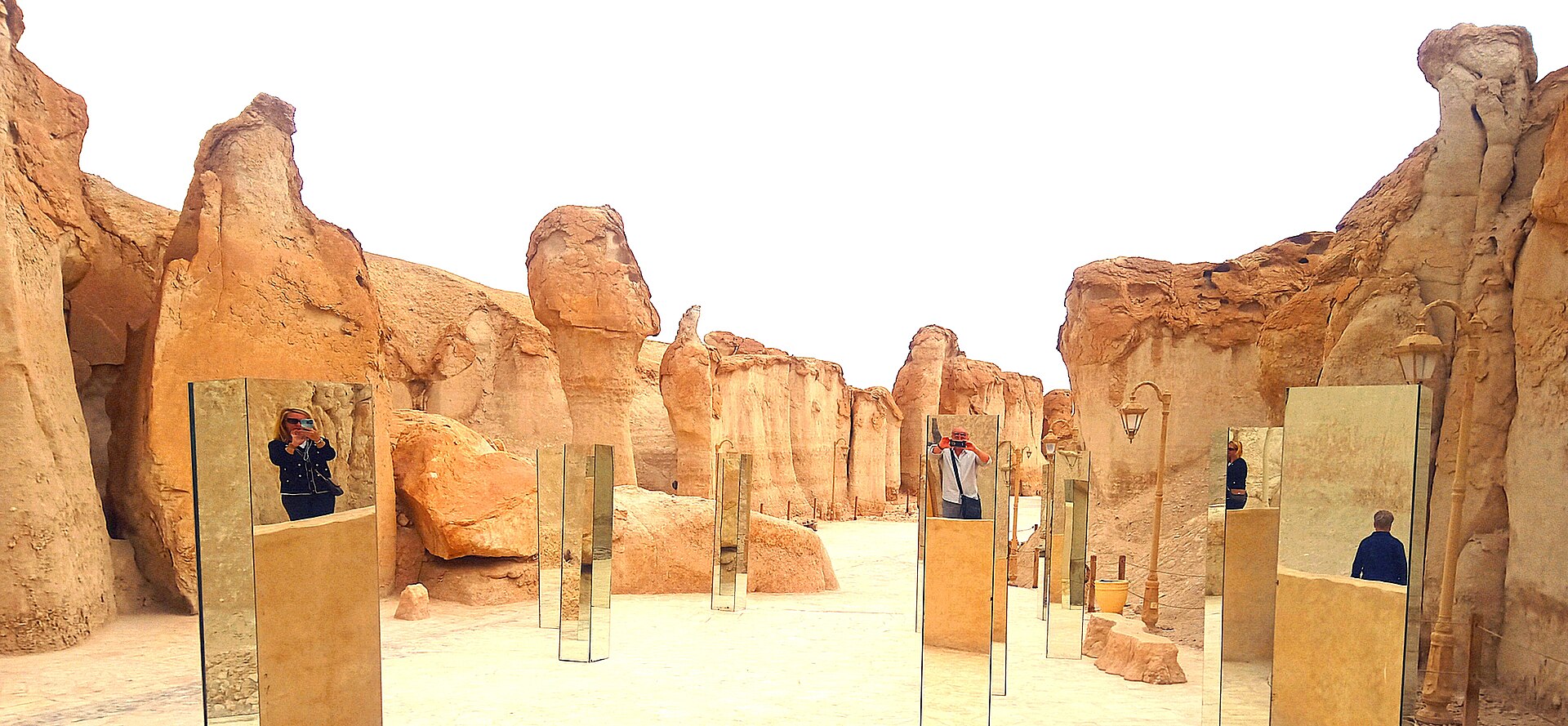
Al Qarah Mountain (Jabal Al Qarah) is part of the Al Ahsa UNESCO World Heritage Site in the Eastern Province. The mountain contains 28 tall, linear passageways totalling 1.5 kilometres in length, carved through limestone and sandstone by millennia of wind and water erosion. The most visited caves include Bu Saleh, Al Eid, An Naqa, Al Mua’adhamah and Al Maheub.
The cave system maintains a stable interior temperature of approximately 20 °C with a gentle, natural airflow from interior to exterior — making it one of the most comfortable caving experiences in the country. The “Land of Civilisations” cultural tourism project, partially opened in 2016, provides structured access to the main cave and a stone amphitheatre. Facilities include a museum, cafe, gift shop, restrooms and parking. Entry costs SAR 55 (approximately USD 15).
Al Qarah is family-friendly and does not require any special equipment, though a phone torch is useful in the darker interior sections. It is approximately a 25-minute drive from Al Hofuf and makes an ideal half-day excursion when combined with the Al Ahsa oasis date plantations.
Summan Plateau Caves — Northeast of Riyadh
The Summan Plateau, roughly 220 kilometres northeast of Riyadh, hosts one of the Kingdom’s densest concentrations of limestone caves. The Saudi Geological Survey has mapped 58 caves in the Ma’aqala area alone. The Arabic word dahl — a hole in the ground leading to a cave — is the standard Bedouin term for these features, and it appears in many cave names across the region.
Two caves stand out for visitors. Murubbeh (B7 Cave) was selected as the most tourism-ready cave on the plateau because its interior drops to 15 °C — significantly cooler than any other surveyed cave in the area. Surprise Cave, discovered by Swedish explorer Lars Bjurstrom, earned its name because the narrow, dusty entrance shaft conceals what speleologists describe as the best-decorated cave found in Saudi Arabia, with extensive mineral formations.
Dahl Sultan, discovered in 1983 near Ma’aqala, is believed to hold potential as the longest limestone cave in Saudi Arabia, though full survey data is still being compiled. These caves generally require organised access through the Saudi Geological Survey or specialist tour operators, and are not set up for independent casual visits.
Al Wahbah Crater — Taif Region
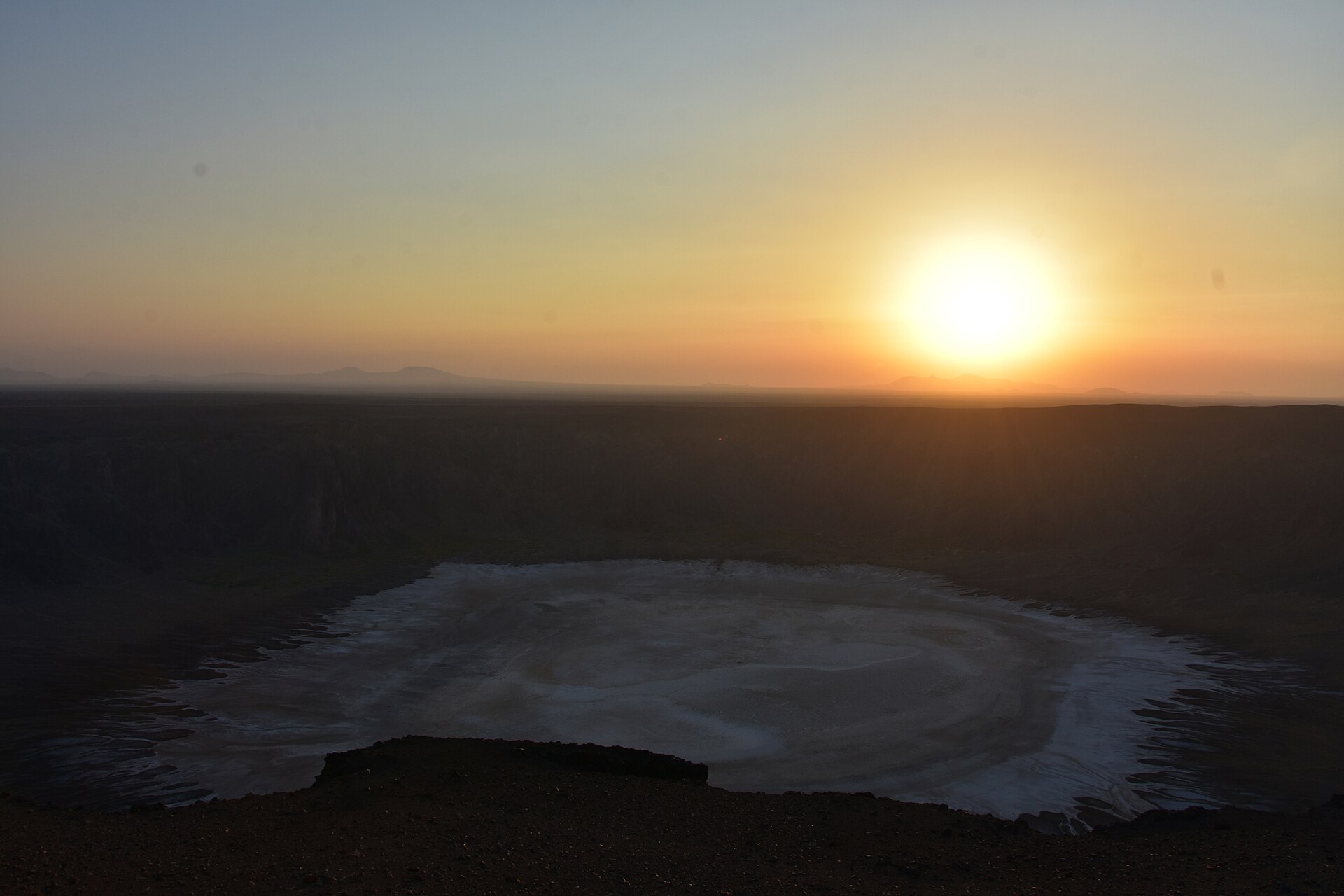
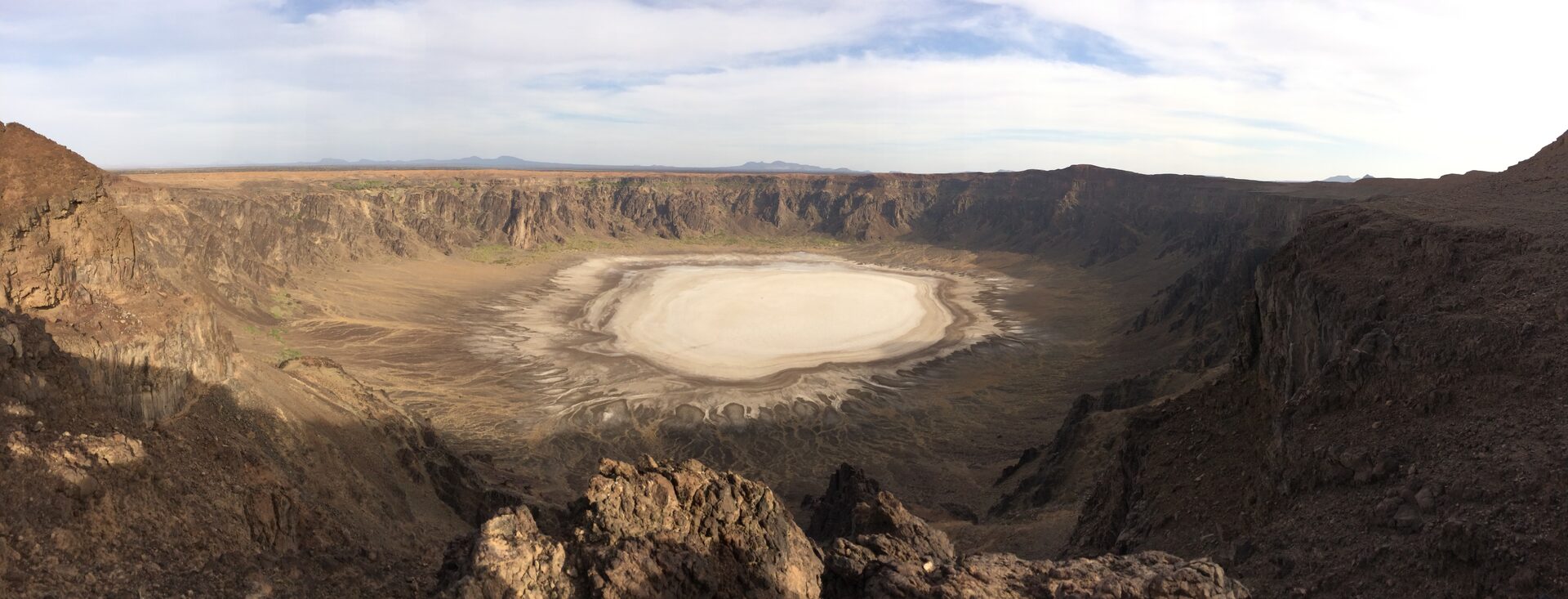
While not a cave in the traditional sense, Al Wahbah Crater is the largest volcanic crater in Saudi Arabia and one of its most dramatic underground-adjacent geological features. The maar crater measures 4 kilometres across and drops 250 metres below the surrounding Harrat Kishb basalt plateau. Its floor is covered in white sodium phosphate crystals, and its origin — a phreatomagmatic explosion when groundwater met hot magma — is closely related to the same volcanic processes that created the lava tubes elsewhere in the Kingdom.
Al Wahbah sits approximately 350 kilometres from Jeddah on the western edge of Harrat Kishb. The road from Jeddah to the crater rim is paved and suitable for a sedan, though a 4×4 is required to drive around the rim. Descending into the crater is officially prohibited due to the difficulty of the return climb, and security patrols enforce this restriction. Hiking the full crater rim takes approximately three hours.
The crater is also one of the Kingdom’s premier stargazing locations, with virtually zero light pollution. Overnight camping at the rim is common and popular during the cooler months. For hikers exploring the Taif region, it pairs well with the Al Shafa and Al Hada mountain resorts.
The Harrat Lava Fields: Context for Caving
Saudi Arabia’s western volcanic belt contains at least 13 major harrat (singular: harrah), covering more than 180,000 square kilometres. The largest — Harrat Khaybar, Harrat Rahat and Harrat Kishb — contain extensive lava tube networks formed over the past five million years. The most recent recorded eruption in Harrat Khaybar occurred between 600 and 700 AD, and some flows in Harrat Kishb are as young as 2,000 years.
These lava fields create an otherworldly black basalt landscape that is itself a draw. The Khaybar area includes striking volcanic features such as Jabal Abyad (a white rhyolite lava dome), Jabal al Quidr (a basalt stratovolcano) and Jabal Bayda (a tuff cone formed by lava erupting in the presence of water). NASA satellite imagery from the International Space Station has captured the full scale of these 14,000-square-kilometre fields.
Visitors exploring the lava tube caves will necessarily spend time traversing this terrain, making the surface landscape as much a part of the experience as the caves themselves. A good pair of closed-toe boots with ankle support is essential — the basalt is sharp, uneven and unforgiving.
Essential Gear and Safety
What to Bring
The Saudi Ministry of Tourism and experienced speleologists recommend the following gear for any cave exploration beyond Al Qarah Mountain’s developed passages:
- Helmet: Mandatory in lava tubes and limestone caves. Low ceilings and uneven overhead rock are common.
- Headlamp: A primary headlamp plus a backup light source. Many caves have no artificial lighting at all.
- Gloves: Basalt lava rock is abrasive. Leather or thick fabric gloves protect hands when scrambling.
- Sturdy boots: Closed-toe, ankle-supporting boots with good grip. Never sandals or trainers.
- Water: At least 3 litres per person. There is no water source inside most caves, and exit hikes across lava fields in any season are dehydrating.
- First aid kit: Including bandages for cuts from sharp basalt.
- Ropes and harness: Required for vertical caves like Ghar Al Hibashi or deeper dahls on the Summan Plateau. Not needed for Umm Jirsan or Al Qarah.
Safety Rules
The Saudi Geological Survey and saudicaves.com publish cave safety guidance specific to Arabian conditions:
- Never enter a cave alone. A minimum group of three is standard practice — if one person is injured, one can stay while the other goes for help.
- Inform someone on the surface of your entry time and expected exit time.
- Avoid caves during or immediately after rain. Flash floods can fill wadi-connected caves rapidly.
- Watch for unstable rock, particularly in lava tubes where ceiling collapses have created the entrance holes.
- Humidity near underground water sources can make surfaces extremely slippery — particularly at Ain Heet.
- Cave exploration is not recommended for young children in undeveloped sites, though Al Qarah Mountain is suitable for families.
Guided Tours and Organised Access
Saudi Arabia’s cave tourism infrastructure is developing rapidly under the Ministry of Tourism, which supervises 56 caves and dolines directly, with another 53 proposed as future tourist attractions. For most visitors, a guided tour is the safest and most practical approach.
Khaybar Heritage Tours (via Experience AlUla)
The official Khaybar Heritage Tour departs from AlUla daily at 10:00 AM and covers approximately 6 hours including transfer (the drive from AlUla to Khaybar is 2 hours 15 minutes each way). The tour includes the Umm Jirsan lava tube, Al Rawan Viewpoint, Al Nizar Fort and a Bedouin camp recreation with coffee and dates. Pricing starts at SAR 270 per person (approximately USD 72). Booking is available through experiencealula.com or through Almosafer.
Saudi Geological Survey Expeditions
The SGS occasionally conducts open-access field trips to caves on the Summan Plateau and other survey sites. These are typically announced through the SGS website and social media channels. They are free but limited in availability.
Independent Exploration
Self-guided visits are possible at Ain Heet (no formal entry restriction), Al Wahbah Crater (free access to the rim) and Al Qarah Mountain (ticketed entry). For the Harrat lava fields, hiring a local driver or guide through operators in Medina or AlUla is strongly recommended. The basalt terrain has minimal trail markers and no mobile signal in many areas.
Visitors planning 4×4 off-road trips through the lava fields should carry a satellite communicator, spare tyres and a GPS device loaded with offline maps. The basalt will shred road tyres within minutes if you leave established tracks.
When to Go
The cave interiors are comfortable year-round, but the surface conditions determine the season. Between October and March, daytime temperatures in the Harrat fields drop to 20–30 °C, making the approach hikes manageable. Summer temperatures above 45 °C on the basalt surface make lava field exploration genuinely dangerous.
Al Wahbah Crater is best visited at sunrise for photography and before the heat builds. The stargazing season at the crater rim peaks in winter when skies are clearest.
Al Qarah Mountain and Ain Heet are accessible year-round, though the Eastern Province and Riyadh region are most pleasant from November to February.
Conservation and Responsible Caving
Saudi Arabia’s caves face pressure from both tourism and environmental change. John Pint, who has explored and documented Arabian caves since 1980 and authored The Desert Caves of Saudi Arabia (Stacey International, 2003), has documented graffiti, litter and campfire damage in multiple cave systems including Al Qarah Mountain and sites on the Summan Plateau.
The principles of responsible caving — take nothing, leave nothing, break nothing — apply with particular force in Saudi Arabia’s arid environment, where mineral formations may take thousands of years to develop and guano ecosystems support rare mineralogical processes found nowhere else. Visitors should stay on established paths, carry out all waste and avoid touching or collecting formations.
The caves also play a role in the Kingdom’s aquifer system. Research initiated in 1986 by King Fahd University of Petroleum and Minerals, in collaboration with the Austrian Academy of Sciences, studied how dahls on the Summan Plateau contribute to replenishing the Umm er-Radhuma aquifer — one of the most important groundwater sources in the country. Protecting cave hydrology is not just an environmental concern but a water security issue.
Combining Caves with Other Adventures
Cave exploration pairs naturally with several other outdoor activities across the Kingdom. Visitors heading to the Harrat Khaybar lava fields from AlUla can combine the Umm Jirsan lava tube with the Hegra UNESCO site and hot air balloon flights over AlUla. The Al Wahbah Crater rim hike connects with broader hiking routes in the Taif highlands, and the Ain Heet sinkhole is often paired with desert dune bashing excursions south of Riyadh.
For those interested in the geological context, the photography tour operators running circuits through the volcanic fields offer a slower, more interpretive experience than standard adventure tours.
All visitors will need a valid Saudi tourist visa before arrival. The e-visa process takes approximately 5–15 minutes online for eligible nationalities.
Explore More Saudi Arabia Travel Guides
- Saudi Arabia Travel Guide 2026 — The complete guide to visiting the Kingdom
- Best Hiking Trails in Saudi Arabia — From the Asir highlands to AlUla canyon walks
- 4×4 Off-Roading in Saudi Arabia — Best desert tracks and what vehicle to drive
- Stargazing in Saudi Arabia — The best dark sky locations in the Kingdom
- Rock Climbing in Saudi Arabia — The best crags and guides for climbers
- Saudi Arabia Visa Guide — Every visa type explained, from tourist e-visa to Hajj permit