
TEHRAN — Brigadier General Ebrahim Zolfaqari, spokesperson for the IRGC’s Khatam al-Anbiya Central Headquarters — Iran’s apex joint operational command — issued three linked public statements on April 7, 2026 that together constitute the clearest irreversible escalation commitment of the 39-day war: any further American strikes will be met “far more forcefully and on a much wider scale,” all prior restraint toward regional partners has been “removed,” and the IRGC will act to deprive “the Americans and its allies of regional oil and gas for years.” The statements, carried by Tasnim News Agency, WANA, CNN, and NPR within hours of each other, arrived as the final hours ticked down on President Donald Trump’s self-imposed April 7 deadline — set for 8pm Eastern Time — and as US forces struck more than 50 military targets on Kharg Island, though an American official told NBC News the strikes “did not involve oil assets.” A full account of the April 7 Kharg operation is in US Strikes 50 Military Targets on Kharg Island, Spares Oil Terminal Again.
What makes Zolfaqari’s announcement operationally binding rather than rhetorical is the structural reality behind it: no Iranian civilian authority retains the capacity to walk it back. Supreme Leader Ali Khamenei has been absent from public life for 29 consecutive days, his son Mojtaba reportedly unconscious in Qom. President Masoud Pezeshkian — who told the Jerusalem Post on April 7 that “more than 14 million Iranians have declared their readiness to give their lives in defense of the country” — was stripped of wartime decision-making authority when Ahmad Vahidi blocked the president’s ministerial appointments and installed his own man, Mohammad Bagher Zolghadr, as secretary of the Supreme National Security Council, according to a Foundation for Defense of Democracies assessment published April 6. The IRGC’s Mosaic Defense architecture distributes pre-delegated strike authority across 31 semi-autonomous provincial commands, each with independent intelligence cells and organic weapons stockpiles — and each, according to Deputy Defense Minister Reza Talaeinik, with “named successors who span three ranks, ready to replace them,” as reported by the Jerusalem Post. The killing of a second consecutive IRGC intelligence chief, Khademi, on April 6, only accelerates that downward delegation. For Saudi Arabia’s Eastern Province, Zolfaqari’s words are not a diplomatic signal to be parsed but an operational timeline to be survived.
Table of Contents
- The Three Limbs of the Zolfaqari Doctrine
- Who Inside Tehran Can Rescind This Commitment?
- Jubail as Proof of Concept
- Can Saudi Air Defense Math Survive the Next Salvo?
- What Does the Trump Deadline Actually Determine?
- The Pattern: IRGC Public Commitment Precedes Operational Action
- Background and Context
- Frequently Asked Questions
The Three Limbs of the Zolfaqari Doctrine
The statements Zolfaqari delivered on April 7 were not improvised bluster from a minor commander but a structured, three-part operational doctrine issued through the most authoritative military communications channel Iran possesses — the Khatam al-Anbiya Central Headquarters, which functions as the supreme joint command coordinating the regular army, IRGC ground forces, navy, and aerospace division. Zolfaqari has served as the primary face of Iranian military communications throughout the war, and his office’s statements carry the institutional weight of standing orders rather than political negotiation.
The first limb, reported by CNN and PressTV, established the escalation threshold: “If attacks on non-civilian targets are repeated, our retaliatory response will be carried out far more forcefully and on a much wider scale.” The second, carried by WANA News Agency and NPR, dissolved what remained of Iran’s regional restraint calculus: “Regional American partners should know that, until now we have exercised significant restraint for the sake of good neighborliness and have taken precautions in selecting retaliatory targets, but from now on, all such precautions have been removed.” The third, published by Tasnim News Agency and picked up by Republic World, converted the military threat into an economic one — the IRGC would “act against American infrastructure and its partners in a way that will deprive the Americans and its allies of regional oil and gas for years.” The progression from military escalation to regional de-restriction to energy-infrastructure targeting was sequential and deliberate, each statement building the logical architecture for the next.
An earlier version of the IRGC position, broadcast by PressTV on April 5, had contained a qualifier — “if attacks on civilian facilities are repeated” — that implied a conditional threshold. The April 7 formulation strips that qualifier entirely and replaces it with “non-civilian targets,” meaning any further American military strikes on any Iranian military assets now trigger the full response. Given that the United States struck more than 50 military targets on Kharg Island on April 7 — confirmed by NBC News and Al-Monitor — the trigger condition Zolfaqari articulated had already been met before his words finished circulating through wire services.
Who Inside Tehran Can Rescind This Commitment?
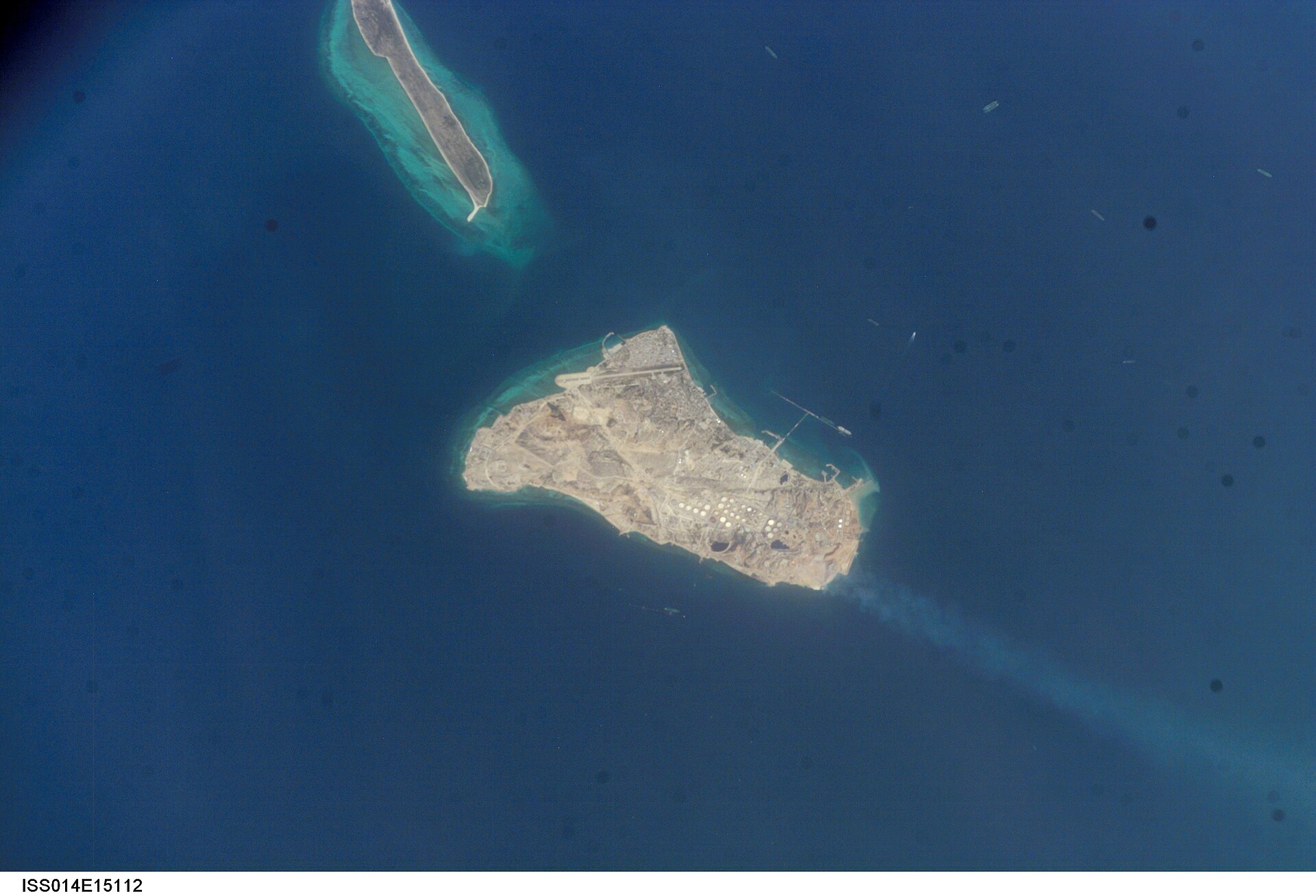
The constitutional answer is one man: the Supreme Leader, who under Iran’s system holds ultimate command authority over all armed forces. But Khamenei has been absent from public life for 29 consecutive days — the longest disappearance in his 37-year tenure — and his son Mojtaba has been reportedly unconscious in Qom. The Western intelligence community’s assessment, published by the Washington Post on March 16, 2026, concluded bluntly: “What is taking shape in Iran is no longer an Islamic Republic in its original sense, but a military junta in every respect.” The Foundation for Defense of Democracies, in an April 6 analysis of Iran’s wartime command structure, identified the effective ruling circle as five men — Vahidi, Zolghadr, Qalibaf, Radan, and Raisi — none of whom possesses either the institutional incentive or the constitutional standing to countermand a public military commitment issued through the Khatam al-Anbiya headquarters.
The Middle East briefing 3,000+ readers start their day with.
One email. Every weekday morning. Free.
Vahidi’s seizure of the command structure has been methodical. Appointed IRGC Commander-in-Chief on March 1, 2026, after his predecessor Pakpour was killed, he moved within weeks to block President Pezeshkian’s attempt to appoint Hossein Dehghan — a figure with ties to diplomatic channels — as a ministerial appointment on March 28, according to the FDD assessment. In Dehghan’s place, Vahidi installed Zolghadr, a veteran IRGC commander under US sanctions, as secretary of the Supreme National Security Council — the body that formally controls Iran’s nuclear and military strategy. Pezeshkian retains the title of president, but as the authorization ceiling analysis has established, the civilian government’s wartime authority has been systematically hollowed to the point where the president’s own warning — that the economy would “collapse in 3-4 weeks” — was ignored by the command structure that now issues operational doctrine in his name.
The decentralization compounds the irreversibility. The IRGC’s Mosaic Defense architecture, described by the Sunday Guardian Live and the Jerusalem Post, distributes operational authority across 31 semi-autonomous provincial commands designed to function independently if communication with Tehran is severed — a contingency that two consecutive intelligence-chief killings (the latest being Khademi on April 6, as reported by NBC News) make increasingly plausible. Even if Vahidi himself wished to rescind Zolfaqari’s commitment — and nothing in his biography suggests he would — the provincial commands operating under pre-delegated strike authority may already be beyond the reach of a countermand order.
Jubail as Proof of Concept
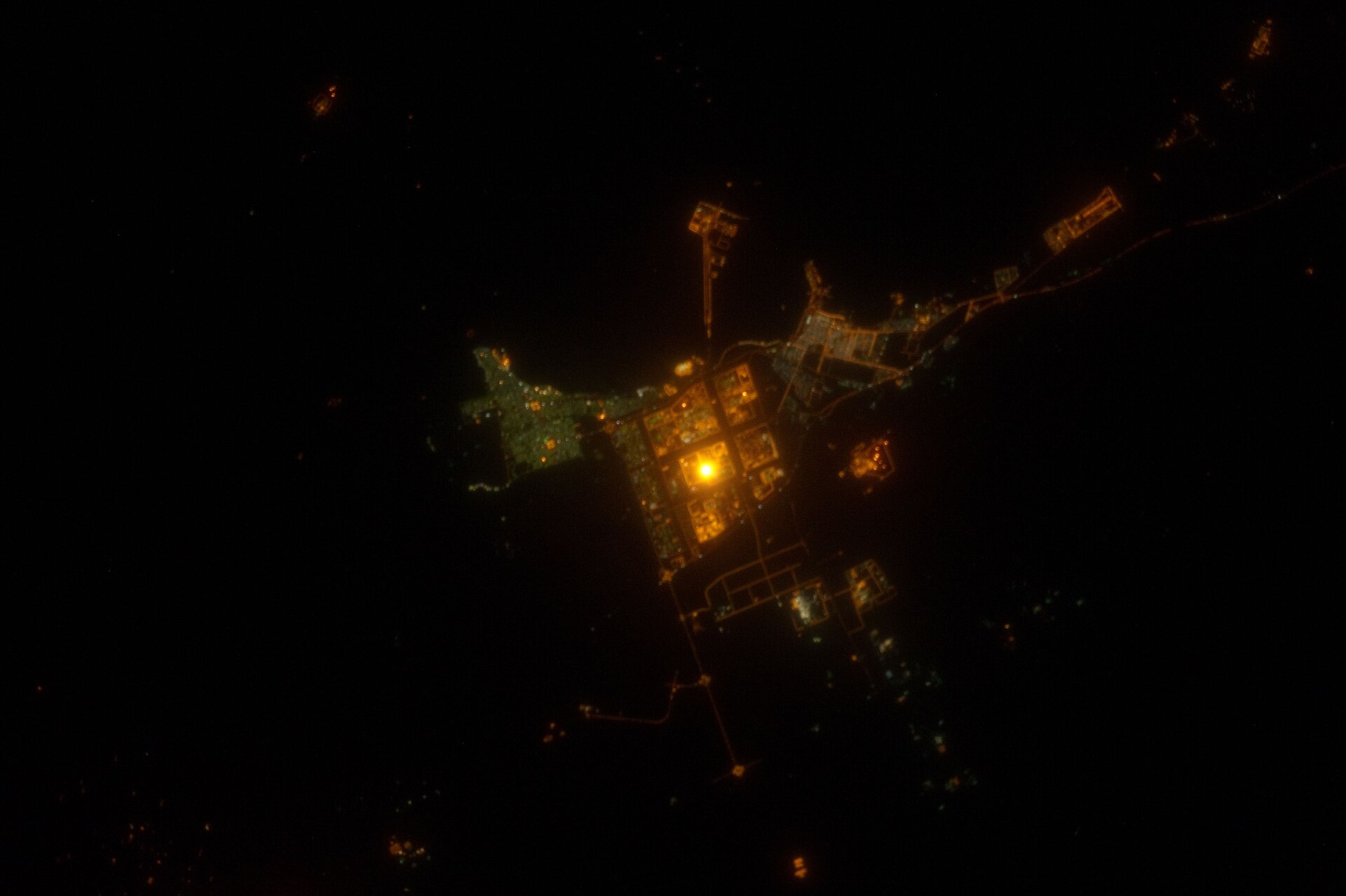
The operational content of Zolfaqari’s third limb — depriving allies of “oil and gas for years” — is not prospective. The IRGC demonstrated the mechanism hours before the statement was issued, when 11 ballistic missiles and 18 drones struck the Jubail industrial corridor on April 7, and while all 11 missiles were intercepted by Saudi Patriot batteries, falling debris triggered a fire at the SABIC complex that Saudi authorities have yet to fully characterize — the Ministry of Defense stated only that “damage assessment underway,” according to Al-Monitor and Upstream Online. What distinguished the April 7 attack was not the fire itself but the IRGC’s post-strike claim: for the first time in the war, the Khatam al-Anbiya headquarters explicitly named Sadara — the $20 billion Aramco-Dow Chemical joint venture — and ExxonMobil facilities as deliberate targets, not collateral damage, according to Al-Monitor reporting.
The naming of US corporate equity inside Saudi Arabia as intentional IRGC targets represents a doctrinal escalation that maps directly onto Zolfaqari’s “all precautions removed” language. Prior IRGC strikes on Gulf infrastructure had been framed as responses to specific provocations or as collateral consequences of operations directed at military targets — a framing that allowed Gulf states to maintain the diplomatic fiction that they were not themselves at war with Iran. By publicly claiming it “effectively targeted” an Aramco-Dow joint venture and ExxonMobil facilities, the IRGC has dissolved that fiction and replaced it with a targeting doctrine that treats American commercial presence inside allied territory as a legitimate military objective. The three-stage degradation of Jubail’s petrochemical capacity — Sadara shutdown in late March, SABIC force majeure on March 26-27, and the SABIC fire on April 7 — demonstrates a pattern of systematic industrial attrition rather than sporadic harassment, as Upstream Online’s reporting on the sequence makes clear.
“Regional American partners should know that, until now we have exercised significant restraint for the sake of good neighborliness and have taken precautions in selecting retaliatory targets, but from now on, all such precautions have been removed.”Brigadier General Ebrahim Zolfaqari, Khatam al-Anbiya Central Headquarters, April 7, 2026 — WANA News Agency / NPR
Can Saudi Air Defense Math Survive the Next Salvo?
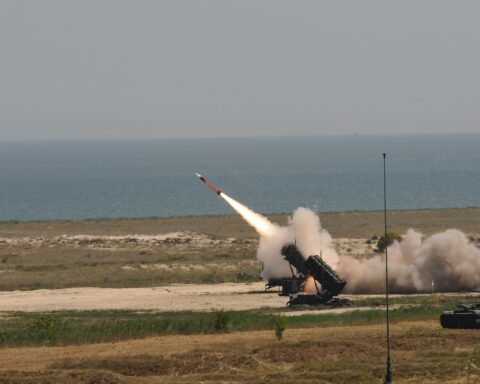
The arithmetic confronting Saudi Arabia’s Eastern Province is unforgiving. After 894 total intercepts since March 3 — 799 drones and 95 ballistic missiles, as documented by this publication on April 7 using DSCA and open-source tracking data — the kingdom’s PAC-3 Missile Segment Enhanced inventory stands at roughly 400 rounds, approximately 14 percent of the estimated 2,800-round pre-war stockpile. The implied expenditure on interceptors alone has reached $3.49 billion at the $3.9 million unit cost documented in DSCA notifications from February 2026. Lockheed Martin’s Camden, Arkansas facility produces approximately 620 PAC-3 MSE rounds per year — meaning Saudi Arabia is consuming interceptors at a rate that exceeds American production capacity by a factor the Pentagon has not publicly addressed, and Poland’s refusal on March 31 to transfer Patriot batteries to the Gulf further constrains the resupply pipeline.
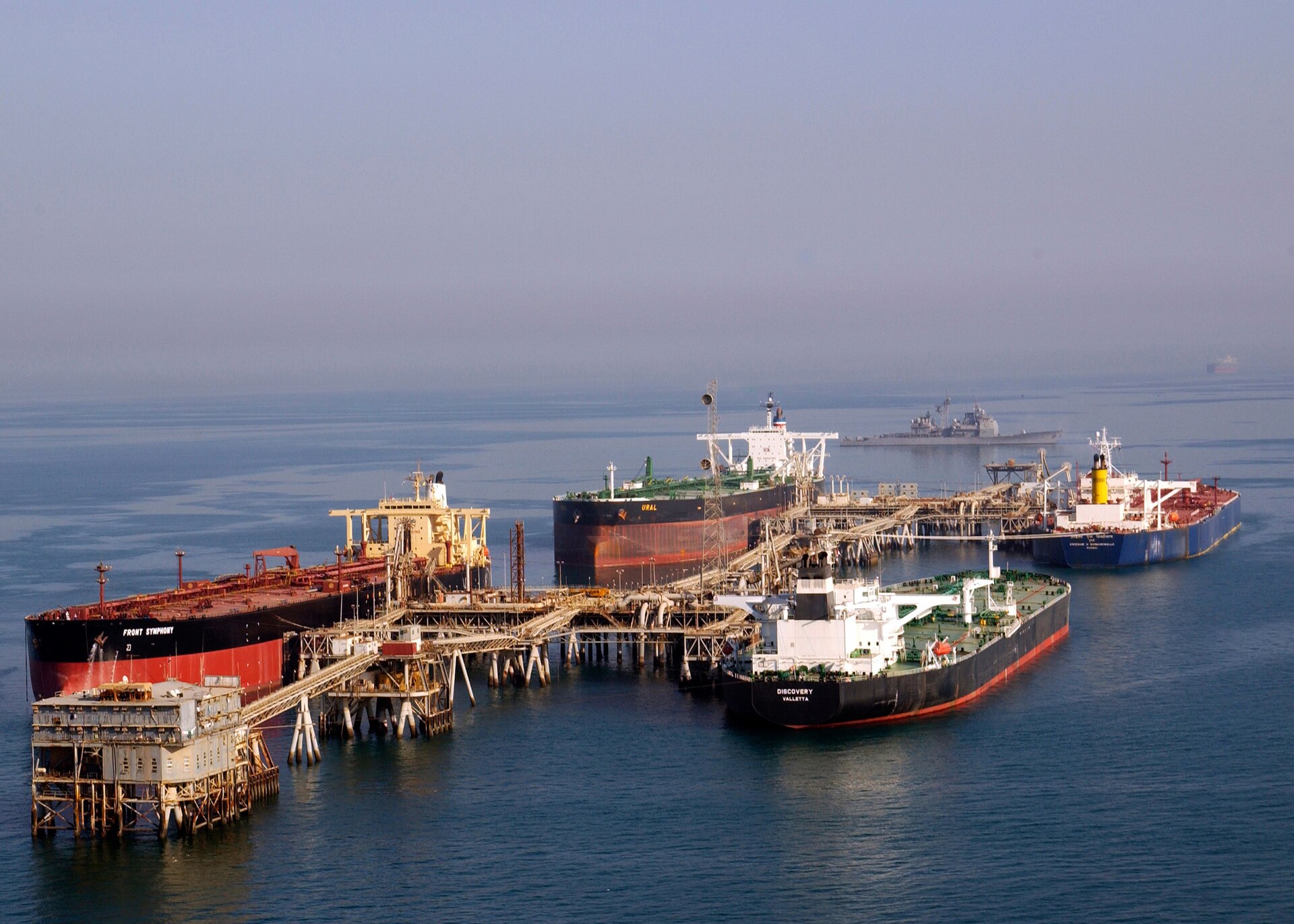
The geographic constraint sharpens the stockpile problem into an impossible triage. A single Patriot battery provides effective coverage across a radius of approximately 60 to 80 kilometers. Ras Tanura — the world’s largest offshore oil-loading facility and the terminus of Saudi Arabia’s Eastern Province export infrastructure — sits 65 to 73 kilometers from the Jubail industrial complex. Defending both simultaneously at full intercept density against a salvo of the scale the IRGC demonstrated on April 7 (11 ballistic missiles plus 18 drones to Jubail alone) requires more batteries than current deployments can provide, a coverage gap that the $16.5 billion in emergency US arms sales authorized since the war began addressed for the UAE, Kuwait, and Jordan — but not, notably, for Saudi Arabia, as the DSCA notifications confirm. Every salvo forces Saudi air defense commanders to make a binary choice between protecting crude-export infrastructure and protecting the petrochemical-industrial base, and Zolfaqari’s doctrine announcement promises those salvos will now arrive “far more forcefully and on a much wider scale.”
What Does the Trump Deadline Actually Determine?
Vice President JD Vance, speaking to NBC News on April 7, framed the administration’s position with unusual specificity: “The president’s deadline has been followed by us and everybody else… he has said very clearly, ‘We are not going to strike energy and infrastructure targets until the Iranians either make a proposal that we can get behind, or don’t make a proposal.’” The statement confirms what the operational sequence already implies — that Trump’s 8pm ET deadline determines whether the United States escalates to striking Iranian energy infrastructure (principally Kharg Island’s oil-export terminals, which handle more than 90 percent of Iran’s crude exports) rather than continuing the current pattern of military-only targeting. It does not determine, and cannot determine, whether Iranian escalation occurs — because that escalation has already been doctrinally committed by a command structure that no surviving civilian authority can override.
The asymmetry is structural. If Trump strikes Kharg’s energy infrastructure after the deadline expires, the IRGC’s Zolfaqari doctrine provides the pre-authorized framework for maximum retaliation against Gulf energy assets — the “oil and gas for years” language. If Trump extends the deadline or confines strikes to military targets, the IRGC’s own trigger condition (“if attacks on non-civilian targets are repeated”) has already been met by the 50-plus military strikes on Kharg on April 7. The April 7 Kharg strikes — which the US official carefully specified “did not involve oil assets,” targeting instead military bunkers and air defense systems — represent an attempt to maintain escalation pressure while staying below the energy-infrastructure threshold that Vance articulated. But the IRGC’s reformulated doctrine no longer distinguishes between civilian and military targets on Iranian soil as a trigger for regional retaliation: any strike now suffices.
Iran’s ambassador to Kuwait, Mohammad Toutounji, offered the diplomatic overlay in remarks reported by Arab News and AFP: “We hope that the countries in the region will use all their diplomatic and political capabilities to prevent such a tragedy from befalling the region.” In Islamabad, Iran’s ambassador delivered the harder message, as reported by NPR: “Sooner or later America will leave this region by accepting defeat and you will stay.” The two statements, diplomatic appeal and strategic threat, are not contradictory — they are the two faces of the IRGC’s post-restraint posture, offering Gulf states a final choice between distancing themselves from American basing and accepting classification as legitimate targets under the Zolfaqari doctrine.
The Pattern: IRGC Public Commitment Precedes Operational Action
The credibility assessment for Zolfaqari’s statements rests not on rhetoric but on the observable pattern this war has established: when the IRGC publicly commits to a category of action through official channels, operational execution follows. In March, the IRGC vowed through PressTV to “set fire to any ship” violating its Hormuz restrictions — vessel seizures began within days. After the United States struck Bank Sepah, Iran’s military banking infrastructure, the IRGC warned of hitting US and Israeli financial and technology infrastructure — and AWS data centers in the UAE were subsequently struck, as documented by Critical Threats on March 16, 2026. On April 4-5, as Tom’s Hardware reported, the IRGC released satellite imagery of OpenAI’s $30 billion Stargate datacenter facility in the UAE accompanied by language promising “complete and utter annihilation” — a pre-announcement of targeting that followed the same public-commitment-then-action sequence.
US intelligence officials, quoted by the Washington Post on March 7, 2026, assessed that the war was “unlikely to lead to a lasting change of the regime” and that the IRGC may become “emboldened after, in the IRGC’s eyes, successfully standing up to the United States and Israel.” That assessment predated the Vahidi junta’s consolidation, the two consecutive intelligence-chief killings, and the systematic hollowing of civilian authority that has left the Khatam al-Anbiya headquarters as the sole functioning organ of Iranian strategic communication. The Zolfaqari doctrine is the product of an institution that has both the capability and the organizational autonomy to execute what it announces — and that has, across 39 days of war, consistently done so. The diplomatic architecture that might have constrained it — the UN Security Council, where Russia, China, and France vetoed a Bahrain-drafted Hormuz resolution — has already failed.
Background and Context
The Iran-US war began on February 28, 2026, and has now entered its 39th day with no active ceasefire framework commanding agreement from any party with operational authority. A 45-day phased ceasefire proposal, reported by Axios and The National from four sources, was assessed as having “slim” chances even before the IRGC’s April 7 escalation commitment — its Phase 1 deferred the Hormuz sovereignty question to Phase 2, a structural flaw that Iran’s five stated preconditions (including Hormuz sovereignty recognition) made unworkable from the outset. Pakistan, Egypt, and Turkey have each attempted mediation; all three efforts collapsed against the same authorization-ceiling problem that Zolfaqari’s doctrine now renders explicit: no one inside Iran’s current command structure possesses both the authority and the incentive to accept constraints on IRGC operations.
Saudi Arabia’s wartime exposure concentrates in the Eastern Province, where crude-export infrastructure (Ras Tanura), petrochemical capacity (Jubail, including SABIC and Sadara), and refining facilities cluster within a geographic corridor that a single IRGC salvo can threaten simultaneously. The IRGC is assessed by US intelligence as retaining approximately 50 percent of its pre-war missile arsenal while sustaining multi-vector attacks in quantities that stress the intercept-to-salvo ratio. The East-West Pipeline to Yanbu, at maximum capacity of 7 million barrels per day according to Aramco CEO Amin Nasser, cannot absorb the full pre-war export volume, and the Yanbu terminus sits within range of Houthi-aligned forces from Yemen.
Trump’s April 7 deadline — originally set for April 6 at 8pm ET, then shifted by approximately one hour according to Fortune’s reporting, before settling on April 7 at 8pm ET — has functioned throughout as a unilateral American escalation clock rather than a diplomatic instrument. The deadline’s operational content, as Vance confirmed to NBC News, is the potential expansion of US targeting to Iranian energy infrastructure — a step the administration has thus far avoided despite striking Kharg Island’s military assets twice. The IRGC’s Zolfaqari doctrine, by pre-committing to maximum retaliation regardless of whether US strikes remain confined to military targets, has effectively decoupled Iranian escalation from American escalation management: the two clocks are now running independently, with Saudi Arabia’s Eastern Province sitting at the intersection of both.
Frequently Asked Questions
What is the Khatam al-Anbiya Central Headquarters?
Khatam al-Anbiya (literally “Seal of the Prophets”) is Iran’s supreme joint military command, coordinating operations across the regular army (Artesh), IRGC ground forces, IRGC Navy, and IRGC Aerospace Force. It functions as Iran’s equivalent of a unified combatant command, and statements issued through its spokesperson carry the institutional authority of the entire Iranian military establishment — which is why Western intelligence has treated Zolfaqari’s April 7 announcement as a doctrine commitment rather than negotiating rhetoric.
Has the IRGC ever issued similar public commitments without following through?
The wartime record shows consistent follow-through: the March vessel-seizure warning preceded actual seizures; the banking-infrastructure warning preceded strikes on AWS facilities in the UAE; the Stargate datacenter satellite-imagery release on April 4-5 employed the same pre-announcement methodology, as documented by Critical Threats and Tom’s Hardware. The wartime institutional incentive structure under Vahidi’s junta rewards escalation credibility, and no internal constituency benefits from issuing empty warnings during a conflict in which two consecutive intelligence chiefs have been killed.
Could a ceasefire still be reached before the deadline expires?
The structural obstacles are formidable: the Axios 45-day framework required Phase 2 Hormuz sovereignty negotiations that Iran’s preconditions make unworkable; Pakistan’s Islamabad Accord collapsed; and the Zolfaqari doctrine, by pre-committing to escalation through the military’s apex command, has created an institutional commitment that only the Supreme Leader could rescind — authority that cannot be exercised while Khamenei remains absent. The gap between the 15 ceasefire proposals circulating and the 5 Iran has acknowledged receiving, despite direct Witkoff-Araghchi texts, reflects a fundamental disconnect between the diplomatic channel and the military command structure that now controls Iranian decision-making.
What specific Saudi infrastructure is most at risk under the new IRGC doctrine?
Zolfaqari’s “oil and gas for years” language, combined with the IRGC’s explicit naming of Sadara (Aramco-Dow, $20 billion joint venture) and ExxonMobil facilities as April 7 targets, points to a targeting doctrine prioritizing infrastructure with American corporate equity — encompassing Jubail’s petrochemical corridor, Ras Tanura’s offshore loading platforms, and potentially the Shaybah oil field’s NGL facilities. The IRGC’s April 4-5 release of satellite imagery of the $30 billion Stargate datacenter in the UAE, reported by Tom’s Hardware, suggests the target set extends beyond hydrocarbons to any infrastructure representing significant American capital investment in the Gulf.
What is the IRGC’s Mosaic Defense doctrine and why does it matter for escalation control?
Mosaic Defense, developed under former IRGC Commander General Jafari, divides Iran into 31 semi-autonomous provincial commands with independent intelligence cells, organic weapons stockpiles, and pre-delegated strike authority activated automatically if communications with Tehran are severed, as reported by the Sunday Guardian Live and the Jerusalem Post. The doctrine was designed to ensure decapitation strikes could not paralyze retaliatory capacity. With two consecutive intelligence chiefs killed and central command coherence degrading, Mosaic Defense means that even a central decision to de-escalate may not propagate to provincial commanders already operating under pre-delegated authority — making Zolfaqari’s commitment functionally irreversible at the operational level. The Security Council’s failure to provide any multilateral framework was confirmed hours later when Russia and China vetoed the Hormuz resolution 11–2, formally exhausting every diplomatic track available to the Gulf states and leaving Saudi Arabia’s Article 51 self-defense architecture as the only operative legal framework. The allied response to that legal vacuum has so far been limited to short-range systems: the UK air defence deployment to Saudi Arabia fills the drone layer but cannot reach the ballistic-missile altitudes that drove the IRGC doctrine Zolfaqari announced that day.