
Riyadh is not the barren desert city that many outsiders imagine. The Saudi capital has over 700 public parks, more than 87 of which opened in the last three years alone, and an ambitious programme called Green Riyadh that aims to plant 7.5 million trees by 2030. Whether you are looking for a morning jog through shaded trails, a family picnic beside an artificial lake, or a dramatic wadi hike just beyond the city limits, Riyadh delivers. This guide covers the capital’s best parks and green spaces in detail, from heritage palm oases in the old city centre to the mega-projects reshaping the skyline. Pair it with our wider Riyadh travel guide for a complete trip plan, and see the Saudi Arabia travel guide if you are building a multi-city itinerary.
Best Time to Visit: November to March (15-25 °C daytime; pleasant for outdoor activities)
Getting There: King Khalid International Airport (RUH); parks spread across the city — Uber and SRTA metro available
Visa Required: Yes — tourist e-visa available for 63 nationalities
Budget: USD 5-20 per day for park entry and activities; many parks are free
Must-See: Salam Park, Wadi Hanifah, King Abdullah Park
Avoid: Visiting between June and September when afternoon temperatures regularly exceed 45 °C
Why Riyadh’s Green Spaces Matter
In a city where summer temperatures climb past 48 °C, green space is not a luxury — it is infrastructure. The Royal Commission for Riyadh City launched the Green Riyadh programme in March 2019, committing to increase the per-capita share of green space from 1.7 square metres to 28 square metres by 2030. That represents a sixteen-fold expansion. The scheme covers 1,204 kilometres of main roads, 43 city parks, 387 neighbourhood parks, 4,500 mosques, 4,515 schools, and 148 square kilometres of valleys and tributaries. Every drop of irrigation water is recycled, not drawn from the aquifer. The result, already visible in newly planted boulevards and freshly turfed neighbourhood squares, is a city that takes its desert identity seriously while actively softening it.
For travellers, this means more shade, more walking routes, and more reasons to leave the mall. Riyadh’s parks range from pocket-sized neighbourhood squares where families spread blankets after Maghrib prayer to 80-kilometre-long wadis that cut through the Najd Plateau. What follows is a curated guide to the best of them.
Salam Park — Riyadh’s Family Favourite
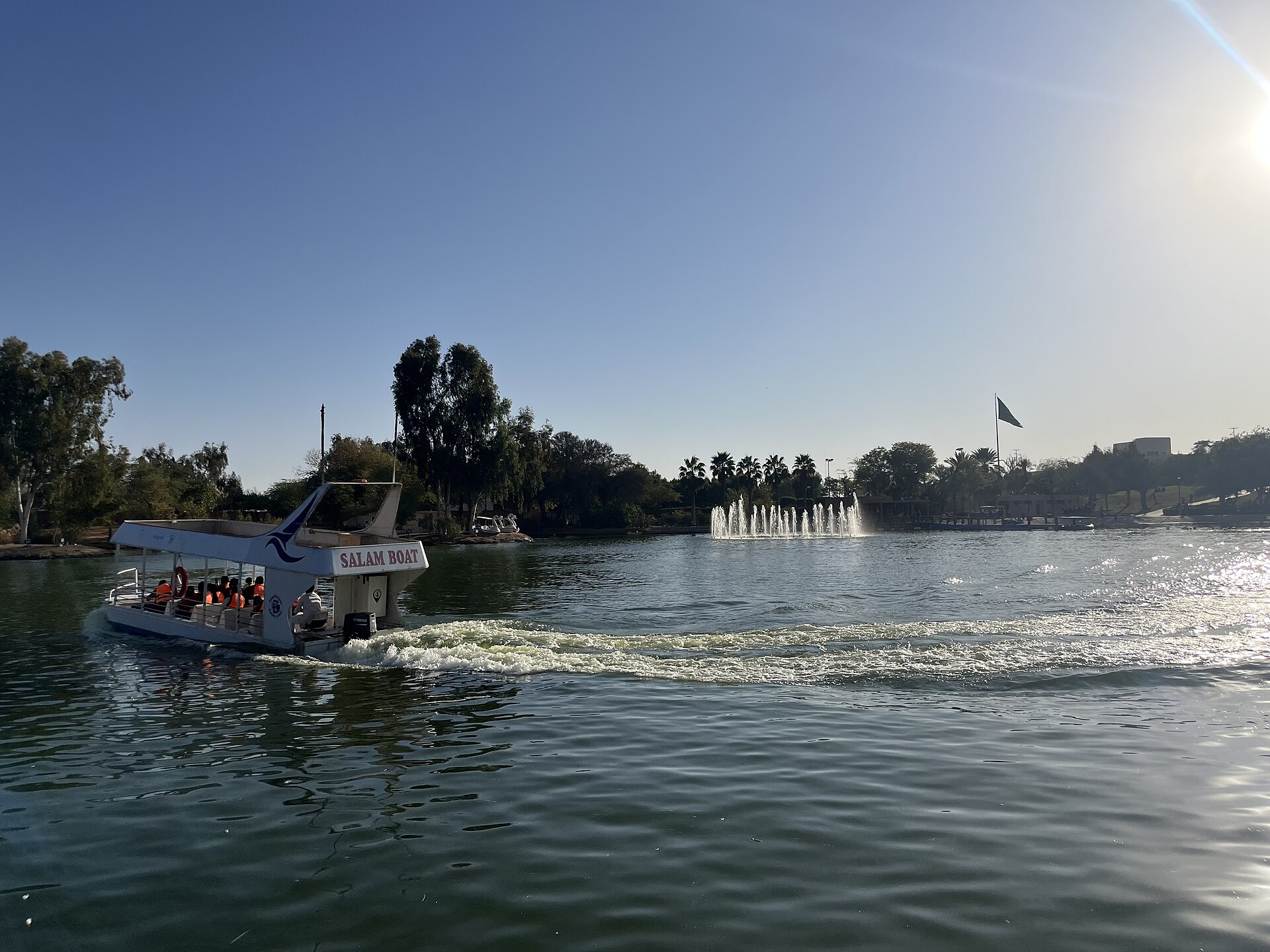
Salam Park is a 61-acre urban park in the Al-Salam district, southwest of the historic Qasr al-Hukm quarter. Opened in 2004, it was built on the site of a date-palm orchard once owned by Prince Abdullah bin Abdul Rahman. The park’s centrepiece is a 3.3-hectare artificial lake with a fountain display and shuttle-boat rides (SAR 10 per person). A one-kilometre pedestrian track rings the water, and the park includes jogging trails, children’s play areas, sports fields, swimming pool, a mosque, and grassy picnic zones. A charming park train runs a leisurely loop for those who prefer to sit.
Practical Details
- Entry fee: SAR 5.25 (approximately USD 1.40). Children under 3 and visitors with disabilities enter free.
- Opening hours: Generally 4:00 PM to 2:00 AM. Hours may vary seasonally.
- Location: Al-Salam district, accessible by car or ride-hailing apps.
- Time needed: 2-3 hours for a full visit with boat ride.
- Entry fee: SAR 11.50 for adults. Children’s swimming pool costs an additional SAR 35.
- Opening hours: Monday to Saturday, 1:00 PM to midnight. Closed Sundays for maintenance. Winter hours may shift (1:00 PM to 11:00 PM).
- Location: Al Ameen Abdullah Al Ali Al Naeem Street, Al Malaz.
- Getting there: About 32 km from King Khalid Airport (roughly 40 minutes by car); 20-30 minutes from central Riyadh.
- Entry fee: Free.
- Opening hours: Open 24 hours, though best visited in daylight for trail safety.
- Best time: November to April. The valley is magical at sunset when the low light catches the sandstone escarpments.
- Getting there: Multiple access points along its 80 km length. The Sports Boulevard section near Diriyah is most developed.
- What to bring: Water, sun protection, comfortable walking shoes. Parts of the trail are unpaved.
- Entry fee: Free.
- Trail distance: Approximately 13 km perimeter trail; allow 3-4 hours for a full walk.
- Best for: Jogging, mountain biking, strolling. The interconnected trail system means you can design routes of any length.
- Getting there: Ride-hailing or private car. The DQ is in western Riyadh, about 20 minutes from the city centre.
- Entry fee: Free.
- Best time: Late afternoon or after sunset, especially in cooler months (November to March).
- Getting there: Southern Riyadh, about 30 minutes from the city centre by car. No public transit access.
- What to bring: Picnic supplies, a light jacket for winter evenings.
- Wadi Hanifah Destination: 13.4 km with pedestrian, cycling, and equestrian trails through the valley.
- The Promenade: A 4-kilometre urban walkway designed following Salmani architectural principles.
- Cycling Bridge: At the intersection of King Khalid Road and Prince Mohammed bin Salman bin Abdulaziz Road, with a 1-kilometre pedestrian path and 771-metre cycling path.
- Princess Nourah bint Abdulrahman University Loop: An internal trail circuit around the university campus.
- Sands Sports Park (Phase 1): Active recreation zone with sports facilities.
- Hours: Saturday-Tuesday 9:00 AM to midnight; Wednesday-Friday 9:00 AM to 1:00 AM.
- Entry fee: Free before 5:00 PM. SAR 50 from 5:00 PM onward.
- Parking: SAR 30 for 3 hours. Valet SAR 195.
- Entry fee: SAR 11.50 for adults, SAR 5.75 for children. Children under 3 free. Train ride SAR 4.60.
- Opening hours: Friday and Saturday 9:00 AM to 4:45 PM. Sunday closed. Weekday schedules vary; some days are family-only, others are designated male-only or female-only. Check the Riyadh Zoo website before visiting.
- Time needed: 2-3 hours.
- Uber/Careem: The most convenient option. Both apps work reliably across Riyadh. A cross-city ride rarely exceeds SAR 50.
- Rental car: Best for day trips to Wadi Namar, Edge of the World, or the Sports Boulevard’s extended trail system. International licences accepted for tourists.
- Walking: Practical within the Diplomatic Quarter trail network and along the Sports Boulevard. Not practical between parks — Riyadh’s scale and heat make inter-park walking unrealistic.
- Water: Carry at least 1.5 litres per person, more for Wadi Hanifah or Edge of the World.
- Sun protection: Hat, sunglasses, and sunscreen. Even in winter, the desert sun is strong.
- Comfortable shoes: Trainers for paved parks; hiking shoes for Wadi Hanifah’s unpaved sections and Edge of the World.
- Light layers: Winter evenings can drop to 8 °C. A light jacket is wise for after-dark park visits November to February.
- Prayer awareness: Parks may close or restrict access briefly during prayer times. Check the prayer times travel guide for specifics.
- Picnic supplies: Many parks have no food vendors beyond small kiosks. Pack snacks, especially for Wadi Hanifah and Wadi Namar.
- King Abdullah Park + Al Malaz — Combine the fountain show with dinner in Al Malaz’s old-school restaurant scene.
- Wadi Hanifah + Diriyah — Cycle the Sports Boulevard wadi trail, then visit the At-Turaif UNESCO site and Bujairi Terrace.
- Diplomatic Quarter parks + Embassy dining — Jog the DQ trail, then eat at one of the international restaurants clustered around the Diplomatic Quarter.
- Edge of the World + stargazing — Drive out for sunset, stay for one of the darkest skies within easy reach of a major city.
- Salam Park + Qasr al-Hukm — The park is a five-minute drive from Riyadh’s historic administrative quarter and the Islamic heritage cluster.
- Riyadh Travel Guide 2026 — The complete guide to Saudi Arabia’s capital city
- Edge of the World from Riyadh — Everything you need to know about the Tuwaiq Escarpment day trip
- Diriyah Day Trip from Riyadh — UNESCO heritage, Bujairi Terrace, and Wadi Hanifah trails
- Riyadh Diplomatic Quarter — Parks, cafes, and culture in the city’s greenest neighbourhood
- Riyadh Season Guide 2025-2026 — Events, zones, tickets, and what to expect
- Saudi Arabia Travel Guide 2026 — The complete guide to visiting the Kingdom
- Saudi Arabia Visa Guide — Every visa type explained
Tip: Visit after sunset when the temperature drops and the fountains are illuminated. Salam Park is particularly atmospheric on weekend evenings when local families fill the lawns.
King Abdullah Park — The Dancing Fountains of Al Malaz
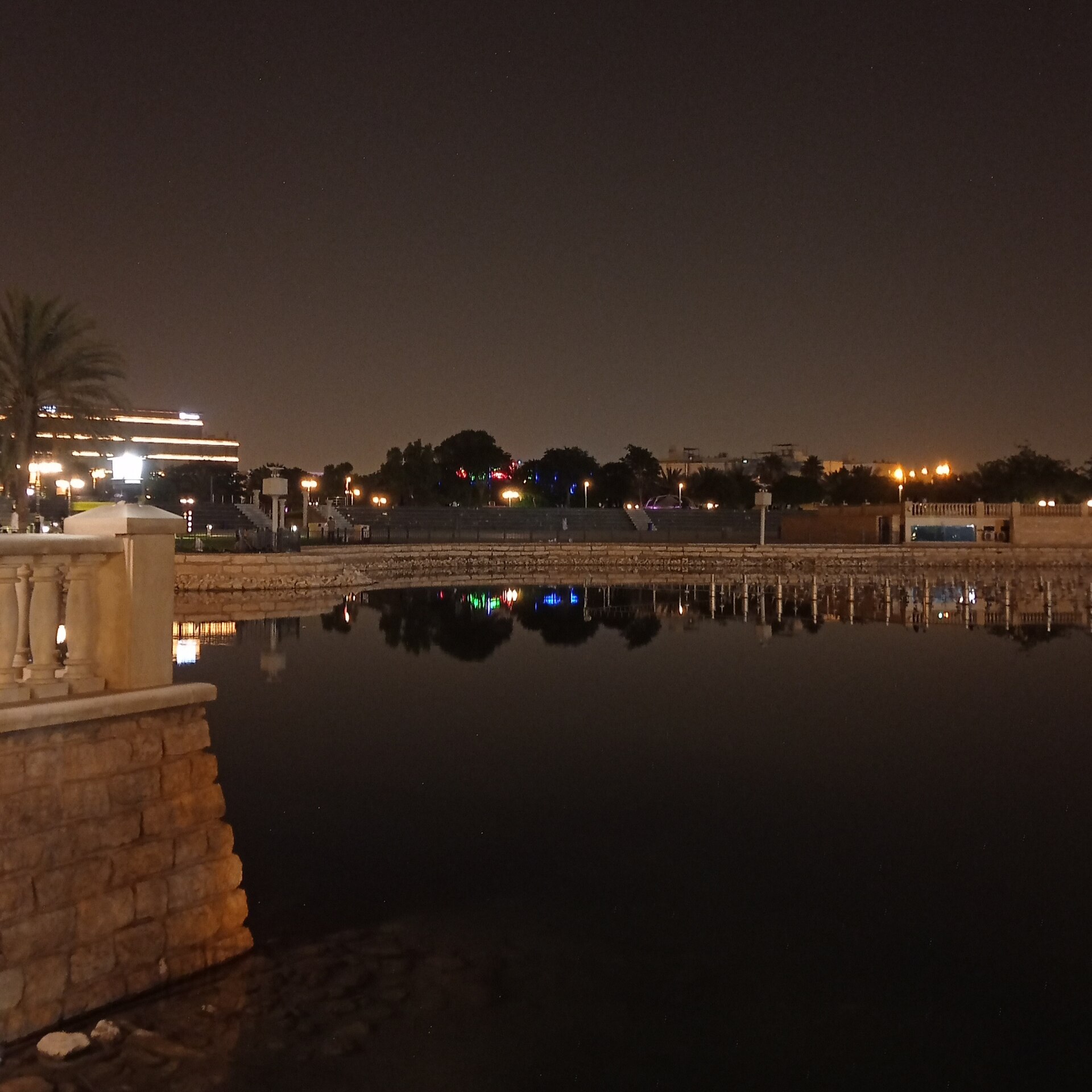
King Abdullah Park (also known as Al Malaz Park) occupies 318,000 square metres in the Al Malaz district, near Prince Faisal bin Fahd Stadium. It is one of Riyadh’s largest and best-maintained parks, with wide pathways for jogging and cycling, manicured lawns for picnicking, a large children’s play area, an auditorium for cultural events, and a signature attraction: the dancing water fountain. The nightly show starts at 6:15 PM, combining choreographed water jets, coloured lights, and laser projections. It is free to watch from the lakeside promenade and draws large crowds, especially on Thursday and Friday evenings.
Practical Details
Tip: Arrive by 5:30 PM to claim a good viewing spot for the fountain show. The lakeside promenade fills up fast on weekend nights.
Wadi Hanifah — An 80-Kilometre Natural Corridor
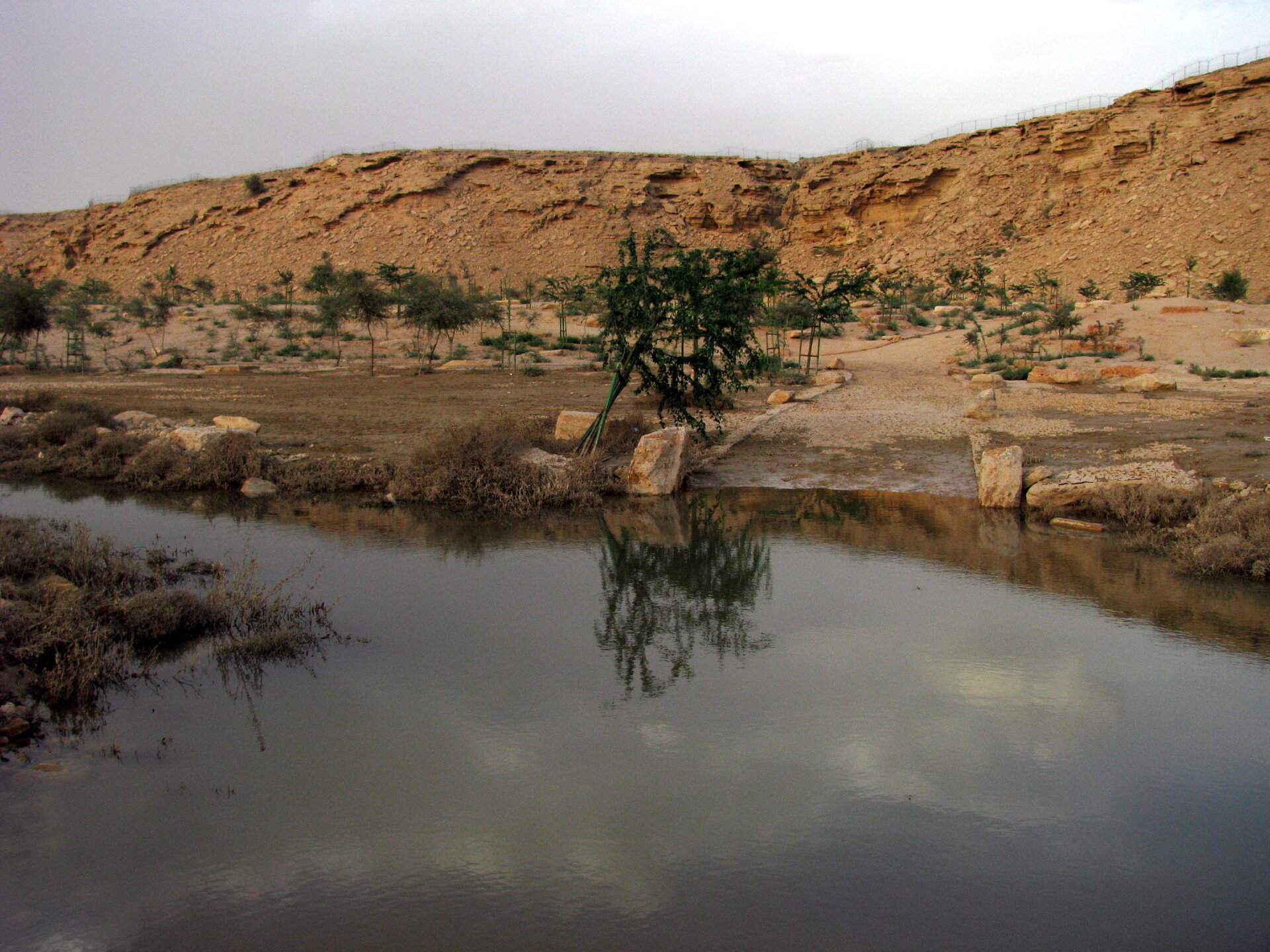
Wadi Hanifah is Riyadh’s most significant natural landscape feature: an 80-kilometre valley that cuts through the Najd Plateau and runs directly through the heart of the city. Once degraded by unchecked development, the wadi underwent a comprehensive rehabilitation that earned it the Aga Khan International Award for Architecture. Today it functions as a linear park system with over 50 kilometres of paved and gravel walking and cycling trails, connecting multiple sub-parks, picnic areas, and historic sites. The valley’s restored greenery, fed entirely by recycled water, supports more than 9,500 trees and hundreds of date palms.
Key Sections
Wadi Hanifah Dam Park: Features 27 distinct sitting areas along a scenic 5.6-kilometre walking path. The dam creates a picturesque water feature, especially after winter rains.
Al-Musanaa Lake Park: A 40,000-square-metre lake (10 metres deep) with 4 kilometres of pedestrian walkways and 22 seating areas. Good for bird-watching.
Al-Jazeera Lake Park: A 35,000-square-metre lake (3 metres deep) with 5.5 kilometres of walkways and 37 seating areas. The shallowest and most family-friendly of the wadi’s lake parks.
Sports Boulevard Connection
Since February 2025, Wadi Hanifah has formed the anchor of the Sports Boulevard project’s first phase. The 13.4-kilometre Wadi Hanifah Destination stretches from Al-Olab Dam in the north to Jeddah Road in the south, passing through the Diriyah Gate development. It includes dedicated pedestrian, cycling, and equestrian trails, making it the longest continuous off-road exercise route in the city. If you are planning a day trip to Diriyah, the wadi trails offer a natural route between the two areas.
Practical Details
Tip: Rent a bicycle from one of the Sports Boulevard stations at the Promenade entrance and cycle the full 13.4-kilometre Wadi Hanifah Destination. The trail is flat and well-surfaced, suitable for casual riders.
The Diplomatic Quarter Parks — Riyadh’s Greenest Neighbourhood
The Diplomatic Quarter (DQ) was designed from inception with greenery at its core. Roughly 30% of the quarter’s total area is dedicated to public parks, gardens, and plazas — a striking proportion by any global city standard, let alone a desert capital. There are 17 named gardens and parks within the DQ, connected by an approximately 13-15 kilometre network of walking and jogging trails that wind along escarpment edges, through landscaped wadis, and past public art installations.
Standout Parks in the DQ
Al Arudh Garden: One of the largest parks in the DQ, with playgrounds, fountains, a mosque, and vast lawns ideal for picnicking. Popular with families on weekends.
Hajer Garden (Rock Park): An artistically designed park where natural rock formations are integrated into the landscape design. Paths wind between sculptural rock structures and planted terraces.
Al Arid Park: Known for its lush green grass and a covered walkway that loops the perimeter — a popular route for early-morning joggers escaping the heat.
Practical Details
Wadi Namar — Desert Waterfall on the Southern Edge
Wadi Namar Dam Park, inaugurated in 2012, sits on Riyadh’s southern outskirts and offers something you do not expect in the Arabian desert: a waterfall. The 2-kilometre dam creates an artificial lake surrounded by green spaces, rocky hillsides, and pedestrian walkways. An artificial waterfall cascades over the dam’s central section, and the entire valley has been reforested with more than 520 date palms along the walkways and 9,500 trees throughout the valley.
Activities include cycling, walking, and simply sitting by the lake to feed the resident ducks. The park has separate male and female amenity areas, including washrooms with ablution facilities and marked prayer spaces. Wadi Namar is particularly popular at night, when illuminated pathways and the waterfall’s lights reflect across the water.
Practical Details
The Sports Boulevard — The World’s Largest Linear Park
The Sports Boulevard is Riyadh’s most ambitious green infrastructure project after King Salman Park. When completed, it will stretch 135 kilometres across Prince Mohammed bin Salman bin Abdulaziz Road, connecting Wadi Hanifah in the west to Wadi Al Sulai in the east. The numbers are staggering: 4.4 million square metres of greenery, 220 kilometres of cycling tracks, 149 kilometres of horse-riding trails, and continuous pedestrian walkways across the entire route.
Phase one opened to visitors on 27 February 2025, covering 83 kilometres with 40% overall completion. The five open destinations are:
Construction continues on remaining destinations, including the Urban Wadi, the King Abdulaziz Road Underpass, and the Abi Bakr Al-Siddiq Road Underpass. When fully open, the Sports Boulevard will be the longest linear park on earth. For visitors arriving in 2026, the Wadi Hanifah and Promenade sections alone justify a half-day visit.
King Salman Park — The Future of Riyadh’s Green Identity
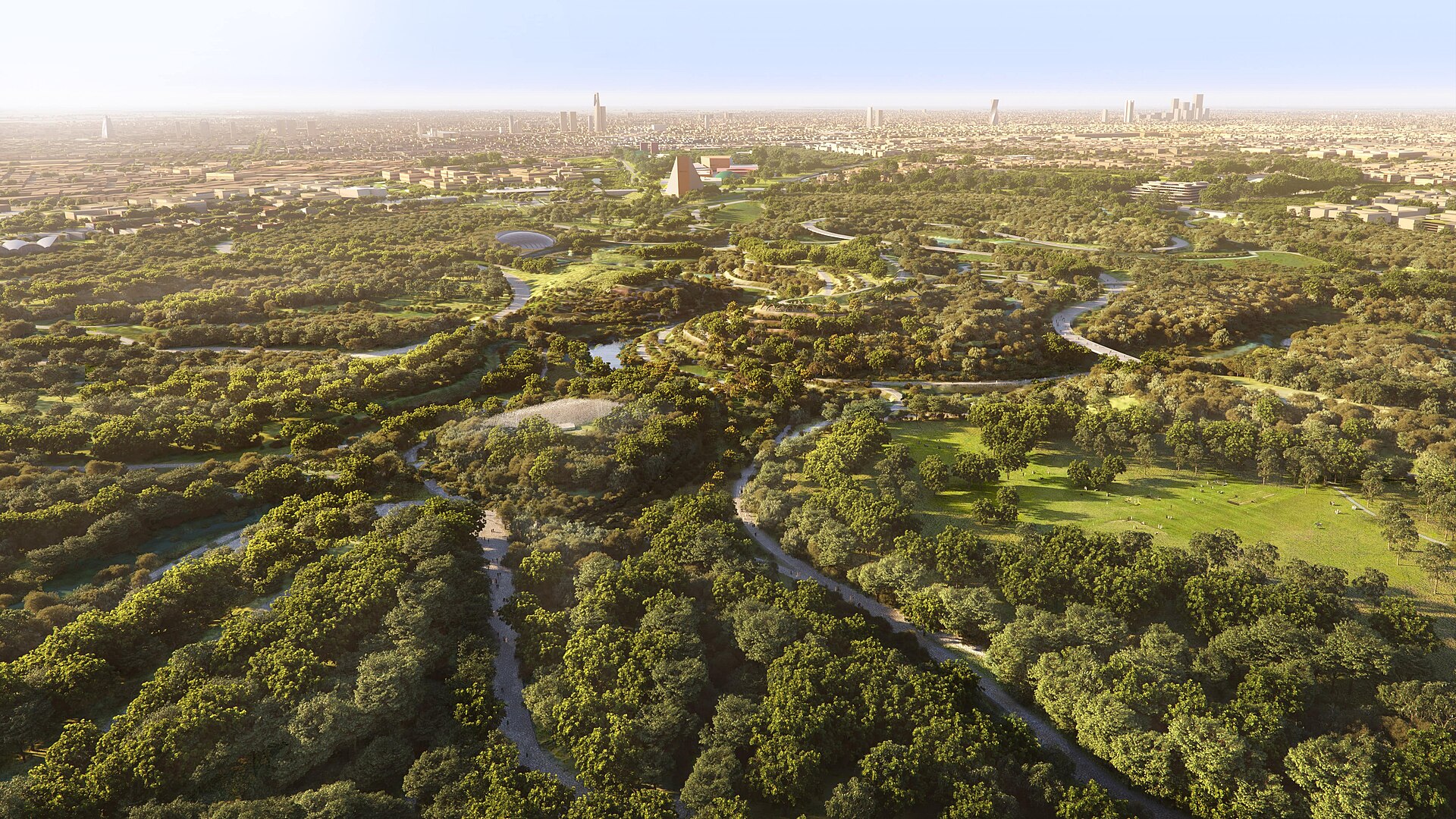
King Salman Park is being built on the 16.6-square-kilometre site of Riyadh’s former airport. When complete, it will be one of the largest urban parks in the world — roughly seven times the size of Hyde Park in London and five times that of Central Park in New York. The park will contain gardens, museums, theatres, lakes, sports facilities, a Royal Arts Complex, and a cascade wadi landscape feature.
Announced in 2019 under the patronage of King Salman bin Abdulaziz Al Saud as part of Vision 2030, the project passed 48% overall construction completion in 2024, with more than 90% of construction packages now under contract. Over 13,000 workers are delivering infrastructure across the development, and more than 13 million cubic metres of soil have been excavated. The Art Park section within Phase 1 is expected to be the first area to open in late 2026, with broader completion targeted for 2027.
Visitors arriving in Riyadh in late 2026 may catch the Art Park opening. For now, the perimeter of the construction site offers a sense of the project’s scale — the former runway axis is visible from several surrounding roads.
Al Bujairi Terrace and Diriyah Gardens
Al Bujairi Terrace, part of the Diriyah Gate development adjacent to the UNESCO World Heritage Site of At-Turaif, blends heritage with manicured green space. Spanning 15,000 square metres, the terrace features man-made waterfalls, gardens, and more than 20 high-end restaurants and cafes. It functions as a cultural dining destination with genuine garden atmosphere — the kind of place where you walk between meals through planted courtyards with the mud-brick walls of old Diriyah as a backdrop.
The surrounding Diriyah area, which connects to the Wadi Hanifah trail system, offers additional green walking routes. Combine a visit with our Diriyah day trip guide for a full itinerary.
Practical Details
Riyadh Zoo — Green Space with Wildlife
Riyadh Zoo (also known as Malaz Zoo), established in 1987, covers 55 acres in the Al Malaz district, making it the Kingdom’s largest zoo. It is home to more than 1,500 animals across 196 species, including lions, tigers, gorillas, chimpanzees, elephants, zebras, crocodiles, and flamingos. While it is primarily a wildlife attraction, the zoo’s extensive tree cover and shaded pathways make it one of Al Malaz’s greenest areas. An open-air train provides a 20-minute tour of the entire grounds.
Practical Details
The Palm Oasis at Murabba
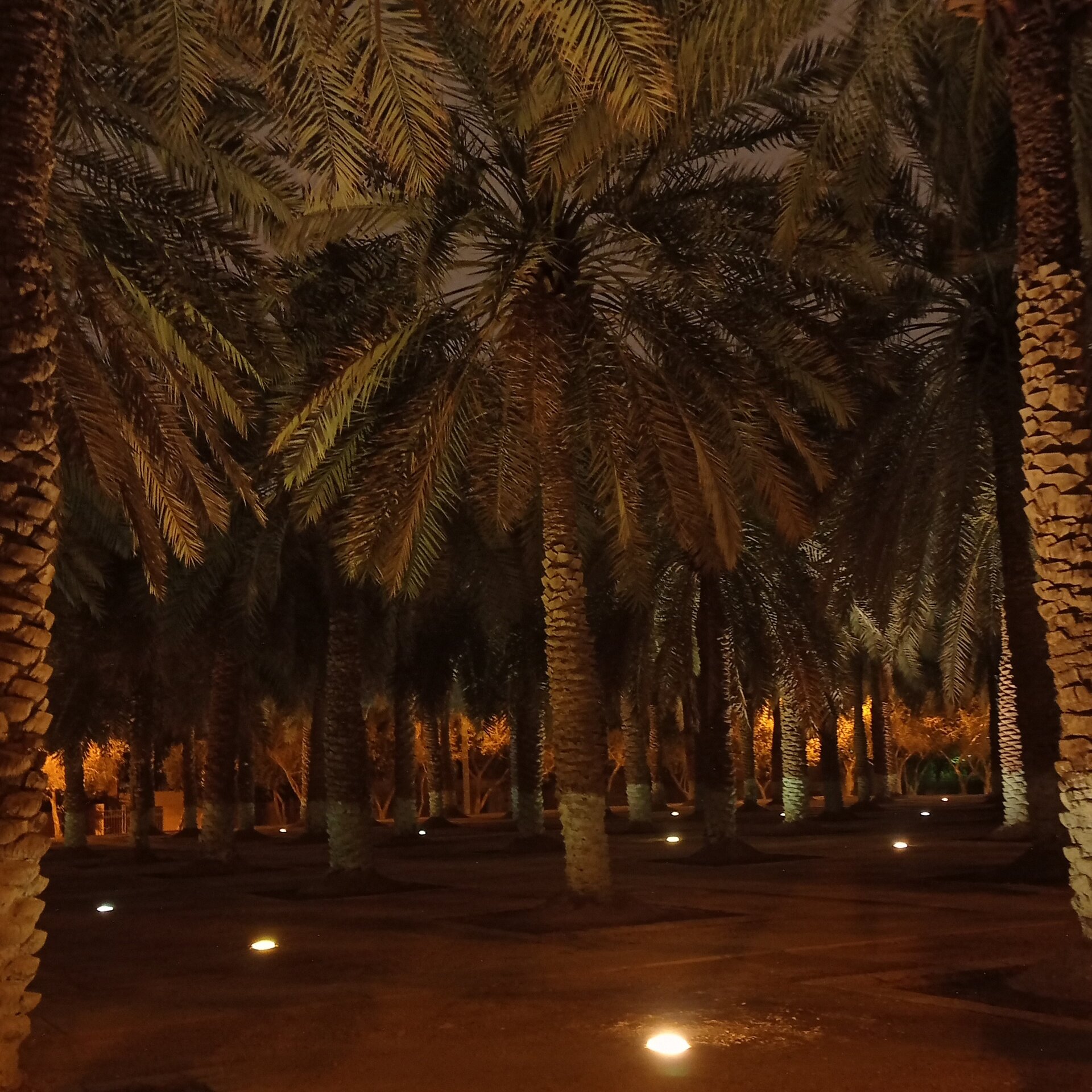
Tucked into the Murabba district near the National Museum and the Murabba Palace, remnant date-palm oases survive as living fragments of old Riyadh. Before the oil era, the Wadi Hanifah basin was lined with date gardens that defined the city’s economy and identity. The palm oasis at Murabba, beautifully lit at night with ground-level illumination, offers a quiet, atmospheric walk through dense palm canopy — a stark contrast to the glass towers visible beyond the treeline. It pairs naturally with a visit to the Islamic heritage sites of Riyadh, many of which cluster in the same historic core.
Neighbourhood Parks Worth Knowing
Beyond the headline parks, Riyadh’s 700-plus neighbourhood parks include several that reward a detour:
Olaya Park: A 37,000-square-metre oasis in the heart of the Olaya commercial district, featuring an artificial lake with natural stone details and cascading waterfalls. It is a popular after-work spot for residents of surrounding office towers.
Yamamah Park: Near the King Abdullah Financial District in the Murabba area, offering playground facilities and shaded walking paths among mature trees.
Al Munsiyah Park: One of three new city parks launched by Green Riyadh in 2025, spanning part of the 550,000-square-metre combined development across the Al Munsiyah, Al Rimmal, and Al Qadisiyah neighbourhoods. These represent the newest generation of Riyadh parks — designed with recycled-water irrigation, native planting, and modern play equipment.
If you are staying in north Riyadh, the proliferation of new neighbourhood parks means a green space is rarely more than a five-minute drive from any residential compound.
Edge of the World — Riyadh’s Greatest Day Trip
Strictly speaking, the Edge of the World is not a park — it is a geological formation roughly 90 kilometres northwest of the city. But it belongs in any guide to Riyadh’s outdoor green spaces because it is the natural endpoint of the Tuwaiq Escarpment, the same ridge system that shapes Wadi Hanifah’s course through the capital. The 700-kilometre escarpment terminates at 300-metre cliffs that drop away to an unbroken desert horizon, earning the site its nickname. The landscape is rich in fossils from roughly 50 million years ago, when the escarpment was an ocean floor.
Access is via two routes — the Acacia Valley route (weekends only) and the Sadus Dam route (daily). Both require a 4×4 vehicle for the final stretch. Plan 30 minutes to 1 hour of hiking once you arrive. Organised tours from Riyadh cost from SAR 200-400 per person and typically include transport, a guide, and sometimes a sunset dinner. The Edge of the World is free to enter and there is no ticketing.
Tip: Go for sunset. The light on the escarpment face changes dramatically in the final hour before dark, and the temperature drops to something genuinely pleasant. Bring water and a headlamp for the walk back to the vehicle.
Riyadh Season — Parks Transformed
Each year from October to May, Riyadh Season transforms several of the city’s open spaces into entertainment zones. Boulevard World, the cultural centrepiece of the Riyadh Season, runs through May 2026 and features 24 subzones — including Kuwait, South Korea, and Indonesia alongside returning zones like Egypt, France, India, and the Levant — with approximately 1,700 shops, over 500 restaurants, 40 rides, and 31 interactive attractions. Entry is SAR 30 on weekdays and SAR 40 on weekends. The seasonal overlay adds a festive dimension to Riyadh’s park landscape, though it is worth noting that the underlying parks exist year-round.
Best Time to Visit Riyadh’s Parks
Riyadh’s outdoor season runs from November to March, when daytime temperatures sit between 15 and 25 degrees Celsius. This is when the parks are at their greenest (winter rains occasionally fill the wadis), the evening atmosphere is most pleasant, and the city’s cultural calendar — including Riyadh Season — is in full swing.
| Season | Temperature Range | Park Suitability |
|---|---|---|
| Winter (Nov-Feb) | 8-25 °C | Ideal. Comfortable all day. Best season for hiking, cycling, and wadi walks. |
| Spring (Mar-Apr) | 16-32 °C | Good mornings and evenings. Midday can be warm. Wildflowers in Wadi Hanifah. |
| Summer (May-Sep) | 32-48 °C | Outdoor parks largely unusable midday. Night visits only. Indoor attractions preferred. |
| Autumn (Oct) | 25-35 °C | Warming into comfort. Riyadh Season launches. Evening park visits resume. |
Warning: Summer temperatures in Riyadh regularly exceed 45 °C and can reach 50 °C. Parks are effectively unusable between 10:00 AM and 5:00 PM from June through August. If visiting in summer, restrict outdoor time to early morning (before 8:00 AM) or late evening (after 9:00 PM).
Getting Around Riyadh’s Parks
Riyadh’s parks are spread across the city, and no single area contains them all. The Riyadh Metro (SRTA), which began limited operations in 2024, connects some park-adjacent stations, but most parks are not on metro lines. For practical purposes, visitors should plan on using:
For the Kingdom Centre Sky Bridge and central attractions, combine a park visit in the cooler hours with a mall or museum visit during peak heat.
What to Bring
Green Riyadh — The Numbers Behind the Transformation
The Green Riyadh programme, a centrepiece of Vision 2030, provides context for everything in this guide. Key figures:
| Metric | Before Programme (2019) | Target (2030) |
|---|---|---|
| Per-capita green space | 1.7 sq m | 28 sq m |
| Total green coverage | 1.5% | 9% |
| Trees planted | Baseline | 7.5 million |
| Daily irrigation (recycled water) | – | 1 million cubic metres |
| Parks opened (last 3 years) | – | 87 new parks |
| Total parks in Riyadh | – | 700+ |
The programme covers roads, mosques, schools, government compounds, health facilities, and wadis in addition to dedicated parks. The ambition is not cosmetic — it is structural. Riyadh is redesigning its thermal profile, using tree canopy and irrigated green belts to lower urban temperatures, improve air quality, and create continuous wildlife corridors through the city. For visitors, the practical result is a visibly greener city every year.
Combining Parks with Other Riyadh Activities
Riyadh’s parks work best as part of a mixed itinerary. Some natural pairings: