RIYADH — SABIC told the Saudi stock exchange on Tuesday that it cannot estimate when its Jubail plants will resume production, warning of “material impact to 2026 financial results” — the first formal financial disclosure of industrial war damage by any listed Saudi company since Iran began striking the Kingdom five weeks ago. The filing lands twelve days before a $3.7 billion debt grace period expires at Sadara, a Jubail joint venture majority-owned by Aramco, and it arrives on a balance sheet already carrying a $6.9 billion net loss for 2025, a one-third cut to Aramco’s dividend, an $8 billion giga-project write-down at PIF, and the suspension of The Line. What SABIC’s Tadawul disclosure really reveals is not one company’s production halt but the compounding fiscal arithmetic of a sovereign wealth fund that converted its petrochemical equity into Vision 2030 diversification capital six years ago — and is now watching both sides of that transaction deteriorate simultaneously.
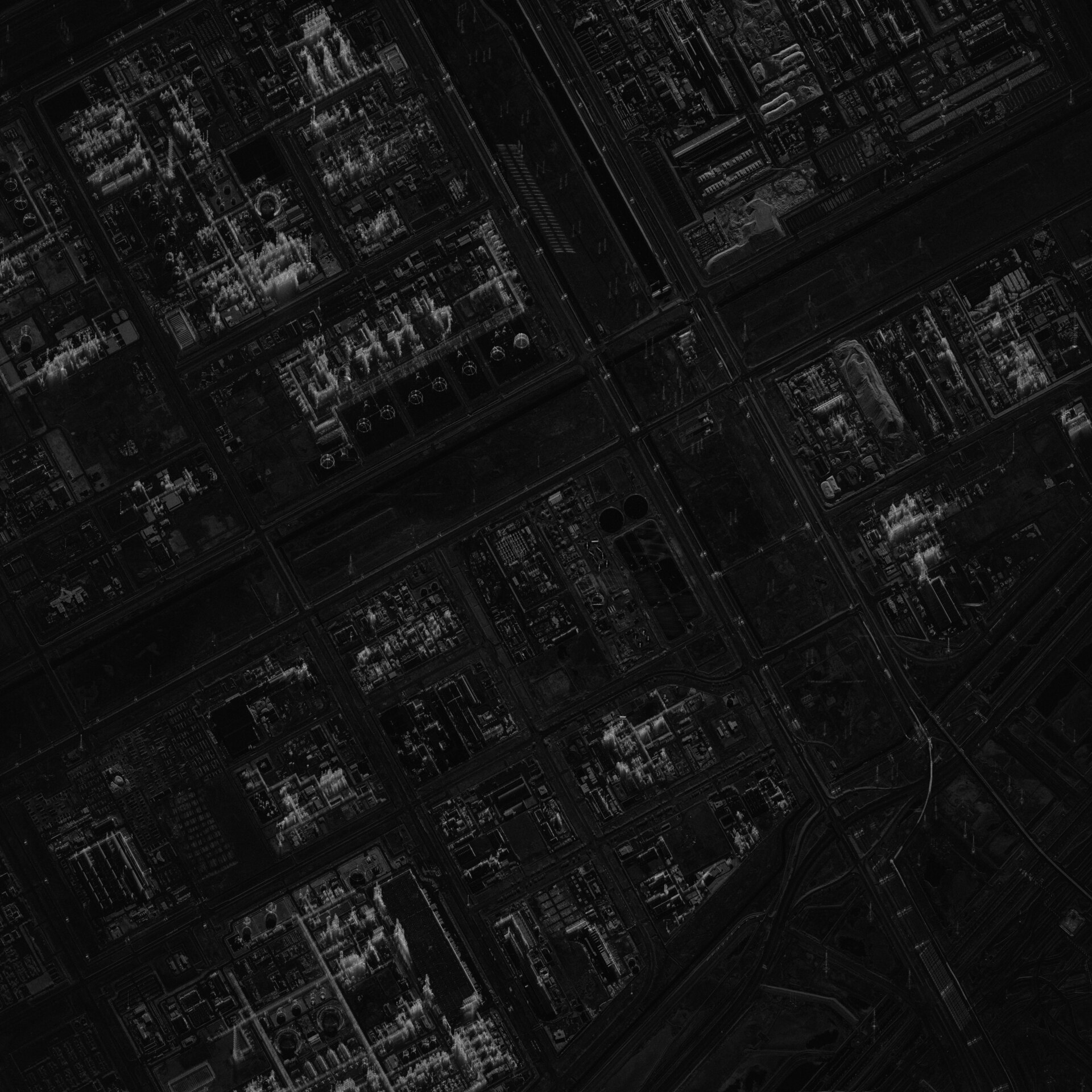
Table of Contents
- The Three-Stage Degradation Arc
- What Does the SABIC Tadawul Filing Actually Mean?
- The Ownership Chain: Government to Aramco to SABIC
- Will Sadara Default on June 15?
- PIF’s Compounding Balance-Sheet Exposure
- Why Is the IRGC Targeting Saudi Petrochemicals?
- What Happens When Insurers Refuse to Cover Eastern Province?
- Can PIF Absorb All of This Without a Fiscal Crisis?
- Frequently Asked Questions
The Three-Stage Degradation Arc
The damage to Saudi Arabia’s downstream petrochemical sector did not begin on April 7 when Iranian missile debris ignited a fire inside SABIC’s Jubail complex. It began eleven days earlier, on March 26-27, when SABIC declared force majeure on five chemical export lines — methyl methacrylate, monoethylene glycol, diethylene glycol, styrene, and methanol — because the Hormuz shipping disruption had severed its routes to market. No missile had touched the facility. The plants were physically intact. SABIC simply could not ship product, and told buyers it would not honour delivery contracts.
That first stage was a logistics failure, and the industry treated it as one. ICIS counted 31 force majeure or sales-allocation announcements for chemicals across Asia and the Middle East by mid-March, before any physical infrastructure damage had occurred. SABIC’s declaration was severe — the company supplies 33 percent of Europe’s styrene imports, 40 percent of India’s, and 44 percent of China’s — but it was, at least theoretically, reversible once shipping lanes reopened.
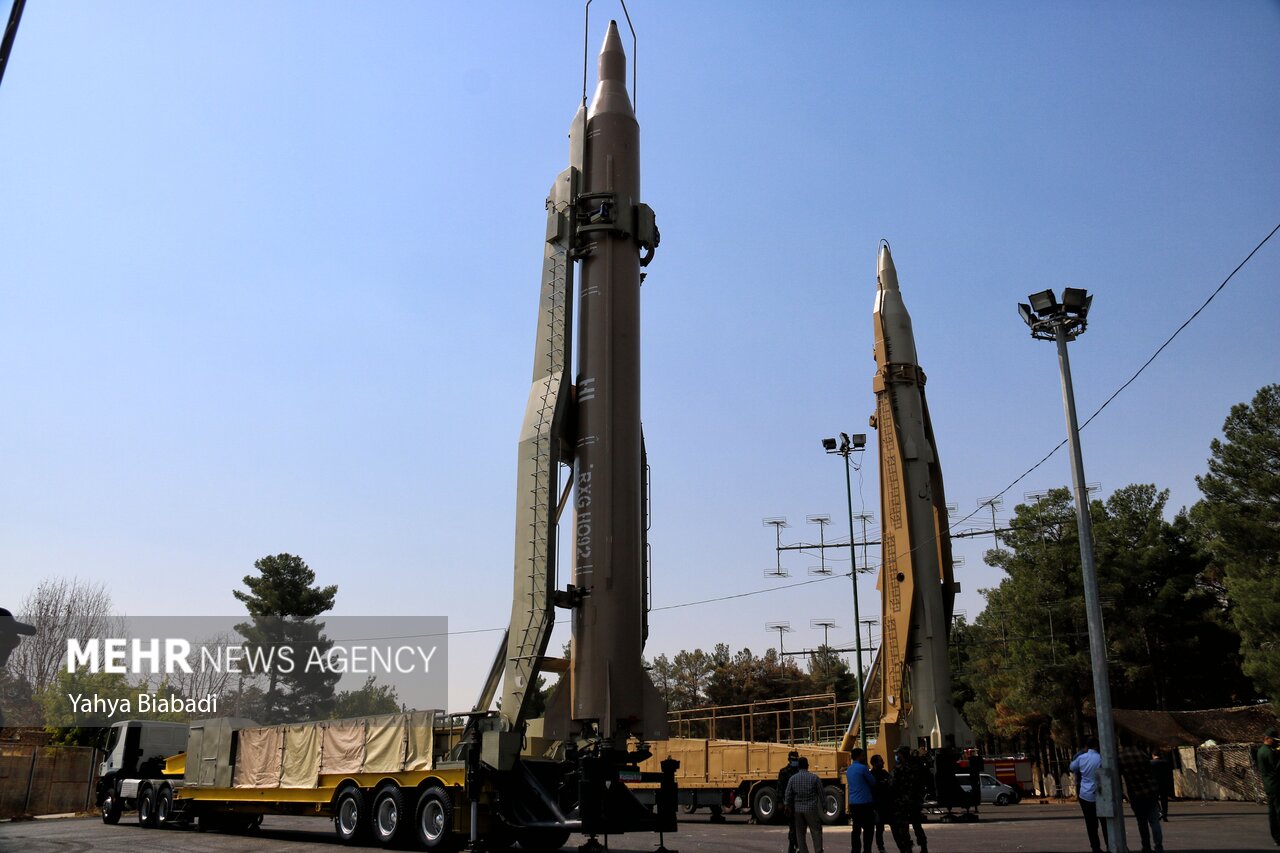
The second stage arrived on April 7. Eleven Iranian ballistic missiles targeted the Eastern Province; Saudi air defenses intercepted all eleven, but terminal-phase kills shatter warheads at altitude, and the debris still falls. At SABIC’s Jubail complex, it fell onto operational infrastructure and started a fire that forced partial evacuations of worker housing. The IRGC claimed the strike explicitly as retaliation for US-coalition hits on Iran’s Asaluyeh petrochemical plants — naming Jubail a “direct and legitimate target,” as it had in a public statement on March 18, twenty days before the missiles arrived.
The third stage is the one that matters to capital markets. On April 8, SABIC filed a regulatory disclosure on the Tadawul stating that it “cannot provide, at the present time, an estimate for the return to production, as this is contingent on domestic and international factors,” and warning of “material impact to 2026 financial results.” That language — domestic and international factors — is corporate shorthand for a problem the company cannot solve on its own. Production restart depends on things SABIC does not control: the war, the ceasefire, the repair supply chain, and the insurance market.
What Does the SABIC Tadawul Filing Actually Mean?
Regulatory filings on the Saudi stock exchange carry specific obligations under the Capital Market Authority’s Continuing Obligations rules. A company must disclose any development “that would have a material effect on its financial position or the price of its listed securities.” SABIC’s filing on April 8 meets that threshold and then some — it is the first admission by a Tadawul-listed company that war damage has rendered a production timeline unknowable. It is also the first material regulatory action under new CEO Faisal Mohammed Al-Faqeer, who assumed the role on April 1, 2026 — seven days before the disclosure landed.
The Middle East briefing 3,000+ readers start their day with.
One email. Every weekday morning. Free.
The financial baseline makes the disclosure alarming in its own right. SABIC’s full-year 2025 adjusted net income was SAR 2.1 billion, roughly $560 million, on revenues of SAR 116.5 billion ($31 billion) — a margin so thin that a sustained production halt of even a few weeks would erase the entire year’s adjusted profit. The company already swung to a headline net loss of SAR 25.78 billion ($6.87 billion) in 2025, driven primarily by non-cash impairments of SAR 15.2 billion related to its planned exit from European petrochemical assets and thermoplastic engineering businesses in the Americas. Those were strategic write-downs taken before the war, and war damage sits on top of them.
The language also signals something beyond quarterly earnings guidance: the conditions for any restart are geopolitical, not operational. Whether the ceasefire holds, whether Iran strikes Jubail again, whether Hormuz throughput recovers enough to resume exports, whether critical equipment can be sourced at all — all of these sit outside SABIC’s management control.
The Ownership Chain: Government to Aramco to SABIC
To understand why a single petrochemical company’s Tadawul filing threatens the fiscal architecture of Vision 2030, you have to trace the ownership chain. The Saudi government owns 82 percent of Aramco through the Ministry of Finance and another 16 percent through PIF. Aramco, in turn, owns 70 percent of SABIC, having acquired PIF’s stake in June 2020 for $69.1 billion — at the time, the largest transaction in the history of the global chemical industry. The remaining 30 percent of SABIC is held by public shareholders on the Tadawul.
The Atlantic Council described the logic of that 2020 deal precisely: PIF was converting “petroleum capital into diversification capital.” Those proceeds flowed into PIF’s coffers to fund giga-projects, international investments, and the entire apparatus of Vision 2030’s post-oil economy. Aramco, meanwhile, gained a vertically integrated downstream business that would theoretically capture more value from every barrel of Saudi crude by converting it into higher-margin chemicals and polymers rather than selling it as raw feedstock.
The problem is that both sides of this transaction are now deteriorating at once. Aramco’s dividend has fallen from $124.3 billion in 2024 to $85.5 billion in 2025 — a decline driven by lower oil prices and reduced free cash flow that predated the war. PIF’s share of that dividend, via its 16 percent Aramco stake, dropped by an estimated $6 billion. Simultaneously, the petrochemical asset PIF sold to Aramco — the 70 percent SABIC stake that was supposed to generate downstream earnings — is producing nothing and has told the market it cannot say when it will produce again.
Yasir Al-Rumayyan sits at the apex of this chain, serving simultaneously as PIF Governor and Aramco Chairman. That dual role was designed for alignment in peacetime: the same person overseeing the sovereign wealth fund and the company that funds it. In wartime, it means one individual presides over a $6 billion dividend shortfall at PIF, a production shutdown at SABIC, an approaching debt cliff at Sadara, and an $8 billion giga-project write-down — all feeding into the same consolidated fiscal picture.
Will Sadara Default on June 15?
Sadara Chemical Company occupies the most dangerous position in the Jubail complex. The $20 billion joint venture between Aramco (65 percent) and Dow Chemical (35 percent) was the largest petrochemical facility ever built in a single phase, and it has struggled to service its debt from operations since commissioning. In 2021, lenders agreed to restructure $3.7 billion in senior debt, granting a principal repayment grace period through June 15, 2026, and extending the final maturity from 2029 to 2038. The restructuring consolidated guarantee obligations onto Aramco and Dow in proportion to their ownership — roughly $2.4 billion backstopped by Aramco and $1.3 billion by Dow.
Sadara shut down all 26 of its manufacturing units in late March, 76 days before that grace period expires. It has been generating zero revenue since then, with its entire rated capacity offline: 1.5 million tonnes per year of ethylene, 750,000 tonnes of polyethylene, 330,000 tonnes of propylene oxide, and 400,000 tonnes of MDI. The April 7 missile debris fire at the adjacent SABIC facilities did not damage Sadara directly, but it extended the timeline for any restart of the broader Jubail complex from weeks to potentially months.
The question is what happens on June 15 if Sadara remains offline and revenue remains at zero. A missed payment after the grace period expires would trigger default provisions in the loan agreements. Whether those provisions include cross-default clauses linking Sadara’s debt to Aramco’s broader credit facilities is not disclosed in public filings, but the guarantee structure means that Aramco and Dow would face immediate calls on their respective backstops. For Aramco, a $2.4 billion guarantee call during a period of declining dividends and war-related production disruptions would compound an already stressed capital allocation. For Dow, $1.3 billion is not existential but arrives at a moment when the American chemical company has no visibility on when its Saudi asset will generate returns again.
The most likely outcome is a second restructuring — another extension, another grace period, another admission that Sadara’s debt burden exceeds its earning capacity. But every restructuring erodes lender confidence and extends the timeline before the facility becomes self-sustaining, and this one would be negotiated during active hostilities, with the borrower’s production site inside a declared IRGC target zone.
PIF’s Compounding Balance-Sheet Exposure
PIF released its 2026-2030 strategy on April 7 — the same day Iranian missiles struck Jubail — and the document reads as a controlled retreat disguised as strategic recalibration. Construction commitments were cut from $71 billion to $30 billion, a 58 percent reduction, while the fund took an $8 billion write-down on giga-projects. The Line, the 170-kilometre mirrored megastructure that was supposed to house 1.5 million people, was formally suspended after completing only 2.4 kilometres. PIF reported a near-zero investment return for 2024, with cash reserves falling to roughly $15 billion by late 2024, their lowest level since 2020.
These figures were already alarming before the SABIC filing. The April 8 disclosure adds another layer. Consider the compounding exposures PIF faces in the next 90 days alone:
| Exposure | Amount | Timeline | Source |
|---|---|---|---|
| Aramco dividend decline (PIF’s 16% share) | ~$6 billion shortfall vs 2024 | Already realized | AGSI analysis |
| Giga-project write-down | $8 billion | Disclosed April 7, 2026 | PIF 2026-2030 strategy |
| Sadara debt grace period expiry | $3.7 billion (Aramco guarantees $2.4B) | June 15, 2026 | Sadara restructuring terms |
| SABIC 2026 earnings loss (war-related) | Unknown — “material impact” | Ongoing, no restart estimate | SABIC Tadawul filing, April 8 |
| Construction commitment reduction | $41 billion cut ($71B to $30B) | 2026-2030 plan period | PIF strategy document |
| Gulf infrastructure repair (Saudi share) | Portion of $25 billion Gulf-wide estimate | 2-4 year recovery | Rystad Energy, March 2026 |
The AGSI has quantified part of this dynamic directly: PIF faces “a $6 billion drop in the dividend it receives” from Aramco at precisely the moment “the PIF is intending to scale up its investments from $40 billion a year to $70 billion a year.” The fund’s annual deployment target and its income trajectory are moving in opposite directions. The war has accelerated the divergence, but the structural mismatch existed before the first missile landed.
What makes the SABIC filing damaging in a structural sense is its interaction with the 2020 transaction. When PIF sold its SABIC stake to Aramco, it traded a productive industrial asset for liquid capital — capital spent on NEOM, on Qiddiya, on international portfolio investments, on the entire Vision 2030 build-out. The asset PIF sold is now generating war losses rather than earnings, but PIF no longer owns it. Instead, PIF owns 16 percent of Aramco, which owns 70 percent of SABIC, which owns its share of a shuttered Jubail, and the losses travel up that chain arriving as reduced Aramco dividends, reduced Aramco share value, and a guarantee liability on Sadara — a diluted but inescapable version of the damage.
Why Is the IRGC Targeting Saudi Petrochemicals?
The IRGC did not stumble onto Jubail by accident. Its March 18 statement naming the complex as a “direct and legitimate target” came twenty days before missiles arrived, and the April 7 strike communique framed the attack as symmetrical retaliation: “in response to the enemy’s crimes in the aggression against Asaluyeh petrochemical plants.” This is industrial-economic warfare conducted with public advance notice, and the target selection follows a methodical logic.
Since March 2, the IRGC has struck Saudi crude infrastructure at Ras Tanura, refining capacity across the Eastern Province, and now downstream petrochemicals at Jubail. The pattern works down every tier of the Kingdom’s hydrocarbon value chain — extraction, refining, chemicals — degrading not just current production but the revenue base that funds Saudi military operations, air defense replenishment, and economic resilience. A Singapore-based chemical trader told OPIS that “any sustained disruption in Jubail would tighten regional availability significantly, especially with Asia already facing constrained feedstock flows.”
Jubail Industrial City covers 1,016 square kilometres and produces roughly 60 million tonnes of petrochemicals per year, representing an estimated 7 percent of Saudi GDP by output value. It is not a single facility but a city-scale industrial zone, and its concentration makes it both economically efficient and strategically vulnerable. The IRGC understands this arithmetic: degrading Jubail does not require destroying it. Forcing production halts, triggering force majeure declarations, and making insurance coverage unavailable achieves the same economic effect as physical demolition, potentially at lower military cost.
The IRGC’s targeting also reveals awareness of the ownership chain. Striking Jubail damages SABIC’s earnings, which reduces Aramco’s consolidated performance, which lowers the dividend PIF receives, which constrains the sovereign wealth fund’s ability to deploy capital for Vision 2030 and military procurement. A single missile debris fire at one petrochemical complex propagates fiscal damage through the entire Saudi state architecture. Whether the IRGC’s planners model this chain explicitly or simply target the Kingdom’s most valuable concentrated industrial assets, the effect is the same.
What Happens When Insurers Refuse to Cover Eastern Province?
The SABIC filing’s reference to “international factors” likely encompasses the insurance market, which has become a second front in the war’s economic damage. Lloyd’s of London CEO John Neal said in March that it was “critical” that Middle East war coverage remained available, but the market has moved against Saudi industrial assets with remarkable speed. War-risk premiums for Gulf shipping surged over 200 percent in the weeks after hostilities began according to broker reports, and several major insurers have suspended underwriting for specific high-risk categories entirely.
Standard property insurance policies contain war exclusion clauses that deny coverage for losses arising directly or indirectly from war or acts of war, regardless of whether war is formally declared. The legal ambiguity of the current conflict — the United States has not declared war, Saudi Arabia is not technically a belligerent, and the IRGC frames its strikes as retaliatory rather than offensive — creates a classification nightmare for underwriters. Whether a missile debris fire at a petrochemical complex constitutes “war damage,” “terrorism,” “sabotage,” or “hostile acts” determines which insuring clause or exclusion applies, and the answer could vary between policies and between insurers.
For SABIC and its Jubail tenants, this uncertainty has practical consequences. Physical repair of war-damaged industrial infrastructure requires insurer engagement — loss adjusters, claims processing, coverage confirmation — before reconstruction contracts can be signed and financing secured. If insurers invoke war exclusions and deny claims, the repair cost falls entirely on SABIC and its parent Aramco. Rystad Energy estimated Gulf-wide energy infrastructure repair costs at a minimum $25 billion, with recovery “constrained more by supply chain bottlenecks and structural limitations than by financial capital alone.” Large-frame gas turbine OEM production backlogs of two to four years mean that even with unlimited funding, some repairs cannot be completed quickly.
The insurance void compounds PIF’s fiscal exposure in a way that does not appear on any balance sheet yet. Uninsured war damage at SABIC flows through to Aramco’s cost base, reducing free cash flow, reducing dividends, and reducing PIF’s income. It also increases the probability that the Saudi government will need to provide direct fiscal support to Aramco’s downstream operations — money that would otherwise flow to PIF or the national budget.
Can PIF Absorb All of This Without a Fiscal Crisis?
The honest answer is that nobody knows, and the SABIC filing makes the uncertainty explicit for the first time. PIF’s cash reserves of roughly $15 billion as of late 2024 would not cover the Sadara guarantee ($2.4 billion via Aramco), the SABIC earnings loss (unknown but material), the infrastructure repair costs (Saudi Arabia’s share of the $25 billion Gulf-wide estimate), and the giga-project write-down ($8 billion) simultaneously. The fund’s assets under management reached approximately $930 billion by late 2025, but the vast majority of those assets are illiquid — equity stakes in giga-projects, international portfolio holdings, and the Aramco shares that cannot be sold without destabilizing the Kingdom’s most important listed company.
Saudi Arabia is projected to run a budget deficit of approximately 3.3 percent of GDP in 2026, equivalent to around $44 billion, with some independent estimates suggesting the gap could widen to 6 percent if oil revenues remain constrained. The non-oil PMI collapsed to 48.8 in March 2026, the first contraction since August 2020, signalling that the non-oil economy PIF was supposed to be building is itself under stress. Oxford Economics warned of potential GCC recession, with Qatar facing GDP contraction of 14 percent.
The PIF 2026-2030 strategy document attempted to frame the retrenchment as disciplined capital allocation — Humain, the AI venture, replacing The Line as the flagship investment, with $23 billion in partnerships with NVIDIA, AMD, AWS, Qualcomm, and Cisco. Eight planned IPOs were positioned as capital recycling vehicles. The fund signaled it would pivot from construction-heavy giga-projects to technology investments with faster return profiles and lower capital intensity.
But the SABIC filing punctures that narrative by revealing a category of loss the strategy document did not price in: ongoing war damage to the industrial assets that generate the cash PIF needs to execute any strategy at all. Cutting construction spending from $71 billion to $30 billion conserves capital only if the revenue streams funding that capital remain intact. When Aramco’s dividend is falling, SABIC’s earnings are zeroed, Sadara’s debt is approaching default, and the insurance market has withdrawn coverage from Eastern Province industrial assets, the $30 billion revised target may itself prove aspirational.
The ceasefire, if it holds, changes the military trajectory but not the fiscal one. Physical damage at Jubail requires repairs with multi-year lead times. Force majeure declarations remain in effect until Hormuz throughput recovers sufficiently for SABIC to resume exports — and current throughput is 15-20 ships per day against a pre-war baseline of 138. The Sadara debt clock ticks regardless of whether missiles are flying. And the cumulative write-downs, earnings losses, and dividend reductions have already occurred — they cannot be unwound by a diplomatic agreement.
The most revealing aspect of the SABIC filing may be its timing: released on April 8, one day after PIF published its 2026-2030 strategy and one day after the Jubail fire. The strategy document laid out a controlled, forward-looking framework, and the Tadawul filing immediately undercut it with a disclosure that amounts to: we do not know when our largest industrial asset will produce again, and the answer depends on factors we cannot influence. That juxtaposition — strategic vision on Monday, material uncertainty on Tuesday — captures PIF’s fundamental predicament. The fund is simultaneously trying to plan Saudi Arabia’s post-oil future and absorb the costs of Saudi Arabia’s present war, and the resources for both come from the same finite pool of hydrocarbon revenue that the war itself is degrading.
Frequently Asked Questions
What is SABIC’s current share price impact from the Jubail shutdown?
SABIC’s Tadawul-listed shares (ticker 2010) were already under severe pressure before the April 8 filing, having traded near multi-year lows through early 2026 amid the broader $6.87 billion net loss reported for 2025. The April 8 disclosure of indeterminate production halt triggered additional selling pressure, though exact post-filing pricing is subject to Tadawul trading conditions. The 30 percent free float means roughly $20 billion in public market capitalization is directly exposed to the production timeline uncertainty, while the 70 percent Aramco-held stake’s impairment — if triggered by extended shutdown — would flow through Aramco’s consolidated financial statements and affect its own Tadawul valuation and dividend capacity.
Does Dow Chemical face material exposure from the Sadara situation?
Dow’s 35 percent ownership of Sadara translates into a $1.3 billion guarantee obligation on the senior debt, and the company’s Q1 2026 earnings call will be the first occasion for Dow management to address the Jubail shutdown’s impact on its Middle East operations publicly. Dow had already been reducing its exposure to commodity chemicals globally, with the SABIC-era Sadara joint venture representing an increasingly awkward strategic fit. If Sadara defaults and a second restructuring is required, Dow faces a choice between injecting additional capital into a war-damaged asset with no production timeline or negotiating an exit from the venture — either option carrying heavy cost in a conflict environment where asset valuations are depressed and buyer interest is minimal.
How does SABIC’s shutdown affect global chemical supply chains?
Jubail’s annual output represents between 6 and 8 percent of total global petrochemical production, and SABIC’s dominant positions in styrene, MEG, and methanol mean the disruption concentrates in product lines where alternative suppliers have limited spare capacity. The force majeure declarations that began in late March — before any physical damage — were already pushing spot prices for affected lines to levels that downstream manufacturers in automotive, construction, packaging, and electronics describe as unsustainable beyond a single quarter. Physical production damage at Jubail has extended that timeline from weeks to potentially months, and no alternative supplier base can absorb SABIC’s market share at speed.
What precedent exists for war damage to Saudi industrial infrastructure?
During the 1991 Gulf War, Iraqi Scud missiles targeted Jubail, but the industrial complex was still largely under construction and sustained no recorded production damage. The more relevant military precedent is the September 2019 Abqaiq-Khurais drone and missile attack, which temporarily halved Saudi crude output but caused limited structural damage and was repaired within weeks. The April 2026 Jubail strikes represent the first operational war damage to Saudi petrochemical production infrastructure in the Kingdom’s history, and the combination of physical fire damage, ongoing military threat, insurance market withdrawal, and OEM equipment backlogs makes this recovery timeline fundamentally different from the rapid Abqaiq restoration.
Could the Saudi government directly bail out SABIC and Sadara?
The Saudi government has the sovereign capacity to intervene — it retains approximately $420 billion in central bank foreign reserves and could direct the Ministry of Finance or PIF to inject capital. However, direct bailouts of war-damaged industrial assets would compete for the same fiscal resources needed to fund military operations, air defense replenishment (PAC-3 MSE stockpiles are estimated at roughly 400 rounds remaining), Expo 2030 and FIFA 2034 commitments, and the reduced but still substantial Vision 2030 investment programme. With the budget already projected to run a deficit of $44 billion or more in 2026, any bailout would likely require additional sovereign debt issuance or drawdowns from central bank reserves — options that carry their own rating agency and investor confidence implications during an active conflict. The downstream financial cascade from Jubail’s shutdown is already accumulating: Sadara Chemical’s $3.7 billion debt grace period expires June 15 with all 26 units offline and zero revenue, representing the first formal debt threshold breach at an Aramco-anchored industrial joint venture.