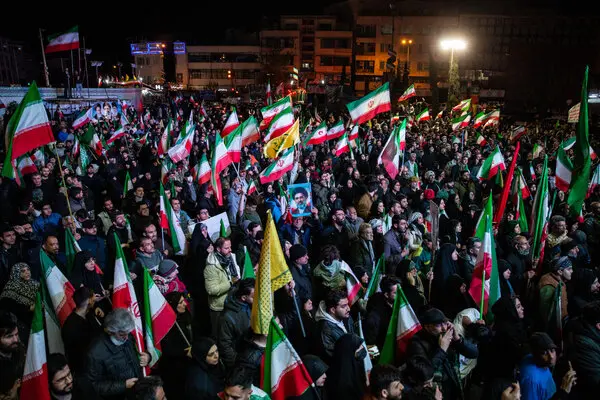

The guns stopped at 2:02 a.m. Tehran time. Forty days after the United States and Israel launched Operation Epic Fury with the assassination of Supreme Leader Ali Khamenei, a two-week ceasefire took effect across the Iran theatre — brokered by Pakistan, announced by Trump on Truth Social at 6:32 p.m. Eastern on April 7, and confirmed by Iran’s Supreme National Security Council hours later with a statement that managed to accept the truce and threaten war in the same paragraph: “This does not signify the termination of the war. Our hands remain upon the trigger, and should the slightest error be committed by the enemy, it shall be met with full force.”
The ceasefire arrived less than two hours before Trump’s self-imposed deadline to begin destroying Iran’s power grid, bridges, and remaining civilian infrastructure — a threat he had escalated throughout the day with language that prompted more than a dozen congressional Democrats to call for his removal under the 25th Amendment. “A whole civilization will die tonight,” he had posted that morning. By evening, that civilization had a reprieve, and Trump was calling it “a big day for world peace.”
The Terms
The agreement, already being called the Islamabad Accords, rests on a simple exchange: the US and Israel halt all offensive strikes on Iran for two weeks, and Iran reopens the Strait of Hormuz to commercial shipping. The details, as with everything in this war, are where the agreement begins to fracture.
Trump’s version: Iran agreed to the “complete, immediate and safe opening” of the Strait of Hormuz, and has submitted a 10-point proposal that constitutes “a workable basis on which to negotiate.” He claimed almost all past points of contention had been resolved.
Iran’s version: the Strait of Hormuz reopens under “controlled passage coordinated with Iran’s Armed Forces,” a framework Tehran says confers upon it “a unique economic and geopolitical standing.” The SNSC statement described the ceasefire as a product of Iran’s 10-point proposal, which calls for the withdrawal of all US combat forces from the region, an end to hostilities against “all components of the resistance axis” including Hezbollah, and full sanctions relief. These are not minor asks — they represent the most ambitious set of Iranian demands since the 1979 revolution.
The gap between the two narratives is the gap the Islamabad talks will have to close. Vice President JD Vance, speaking in Budapest on Wednesday, called the agreement “a fragile truce” and said the Iranian response had varied depending on which faction within the government was speaking. The foreign minister had responded favourably, Vance said, but others had been “lying” about the military situation and the contours of the deal — a public acknowledgment from the US vice president that Tehran’s command structure is not unified, and that any agreement is only as durable as the faction enforcing it.
The Middle East briefing 3,000+ readers start their day with.
One email. Every weekday morning. Free.
Hormuz: Two Ships Through, One Thousand Still Waiting
The first vessels crossed within hours of the ceasefire taking effect. MarineTraffic confirmed that the Liberia-flagged bulk carrier Daytona Beach transited the Strait at approximately 6:44 a.m. UTC on Wednesday, followed by the Greek-owned NJ Earth at 8:44 a.m. Both passed without incident under Iranian military coordination.
That is two ships. The backlog is approximately one thousand.
MarineTraffic data shows 426 tankers, 34 LPG carriers, and 19 LNG vessels stranded in the Persian Gulf — a floating inventory of hydrocarbons that has been trapped since Iran effectively closed the Strait in the first week of March. Vanja Subasic, a maritime analyst, told CNN that at the likely pace of 10-15 ships per day under Iranian coordination, only 150-210 vessels would transit during the two-week ceasefire window, leaving the majority still stranded when the deal expires. The pre-war daily average was 110 ships. Even under the best scenario, Hormuz remains a controlled chokepoint operating at a fraction of its normal capacity, with Iran’s military deciding who passes and when.
What the War Cost
The toll after 40 days, compiled from Iranian government figures, HRANA, Lebanese authorities, and coalition sources: at least 2,076 killed in Iran according to Tehran’s Health Ministry — a figure that HRANA, the Iranian human rights monitoring group, puts significantly higher at over 5,000 — with 26,500 wounded. At least 1,497 killed in Lebanon including 57 health workers. More than 600 schools and education centres hit in Iran. Four Red Crescent workers killed. Over one million displaced in Lebanon, with 600,000 barred from returning to southern Lebanon by Israel’s Defence Minister Katz. Iran’s Health Ministry figures do not include military deaths, which neither side has disclosed in full.
The US lost at least seven manned aircraft confirmed — three F-15s to Kuwaiti friendly fire on Day 3, one KC-135 tanker in Iraq on Day 13, one F-15E Strike Eagle shot down over Iran on Day 35, one A-10 Thunderbolt hit over Iran and crashed in Kuwait on the same day — with Iran claiming an additional two C-130s and two Black Hawks destroyed during the rescue operation for the downed F-15E crew on Days 36-37. The US has not confirmed or denied those claims. Fourteen US service members are confirmed dead.
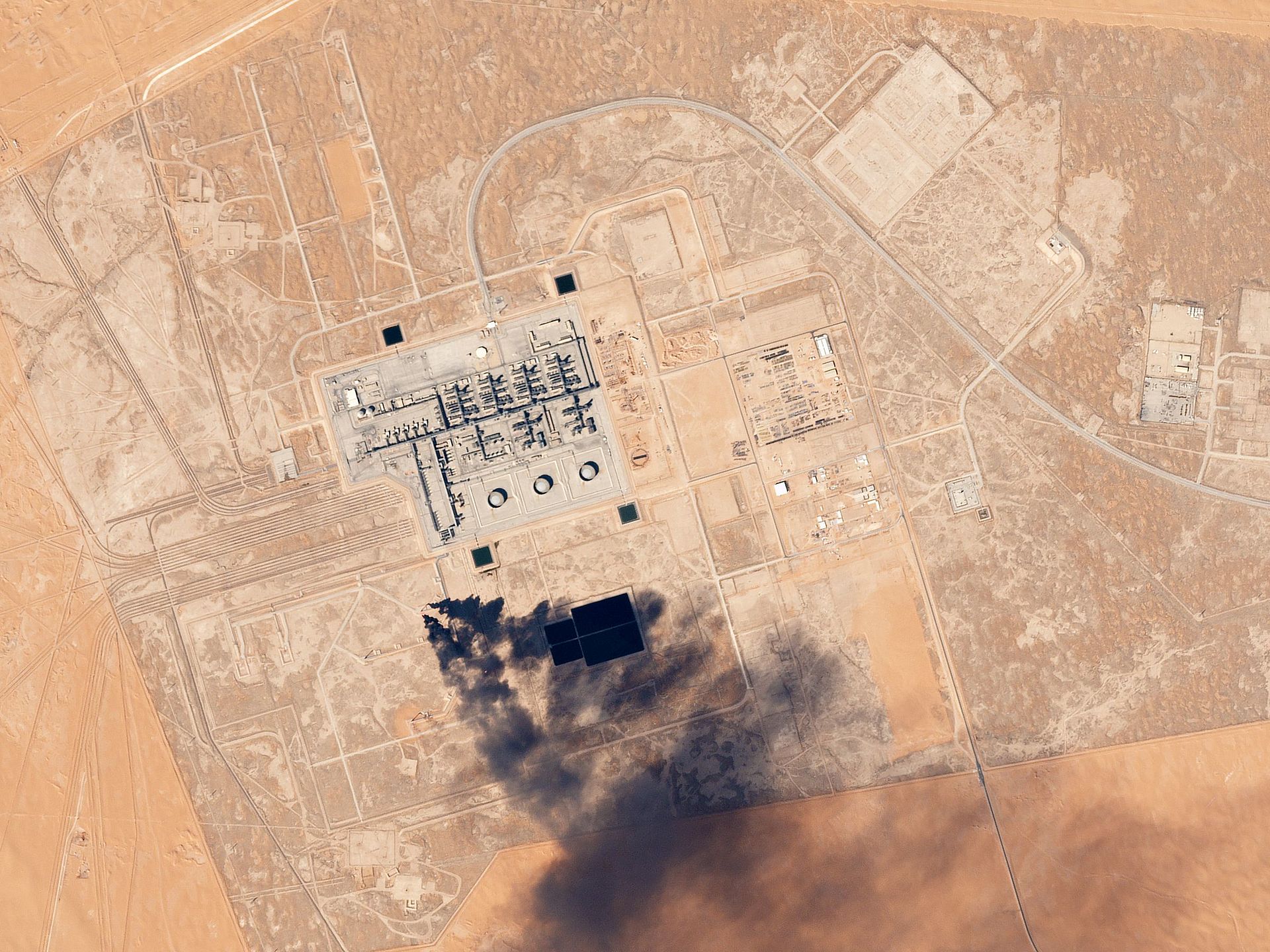
The economic damage: Brent crude surged from $72 pre-war to peaks above $119, settling around $113 on the eve of the ceasefire. The IEA described the Hormuz closure as the largest supply disruption since the 1970s energy crisis, with at least 8 million barrels per day curtailed as of mid-March — a figure that grew as the war continued. Gulf states lost an estimated $120 billion by March 31. The US war cost reached $27.5 billion by the same date, with the Pentagon requesting an additional $200 billion. Repair costs for Middle Eastern energy infrastructure are forecast at $25 billion or more by Rystad Energy. Qatar’s Ras Laffan LNG complex — 17-23% of capacity physically destroyed by Iranian missiles — faces a 3-5 year rebuild. The EIA’s latest outlook, published this week, said Middle East oil production would not return “close” to pre-conflict levels until late 2026, and assumed the war does not restart.
The Lebanon Problem
Pakistan’s Prime Minister Sharif announced the ceasefire applied “everywhere including Lebanon and elsewhere.” Netanyahu’s office said it does not. Israel’s military confirmed on Wednesday that it will continue “intensified ground operations” against Hezbollah in southern Lebanon regardless of the Iran ceasefire.
Hezbollah, for its part, said it had halted attacks on Israel and on Israeli soldiers inside Lebanon. The contradiction is structural: Iran’s 10-point proposal demands an end to hostilities against “all components of the resistance axis,” which explicitly includes Hezbollah. Israel says Lebanon is a separate conflict. If the Islamabad talks on Friday cannot reconcile these positions, the ceasefire’s two-week window may expire with the Lebanon front still active — and with Iran arguing the US has failed to deliver on a core condition.
Islamabad, Friday
Iranian President Pezeshkian confirmed in a phone call with PM Sharif on Wednesday that Iran will send a delegation to Islamabad for talks beginning April 10. The US delegation is expected to include special envoy Steve Witkoff, Jared Kushner, and Vice President Vance. Pakistan’s General Asim Munir — the army chief who, alongside Sharif, brokered the final hours of negotiation — will host.
The 10-point proposal that forms the basis for talks includes demands that no US administration has accepted in 47 years of hostility with Iran: the withdrawal of all American combat forces from Middle Eastern bases, recognition of Iranian control over Hormuz transit, and full sanctions relief. The US position, as articulated by Trump, is that Iran’s military objectives have been “met” — a framing that lets both sides claim victory while avoiding the question of what, precisely, was achieved. CENTCOM says it struck over 10,000 targets in Iran and destroyed 92% of the Iranian navy’s largest vessels. Iran says it downed multiple US aircraft, closed the world’s most important shipping lane for 40 days, and forced the United States to negotiate under its terms rather than the other way around.
Both narratives contain elements of truth, which is precisely why neither side can afford to let the other’s version stand unchallenged. The Islamabad talks will be, in essence, a negotiation over whose version of the last 40 days becomes the official record — and whether the ceasefire that emerged from mutual exhaustion can be converted into something that survives its own contradictions.
What to Watch
Hormuz throughput. If Iran is processing 10-15 ships per day under military escort, that is a controlled reopening, not a free one. The pace will determine whether oil markets treat the ceasefire as real or performative. Early trading on Wednesday saw Brent ease, but the structural backlog means prices will remain elevated until the Strait returns to something approaching normal capacity.
Lebanon. If Israel continues striking Lebanon while the Iran ceasefire holds, Tehran will frame it as a US breach. This is the most likely trigger for a collapse before April 22.
The IRGC’s grip. The SNSC accepted the ceasefire — but the SNSC is controlled by Zolghadr, installed by IRGC Commander Vahidi. Supreme Leader Mojtaba Khamenei, constitutionally required to confirm all SNSC decisions under Article 176, has not been seen or heard in 29 days. The ceasefire’s enforceability on the Iranian side depends entirely on whether Vahidi wants it enforced. Vance’s description of internal Iranian factions “lying” about the deal suggests Washington is not confident that it will be.
The Friday delegation list. Who Iran sends to Islamabad will reveal whether this is a negotiation or a performance. If Araghchi leads, there is diplomatic intent. If the IRGC sends a shadow delegation, the civilian government has already been sidelined from the outcome.