
If you are planning a trip to the Kingdom and wondering whether you can order a beer with dinner or pack a bottle of wine in your suitcase, this guide gives you the honest, complete answer. Saudi Arabia maintains one of the strictest alcohol prohibitions in the world, and that fact shapes every aspect of social life, dining and nightlife in the country. Whether you are visiting Riyadh, exploring Jeddah or heading to AlUla, this page — part of our comprehensive Saudi Arabia travel guide — explains exactly what you need to know: what is banned, what the penalties are, what alternatives exist, and how to have a genuinely great time without a drop of alcohol.
Is Alcohol Legal? No. The sale, purchase, consumption, and possession of alcohol are illegal for tourists and residents.
Can I Bring Alcohol Into the Country? No. All luggage is X-rayed at customs and alcohol is confiscated. You may face fines, detention or deportation.
Visa Required: Yes — tourist e-visa available for 63 nationalities
Penalties: Fines, imprisonment and deportation for foreigners; more severe penalties for Saudi citizens
Non-Alcoholic Alternatives: Widely available — 0.0% beers, craft mocktails, Arabic coffee, fresh juices
Avoid: Arriving at a Saudi airport smelling of alcohol, or attempting to bring any amount through customs
The Law: Is Alcohol Legal in Saudi Arabia?
The short answer is no. Saudi Arabia prohibits the importation, manufacture, sale, possession and consumption of alcohol. This applies to everyone in the country — tourists, residents, expatriates and citizens alike. The prohibition is rooted in Islamic law (Sharia), which the Kingdom enforces as the basis of its legal system. Saudi Arabia is home to Islam’s two holiest cities, Mecca and Medina, and the government has historically positioned itself as the custodian of the faith’s most sacred sites.
The ban dates back to 1952, when King Abdulaziz ibn Saud formally prohibited the sale of alcohol following an incident in which a British diplomat was killed by one of the king’s sons while intoxicated. Before that, alcohol was available in the country, though frowned upon by religious authorities. The prohibition has remained in place ever since and is enforced consistently.
The Diplomatic Quarter Exception
There is one narrow exception. In January 2024, Saudi Arabia opened its first regulated alcohol store in more than 70 years inside Riyadh’s Diplomatic Quarter. The store is restricted to non-Muslim diplomats who present valid diplomatic identification. Access has since been quietly expanded to include some non-Muslim expatriates earning at least SAR 50,000 (approximately USD 13,300) per month and holders of Saudi Arabia’s Premium Residency visa, which costs around EUR 173,000. Strict purchase quotas, ID checks and a ban on mobile phones inside the premises apply. This store is not accessible to tourists under any circumstances.
What About NEOM, Sindalah and the Red Sea Project?
In May 2025, multiple international media outlets reported that Saudi Arabia planned to license up to 600 tourist venues — five-star hotels, luxury resorts and designated zones within mega-projects like NEOM, Sindalah Island and the Red Sea Project — to serve wine, beer and cider (up to 20% ABV) by 2026. A Saudi official subsequently told Reuters that these claims were “unfounded.” As of April 2026, no licensed tourist venue in Saudi Arabia serves alcohol to the general public. Sindalah Island, which held a grand opening event in October 2024 at a cost of nearly USD 4 billion, remains largely closed to public visitors.
The situation may evolve ahead of Expo 2030 in Riyadh and the FIFA World Cup 2034, both of which will require the Kingdom to accommodate millions of international visitors. But no confirmed policy change has been implemented, and travellers should not arrive expecting alcohol to be available at any resort or hotel.
What Happens If You Are Caught With Alcohol
Saudi Arabia takes alcohol violations seriously. The penalties are real and consistently enforced. Here is what tourists need to know:
| Offence | Penalty for Foreigners | Notes |
|---|---|---|
| Bringing alcohol through customs | Confiscation, fine, possible detention and deportation | All luggage is X-rayed at Saudi airports |
| Possessing alcohol | Fine, imprisonment, deportation | Applies to any quantity, including miniatures |
| Public intoxication | Arrest, imprisonment, deportation | Being visibly drunk is an offence in itself |
| Arriving at border smelling of alcohol | Detention, possible denial of entry | Customs officers are trained to detect this |
| Selling or manufacturing alcohol | Heavy fine, imprisonment, deportation | The most severely punished offence |
Practical Warning: A 2020 legal reform replaced corporal punishment (flogging) with fines or imprisonment for discretionary offences. However, the penalties remain severe by Western standards. The U.S. State Department warns that drug and alcohol offences can lead to lengthy imprisonment and deportation. Do not assume that being a tourist provides any leniency.
Duty-Free and Airports: What You Cannot Do
If you are flying into Saudi Arabia from a country where duty-free alcohol is available, understand this clearly: you cannot bring it into the Kingdom. Even if you purchase alcohol at duty-free in London, Dubai or any other departure airport, that alcohol will be confiscated at Saudi customs. Every bag, carry-on and checked, is X-rayed on arrival.
Saudi Arabia’s airports — King Khalid International (Riyadh), King Abdulaziz International (Jeddah) and King Fahd International (Dammam) — do not sell alcohol in their duty-free shops, departures or arrivals. There is no alcohol service in any Saudi airport lounge, including premium and business-class lounges.
The new national carrier, Riyadh Air, which began operations in 2025, does not serve alcohol on any of its flights, regardless of route or class of service. Saudia (the legacy national airline) has never served alcohol.
Why the Ban Exists: Cultural and Religious Context
Understanding why Saudi Arabia prohibits alcohol helps visitors approach the topic with respect rather than frustration. The prohibition is not arbitrary — it is one of the clearest instructions in Islam. The Quran explicitly forbids intoxicants in Surah Al-Ma’idah (5:90-91), describing alcohol as an “abomination” that Satan uses to create enmity and distract believers from prayer. The prohibition developed in stages during the Prophet Muhammad’s lifetime, eventually becoming absolute.
Saudi Arabia enforces a Hanbali interpretation of Sharia law — the most conservative of the four Sunni schools of jurisprudence. As the custodian of Mecca and Medina, the Kingdom has historically seen itself as obligated to uphold Islamic law in its strictest form. While neighbouring Gulf states like the UAE, Bahrain and Qatar allow alcohol for non-Muslims in licensed venues, Saudi Arabia has maintained the prohibition as a matter of national and religious identity.
This is important context for visitors: the ban is not a quirk of regulation. It reflects deeply held beliefs shared by the majority of the population. Complaining about it, attempting to circumvent it or treating it dismissively will alienate the people you meet. The practical approach is to embrace the alternatives — and Saudi Arabia has invested heavily in making those alternatives genuinely enjoyable.
Non-Alcoholic Drinks: What Is Actually Available
Saudi Arabia has developed what may be the most sophisticated non-alcoholic drinks scene in the world. Far from being an afterthought, alcohol-free beverages are a major industry and a genuine point of cultural pride. Here is what you will find:
Non-Alcoholic Beer
Non-alcoholic beer (strictly 0.0% ABV — even 0.5% products are not permitted) is widely available in supermarkets, restaurants, hotels and cafes across Saudi Arabia. Popular brands include:
- Barbican — The most ubiquitous brand in the Kingdom, available in flavours including peach, pomegranate, strawberry, malt and pineapple
- Moussy — Another Saudi staple, widely available in supermarkets and corner shops
- Holsten 0.0 — German-style non-alcoholic lager
- Heineken 0.0 — Rolled out across the Gulf in 2020, available in most upscale restaurants
- Budweiser Zero — Available in many Western-style restaurant chains
- Bavaria 0.0 — Dutch non-alcoholic, popular in supermarkets
- Lyre’s, the Australian non-alcoholic spirits brand, operates a dedicated bar inside the Kingdom Tower shopping mall in Riyadh, where Saudis come daily for drinks that replicate the flavour profiles of classic cocktails without the alcohol or excessive sugar
- Meraki, a Greek-influenced restaurant in Riyadh’s Al Faisaliah Tower, serves non-alcoholic versions of Mykonos mules and old fashioneds
- Specialty mocktail menus have become standard at high-end restaurants across Riyadh, Jeddah, and the Eastern Province
- Chai (black tea) — served sweet, often with fresh mint, and available everywhere from street stalls to five-star hotels
- Karak — spiced milk tea, thick and sweet, hugely popular as a late-night drink
- Fresh juices — Saudi Arabia has excellent juice bars serving pomegranate, mango, avocado and mixed fruit juices at very low prices
- Saudi champagne — a popular local mocktail made from apple juice, sparkling water and sliced fruit, served at celebrations
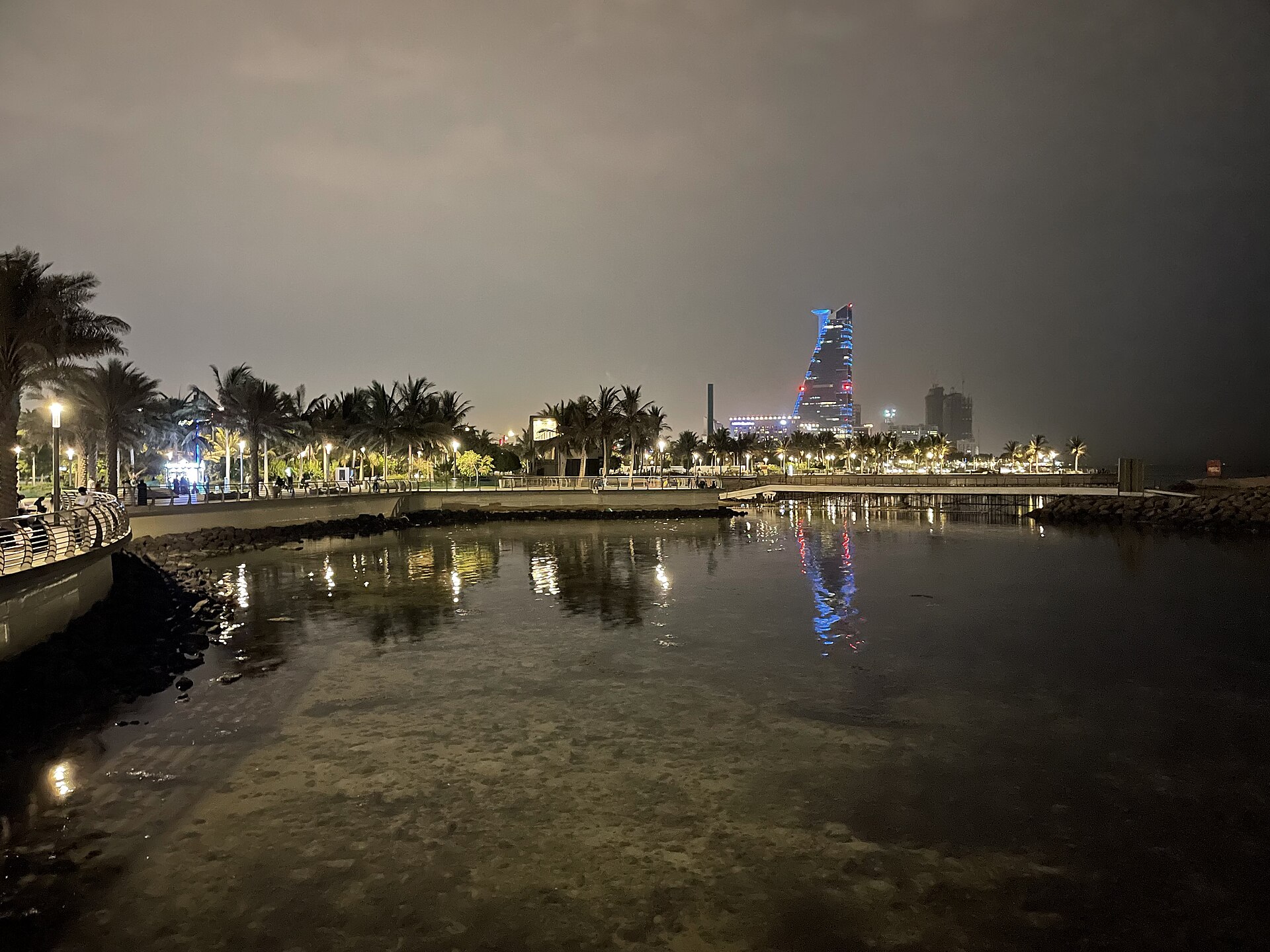
- Walking the Jeddah Corniche — a 30 km waterfront promenade lined with restaurants, cafes and sculptures
- Desert stargazing — Saudi Arabia has some of the darkest skies in the Middle East, and stargazing tours are increasingly popular
- Night markets and souks — traditional markets in Riyadh’s Al Zal and Jeddah’s Al Balad stay open late
- Evening desert drives and desert camping
- Do not buy duty-free alcohol. It will be confiscated at Saudi customs. If you are transiting through a Gulf hub (Dubai, Doha, Bahrain), be aware of this.
- Do not pack alcohol in checked luggage. Bags are X-rayed and screened.
- Do not drink excessively before boarding. Arriving visibly intoxicated or smelling of alcohol at a Saudi airport can result in detention or refusal of entry.
- Ensure your visa is in order before travelling — alcohol issues at the border can complicate future visa applications.
- Do not attempt to source alcohol. Black market alcohol exists in Saudi Arabia, but it is illegal, dangerous (some is methanol-contaminated home brew) and accessing it risks imprisonment and deportation.
- Do not joke about the ban in public or with people you do not know well. Many Saudis feel strongly about it.
- Embrace the alternatives. Order a Barbican or a craft mocktail. Try qahwa with dates. You may be genuinely surprised by how good the non-alcoholic options are.
- Adjust your social expectations. Saudi social gatherings revolve around food, conversation, coffee and hospitality rather than drinking. This often produces longer, more engaged conversations than the typical bar environment.
- Saudi Arabia Travel Guide 2026 — The complete guide to visiting the Kingdom
- Saudi Arabia Nightlife Guide — Entertainment, dining and late-night culture without alcohol
- Saudi Arabia Customs and Etiquette — What not to do as a visitor
- Dress Code for Women — Practical guide to what to wear
- Dress Code for Men — What men should wear in Saudi Arabia
- Saudi Arabia Visa Guide — Every visa type explained
- Saudi Arabia Currency Guide — The Saudi Riyal, exchange rates and money tips
- Saudi Arabia Shopping Guide — Best malls, souks and what to buy
In late 2025, A12 Cafe opened on Riyadh’s Tahlia Street, serving Warsteiner 0.0% on draught in a pub-style setting — complete with bar stools, peanuts and football on a television screen. It quickly became a social media sensation and a genuine nightlife destination, welcoming both men and women. It is exactly what it looks like: a pub, without the alcohol.
Mocktails and Craft Non-Alcoholic Cocktails
Saudi Arabia’s upscale dining and hospitality scene has attracted world-class mixologists from Dubai, London and Berlin who specialise in zero-proof cocktails. These are not the sugary virgin daiquiris of a resort pool bar — they are sophisticated, complex drinks crafted with the same techniques used in top cocktail bars worldwide.
Arabic Coffee (Qahwa)
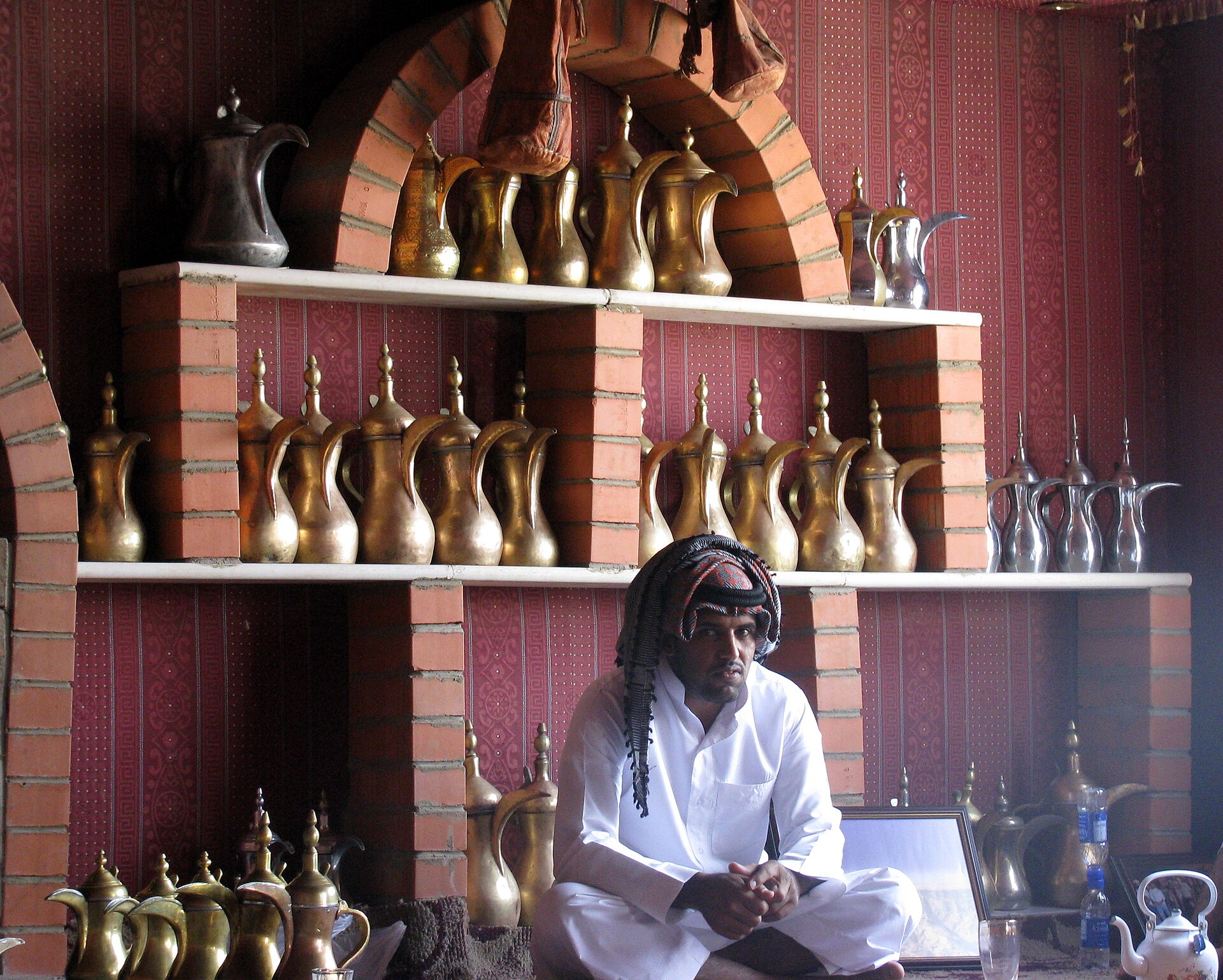
If there is one drink that defines Saudi social life, it is qahwa — traditional Arabic coffee brewed with lightly roasted beans and flavoured with cardamom. Served in small handleless cups called finjaan from a long-spouted brass pot (dallah), qahwa is the centrepiece of Saudi hospitality. It is served at every social gathering, business meeting, wedding and religious event. In 2015, UNESCO added the preparation and serving of Arabic coffee to its Intangible Cultural Heritage of Humanity list.
You will be offered qahwa constantly as a visitor. Accept it. It is the Saudi equivalent of being offered a glass of wine in France — refusing feels rude, and the flavour (earthy, aromatic, lightly bitter) grows on you quickly. It is traditionally accompanied by dates.
Tea, Karak and Fresh Juices
Beyond coffee, Saudi Arabia offers:
How to Enjoy Saudi Nightlife Without Alcohol
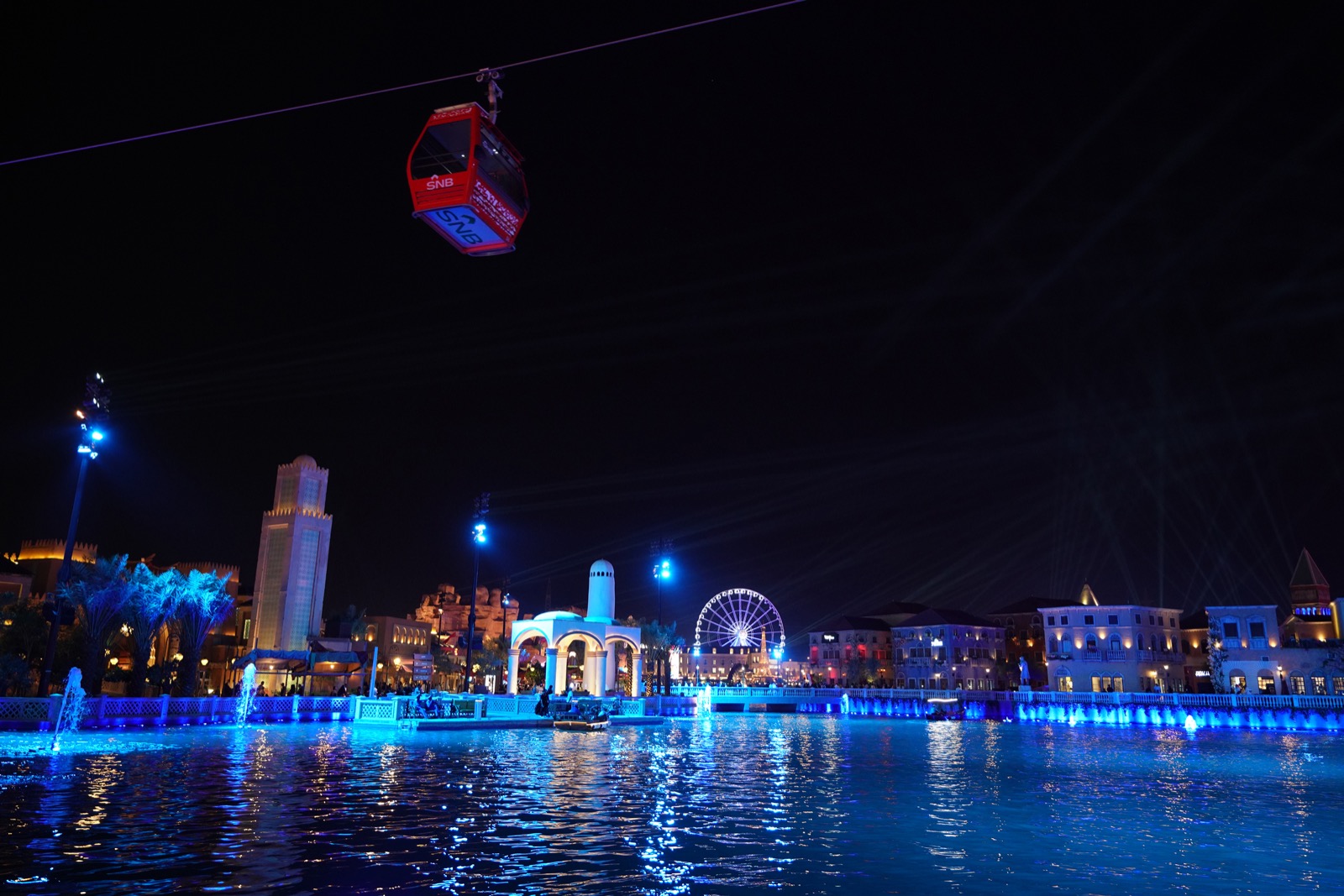
This is the question most first-time visitors have, and the honest answer may surprise you: Saudi nightlife is genuinely vibrant. The Kingdom has invested billions in entertainment infrastructure since 2019, and the result is a social scene that does not need alcohol to function. Here is how Saudis — and visitors — spend their evenings:
Late-Night Dining and Cafe Culture
Saudis eat late. Dinner at 10 or 11 PM is completely normal. Many restaurants in Riyadh and Jeddah stay open until 1 or 2 AM, and some cafes operate 24 hours a day. The cafe is the Saudi equivalent of the pub — the default social gathering place. Coffee shops on Riyadh’s Olaya Street and Tahlia Street are packed past midnight on weekends (Thursday and Friday nights), with groups of friends, families and couples lingering over coffee, dessert and conversation.
Riyadh Season and Entertainment Zones
Riyadh Season, the Kingdom’s flagship entertainment festival running roughly from October to March, transforms the capital into a sprawling entertainment hub. Boulevard Riyadh City and Boulevard World offer live music, international food courts, fairground rides, immersive experiences and themed zones. Events have included concerts by major international artists, WWE events, Cirque du Soleil and Formula E. Entry is ticketed and the atmosphere is electric — with no alcohol involved.
Shisha Lounges
Shisha (hookah or hubbly-bubbly) is legal in Saudi Arabia and widely available in dedicated lounges and many restaurants. It is a deeply social activity, typically enjoyed while sitting with friends for extended periods. Many upscale shisha lounges in Riyadh and Jeddah are open-air, beautifully designed spaces with elaborate menus of flavoured tobacco.
Outdoor and Active Nightlife
Saudi Arabia’s climate means that evenings (especially from October to April) are the best time to be outdoors. Popular evening activities include:
What Tourists Actually Need to Know: Practical Tips
Here are the practical realities of visiting Saudi Arabia as someone who normally drinks alcohol:
Before You Fly
During Your Stay
For Business Travellers
If you are visiting Saudi Arabia for business, be aware that corporate entertainment follows the same rules. Business dinners, networking events and conferences are entirely alcohol-free. This is normal and expected — your Saudi counterparts will not consider it unusual. Many international hotel chains in Saudi Arabia (Marriott, Hilton, Four Seasons) have invested heavily in their non-alcoholic beverage programmes precisely because business travellers expect sophisticated options.
How Saudi Arabia Compares to Other Gulf States
If you are planning a broader Middle East trip, understanding the regional context helps:
| Country | Alcohol for Tourists | Where Available |
|---|---|---|
| Saudi Arabia | Completely prohibited | Nowhere (diplomatic store only) |
| UAE (Dubai, Abu Dhabi) | Legal in licensed venues | Hotels, restaurants, bars, clubs with liquor licence |
| Bahrain | Legal in licensed venues | Hotels, restaurants, bars, some retail shops |
| Qatar | Legal in licensed hotel venues only | Select hotel bars and restaurants |
| Oman | Legal in licensed venues | Hotels, some restaurants with licence |
| Kuwait | Completely prohibited | Nowhere |
If you are visiting Saudi Arabia as part of a broader Gulf itinerary — for example, combining it with a stop in Dubai — you will need to mentally switch gears. The experience is fundamentally different, and many travellers find Saudi Arabia’s alcohol-free environment a refreshing change from the sometimes excessive nightlife of Dubai or Bahrain.
Vision 2030 and the Future: Will Things Change?
Saudi Arabia’s Vision 2030 transformation, led by Crown Prince Mohammed bin Salman, has already produced dramatic social changes: cinemas reopened in 2018 after a 35-year ban, women gained the right to drive in 2018, mixed-gender entertainment events are now common, and a massive tourism industry is being built from scratch. The Kingdom aims to attract 150 million visits per year by 2030.
Against this backdrop, many observers have speculated that alcohol will eventually be permitted in some form for tourists. The 2024 opening of the diplomatic quarter store, the leaked (and officially denied) reports of 600 licensed venues, and the practical challenges of hosting major international events like the FIFA World Cup 2034 all point in that direction.
However, as of April 2026, no change has been implemented for tourists. The government has officially denied reports of imminent liberalisation. Even the most optimistic analysts suggest any change would be limited to enclosed, licensed venues within specific tourism developments — not a general lifting of the ban.
Bottom Line: Plan your trip based on the rules that exist today, not the rules that might exist in the future. If alcohol is something you cannot do without on holiday, Saudi Arabia may not be the right destination for you right now. If you are willing to try something different, you will discover a country where social life is rich, food culture is extraordinary, and a cold Barbican at midnight is genuinely refreshing.
Frequently Asked Questions
Can I drink alcohol in my hotel room?
No. The prohibition applies everywhere in Saudi Arabia, including private hotel rooms. Hotels do not provide alcohol and will not permit guests to consume it on their premises.
What about cruise ships docking in Saudi ports?
Cruise lines visiting Saudi ports (typically Jeddah or NEOM) generally suspend alcohol service while in Saudi territorial waters. Policies vary by cruise line — check with your operator before booking.
Can I bring alcohol-containing medication?
Prescription medications that contain alcohol (such as certain cough syrups) are generally permitted if you carry a doctor’s prescription and a reasonable quantity for personal use. Declare them at customs to avoid problems.
Is non-alcoholic beer really zero alcohol?
In Saudi Arabia, only 0.0% ABV products are permitted. Brands sold as “non-alcoholic” in Saudi Arabia contain no alcohol whatsoever. Products with even 0.5% ABV (which are legally sold as non-alcoholic in many Western countries) are not available in the Kingdom.
Are there alcohol-free bars in Saudi Arabia?
Yes. Riyadh in particular has seen a boom in bar-style venues that serve craft mocktails and 0.0% draught beer. A12 Cafe on Tahlia Street is the best known, but the trend is growing across major cities. These venues offer the ambiance and social experience of a bar without any alcohol.
What if I have a drinking problem and use the trip as a dry break?
Saudi Arabia is actually an excellent destination for this. The complete absence of alcohol from public life, shops, restaurants and social settings removes all temptation and social pressure. Several expats and travellers have noted this as an unexpected benefit.