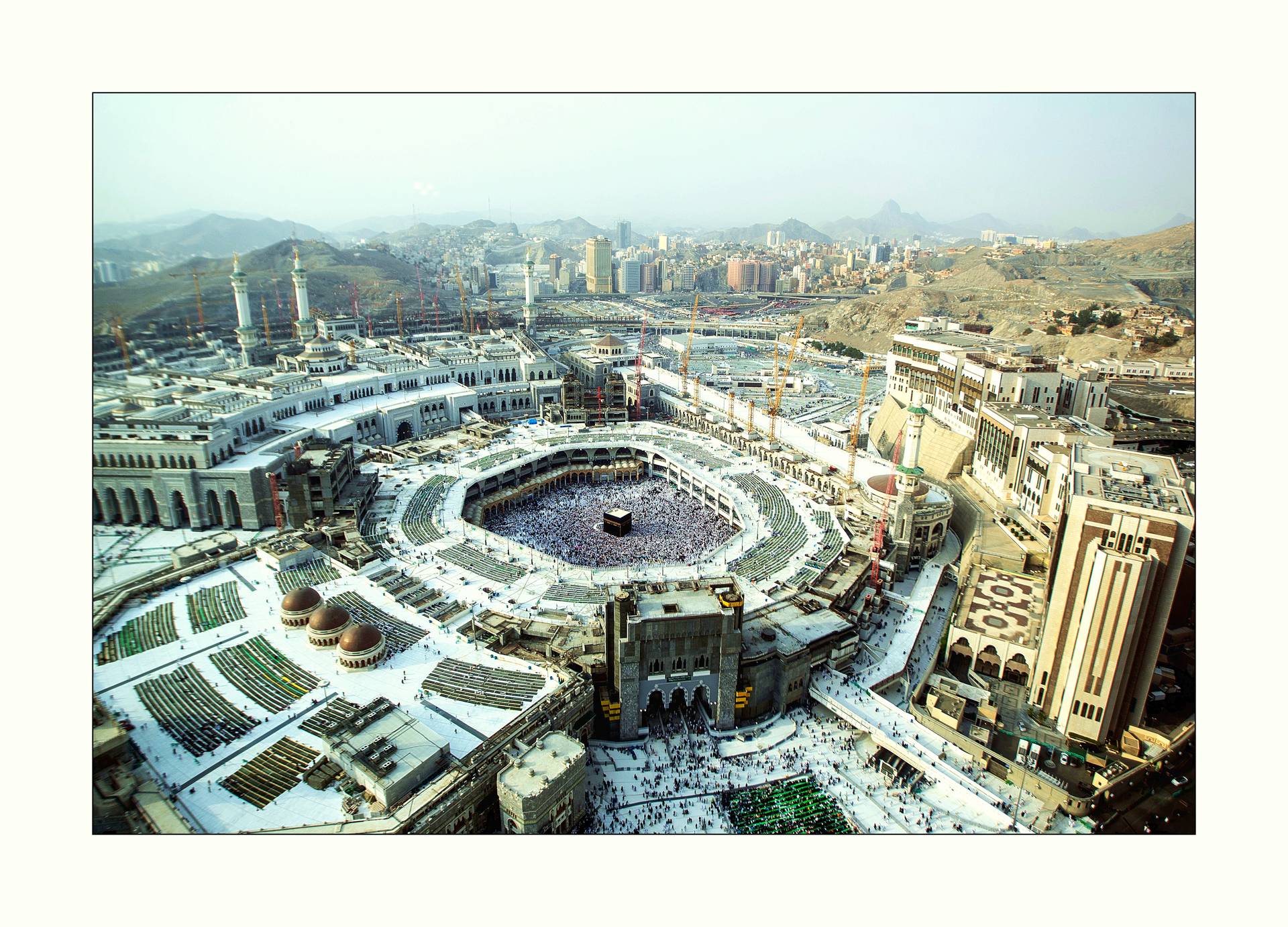

JEDDAH — The two-week ceasefire agreed on April 7 expires on approximately April 21. Indonesia’s first Hajj charter departs April 22. Between those two dates sits a gap that Saudi Arabia cannot publicly discuss, because discussing it would require admitting what 38 days of war have done to the Kingdom’s air defenses — and what Iran’s remaining arsenal could do to 1.8 million pilgrims gathered on the open plain of Arafah.
Prince Saud bin Mishaal, the Mecca governor, announced on April 6 that Hajj preparations are “95% complete.” The figure covered transport, accommodation, crowd management, and logistics. It did not include a single metric on air defense readiness. Saudi Ambassador Faisal bin Abdullah Al-Amudi told Indonesian officials, “Alhamdulillah, Saudi Arabia remains safe at this time.” That qualifier — “at this time” — does heavy lifting. The ceasefire holds. But the Kingdom entered this war with approximately 2,800 PAC-3 MSE interceptor rounds. After 38 days of sustained Iranian strikes, the stockpile is down approximately 86%, to roughly 400 remaining. Those 400 rounds must simultaneously cover Aramco’s Eastern Province terminals, the Jubail petrochemical complex, Riyadh, and — beginning in mid-April — the two holiest sites in Islam.
Iran, according to the Soufan Center, retains approximately 50% of its pre-war missile and drone arsenal, with production capacity of 15-30 ballistic missiles and 50-100 drones per day. The IRGC’s April 7 declaration that “all restraint” has been removed has not been formally retracted. Khamenei’s attributed ceasefire statement via IRIB was: “this is not the end of the war, but all units must ceasefire.”
Table of Contents
- The Calendar Trap: April 21 to May 26
- What Does Indonesia’s Contingency Planning Reveal That Riyadh Will Not Say?
- Can 400 PAC-3 Rounds Cover Aramco, Riyadh, and the Holy Cities Simultaneously?
- The Five Intercept Layers: Architecture and Its Limits
- Why Does the Ceasefire Expiration Create a Unique Danger for Hajj?
- The Custodian Title as Structural Liability
- What Saudi Arabia Is Not Saying
- The Airspace Problem: Getting Pilgrims to Jeddah
- How Iran Has Weaponized Hajj Before
- The Economics of Cancellation vs. the Politics of Proceeding
- The Debris Problem: When Interception Is Not Protection
- Ninety-Five Percent Ready — For What?
- The Replenishment Impossibility
- Frequently Asked Questions
The Calendar Trap: April 21 to May 26
The ceasefire agreed on April 7 runs for approximately two weeks, placing its expiration around April 21. Pakistan’s first Hajj charter flights depart April 18 — three days before the ceasefire lapses. Indonesia, the largest single-country quota holder at 221,000 pilgrims, dispatches its first flight on April 22, one day after the ceasefire’s nominal end. By the time the Day of Arafah arrives on approximately May 26 — when 1.8 million pilgrims will stand on a single open plain south of Mecca — the war will have reached Day 87, if the ceasefire collapses on schedule.
The gap between ceasefire expiration and pilgrim concentration is not an oversight. It is a structural feature of the conflict’s timing. Saudi Arabia confirmed Hajj 2026 will proceed, with first pilgrims arriving from April 18 onward. The Kingdom set this calendar before the war began. Changing it now would require an admission that the Custodian of the Two Holy Mosques cannot guarantee the safety of the holiest rite in Islam.
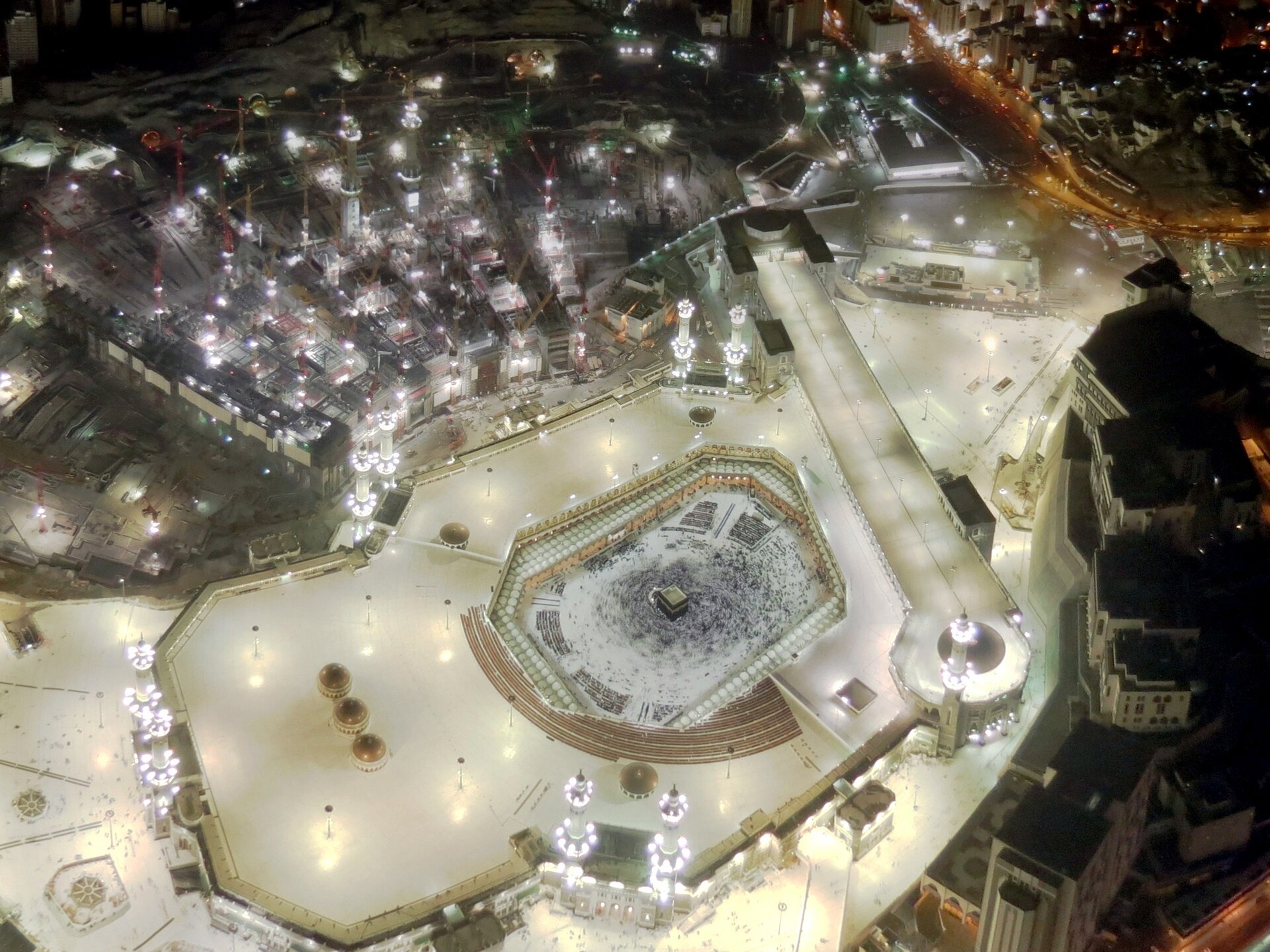
The pilgrim flow cannot be switched off like a pipeline valve. Three countries alone — Indonesia (221,000), Pakistan (179,210), and India (175,025) — account for 575,235 pilgrims, representing nations that have each published contingency plans for security disruptions. Their combined planning documents contain more candid security assessments of Saudi Arabia’s wartime capabilities than anything Riyadh itself has released.
The Middle East briefing 3,000+ readers start their day with.
One email. Every weekday morning. Free.
What Does Indonesia’s Contingency Planning Reveal That Riyadh Will Not Say?
Indonesia’s Ministry of Hajj and Umrah, under Minister Mochamad Irfan Yusuf, published three formal scenarios for Hajj 2026 — a degree of contingency planning that the host country has not matched with any public equivalent. The scenarios, reported by ANTARA News in March 2026, are structured around escalating levels of disruption.
Scenario One: proceed, but reroute all charter flights via the southern Indian Ocean and East African airspace, avoiding Iraq, Syria, Iran, Israel, UAE, and Qatar entirely. This adds hours to the flight, increases fuel costs, and may require refueling stops — but it assumes Jeddah’s airspace and ground infrastructure remain operational. Scenario Two: Indonesia suspends departures unilaterally, negotiates partial refunds or carryover quotas with Riyadh. Scenario Three: Saudi Arabia suspends Hajj entirely; Indonesia halts procurement, secures prepaid funds, and guarantees priority placement the following season.
Yusuf stated, “The main principle in preparing these scenarios is to ensure the safety and security of Indonesian pilgrims as the highest priority.” The formulation is diplomatic. Its implications are not. A sending country does not draft three-scenario contingency plans — including one premised on the host nation cancelling the pilgrimage — unless it has concluded, on the basis of its own intelligence and diplomatic channels, that the host’s security assurances are insufficient.
Marwan Dasopang, chairman of the Indonesian House of Representatives Commission VIII, went further, calling for a formal proclamation halting departures. He cited “recent reports of missile strikes affecting aviation infrastructure — including damage to a terminal building at Dubai International Airport.” Dasopang sits on the committee that oversees religious affairs and Hajj budgets. His public demand to halt flights was directed at Jakarta, but the underlying intelligence assessment was about Riyadh.
Pakistan temporarily halted all Hajj flights in March 2026 due to regional security conditions, then resumed. The halt itself — by a country that has never previously interrupted Hajj flights over security concerns — constitutes a public judgment on Saudi Arabia’s capacity to guarantee pilgrim safety that Islamabad was unwilling to articulate in diplomatic language.
Can 400 PAC-3 Rounds Cover Aramco, Riyadh, and the Holy Cities Simultaneously?
Saudi Arabia entered the conflict in late February 2026 with an estimated 2,800 PAC-3 MSE interceptor rounds — the primary kinetic-kill weapon against ballistic missiles in the Kingdom’s inventory. After 38 days of sustained Iranian strikes, Saudi Arabia’s own stocks are down to roughly 400, an 86% drawdown. Across the GCC coalition, approximately 2,400 rounds have been expended in total. The implied cost of Saudi Arabia’s share: $3.49 billion at $3.9 million per round.
No resupply is coming in time. The $9 billion sale of 730 PAC-3 MSE rounds approved by the Defense Security Cooperation Agency on January 30, 2026 has not been delivered. Those rounds do not exist in theater. Production line constraints mean replacements cannot arrive before the Day of Arafah regardless of priority — a point addressed in full below.
A detailed breakdown of why the $9 billion sale cannot close the gap before Hajj — including Camden production arithmetic, the 18-month delivery timeline, and the political versus military significance of the approval — is available in The $9 Billion Mirage: Saudi Arabia’s PAC-3 Sale Delivers Politics, Not Interceptors.
The allocation problem is geometric. Patriot batteries have a defended area radius of approximately 20-30 kilometers per battery. Ras Tanura and the Jubail petrochemical complex — which together represent the majority of Saudi Arabia’s Eastern Province industrial output — sit 65-73 kilometers apart and cannot be covered by the same battery. Riyadh lies 400 kilometers inland. Mecca and Medina sit in the Hejaz, on the Kingdom’s western flank, separated from Eastern Province by 1,200 kilometers.
Four hundred rounds, distributed across a territory larger than Western Europe, protecting four categories of high-value targets — oil infrastructure, petrochemical plants, the capital, and two holy cities — means fewer than 100 rounds per target cluster. Against an adversary producing 15-30 ballistic missiles per day, 100 rounds per priority zone represents three to six days of sustained defense. The Day of Arafah is 48 days away.
The Five Intercept Layers: Architecture and Its Limits
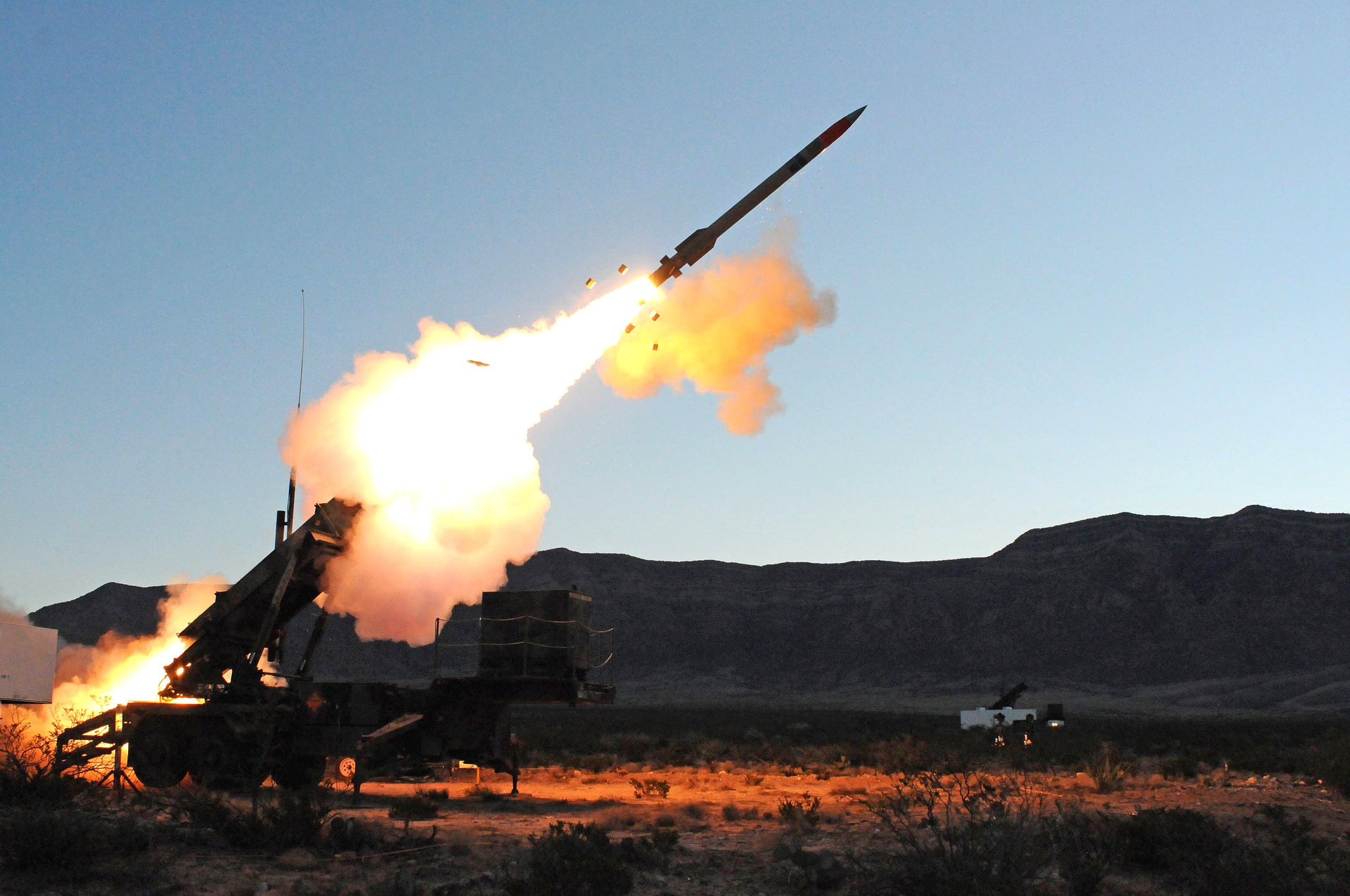
Saudi Arabia’s layered defense around Mecca and Medina, as reported by India.com and News24Online, comprises five systems: THAAD for high-altitude ballistic missile intercept, PAC-3 MSE for terminal-phase engagement, KM-SAM Block II (a South Korean system providing medium-range coverage), a Chinese-supplied 30-kilowatt laser for drone and slow-target interdiction, and Skyguard rapid-fire cannon for point defense.
On paper, the architecture is comprehensive. In practice, each layer has been tested — and several have been found insufficient — during the 38-day campaign. The Saudi Ministry of Defense’s statement — “Air defense forces — an eye that never sleeps, its mission is the safety of Muslim pilgrims” — describes aspiration, not demonstrated capability. When 11 ballistic missiles targeted Jubail on April 7, all 11 were intercepted by PAC-3. But falling debris ignited a fire at the SABIC petrochemical facility. The missiles were stopped. The damage occurred anyway.
This is the distinction Saudi Arabia cannot afford to explain publicly. Interception is not the same as protection. A PAC-3 MSE hitting an inbound ballistic missile at terminal velocity produces debris that falls within the defended zone. Over Jubail’s industrial facilities, debris fires are a financial and operational problem. Over the Grand Mosque during Tawaf, with 100,000 worshippers circling the Kaaba in the open air, debris is a mass casualty event.
THAAD provides higher-altitude intercept, meaning debris disperses over a wider area and has more time to slow before impact. But the Kingdom’s THAAD inventory is limited, and THAAD is optimized for high-altitude, long-range ballistic threats — not the swarm drone attacks that constitute the majority of IRGC daily operations. Against a mixed salvo of 15 ballistic missiles and 50 drones launched simultaneously — well within Iran’s demonstrated capacity — the five layers must function in concert, with different systems engaging different threat types at different altitudes, with zero margin for leakage.
GCC partner reserves offer little cushion. Bahrain’s air defense inventory has been drawn down substantially through 38 days of strikes — Bahrain intercepted 31 drones and 6 missiles in the hours immediately following the April 7 ceasefire declaration alone. Kuwait intercepted 28 drones in the post-ceasefire window alone. US-operated Patriot batteries at Al Udeid Air Base in Qatar have already shifted to firing PAC-2 interceptors — a circa-2000 proximity-fragmentation warhead rather than the PAC-3’s direct kinetic-kill technology — as PAC-3 stocks have been drawn down across theater.
Why Does the Ceasefire Expiration Create a Unique Danger for Hajj?
The ceasefire is not a peace agreement. It is a pause in hostilities whose terms have already been publicly rejected by Iran’s lead negotiator. Masoud Pezeshkian’s parliamentary speaker, Mohammad Bagher Ghalibaf, declared the framework “unreasonable” while continuing to negotiate in Islamabad. Khamenei’s attributed statement via IRIB — “this is not the end of the war, but all units must ceasefire” — explicitly frames the halt as temporary. The SNSC full text adds: “negotiations are continuation of battlefield.”
The ceasefire’s structural fragility has already been demonstrated. In the hours following its declaration, IRGC drones struck Kuwait oil and water infrastructure. Bahrain intercepted 31 drones and 6 missiles. The White House acknowledged that “it will take time for orders to reach lower ranks” — a diplomatic way of describing an authorization ceiling that makes ceasefire enforcement structurally impossible given the IRGC’s decentralized mosaic of 31 provincial corps. The UK air defence deployment to Saudi Arabia addresses the drone layer of that threat but leaves the ballistic-missile ceiling entirely to PAC-3 — the system whose 400 remaining rounds define the outer boundary of Hajj-period protection.
If the ceasefire collapses on or around April 21, the Kingdom will face renewed Iranian strikes with a deeply depleted interceptor stockpile, at the precise moment when hundreds of thousands of pilgrims are arriving at Jeddah’s King Abdulaziz International Airport and beginning overland movement to Mecca. The window between April 21 and May 26 — the Day of Arafah — is 35 days. At Iran’s demonstrated capacity of 15-30 ballistic missiles per day, that window represents 525-1,050 ballistic missiles. Against 400 remaining PAC-3 MSE rounds.
The Islamabad Accords framework, negotiated by Pakistan, envisions a 45-day phased process with Hormuz sovereignty and HEU enrichment deferred to Phase 2. Phase 2 has no timeline. The accords’ own mediators have described chances as “slim.” A ceasefire extension is possible. A guaranteed extension through the end of Hajj — which would need to hold until at least early June — has no structural foundation in any proposal currently on the table.
The Custodian Title as Structural Liability
King Fahd adopted the title Custodian of the Two Holy Mosques in 1986, partly in response to the 1979 Iranian Revolution and the Grand Mosque seizure of the same year. The title replaced the previous “His Majesty” and bound the House of Saud’s domestic and international legitimacy to a single obligation: the protection of Mecca and Medina and the safe conduct of the Hajj.
This was always a conditional bargain with 1.8 billion Muslims. After the 2015 Mina stampede — which killed up to 2,411 pilgrims by independent counts, though Saudi Arabia’s official figure was 769 — Brookings Institution observed: “These terrible tragedies strike at the Saudi royal family’s core claim to legitimacy.” The Kingdom’s enemies, “from al-Qaida to Iran, will be quick to blame Riyadh” for any Hajj failure.
That assessment was written about a crowd-management disaster — a failure of logistics and planning. The current scenario is qualitatively different. A ballistic missile strike on Mecca during Hajj would not be a Saudi organizational failure. It would be an Iranian act of war against the holiest site in Islam. But the political consequences would fall on the Custodian, not the attacker. Iran has no pilgrims in Saudi Arabia this year — Saudi Arabia suspended Iranian visas, and direct flights are cancelled. Iran boycotted Hajj from 1988 to 1990 after the 1987 Mecca Massacre. Tehran has no constituency to protect in the Hejaz and no moral exposure if its missiles land there.
Ayatollah Mohammad Emami Kashani’s post-2015 verdict — “Saudi Arabia is incapable of organising the pilgrimage” and “the running of the Hajj must be handed over to Islamic states” — represents Tehran’s standing position, articulated after a stampede. The rhetorical framework for delegitimizing Saudi custodianship after a wartime Hajj incident is already built. It has been waiting since 1987.
What Saudi Arabia Is Not Saying
Track what Riyadh has disclosed about Hajj 2026 preparations, and what it has not. Prince Saud bin Mishaal’s “95% readiness” figure, reported by Asharq al-Awsat, covered pilgrim transport, accommodation quality, crowd flow management, and logistics infrastructure. Zero security metrics. No mention of air defense posture, interceptor availability, threat assessments, or contingency plans for ceasefire collapse during the pilgrimage period. Saudi Arabia’s silence extends beyond Hajj logistics: the UAE formally demanded Iran pay reparations on April 8 for strikes that also hit Saudi territory — and Saudi Arabia said nothing, a pattern of diplomatic restraint that the Kingdom has maintained throughout the war at significant political cost.
Hajj Minister Tawfiq Al-Rabiah described a system designed to ensure “smooth procedures at airports and provide quick support in case of any challenges.” The word “challenges” carries enormous weight when the challenge under discussion is a ballistic missile. Al-Rabiah was describing airport logistics, not integrated air and missile defense.
Ambassador Al-Amudi’s assurance to Indonesia — “Everything will proceed as planned” and “God willing, preparations are running smoothly and according to plan, and there will be no impact” — is constructed entirely in the language of faith and routine. “There will be no impact” is a theological statement, not a military assessment. Indonesia drafted three contingency scenarios. Saudi Arabia has published zero.
The Kingdom has not publicly addressed the PAC-3 stockpile drawdown. It has not disclosed the number of interceptors allocated to Mecca and Medina specifically. It has not released any airspace management plan for integrating civilian Hajj charter traffic with active air defense operations. It has not acknowledged the EASA CZIB 2026-03-R5 advisory — which instructs airlines to route via a southern corridor at FL320 or above to reach Jeddah and Medina — or explained how this advisory squares with “everything will proceed as planned.”
The $730-round PAC-3 sale approved in January has received no public delivery timeline. Poland refused a US request to transfer Patriot batteries to Saudi Arabia on March 31. No alternative donor has been identified publicly. Saudi Arabia has not disclosed what percentage of its remaining interceptor stocks are allocated to Mecca and Medina.
The Airspace Problem: Getting Pilgrims to Jeddah
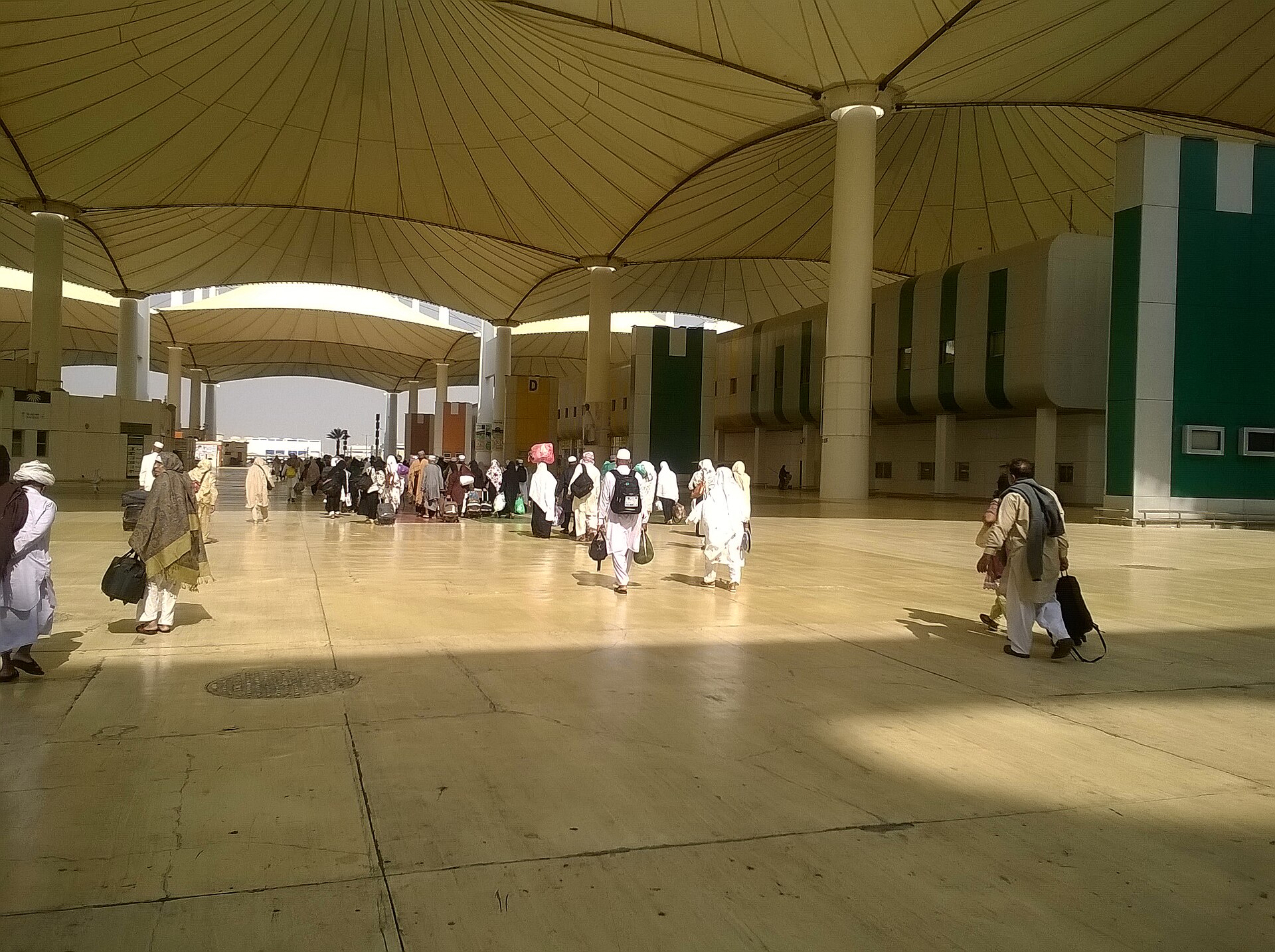
Before pilgrims face the air defense question on the ground, they must survive the airspace above. The European Union Aviation Safety Agency’s conflict zone information bulletin CZIB 2026-03-R5 advises airlines to route to Jeddah and Medina via a southern corridor at flight level 320 and above, avoiding Iraqi, Syrian, and Iranian airspace. The bulletin has been extended through rolling renewals since March 2026.
Indonesia’s Scenario One reroutes charter flights via the southern Indian Ocean and East Africa, bypassing the entire Middle Eastern conflict zone — adding hours of flight time and possible refueling stops, but keeping Jeddah’s airport as the end-point. The operative assumption is that the airport itself remains functional.
Pakistan’s March 2026 flight halt — temporary but unprecedented — demonstrated that even allied Muslim-majority nations with deep institutional ties to Saudi Arabia will prioritize domestic political exposure over diplomatic deference when airspace safety is in question. Pakistan resumed flights after conditions improved, but the precedent is set. Pakistan’s Hajj quota of 179,210 pilgrims represents the second-largest national contingent. A second halt during ceasefire collapse would remove nearly 180,000 pilgrims from the pipeline.
Bahrain’s airspace has been closed since February 28, making the King Fahd Causeway the sole international access corridor to the island — a corridor that appeared on the IRGC’s April 3 counter-target list of eight bridges across four countries. Hajj pilgrims from Bahrain must transit through Saudi airspace from Dammam. The airspace that protects their transit is defended by the same depleted interceptor stocks that must protect Mecca.
How Iran Has Weaponized Hajj Before
Iran’s relationship with the Hajj as a political instrument predates the current war by four decades. The 1987 Mecca Massacre — in which Saudi security forces killed 275 Iranian pilgrims and 127 others during a political demonstration organized by Tehran, totaling 402 dead — triggered Ayatollah Khomeini’s most sustained campaign to strip the House of Saud of custodianship over the holy sites.
Iran boycotted Hajj from 1988 to 1990. Saudi Arabia severed diplomatic relations in April 1988. Khomeini’s demand — that management of the Hajj be transferred to a council of Islamic states — became a standing feature of Iranian revolutionary rhetoric, revived after every Saudi failure. The 2015 Mina stampede produced the same verdict from Ayatollah Kashani that Tehran had prepared since 1987.
In 2026, Iran has no pilgrims in Saudi Arabia. Saudi Arabia suspended Iranian Hajj visas; direct flights between the two countries were cancelled. This absence is itself a weapon. Tehran has no citizens at risk in the Hejaz. It has no exposure to Hajj disruption and full license to exploit it politically. Any incident — a missile intercept over Mecca whose debris injures pilgrims, a drone that penetrates the five-layer defense, or even a near-miss that triggers a stampede — would generate a legitimacy crisis for the Custodian, not for the attacker.
The IRGC has not directly threatened Mecca or Medina. No public IRGC statement has named the holy cities as targets. But IRGC doctrine targets US bases and Saudi oil infrastructure across the Kingdom’s territory, and sustained operations against those targets place the entire air defense network under pressure that degrades coverage everywhere — including over the Hejaz. The IRGC struck the East-West Pipeline’s pumping stations on the day the ceasefire was supposed to take effect. It does not need to target Mecca to endanger Mecca. It needs only to exhaust the interceptors defending everything else.
The Economics of Cancellation vs. the Politics of Proceeding
Saudi Arabia’s Hajj and Umrah economy — accommodation, transport, catering, and ancillary services — represents the Kingdom’s largest non-oil revenue stream, with market projections from Future Market Insights estimating the broader religious tourism sector at $183.8 billion by 2025 on a projected trajectory to $368.3 billion by 2035. The Aramco May OSP inversion has already placed Saudi fiscal projections under severe strain — Goldman Sachs estimates an $80-90 billion deficit versus the official $44 billion forecast. Cancelling or postponing Hajj would add the destruction of the Kingdom’s largest non-oil revenue stream to a fiscal position already under wartime compression.
The only precedent for foreign pilgrim exclusion is COVID-19 in 2020, when Saudi Arabia reduced the Hajj to 1,000 domestic participants — the first restriction since the Kingdom’s founding in 1932. But COVID was a symmetric, globally shared crisis. Every nation faced the same virus. Cancellation carried no implication of Saudi weakness or failure. A wartime cancellation carries precisely that implication. It would constitute a public admission that the Custodian of the Two Holy Mosques cannot protect the Two Holy Mosques.
MBS has no option that does not cost him something. Cancelling Hajj surrenders the legitimacy claim embedded in the custodian title. Proceeding requires guaranteeing safety he cannot guarantee. Publicly acknowledging the PAC-3 drawdown would confirm Iranian missile capability to the adversary and to 1.8 billion Muslims. Quietly reducing pilgrim quotas would prompt the sending countries — which have already drafted contingency plans — to ask why.
| Date | Event | Day of War (if ceasefire collapses April 21) |
|---|---|---|
| April 7 | Ceasefire agreed | Day 38 |
| April 18 | First Pakistan Hajj charter flights | Ceasefire Day 11 |
| ~April 21 | Ceasefire expires | Day 52 (hostilities resume) |
| April 22 | Indonesia first Hajj departure | Day 53 |
| ~May 5 | June OSP repricing due (Aramco) | Day 66 |
| ~May 25-26 | Day of Arafah — 1.8M on open plain | Day 87 |
| ~May 27-29 | Eid al-Adha / Mina tent city | Days 88-90 |
| ~Early June | Final pilgrim departures | Day 95+ |
The Debris Problem: When Interception Is Not Protection
The Jubail SABIC fire of April 7 established a precedent that Saudi air defense planners cannot have missed. Eleven ballistic missiles targeted Jubail. All eleven were intercepted. Debris from the intercepts started a fire at SABIC’s petrochemical facility. The intercept rate was 100%. The damage rate was not zero.
PAC-3 MSE is a hit-to-kill interceptor — it destroys the incoming warhead through direct kinetic impact, rather than proximity detonation. This means the incoming missile is fragmented at altitude, producing a debris field that falls within the defended area. Over an industrial zone, debris causes fires, equipment damage, and worker injuries. Over a pilgrimage site — specifically, over the Masjid al-Haram during Tawaf, where 100,000 or more worshippers circle the Kaaba in the open air — the same debris becomes an indiscriminate threat to exposed human bodies.
Saudi Arabia has never publicly addressed the debris risk over the holy cities. No statement from the Ministry of Defense, the Hajj Ministry, or any official body has acknowledged that successful interception over Mecca or Medina would itself produce falling debris over the world’s densest temporary human concentration.
Ninety-Five Percent Ready — For What?
Prince Saud bin Mishaal’s readiness figure deserves close attention for what it measures. The Mecca governor’s preparedness review, reported by Asharq al-Awsat, assessed transportation capacity, accommodation standards, crowd management infrastructure, health services, and logistical chains. These are the standard components of Hajj readiness — categories that Saudi Arabia has refined over decades into one of the world’s most practiced mass-event management systems. After 2015, the Kingdom invested heavily in crowd-flow technology, wearable tracking for pilgrims, and emergency medical infrastructure. None of those investments address a ballistic missile. Al-Rabiah’s system for “smooth procedures at airports and quick support in case of any challenges” was designed for lost luggage, delayed flights, and medical emergencies. The challenge in 2026 is an adversary with 50% of its pre-war arsenal intact, production lines running, and a ceasefire that its own lead negotiator has called “unreasonable.”
The Replenishment Impossibility
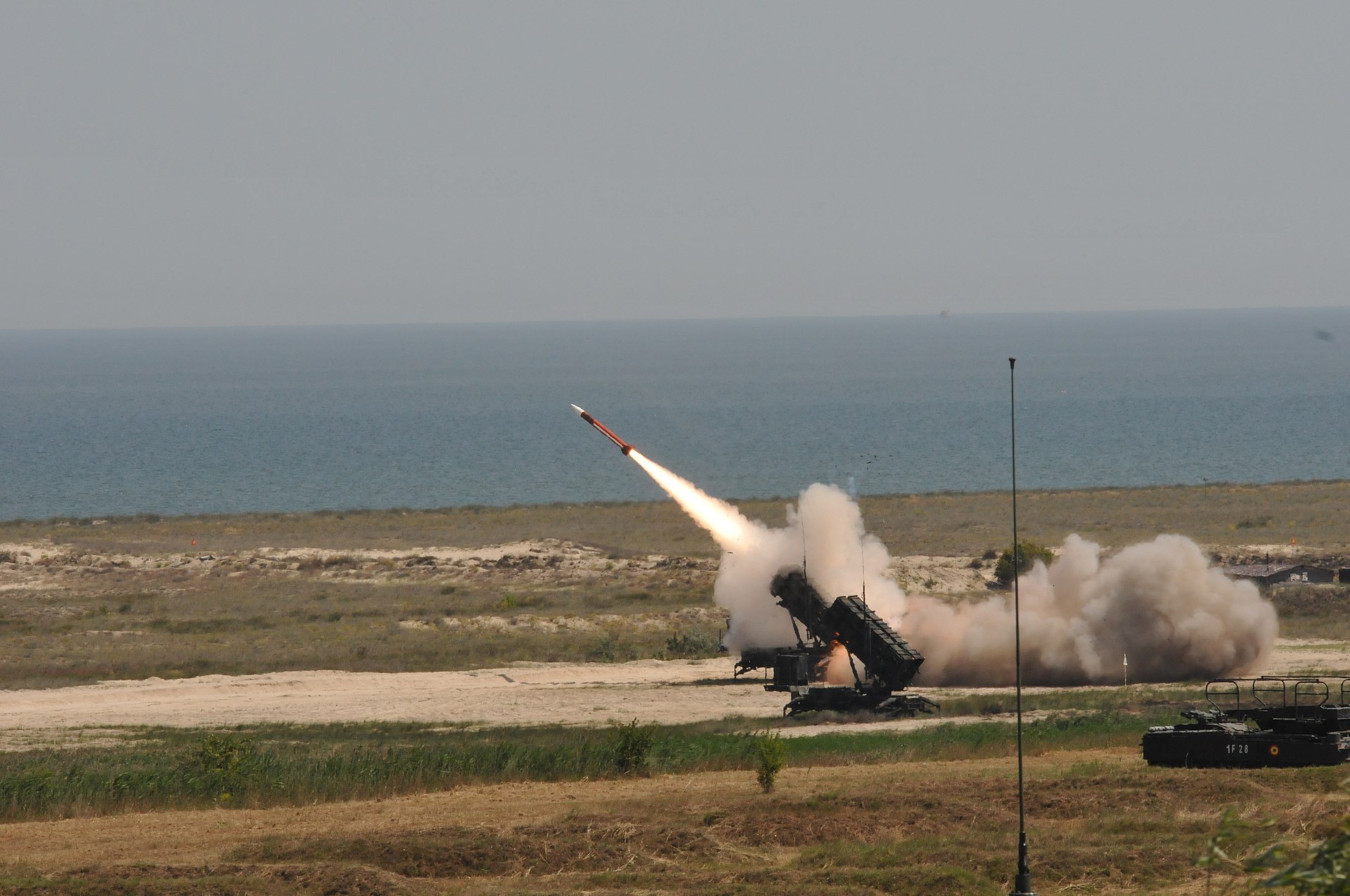
The supply chain arithmetic forecloses the most obvious solution. Lockheed Martin’s Camden facility produces 620-650 PAC-3 MSE rounds per year — approximately 50-55 per month. The January 2026 framework agreement to expand production to 2,000 rounds per year requires infrastructure investment that will not be complete until 2030. At current production rates, replacing the 2,400 rounds expended across the GCC coalition would take approximately 3.5 years.
The $9 billion sale of 730 rounds approved by DSCA on January 30, 2026 represents future production, not existing inventory. These rounds have not been manufactured. They cannot be redirected. Poland’s March 31 refusal to transfer Patriot batteries to Saudi Arabia — a decision that Warsaw justified on the basis of its own Russian-front threat calculus — closed the most politically feasible allied transfer option.
Between now and the Day of Arafah on approximately May 26, the theoretical maximum additional PAC-3 MSE production is roughly 75-85 rounds. This assumes all Camden output is allocated exclusively to Saudi Arabia, bypassing every other customer including the US Army. Even under this impossible assumption, the rounds would need to be assembled, tested, shipped, and integrated into Saudi fire units — a process that takes weeks under peacetime logistics. Saudi Arabia will defend Hajj 2026 with approximately the same 400 rounds it has today.
| Metric | Figure | Source |
|---|---|---|
| Pre-war PAC-3 MSE inventory | ~2,800 rounds | Defense News, March 2026 |
| Rounds expended — GCC coalition (38 days) | ~2,400 | Defence Security Asia / Defense News |
| Remaining inventory | ~400 rounds | Defense News estimate |
| Cost per round | $3.9 million | Lockheed Martin / DSCA |
| Annual production (current) | 620-650 rounds | Defense News, March 2026 |
| Annual production (2030 target) | 2,000 rounds | Lockheed Martin framework agreement |
| DSCA approved sale (undelivered) | 730 rounds / $9 billion | DSCA, January 30, 2026 |
| Iran daily production capacity | 15-30 BMs + 50-100 drones | Soufan Center, April 2026 |
| Iran arsenal remaining | ~50% of pre-war stocks | Soufan Center IntelBrief |
| Time to replace expended rounds | ~3.5 years at current rate | Calculated from production figures |
Frequently Asked Questions
Has Saudi Arabia ever cancelled Hajj due to military conflict?
No. The closest precedent is the COVID-19 restriction of 2020, when the Kingdom limited Hajj to 1,000 domestic participants — the first foreign-pilgrim exclusion since the Saudi state’s founding in 1932. During the 1990-1991 Gulf War, Hajj proceeded despite Iraqi Scud missile strikes on Riyadh and Dhahran, though pilgrim numbers fell sharply. The 1979 Grand Mosque Seizure — a two-week armed siege involving 400-500 militants and 50,000-100,000 trapped worshippers — required French special forces assistance and resulted in concessions to religious conservatives, but occurred outside the Hajj season. No Saudi ruler has cancelled the pilgrimage over a military threat to the holy cities themselves.
Could the United States deploy additional Patriot batteries to protect Mecca during Hajj?
US Patriot batteries are already operating in theater, including at Al Udeid Air Base in Qatar, where they have shifted to firing older PAC-2 interceptors as PAC-3 stocks deplete. However, US military doctrine does not include the defense of Mecca — a site US troops cannot enter, as the holy city is closed to non-Muslims under Saudi law. Any US Patriot deployment to the Mecca perimeter would require Saudi crews operating under Saudi command, using rounds from the same depleted stockpile. The 20,000 US troops in theater identified by the Soufan Center are positioned to prosecute the Iran campaign, not to augment Hajj defense specifically. Greece’s bilateral air defense partnership with Saudi Arabia, including PAC-3 operations, demonstrates the Kingdom’s reliance on third-party crews — but those crews draw from the same interceptor pool.
What happens to sending countries’ investments if Hajj is disrupted after pilgrims have departed?
Indonesia’s three-scenario framework includes provisions for partial refunds and carryover quotas — but only for Scenario Two (Indonesia suspends departures) and Scenario Three (Saudi cancellation). No published contingency addresses Scenario Four: pilgrims in-country when the ceasefire collapses. Indonesia’s quota of 221,000 pilgrims represents approximately $2.2 billion in per-pilgrim costs including flights, accommodation, and Saudi visa fees. Pakistan’s 179,210 pilgrims represent a similar financial exposure. Evacuation of nearly 600,000 pilgrims from three countries alone — through a single airport (Jeddah KAIA) operating under wartime airspace restrictions — has no logistical precedent in modern aviation history.
Does Iran have a history of targeting religious sites?
The IRGC has not publicly threatened Mecca or Medina and has not targeted religious sites during the current conflict. However, Iran’s proxy Ansar Allah (the Houthis) fired ballistic missiles into Saudi Arabia in 2017 and 2019 — including toward Riyadh and border regions — with Saudi air defenses conducting hundreds of intercepts across that period. Iran’s war aims center on US bases and Saudi energy infrastructure, not religious targets. The danger to the holy cities is indirect: sustained strikes against Eastern Province infrastructure deplete the interceptor stocks that also defend the Hejaz. The IRGC’s “all restraint removed” declaration of April 7 has not been formally retracted, and post-ceasefire strikes on Kuwait and Bahrain confirmed that IRGC units continue operating with decentralized autonomy regardless of orders from Tehran.
What is the Custodian of the Two Holy Mosques title and why does it matter politically?
The title was adopted in 1986 by King Fahd, replacing “His Majesty,” partly in response to twin legitimacy threats: the 1979 Iranian Revolution, which positioned Tehran as an alternative Islamic authority, and the 1979 Grand Mosque Seizure, which exposed the royal family’s inability to secure its holiest site. The title binds Saudi sovereign legitimacy to a specific functional obligation — the protection of Mecca, Medina, and the annual pilgrimage. Unlike monarchical titles rooted in lineage or territory, “Custodian” implies ongoing performance. The Hajj and Umrah economy represents the economic expression of that custodial role — Saudi Arabia’s largest non-oil revenue stream and the mechanism through which the custodian title generates material as well as symbolic returns. Any failure to protect pilgrims during a threat that the Kingdom chose to absorb by proceeding with the Hajj would expose the gap between the title’s promise and the state’s demonstrated capacity to fulfill it, with consequences amplified by Iran’s four-decade campaign to strip the House of Saud of that role.
How that custodial obligation intersects with the April 10 Islamabad talks — and specifically with the 33-day window before Hajj peak — is the subject of the diplomatic failure pathway and Saudi Arabia’s Hajj constraint, which examines Ghalibaf’s pre-staged walkout conditions as a direct function of IRGC institutional imperatives that operate regardless of ceasefire status. The naval dimension of the same window is equally constrained: NATO has no mine countermeasure ships to deploy to Hormuz, meaning any clearance operation would begin well after the Hajj peak.
The full diplomatic and calendar analysis of why April 18 — not April 22 — is the binding date for MBS is covered in the April 18 deadline that may matter more than the ceasefire itself: why the Hajj arrival window activates four days before the truce expires, and why Iran has no incentive to grant an extension.
Saudi Arabia’s emergency resupply requests require US political clarity, which Trump’s simultaneous threat-and-negotiate posture on April 9 has made impossible — a paralysis with direct implications for every pending Saudi defence decision. The legal dimension of that paralysis runs deeper still: the April 29 War Powers deadline means Congress could strip the legal authority for US crews to operate Saudi PAC-3 batteries — seven days after the ceasefire expires, at the peak of Hajj arrivals.