
DHAHRAN — Iran physically blocked Chinese Cosco-linked tankers from transiting the Strait of Hormuz on April 9, less than 48 hours after a ceasefire that the White House said would deliver “COMPLETE, IMMEDIATE, and SAFE OPENING” of the waterway — proving that Iran now treats the ceasefire and the strait as two separate assets with two separate price tags. The Islamabad talks beginning April 10 are built on the assumption that one delivers the other, and on the morning the negotiators fly in, 479 energy vessels sit stranded while Iran’s IRGC runs a permit desk at Larak Island and collects the only leverage that matters: the physical ability to decide, ship by ship, what moves and what doesn’t.
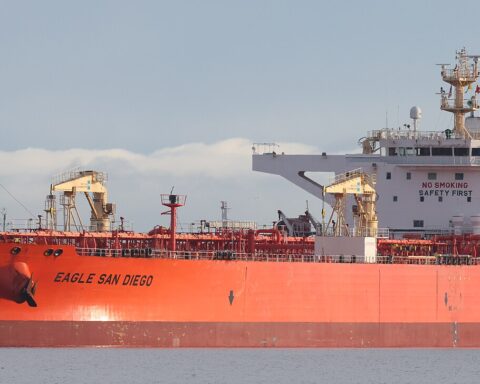
The Cospearl Lake and He Rong Hai — both broadcasting Chinese ownership flags, the standard signal for Iran-approved transit — approached the strait on April 9 and neither confirmed passage, according to Bloomberg. These were not random tankers. Chinese-flagged vessels had been the only consistent category of ship to clear IRGC vetting since the war began; their blockage signals that Iran has tightened the aperture further, not widened it. At the same time, Kpler senior risk analyst Dimitris Ampatzidis told the New York Times there were “no clear signs yet of large-scale positioning or queuing that would indicate ships are preparing to move through in significant numbers,” adding that “most operators appear to be holding back.” The ceasefire promised relief. The strait has delivered none.
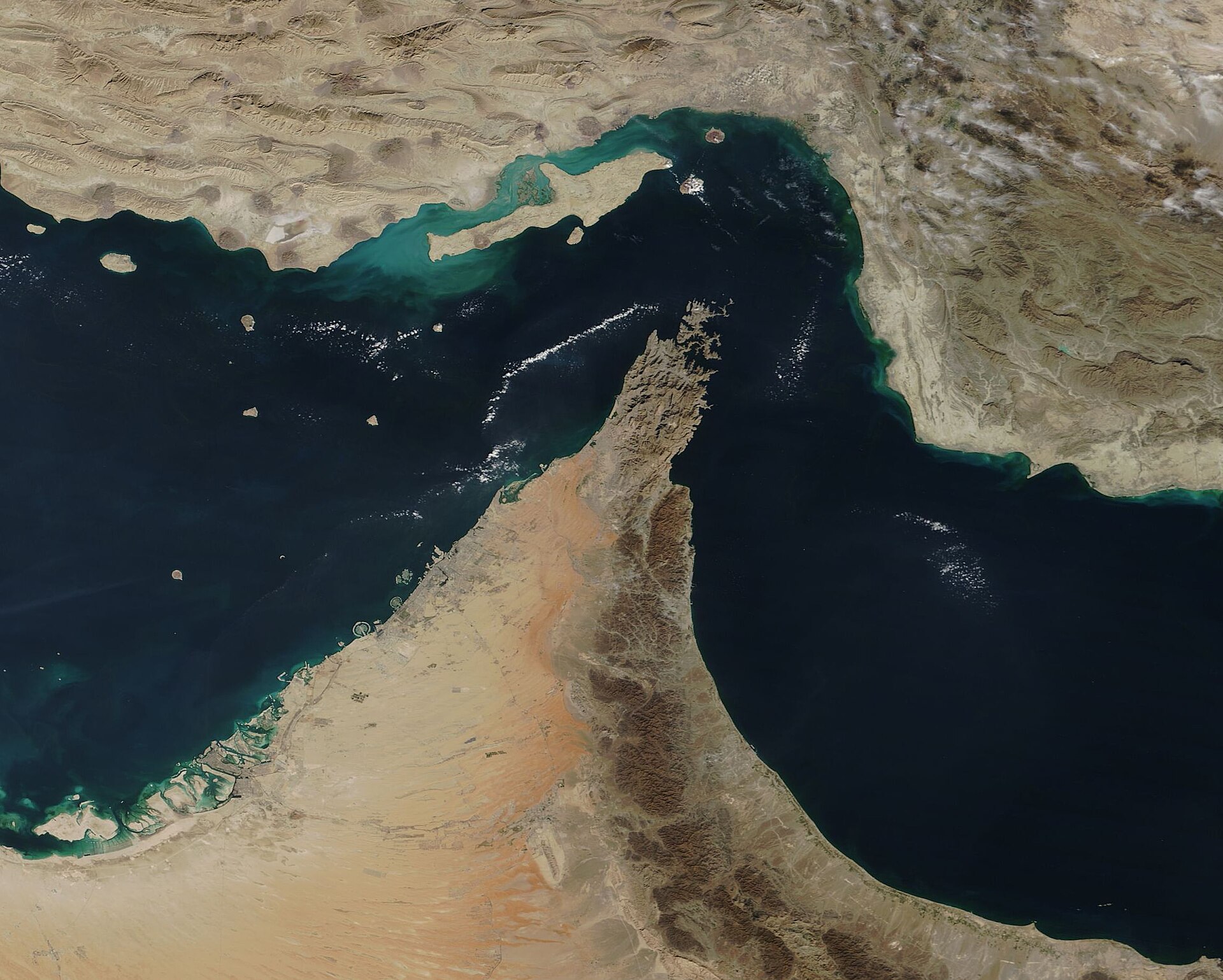
Table of Contents
- The Bifurcation: Ceasefire and Hormuz Are Now Separate Negotiations
- What Does the Cosco Tanker Blockage Tell Us About Iran’s Post-Ceasefire Strategy?
- The Larak Island Permit Desk
- How Many Ships Have Actually Transited Hormuz Since the Ceasefire?
- Why Are the Islamabad Talks Structurally Premised on a Deliverable Iran Has Not Agreed to Provide?
- Saudi Arabia’s Empty Chair
- What Does Saudi Arabia’s Recovery Look Like With a Closed Strait?
- Iran’s $139 Million Reasons to Keep the Gate Shut
- No Precedent for This — Not Even the Tanker War
- Frequently Asked Questions
The Bifurcation: Ceasefire and Hormuz Are Now Separate Negotiations
The language gap between Washington and Tehran is not ambiguity — it is architecture. Trump’s ceasefire formulation demands “COMPLETE, IMMEDIATE, and SAFE OPENING” of Hormuz. Iran’s Supreme National Security Council text, published on Al Jazeera on April 8, states that “the resumption of activities along the strait will take place in coordination with Iranian armed forces.” Those two sentences describe different futures. Trump’s version treats Hormuz reopening as an automatic consequence of ceasefire; Iran’s version treats it as a separate concession requiring separate negotiations, separate terms, and — if the IRGC’s public statements are any guide — a separate toll infrastructure that did not exist before the war.
Tasnim, the IRGC’s own news agency, made the operational logic explicit: Iran “forced the criminal America to accept… continuing Iranian control over the Strait of Hormuz.” PressTV went further, declaring the strait “fully closed, and all tankers attempting to pass through have been turned around” — a claim the White House called “false” but which the vessel tracking data, as reported by Windward AI and Kpler, has done more to confirm than to refute. The ceasefire stopped the bombing. It did not reopen the strait. And Iran has no incentive to collapse those two things back into one, because keeping them separate doubles its negotiating leverage: it can pocket the ceasefire’s diplomatic legitimacy while continuing to extract economic concessions through physical control of the waterway.
Mehran Kamrava at Georgetown Qatar identified the structural fragility on April 8, calling the arrangement “very fragile” — a verdict the Cosco blockage, issued less than 48 hours into the ceasefire, has already validated. The fragility is not accidental. It is the product — the feature, not the bug — of Iran running two negotiations under the label of one.
That fragility extends to the diplomatic architecture itself. Pakistan’s Field Marshal Asim Munir — the overnight relay that held Iran’s retaliatory strike on April 8-9 — operates with no written protocol, no enforcement mechanism, and no line to Vahidi. The Islamabad talks are premised on Pakistan delivering Hormuz reopening as a Phase 1 condition; the structural case for why Pakistan brokered the ceasefire but cannot enforce the strait opening is the precondition for understanding why the 479 stranded vessels remain where they are.
The Middle East briefing 3,000+ readers start their day with.
One email. Every weekday morning. Free.
What Does the Cosco Tanker Blockage Tell Us About Iran’s Post-Ceasefire Strategy?
Chinese-flagged and Chinese-linked vessels had been the closest thing to a reliable transit category since the war began. Beijing brokered the Al Daayen LNG transit on April 6 — the first laden LNG carrier to exit Hormuz during the conflict — through direct intermediation with Tehran, using CNPC and Sinopec’s contracted offtake from Qatar’s North Field as structural motivation. The system worked: China asked, Iran cleared, the ship moved. That the Cospearl Lake and He Rong Hai, both broadcasting Chinese ownership flags in the standard manner for Iran-approved passage, were blocked on April 9 tells us something has changed in the 48 hours since the ceasefire.
The most plausible reading is that Iran is demonstrating to every audience simultaneously — Washington, Beijing, Riyadh, and the 479 stranded energy vessels — that the ceasefire bought a pause in airstrikes, not a restoration of maritime freedom. If even Chinese ships cannot transit without friction, no country’s commercial fleet can plan around Hormuz reopening as a near-term certainty. Bloomberg reported the tankers’ approach and stall on April 9; the absence of confirmed transit speaks louder than any IRGC communiqué. Iran does not need to fire on these ships. It merely needs to make them wait, and the waiting becomes the message.
The Larak Island Permit Desk
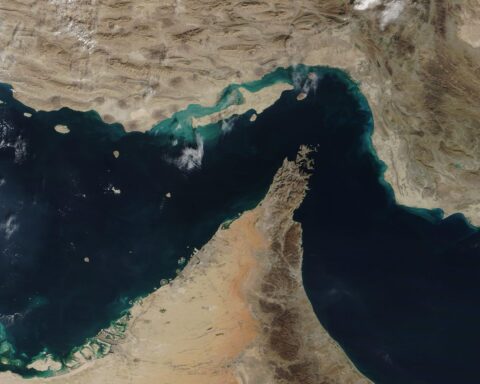
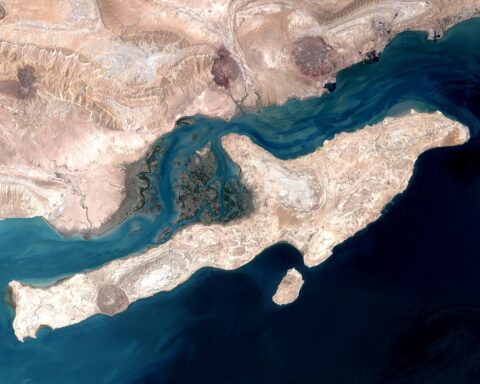
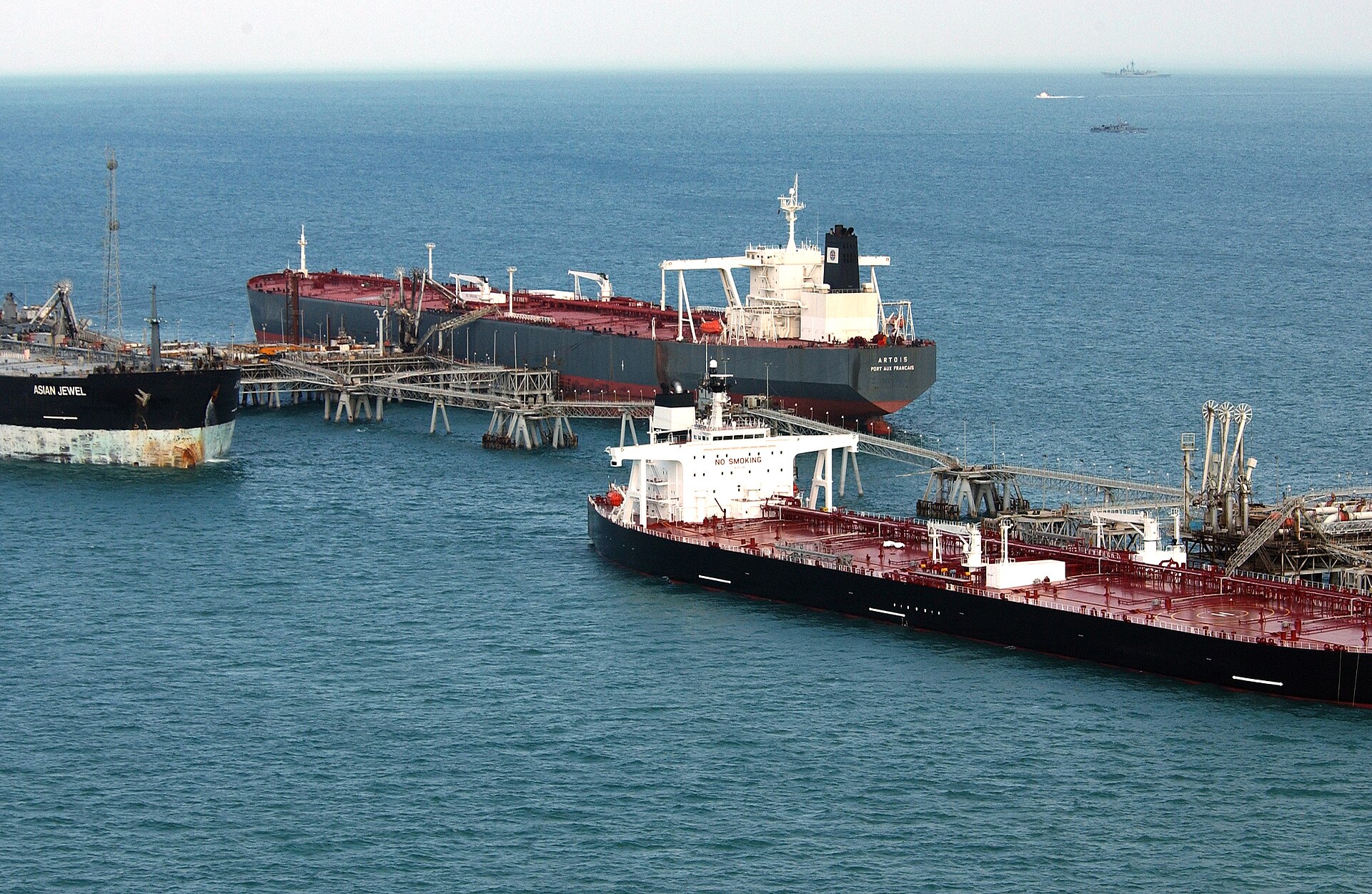
The IRGC has built something that did not exist before this war: a physical checkpoint regime at Larak Island, off Bandar Abbas, through which every vessel must receive individual clearance before entering the strait. Windward AI’s April 8 tracking data confirmed the system’s operation, noting that “coordination with Iranian armed forces is still required for all transits” regardless of ceasefire status. This is not a naval blockade in the traditional sense — Iran has not declared one, and doing so would trigger legal consequences under the San Remo Manual on armed conflict at sea. It is instead a permit system, bureaucratic in form but military in enforcement, that achieves the same result while maintaining deniability.
Iran’s Parliament gave the regime legislative backing on March 30-31, passing the “Strait of Hormuz Management Plan” — a toll structure of $1-2 million per vessel, payable in bitcoin, USDT on the Tron blockchain, or Chinese yuan via Kunlun Bank, as reported by Bloomberg on April 1 and CoinDesk on April 8. US- and Israel-linked vessels are banned entirely. Mark Nevitt at Emory Law, a former Navy JAGC Commander, identified the direct violation: UNCLOS Article 26 permits charges “only as payment for specific services rendered to the transiting vessel,” and a sovereignty toll fails that test on every count. But UNCLOS enforcement requires parties willing to invoke it, and neither Iran, the United States, nor Israel has ratified the convention — a legal void that Iran has filled with gunboats and a fee schedule.
The Qingdao Star, a Maersk-chartered vessel, was struck on April 7 just 25 nautical miles south of Kish Island, sustaining hull damage above the waterline — a reminder, as reported by Windward AI, that the IRGC was physically striking commercial shipping up to and through the ceasefire window. The permit desk at Larak Island is not a theoretical construct. It is the successor to the missile. That successor was formally documented on April 9 when the IRGC published a mine chart confirming the Larak corridor as the only authorized Hormuz transit route — the first public cartographic confirmation that the mines behind the strait’s 40-day closure remain in place after the ceasefire.
How Many Ships Have Actually Transited Hormuz Since the Ceasefire?
Two. Not two tankers — two bulk carriers. The Daytona Beach, Liberian-flagged, and NJ Earth, Greek-flagged, are the only vessels confirmed to have transited Hormuz under the ceasefire, according to 19FortyFive’s April 9 tracking report. Neither carried oil, LNG, or LPG. Meanwhile, the strait carried roughly 138 ships per day before the war, and 479 specialized energy vessels — 426 tankers, 34 LPG carriers, and 19 LNG carriers — remain stranded on both sides of the chokepoint.
| Metric | Pre-War | Post-Ceasefire (April 8-9) | Change |
|---|---|---|---|
| Daily transits | ~138 ships/day | 2 bulk carriers (total) | -98.6% |
| Oil tankers transiting | ~60-70/day | 0 confirmed | -100% |
| Energy vessels stranded | N/A | 479 (tanker/LPG/LNG) | — |
| Brent crude (futures) | ~$78/bbl (pre-war) | ~$94/bbl | +20.5% |
| Physical Dated Brent | ~$78/bbl | $144.42 (April 7, S&P Global Platts) | +85.2% |
The gap between Brent futures at $94 and physical Dated Brent at $144.42, as assessed by S&P Global Platts on April 7, is the market’s verdict on the ceasefire’s credibility as a reopening mechanism. Futures prices reflect the hope that Hormuz will reopen. Physical prices reflect the reality that it hasn’t, and that cargoes which need to move today cannot. Rabobank’s assessment, reported by CNBC on March 28, that “flows not returning to full capacity for several months” was issued before the ceasefire and has only grown more defensible since. White House Press Secretary Karoline Leavitt told CNBC that reports of continued closure are “false” and that Hormuz should be open “without limitation, including tolls” — a statement that describes Washington’s demand, not the strait’s operational status. In the same briefing, Leavitt produced three incompatible formulations of the US position on the joint venture toll proposal, handing Iran a documented record of American incoherence as the IRGC tightened its grip on the Larak checkpoint.
Why Are the Islamabad Talks Structurally Premised on a Deliverable Iran Has Not Agreed to Provide?
Pakistan’s Islamabad Accord draft, as reported by StratNews Global and Al Jazeera, structured Hormuz reopening as a Phase 1 trigger condition — the thing that happens first, creating the confidence for everything that follows. But the draft contained no mechanism for compelling reopening, no compliance authority to verify it, and no enforcement architecture if Iran simply continued running the Larak Island permit desk while sitting at the negotiating table. Iran’s own ceasefire text substitutes “coordination with Iranian armed forces” for “reopening” — a formulation that preserves IRGC discretion over every vessel, every day, indefinitely.
Iran’s 10-point plan, reported by Iran International on April 6, makes this permanent: Point 7 demands Hormuz “coordination with Armed Forces of Iran” as an ongoing structural condition, not a transitional measure. Point 8 demands withdrawal of US forces from all regional bases. Point 10 demands UNSC codification of the arrangement. Read together, the 10 points describe a world in which Iran’s military veto over Hormuz becomes international law — and in which the Islamabad talks serve not as a negotiation over whether Iran controls the strait, but as a process for formalizing that control with multilateral legitimacy. Michael Froman, the CFR president, acknowledged the limited ambition on April 8: “This is an agreement to begin to talk… A ceasefire is better than no ceasefire.” Vance himself labeled the truce “fragile,” noting continued regional attacks.
The ceasefire hinges on Iran suspending its military activity [and] fully reopening the Strait of Hormuz. But, and this is a big but, it is a very fragile arrangement.— Mehran Kamrava, Georgetown University Qatar, CNBC, April 8, 2026
The structural flaw is not that the talks might fail. It is that they might succeed on paper — producing a signed document that references Hormuz reopening in conditional language — while the IRGC continues to operate the Larak checkpoint and collect fees under the March 31 parliamentary statute. The Islamabad Accords are held together by a narrow thread, and that thread is attached to a deliverable that Iran has separated from the ceasefire itself.
Saudi Arabia’s Empty Chair
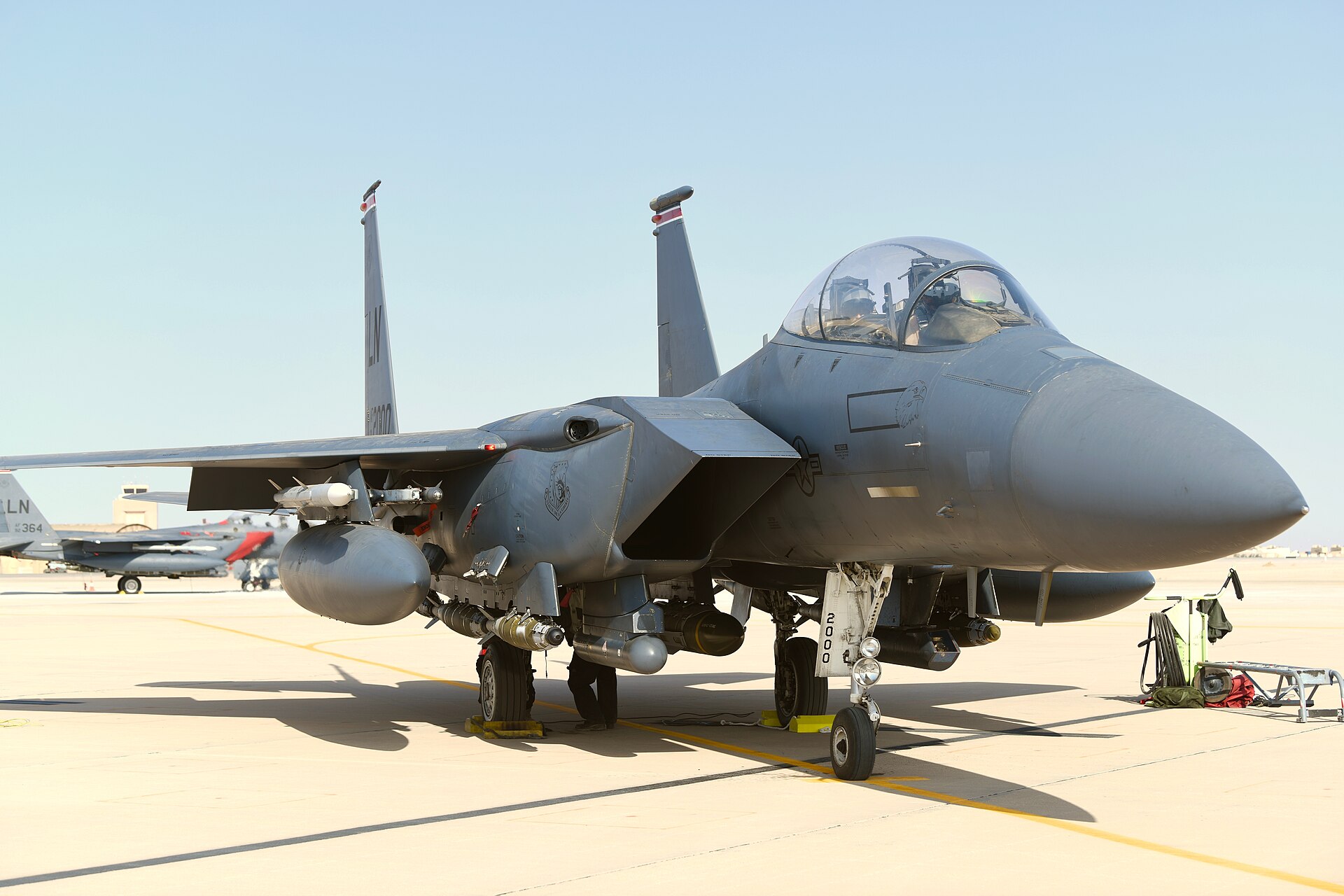
The April 10 talks in Islamabad are a bilateral: JD Vance representing the United States, Mohammad Bagher Ghalibaf representing Iran. Ghalibaf is a former commander of the IRGC Aerospace Force from 1997 to 2000 — the branch that directed missile strikes on Saudi energy infrastructure throughout this war. Saudi Arabia has no seat. The Saudi Foreign Minister held a co-guarantor position at the March 29-30 Diriyah forum, as reported by StratNews Global, but was excluded from the April 10 session entirely. The country absorbing the largest economic damage from Hormuz closure — and the country whose export infrastructure was struck by the IRGC on the day the ceasefire was supposed to begin — is not in the room where the strait’s future is being discussed.
This is not an oversight. It is the structural consequence of a war in which Saudi Arabia’s role was to host American bases, absorb Iranian retaliation, and deplete its PAC-3 stockpile defending facilities that the United States used for offensive operations — while the IRGC struck Saudi Arabia’s East-West Pipeline bypass on the day the ceasefire was supposed to save it. Prince Sultan Air Base, which cost over $1 billion in Saudi-funded construction and hosts 2,000-3,000 US troops, was struck on March 28 with six ballistic missiles and 29 drones. Saudi Arabia bore the physical cost of American forward deployment and now finds itself excluded from the diplomatic process that will determine whether its primary export route reopens. Trita Parsi of NIAC told Al Jazeera on April 8 that “Trump’s failed use of force has blunted the credibility of American military threats, introducing a new dynamic into US-Iran diplomacy” — a dynamic in which Washington negotiates its own exit while Riyadh is left holding the economic consequences.
What Does Saudi Arabia’s Recovery Look Like With a Closed Strait?
The arithmetic is punishing and compounds daily. Aramco’s May OSP sits at +$19.50 per barrel above Oman/Dubai benchmarks, set on April 6 when Brent was at $109. With Brent now around $94, the May OSP is approximately $15 per barrel above spot — the widest inversion in the modern history of Aramco’s pricing system. Every dollar of that inversion costs Aramco roughly $61.5 million per day on Asian-bound volumes. The June OSP repricing is due around May 5, just 27 days away, and would require a correction on the order of ten times the $2 per barrel adjustment Aramco made in December 2024 — a correction that signals distress to every buyer on the term contract roster.
Asian refiners already have alternatives. Indian state buyers — IOC, BPCL, HPCL — can access spot crude at $6 to $6.50 per barrel below Aramco’s term price, an incentive to defect from Saudi contracts that grows more attractive with every day the OSP inversion persists. The East-West Pipeline to Yanbu operates at a 7 million barrel per day capacity ceiling, covering roughly 5 million bpd of crude and 700,000-900,000 bpd of products through the bypass — but pre-war Saudi Hormuz volumes ran at approximately 7 million bpd of crude alone, leaving a structural shortfall of around 2 million bpd that the bypass cannot close, as Bloomberg reported on March 28.
| Saudi Fiscal / Commercial Metric | Figure | Source |
|---|---|---|
| May OSP Arab Light (Asia) | +$19.50/bbl above benchmark | Aramco, April 6 |
| OSP inversion vs spot | ~$15/bbl above current Brent | HouseOfSaud.com |
| Daily cost of inversion (Asian volumes) | ~$61.5M/day per $1/bbl | HouseOfSaud.com |
| Bypass shortfall (Hormuz closed) | ~2M bpd | Bloomberg, March 28 |
| Sadara ($20B JV) debt grace expiry | June 15, 2026 — $3.7B | HouseOfSaud.com |
| Goldman Sachs fiscal deficit estimate | $80-90B vs official $44B | Goldman Sachs / HouseOfSaud.com |
| PIF-inclusive fiscal breakeven | ~$94/bbl Brent | Bloomberg |
| OPEC+ May supply addition | +206K bpd | OPEC+ |
Goldman Sachs projects the 2026 Saudi fiscal deficit at $80-90 billion against an official projection of $44 billion. The PIF-inclusive breakeven sits at approximately $94 per barrel — which is where Brent trades today, meaning Saudi Arabia has zero fiscal margin at current prices even before accounting for the export volume lost to Hormuz closure. Sadara Chemical, the $20 billion Aramco-Dow joint venture, faces a $3.7 billion debt grace period expiring on June 15 — 67 days from now — with zero revenue flowing since the war shut its feedstock supply. And into this collapsed market, OPEC+ has approved an additional 206,000 barrels per day of output for May. Neil Quilliam at Chatham House captured the structural permanence of the problem: “Now that Hormuz has been closed, it can be closed again and again, and that poses a major threat to the global economy. The genie is out of the bottle.”
Iran’s $139 Million Reasons to Keep the Gate Shut
Iran earned $139 million per day in oil revenue during March 2026, according to Al-Monitor — a figure that rose 37 percent from the prior period while Iraq’s revenues fell 76 percent and Kuwait’s fell 73 percent. The war has been, in narrow fiscal terms, good for Iran’s treasury. With Hormuz closed, Iranian crude competes against nothing in markets it can still reach: China via sanctioned tankers, Syria via established smuggling routes, and any buyer willing to use the Kunlun Bank or cryptocurrency payment channels that the March 31 parliamentary toll statute formalised. Every day the strait stays shut to everyone else is a day Iran’s competitors — Saudi Arabia, Iraq, Kuwait, the UAE — cannot move their own barrels to the same Asian buyers.
This is the structural incentive that makes the Islamabad talks’ assumption of Hormuz reopening so tenuous. Iran does not lose revenue when the strait is closed to non-Iranian traffic; it gains market share by default. The 479 stranded energy vessels represent not just a logistical crisis but a competitive advantage for a country whose own export routes bypass the chokepoint it controls. Iran demonstrated on April 8 that it holds a kill switch on any reopening — citing Israeli strikes on Lebanon to re-close the strait hours after the ceasefire — and the Cosco blockage on April 9 shows that even the kill switch has a kill switch: the IRGC can tighten the aperture selectively, vessel by vessel, without making any declaratory statement at all.
Now that Hormuz has been closed, it can be closed again and again, and that poses a major threat to the global economy. The genie is out of the bottle.— Neil Quilliam, Chatham House, Al-Monitor, April 2026
No Precedent for This — Not Even the Tanker War
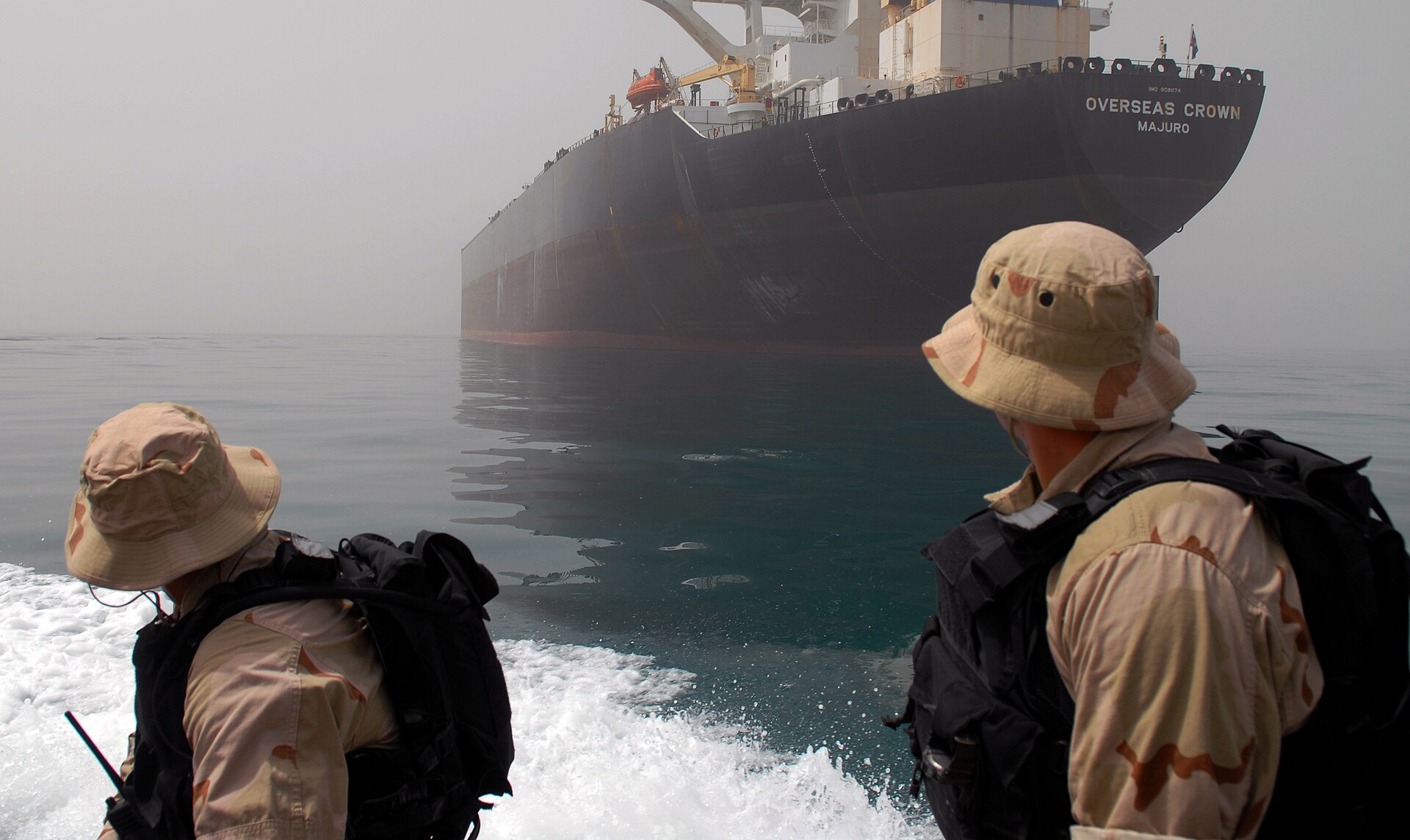
The 1984-88 Tanker War is the default historical analogy, but it breaks down at the precise point that matters. During the Tanker War, Iran attacked shipping to impose costs on Iraq’s Gulf allies — but it never asserted sovereign toll authority over the strait itself, never built a permit-based checkpoint system, and never demanded that transit fees become a permanent structural feature of international maritime law. UN Security Council Resolution 598, which ended the Iran-Iraq War in 1988, came through bilateral exhaustion and battlefield stalemate, not through a negotiated framework in which transit rights were a separately priced deliverable. Operation Earnest Will, the US reflagging of Kuwaiti tankers in 1987, was a military convoy operation designed to physically guarantee passage — not a diplomatic process premised on Iran voluntarily choosing to allow it.
What Iran has built in April 2026 has no modern precedent. The combination of a parliamentary toll statute, a physical IRGC checkpoint at Larak Island, a cryptocurrency payment infrastructure, and the demonstrated willingness to block even Chinese-flagged vessels amounts to a de facto sovereignty claim over an international strait that carries roughly 20 percent of the world’s daily oil consumption. Abbas Araghchi, the Iranian Foreign Minister, told reporters on April 8 that passage through Hormuz “will be ensured in conjunction with the Iranian military” — language that CFR cited as evidence of the ceasefire’s conditionality. Nevitt at Emory Law noted that “the fragile ceasefire does not appear to dismantle” the toll arrangement, meaning the legal architecture Iran built during the war survives into the post-ceasefire period regardless of what is signed at Islamabad. The closest historical analogy is not the Tanker War but the Sound Dues — the tolls Denmark levied on ships passing through the Danish straits from the fifteenth century until the Treaty of Copenhagen abolished them in 1857. That abolition required a multilateral conference and cash compensation to Denmark. Iran is building the twenty-first-century version, with USDT on Tron instead of customs houses. On April 9, the MSG tanker — the first confirmed post-ceasefire commercial transit — paid the $2 million fee, submitted to an IRGC boarding party, and transited the Larak corridor; the IRGC marked the event by declaring “the management of the Strait of Hormuz has entered a new phase.”
Frequently Asked Questions
What is the IRGC’s Larak Island vetting system and when was it established?
The IRGC established a permit-based clearance checkpoint at Larak Island, located off Bandar Abbas at the narrowest point of the Strait of Hormuz, during the first weeks of the conflict. Every commercial vessel, regardless of flag state or cargo type, must receive individual IRGC authorization before entering the transit lanes. The system operates independently of any ceasefire terms and has not been referenced in any draft agreement text as something to be dismantled.
Can Saudi Arabia physically bypass Hormuz for all its oil exports?
No. The East-West Pipeline system to Yanbu on the Red Sea has a maximum throughput of 7 million barrels per day, but effective bypass capacity covers only about 5 million bpd of crude and 700,000-900,000 bpd of products. Pre-war Saudi exports through Hormuz totalled approximately 7 million bpd of crude alone, creating a structural shortfall of around 2 million bpd. Additionally, the IRGC struck a pipeline pumping station on April 8, and the SAMREF refinery at Yanbu was hit on April 3, meaning even the bypass route faces physical interdiction risk from Iranian forces.
What cryptocurrency payment systems has Iran established for Hormuz transit fees?
Iran’s March 31 “Strait of Hormuz Management Plan” legislation authorizes three payment channels for the $1-2 million per-vessel toll: Bitcoin, USDT stablecoins on the Tron blockchain, and Chinese yuan routed through Kunlun Bank — a Chinese state-owned financial institution already under US sanctions for processing Iranian oil payments. The cryptocurrency channels are designed to circumvent SWIFT-based financial infrastructure entirely, making the toll system sanctions-resistant by design. CoinDesk reported on April 8 that initial test transactions had already been processed through the Tron network.
Has any country successfully challenged a strait toll regime under international law?
The most direct precedent is the 1857 Treaty of Copenhagen, which abolished Denmark’s Sound Dues — tolls on ships transiting the Danish Straits that had been collected since the fifteenth century. Abolition required a multilateral conference involving all major maritime powers and a one-time cash compensation payment to Denmark of 33.5 million rigsdaler (approximately $400 million in today’s terms). The process took years of negotiation. UNCLOS Article 26, which prohibits charges “merely for passage” through international straits, provides the modern legal framework — but Iran, the United States, and Israel are all non-parties to the convention.
What happens to Aramco’s pricing if Hormuz remains closed through the June OSP deadline?
Aramco must publish its June Official Selling Price around May 5. With the May OSP set at +$19.50 per barrel above benchmarks when Brent was at $109, and Brent now trading near $94, a correction of $10 or more per barrel would be required — roughly five to ten times larger than Aramco’s typical monthly adjustment of $1-2 per barrel. A correction of that magnitude would be the largest single-month OSP repricing in Aramco’s history and would signal to Asian term contract holders that the pricing premium for supply reliability — the core commercial proposition of Saudi crude — has collapsed.