
One of the most common questions visitors ask before arriving in the Kingdom is whether Saudi Arabia’s tap water is safe to drink. The short answer: the water that leaves Saudi desalination plants and treatment facilities meets or exceeds World Health Organization (WHO) standards. But as with many countries, what happens between the plant and your glass matters. This guide, part of our comprehensive Saudi Arabia Travel Guide 2026, covers everything you need to know about drinking water safety, city-by-city variations, bottled water options, and practical hydration tips for Saudi Arabia’s extreme heat.
Tap Water Safety: Treated water meets WHO standards; however, building pipes and rooftop tanks can affect quality — use caution, especially in older buildings
Main Water Source: Seawater desalination (approximately 60% of supply), with the remainder from non-renewable groundwater
Bottled Water Cost: SAR 1–3 (~$0.27–$0.80) for a 1.5-litre bottle at supermarkets
Visa Required: Yes — tourist e-visa available
Best Practice: Drink bottled or filtered water; tap water is fine for cooking, showering, and brushing teeth in modern buildings
Avoid: Drinking directly from taps in older buildings with uncleaned rooftop storage tanks
Is Saudi Arabia Tap Water Safe to Drink?
According to WHO data, 99% of Saudi cities, towns, and rural areas have access to improved, clean water sources. The Saudi Water Authority (SWA), which oversees both the Saline Water Conversion Corporation (SWCC) and the National Water Company (NWC), maintains that tap water delivered to homes and businesses is of high quality and comparable to municipal water systems in Europe or North America.
The reality on the ground is more nuanced. The water that exits Saudi treatment plants is genuinely safe and rigorously tested. The concern lies in what the industry calls “last-mile” delivery: the network of ageing pipes, building plumbing, and especially rooftop storage tanks that can introduce contaminants between the main supply line and your tap. In older buildings, corrosion, sediment accumulation, and biofilm growth inside poorly maintained tanks can degrade water quality. In modern hotels, newer apartment complexes, and recently built infrastructure, these risks are minimal.
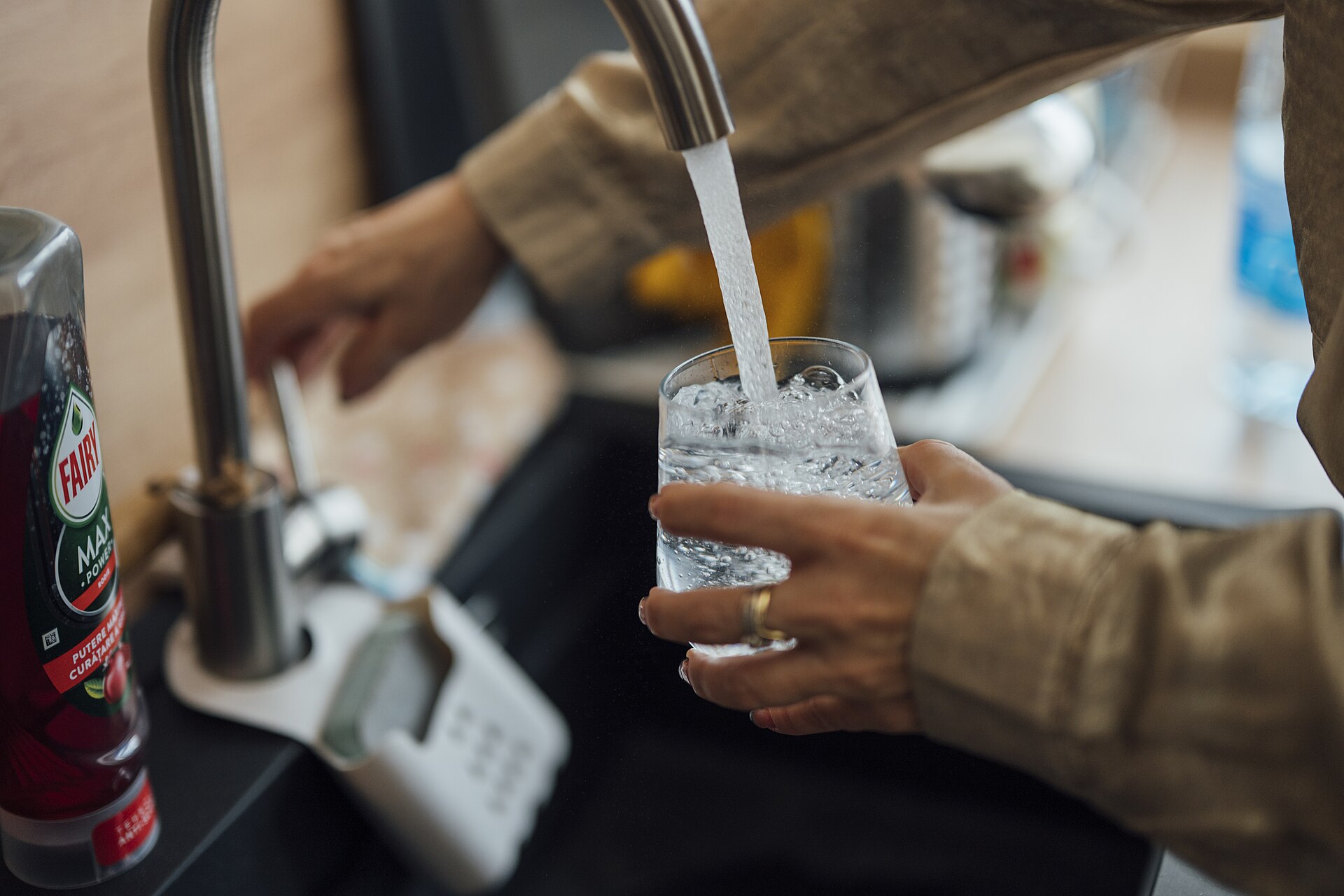
For visitors, the practical advice is straightforward: drink bottled or filtered water, but do not be alarmed if you accidentally swallow tap water while showering or brushing your teeth. The base water supply is treated and safe. Many residents in newer buildings drink tap water daily without issue.
How Saudi Arabia Produces Its Drinking Water
Saudi Arabia is one of the driest countries on Earth, with no permanent rivers and minimal annual rainfall. To supply water to its population of over 36 million, the Kingdom operates the world’s largest desalination infrastructure, a network of industrial-scale facilities that convert seawater from the Red Sea and the Arabian Gulf into potable water.
Desalination: The Backbone of the Supply
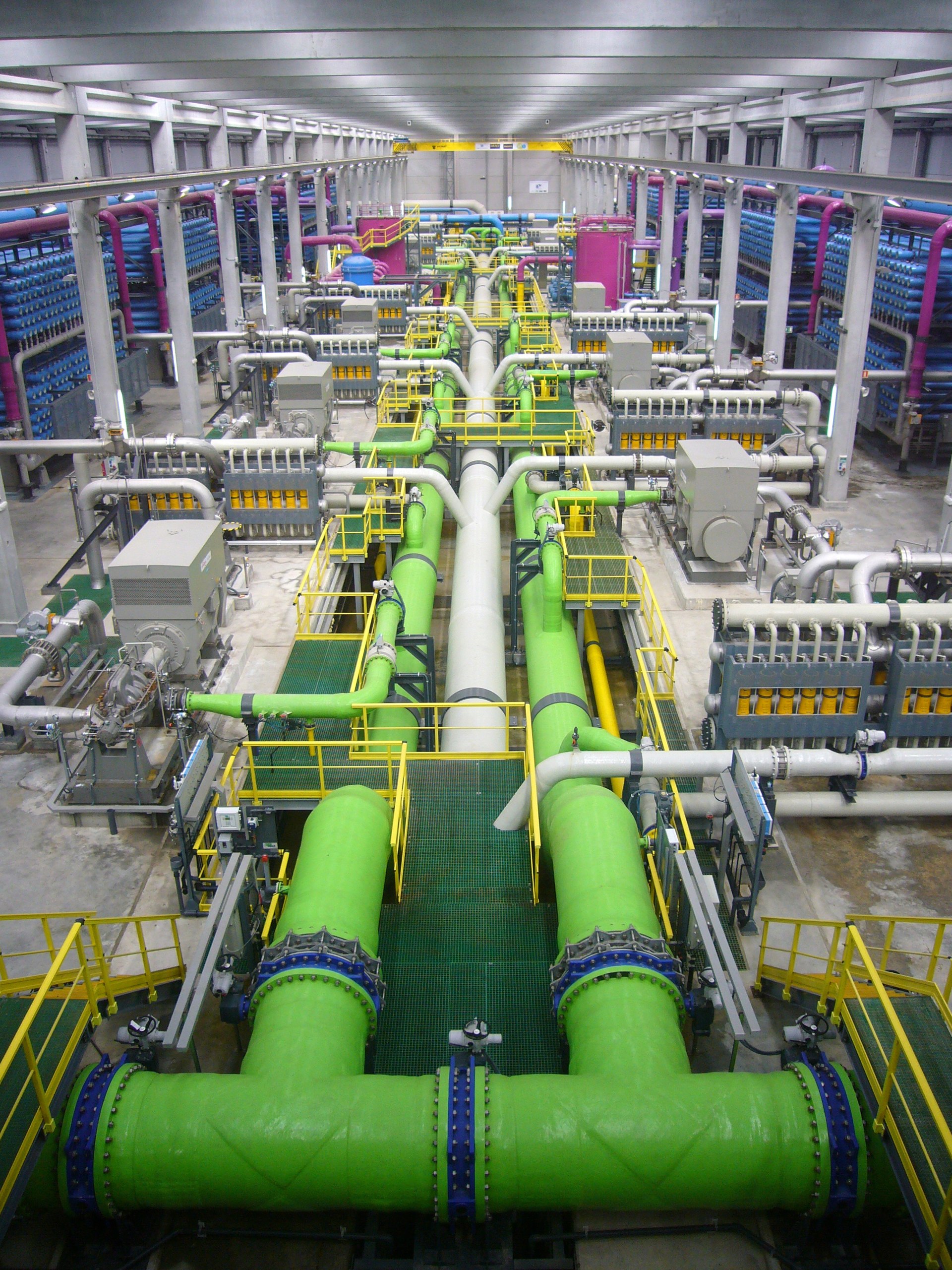
The Saline Water Conversion Corporation (SWCC) is the world’s largest producer of desalinated water, with a daily output exceeding 11.1 million cubic metres from 30 operational plants. This water accounts for roughly 60% of Saudi Arabia’s total potable water supply, with the remaining 40% drawn from non-renewable groundwater aquifers.
SWCC employs two primary desalination technologies:
- Multi-Stage Flash (MSF) Distillation: Seawater is heated to 90–120°C and passed through multiple low-pressure chambers, where it rapidly evaporates (“flashes”) and is then condensed into fresh water. This thermal process historically dominated Saudi desalination, accounting for approximately 64% of production.
- Reverse Osmosis (RO): Seawater is forced through semi-permeable membranes at pressures of 54–80 bar, separating salt molecules from water molecules. RO technology consumes roughly 3–4 kWh per cubic metre, compared to 10–15 kWh for thermal methods, making it significantly more energy-efficient. The Kingdom is steadily transitioning toward RO as its primary technology.
- Carry a reusable water bottle: Refill from large 5-gallon dispensers at hotels and serviced apartments. Most Saudi hotels have water dispensers in lobbies and hallways.
- Buy large formats: A single 5-litre or 10-litre jug generates far less plastic waste per litre than individual 500ml bottles.
- Use hotel filtration: Many upscale hotels now provide in-room water filtration systems or glass carafes refilled from filtered sources as part of their sustainability commitments.
- Support the shift: Companies like Wisewell are introducing home and commercial water filtration systems designed for the Saudi market, and refill stations are being installed at malls and university campuses as part of Vision 2030 sustainability targets.
- Moderate conditions (indoors, air-conditioned): 2–2.5 litres per day
- Hot conditions (outdoors, sightseeing): 3–4 litres per day
- Extreme conditions (desert excursions, Hajj): 4–6 litres per day
- Start early: Drink a full glass of water immediately upon waking and before each meal.
- Carry water everywhere: Never leave your hotel without at least one litre of water, even for short excursions. Include this on your packing checklist.
- Supplement with electrolytes: Rehydration salts (available at every Saudi pharmacy, locally called saydliyya) help replace sodium, potassium, and other minerals lost through sweating. Oral rehydration sachets cost SAR 2–5.
- Eat water-rich foods: Watermelon, cucumber, and yoghurt are widely available and help maintain hydration. Saudi markets and juice shops offer excellent fresh watermelon juice.
- Limit caffeine in peak heat: Arabic coffee (qahwa) is a cultural staple, but caffeine is a mild diuretic. Balance coffee consumption with extra water.
- Use air conditioning strategically: Malls, museums, and hotel lobbies are excellent mid-day rest points for rehydrating and cooling down.
- Portable carbon filter jugs: Brita and similar brands are available at Riyadh and Jeddah supermarkets (SAR 80–150) and effectively remove chlorine taste and sediment.
- Under-sink reverse osmosis units: Common in Saudi homes; many furnished apartments come pre-equipped. These produce drinking-quality water from tap supply.
- UV sterilisation bottles: Useful for travel to remote areas. SteriPen and similar products work effectively with Saudi tap water.
- 5-gallon water dispensers: Available for home delivery from companies like Nova and Berain at SAR 6–12 per refill. This is significantly cheaper and more environmentally friendly than individual bottles.
- Saudi Arabia Travel Guide 2026 — The complete guide to visiting the Kingdom
- Is Saudi Arabia Safe for Tourists? — Honest security guide for 2026
- Essential Arabic Phrases for Saudi Arabia — Key phrases every visitor should know
- Saudi Arabia Visa Guide — Every visa type explained
- Riyadh Travel Guide — Everything you need for Saudi’s capital
- Jeddah Travel Guide — The Red Sea gateway city
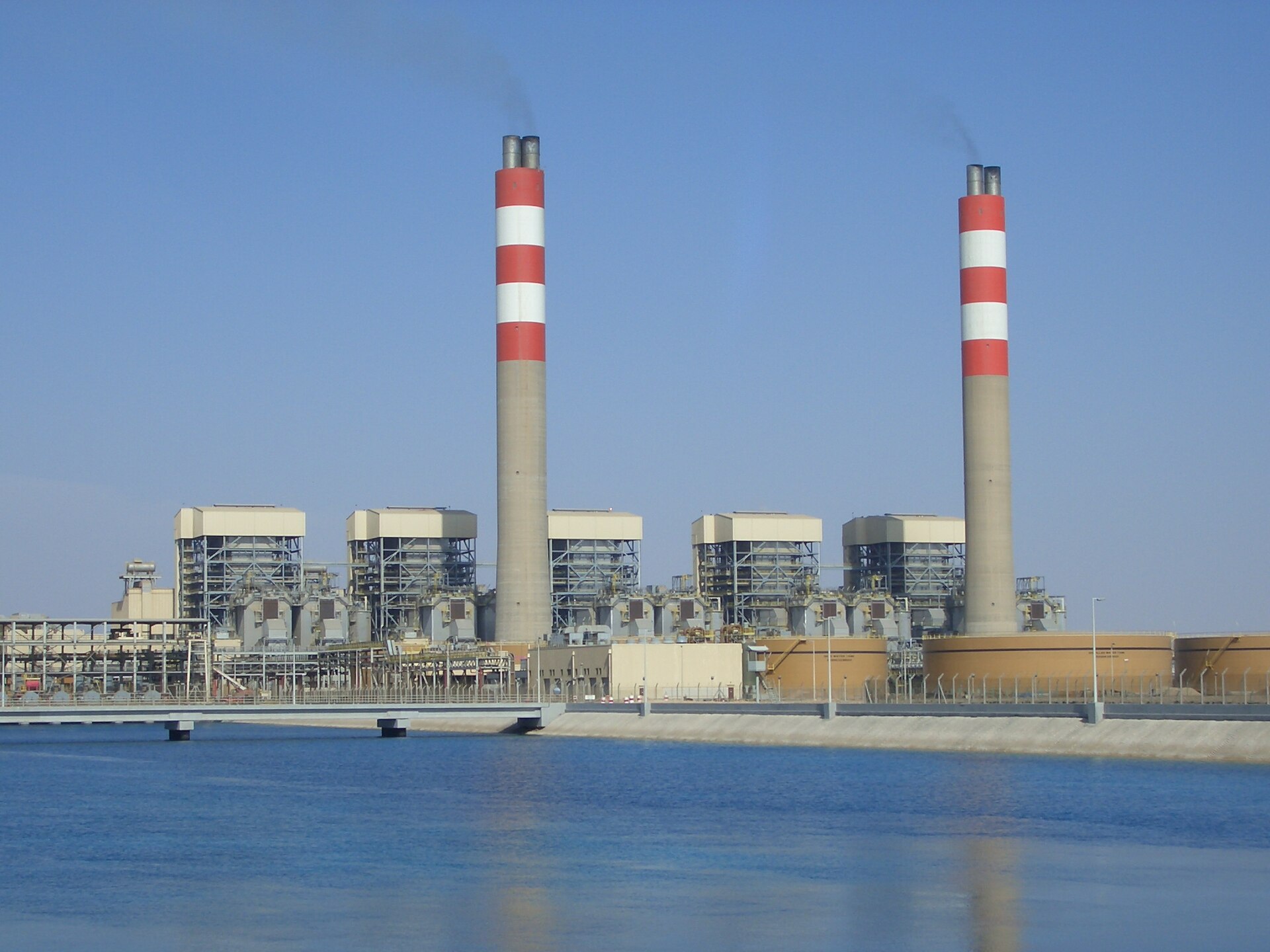
The flagship Ras Al-Khair facility, located 75 km northwest of Jubail on the Arabian Gulf, is the world’s largest hybrid desalination plant. It combines eight MSF thermal units with seventeen RO units, producing 1,036,000 cubic metres of water per day — enough to supply approximately 3.5 million people in Riyadh. On the Red Sea coast, the Shoaiba 3 plant near Jeddah is the world’s largest standalone thermal desalination facility, with a capacity of 880,000 cubic metres per day.
From Plant to Tap: The Distribution Challenge
Once desalinated, water is pumped through extensive pipeline networks to cities across the Kingdom. Riyadh, located over 400 km inland from the nearest coast, receives water via massive cross-country transmission pipelines from both Gulf and Red Sea plants. The NWC has been constructing “city gate” reservoir systems to receive and redistribute this water through metropolitan networks.
The distribution infrastructure has improved substantially under Vision 2030 investment, with the NWC allocating approximately $20 billion for water distribution projects. However, older neighbourhoods in major cities still rely on infrastructure that predates these upgrades, and individual building owners remain responsible for maintaining their own rooftop tanks and internal plumbing.
City-by-City Drinking Water Guide
Riyadh
The capital receives desalinated water piped from both the Arabian Gulf (primarily Ras Al-Khair and Jubail plants) and the Red Sea coast. If you are visiting Riyadh, you will find that water quality in modern hotels, shopping malls, and newer residential districts is excellent. The city has undergone significant infrastructure upgrades, and continuous water supply — once a serious issue (water was available only once every 2.5 days as recently as 2011) — has improved markedly. In older neighbourhoods such as parts of central Riyadh, rooftop tank maintenance remains inconsistent. Stick to bottled water in budget accommodation and older guesthouses.
Jeddah
As the Red Sea gateway to Saudi Arabia, Jeddah benefits from proximity to several desalination plants, including the Shoaiba complex. The city historically faced more severe water supply challenges than Riyadh, with water available only every nine days in some districts as late as 2011. Modern Jeddah has improved considerably, but older districts — particularly in the historic Al-Balad area — may still have less reliable infrastructure. Hotel tap water in the Corniche and northern Jeddah districts is generally of good quality. Summer temperatures regularly exceed 40°C with high humidity, making hydration especially critical. Pack extra bottled water when exploring — our Saudi Arabia packing list covers what to bring.
Mecca and Medina
The holy cities receive dedicated water infrastructure given the massive influx of pilgrims. If you are visiting for Hajj or Umrah, water quality in the hotels and official pilgrimage areas is well maintained. The Grand Mosque and Prophet’s Mosque both have extensive water cooler networks providing chilled, filtered water free of charge.
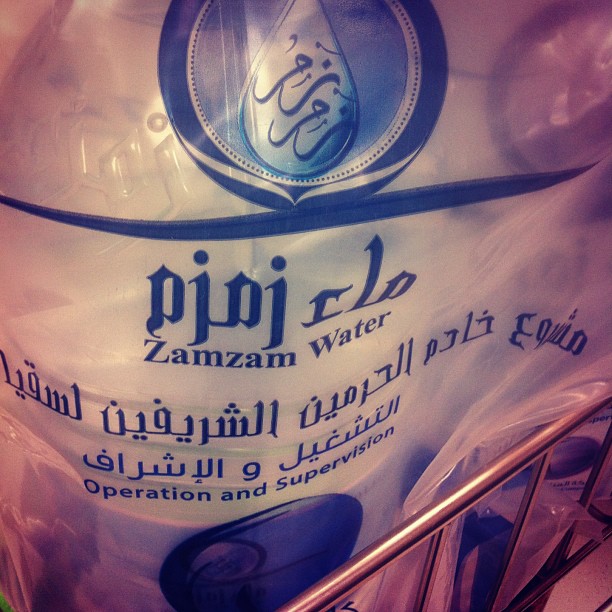
Zamzam water, drawn from the historic well within the Grand Mosque compound, receives special treatment. The General Presidency for the Affairs of the Grand Mosque takes 100 random samples daily, testing for microbiological and chemical purity in an on-site laboratory. Studies from King Saud University have confirmed no biological contamination in Zamzam water. The King Abdullah Zamzam Water Project in Kudai pumps, purifies, and bottles the water for distribution to pilgrims. Scientific analysis has found Zamzam water to be pathogen-free, though its mineral content (particularly calcium and magnesium) is higher than most commercially available water.
Dammam, Al Khobar, and the Eastern Province
The Eastern Province sits closest to the major Arabian Gulf desalination plants at Jubail and Ras Al-Khair, meaning water travels shorter distances through the pipeline network. Tap water quality in modern accommodation tends to be among the best in the Kingdom. However, a 2025 study of groundwater in the Qatif coastal area found that up to 35.3% of tested samples were classified as unsuitable for human consumption, underscoring that not all water sources are equal — this applies to well water, not the municipal desalinated supply.
AlUla, Tabuk, and Remote Areas
If you are heading to AlUla or Tabuk in the northwest, or to Abha and the Asir highlands, water infrastructure is newer but may rely more heavily on groundwater and tanker delivery in remote locations. Tourist resorts and hotels in these areas typically use their own filtration systems. Always carry bottled water when venturing to archaeological sites like Hegra, Elephant Rock, or remote hiking trails, as refill points may be scarce.
Bottled Water in Saudi Arabia: Brands, Prices, and Where to Buy
Bottled water is ubiquitous in Saudi Arabia. Supermarkets, convenience stores (known locally as baqalas), petrol stations, and hotel minibars all stock it. Here are the major brands you will encounter:
| Brand | Source | Price Range (1.5L) | Notes |
|---|---|---|---|
| Nova | Natural groundwater | SAR 1.50–2.50 | One of Saudi Arabia’s oldest and most recognised brands; widely trusted |
| Berain | Natural spring water | SAR 1.00–2.00 | Mid-range; good balance of quality and price |
| Hana | Treated groundwater | SAR 0.75–1.50 | Budget-friendly; widely available in bulk packs |
| Arwa | Purified water (Coca-Cola) | SAR 1.00–2.00 | Consistent quality; widely available in restaurants |
| Safa | Purified water | SAR 0.75–1.50 | Among the cheapest options; adequate quality |
| Tania | Treated water | SAR 0.75–1.25 | Budget brand; widely available in multipacks |
| Aquafina | Purified water (PepsiCo) | SAR 1.50–2.50 | International brand; commonly stocked in hotels |
Expect to pay SAR 1–3 ($0.27–$0.80 USD) for a standard 1.5-litre bottle at supermarkets, and slightly more at convenience stores or hotel minibars. Bulk packs of 12 or 24 small bottles are available at major chains like Tamimi Markets, Panda, Danube, and Carrefour, often priced under SAR 10 for a shrink-wrapped pack. Most restaurants serve complimentary water or charge SAR 3–8 for a large bottle. When interacting with shopkeepers, a few basic Arabic phrases can be helpful — “may” (water) is one of the first words worth learning.
Tip: In Saudi heat, water stored in car boots or left in direct sunlight can become unpleasantly warm within minutes. If you are renting a car, keep bottles in an insulated bag or inside the air-conditioned cabin.
Water for Specific Situations
Cooking
Tap water is safe for cooking in modern Saudi kitchens, as boiling eliminates any residual microbiological concerns. Hotels and restaurants use tap water for cooking as standard practice. If you are self-catering in a serviced apartment, using tap water for boiling pasta, rice, or making soup is perfectly fine. For cold preparations like salads or cold drinks, bottled water is the safer default.
Brushing Teeth
Tap water in Saudi Arabia is safe for brushing teeth. The water has been through industrial desalination and treatment processes that remove pathogens. You may notice a slight mineral taste or chlorine flavour depending on your location, but this poses no health risk. If you have a very sensitive stomach and are particularly cautious, use bottled water, though this is not medically necessary in modern accommodation.
Baby Formula and Infant Hydration
For preparing baby formula, always use bottled water. While Saudi tap water meets safety standards at the source, the higher mineral content of some groundwater-blended supplies, combined with potential variability from building plumbing, makes bottled water the prudent choice for infants. Choose low-sodium brands such as Berain or Arwa. Avoid Zamzam water for formula preparation due to its naturally high mineral content.
Medication
If you need to take medication with water, bottled water is the standard choice for visitors. This is more about convenience and taste than safety — tap water will not interfere with medication efficacy, but bottled water eliminates any concern about mineral interactions.
Ice in Drinks
Ice served in Saudi hotels, restaurants, and cafes is made from filtered or bottled water and is safe to consume. Saudi Arabia’s food safety regulations require commercial ice to be produced from purified water. Street-side juice stalls in souks also typically use commercially produced ice.
The Environmental Cost of Bottled Water in Saudi Arabia
Saudi Arabia discards approximately 5 billion plastic water bottles every year, with less than 5% recycled. Despite government sustainability campaigns under Vision 2030 — including bans on single-use plastic bags and straws — 77% of Saudi residents still rely on bottled water as their primary hydration source. The carbon footprint is significant: manufacturing, filling, transporting, and disposing of these bottles contributes substantially to the Kingdom’s waste stream.
For environmentally conscious travellers, there are practical steps you can take:
Note: The Zahid Group’s “No to Single-Use Plastics” campaign demonstrated that corporate action can achieve dramatic results, cutting plastic water bottle use by 92% in its first year of operation. Travellers can contribute to this momentum by reducing their own consumption.
Staying Hydrated in Saudi Arabia’s Heat
Dehydration is one of the most common health issues among visitors to Saudi Arabia, particularly between May and October when temperatures routinely exceed 45°C (113°F) in Riyadh and the interior, and humidity compounds the heat along the Red Sea and Gulf coasts. Our Saudi Arabia safety guide covers heat-related health risks in detail, but here are the key hydration principles:
How Much Water Do You Need?
A useful rule: drink a glass of water (250ml) every 30 minutes when outdoors in summer. Do not wait until you feel thirsty — by the time thirst registers, you are already mildly dehydrated. Check your urine colour as an indicator: pale straw colour indicates adequate hydration, while darker urine signals you need to drink more.
Practical Hydration Tips
Warning signs of dehydration: Dark urine, dry mouth, dizziness, fatigue, headache, muscle cramps, nausea, rapid breathing, or reduced urination. If you experience these symptoms, move to shade or air conditioning immediately, sip water slowly (not gulping), and seek medical attention if symptoms worsen. Saudi hospitals and clinics are well-equipped to treat heat-related illness.
Water for Hajj and Umrah Pilgrims
If you are travelling for Hajj 2026, hydration planning is essential. The rituals involve extended periods outdoors, including the standing at Arafat and the walk between Safa and Marwa, in temperatures that can exceed 50°C during summer Hajj seasons. Saudi authorities distribute free bottled water at key points during Hajj, and the Grand Mosque and surrounding areas have extensive chilled water cooler networks.
Zamzam water is freely available within the mosque complex from dedicated coolers. A few important rules apply: official 5-litre Zamzam bottles from the King Abdullah Zamzam Distribution Centre are reserved for pilgrims holding valid Hajj or Umrah visas. Tourists on standard visit visas cannot purchase the official 5-litre containers for export. Always obtain Zamzam from verified sources — the Grand Mosque coolers, major supermarkets, or official distribution points — to ensure authenticity.
Water Filtration Options for Longer Stays
If you are staying in Saudi Arabia for more than a few days, or renting a serviced apartment, consider these filtration options to reduce bottled water dependence: