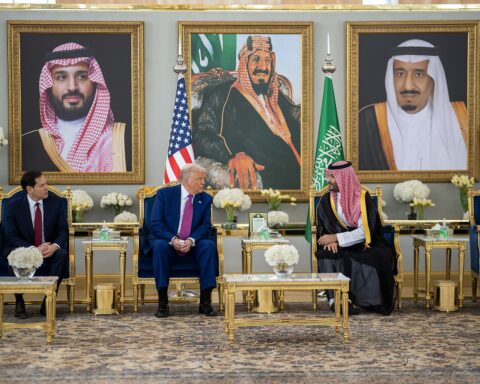

JEDDAH — Saudi Arabia’s Hajj pilgrim arrival window opens April 18 — four days before the Iran ceasefire expires on April 22, with no extension mechanism agreed, no extension mechanism proposed, and no diplomatic channel through which Mohammed bin Salman can request one without conceding that the kingdom hosting Islam’s holiest obligation now depends on Tehran’s forbearance to do so safely. By the time Indonesia’s first charter lifts off on April 22, Pakistan will already have 186 flights’ worth of pilgrims on Saudi soil, the cordon around Mecca and Medina will be active, and the man who styles himself Custodian of the Two Holy Mosques will be operating the largest annual security undertaking in Islamic history inside a war zone whose ceasefire has, on paper, just expired.
The conventional reading of the April 8 ceasefire treats April 22 as the pressure date — the day the truce lapses if Islamabad talks fail. That reading is wrong by four days. The real deadline is April 18, when the General Authority of Civil Aviation begins routing hundreds of charter flights into Jeddah and Madinah, when the Ministry of Hajj and Umrah’s 100,000 SAR fines and deportation orders force the last Umrah visa holders out, and when Saudi Arabia’s entire security apparatus pivots from wartime posture to pilgrim protection. Once that machinery engages, MBS cannot pause it, cannot reverse it, and cannot credibly claim to the 1.8 million Muslims arriving over the following five weeks that their safety is guaranteed by a ceasefire that technically no longer exists.
Table of Contents
- The April 18 Cordon: Logistics as Strategic Exposure
- Why Is April 22 the Wrong Deadline?
- Why Does Iran Gain From Doing Nothing?
- The Custodian Trap: What Happens If MBS Cannot Extend the Ceasefire?
- Three Channels, Three Dead Ends
- How Many Interceptors Protect 1.8 Million Pilgrims?
- Indonesia’s Scenario 3 and the Contingency Nobody Wants to Name
- The 1987 Mirror: When Hajj Last Became a Weapon
- Why Does No Extension Mechanism Exist?
- Frequently Asked Questions
The April 18 Cordon: Logistics as Strategic Exposure
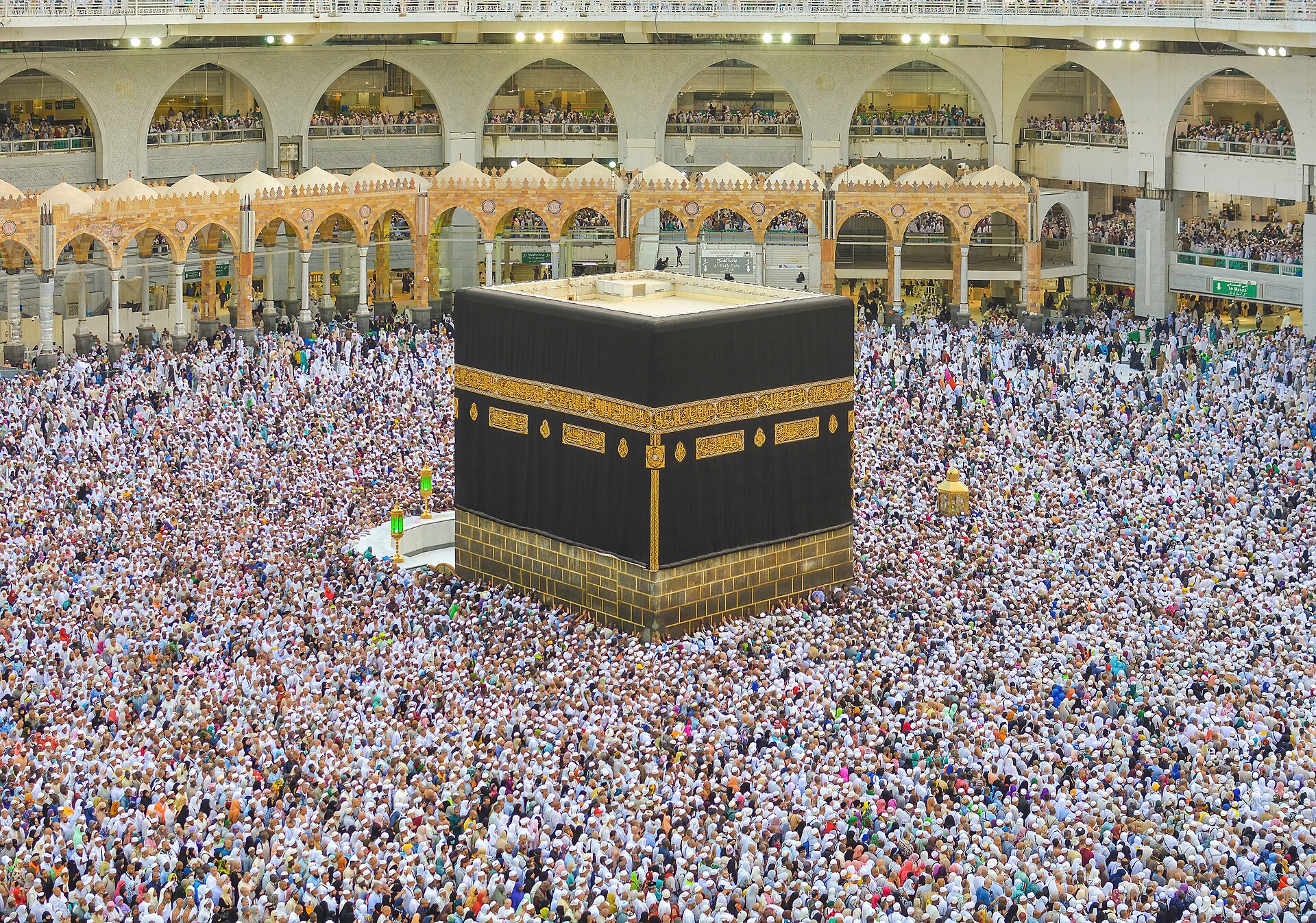
Saudi Arabia issued Hajj 2026 visas beginning February 8 — the earliest on record, a decision made weeks before the war began and one that now functions as an irreversible institutional commitment. The General Authority of Civil Aviation confirmed that flights to Madinah begin April 18, opening a 34-day arrival operation stretching to May 21 that will funnel approximately 1.8 million international pilgrims and 200,000 domestic worshippers toward the holiest sites in Islam. Pakistan alone accounts for 119,000 pilgrims across 468 charter flights from multiple embarkation points, with the first 186 flights landing in Madinah starting on the cordon’s opening day. Indonesia — the single largest national contingent at 221,000 pilgrims across 548 flights from 16 embarkation points — begins its charters on April 22, the very day the ceasefire nominally expires.
Simultaneously, April 18 is the Ministry of Hajj and Umrah’s absolute final date for all Umrah visa holders to exit the kingdom, enforced with fines up to 100,000 SAR (roughly $26,700), detention, deportation, and multi-year entry bans. The effect is a complete population swap inside Saudi Arabia’s religious security perimeter: one class of visitors forced out under penalty of law, another class flooding in under the assumption of safety. The cordon is not a metaphor — it is an operational reality that transforms Saudi Arabia’s entire western corridor from a wartime defensive zone into the world’s largest open-air gathering of civilians, protected by a ceasefire whose authors did not consult Riyadh and whose expiry falls inside the arrival window.

Why Is April 22 the Wrong Deadline?
Because April 18 — not April 22 — is the date Saudi Arabia’s Hajj arrival machinery activates, routing charter flights from Pakistan and scores of other nations into Jeddah and Madinah while simultaneously enforcing the exit of all Umrah visa holders. By the time the ceasefire formally expires on April 22, over 100,000 pilgrims will already be on Saudi soil with no way to reverse their arrival.
The ceasefire agreed April 8 runs for two weeks, expiring April 22 absent an extension that no party has yet proposed in any stated form. The Soufan Center’s April 9 IntelBrief noted explicitly: “No ceasefire extension provisions are mentioned. Negotiations scheduled for Islamabad will address nuclear enrichment — a potential stumbling block preventing agreement renewal.” The Islamabad talks, in other words, are not about extending the ceasefire — they are about converting it into something larger, and the distance between those two objectives is the distance between April 18 and April 22.
The Middle East briefing 3,000+ readers start their day with.
One email. Every weekday morning. Free.
By April 22, the arrival operation is already four days old. Pakistan’s first wave of pilgrims will have been on the ground in Madinah since April 18. Indonesian Hajj Minister Mochamad Irfan Yusuf told ANTARA News in March that “the main principle in preparing these scenarios is to ensure the safety and security of Indonesian pilgrims as the highest priority” — language that acknowledges the possibility of a security failure without naming the specific scenario. The 221,000 Indonesians lifting off on April 22 will be boarding aircraft while the ceasefire clock hits zero, a coincidence of scheduling that no logistics planner would have designed and no politician in Jakarta, Islamabad, or Riyadh can now undo.
MBS’s problem is not April 22. His problem is that by April 18, he must have either secured an extension or decided to proceed without one — and proceeding without one means telling 1.8 million pilgrims, their governments, and the entire Islamic world that the Custodian of the Two Holy Mosques is confident enough in an expired ceasefire to bet their lives on it. Last year, 1,673,230 pilgrims from 171 countries completed Hajj without incident. This year, the baseline assumption of safety that underwrites every visa, every charter booking, every family’s decision to send a parent or grandparent to Mecca rests on a truce negotiated between Washington and Tehran in a process from which Saudi Arabia has no seat at the table.
Why Does Iran Gain From Doing Nothing?
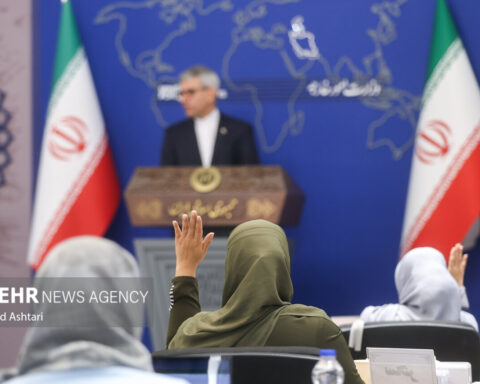
Iran suspended its own Hajj participation for 2026 and has no citizens inside Saudi Arabia’s pilgrim cordon, meaning a ceasefire lapse costs Tehran nothing on the Hajj dimension while costing Riyadh everything. Iran’s 10-point plan contains no Hajj carve-out, and Ghalibaf pre-declared three violations before Islamabad talks began, giving Tehran a ready-made exit at any moment.
Iran’s 10-point ceasefire plan, published through multiple channels, covers Hormuz transit coordination, nuclear enrichment, sanctions lifting, US base withdrawal from the region, and UNSC codification of any agreement. It contains no Hajj carve-out, no religious calendar provisions, no acknowledgment that 1.8 million civilians are about to enter the blast radius of a conflict Iran has been prosecuting for six weeks. This is not an oversight — Iran’s 10-point plan reflects a negotiating position in which Hajj is invisible because it is irrelevant to Iranian interests and maximally relevant to Saudi vulnerability.
Saudi Arabia suspended Iranian Hajj visas for 2026. Iran’s Hajj chief Alireza Rashidian had met the Saudi Ambassador in November 2025 requesting an increase beyond the usual quota of approximately 85,000 pilgrims, but the suspension — imposed as bilateral relations collapsed — means Iran has no citizens inside the cordon, no consular obligation to protect, and no institutional stake in the pilgrimage proceeding. The asymmetry is total: Saudi Arabia needs the ceasefire to hold through May 30 (when Hajj formally ends) while Iran needs nothing from Saudi Arabia on this dimension. A ceasefire lapse on April 22 costs Tehran zero pilgrims, zero domestic political capital, and zero diplomatic exposure. It costs Riyadh everything.
Mohammad Baqer Ghalibaf, the Iranian Parliamentary Speaker, arrived in Islamabad already holding an exit — he pre-declared three ceasefire violations before talks began (Lebanon strikes by Israel, an Iranian airspace drone incursion, and the uranium enrichment ban), giving Iran a ready-made justification for walking away without needing to manufacture new grievances. “Under such circumstances,” Ghalibaf told IRNA on April 8, “neither a bilateral ceasefire nor negotiations have any meaning.” That statement was made ten days before the Hajj cordon opens and fourteen days before the ceasefire expires, and it signals that Iran views the truce as already conditional — a political instrument to be withdrawn when convenient, not a commitment to be extended when requested.
The Custodian Trap: What Happens If MBS Cannot Extend the Ceasefire?
The title “Custodian of the Two Holy Mosques” is not ceremonial. King Fahd adopted it in 1986, deliberately replacing “His Majesty,” in a theological repositioning that came seven years after the 1979 Grand Mosque seizure — when Juhayman al-Otaybi and roughly 500 fighters held Islam’s holiest site for two weeks until French GIGN commandos were brought in for the final assault, and 63 surviving militants were publicly beheaded the following January. The title is the foundational claim underwriting Saudi state Islamic legitimacy, the reason the kingdom controls Hajj quotas and visa issuance for 171 countries, and the reason a security failure during the pilgrimage carries consequences that no amount of oil revenue or defence spending can offset.
If MBS cannot secure a ceasefire extension before April 18, he faces a choice that has no good outcome. Proceeding with Hajj under an expired or expiring ceasefire means accepting that the IRGC — whose decentralized command structure means the IRGC commands Iran alone regardless of what civilian negotiators agree in Islamabad — could resume strikes against Saudi infrastructure at any point during the five-week pilgrimage window. Yasmine Farouk, Gulf and Arabian Peninsula Project Director at the International Crisis Group, laid out the exposure on Democracy Now on April 9: “Energy infrastructures, desalination, power plants, nuclear plants could have been in the crossfire. What is at stake is uncontrolled escalation.” That assessment was made about wartime conditions, but it applies with equal force to a post-ceasefire lapse — the targets have not moved, the interceptors have not been replenished, and the pilgrims will be closer to them.
Energy infrastructures, desalination, power plants, nuclear plants could have been in the crossfire. What is at stake is uncontrolled escalation.
— Yasmine Farouk, Gulf and Arabian Peninsula Project Director, International Crisis Group, Democracy Now, April 9, 2026
Cancelling or postponing Hajj is the alternative that cannot be named. No Saudi ruler has cancelled Hajj since the kingdom’s founding — the obligation is Quranic, the logistics are multinational, and the reputational damage would validate four decades of Iranian rhetoric about Saudi unfitness to administer the holy sites. After the 2015 Mina stampede killed at least 769 (independent counts exceeded 2,000, with Iran losing more than 400 pilgrims), Ayatollah Khamenei demanded that an international Islamic body replace Saudi management of Hajj. MBS cannot afford to hand Tehran that argument on a plate by admitting he cannot guarantee pilgrim safety.

Three Channels, Three Dead Ends
MBS has, in theory, three diplomatic channels through which to seek a ceasefire extension, and each one is structurally blocked. Qatar, which brokered China’s role in the Hormuz transit framework, is dependent on its North Field gas arrangement and cannot act as a Saudi proxy without compromising the neutrality that makes it useful to both sides. Oman, which maintains the most active bilateral channel with Tehran, operates on the same principle — its value to Iran is precisely that it does not carry Saudi instructions, and the moment Muscat advocates explicitly for Riyadh’s Hajj timeline, it becomes a party rather than a mediator.
The third channel is the most constrained. Asking Donald Trump to prioritize Hajj security over the Islamabad nuclear talks — or, more critically, over Israel’s ongoing Lebanon operations, which triggered the second Hormuz re-closure on ceasefire day itself — means publicly naming Israel as the obstacle to pilgrim safety. MBS cannot do this.
Saudi Arabia’s official ceasefire statement, released through Asharq Al-Awsat and Al Arabiya on April 8, used the language of aspiration rather than demand: “The Kingdom hopes that the ceasefire will represent an opportunity to achieve a comprehensive and sustainable de-escalation, enhancing the security of the region.” No deadline, no accountability framework, no mechanism for extension. Pakistani PM Shehbaz Sharif credited Saudi Arabia with “invaluable” support for the ceasefire — but support is not authorship, and Riyadh was not a direct party to the agreement it now desperately needs to survive.
The Saudi Foreign Ministry was excluded from the April 10 Islamabad bilateral between Vance and Ghalibaf, a format that reduces the kingdom from co-guarantor (the role it held during the March 29-30 talks) to interested bystander. Even the language gap between Saudi Arabia and its closest ally tells the story: Farouk noted on Democracy Now that “the UAE statement was very detailed… fleshed out all the details that it expects from any negotiations,” while Riyadh’s statement contained no specifics, no demands, and no timeline — the diplomatic equivalent of hoping for the best while controlling nothing.
How Many Interceptors Protect 1.8 Million Pilgrims?
Saudi Arabia entered the war with approximately 2,800 PAC-3 MSE interceptor rounds. Six weeks later, the PAC-3 stockpile is running dry — roughly 400 rounds remain, an 86 percent drawdown representing billions of dollars in expended munitions and a defensive capacity that cannot be rebuilt before Hajj begins. The Raytheon/Lockheed Martin production line in Camden, Arkansas turns out approximately 620 rounds per year, meaning that even if every interceptor produced from today forward were shipped directly to Saudi Arabia (they will not be — Poland, which refused to transfer its own Patriot systems to Riyadh on March 31, has its own orders in the queue), the kingdom could not meaningfully replenish before the Day of Arafah on May 26, when pilgrim density peaks at the plains outside Mecca.
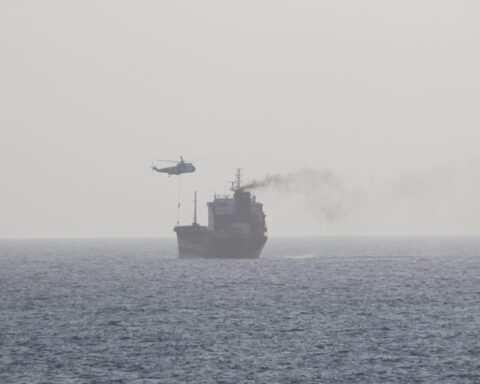
Patriot batteries are deployed around both Mecca and Medina, the two cities that will absorb the entire pilgrim population over five weeks. The IRGC struck the East-West Pipeline on ceasefire day — after the truce was nominally in effect — demonstrating both the willingness to test boundaries and the decentralized command reality that makes IRGC compliance with any ceasefire contingent on local commanders rather than Tehran’s civilian negotiators. If the ceasefire lapses on April 22 and the IRGC resumes operations, the 400 remaining PAC-3 rounds must simultaneously protect oil infrastructure (Ras Tanura, the East-West Pipeline, Yanbu), military installations (Prince Sultan Air Base, King Abdulaziz Air Base), and the two holiest sites in Islam — a triage problem that no air defense architecture is designed to solve.
| Date | Event | Pilgrim Exposure |
|---|---|---|
| April 8 | Two-week ceasefire agreed (Washington-Tehran via Islamabad) | 0 pilgrims in Hajj corridor |
| April 10 | Islamabad bilateral talks (Vance-Ghalibaf); Saudi excluded | 0 pilgrims in Hajj corridor |
| April 18 | Hajj arrival window opens; Umrah visa holders must exit; Pakistan first wave lands Madinah | Tens of thousands arriving |
| April 22 | Ceasefire expires; Indonesia first charter departs | 100,000+ already on Saudi soil |
| May 21 | Arrival phase ends | ~1.8 million international pilgrims present |
| May 26 | Day of Arafah (peak density) | ~2 million at Mecca plains |
| May 27 | Eid al-Adha | ~2 million |
| May 30 | Hajj 2026 formally ends | Departure phase begins |
The table makes the problem architectural rather than political. MBS needs the ceasefire to hold not for two weeks but for seven — from April 18 through May 30 — and he has no mechanism to secure it for even one day beyond April 22. Every day that passes without an extension framework converts the ceasefire from a diplomatic achievement into a ticking clock, and the first pilgrims to arrive will be the ones most exposed if it stops.
Indonesia’s Scenario 3 and the Contingency Nobody Wants to Name
Indonesia’s Ministry of Hajj and Umrah, under Minister Mochamad Irfan Yusuf, officially published a document known internally as Scenario 3 — the contingency plan for a full Saudi suspension of Hajj operations, including financial protection mechanisms for the 221,000 Indonesian pilgrims who have already paid deposits. The fact that Indonesia committed this scenario to paper, through the state news agency ANTARA, means that the world’s largest Muslim-majority nation has institutionally acknowledged what Riyadh cannot say aloud: that Hajj 2026 might not happen, or might happen under conditions that make it unsafe.
Indonesia’s exposure is not abstract. Its 221,000 pilgrims constitute the single largest national delegation, flying from 16 embarkation points across an archipelago of 17,000 islands, on 548 charter flights coordinated through a logistics operation that takes months to stand up and cannot be halted at short notice without cascading financial and political consequences. Yusuf’s language about safety as “the highest priority” is the closest any participating government has come to publicly conditioning Hajj attendance on the security situation — a signal that Jakarta is watching the ceasefire timeline with the same calendar MBS is using, and reaching the same conclusion about April 18.
Pakistan’s 119,000 pilgrims present a different but equally binding constraint. The 34-day flight operation — 468 charters, first 186 into Madinah starting April 18 — was planned and contracted months ago, before the war began, before the ceasefire existed, and before anyone imagined that the world’s largest annual human migration would coincide with the expiry of a truce between two nations that have spent six weeks destroying each other’s infrastructure. Islamabad is simultaneously hosting the ceasefire talks and dispatching its citizens into the zone those talks are meant to protect, a dual role that gives Pakistan a domestic stake in the outcome that goes beyond its mediator function.
The 1987 Mirror: When Hajj Last Became a Weapon
On July 31, 1987, 402 people died in Mecca — 275 Iranian pilgrims, 85 Saudi security personnel, and 42 others — after Iranian demonstrators clashed with Saudi police in what became the single deadliest incident in modern Hajj history prior to the 2015 Mina stampede. Ayatollah Khomeini called the Al Saud “a bunch of savages” unfit to administer Islam’s holiest sites, Iran boycotted Hajj for three years (1988-1990), Saudi Arabia slashed Iran’s pilgrim quota by 87 percent, and diplomatic relations were not restored until 1991. The incident established a precedent that both sides understand: Hajj is not a neutral space immune to geopolitics — it is the single point where Saudi Arabia’s theological claim to Islamic leadership is most exposed and most consequential.
The 2016 suspension, following the execution of Shia cleric Nimr al-Nimr, saw Iran bar approximately 60,000 of its own pilgrims — a self-imposed punishment that nonetheless reinforced Tehran’s narrative that Saudi Arabia weaponises access to the holy sites. Now the mirror has inverted. Saudi Arabia suspended Iranian visas for 2026, but the consequence flows the wrong way: it is Saudi Arabia’s 1.8 million pilgrims who face risk, not Iran’s absent 85,000. Iran has no hostages inside the cordon, no consular emergency to manage, no grieving families to answer to if the ceasefire collapses on April 22 and the IRGC resumes strikes with pilgrims on the ground in Mecca and Medina.
The 1989 Hajj bombings — two devices, one pilgrim killed, 16 Kuwaiti Shia later executed — demonstrated that even minor security breaches during the pilgrimage carry outsized political consequences. The 2015 Mina stampede, which killed at least 769 by official count and more than 2,000 by independent tallies (Iran lost over 400 pilgrims and Khamenei demanded international oversight), showed that the scale of Hajj makes any failure catastrophic and any failure of Saudi management an existential threat to the Custodian title. MBS inherited both precedents and now faces a third: not a stampede or a bombing but the structural possibility that the ceasefire protecting the pilgrimage will expire before the pilgrimage is over, and that the party holding the extension — Iran — has neither the incentive nor the obligation to grant one.

Why Does No Extension Mechanism Exist?
The two-week ceasefire was negotiated between Washington and Tehran as a pause enabling nuclear talks, not as a renewable framework. The Soufan Center confirmed on April 9 that no extension provisions were included, and the Islamabad negotiations focus on nuclear enrichment — the issue most likely to block any renewal — rather than on a rolling security guarantee for the five additional weeks Hajj requires.
Al Jazeera reported on April 8 that “negotiations expected to begin in Islamabad on Friday will test whether this truce can be converted into a more durable arrangement.” The word “converted” does heavy lifting in that sentence — it implies transformation, not extension, and it acknowledges that the current ceasefire was designed as a pause, not a framework.
An unnamed Iranian official told Reuters that Iran “will face a disaster” without sanctions relief — language that confirms Tehran entered the ceasefire under economic duress but does not suggest willingness to extend it without extracting concessions on the issues (sanctions, enrichment, Hormuz sovereignty, US base withdrawal) that form the core of the 10-point plan. Ghalibaf’s pre-declared violations give Iran the procedural basis to walk away from extension talks at any moment, and the IRGC’s demonstrated willingness to strike Saudi infrastructure after the ceasefire was announced — the East-West Pipeline pumping station was hit on April 8, hours after the truce took effect — means that even a formal extension carries no guarantee of compliance from the military organisation that actually controls Iran’s offensive capability.
The structural problem is that a ceasefire extension for Hajj would require Iran to grant Saudi Arabia a favour — weeks of additional security — in exchange for nothing that addresses Tehran’s stated demands. Sanctions relief, enrichment rights, Hormuz sovereignty recognition, US troop withdrawal: none of these can be delivered in the nine days between now and April 18, and none of them are within Saudi Arabia’s power to offer. MBS is asking for time from a counterparty that gains nothing from giving it, through diplomatic channels that do not include him, on a timeline that his own religious calendar has made non-negotiable.
Pakistani PM Shehbaz Sharif praised “remarkable wisdom” and “constructive engagement” on April 8, language that belongs to a communique, not a crisis. The wisdom required now is not the diplomatic kind — it is the operational kind, the recognition that 1.8 million people are about to enter a security perimeter whose guarantee expires four days after it activates, and that neither the guarantor nor the threat has any reason to accommodate the schedule of the man who calls himself Custodian of the Two Holy Mosques.
Frequently Asked Questions
When does the Hajj 2026 pilgrim arrival window officially open?
Flights to Madinah begin April 18, 2026, with the arrival phase running through May 21, according to GACA. The same date — April 18, or 1 Dhul Qadah 1447 AH — is the Ministry of Hajj and Umrah’s absolute deadline for all Umrah visa holders to exit the kingdom, creating a logistical crossover in which one pilgrim population is expelled under threat of fines and deportation while another begins flooding in. Saudi Arabia issued Hajj 2026 visas beginning February 8, weeks before the war started, making the arrival timeline an institutional fact rather than a policy choice.
Can Saudi Arabia postpone or cancel Hajj 2026?
No Saudi ruler has cancelled Hajj since the kingdom’s founding, and the only modern precedent for suspension was the COVID-19 pandemic in 2020, when Saudi Arabia limited attendance to approximately 1,000 domestic pilgrims. The theological and political cost of cancellation would be immense — it would validate decades of Iranian rhetoric about Saudi unfitness to administer the holy sites and potentially trigger demands, last voiced by Khamenei after the 2015 Mina stampede, for international Islamic oversight of the pilgrimage. Indonesia’s publication of Scenario 3 (full suspension with financial protection) indicates that participating nations are preparing for the possibility even if Riyadh will not name it.
Does Iran have any stake in Hajj 2026 proceeding safely?
Iran’s direct stake is effectively zero. Saudi Arabia suspended Iranian Hajj visas for 2026, meaning no Iranian citizens will be inside the security cordon. Iran’s 10-point ceasefire plan contains no religious calendar provisions or Hajj-specific clauses. The last time Iran had a major Hajj stake was 2015, when over 400 Iranian pilgrims died in the Mina stampede and Khamenei demanded Saudi Arabia cede management authority. With its own pilgrims barred and its ceasefire demands focused on sanctions, enrichment, and Hormuz sovereignty, Tehran faces no domestic political cost from a ceasefire lapse that coincides with Hajj — a structural asymmetry that gives Iran passive veto power over pilgrim safety without requiring any affirmative action.
What air defense capacity does Saudi Arabia have to protect Hajj sites?
Patriot PAC-3 batteries are deployed around both Mecca and Medina, but the kingdom’s interceptor stockpile has been drawn down to approximately 400 rounds from a pre-war total of roughly 2,800 — an 86 percent depletion. The Camden, Arkansas production facility manufactures approximately 620 rounds per year, and competing orders from NATO allies (Poland refused to transfer its own systems to Saudi Arabia on March 31) mean replenishment before Hajj’s peak on May 26 is logistically impossible. During wartime, Saudi Arabia intercepted 799 drones and 95 ballistic missiles (894 total projectiles) between March 3 and April 7 — a rate of consumption that, if resumed, would exhaust remaining stocks within days rather than weeks.
What happened the last time Hajj became entangled in Saudi-Iranian conflict?
The most direct precedent is July 31, 1987, when 402 people — including 275 Iranian pilgrims — died during clashes between Iranian demonstrators and Saudi security forces in Mecca. Khomeini called the Al Saud “a bunch of savages,” Iran boycotted Hajj for three consecutive years (1988-1990), Saudi Arabia cut Iran’s quota by 87 percent, and diplomatic relations were severed until 1991. The 1989 Hajj bombings (two devices, one pilgrim killed, 16 Kuwaiti Shia executed) and the 2015 Mina stampede (at least 769 dead officially, over 2,000 by independent counts) further established that Hajj security failures carry consequences for Saudi legitimacy that extend far beyond the immediate casualty toll and persist for years in regional diplomacy.
That decision paralysis deepened further on April 9, when Trump’s Truth Social threat of “lethal prosecution and destruction” and Vance’s simultaneous flight to Islamabad created a dual-track signalling failure that has left Riyadh unable to plan for either a deal or its collapse before Hajj arrivals begin.