
Jeddah Islamic Port is Saudi Arabia’s principal cruise gateway on the Red Sea, welcoming ships from MSC, Oceania, Crystal, and the Saudi-owned AROYA Cruises throughout the winter season. Whether you have six hours in port or a full day, Jeddah rewards cruise passengers with a UNESCO-listed old town, the world’s tallest fountain, a 30-kilometre waterfront corniche, and some of the Red Sea’s best coral reefs. This guide covers everything you need to know to make the most of your stop — from clearing the terminal and finding transport to choosing the right shore excursion. For a broader look at the city beyond cruise day, see our full Jeddah Travel Guide.
Best Time to Visit: October to April (cruise season; cooler temperatures of 24-32 C)
Getting There: Ships dock at Jeddah Islamic Port, roughly 10 km south of the city centre
Visa Required: Yes — tourist e-visa or 96-hour maritime e-visa
Budget: USD 40-120 per person for a day ashore (transport, food, excursions)
Must-See: Al-Balad UNESCO old town, Jeddah Corniche, King Fahd’s Fountain
Avoid: Leaving the ship without confirming your visa status — not all cruise lines handle this for you
The Port: Layout and Facilities
Jeddah Islamic Port is one of the largest ports on the Red Sea, covering 12 square kilometres with 62 operational berths and a maximum draft of 16 metres — deep enough for every cruise ship currently afloat. The dedicated cruise terminal, opened in 2021 in collaboration with Cruise Saudi, can process more than 2,500 passengers per arrival and includes prayer rooms, air-conditioned waiting areas, bathrooms, ATMs, currency exchange counters, and free Wi-Fi.
Ships typically berth at the port’s southern quays, which sit roughly 10 kilometres from downtown Jeddah and about 4 kilometres from Al-Balad, the historic old town. The distance between the ship’s gangway and the terminal building can itself be substantial — some passengers report a 10-minute shuttle bus ride within the port grounds before reaching the exit gate. Most cruise lines provide this intra-port shuttle free of charge, though it is worth confirming with your ship’s shore excursion desk before arrival.
Terminal upgrade in progress: Cruise Saudi and the Jeddah Central Development Company (JCDC), both owned by Saudi Arabia’s Public Investment Fund (PIF), have signed an agreement to build a new state-of-the-art cruise and superyacht terminal as part of the USD 20-billion Jeddah Central waterfront redevelopment. Construction is expected to begin within the next few years.
Currency and Connectivity
The Saudi riyal (SAR) is the local currency, pegged at 3.75 to the US dollar. ATMs at the terminal dispense riyals, and currency exchange desks are available inside the building. Major credit cards are accepted almost everywhere in Jeddah, including taxis, malls, restaurants, and even many souq vendors. For mobile data, you can pick up a prepaid SIM card from an STC or Mobily kiosk at Red Sea Mall or other shopping centres — a 10 GB tourist SIM typically costs SAR 75-100 (USD 20-27). Free Wi-Fi is available at the port terminal, in most malls, and at many cafes and restaurants.
Getting from the Port to the City
Transport is the first decision every cruise passenger faces in Jeddah. The port sits in an industrial zone with no walkable attractions nearby, so you will need wheels. Here are your options, ranked from most to least convenient.
Cruise Line Shuttle Bus
Many cruise lines offer a shuttle between the terminal and a central drop-off point, usually near Al-Balad or the Corniche. The typical cost is EUR 15-20 (USD 16-22) return. The shuttle runs on a fixed schedule — miss the last bus back and you will need to arrange your own return. Check your ship’s daily programme for exact times and prices. During the 2025-2026 season, AROYA Cruises, which uses Jeddah as its homeport, operates its own transfer services for embarking and disembarking passengers.
Ride-Hailing Apps: Uber and Careem
Uber and Careem (a regional ride-hailing app now owned by Uber) both operate in Jeddah and are the most reliable way to get around independently. Fares are metered and paid through the app — no negotiation, no cash needed. Expect to pay approximately:
| Destination | Distance | Estimated Fare (SAR) | Estimated Time |
|---|---|---|---|
| Al-Balad (old town) | ~4 km | 15-25 | 10-15 min |
| Jeddah Corniche (central) | ~10 km | 25-40 | 15-25 min |
| King Fahd’s Fountain | ~12 km | 30-45 | 15-25 min |
| Red Sea Mall | ~18 km | 40-60 | 20-30 min |
| King Abdulaziz Airport (JED) | ~27 km | 80-120 | 25-40 min |
Tip: Download Careem or Uber before you arrive in Jeddah. Cellular signals inside the port terminal can be unreliable, so having the app already installed and logged in will save you time. Careem is slightly more popular locally and often has shorter wait times.
Regular Taxis
Yellow-and-white metered taxis wait outside the cruise terminal, but cruise passengers consistently report that drivers at the port are aggressive negotiators who often refuse to use the meter. If you do take a regular taxi, agree on the fare before getting in. A fair rate to Al-Balad is SAR 20-30; to the Corniche expect SAR 30-50. If you are travelling with family or in a group of three or four, splitting a taxi is still cheaper than most cruise-line shuttles.
Private Tours and Transfers
Pre-booked private car services are available through platforms such as GetYourGuide, Viator, and local operators like Rimo Tours. A half-day private car with driver typically costs SAR 300-500 (USD 80-135), which includes the vehicle, driver, and up to four or five passengers. This is the most comfortable option if you want to cover multiple attractions without worrying about hailing rides between stops. For details on getting around Saudi Arabia more broadly, see our dedicated transport guide.
Visa Requirements for Cruise Passengers
Saudi Arabia requires all foreign visitors to hold a valid visa, and cruise passengers are no exception. There are two main options:
- Tourist e-visa: Available to citizens of 63 eligible countries, valid for one year with multiple entries and stays of up to 90 days. Apply online at visa.visitsaudi.com before your trip. The fee is approximately SAR 535 (USD 143), including insurance. This is the best option if you plan to return to Saudi Arabia or have a longer itinerary.
- Maritime e-visa (96-hour transit): Designed specifically for cruise passengers, this visa allows a stay of up to 96 hours. It is sometimes arranged by the cruise line, but not always — verify with your operator well in advance.
- Naseef House: A 19th-century merchant mansion with carved wooden doors, antique furnishings, and rooftop views across the old town. Now a museum and cultural centre, it was once the most prominent house in Jeddah and hosted King Abdulaziz when he took the city in 1925.
- Al Shafei Mosque: One of the oldest mosques in Jeddah, with a minaret dating to the 13th century and notable woodwork inside. Non-Muslims may view the exterior and courtyard.
- Souq Al Alawi: The old town’s main bazaar street, lined with spice merchants, perfume sellers, and traditional textile shops. This is the place to buy oud (Arabian incense), Arabic coffee pots, and handwoven fabrics.
- Al-Rahmah Mosque (the Floating Mosque): Built in 1985 on stilts over the Red Sea, this white-domed mosque appears to hover above the waves at high tide. Covering 2,400 square metres with 52 outer domes, it is one of Jeddah’s most photographed landmarks. Non-Muslims are welcome to visit outside of prayer times.
- Jeddah Sculpture Museum: An open-air collection of 20 monumental sculptures by international artists including Henry Moore, Joan Miro, and Alexander Calder, set along a 7-kilometre stretch of the Corniche known locally as Al Hamraa. The collection dates to the 1970s “beautification project” led by then-mayor Mohamed Said Farsi.
- Fakieh Aquarium: Saudi Arabia’s first public aquarium, home to more than 200 marine species and popular with families for its dolphin shows and educational programmes.
- 09:00 — Disembark and take a Careem/Uber to Al-Balad (10-15 minutes)
- 09:15-11:00 — Walk Al-Balad: Naseef House, Souq Al Alawi, Al Shafei Mosque area
- 11:00-11:15 — Careem/Uber to the central Corniche
- 11:15-12:30 — Walk the Corniche, photograph King Fahd’s Fountain, visit Al-Rahmah Mosque
- 12:30-13:00 — Lunch at a Corniche restaurant (try Hijazi cuisine: mutabbaq, saleeg, or mandi)
- 13:00-13:30 — Return to port via Careem/Uber
- 08:00-10:30 — Al-Balad walking tour (self-guided or with a local guide)
- 10:30-13:00 — Corniche exploration: King Fahd’s Fountain, Sculpture Museum, Floating Mosque
- 13:00-14:00 — Lunch at a seafood restaurant on the Corniche or in Al-Balad
- 14:00-16:30 — Red Sea Mall for shopping and air-conditioned relief from the afternoon heat
- 16:30-17:00 — Return to Corniche for late-afternoon light (best photo conditions)
- 17:00-17:30 — Return to port
- 07:30-12:00 — Morning reef snorkelling trip from Obhur Bay
- 12:30-13:30 — Lunch in Obhur or at the Corniche
- 14:00-16:00 — Al-Balad walking tour
- 16:00-17:00 — Souq shopping for spices, oud, and Arabic coffee sets
- 17:00-17:30 — Return to port
- Women: Cover shoulders and knees. Loose-fitting trousers or maxi skirts with a blouse or long top are ideal. Head covering is not required in public spaces but is mandatory inside mosques. Carry a lightweight scarf in your bag.
- Men: Long trousers and a shirt that covers the shoulders. Shorts are acceptable in some beach and mall settings but not in the old town or mosques.
- Footwear: Comfortable walking shoes are essential for Al-Balad’s uneven cobblestones. Slip-on shoes make mosque visits easier.
- Alcohol: The sale and consumption of alcohol is prohibited throughout Saudi Arabia, including on the port premises. Do not attempt to bring alcohol ashore from the ship.
- Prayer times: Some shops and restaurants may close briefly during the five daily prayers (each lasting approximately 20-30 minutes). Plan around these pauses — the Careem app or a quick web search will show daily prayer times for Jeddah.
- Photography: Do not photograph local people, particularly women, without explicit permission. Photography of military installations, government buildings, and some mosques is restricted.
- Public displays of affection: Keep physical contact with your partner discreet in public.
- Ramadan: If your cruise calls during Ramadan, eating, drinking, and smoking in public during daylight hours is prohibited out of respect for those fasting. Restaurants in hotels and malls typically have screened-off dining areas for non-fasting visitors.
- Saleeg: A creamy rice dish cooked in milk and chicken broth, often served with roast chicken. Jeddah’s signature comfort food.
- Mandi: Slow-cooked lamb or chicken on spiced basmati rice, prepared in a tandoor-style pit oven.
- Mutabbaq: A stuffed savoury pastry filled with spiced minced meat, egg, and onion — ideal street food in Souq Al Alawi.
- Qahwa and dates: Traditional Arabic coffee served with dates. Available everywhere, often complimentary as a welcome gesture.
- Taif (175 km east): The “City of Roses” sits at 1,800 metres altitude in the Hejaz Mountains, offering cool temperatures, rose farms, and the historic Shubra Palace. A long but rewarding day trip by car. See our Abha and Asir Travel Guide for more on Saudi Arabia’s highlands.
- Yanbu (300 km north): A quieter Red Sea port with excellent diving and a restored historic district. Some cruise itineraries call at both Jeddah and Yanbu.
- Moon Valley desert safari: 4×4 excursions into the desert landscape east of Jeddah, typically including sandboarding, a campfire dinner, and stargazing. Half-day and full-day options available through local tour operators.
- Jeddah Travel Guide 2026 — The complete guide to Al-Balad, diving, F1, food, and hotels in Saudi Arabia’s Red Sea gateway
- Jeddah Corniche Guide — 30 km of Red Sea waterfront, King Fahd’s Fountain, the Floating Mosque, and dining
- Jeddah F1 Grand Prix Guide — Everything you need to know about the Saudi Arabia GP on the Corniche Circuit
- Saudi Arabia Diving Guide — Red Sea dive sites, operators, and snorkelling spots
- Saudi Arabia Travel Guide 2026 — The complete guide to visiting the Kingdom
- Saudi Arabia Visa Guide — Every visa type explained, including the tourist e-visa and maritime transit visa
Your cruise line may claim to handle visas on your behalf, but experiences vary widely. Some operators process group visas that allow passengers to disembark only as part of an organised shore excursion, while others leave it entirely to the individual. The safest approach is to apply for your own Saudi Arabia e-visa before departure. Israeli passport holders are not permitted entry into Saudi Arabia.
Top Shore Excursions from Jeddah Cruise Port
Jeddah packs more into a single port day than almost any other Red Sea stop. The city’s mix of UNESCO heritage, modern waterfront, and Red Sea marine life means you can tailor your day to history, leisure, food, or adventure. Below are the best options, organised by interest and time required.
Al-Balad: The UNESCO Old Town
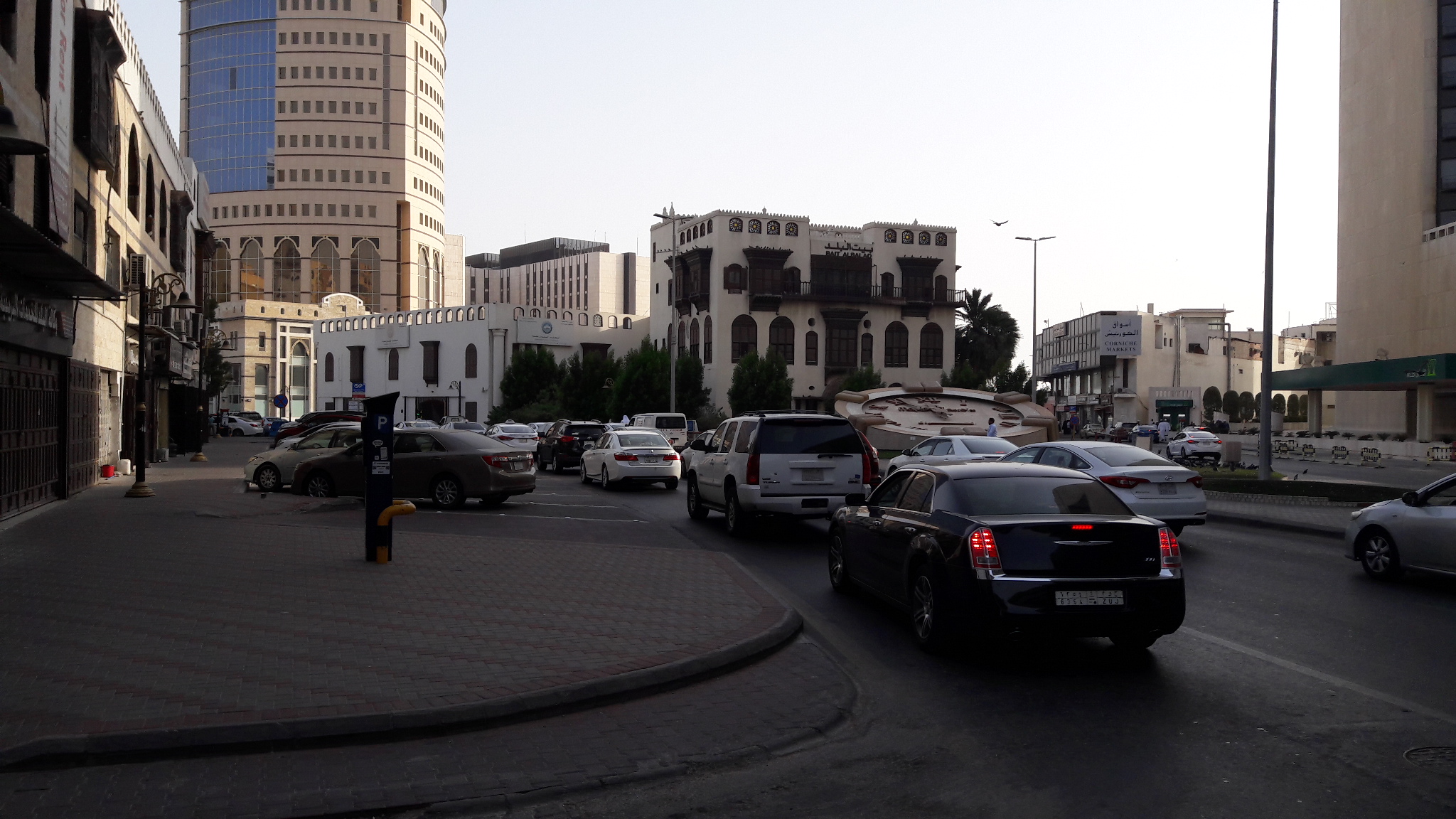
Al-Balad is Jeddah’s historic heart and the single most rewarding excursion for cruise passengers with limited time. Inscribed as a UNESCO World Heritage Site in 2014 under the title “Historic Jeddah, the Gate to Makkah,” the district has served as a major trading port since the 7th century, channelling goods from the Indian Ocean trade routes and guiding Muslim pilgrims arriving by sea toward Mecca, just 65 kilometres to the east.
Walking through Al-Balad’s narrow alleys, you encounter more than 600 coral-stone buildings adorned with rawashin — the ornate wooden lattice windows that became the district’s architectural signature. Key stops include:
Time required: 2-3 hours for a thorough walk. Guided walking tours are available from SAR 150-300 (USD 40-80) through platforms like GetYourGuide and Viator, or through your cruise line’s excursion desk. The district is best visited in the morning before the heat builds, or in the evening when lantern light and food stalls transform the atmosphere. For a deeper look at this area, see our Jeddah Travel Guide, which covers Al-Balad in detail.
The Jeddah Corniche and King Fahd’s Fountain
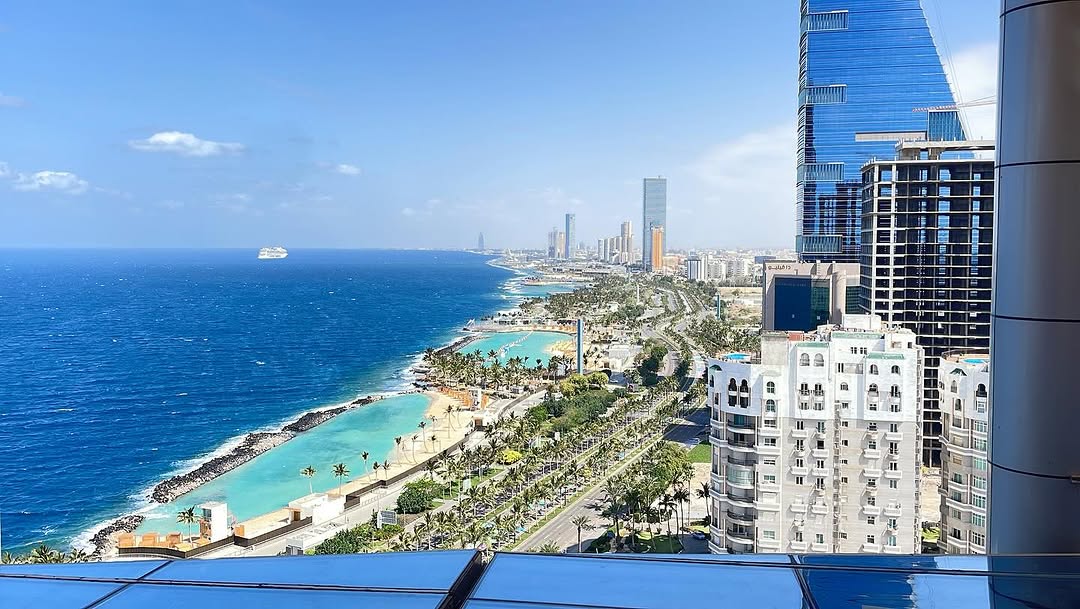
The Jeddah Corniche is Saudi Arabia’s most spectacular urban waterfront — a 30-kilometre promenade stretching along the Red Sea coast from the industrial south near the port to the resort-lined shores of Obhur in the north. The recently completed ROSHN Waterfront section covers 730,000 square metres and draws more than 55 million visitors per year, with shaded walkways, jogging tracks, cycling corridors, children’s play parks, and seven distinct recreational zones.
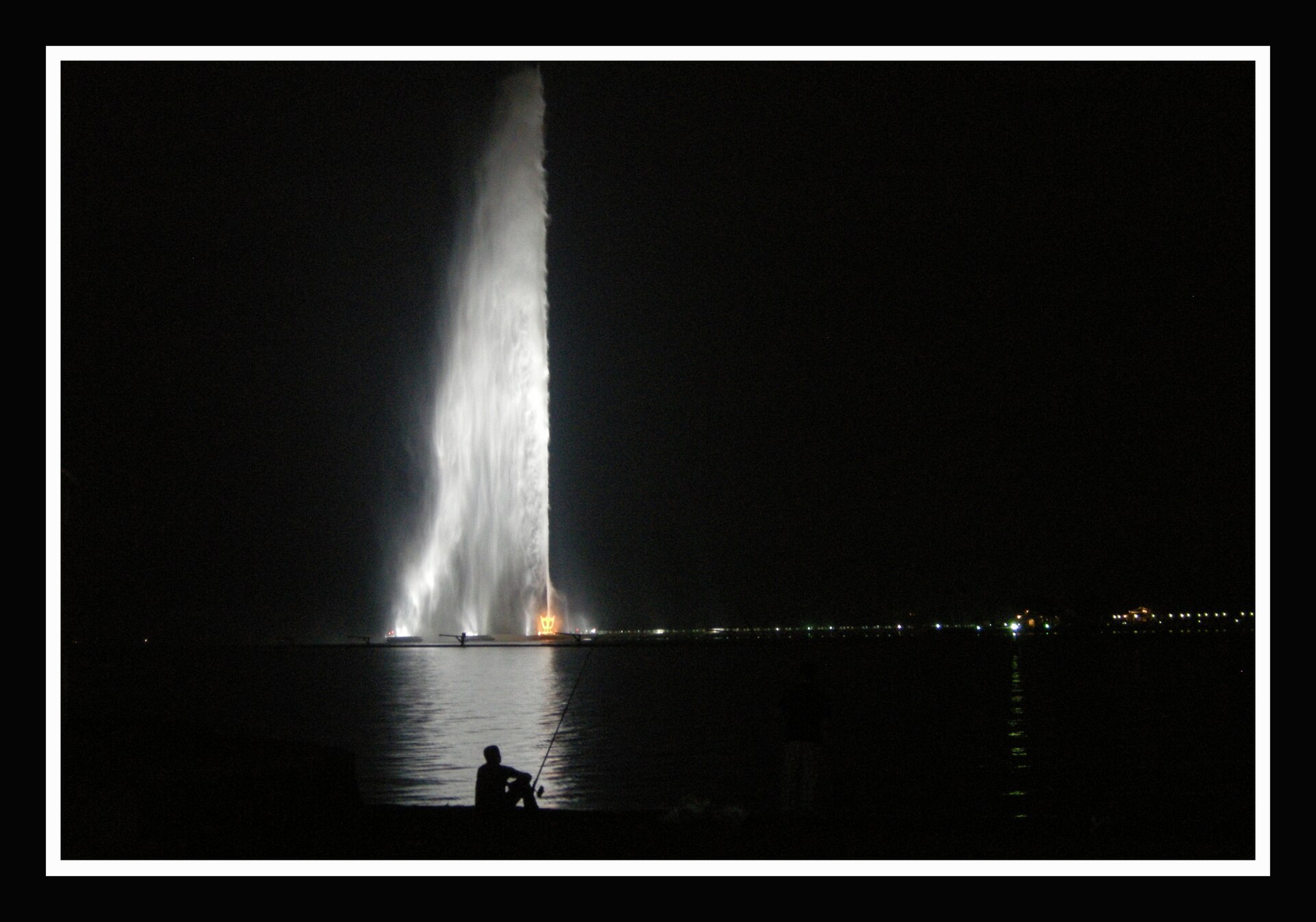
The undisputed centrepiece is King Fahd’s Fountain, inaugurated in 1985 and still the tallest fountain on Earth. It pumps saltwater from the Red Sea at 375 km/h to reach a maximum height of 312 metres (the typical visible plume settles at around 260 metres). The fountain operates daily and is free to view from anywhere along the central Corniche. The evening light show, powered by more than 500 spotlights, is worth timing your return to the ship around.
Other Corniche highlights include:
Time required: 2-4 hours to explore the central Corniche section on foot or by rented bicycle. The entire 30-kilometre stretch is too long for a cruise-day walk, so focus on the central zone between Al-Rahmah Mosque and King Fahd’s Fountain.
Al-Rahmah Floating Mosque
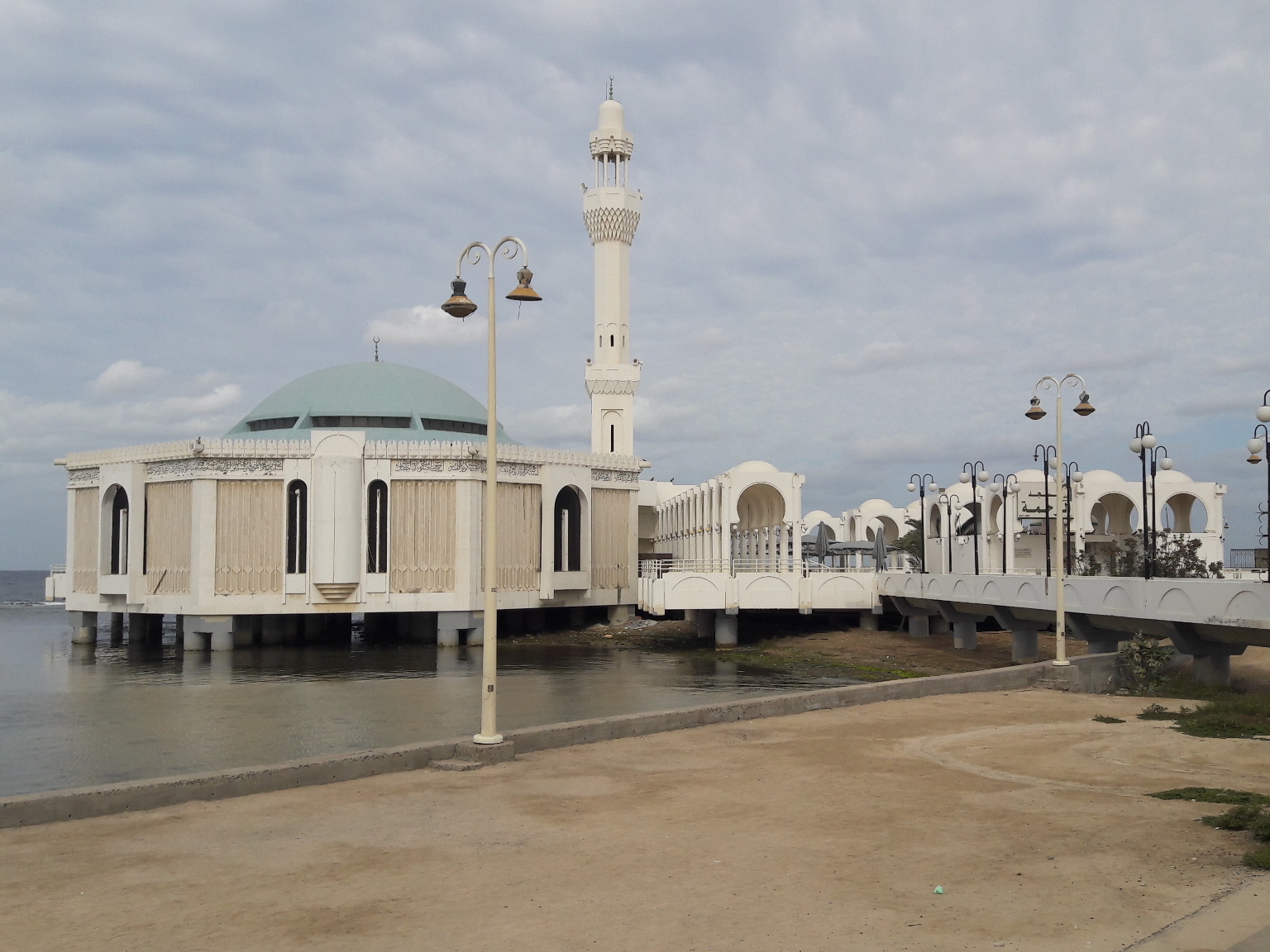
Often called the Floating Mosque, Al-Rahmah sits on the Corniche’s northern stretch and is one of the most distinctive religious structures in Saudi Arabia. Its white facade, green dome, and slender minaret rising above the Red Sea make it an essential photo stop for cruise passengers. The mosque is engraved with Quranic verses and features 23 external umbrellas that provide shade for worshippers. Non-Muslims may enter outside of the five daily prayer times, provided they remove their shoes and dress modestly — women should cover their hair with a scarf when inside.
Time required: 30-45 minutes, easily combined with a Corniche walk.
Red Sea Snorkelling and Diving
Jeddah sits on one of the richest coral reef systems in the world. Several dive centres along the Corniche and at Obhur Bay offer half-day reef excursions suitable for cruise passengers with limited time. Snorkelling trips to the nearshore reefs typically cost SAR 200-350 (USD 55-95) including equipment, while introductory scuba dives start at SAR 400-600 (USD 107-160). The Red Sea’s visibility often exceeds 20 metres, and water temperatures remain above 25 C year-round. For a comprehensive look at dive sites and operators, see our Saudi Arabia Diving Guide.
Time required: 4-5 hours for a snorkelling trip; full-day for a two-tank scuba dive. Not ideal if your ship is only in port for six hours.
Shopping: Red Sea Mall and Mall of Arabia
If your priority is air-conditioned shopping and dining, Jeddah’s mega-malls are among the largest in the Middle East. Red Sea Mall, roughly 18 kilometres from the port, houses more than 480 stores across three floors, including international brands, a hypermarket, a cinema complex, and dozens of restaurants. Mall of Arabia is similarly vast, with over 300 outlets and a dedicated entertainment zone for families. Both malls accept major credit cards and have currency exchange desks. Shopping hours run Saturday to Tuesday 10:00 AM to midnight, and Wednesday to Thursday 10:00 AM to 2:00 AM.
Time required: 2-3 hours. A ride-hailing trip from the port costs SAR 40-60 each way.
Makkah (Mecca) — For Muslim Travellers Only
Makkah lies just 65 kilometres east of Jeddah, and the Haramain High-Speed Railway connects the two cities in 47 minutes. However, a critical restriction applies: non-Muslims are not permitted to enter Makkah under any circumstances. The prohibition is absolute, strictly enforced with highway checkpoints, and carries penalties including fines, deportation, and imprisonment. There are no exceptions for tourism, curiosity, or academic research.
For Muslim cruise passengers, a day trip to Makkah for Umrah is theoretically possible but logistically tight. You will need a valid Umrah permit (separate from your tourist visa), transport to and from the Haramain station, and enough time to perform the pilgrimage and return before sailing. Consult your cruise line and a licensed Umrah operator well in advance. For comprehensive guidance, see our Hajj 2026 Guide.
Sample Itineraries for Cruise Passengers
The right itinerary depends on how long your ship is in port. Below are three options calibrated to the most common docking windows.
Half-Day Itinerary (4-6 Hours)
Full-Day Itinerary (8-10 Hours)
Active Adventure Itinerary (8+ Hours)
Traffic warning: Jeddah traffic can be severe, particularly during the late afternoon (16:00-18:00) and near prayer times when shops close and roads congest. Always budget an extra 30-45 minutes for your return journey to the port. Multiple cruise passengers have reported nearly missing their ships due to unexpected traffic delays.
What to Wear Ashore
Jeddah is the most cosmopolitan city in Saudi Arabia, and the dress code is more relaxed here than in Riyadh or the conservative interior. That said, modest dress is expected in all public spaces. For detailed guidance, see our Saudi Arabia dress code guide.
Foreign women are not required to wear an abaya in Jeddah. You will see local women wearing everything from traditional black abayas to colourful modern modest fashion and Western-style clothing.
Cultural Etiquette and Rules
Saudi Arabia enforces Islamic law, and some rules differ significantly from what cruise passengers may be accustomed to. Key points:
For a comprehensive overview of what to expect as a foreign visitor, see our guide to non-Muslim travel in Saudi Arabia.
Cruise Lines Calling at Jeddah
Jeddah’s cruise season runs primarily from October to April, when Red Sea temperatures are most comfortable. The following lines regularly include Jeddah in their itineraries:
| Cruise Line | Ship(s) | Typical Season | Notes |
|---|---|---|---|
| AROYA Cruises | Aroya Manara | September-May | Saudi homeport; 1,678 cabins; halal dining, Arabic-language services, family-focused |
| MSC Cruises | Various | November-March | Red Sea and Arabian Gulf repositioning itineraries |
| Oceania Cruises | Vista, others | April-May transit | World cruise and grand voyage port calls |
| Crystal Cruises | Crystal Serenity | April-May transit | Luxury segment; Red Sea repositioning |
| Scenic Cruises | Scenic Eclipse | Seasonal | Expedition-style; smaller ship |
AROYA Cruises, Saudi Arabia’s first domestic cruise line, uses Jeddah Islamic Port as its homeport for Red Sea sailings. Its three-, four-, and five-night itineraries from Jeddah visit destinations including Jabal Al Sabaya, Safaga, Sharm El Sheikh, and Marsa Alam in Egypt. The ship was refitted for the regional market with halal-certified kitchens, Arabic-language entertainment, and family facilities. AROYA also launched Arabian Gulf departures from Dammam in early 2026. For visitors who want to explore Saudi Arabia’s beaches and coastal attractions, a short AROYA sailing is one of the most convenient ways to see the Red Sea coast.
Food and Dining Ashore
Jeddah’s culinary scene is one of the strongest in Saudi Arabia, shaped by centuries of pilgrimage traffic that brought flavours from across the Islamic world. Hijazi cuisine — the traditional food of the Hejaz region — is the must-try category for cruise passengers. Key dishes include:
For sit-down dining, the Corniche waterfront has dozens of restaurants ranging from casual seafood grills to Michelin-recognised establishments. Budget SAR 50-80 (USD 13-21) per person for a solid local meal, or SAR 200-400 (USD 53-107) for fine dining. For a complete food itinerary, see the dining sections of our Jeddah Travel Guide.
Practical Tips for Cruise Passengers
Timing Your Day Ashore
Jeddah’s heat is the single biggest factor in planning your day. From October to March, daytime temperatures range from 24-32 C, which is manageable. From April onward, temperatures climb above 35 C with high humidity, making extended outdoor walking uncomfortable. Start early — Al-Balad and the Corniche are best visited in the morning or late afternoon. Use the midday hours (12:00-15:00) for air-conditioned activities like malls, museums, or restaurants.
Staying Hydrated
Carry water with you at all times. Bottled water is sold at every convenience store and costs SAR 1-2 (about USD 0.50). The sun in Jeddah is intense even in winter months, and cruise passengers accustomed to Mediterranean temperatures are often surprised by how quickly they dehydrate.
Safety
Jeddah is generally very safe for tourists. Violent crime against visitors is extremely rare, and the city is well-policed. Petty theft is uncommon but take standard precautions — keep valuables close in crowded souqs and do not flash expensive electronics unnecessarily. The main risks for cruise passengers are traffic (Jeddah’s driving can be aggressive) and heat exhaustion.
Returning to the Ship
This is the single most important piece of practical advice in this guide: give yourself more time than you think you need to get back to the port. Jeddah traffic is unpredictable, ride-hailing drivers sometimes struggle to locate the correct port entrance gate, and the intra-port shuttle from the gate to the ship can add another 10-15 minutes. Aim to be back at the terminal at least 60 minutes before your ship’s all-aboard time.
Day Trips Beyond Jeddah
If your ship is in port for a full day or if you are extending your stay, consider these excursions beyond the city limits: