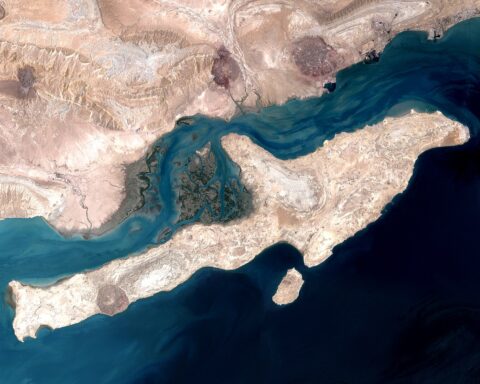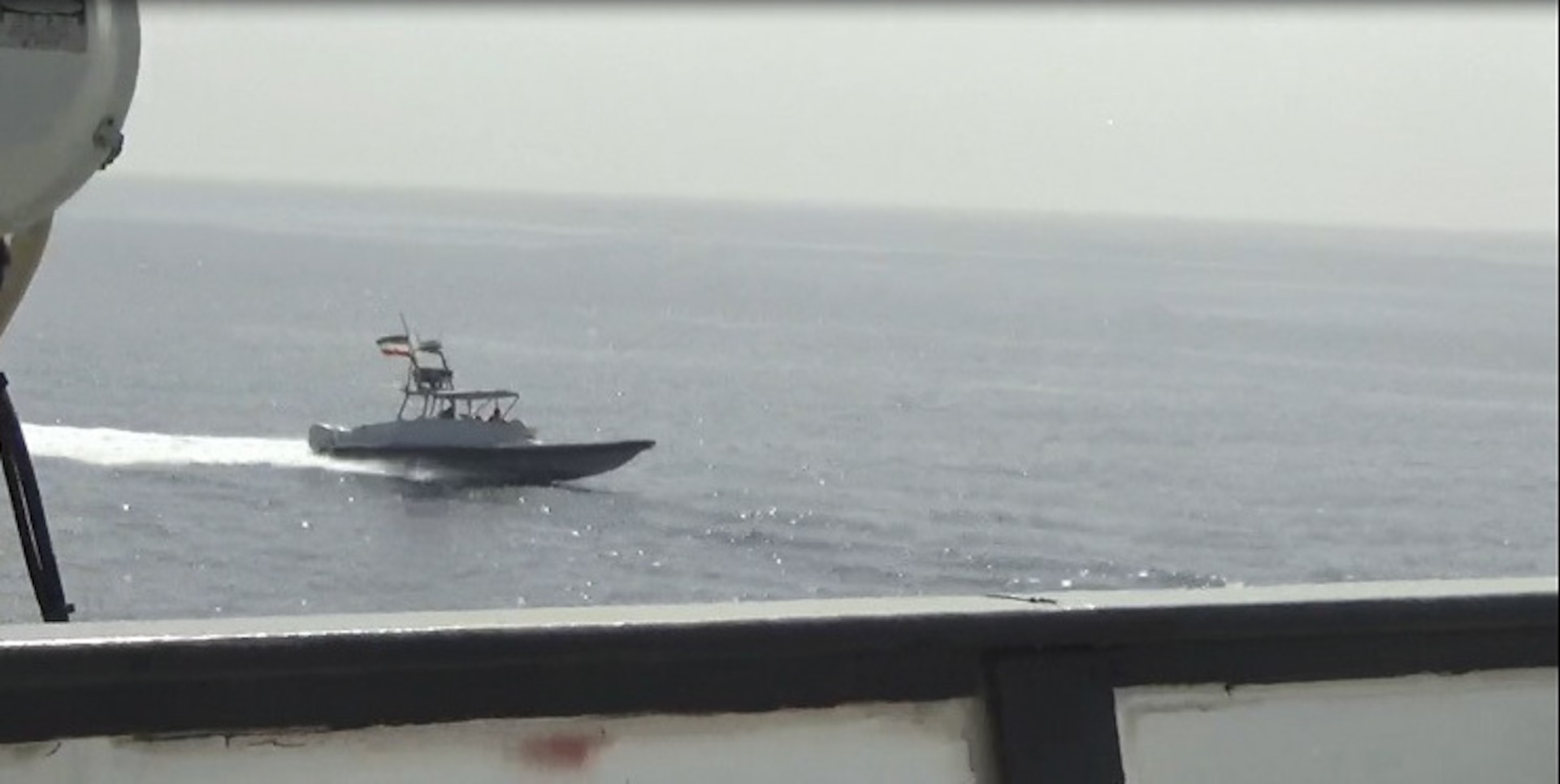

DUBAI — A Gabon-flagged tanker carrying 7,000 tonnes of Emirati fuel oil became the first confirmed non-Iranian commercial vessel to transit the Strait of Hormuz since the ceasefire began on April 7, completing its passage on April 9 after paying approximately $2 million to Iran’s Islamic Revolutionary Guard Corps and submitting to an IRGC boarding party for what Tehran described as “technical inspections” — a transaction that the IRGC’s navy marked, at 21:26 UTC the same evening, with a social media declaration that “the management of the Strait of Hormuz has entered a new phase.” The tanker MSG (IMO: 9466623), bound for Mundra, India, was routed not through the traditional Omani-side shipping lane but through the IRGC-monitored Larak Island corridor, a narrow five-nautical-mile channel between Qeshm and Larak islands that Iran designated after publishing a navigation chart marking the standard traffic separation scheme as a danger zone due to mines.
The transit matters less for the cargo it carried than for the system it validated. Iran did not close Hormuz — it built a permission architecture around it, complete with a parliamentary fee statute passed on March 31, an IRGC-issued navigation chart that functions as the licensing instrument, a boarding-and-inspection protocol, and a declared right to reject vessels outright. The ceasefire text, as articulated by Foreign Minister Abbas Araghchi, commits Iran only to allowing passage “in coordination with Iran’s Armed Forces and with due consideration of technical limitations.” The Islamabad talks scheduled for April 10 cannot reopen what was never formally sealed; they can only formalise or contest a control mechanism Iran is already operating at scale, with 230 oil-laden vessels stalled outside the strait as of April 9, according to ADNOC.
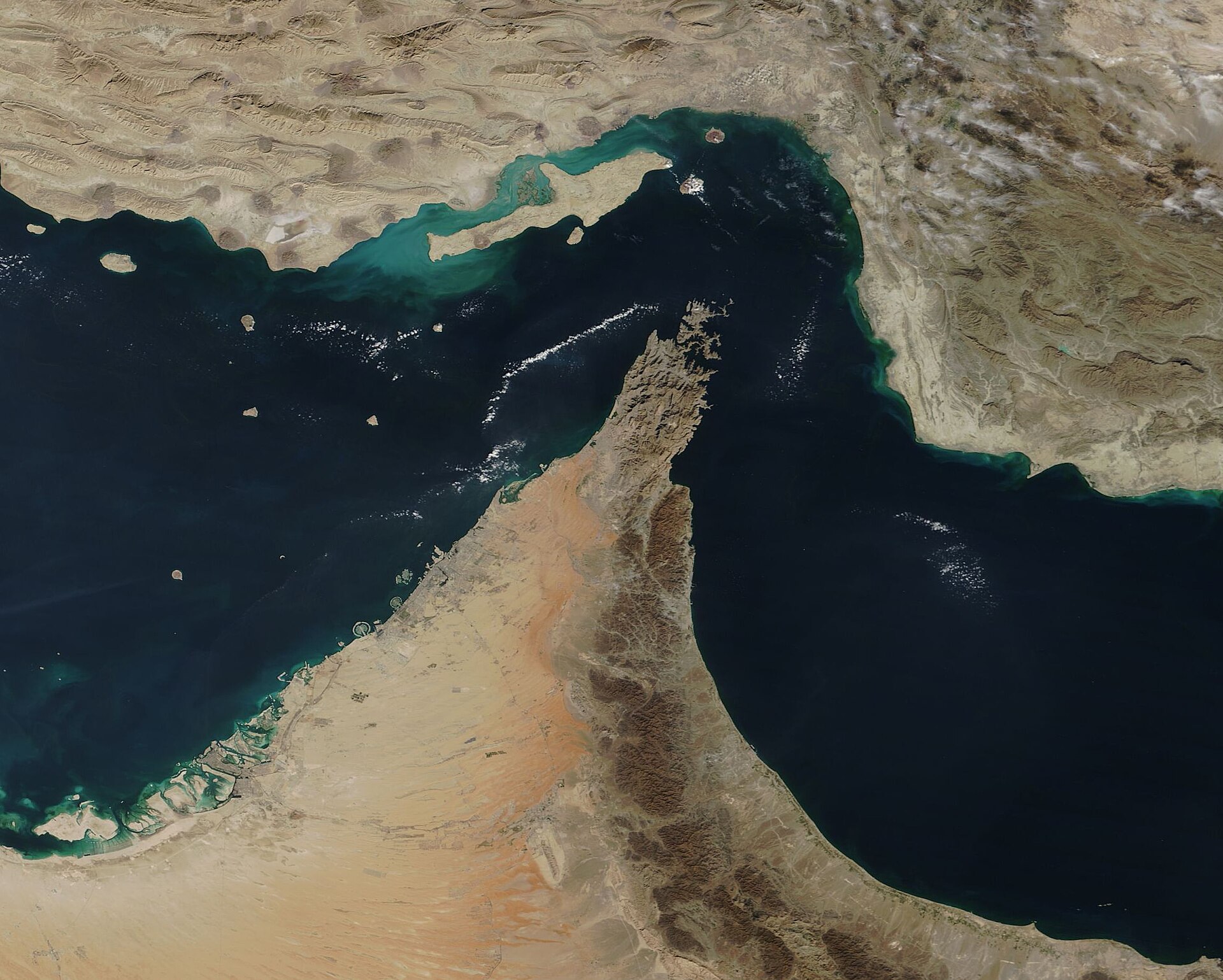
Table of Contents
- The MSG Transit: Anatomy of a Licensed Passage
- Five Ships Where 140 Once Sailed
- How Did Iran Build a Licensing Regime Without a Treaty?
- Can the Islamabad Talks Dismantle a System Already Running?
- The Legal Void All Three Sides Created
- Background: From February Drills to April Doctrine
- Frequently Asked Questions
The MSG Transit: Anatomy of a Licensed Passage
The MSG’s passage through Hormuz on April 9 was not a resumption of normal shipping — it was a demonstration of what the new normal looks like. The vessel paid a toll Iran’s parliament had legislated into domestic law eight days earlier, submitted to a physical boarding by IRGC naval personnel, followed a route dictated by an IRGC-published chart rather than the internationally recognised traffic separation scheme, and completed its transit through waters Iran’s navy now describes as being under a fundamentally different management regime. Every element of the transaction — the fee, the inspection, the routing, the prior authorisation — required the shipowner to treat Iran as the sovereign administrator of an international waterway through which roughly 21 percent of global oil consumption passed before the war.
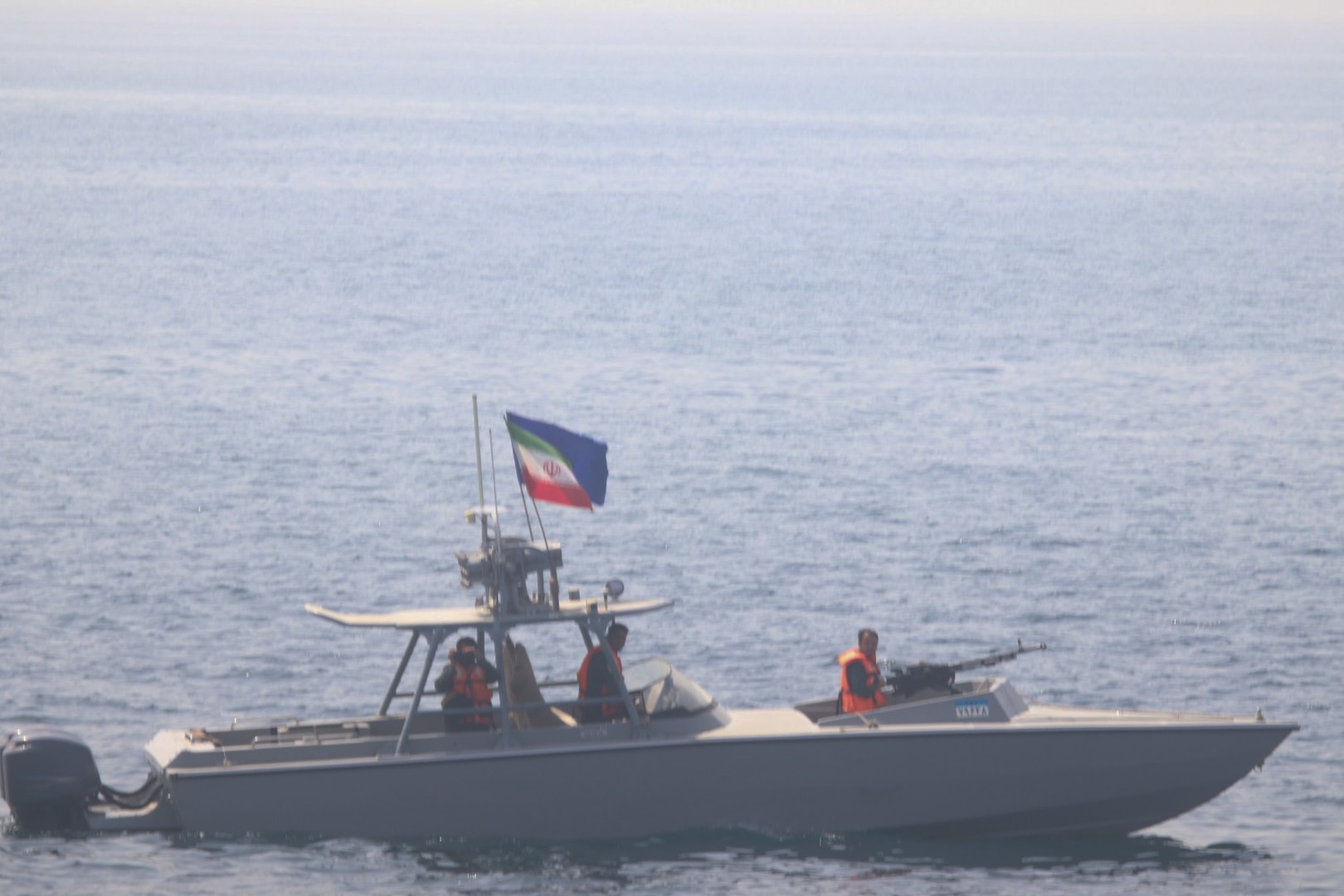
Iran’s deputy foreign minister, Saeed Khatibzadeh, framed the system in language calibrated to sound administrative rather than coercive. “Any ship needs army approval to pass so crews can be told where to avoid the mines,” Khatibzadeh told Euronews on April 9, adding: “Anybody who communicates with the Iranian authority has got permission to pass.” The formulation is important because it presents the licensing requirement as a safety service — guidance through mined waters — rather than a sovereignty claim, even as the IRGC simultaneously warns that ships without authorisation will be “targeted and destroyed.”
The MSG was not the first vessel to pay for passage. The Malta-flagged CMA CGM Kribi transited on April 2 before the ceasefire, and at least two earlier vessels paid in Chinese yuan, one brokered by a Chinese maritime services company, according to Lloyd’s List and Bloomberg. But the MSG transit is the first to occur under ceasefire conditions, when Iran’s stated commitment to allowing passage might have suggested the toll and inspection regime would be relaxed. It was not relaxed. If anything, the IRGC’s post-transit declaration — “the management of the Strait of Hormuz has entered a new phase, God willing, and praise be to God” — signalled that the ceasefire had consolidated rather than loosened Iran’s grip.
Five Ships Where 140 Once Sailed
The scale of the throughput collapse tells the story the MSG’s successful transit obscures. On April 9, five ships crossed Hormuz, according to Fortune — against Iran’s own stated pledge of “a minimum of fifteen” per day during the ceasefire. On April 8, the first full day of the ceasefire, four ships crossed. The pre-war baseline was 130 to 160 vessels daily, meaning Iran’s licensing regime is currently permitting roughly 3 percent of normal traffic even under ceasefire conditions when Tehran has ostensibly committed to safe passage.
The Middle East briefing 3,000+ readers start their day with.
One email. Every weekday morning. Free.
Sultan Al Jaber, CEO of Abu Dhabi’s ADNOC, did not treat the MSG transit as evidence that the strait was reopening. “The strait must be open — fully, unconditionally and without restriction,” Al Jaber told The National on April 9. “Iran has made clear — through both its statements and actions — that passage is subject to permission, conditions and political leverage. That is not freedom of navigation. That is coercion.” ADNOC’s own data showed 230 oil-laden vessels stalled outside Hormuz as of the same day, a floating queue that represents billions of dollars in stranded cargo and mounting demurrage costs for charterers who cannot get their ships through a chokepoint Iran insists is open.
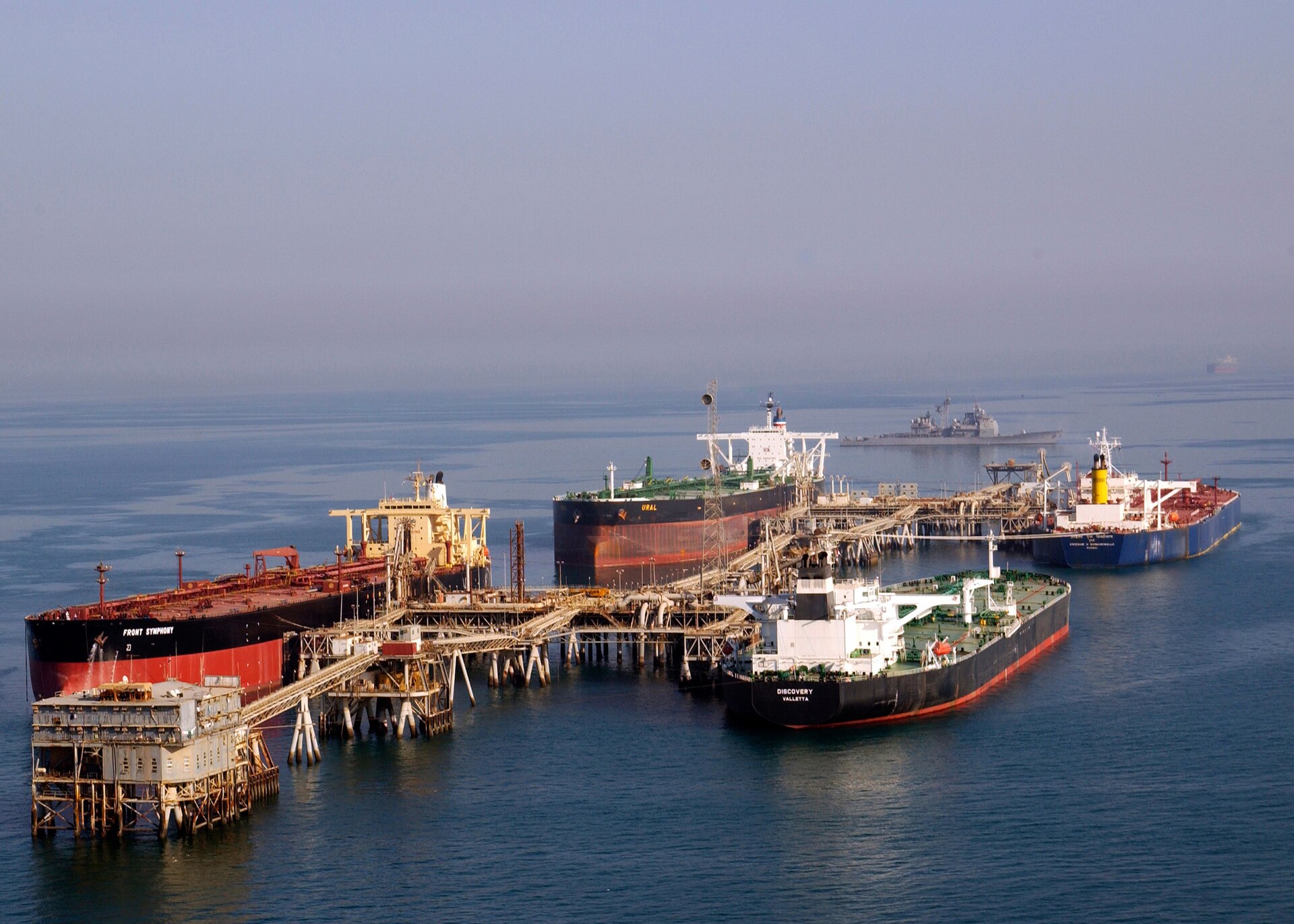
The gap between Iran’s pledge and its performance is not incidental — it is structural. The IRGC requires 96 hours’ advance notice before setting a toll for each vessel, according to Bloomberg and shipping sources, meaning the bottleneck is built into the administrative process itself. Even if Iran approved every application it received, the inspection-and-routing protocol through the narrow Larak corridor imposes a physical constraint that makes pre-war throughput volumes impossible. C. Uday Bhaskar, a Delhi-based maritime analyst, told Al Jazeera the calculus for shipowners is straightforward: “If I were the owner of a VLCC which weighs about 300,000 tonnes, whose value could be a quarter billion dollars…I would believe the Iranians if they said we have laid mines.” The mines, whether real or declared, are the licensing regime’s enforcement mechanism — they make the IRGC chart the only safe passage, and the IRGC the only authority that can grant it.
How Did Iran Build a Licensing Regime Without a Treaty?
The architecture Iran has assembled over the past six weeks did not emerge from any negotiation or international agreement. It was built unilaterally through a sequence of domestic legislative acts, military declarations, and administrative procedures that, taken together, constitute a functioning sovereign control system over an international strait — a system that requires no treaty to maintain and no treaty to revoke.
The sequence began before the war started. On February 16, 2026, two weeks before hostilities, the IRGC Navy conducted “Smart Control of the Strait of Hormuz” drills — the exercise name itself telegraphing the concept of administrative rather than purely military control. When the war began on February 28, the IRGC declared the traditional shipping lanes unsafe, published a navigation chart redirecting vessels northward toward the Iranian coast through the Larak corridor, and began requiring advance notification and payment from any vessel seeking transit. On March 31, Iran’s parliament passed the fee bill, encoding the toll into domestic statute and transforming what had been a military exaction into a legislated charge. The IRGC then established the boarding-and-inspection protocol, and by early April had exercised the claimed right to refuse passage entirely — the Maritime Executive reported the IRGC rejected a container ship in what it described as “the first time the IRGC had claimed an administrative rejection under its formalized Strait of Hormuz control protocol.”
Mark P. Nevitt, a professor of law at Emory University and retired Navy commander, identified the strategy’s legal architecture in Just Security: “Rather than closing the Strait to all traffic indiscriminately, Tehran has weaponized access selectively.” Nevitt noted that Iran’s fee is “neither linked to any service nor applied without discrimination — it is a selective toll imposed for purely coercive purposes,” and that “there is no ‘Strait of Hormuz Convention,’ and Iran cannot conjure one through unilateral assertion.” But the absence of a convention is precisely the point — Iran does not need international recognition of its system for the system to function. It needs only the mines (or the credible claim of mines), the chart, the corridor, and the willingness to enforce.
The bilateral exemptions Iran has granted reinforce the sovereignty claim rather than undermining it. When Iran declared that Iraqi ships could transit freely on April 4-5, it established the principle that passage is a privilege Tehran can extend or withhold on a state-by-state basis — the defining attribute of sovereign territorial control rather than an international commons. Pakistan brokered a two-ship-per-day bilateral arrangement in late March, the first state-to-state licensing negotiation that treated Iran as the passage authority. Each bilateral deal, each exemption, each toll paid, adds another layer of precedent to a regime that grows more entrenched with every transaction.
Can the Islamabad Talks Dismantle a System Already Running?
The Islamabad talks resuming on April 10 face a structural problem that no amount of diplomatic energy can resolve at the table: the IRGC is not represented in the negotiations, and the licensing regime the talks would need to address is an IRGC operation, not a Foreign Ministry programme. Araghchi can negotiate; the IRGC’s Navy operates. The ceasefire text’s formulation — passage “in coordination with Iran’s Armed Forces” — explicitly preserves the military’s role as gatekeeper, meaning any diplomatic agreement that does not include the IRGC’s operational chain of command is an agreement about what Iran’s diplomats would like to happen, not what Iran’s military will permit.
Iran’s own 10-point plan, presented as a framework for negotiations, makes the asymmetry explicit. Point 7 requires IRGC “coordination” over Hormuz as a treaty requirement — in effect, asking the international community to codify the licensing regime Iran is already running into a binding agreement. The demand does not ask for permission to do what Iran is doing; it asks for international recognition of what Iran has already done. Ebtesam Al-Ketbi, president of the Emirates Policy Center, told Military Times on April 8: “This ceasefire is not a solution; it is a test of intentions. If Iran can extract millions per ship, the implications are enormous — not just for the Gulf, but for the global economy.”
The financial incentive alone makes voluntary dismantlement unlikely. At $2 million per vessel crossing, pre-war throughput of 130 to 160 ships daily would generate an estimated $260 million to $320 million per day in toll revenue. Iran’s parliament did not pass the fee bill as a wartime expedient; it passed it as permanent domestic legislation, with Tasnim, the IRGC-linked news agency, describing the revenue as “earmarked for reconstruction.” The legislative framing transforms the toll from a military imposition into a fiscal programme with domestic constituencies — spending that Iranian politicians will be reluctant to surrender even if the Foreign Ministry agrees to do so. The institutionalisation of this commercial lane alongside the CENTCOM mine-clearing operation has created a dual-track architecture that Saudi Arabia cannot endorse either side of.
The Legal Void All Three Sides Created
The legal framework that might constrain Iran’s licensing regime does not apply to any of the three principal belligerents. UNCLOS Article 26 prohibits transit charges through international straits, but Iran, the United States, and Israel are all non-ratifiers of UNCLOS — a symmetry that leaves Washington unable to invoke the very legal regime it cites when calling Hormuz an open strait. Nevitt’s analysis in Just Security is blunt: Iran cannot conjure a Strait of Hormuz Convention through unilateral assertion, but neither can the United States invoke a convention it has refused to join.
Qatar’s foreign ministry spokesman, Majed al-Ansari, called Hormuz “a naturally occurring open strait that all of us share,” while Oman’s transport minister, Saeed bin Hamoud al-Maawali, rejected transit fee claims outright, noting that Oman “signed all international maritime transport agreements” that prohibit such charges. But neither Qatar nor Oman has the naval capacity to enforce the principle, and the IRGC’s navigation chart — which directs ships away from the Omani-side lane and into Iranian-monitored waters — physically removes Oman from the strait’s operational geography. Amin Saikal, a professor at the Australian National University, told Al Jazeera: “A toll to pass through the Strait of Hormuz is not going to go down well with President Trump and his expectations that the strait should be open for everyone.” Yet Trump’s own April 8 proposal to operate Hormuz as a “joint venture” — in which “Iran and Oman will be able to charge ships,” according to the AP ceasefire text — appeared to concede the principle of tolling even as the administration publicly demanded unconditional access.
The IRGC’s own language suggests permanence is the objective, not a negotiating position. “The Strait of Hormuz will never return to its previous status, especially for the US and the Zionist regime,” the IRGC Navy declared on April 5, two days before the ceasefire — a statement of intent that predates any negotiation and that the April 9 “new phase” declaration reaffirmed. The regime does not need international recognition to persist; it needs only the continued physical reality of mines (or claimed mines) in the traditional shipping lanes, the IRGC’s willingness to board and inspect, and the commercial calculation of shipowners who will pay $2 million rather than risk a $250 million vessel.
Background: From February Drills to April Doctrine
Iran’s control architecture over Hormuz did not materialise with the war’s outbreak on February 28 — its conceptual and operational foundations were laid earlier and have been built incrementally through a series of escalating assertions that moved from military exercise to administrative practice to legislative permanence.
The IRGC Navy’s “Smart Control of the Strait of Hormuz” drills on February 16, 2026, were the doctrinal announcement: the exercise practised the boarding, inspection, and routing protocols that would become operational within two weeks. When the war began, the IRGC published its navigation chart — the instrument that redirected all shipping from the traditional traffic separation scheme into the Larak corridor — and began requiring advance notice from transiting vessels. Each subsequent step — the payment precedent set by the CMA CGM Kribi, the parliamentary fee bill on March 31, the first formal administrative rejection of a container ship — added a layer of institutional depth to what had begun as a military posture.
During the 1980s Tanker War, Iran attacked shipping but never sealed Hormuz and never claimed administrative authority over transit — it depended on the same sea lanes for its own oil exports. The 2026 architecture is structurally different because Iran has reduced its dependence on Hormuz-route exports at pre-war volumes and because the control mechanism is administrative rather than purely military. A mine can be swept; a chart can be replaced; an inspection protocol can be suspended. But a domestic statute, a parliamentary revenue stream, bilateral precedents with Iraq and Pakistan, and a ceasefire text that explicitly preserves military “coordination” — these are institutional facts that persist beyond any individual military operation.
The IRGC’s April 9 declaration that Hormuz management has “entered a new phase” was not a threat or a warning — it was a status report. The system is running. Five ships crossed on April 9 under its terms, 230 waited outside, and the ceasefire that was supposed to reopen the strait instead validated the architecture that controls it.
Frequently Asked Questions
What happens to ships that attempt transit without IRGC authorisation?
The IRGC has warned that unauthorised vessels will be “targeted and destroyed,” according to the Sunday Guardian Live. In practice, the IRGC has so far enforced the regime through administrative rejection — refusing passage — rather than kinetic action against non-compliant commercial vessels. However, the declared mine presence in the traditional shipping lanes means that vessels attempting to use the standard traffic separation scheme without IRGC routing guidance would be navigating through waters Iran has designated as mined, regardless of whether the IRGC fires on them directly.
How does the $2 million toll compare to alternative shipping routes?
The alternative to Hormuz transit for Gulf oil exporters is the East-West Pipeline to Yanbu on the Red Sea coast, which Saudi Arabia has activated at its maximum capacity of approximately 7 million barrels per day. However, Yanbu-routed cargoes then face the Bab el-Mandeb chokepoint and Red Sea security risks from Houthi activity. For importers, rerouting around the Cape of Good Hope adds approximately 15-20 days and $500,000-$800,000 in additional voyage costs per VLCC — making the $2 million toll economically rational for individual shipowners even as it establishes a principle that Gulf states and maritime law scholars consider illegal under customary international law.
Could the US Navy clear the mines and reopen the traditional shipping lanes?
US mine countermeasures capacity in the Gulf has degraded significantly. The four Avenger-class mine countermeasures ships previously based in Bahrain were retired in September 2025, and the three Littoral Combat Ships with mine warfare modules are deployed in Asia. Based on the 1991 Kuwait mine-clearing benchmark, clearing the approximately 200 square miles of declared danger zone would require an estimated 51 days even with dedicated assets — assets that would need to be redeployed from other theatres. Mine clearance would also require operating in waters within range of Iranian anti-ship missiles and coastal defences, making it a combat operation rather than a humanitarian demining exercise.
Why hasn’t Saudi Arabia or the UAE challenged the regime militarily?
Neither Saudi Arabia nor the UAE has the mine countermeasures capability to clear the Larak corridor independently, and both countries’ remaining Patriot PAC-3 missile interceptor stocks — estimated at roughly 400 rounds after 894 confirmed intercepts during the war — are insufficient to defend critical infrastructure while simultaneously supporting a naval operation in the strait. Sultan Al Jaber’s language on April 9 — demanding the strait be open “fully, unconditionally and without restriction” — was addressed to Washington and the Islamabad negotiators, not to ADNOC’s own naval assets, which do not exist in a form capable of contesting IRGC control.
Does the ceasefire text require Iran to dismantle the licensing regime?
No. Araghchi’s formulation commits Iran to allowing passage “in coordination with Iran’s Armed Forces and with due consideration of technical limitations” — language that preserves the IRGC’s gatekeeper role rather than dismantling it. Hormuz governance is deferred to Phase 2 of the negotiating framework, and Iran’s 10-point plan (Point 7) seeks to codify IRGC “coordination” as a treaty requirement. The ceasefire created a pause in military operations, not a resolution of the sovereignty question that underpins the licensing regime. On the same morning, the IRGC’s formal Hormuz access regime was published as a parallel doctrine — destroy-on-sight orders issued hours before Vance landed in Islamabad.