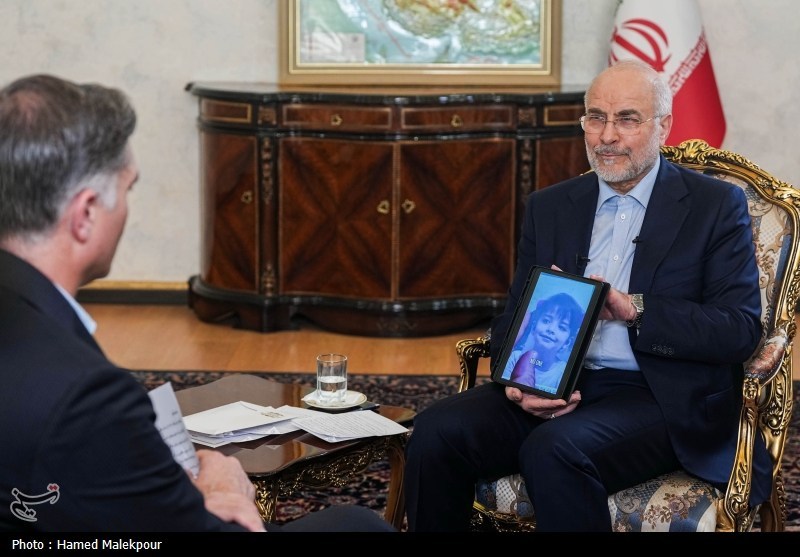
ISLAMABAD — Iran sent two messages to Islamabad on April 11 and they contradict each other. Foreign Minister Abbas Araghchi, speaking not to the Americans or the Pakistani mediators but to Germany’s Johann Wadephul on the phone, declared Iran enters talks “with complete distrust due to Washington’s repeated breaches of commitment and treachery against diplomacy.” Parliament Speaker Mohammad Bagher Ghalibaf, the man actually leading Iran’s 71-member delegation, landed in Islamabad carrying photographs of the Minab school bombing victims and offered a materially different formulation: “We have goodwill but we do not have trust.”
The gap between “complete distrust” and “goodwill without trust” is not semantic. It is the distance between a country that cannot negotiate and a country that is negotiating while pre-committing to domestic audiences that any concession will be framed as betrayal. For Saudi Arabia — excluded from the room it occupied two weeks ago, absorbing an Aramco May OSP now $13-15 per barrel underwater, and watching Hormuz throughput collapse to 2 ships on April 10 versus 138 per day before the war — the distinction is the difference between a pricing crisis that resolves in weeks and one that metastasizes into a fiscal emergency by June.
Table of Contents
- The Dual-Track Message and Who It Was For
- Why Did Araghchi Call Berlin, Not Islamabad?
- Who Authorized the Delegation — and Does It Matter?
- The 1988 Poison Chalice and Why It Does Not Apply
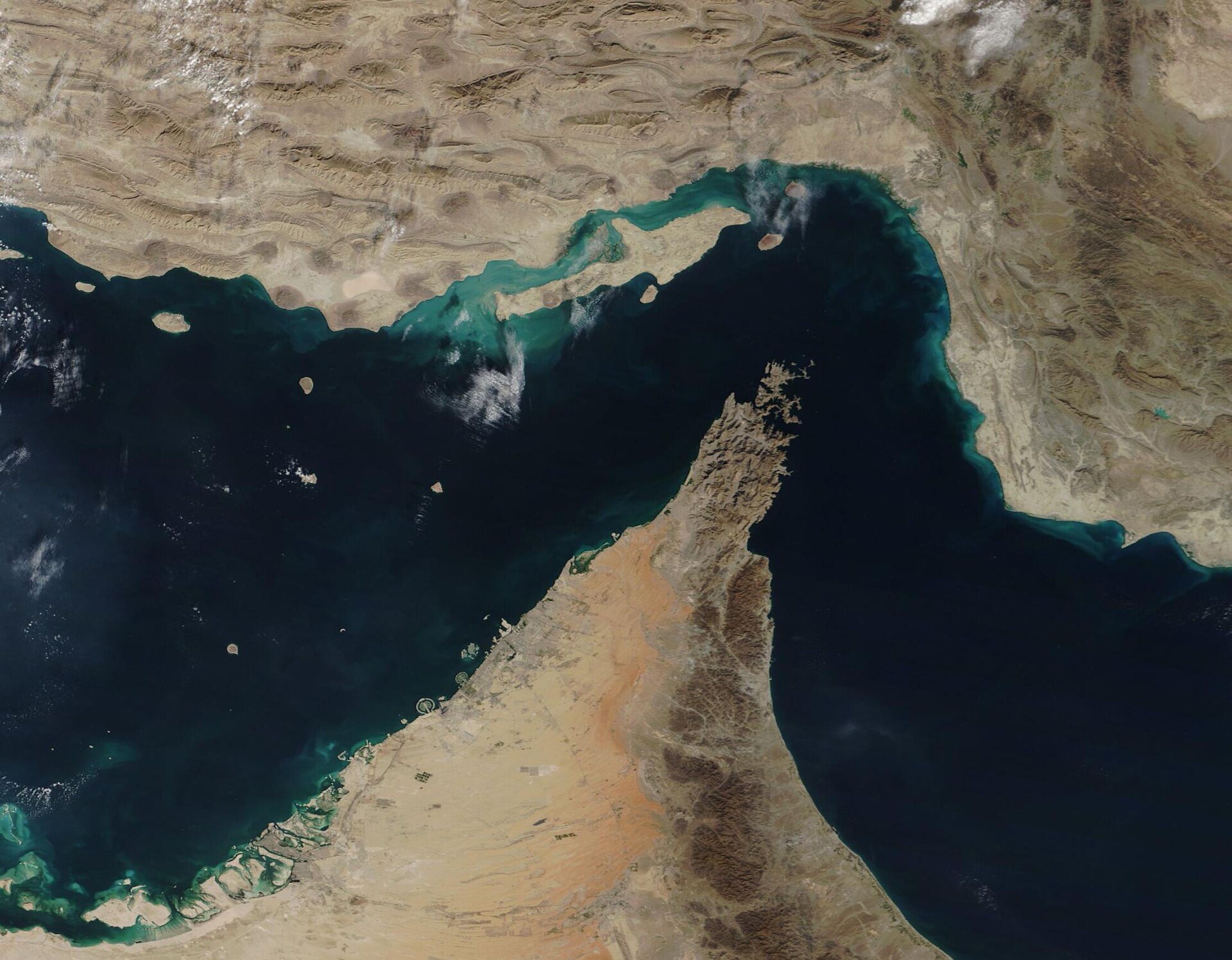
- How Many Ships Are Actually Crossing Hormuz?
- The May OSP Inversion and the June Cliff
- Saudi Arabia’s Vanishing Seat
- What Happens When the Ceasefire Expires on April 22?
- Frequently Asked Questions
The Dual-Track Message and Who It Was For
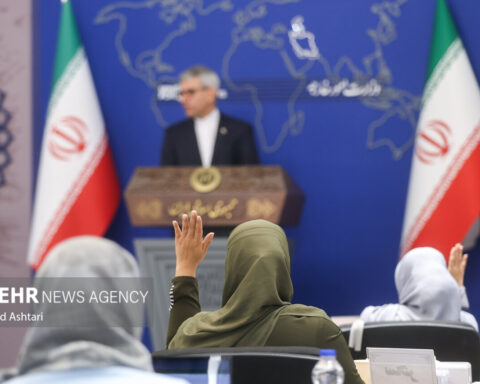
Araghchi’s statement and Ghalibaf’s statement were released within hours of each other on April 11. They were directed at different audiences through different channels, and the contradiction between them is the message itself. Araghchi spoke to a European foreign minister by telephone — a channel that guarantees publication in Western and Iranian media simultaneously while preserving total deniability at the negotiating table. He never said “complete distrust” to anyone in Islamabad.
Ghalibaf’s formulation was public, delivered on arrival in Pakistan and posted to his own social media alongside photographs of dead children from Minab. “We have goodwill but we do not have trust” is a negotiating position. “Complete distrust due to treachery” is a domestic pre-commitment device — a statement designed to make any future Iranian concession politically lethal for whoever signs it. As Ali Vaez, Director of the Iran Project at the International Crisis Group, told the Christian Science Monitor on April 10: “Trust in the U.S. as a negotiating partner was already at zero because the Trump administration has burned Iran three times: first by pulling out of the JCPOA, and then when Trump bombed Iran in the middle of negotiations last year and this year.”
The effect is structural. By broadcasting “complete distrust” to a European interlocutor before a single word was exchanged in Islamabad, Araghchi raised the domestic cost of any Iranian concession above the threshold that even Ghalibaf — a former IRGC Aerospace Force commander — can absorb. Any deal that emerges now has to survive Araghchi’s own public standard, a standard he set deliberately and from outside the room. That closing function is documented in detail in the analysis of how Iran’s state television functions as an IRGC command channel — the IRIB broadcast that foreclosed Islamabad’s negotiating space before Araghchi landed.
Why Did Araghchi Call Berlin, Not Islamabad?
Araghchi called Germany’s Foreign Minister because Germany guarantees amplification without accountability. Berlin has no seat at these talks and no enforcement role — but it has the largest Iranian diaspora in Europe and a press corps that distributes Iranian state framing globally. The call placed Tehran’s pre-commitment in every headline before a session began.
The Middle East briefing 3,000+ readers start their day with.
One email. Every weekday morning. Free.
Araghchi telephoned German Foreign Minister Johann Wadephul — not the Pakistani mediators, not the US delegation, not his own delegation chief Ghalibaf. Germany has a direct channel to EU foreign policy coordination and the diaspora reach to ensure the message circulated in Farsi and German before any Islamabad session opened. That is the infrastructure of a pre-commitment broadcast, not a diplomatic communication.
PressTV, Iran’s English-language state broadcaster, ran the Araghchi quote as its lead alongside a companion analysis arguing that “the US must drop ‘forever war’ logic and ‘Israel First’ posture for any breakthrough.” Iranian Vice President Mokhber reinforced the frame on the same outlet: “No deal with the US if we meet the representatives of ‘Israel First.’” The audience for this messaging is not in Islamabad. It is in Tehran, Mashhad, and Isfahan — the cities where any concession on Hormuz sovereignty or uranium enrichment will be measured against Araghchi’s “treachery” standard.
Ghalibaf, by contrast, set two preconditions that are operationally specific: a Lebanon ceasefire must be implemented, and Iran’s blocked assets must be released. These are demands that can be discussed, sequenced, and traded. They belong to the vocabulary of negotiation. Araghchi’s “complete distrust due to treachery against diplomacy” belongs to the vocabulary of pre-commitment — and pre-commitment, once broadcast, is almost impossible to walk back without paying exactly the domestic price it was designed to extract.
Who Authorized the Delegation — and Does It Matter?
Yes — because Iran’s 71-member delegation includes no IRGC commander and operates under a constitution that requires Supreme Leader confirmation of all SNSC decisions. With Khamenei absent since February 28 and his April 8 ceasefire order delivered only as written text on state television, any agreement the delegation signs faces a constitutional ratification gap before it becomes binding.
Iran’s 71-member delegation to Islamabad includes the Parliament Speaker, the Foreign Minister, SNSC Secretary Ali-Akbar Ahmadian, and Central Bank Governor Abdolnasser Hemmati. It does not include Ahmad Vahidi, the IRGC commander who an unnamed Iranian parliamentarian told NBC News “is in charge of the country.” The same source was blunt about Ghalibaf’s authority: “Ghalibaf doesn’t have the strength to confront him.”
Before the delegation departed Tehran, Vahidi clashed with Araghchi and Ghalibaf over its composition. He demanded the inclusion of Mohammad Bagher Zolghadr, the IRGC-installed SNSC Secretary who is under both US and EU sanctions. The negotiating team refused on grounds that Zolghadr was “too inexperienced.” Vahidi also insisted the delegation refuse to negotiate Iran’s missile program — a demand that was partially overridden, since Iran’s own published 10-point plan includes a non-nuclear commitment (Point 9) that inherently touches the enrichment-to-warhead pipeline. Trump rejected even that limited opening: “There will be no enrichment of Uranium.”
The authorization question runs deeper than personnel. Under Article 176 of Iran’s constitution, all Supreme National Security Council decisions require confirmation by the Supreme Leader to become effective. Mojtaba Khamenei has not appeared in any video, audio, or photographic format since February 28. His ceasefire order of April 8 was a written text read by IRIB presenters — not a filmed appearance, not an audio recording, not a fatwa. The SNSC’s own framing of that ceasefire was explicit: “Negotiations are continuation of the battlefield.” That is not a ceasefire formulation — it is a war formulation applied to a pause.
VP JD Vance, en route to Islamabad, offered his own pre-commitment: “Don’t try to play the U.S. in peace talks.” The Americans brought three principals — Vance, special envoy Steve Witkoff, and presidential adviser Jared Kushner. Against Iran’s 71, the asymmetry is itself a signal: the US delegation can make decisions in the room. Whether Iran’s delegation can is the central question of Islamabad.
The 1988 Poison Chalice and Why It Does Not Apply
Every ceasefire in Iranian history gets measured against July 1988, when Ayatollah Ruhollah Khomeini accepted UN Security Council Resolution 598 to end the Iran-Iraq War and called it “more deadly than drinking from a poisoned chalice.” That precedent is invoked constantly. It does not apply. The transmission mechanisms are inverted at every level that matters.
In 1988, IRGC Commander-in-Chief Mohsen Rezaee had already told Khomeini directly that Iran could not resume offensive operations until 1992. The military admission preceded the political decision. Khomeini broadcast the ceasefire in his own voice on Iranian radio — unambiguous, physically present, from a leader whose religious authority was uncontested. Ali Khamenei, then president, personally traveled to the front line within days to explain the decision to military commanders face to face.
In 2026, the sequence is reversed. The IRGC has not admitted military exhaustion. Vahidi’s public posture before the ceasefire was “all restraint removed” — a declaration issued by the Zolfaqari command on April 7, the day before the ceasefire took nominal effect. The ceasefire order came as written text on IRIB, from a Supreme Leader who has been physically absent for 42 days.
Media Line reported errors in Mojtaba Khamenei’s first statement that raised questions about authorship. The Times of London has reported a memo describing the elder Khamenei as “unconscious in Qom.” No filmed address, no audio, no fatwa — only written text read by newsreaders.
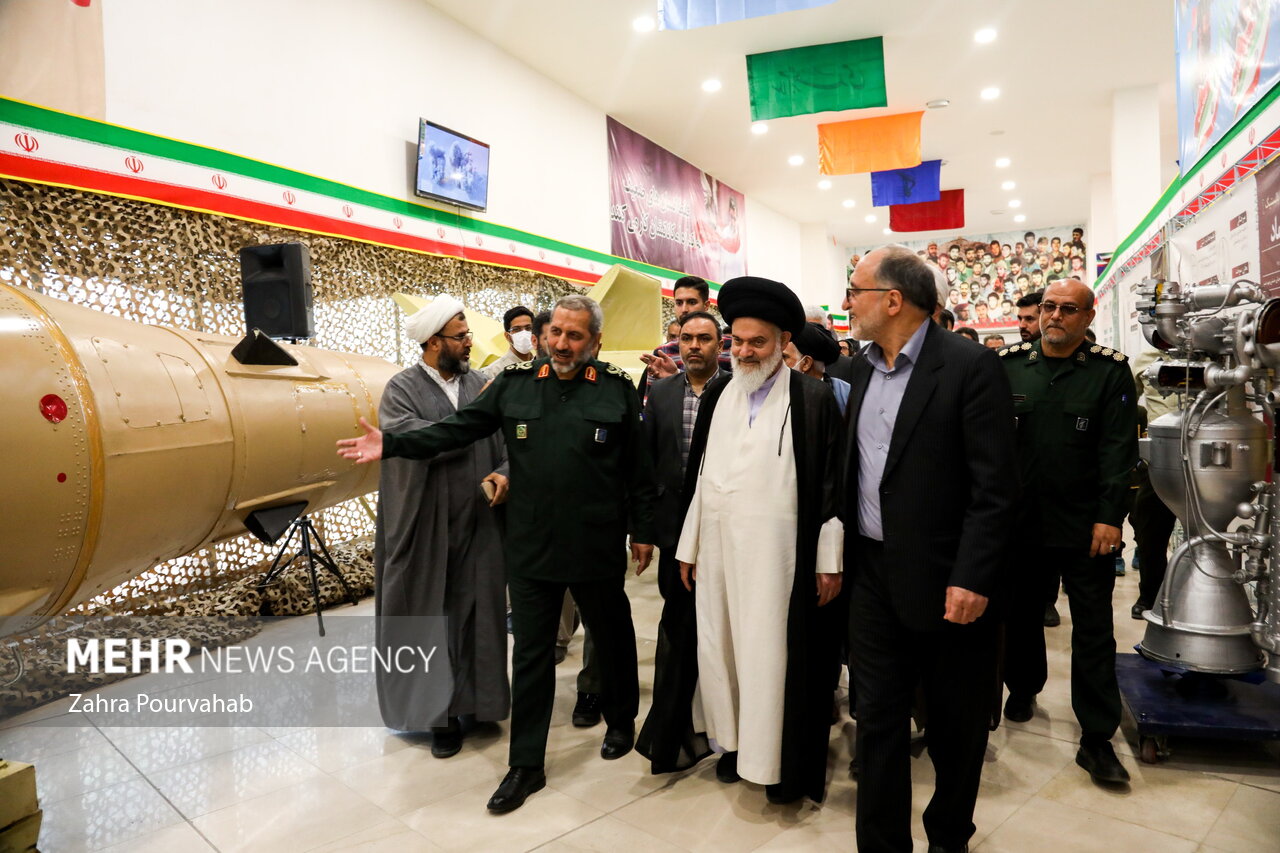
In 1988, the transmission was: IRGC admits defeat → Supreme Leader accepts ceasefire in own voice → president enforces on the ground. In 2026, the transmission is: unsigned written text on state TV → SNSC declares “negotiations are continuation of the battlefield” → IRGC commander absent from delegation → Parliament Speaker negotiates without confirmed constitutional authority. The 1988 precedent is not a template for 2026. It is the photographic negative.
How Many Ships Are Actually Crossing Hormuz?
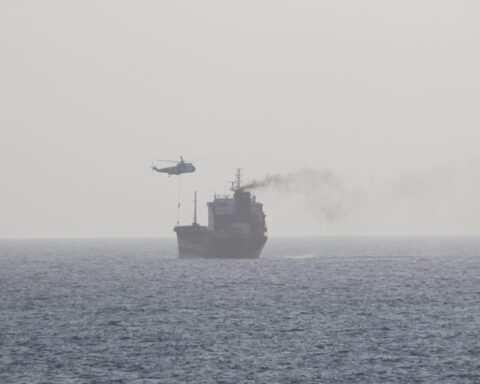
Two on April 10 — the lowest daily crossing since the ceasefire. The post-ceasefire average is 2-4 ships per day, against a pre-war baseline of 138 per day. That is a throughput collapse of over 97 percent. The ceasefire has not reversed it, and 800 vessels remain trapped in the Gulf with no clearing mechanism in place.
Mohammed Baharoon of Dubai’s Public Policy Research Center captured the structural implication: “If Iran is going to be the enforcement mechanism for the traffic light at Hormuz, that means the role of Iran as the policeman of the Gulf is coming back.” Iran’s 10-point plan makes this explicit. Point 2 demands “full control over the Strait of Hormuz.” Point 4 demands withdrawal of all US forces from the Middle East. Point 7 — analyzed previously on this site — requires “coordination with the Armed Forces of Iran” for Hormuz transit, a formulation that converts a UN Convention on the Law of the Sea transit passage into an IRGC-administered toll corridor.
| Metric | Pre-War (Feb 2026) | Post-Ceasefire (Apr 8-11) | Change |
|---|---|---|---|
| Daily ship transits | 138 | 2-4 | -97% |
| Vessels trapped in Gulf | — | ~800 | — |
| Oil flow deficit (Kpler est.) | — | ~6M bpd | — |
| Empty VLCCs off Singapore | — | 70+ | — |
| IRGC transit fee per ship | $0 | $2M | — |
The 800 vessels trapped in the Gulf and the 70-plus empty VLCCs idling off Singapore represent a physical bottleneck that no diplomatic formulation in Islamabad can resolve in two weeks. Even if the talks produced a full reopening agreement tomorrow — which no participant expects — the shipping queue alone would take weeks to clear. Al Jazeera’s summary of the Islamabad objective was modest to the point of confession: Pakistan’s goal is “a deal to keep talks going.” Experts cited by the outlet noted “little expectation that a major breakthrough would be reached.” A deal to keep talking is not a deal that reopens Hormuz.
The May OSP Inversion and the June Cliff
Aramco set its May Official Selling Price at a record +$19.50 per barrel above the Oman/Dubai average when Brent was trading at approximately $109. Brent closed April 11 at $96.66. That puts the May OSP approximately $13-15 per barrel above current spot — a premium so large that every Asian buyer lifting a May cargo is paying a war surcharge for oil that was priced at the peak of the crisis and will arrive into a market that has already priced in at least a partial de-escalation.
The May OSP inversion is already live. But the real cliff is June. Aramco’s June OSP negotiations open in approximately two to three weeks. A return to pricing equilibrium would require an $18 single-month cut — nine times Aramco’s largest-ever monthly adjustment, the $2 cut in December 2024. That is a pricing move with no precedent in the company’s history.
The alternative is worse: maintain the premium and watch Asian buyers defer or cancel liftings entirely. Aramco has already restricted April liftings to Yanbu terminal and Arab Light grade only — the first supply allocation of the war.
Saudi fiscal math makes neither option comfortable. The IMF pegs Saudi Arabia’s central government breakeven at $86.60 per barrel. Bloomberg’s PIF-inclusive estimate is $108-111 per barrel. At $96.66 Brent with an OSP that punishes every barrel sold, Saudi Arabia is simultaneously above its government breakeven and below its real one.
The East-West Pipeline strike on the first day of the ceasefire reduced Saudi pipeline flows by approximately 700,000 barrels per day. Combined with the Hormuz throughput collapse, Saudi Arabia’s export capacity is constrained from both directions: the pipeline bypass to Yanbu is operating below rated capacity, and the Gulf terminals that handle the majority of exports face a strait that is functionally closed. The June OSP decision will be made in this environment — and every day without Hormuz resolution compresses the decision window further.
Saudi Arabia’s Vanishing Seat
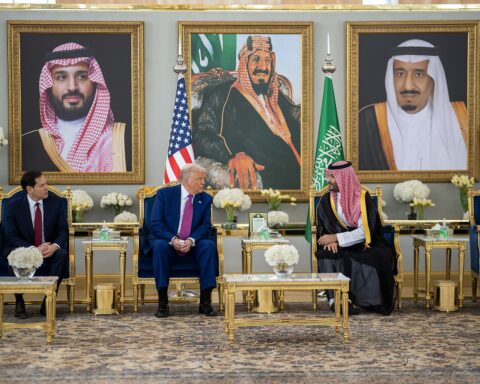
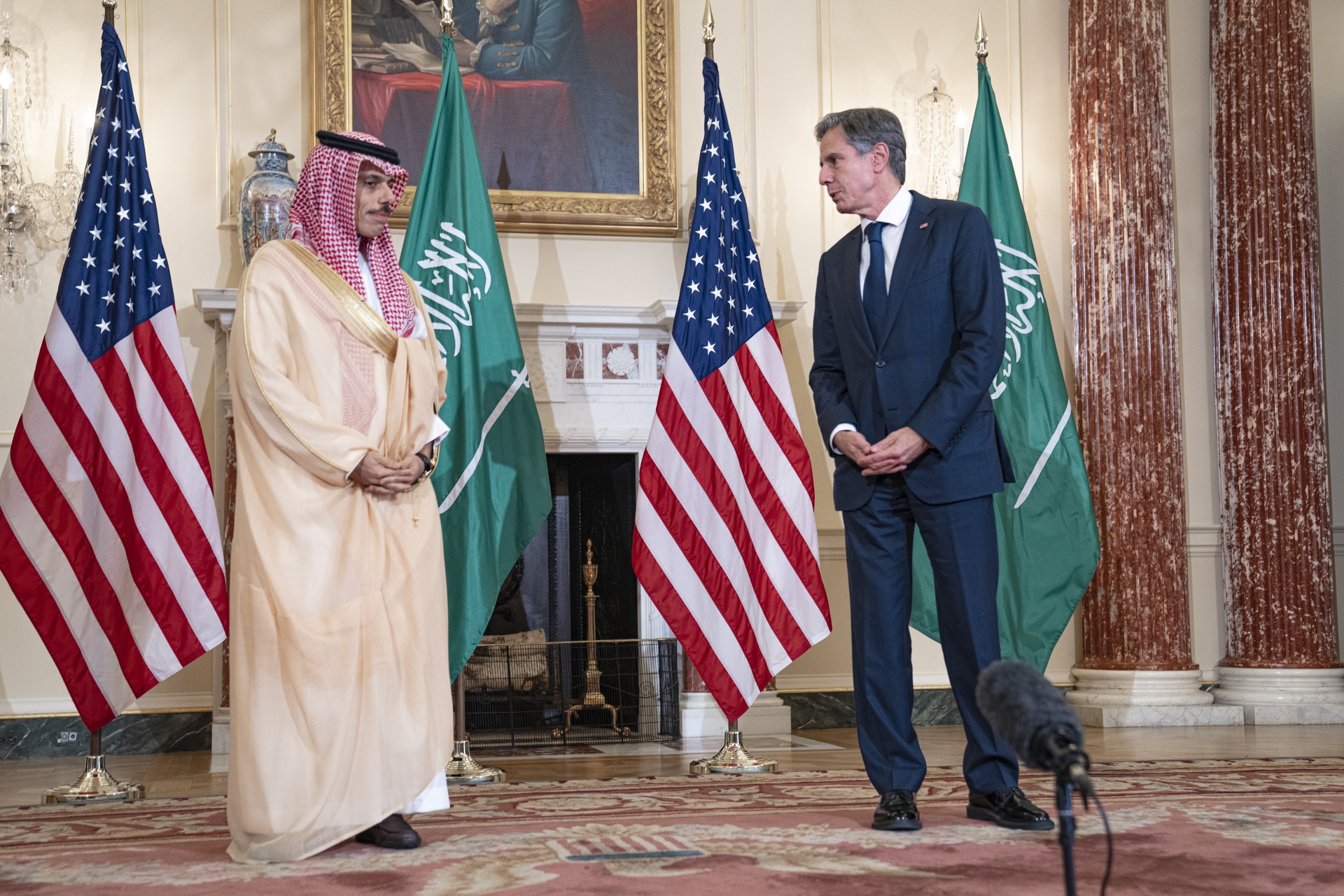
At the March 29-30 talks, Saudi Foreign Minister Prince Faisal bin Farhan had a co-guarantor seat. At the April 10-11 Islamabad bilateral, Saudi Arabia is not in the room. The exclusion is not incidental — it is structural, encoded in Iran’s own negotiating demands.
Point 4 of the 10-point plan requires withdrawal of all US forces from the Middle East. Point 8 specifies closure of US bases “in all regional countries.” Prince Sultan Air Base, which cost over $1 billion in Saudi-funded construction, hosts 2,000-3,000 US troops and was struck on March 28 by six ballistic missiles and 29 drones. Iran’s demand is not for Saudi Arabia to change its policy. It is for Saudi Arabia to lose its security guarantee.
The compliance-without-protection trap is already operational. Saudi Arabia denied offensive use of its territory — a concession to Iran’s demand structure — yet absorbed retaliation anyway. Marwan Muasher at the Carnegie Endowment has documented this dynamic across three analyses.
The kingdom’s PAC-3 interceptor stockpile is down to approximately 400 rounds from an estimated 2,800 — an 86 percent depletion rate — with Camden, Arkansas producing only 620 replacement rounds per year. Poland refused a Patriot battery transfer on March 31. The $16.5 billion emergency arms package went to the UAE, Kuwait, and Jordan — not Saudi Arabia.
Ali Vaez of the International Crisis Group offered the sharpest frame for Iran’s post-ceasefire posture: “If the Iranians survive a hot war they certainly do not want to freeze in a cold peace.” For Saudi Arabia, the cold peace is the scenario where Hormuz stays at 2-4 ships per day, the May OSP inversion bleeds every cargo, the June correction arrives without a resolution pathway, and the kingdom’s exclusion from the room means it cannot even negotiate the terms of its own exposure. The Phase 2 deferral — where Hormuz sovereignty and uranium enrichment are pushed to a second negotiating phase with no timeline — means the issues that matter most to Saudi Arabia are structurally last in line.
What Happens When the Ceasefire Expires on April 22?
The Soufan Center has found no extension mechanism, no renewal clause, and no mediator-triggered pause in the ceasefire text. When April 22 arrives — eleven days from now — the ceasefire either has been replaced by a new agreement or it is over. No participant in Islamabad expects a full resolution by then.
The timeline intersects with two other deadlines that compound the pressure. Hajj arrival opens on April 18, the same date the Umrah cordon seals — meaning hundreds of thousands of pilgrims, including 119,000 from Pakistan and 221,000 from Indonesia, will be arriving in Saudi Arabia during the four-day window between cordon closure and ceasefire expiry. And Aramco’s June OSP negotiation window opens in the same period, forcing a pricing decision on every barrel of oil sold in June while the ceasefire clock runs out.
Pakistan is the sole enforcement mechanism for a ceasefire it brokered but has no capacity to police. The IRGC’s 31 autonomous provincial commands, reorganized in September 2008, each retain independent launch authority. A written ceasefire order from a possibly incapacitated Supreme Leader does not flow down this command chain by constitutional authority alone — it requires operational confirmation from the IRGC command structure. That confirmation has not come. Vahidi’s last public posture, issued through the Zolfaqari command on April 7, was “all restraint removed.” No subsequent retraction has been published.
| Element | Iran (71 members) | United States (3 principals) |
|---|---|---|
| Lead negotiator | Ghalibaf (Parliament Speaker) | Vance (Vice President) |
| IRGC representation | None (Vahidi not in delegation) | N/A |
| Constitutional authority | Article 176: requires Supreme Leader confirmation | Presidential delegation authority confirmed |
| Supreme Leader status | No appearance since Feb 28 (42 days) | N/A |
| Pre-commitment framing | “Complete distrust” (Araghchi) / “Goodwill without trust” (Ghalibaf) | “Don’t try to play the U.S.” (Vance) |
| Ceasefire authority | Written text on state TV, SNSC: “continuation of battlefield” | Presidential authority, direct chain of command |
| Key preconditions | Lebanon ceasefire, asset release, Hormuz sovereignty | No enrichment, immediate Hormuz reopening |
“Iran and the U.S. are beginning from a negative starting point.”
Ali Vaez, Director, Iran Project, International Crisis Group — Christian Science Monitor, April 10, 2026
Ghalibaf’s gesture on the flight to Islamabad — carrying photographs of Minab school bombing victims and posting them to X with the caption “My companions on this flight” — was not sentiment. It was a public binding of the entire negotiating delegation to the war dead before any talks began. A delegation that arrives carrying its dead children’s photographs has pre-committed to a standard of outcome that “a deal to keep talks going” cannot meet. The structural question is whether Islamabad produces anything beyond a second ceasefire — and whether a second ceasefire, without Hormuz reopening, without IRGC operational confirmation, and without Saudi Arabia in the room, is distinguishable from a controlled escalation pause.
Frequently Asked Questions
Why is the Araghchi-Ghalibaf messaging gap significant for markets?
The gap creates a pricing paradox for energy markets. Ghalibaf’s “goodwill” signal could theoretically support a risk-off trade — Brent dropped from $109 to $96.66 partly on ceasefire expectations. But Araghchi’s “complete distrust” signal, broadcast through a European channel that ensures global media pickup, prevents any institutional buyer from pricing in a durable resolution. The result is a market that has de-risked enough to crush the May OSP basis but not enough to restore Hormuz shipping traffic.
Commodity desks face a uniquely bad combination: softening headline prices with physical delivery constraints that have not eased. The 70-plus empty VLCCs off Singapore are the physical manifestation of this paradox — tankers positioned for a reopening that no one in Islamabad can deliver on the current timeline.
Could Pakistan extend the ceasefire unilaterally if talks stall?
Pakistan brokered the Islamabad Accord but has no enforcement clause and no military capacity to police Iranian compliance. The September 2025 Saudi-Pakistan Mutual Defense Assistance Agreement makes Pakistan simultaneously Iran’s interlocutor and Saudi Arabia’s treaty ally — a dual role that constrains its ability to pressure either side. Pakistan’s $5 billion Saudi loan matures in June 2026, adding financial dependency to the diplomatic tightrope.
The 27th Constitutional Amendment, passed in late 2025, transferred foreign policy authority to the military establishment under General Munir, meaning ceasefire extension would be a military decision, not a civilian government one. An extension would require both Iranian and American consent — and Vahidi, the man who controls the IRGC, has no representative in the room to consent on Iran’s behalf.
What is the IRGC’s 31-corps structure and why does it complicate ceasefire compliance?
In September 2008, the IRGC reorganized from a centralized military hierarchy into 31 autonomous provincial commands, each aligned with one of Iran’s provinces and each retaining independent operational authority, including launch authorization. This mosaic structure was designed to survive decapitation strikes — if Tehran’s command is destroyed, each province can continue fighting independently.
The same resilience that protects the IRGC from external attack makes it resistant to internal ceasefire orders. A written text on state television, even if genuinely authorized by the Supreme Leader, must propagate through 31 independent command chains. Without a direct, filmed address from Khamenei — or a public compliance statement from Vahidi — individual corps commanders have constitutional and operational grounds to treat the ceasefire as advisory rather than binding.
How does the Hajj timeline interact with the ceasefire expiry?
The ceasefire expires approximately April 22. Hajj arrivals open April 18, four days earlier, with the Umrah cordon sealing on the same date. Indonesia’s 221,000 pilgrims begin departing on April 22 itself. This creates a window in which Saudi Arabia must simultaneously manage the security of millions of arriving pilgrims and the potential resumption of IRGC strikes on Eastern Province infrastructure.
The 1987 Hajj massacre — in which 402 people died and Iran’s quota was subsequently cut by 87 percent for three years — demonstrates the catastrophic downside of security failure during the pilgrimage. Iran has zero Hajj stake in 2026 because Iranian pilgrims have been barred, removing the mutual-hostage dynamic that historically constrained both sides during the pilgrimage season.
What would an $18 single-month OSP cut mean for Aramco’s customer relationships?
Aramco has never cut its OSP by more than $2 in a single month — the December 2024 adjustment, itself an extraordinary market-share defense move. An $18 correction would be nine times that record and would constitute an implicit admission that the May pricing was set under crisis conditions that no longer obtain.
For term contract customers in Asia — particularly Indian refiners like IOC, BPCL, and Reliance — such a cut would retroactively validate the buyers who deferred or cancelled May liftings and punish those who honored their contracts at the inflated premium. It would also reset expectations for July and beyond, potentially triggering a deflationary spiral in Gulf OSP benchmarks at a time when Saudi Arabia needs every dollar of revenue to cover the PIF-inclusive fiscal breakeven of $108-111 per barrel estimated by Bloomberg.