
Saudi Arabia has quietly become one of the most visually striking destinations on Earth for content creators and photographers. From Nabataean tombs glowing amber at sunset to volcanic craters with white crystal floors, the Kingdom offers a density of dramatically photogenic landscapes that few countries can match. Whether you are building a travel feed, scouting locations for a campaign, or simply want to return home with extraordinary images, this guide maps the spots that actually deliver — with the light conditions, access details, and timing that make the difference between a good photo and a great one. It belongs alongside our complete Saudi Arabia travel guide, which covers logistics, costs, and itineraries across every region.
Best Time to Visit: October to March (cooler temperatures, softer light, lower haze)
Getting There: International flights to Riyadh (RUH), Jeddah (JED), or AlUla (ULH); domestic connections via Saudia and flynas
Visa Required: Yes — tourist e-visa available for 66 nationalities
Budget: $80–$200/day depending on region and accommodation tier
Must-See: Elephant Rock at sunset, Hegra’s Qasr al-Farid, Edge of the World at golden hour
Avoid: Midday shooting in summer (harsh light, 45°C+ heat); visiting AlUla without pre-booking timed entry tickets
AlUla: The Undisputed Crown of Saudi Photography
No single region in Saudi Arabia delivers more consistently spectacular images than AlUla. The entire valley functions as a natural studio — towering sandstone formations, Nabataean heritage carved directly into cliff faces, and a quality of light in the late afternoon that turns everything a deep, warm amber. If you have time for only one photography destination in the Kingdom, this is it.
Elephant Rock (Jabal AlFil)
The single most photographed natural landmark in Saudi Arabia. This monumental sandstone formation — sculpted over millennia by wind and water erosion — genuinely resembles an elephant with its trunk reaching toward the ground. The rock stands roughly 52 metres tall, and the surrounding desert floor provides clean, uncluttered foregrounds.
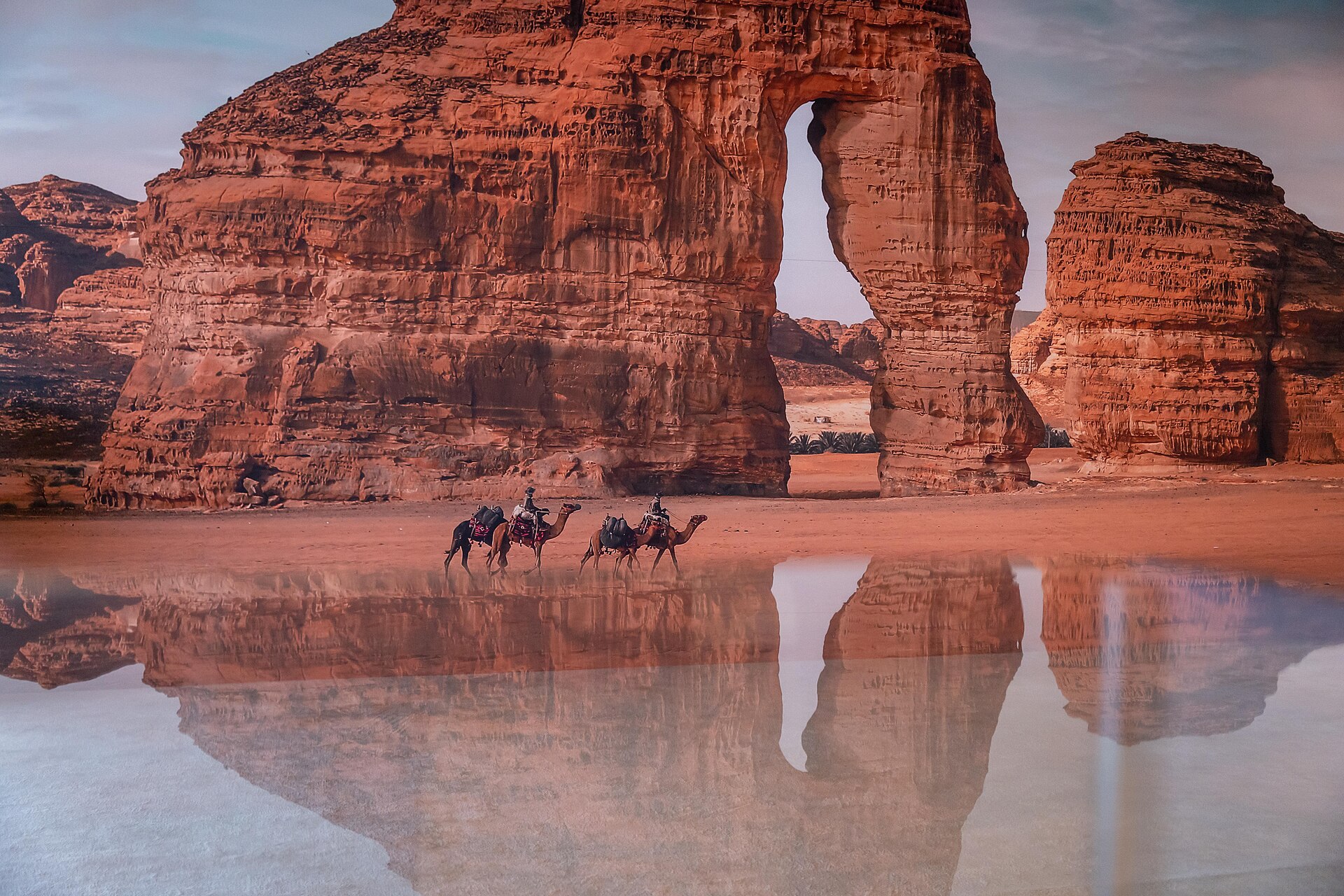
Light window: Arrive 45–60 minutes before sunset. The rock faces roughly west-southwest, meaning the last hour of daylight wraps the formation in deep orange and casts long shadows that give it three-dimensional depth. Sunrise also works but produces cooler, bluer tones.
- GPS: 26.7756°N, 37.9539°E
- Access: Open daily; part of the AlUla visitor experience. Entry is included with a general AlUla Explorer Pass (from 95 SAR / ~$25). No tripod restrictions.
- Best lens: Wide-angle (16–24mm) for the full formation with foreground; 70–200mm for isolating the “trunk” detail.
- Tip: The reflection pool in front of Elephant Rock is seasonal and sometimes artificially maintained. Check conditions before relying on mirror shots.
- Access: Timed-entry tickets required — book through the Experience AlUla platform. The “AlUla Moments” early-access pass (275 SAR / ~$73) grants entry one hour before standard opening, which is ideal for crowd-free golden-hour shooting.
- Drone policy: Drones are prohibited at Hegra without a special permit from the Royal Commission for AlUla.
- Best lens: 24–70mm for the classic full-tomb portrait; 14mm ultra-wide to include the surrounding desert scale.
- GPS: 24.8425°N, 46.1667°E
- Access: 90-minute drive northwest of Riyadh. The last 20 km is an unpaved track that requires a 4WD vehicle — do not attempt in a sedan. No entry fee. No facilities.
- Best lens: Ultra-wide (14–16mm) to convey the scale of the drop; telephoto for isolating cliff-edge silhouettes of other visitors.
- Tip: Bring a headlamp. If you stay for sunset (you should), you will be navigating the unpaved return road in darkness.
- Light window: Arrive 30 minutes before sunset for the golden-to-blue-hour transition. West-facing compositions through the arch frame capture dramatic skies.
- Tip: The glass panels create reflections after dark — bring a lens hood or rubber suction cup to press against the glass for clean night shots.
- GPS: 21.4848°N, 39.1862°E
- Access: Free to walk. Located in central Jeddah, easily reached by Uber or Careem. Some restored houses have interior access (Nassif House Museum is free; Jokhdar House charges a small entry fee).
- Best lens: 35–50mm for street compositions; ultra-wide for looking up at towering facades.
- Tip: The green-painted buildings near Bab Makkah are the most photographed, but the back alleys behind Souq Al Alawi reveal quieter, less curated compositions with laundry lines, cats, and real daily life.
- GPS: 22.9064°N, 41.1375°E
- Access: Approximately 250 km from Taif. A 4WD is required for the final approach. No entry fee. Descending to the crater floor is possible but strenuous (allow 1.5–2 hours for the return hike). Bring at least 3 litres of water per person.
- Drone: This is one of the best drone locations in the Kingdom — the overhead perspective reveals the crater’s perfect circular geometry. No specific restrictions, but fly responsibly and check current Saudi GACA drone regulations.
- Dust protection: Carry a rocket blower and microfibre cloths. Desert wind deposits fine sand on sensors and front elements within minutes. Weather-sealed bodies and lenses earn their premium here.
- Batteries: Extreme heat degrades lithium-ion batteries faster than cold. Carry at least two spares and keep them in an insulated bag, not in direct sun.
- Drone regulations: Saudi Arabia’s General Authority of Civil Aviation (GACA) requires drone registration. Recreational drones under 25 kg are permitted in most areas but banned over crowds, military sites, and heritage zones (including Hegra). Check GACA’s Takamol platform for current permit requirements.
- Tripods: Generally permitted at outdoor sites. Some indoor museums and malls restrict them. No issues at Edge of the World, Elephant Rock, or Al Wahbah.
- Photographing people: Always ask permission before photographing Saudi residents, especially women. Candid street photography of identifiable individuals without consent can result in complaints to police.
- Dress code: Saudi Arabia’s public decency law applies everywhere. Women are not required to wear an abaya but should dress modestly (shoulders and knees covered). Men should avoid sleeveless tops in heritage and religious areas.
- Religious sites: Photography is prohibited inside the two Holy Mosques (Mecca and Medina) during prayer times and in certain areas. Non-Muslims cannot enter Mecca or Medina.
- Military and government buildings: Never photograph military installations, police stations, or government buildings. This is strictly enforced.
- Saudi Arabia Travel Guide 2026 — The complete guide to visiting the Kingdom
- Best Photography Spots in Saudi Arabia — 20 locations with detailed shooting guides
- AlUla Travel Guide — Hegra, Elephant Rock, Dadan, and the ancient oasis valley
- Best Time to Visit Saudi Arabia — Month-by-month climate and light conditions
- Saudi Arabia Weather by Region — Regional conditions that affect shooting schedules
- Saudi Arabia Visa Guide — Every visa type explained
Hegra (Mada’in Salih) — Qasr al-Farid
Saudi Arabia’s first UNESCO World Heritage Site contains 111 Nabataean tombs carved into rose-coloured sandstone, dating from the 1st century BC to the 1st century AD. The standout for photography is Qasr al-Farid — “The Lonely Castle” — a single monumental tomb carved into an isolated boulder, with its upper section deliberately left unfinished. The contrast between the precisely carved lower facade and the rough natural rock above creates a visual tension that photographs beautifully at almost any time of day.
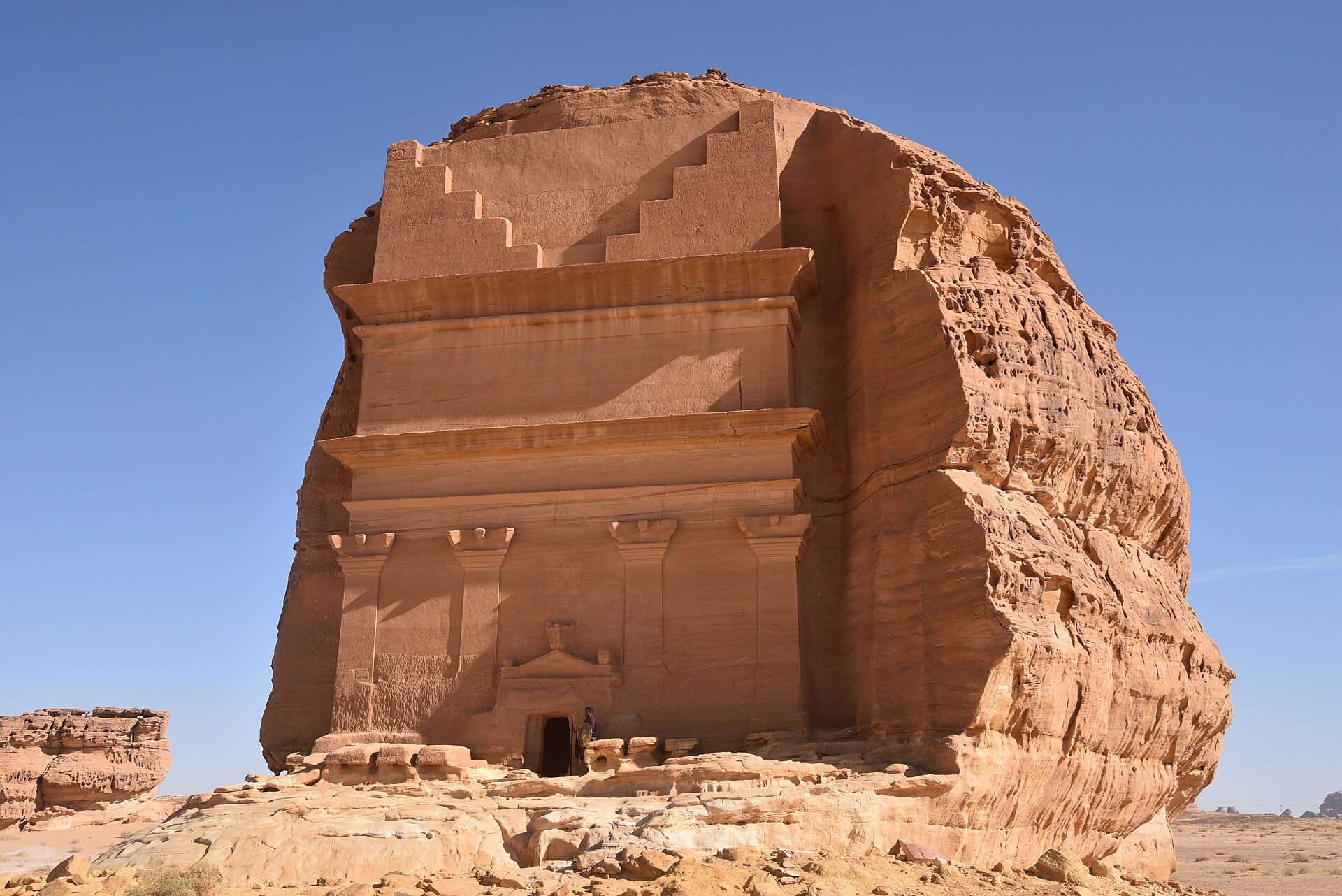
Light window: Late afternoon (3–5 PM in winter) produces the warmest tones. The tomb faces roughly northwest, so afternoon sun lights the carved facade directly. Morning visits offer cleaner skies but the facade sits in partial shadow.
AlUla Old Town and Dadan
Beyond the headline sites, AlUla’s old town — a labyrinth of abandoned mudbrick houses clustered around a 10th-century citadel — offers moody, textured compositions. The ancient Dadanite and Lihyanite tombs at Dadan, carved high into a cliff face, photograph dramatically when the low sun catches their recessed doorways. Both are less crowded than Elephant Rock and reward photographers willing to explore beyond the obvious stops.
Riyadh and Surrounds
Saudi Arabia’s capital is undergoing one of the most ambitious urban transformations on the planet. For photographers, Riyadh offers a compelling split: futuristic skyline shots against the Najd plateau, and raw desert drama less than 90 minutes from the city centre.
Edge of the World (Jebel Fihrayn)
A 300-metre escarpment on the Tuwaiq plateau that drops vertically into an endless flat desert below. The name is not an exaggeration — stand at the rim and you see nothing but empty horizon in every direction. This is the single most dramatic landscape viewpoint within day-trip range of Riyadh, and the images it produces are instantly recognisable.
Light window: Golden hour — the final 45 minutes before sunset — is non-negotiable here. The low sun turns the cliff face orange-gold and casts the valley floor into deep shadow, creating extreme depth. Sunrise works too but requires an overnight camp since the access road is difficult in darkness.
Kingdom Centre Sky Bridge
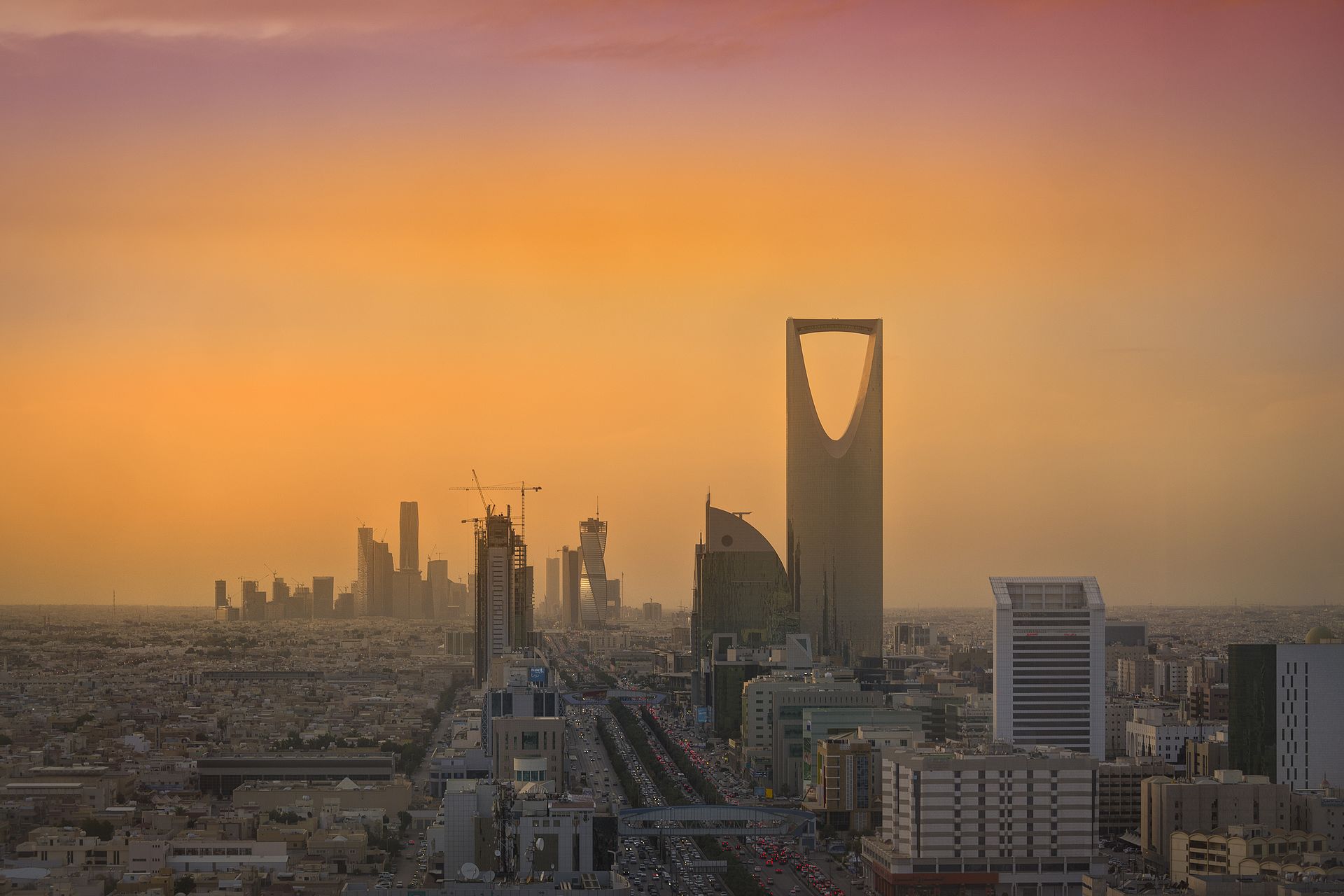
The 99th-floor Sky Bridge observation deck inside Kingdom Centre Tower delivers a 360-degree panorama of Riyadh’s expanding skyline. The tower’s distinctive inverted-arch aperture is itself one of the most recognisable architectural silhouettes in the Middle East. Tickets cost 69 SAR (~$18) and the deck is open until 11 PM, making it one of the few spots in Saudi Arabia where you can shoot blue-hour and night cityscape images from an elevated vantage.
Diriyah (At-Turaif UNESCO Site)
The birthplace of the first Saudi state, Diriyah’s At-Turaif district is a UNESCO World Heritage Site featuring restored mudbrick palaces and mosques in the Najdi architectural style. The ochre walls and geometric patterns photograph beautifully, and the site is dramatically lit after dark. Located just 15 minutes northwest of central Riyadh, it pairs naturally with Kingdom Centre for a single-day photography itinerary. Expect to spend 60–90 SAR (~$16–24) for entry to the heritage zone.
Jeddah: Red Sea Light and Heritage Layers
Saudi Arabia’s western gateway offers a fundamentally different visual palette from the desert interior. Jeddah combines Red Sea coastal light — softer and more humid than the Najd — with one of the oldest continuously inhabited urban centres in the Arabian Peninsula.
Al Balad (Historic Jeddah)
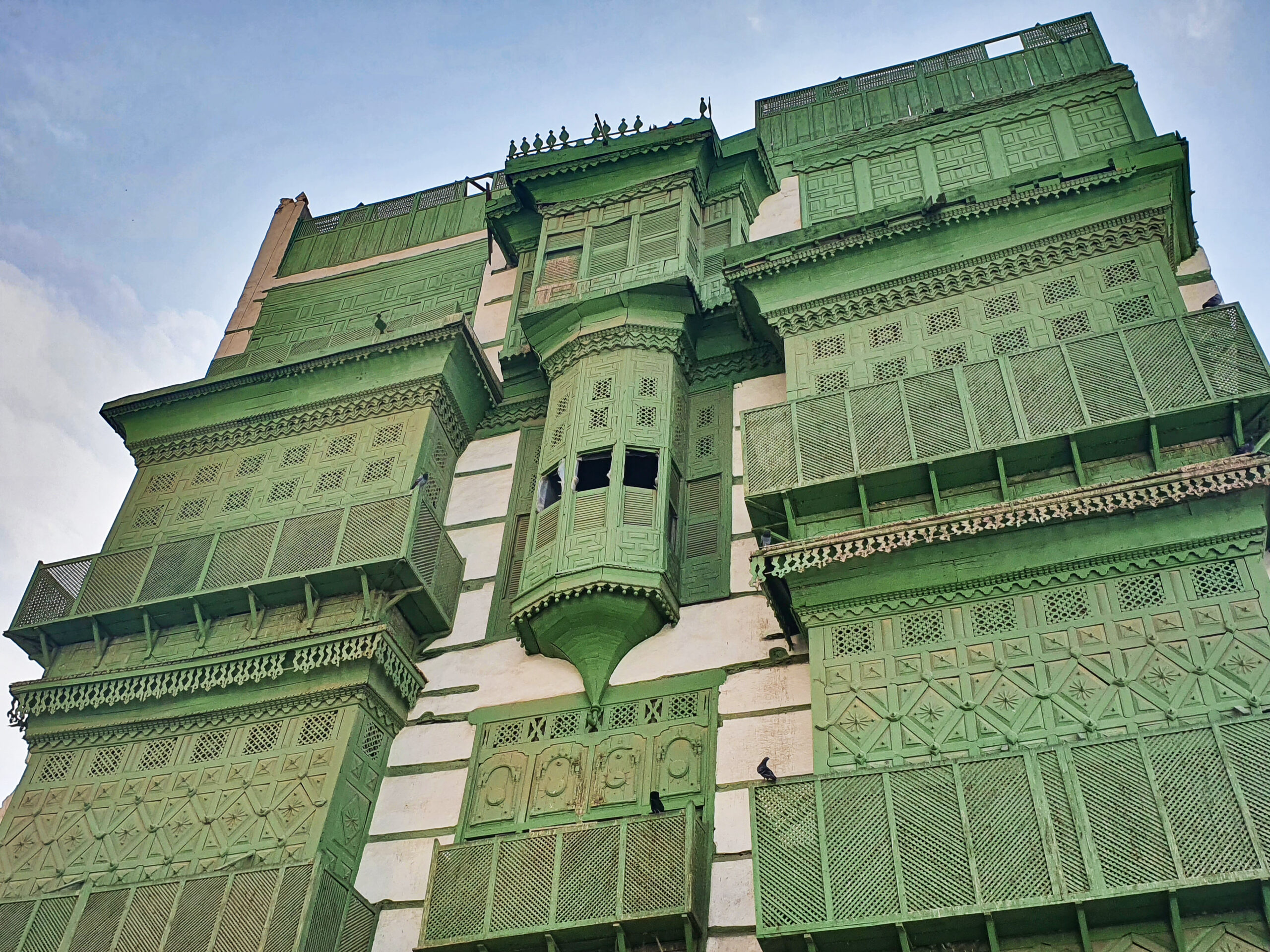
Al Balad is a UNESCO World Heritage Site dating back over 1,400 years, with buildings constructed from Red Sea coral stone and featuring the iconic rawasheen — ornate wooden lattice balconies that jut out from upper floors. The colour palette alone — turquoise, deep green, and terracotta set against white coral walls — makes this one of the most photogenic urban environments in the Middle East.
Light window: Early morning (6:30–8:30 AM) before the narrow streets fill with pedestrians. The east-facing facades catch the first light, and the wooden screens cast intricate shadow patterns across the coral walls. Late afternoon works for west-facing streets.
Jeddah Corniche and King Fahd Fountain
The 30-kilometre waterfront corniche offers clean Red Sea sunset backdrops, public art installations, and the King Fahd Fountain — the world’s tallest water fountain, shooting jets over 300 metres into the air. The fountain operates most evenings after sunset and is best photographed from the corniche south of the fountain, where you can frame the jets against the darkening sky with the Red Sea as foreground.
The Empty Quarter and Desert Landscapes
Al Wahbah Crater
A volcanic maar crater roughly 2 kilometres in diameter and 250 metres deep, with a floor of brilliant white sodium phosphate crystals. The contrast between the dark volcanic rim and the gleaming white basin below creates otherworldly compositions that look like they belong on another planet.
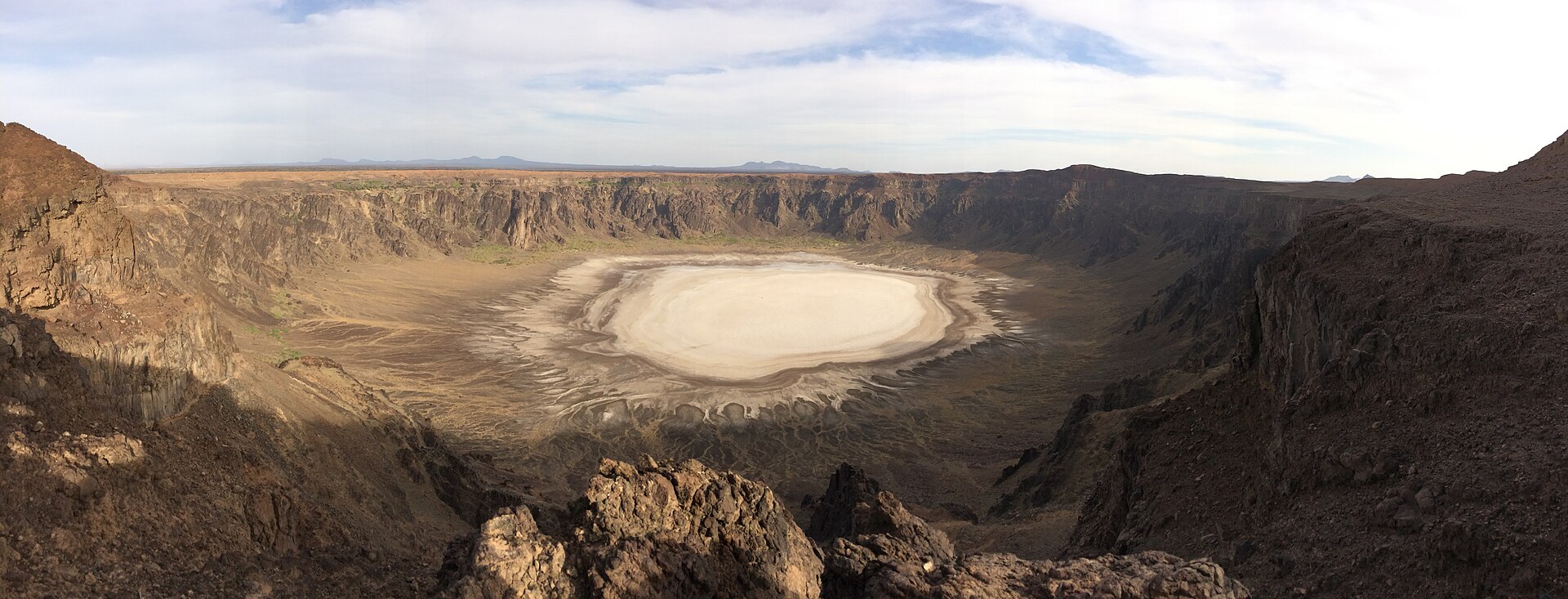
Light window: Sunrise is the definitive moment. The first light illuminates the white floor while the rim remains in deep shadow, creating a natural vignette. By mid-morning the light flattens and the crater loses its drama.
Rub’ al Khali (Empty Quarter) Dunes
The largest contiguous sand desert on Earth covers roughly 650,000 square kilometres across southern Saudi Arabia. The dunes near the Eastern Province entry points and along the Oman border reach heights of 250 metres — taller than most skyscrapers — and their sweeping ridgelines produce some of the most abstract landscape compositions in desert photography. Access requires a guided 4WD tour; operators run from Sharurah, Najran, or through specialised desert tour companies.
Coastal and Island Spots
Umluj — The Maldives of Saudi Arabia
An archipelago of over 100 islands along the Red Sea coast, roughly 540 km north of Jeddah. The turquoise water is genuinely transparent — you can see the sea floor from boat level in many areas — and the white-sand beaches are largely empty. Umluj delivers the tropical paradise aesthetic that content creators typically fly to Southeast Asia for, but with a fraction of the visitor numbers. Boat tours to the outer islands run from the Umluj waterfront (150–400 SAR per person depending on group size and duration).
AMAALA and Sindalah Island
NEOM’s Sindalah Island, which opened to visitors in early 2025, is the first completed component of the giga-project. The resort island offers luxury marina backdrops, turquoise lagoons, and contemporary architecture set against the Gulf of Aqaba’s deep blue water. Access is currently by invitation or through partner hotel bookings. For the Tabuk region’s broader coastline, the mainland beaches near Haql and Sharma offer similar water colours without the exclusivity barrier.
Practical Photography Tips for Saudi Arabia
Light and Timing
| Season | Golden Hour (Approx.) | Conditions |
|---|---|---|
| October–February | Sunrise 6:00–6:30 AM / Sunset 5:15–5:45 PM | Best overall: cooler air, lower haze, soft light persists longer |
| March–April | Sunrise 5:30–6:00 AM / Sunset 6:00–6:30 PM | Good but dust storms (shamal winds) can reduce visibility or create dramatic skies |
| May–September | Sunrise 5:00–5:30 AM / Sunset 6:30–7:00 PM | Extreme heat (40–50°C); shoot only at dawn or dusk; midday light is harsh and bleaching |
Gear and Logistics
Cultural Considerations
Getting Between Spots
Saudi Arabia is vast — Riyadh to AlUla is 900 km by road. Domestic flights are affordable (often 200–500 SAR one-way) and connect all major photography regions. Ride-hailing apps work in cities, but remote locations like Edge of the World and Al Wahbah require a rental 4WD. Budget 200–350 SAR/day for a capable SUV from major rental agencies at airports. International visitors need their home driving licence plus an International Driving Permit, or a Saudi-recognised licence — check current requirements in our visa and entry guide.
Sample 7-Day Instagram Itinerary
| Day | Location | Key Shots |
|---|---|---|
| 1 | Arrive Riyadh | Kingdom Centre Sky Bridge at sunset; Diriyah At-Turaif after dark |
| 2 | Edge of the World (day trip) | Cliff-edge golden hour; star trail opportunity if camping |
| 3 | Fly to AlUla | Elephant Rock sunset; AlUla Old Town afternoon |
| 4 | AlUla | Hegra early-access sunrise; Dadan afternoon light |
| 5 | Fly to Jeddah | Al Balad early morning; Corniche sunset |
| 6 | Day trip to Al Wahbah Crater | Crater rim sunrise (requires overnight near Taif); return via highland scenery |
| 7 | Jeddah / Umluj | Umluj island boat tour or Jeddah street photography; depart |
Budget estimate: This itinerary runs approximately $1,500–$2,500 per person including domestic flights, mid-range hotels, car rentals, and entry fees. See our Saudi Arabia cost guide for detailed breakdowns.