
Jeddah’s traditional markets are among the oldest and most atmospheric in the Arabian Peninsula. For centuries, the port city’s souqs have served as crossroads of trade between Africa, Asia, and the Levant — and that multicultural heritage is still woven into every alleyway. Whether you are building a wider Jeddah travel itinerary or dedicating an afternoon specifically to shopping, the souqs of the Al-Balad historic district and beyond offer everything from 22-karat gold jewellery and hand-blended oud perfumes to fresh Red Sea seafood and Bedouin-woven rugs. This guide covers the best traditional markets in Jeddah, with practical details on what to buy, when to go, and how to bargain.
Best Time to Visit: October to March (cooler evenings); visit after 5 PM for the best atmosphere
Getting There: Most souqs are in Al-Balad, 20 minutes by taxi from King Abdulaziz International Airport
Visa Required: Yes — tourist e-visa
Budget: Free to browse; SAR 50–500 ($13–$133) for souvenirs, spices, and textiles
Must-See: Souq Al Alawi, Souq Qabil, Bab Makkah Market
Avoid: Visiting at midday in summer — temperatures can exceed 40°C; most vendors close until late afternoon on Fridays
Al-Balad: The Historic Heart of Jeddah’s Souqs
Almost all of Jeddah’s most important traditional markets sit within or immediately adjacent to Al-Balad, the UNESCO World Heritage-listed old town inscribed in 2014. The district’s narrow lanes are flanked by coral-stone buildings with ornate wooden balconies known as rawasheen, many dating back centuries. Shopping here is as much about architecture and atmosphere as it is about what you carry home. If you have visited the Jeddah Corniche along the waterfront, Al-Balad is its historic counterpart — the original city that the Corniche grew out from.
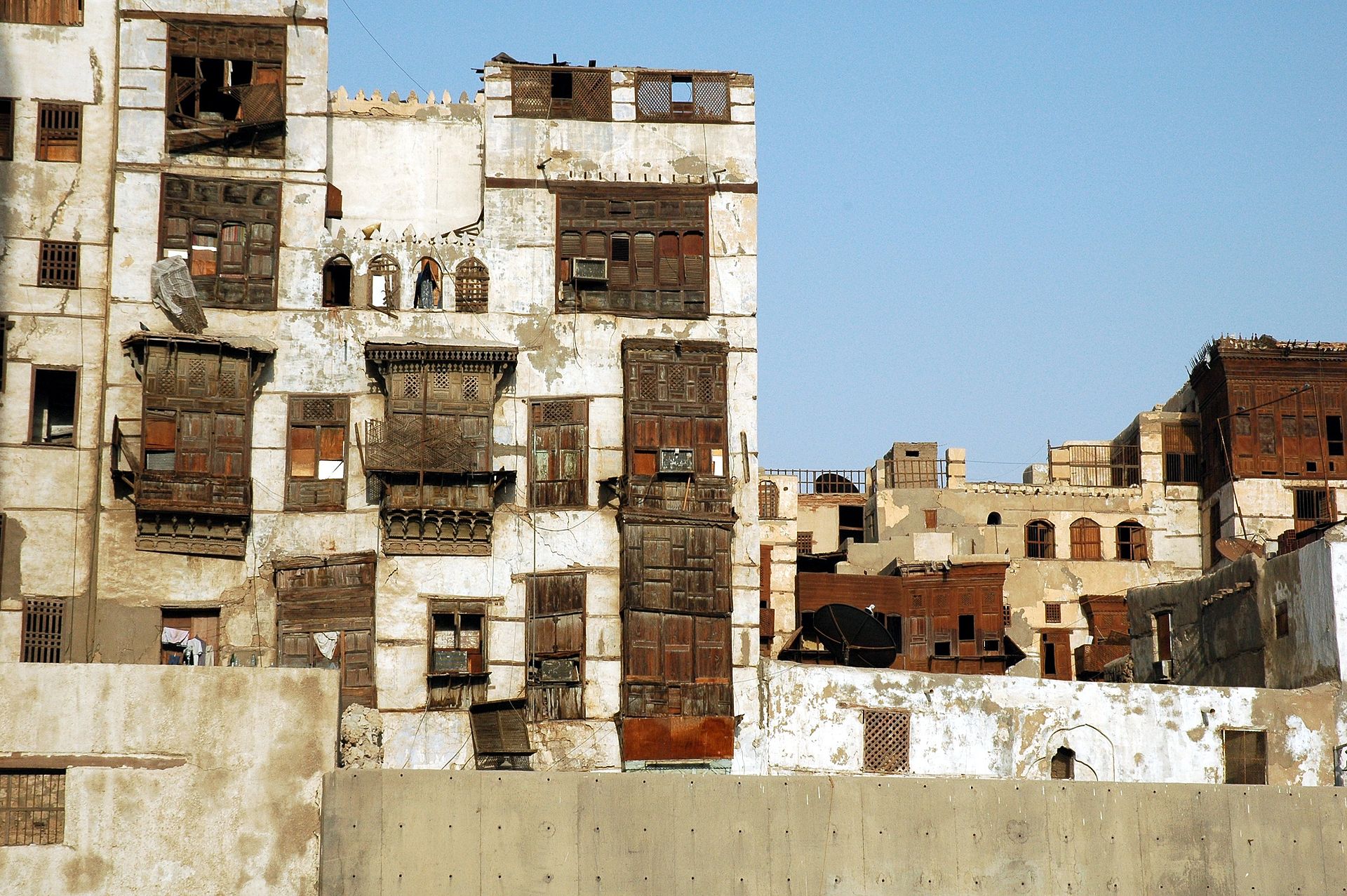
The souqs of Al-Balad are not a single market but a network of interconnected lanes, each historically specialising in a particular trade. Walking from Souq Al Alawi into Souq Qabil and on to the Bedouin Market takes no more than 20 minutes, so it is easy to explore several in a single evening. The best time to arrive is around 5 PM, when the heat breaks, the shops reopen after afternoon prayers, and the alleyways fill with the scent of oud, bukhoor incense, and grilled street food.
Souq Al Alawi — Jeddah’s Largest Traditional Market
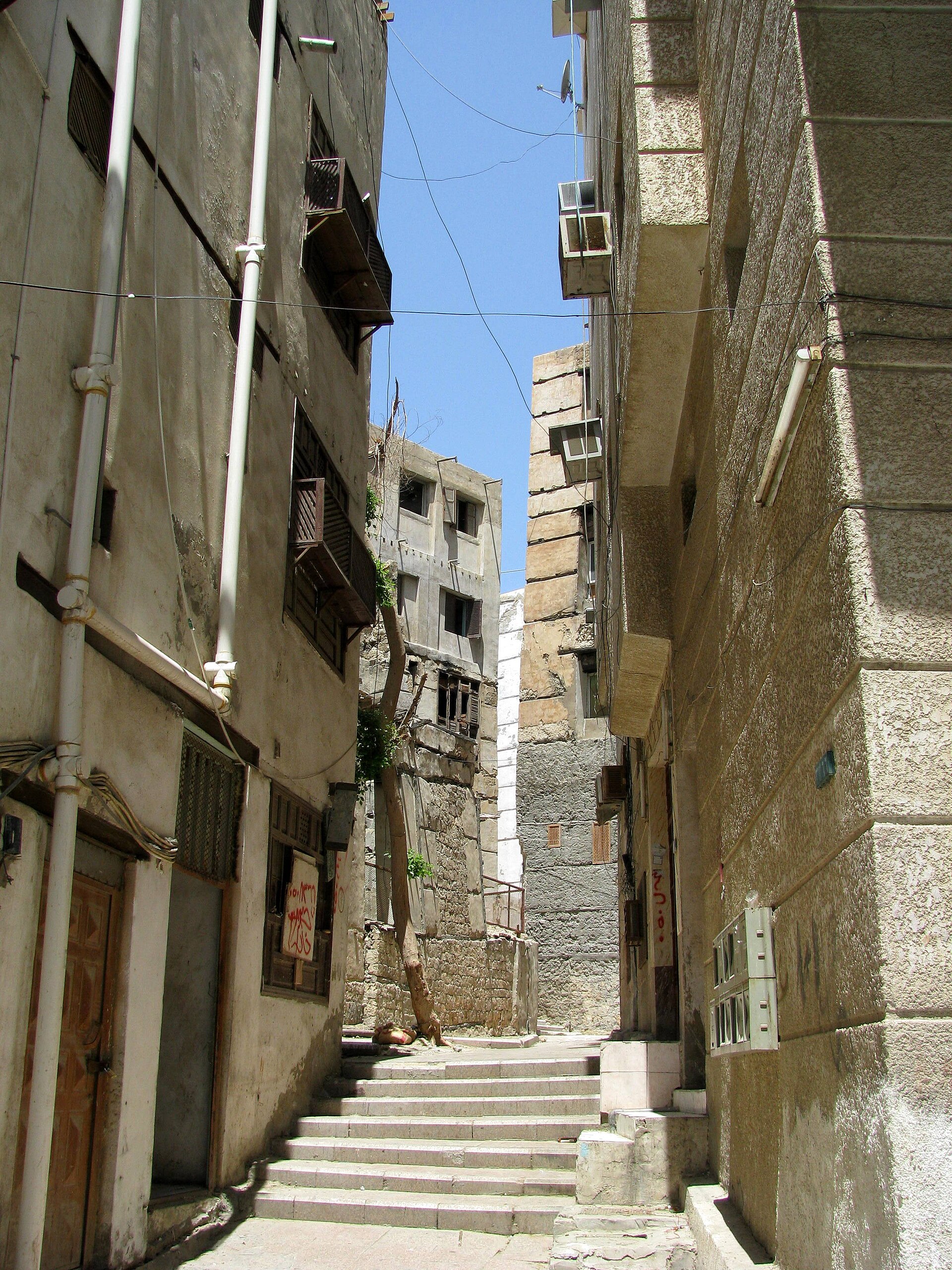
Souq Al Alawi is the heart of traditional shopping in Jeddah and one of the largest souqs in Saudi Arabia. Cutting through the centre of Al-Balad, its main thoroughfare and branching alleyways are lined with hundreds of small shops selling spices, perfumes, textiles, gold jewellery, antiques, and traditional Saudi garments. The souq has operated continuously for generations, and its sensory richness — heaps of turmeric and cardamom, rows of glass perfume bottles, stacks of embroidered fabrics — makes it a photographer’s paradise.
What to Buy at Souq Al Alawi
- Oud and bukhoor: Arabian incense and oud wood chips, sold loose or pressed into discs. Prices start from SAR 20 for basic bukhoor to SAR 500+ for high-grade oud oil.
- Spices: Turmeric, cardamom, saffron, black seed (habbatus sauda), and dried herbs. The section known as Zaqaq Al-Etarah (Herbalist’s Lane) specialises in natural remedies and fragrant herbs.
- Perfumes: Alcohol-free Arabian perfume oils (attar) sold in ornate glass bottles. Vendors will often blend custom scents to order.
- Textiles and garments: Traditional thobes, ghutras (headdresses), and embroidered fabrics imported from India, Indonesia, and East Africa.
- Gold jewellery: A selection of 21-karat and 22-karat gold pieces in traditional Hijazi designs.
- Antiques and curios: Old daggers (janbiya), brass coffee pots (dallah), carved wooden chests, and vintage radios.
- Traditional perfumes: Concentrated oud-based perfume oils and rose water
- Handmade accessories: Beaded jewellery, woven baskets, and embroidered prayer caps
- Spice blends: Pre-mixed Saudi coffee spice (baharat) and hawaij blends
- Souvenirs: Miniature brass dallah coffee pots, fridge magnets, and calligraphy prints
- Thobes: Ready-made and custom-tailored Saudi thobes in white, cream, and grey
- Traditional footwear: Leather sandals and na’al in classic Arabian styles
- Embroidered items: Table runners, cushion covers, and prayer mats with Hijazi patterns
- Incense: Bukhoor discs and sandalwood chips at lower prices than the tourist-facing shops
- Start at 40–50% of the asking price and work toward a middle ground. Vendors expect negotiation and build room into their opening price.
- Be friendly and patient. Haggling in Saudi Arabia is a social exchange, not a confrontation. Accept the offered tea or Arabic coffee — it is a sign of hospitality, not a sales tactic.
- Walk away if the price does not feel right. If the vendor calls you back, you have leverage. If not, the price was probably fair.
- Gold is the exception. Gold prices per gram are fixed nationally. Only the making charge is negotiable.
- Compare across shops. In Souq Al Alawi and Souq Qabil, similar items appear in multiple shops. Check two or three before committing.
- Cash gets better prices. Many small vendors add a surcharge for card payments or simply do not accept them.
- By taxi or ride-hailing: Uber and Careem operate throughout Jeddah. Request drop-off at Bab Makkah or Souq Al Alawi — both are well-known to drivers.
- By car: Parking near Al-Balad is limited during evenings. The multi-storey car park near Bab Makkah is the most reliable option.
- On foot: Once in Al-Balad, everything is walkable. The distance from Bab Makkah to Souq Al Alawi to Nassif House is about 1.5 kilometres.
- Dress modestly. While Jeddah is relatively liberal by Saudi standards, covering shoulders and knees shows respect when visiting traditional markets.
- Keep valuables secure. The souqs are generally safe, but crowded alleyways are a natural environment for pickpockets. Use a crossbody bag or money belt.
- Photograph with permission. Most vendors are happy to be photographed, but ask first — particularly at stalls run by older merchants.
- Respect prayer times. Shops close briefly for each of the five daily prayers. The Asr (afternoon) and Maghrib (sunset) closures are the most noticeable — simply wait 15–20 minutes and everything reopens.
- Stay hydrated. Jeddah’s humidity is punishing. Carry water and take breaks in the shaded tea shops scattered throughout the souqs.
- Jeddah Travel Guide 2026 — The complete guide to Saudi Arabia’s Red Sea gateway
- Jeddah Corniche Guide — 30 kilometres of waterfront promenades, dining, and sea views
- Al Hamra Jeddah — Vintage villas and sea-view cafes in Jeddah’s heritage quarter
- Saudi Arabia Shopping Guide — The best malls, souks, and what to buy across the Kingdom
- Saudi Arabia Travel Guide 2026 — The complete guide to visiting the Kingdom
- Saudi Arabia Visa Guide — Every visa type explained
Practical Details
| Detail | Information |
|---|---|
| Opening hours | 9:00 AM – 10:00 PM (Sat–Thu); 2:00 PM – 10:00 PM (Fri) |
| Location | Souq Al Alawi, Al-Balad, Jeddah 22236 |
| Entry fee | Free |
| Payment | Cash preferred at small stalls; larger shops accept cards |
| Nearest landmark | Nassif House Museum (2-minute walk) |
Tip: Visit Souq Al Alawi in the evening for the best atmosphere. The lantern-lit alleyways, cooler temperatures, and bustling street-food stalls — particularly during Ramadan — create an experience that daytime visits cannot match. Carry cash in small denominations (SAR 10 and SAR 50 notes) as many small vendors do not accept cards.
Souq Qabil — Jeddah’s Oldest Market
Souq Qabil is widely considered the oldest surviving market in Jeddah. Located in the heart of Al-Balad, it is a compact lane — barely 100 metres long — that glows gently under lantern light after dark. Despite its small size, Souq Qabil packs in a dense concentration of vendors selling traditional perfumes, spices, textiles, gold trinkets, and handmade accessories. The souq’s intimacy makes it ideal for visitors who find Souq Al Alawi’s scale overwhelming.
What to Buy at Souq Qabil
| Detail | Information |
|---|---|
| Opening hours | 5:00 PM – 12:00 AM daily |
| Location | Al-Balad, adjacent to Souq Al Alawi |
| Entry fee | Free |
| Best for | Evening browsing, authentic souvenirs |
Bab Makkah Market — Gateway to the Old City
Named after the historic Bab Makkah gate — the monumental stone gateway that once marked the starting point of the pilgrimage road from Jeddah to Makkah — this market surrounds one of Jeddah’s most recognisable landmarks. The gate itself, with its crenellated battlements and three arched openings, has been restored and stands as a free-standing monument ringed by market stalls.
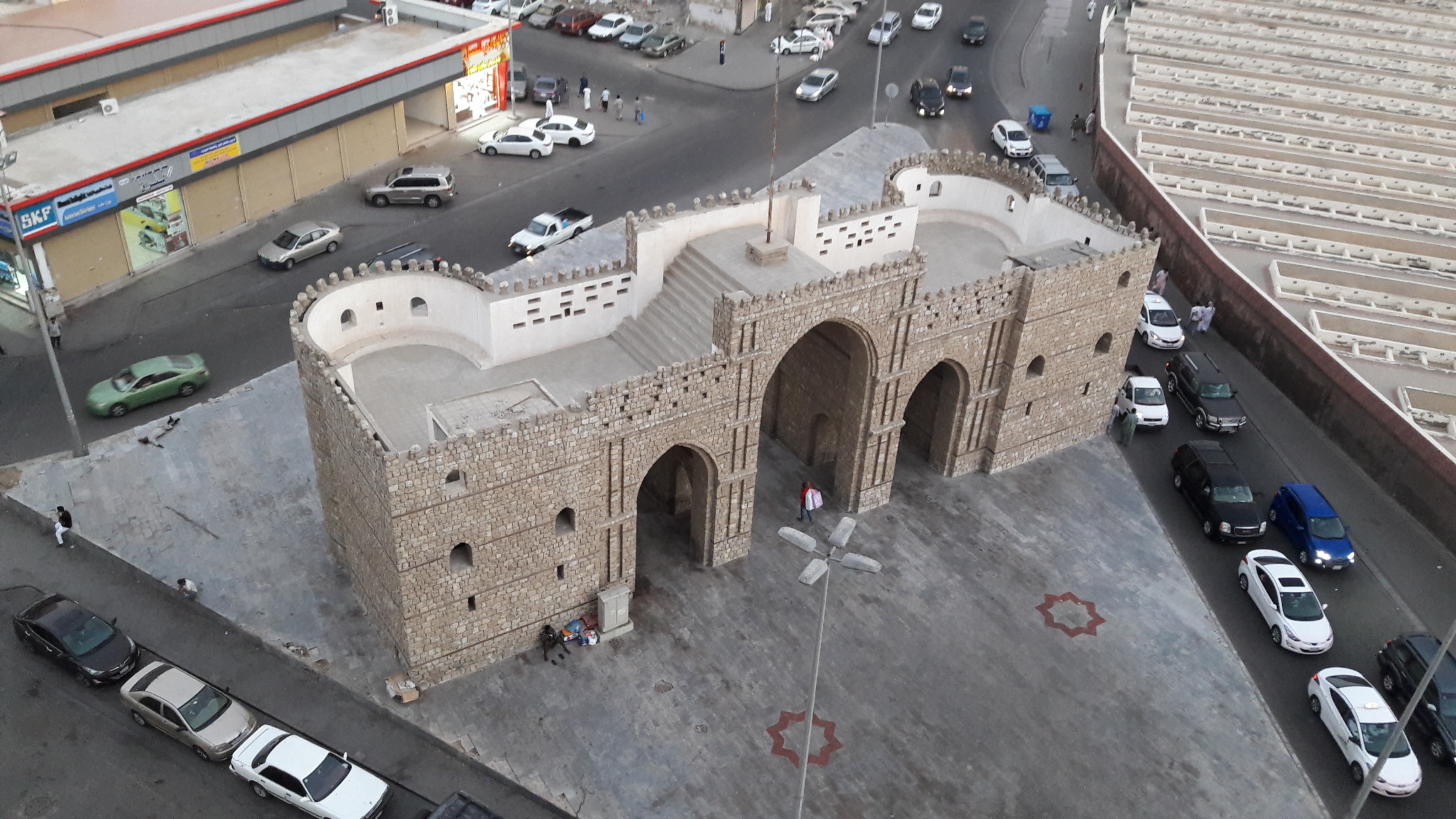
The Bab Makkah Market is more utilitarian than Souq Al Alawi — this is where Jeddah residents come for everyday fabrics, textiles, household goods, and imported electronics at competitive prices. Street vendors display colourful items on open-air stalls, creating a lively, chaotic atmosphere that is closer to a working market than a tourist attraction. For visitors interested in the wider Saudi Arabia shopping experience, Bab Makkah offers an unfiltered look at local commerce.
| Detail | Information |
|---|---|
| Opening hours | 9:00 AM – 10:00 PM (Sat–Thu); 2:00 PM – 10:00 PM (Fri) |
| Location | Near Bab Makkah gate, Al-Balad |
| Best for | Fabrics, textiles, household goods, budget shopping |
Souq Al Nada — Hidden Gem for Traditional Fashion
Souq Al Nada sits between the historic and modern sections of Al-Balad, its alleys painted in soft pastel tones that give it a quieter, more photogenic feel than the larger markets. The souq specialises in men’s traditional fashion — thobes, fabrics for tailoring, and traditional footwear for everyday wear and special occasions. It is also a good spot for spices, incense, and regional brassware at prices lower than Souq Al Alawi.
What to Buy at Souq Al Nada
| Detail | Information |
|---|---|
| Opening hours | 9:00 AM – 10:00 PM (Sat–Thu); 2:00 PM – 10:00 PM (Fri) |
| Location | Al-Balad, between historic and modern sectors |
| Best for | Men’s traditional fashion, quiet browsing |
Tip: Visit Souq Al Nada early morning or late afternoon to avoid crowds. The pastel-painted alleys make for excellent photographs in the golden hour before sunset.
Gabel Street Souq — Perfumes and Gold
Gabel Street Souq (also spelled Qabel) is one of Jeddah’s oldest and most beloved markets, threading through the central historic area. The narrow lanes are saturated with the scent of oud and spices, and the shops here tend to specialise in gold jewellery, perfumes, handmade crafts, and fine textiles. Gabel Street opens later than most markets — typically from 5 PM — and stays open until midnight, making it an ideal evening destination after dinner.
| Detail | Information |
|---|---|
| Opening hours | 5:00 PM – 12:00 AM daily |
| Location | Central historic area, Al-Balad |
| Best for | Gold, perfumes, oud, evening shopping |
Oasis Mall Gold Market
Following the relocation of many gold merchants from the old Al-Kandarah district, Oasis Mall on King Fahd Branch Road in Al-Warood has been reimagined as Jeddah’s primary gold hub. The mall houses dozens of jewellers under one air-conditioned roof, offering everything from delicate bracelets to elaborate bridal sets in both traditional Saudi designs and modern minimal styles. Gold rates in Saudi Arabia are standardised — the price per gram is fixed nationally — so the negotiation at a gold souq centres on the making charge (the craftsmanship fee), which can vary significantly between shops.
Tip: Locally crafted pieces often carry lower making charges than imported designs. Always ask for the making charge separately from the gold weight price, and compare across two or three shops before buying.
Jeddah Fish Market
The Central Jeddah Fish Market is not a place for souvenirs — it is where the city’s restaurants and home cooks come to buy the day’s catch straight from Red Sea fishing boats. Arrive before 7 AM to see the market at its most frenetic: vendors laying out grouper, sea bass, hammour, shrimp, and lobster on crushed ice, while buyers negotiate by weight. On-site cleaning and grilling services mean you can pick your fish and eat it within the hour — a genuinely local experience that most Jeddah travel guides miss.
| Detail | Information |
|---|---|
| Opening hours | 5:00 AM – 9:00 PM daily |
| Best time to visit | 5:00 – 7:00 AM for the freshest selection |
| Best for | Fresh seafood, local experience, budget meals |
Bedouin Market — Handmade Heritage
The Bedouin Market is an open-air market celebrating the craftsmanship of Saudi Arabia’s desert communities. Stalls sell handmade rugs, woven baskets, camel-leather goods, traditional Bedouin jewellery set with turquoise and amber, and hand-stitched clothing. Bargaining is expected and part of the experience — vendors are generally happy to discuss their craft and the origin of their materials. This is one of the few Jeddah markets where you can still find genuinely handmade Saudi products rather than factory imports.
| Detail | Information |
|---|---|
| Opening hours | 9:00 AM – 10:00 PM (Sat–Thu); 2:00 PM – 10:00 PM (Fri) |
| Best for | Handmade rugs, Bedouin jewellery, authentic Saudi crafts |
Dates Wholesale Market
Saudi Arabia produces some of the finest dates in the world, and Jeddah’s Dates Wholesale Market is the place to buy them in bulk at the best prices. The stalls carry all the major Saudi varieties — Ajwa (the prized Madinah date, dark and soft), Sukkary (golden and caramel-sweet), Safawi (semi-dry with a rich flavour), and Medjool (large and fleshy). You will also find date syrup, date-stuffed chocolates, and elegantly packaged gift boxes. Tasting before purchasing is encouraged.
Tip: Ajwa dates from Madinah are the most expensive Saudi variety — expect to pay SAR 80–150 per kilogram. Sukkary dates offer excellent quality at roughly half the price. Bulk purchases of 3 kg or more usually attract a discount.
Nassif House Museum — A Cultural Stop Between Souqs
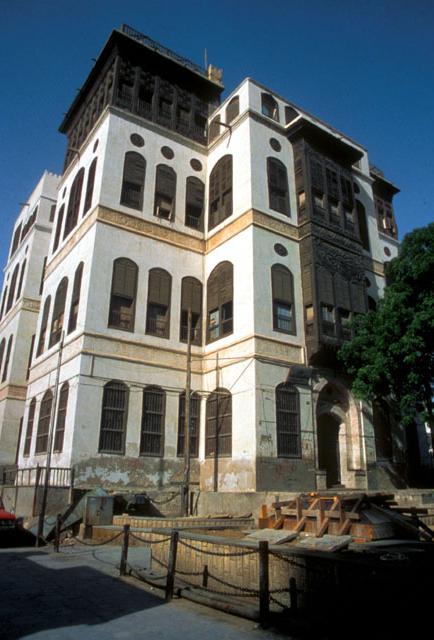
Nassif House (Bait Nassif) stands on the edge of Souq Al Alawi and is worth a 30-minute detour between shopping sessions. Built in the 1880s, this grand five-storey coral-stone merchant’s house hosted King Abdulaziz when he entered Jeddah in 1925. It now operates as a museum and cultural centre, offering a glimpse into the domestic life of wealthy Hijazi merchant families. The building’s ornate rawasheen balconies are among the finest surviving examples in the city. Entry is free. Nearby, the Al-Matbouli House Museum offers a similar window into traditional Jeddah residential heritage.
How to Bargain in Jeddah’s Souqs
Bargaining is a respected tradition in Jeddah’s markets. Here are the key principles:
What to Buy: The Jeddah Souq Shopping List
| Item | Best Souq | Price Range (SAR) |
|---|---|---|
| Oud oil (1 tola / 12ml) | Souq Al Alawi, Gabel Street | 100–2,000+ |
| Bukhoor incense (250g) | Souq Al Alawi | 20–80 |
| Arabian perfume oil | Souq Al Alawi, Souq Qabil | 30–300 |
| Saffron (10g) | Souq Al Alawi (Herbalist’s Lane) | 40–80 |
| 22K gold bangle | Oasis Mall Gold Market | 1,500–5,000+ |
| Ajwa dates (1 kg) | Dates Wholesale Market | 80–150 |
| Handwoven rug | Bedouin Market | 200–1,500 |
| Brass dallah coffee pot | Souq Al Alawi, Souq Qabil | 50–250 |
| Thobe (ready-made) | Souq Al Nada | 80–300 |
| Janbiya dagger (decorative) | Souq Al Alawi | 100–800 |
Getting to Jeddah’s Souqs
Most of Jeddah’s traditional markets are concentrated in the Al-Balad district, roughly 20 minutes by taxi from King Abdulaziz International Airport and 15 minutes from the Jeddah Corniche.
Visitors arriving from abroad will need a Saudi tourist e-visa, which can be obtained online in minutes. For a broader overview of planning your trip, see the Saudi Arabia Travel Guide 2026.
Best Time to Visit Jeddah’s Souqs
Jeddah’s climate is hot and humid year-round, but the souqs are most enjoyable between October and March, when daytime highs drop to a manageable 28–32°C. Regardless of season, the best time to visit any souq is after 5 PM, when the heat breaks, shops reopen after Asr prayers, and the lanes fill with activity.
During Ramadan, the souqs take on a festive atmosphere after iftar (the evening meal breaking the fast). Temporary food stalls transform Souq Al Alawi into an open-air feast, and many shops stay open until well past midnight. For more on visiting during the holy month, see the Ramadan travel guide.
If you are visiting Jeddah during the Hajj season, be aware that the Al-Balad souqs become significantly busier with pilgrims shopping for gifts before or after their journey to Makkah. Prices may be higher, but the energy is extraordinary.