
The National Museum of Saudi Arabia is the Kingdom’s flagship cultural institution and one of the most rewarding stops on any Riyadh travel itinerary. Housed inside a striking sand-dune-inspired building within the King Abdulaziz Historical Center, the museum traces the story of the Arabian Peninsula from the formation of the universe through pre-Islamic civilisations, the birth of Islam, the rise and fall of early Saudi states, and the modern Kingdom. Best of all, admission is free. Whether you are a history enthusiast, a family with children, or a first-time visitor building a wider Saudi Arabia travel plan, this guide covers everything you need to know: galleries, practical tips, opening hours, and how to make the most of your visit.
Best Time to Visit: October to March (cooler weather); weekday mornings for fewer crowds
Getting There: King Faisal Road, al-Murabba district — 10 minutes by taxi from Riyadh city centre; Riyadh Metro Green Line (King Abdulaziz Historical Center station)
Visa Required: Yes — tourist e-visa available online
Budget: Free admission; plan USD 20–40 per day for transport and meals nearby
Must-See: Hall of Man and the Universe, Diriyah scale model, Hajj and Two Holy Mosques gallery
Avoid: Visiting on Friday mornings (museum opens at 2 PM on Fridays); the museum is closed on Sundays
A Brief History of the National Museum
The National Museum opened on 23 January 1999 as the centrepiece of the King Abdulaziz Historical Center, a sprawling cultural campus in the al-Murabba neighbourhood of central Riyadh. The inauguration was timed to mark the centenary of King Abdulaziz ibn Saud’s capture of the Masmak Fortress in 1902 — the event that launched the unification of the modern Kingdom. The Historical Center sits on the grounds of the Murabba Palace compound, which served as King Abdulaziz’s residence and seat of government from 1938 until his death in 1953.
Canadian architect Raymond Moriyama designed the museum building, drawing inspiration from the colours and contours of the Red Sands (Al Ahmar) desert east of Riyadh. The sweeping west façade along Murabba Square was shaped to echo the soft profile of a sand dune, with the overall floor plan forming a crescent oriented toward Makkah. The limestone and glass exterior blends modernist architecture with traditional Najdi design motifs, making the building itself a landmark worth seeing. A major expansion was announced in 2018, adding a new 3,767-square-metre exhibition hall, a 2,285-square-metre theatre, a four-star hotel, and a restaurant.
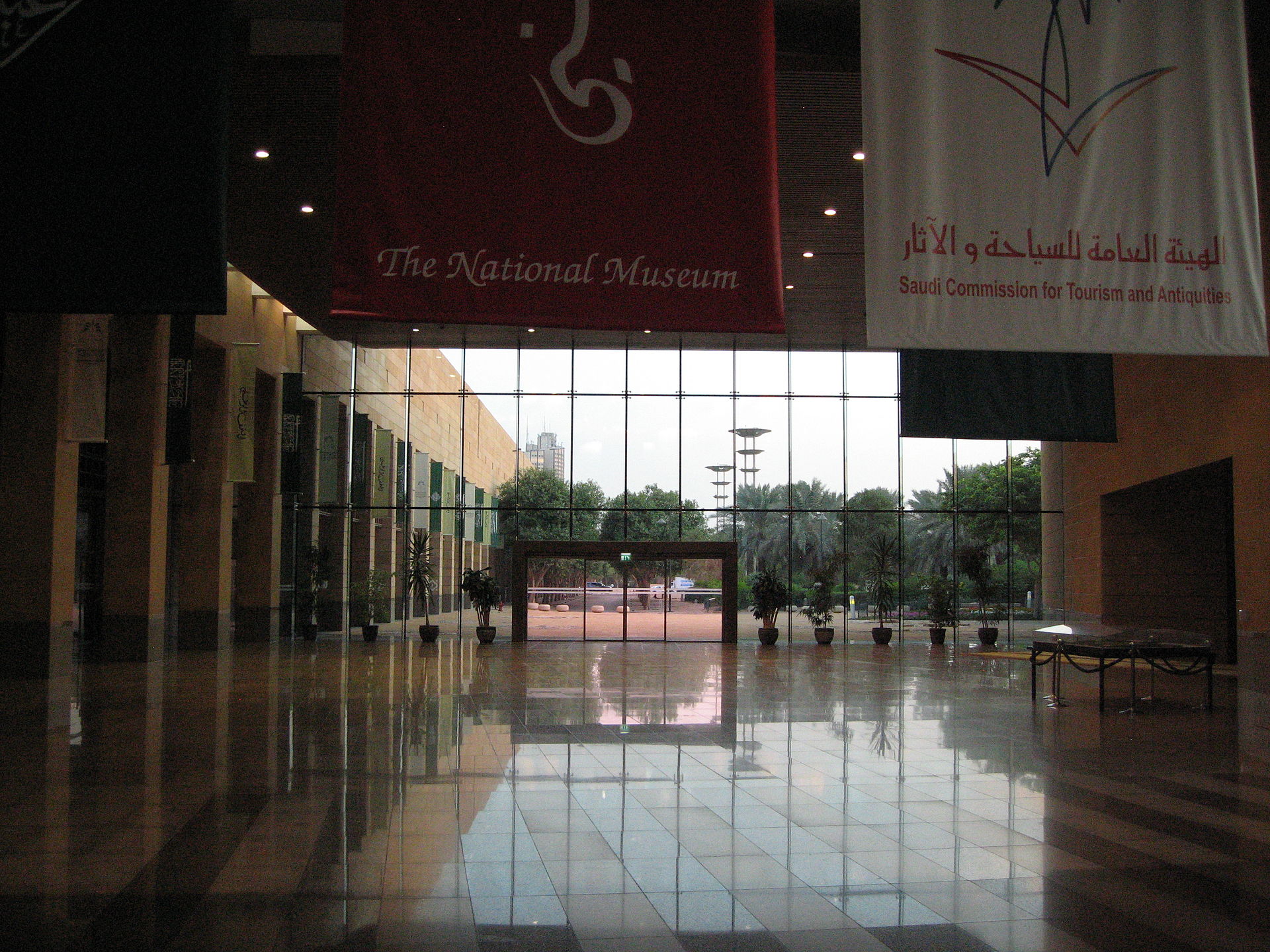
The Eight Galleries — A Complete Walkthrough
The museum’s permanent collection is organised into eight halls that follow a chronological arc from the origins of the universe to the present day. Each gallery uses immersive dioramas, interactive displays, and authentic artefacts to bring its era to life. Plan at least two to three hours to see everything properly.
1. Hall of Man and the Universe
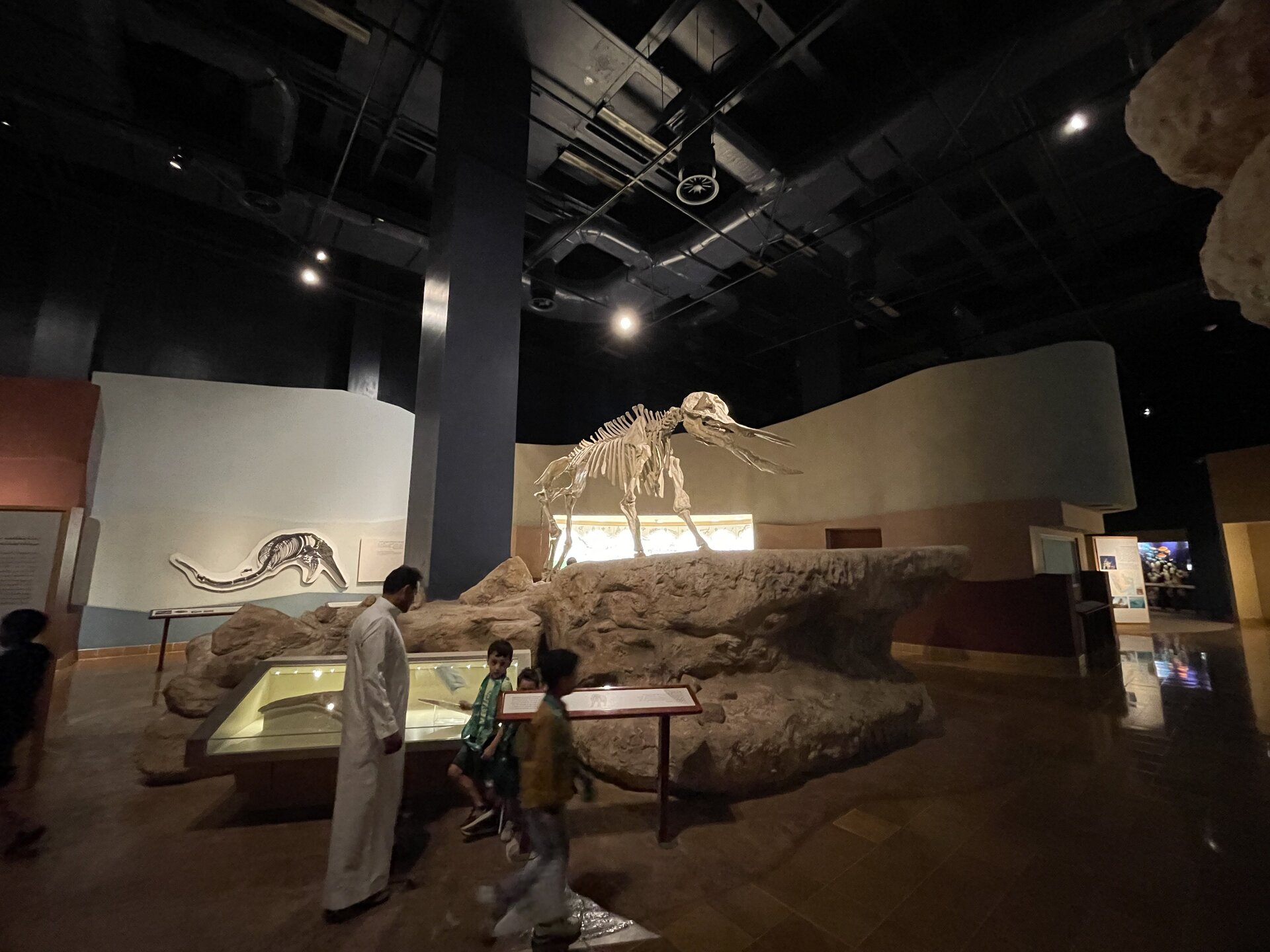
The journey begins with the cosmos. A large meteorite fragment recovered from the Wabar craters in the Rub’ al Khali — one of the most dramatic impact sites on Earth — greets visitors at the entrance. Interactive exhibits explain the solar system, plate tectonics, and the geological formation of the Arabian Peninsula. The gallery’s showpieces are full-size skeletal reconstructions of a Platybelodon (a prehistoric relative of the elephant) and an Ichthyosaur, evidence that this desert landscape was once covered by ancient seas. Younger visitors are particularly drawn to the hands-on geological displays.
2. Hall of the Arab Kingdoms
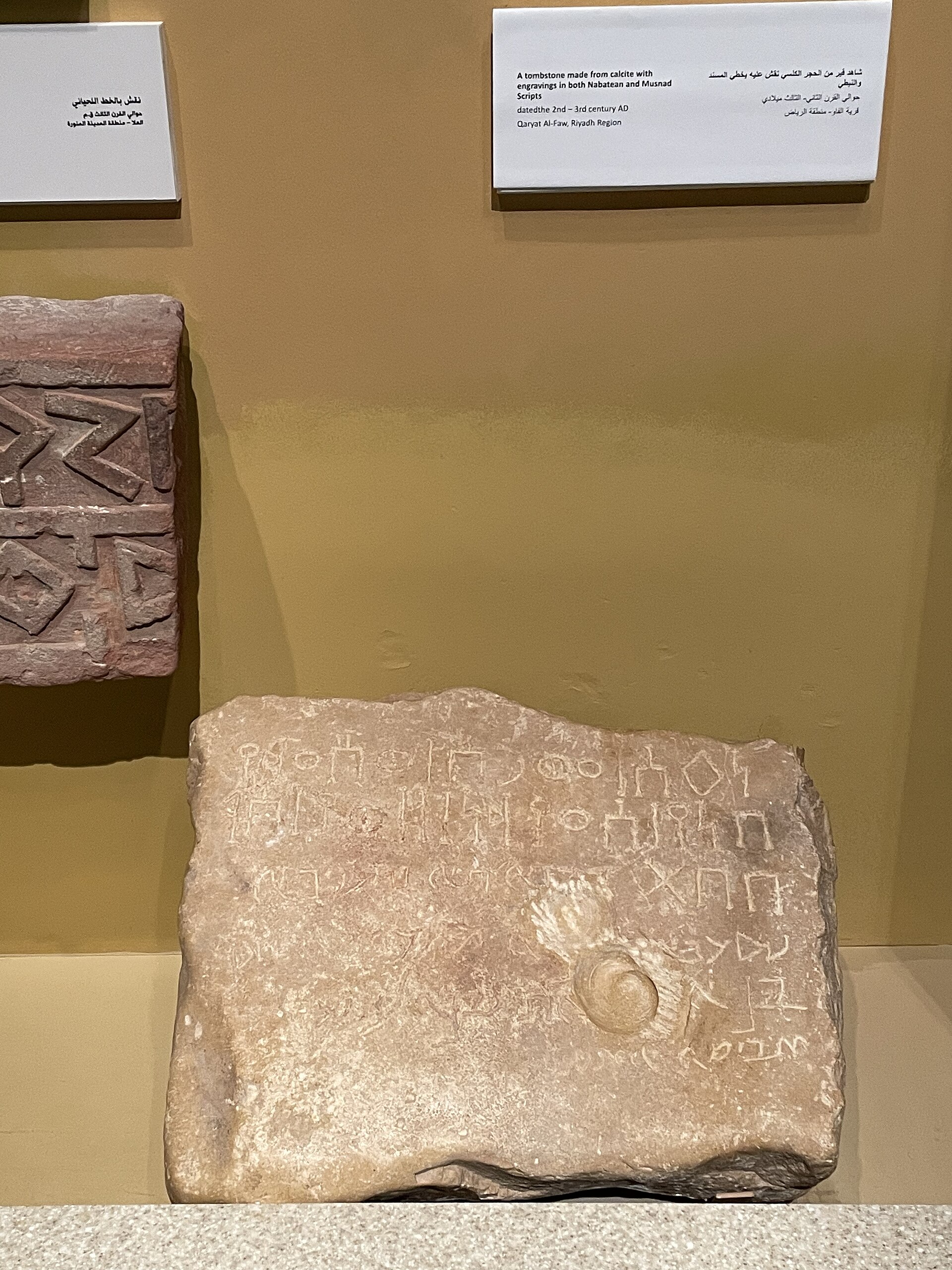
This gallery showcases fourteen pre-Islamic kingdoms that flourished across the Arabian Peninsula from roughly the fifth century BC to the seventh century AD. Artefacts from Qaryat al-Faw, Mada’in Saleh (Hegra), and other archaeological sites illustrate the sophisticated trade networks, scripts, and art that defined these civilisations. Stone inscriptions in Nabataean, Lihyanite, and Ancient South Arabian scripts are displayed alongside pottery, jewellery, and funerary objects. Visitors planning a trip to AlUla will find valuable context here for the Nabataean tombs at Hegra.
3. Hall of the Pre-Islamic Era (Jahiliyyah)
Covering the period immediately before Islam, this gallery explores the social structures, poetry, trade fairs, and religious practices of the Arab tribes. Exhibits illustrate how major cities like Makkah and Yathrib (later Madinah) functioned as commercial and pilgrimage centres. The evolution of Arabic script — from early Musnad to the Kufic forms that would later be used to transcribe the Quran — is traced through inscribed stones and artefacts.
4. Hall of the Prophet’s Mission
Dedicated to the life of the Prophet Muhammad (peace be upon him), this hall covers his lineage, birth in Makkah, early revelations, and the Hijra (migration) to Madinah in 622 CE. The displays are handled with careful reverence, using calligraphy, maps, and contextual artefacts rather than figurative imagery. The gallery provides essential background for visitors who plan to include Hajj or Umrah in their Saudi itinerary.
5. Hall of Islam and the Arabian Peninsula
This gallery picks up the story after the establishment of Islam, covering the Rashidun Caliphate, the Umayyad and Abbasid periods, the Mamluk era, and Ottoman rule over the Hejaz. Rare hand-written Qurans, Kufic inscriptions, and administrative documents are among the highlights. The exhibits trace how the two Holy Mosques in Makkah and Madinah were expanded and maintained across the centuries.
6. Hall of the First and Second Saudi States
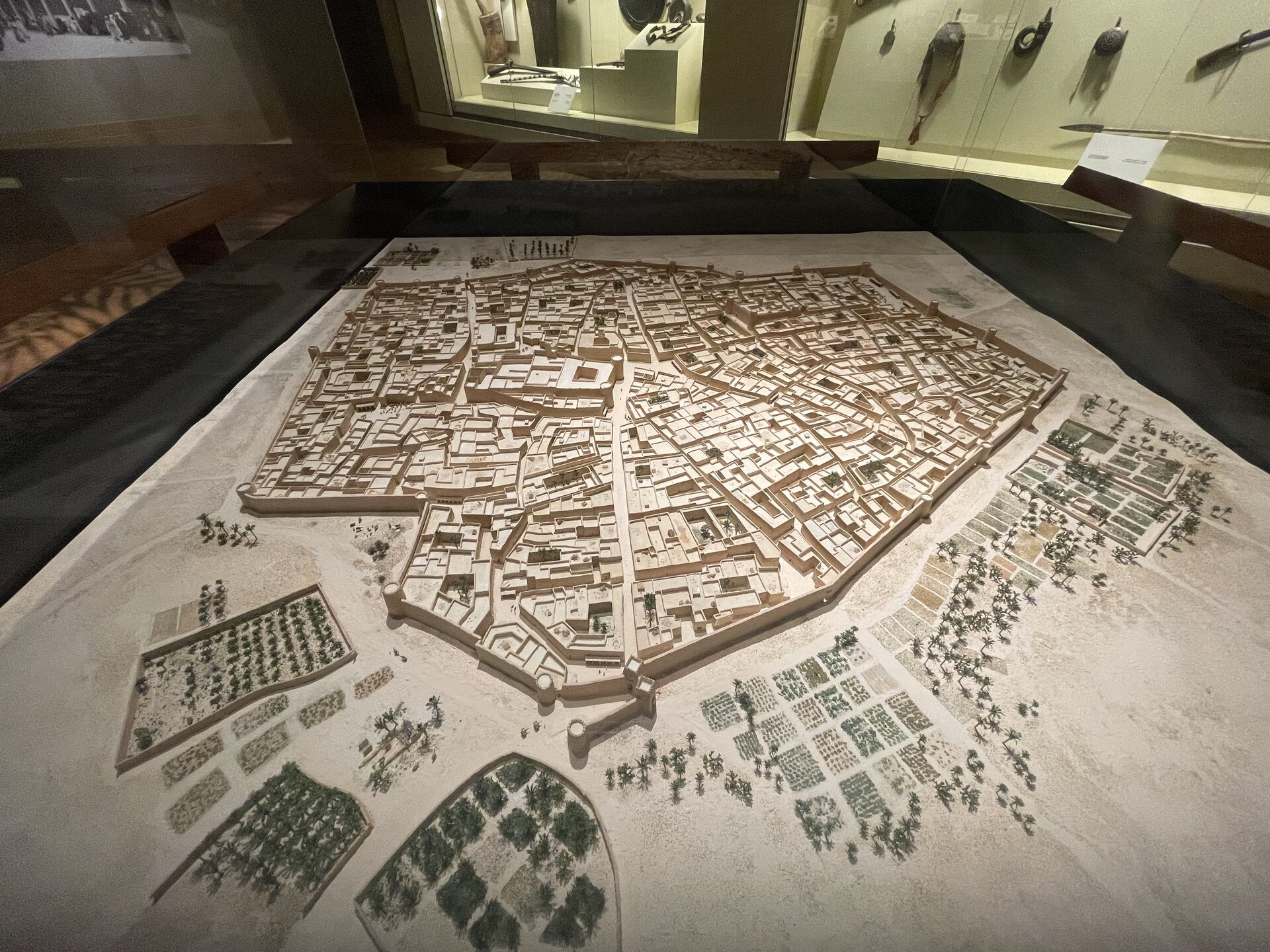
One of the museum’s most visually impressive displays is found here: a large-scale architectural model of Diriyah — the original Saudi capital — viewed through a glass floor. Visitors walk directly over the miniature mud-brick city while examining how the alliance between Imam Muhammad ibn Saud and Sheikh Muhammad ibn Abd al-Wahhab in 1744 laid the foundations for the First Saudi State. Original texts of Kitab al-Tawhid and Kashf al-Shubuhat by Ibn Abd al-Wahhab are also on display. The gallery covers the rise and destruction of the First State, and the subsequent Second Saudi State established in 1824. If you are visiting Diriyah, seeing this model first will give your walking tour far more context.
7. Unification of the Kingdom Hall
This hall is dedicated to King Abdulaziz ibn Saud and his campaign to unite the Arabian Peninsula, beginning with the legendary capture of the Masmak Fortress in Riyadh on 15 January 1902. Photographs, weapons, personal effects, and correspondence chart the thirty-year process of tribal consolidation that culminated in the proclamation of the Kingdom of Saudi Arabia on 23 September 1932. The nearby Masmak Fortress offers a companion experience to this gallery.
8. Hall of Hajj and the Two Holy Mosques
The final gallery focuses on the annual Hajj pilgrimage and the architecture, history, and spiritual significance of the Masjid al-Haram in Makkah and the Prophet’s Mosque in Madinah. A large architectural model of Makkah and its surrounding terrain is the centrepiece. Exhibits explain the rituals of Hajj step by step, making this an excellent primer for anyone planning their pilgrimage. For more on Hajj logistics and planning, see our dedicated Hajj 2026 guide.
Practical Information for Visitors
Opening Hours
| Day | Hours |
|---|---|
| Saturday | 9:00 AM – 7:00 PM |
| Monday – Wednesday | 9:00 AM – 7:00 PM |
| Thursday | 9:00 AM – 10:00 PM |
| Friday | 2:00 PM – 10:00 PM |
| Sunday | Closed |
Tip: Thursday evenings are popular with local families. For the quietest experience, visit on a weekday morning between 9 and 11 AM. During Ramadan, hours may change — check the Ministry of Culture website before your visit.
Tickets and Admission
Admission to the National Museum is free for all visitors. There is no need to book in advance for general entry, although tickets for special temporary exhibitions or guided tours can be reserved through the official Ministry of Culture portal. Photography is permitted in most galleries, but flash photography and tripods are not allowed.
Getting There
The museum is located on King Faisal Road in the al-Murabba district, roughly 3 kilometres north of Riyadh’s commercial centre along Olaya Street. The Riyadh Metro Green Line (Line 3) serves the King Abdulaziz Historical Center station, which is a short walk from the museum entrance. Taxis and ride-hailing apps (Uber, Careem) are widely available; the journey from central Riyadh hotels takes around 10–15 minutes outside rush hour. Free parking is available within the Historical Center grounds.
International visitors will need a Saudi tourist e-visa, which can be obtained online in minutes for citizens of over 60 eligible countries.
What to Bring
- Comfortable shoes — the museum covers a large area across all eight galleries
- A light jacket — the air conditioning is strong inside, even when temperatures outside exceed 40°C
- Water — there are water fountains inside, but carrying a bottle is wise, especially in summer
- Camera or smartphone — photography is allowed in most halls
Visiting with Children
The National Museum is one of the most child-friendly attractions in Riyadh. The Hall of Man and the Universe, with its dinosaur-era skeletons, meteorites, and interactive geological displays, is a natural highlight for younger visitors. Several galleries include touchscreen stations and multimedia presentations designed for children. The open parkland of the Historical Center grounds offers space to run and play between gallery visits. There is no dedicated children’s cafeteria, but the museum shop and nearby cafes cater to families.
The King Abdulaziz Historical Center
The museum sits within the larger King Abdulaziz Historical Center, a cultural campus that is worth exploring in its own right. Key sites within the complex include:
- Murabba Palace — the former residence and administrative headquarters of King Abdulaziz, now restored and open to visitors. The palace’s traditional Najdi architecture contrasts beautifully with the museum’s modern design.
- King Abdulaziz Library — a research library with collections focused on Saudi history, Arabic manuscripts, and Islamic scholarship.
- Al-Wadi Park and Al-Madi Park — landscaped green spaces surrounding the complex, popular with families in the evenings. The parks include walking paths, fountains, and shaded seating areas.
- King Abdulaziz Lecture Hall — hosts cultural events, film screenings, and public lectures throughout the year.
Planning Tip: Allow a full half-day (4–5 hours) to explore both the museum and the surrounding Historical Center grounds. Combine it with a visit to the nearby Masmak Fortress for a comprehensive day of Riyadh history.
Nearby Attractions in Riyadh
The museum’s central location makes it an ideal base for exploring other Riyadh landmarks:
- Masmak Fortress — the mud-brick citadel where King Abdulaziz launched his campaign to unify the Kingdom, located 4 km south in the historic Dira district.
- Kingdom Centre Tower — Riyadh’s most iconic skyscraper, with a Sky Bridge observation deck offering panoramic views of the city.
- Diriyah — the UNESCO-listed ruins of the First Saudi State’s capital, 20 minutes northwest of the museum. Seeing the museum’s Diriyah model first enhances the on-site experience.
- Riyadh Boulevard — the capital’s entertainment and dining district, particularly lively during Riyadh Season events.
Tips for Getting the Most Out of Your Visit
- Start early. Arrive when the museum opens at 9 AM on a weekday to have the galleries largely to yourself for the first hour.
- Follow the chronological order. The eight halls are designed to be experienced sequentially. Starting with Hall 1 (Man and the Universe) and ending with Hall 8 (Hajj and the Two Holy Mosques) gives the narrative its full impact.
- Use the audio guide. Audio guides are available in Arabic, English, and other languages. They add valuable context that the exhibit labels alone do not provide.
- Combine with Murabba Palace. The palace is a 5-minute walk from the museum exit and provides a tangible connection to the Unification era covered in Hall 7.
- Check for temporary exhibitions. The museum regularly hosts special exhibitions on themes ranging from contemporary Saudi art to archaeological discoveries. These are displayed in two dedicated galleries and are sometimes ticketed separately.
- Thursday evenings for atmosphere. If you prefer a livelier visit, Thursday evenings (open until 10 PM) bring a festive local energy, with families filling the parks and cafes around the Historical Center.
Where to Eat Nearby
The al-Murabba district and surrounding streets offer a range of dining options:
- Globe Restaurant (King Faisal Road) — international buffet with views of the Historical Center grounds
- Najd Village (off King Fahad Road, 10 minutes by car) — traditional Najdi cuisine served in a restored heritage house, a fitting complement to a museum-focused day
- Al Baik — Saudi Arabia’s beloved fast-food chain has several branches within a short drive; ideal for a quick, affordable meal
Accessibility
The museum is wheelchair accessible, with ramps and lifts connecting all gallery levels. Wheelchairs are available on request at the main entrance. The grounds of the Historical Center are mostly flat and paved, making them navigable for visitors with mobility needs. Restrooms are available on every floor.
Explore More Saudi Arabia Travel Guides
- Riyadh Travel Guide 2026 — The complete guide to exploring Saudi Arabia’s capital city
- Masmak Fortress Riyadh — The mud-brick citadel where the modern Kingdom was born
- Diriyah — UNESCO-listed capital of the First Saudi State, just outside Riyadh
- Kingdom Centre Tower — Riyadh’s iconic skyscraper and Sky Bridge observation deck
- Saudi Arabia Travel Guide 2026 — The complete guide to visiting the Kingdom
- Saudi Arabia Visa Guide — Every visa type explained