
Saudi Arabia has undergone one of the most dramatic cultural transformations of any country in the 21st century. In less than a decade, the Kingdom has built world-class museums, launched internationally recognised biennales, installed over a thousand public artworks across its cities, and attracted the likes of James Turrell and teamLab to create permanent installations in its deserts and historic districts. Whether you are planning a broader Saudi Arabia travel itinerary or travelling specifically for art, this guide covers where to go, what to see, and when to visit for the best of the Kingdom’s rapidly expanding creative scene.
Best Time to Visit: November to April (art season peaks January–February)
Getting There: Fly to Riyadh (RUH) for galleries and biennales, Jeddah (JED) for the Islamic Arts Biennale and public art, or AlUla (ULH) for Desert X and land art
Visa Required: Yes — tourist e-visa available online
Budget: $80–$200/day depending on city and accommodation
Must-See: Diriyah Contemporary Art Biennale, Desert X AlUla, Noor Riyadh light festival
Avoid: Visiting June–September when extreme heat (40–50°C) shuts down outdoor art events
Why Saudi Arabia for Art?
The speed of Saudi Arabia’s cultural build-out has few parallels. The Ministry of Culture, established by Royal Decree in June 2018, now operates eleven specialised commissions covering everything from film to fashion to visual arts. Under Vision 2030, the government aims to grow the cultural sector’s GDP contribution to three per cent — and the investment is visible everywhere, from the mirrored concert hall of Maraya in AlUla to the sprawling JAX District arts campus in Diriyah.
For visitors, the practical effect is that Saudi Arabia now offers a density of art experiences that rivals established destinations. Many are free. The Islamic Arts Biennale, Noor Riyadh, and Desert X AlUla all charge no admission. Galleries in Riyadh and Jeddah are overwhelmingly free to enter. And unlike older art capitals, Saudi’s cultural infrastructure is new — the spaces are architecturally striking, well-maintained, and designed for contemporary audiences.
Riyadh: The Capital’s Gallery Belt and Public Art
JAX District, Diriyah
The single most important art destination in Saudi Arabia is the JAX District in Diriyah, on the northwestern edge of Riyadh. This repurposed industrial complex houses the Saudi Arabia Museum of Contemporary Art (SAMoCA), the country’s first museum dedicated to contemporary art, which opened in 2023 with a permanent collection and rotating temporary exhibitions. SAMoCA is open Monday to Thursday from 10am to 10pm and Friday to Saturday from 4pm to 10pm.
JAX District is also the venue for the Diriyah Contemporary Art Biennale, organised by the Diriyah Biennale Foundation. The third edition, running from 30 January to 2 May 2026 under the theme “In Interludes and Transitions,” features over 70 artists from across the world, including Pio Abad, Raven Chacon, Rahima Gambo, and Petrit Halilaj. Artistic directors for this edition are Nora Razian and Sabih Ahmed. Tickets are available at biennale.org.sa.
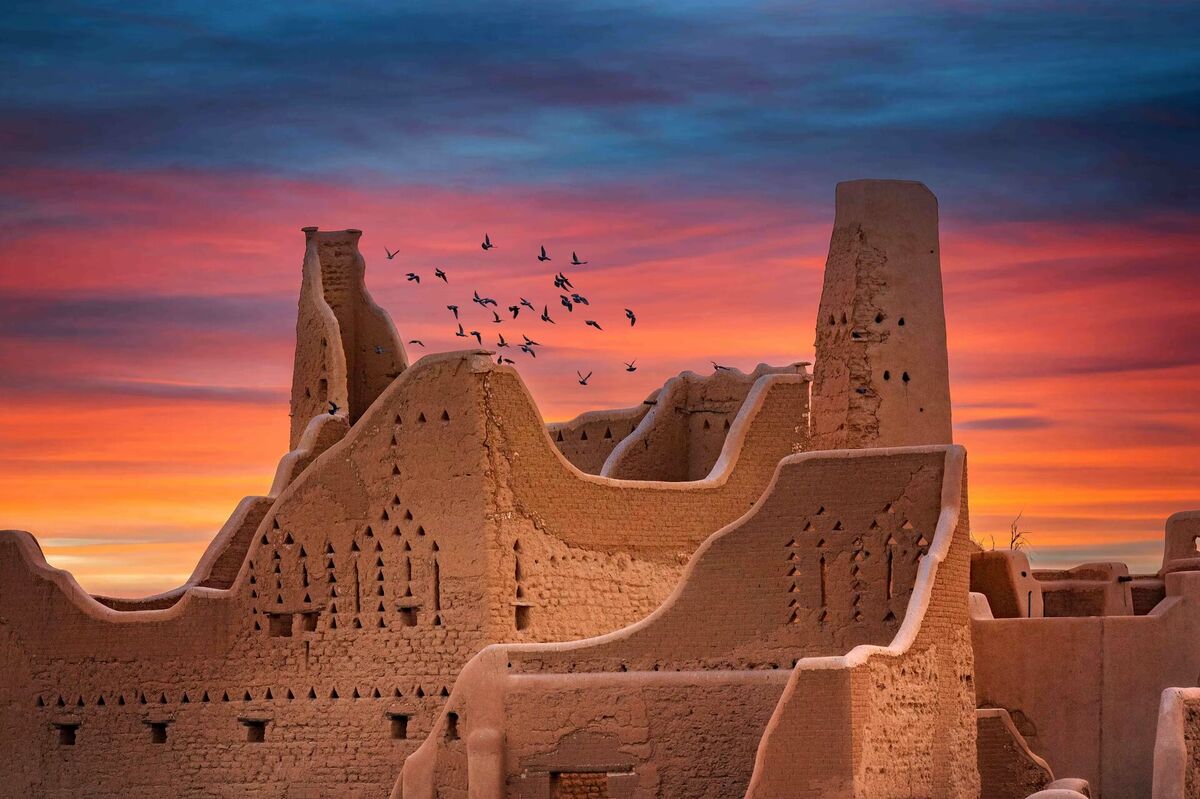
The wider Diriyah development, backed by $62.2 billion from the Public Investment Fund, includes the newly launched Diriyah Art Futures (DAF) — a digital art institute with immersive exhibition spaces, studios, and production labs that opened in late 2024. It sits within the UNESCO World Heritage Site of At-Turaif, making the area a unique intersection of Najdi mud-brick heritage architecture and cutting-edge digital art.
ATHR Gallery, Saudi Arabia’s most internationally recognised commercial gallery (founded in Jeddah in 2009), also operates a venue at JAX District, representing both local and international contemporary artists.
Riyadh’s Inner-City Galleries
Beyond Diriyah, Riyadh’s gallery scene clusters along the Olaya–Takhassusi corridor. Key stops include:
- Naila Art Gallery — Al Takhassosi Street, Building 247. One of the Kingdom’s most established commercial galleries with over 300 exhibitions to its name. Open Saturday to Thursday, 2pm–10pm. Phone: +966 11 880 5352.
- L’Art Pur Foundation — Takhassusi Street. A hybrid gallery and museum with approximately 540 square metres of exhibition space, active since 1999, focusing on emerging Saudi artists.
- Lakum Artspace — part of the inner-city gallery belt in the Olaya/Takhassusi area.
- Al Mousa Centre — Olaya. A repurposed shopping mall housing approximately 20 galleries under one roof, making it the easiest single stop for gallery-hopping in Riyadh.
Riyadh Art Program: 1,000+ Public Works
The Riyadh Art program, managed by the Royal Commission for Riyadh City, has installed over 1,000 artworks across the capital — sculptures, murals, and interactive pieces in parks, metro stations, roundabouts, and along the Sports Boulevard. The Tuwaiq Sculpture symposium, held annually in January–February, invites international artists to create large-scale works in open-air studios. The public can watch the creative process unfold. The sixth edition (January–February 2025) was themed “From Then to Now,” and its selected sculptures are now permanently installed at Roshn Front, SEDRA Community, and Sports Boulevard.
Noor Riyadh: The World’s Largest Light Art Festival
Every November–December, Noor Riyadh transforms the capital into a canvas of light. Billed as the world’s largest light art festival, the fifth edition (November 20 to December 6, 2025) featured over 60 installations by 59 artists from 24 countries under the theme “In the Blink of an Eye.” The event is entirely free and spans multiple city locations. If you are planning a Riyadh trip in late November or early December, Noor Riyadh alone justifies the timing.
Art Week Riyadh
Launched in April 2025, Art Week Riyadh is the Kingdom’s answer to Art Basel and Frieze. The inaugural edition brought together 45 local, regional, and international galleries at JAX District with satellite events across the city, including exhibitions, artist talks, film screenings, and studio visits. The 2026 edition featured 32 galleries. Held annually in April, it anchors the tail end of Riyadh’s art season.
Jeddah: Open-Air Museum and Immersive Art
The Jeddah Sculpture Museum
Jeddah has been a city of public art since the 1970s, when Mayor Mohamed Said Farsi launched an ambitious beautification programme that brought monumental works by Henry Moore, Joan Miró, Alexander Calder, and other international sculptors to the city’s streets and roundabouts. The 30-kilometre Jeddah Corniche functions as an open-air sculpture museum, with the Al Hamraa section alone housing 20 monumental works within a seven-square-kilometre park.
Recent additions have kept the tradition alive. In 2024, a 16,000-square-metre painted walkway was unveiled along the Jeddah Art Promenade, earning a Guinness World Record for the longest pavement painting.
teamLab Borderless Jeddah
Opened in June 2024, teamLab Borderless Jeddah is a permanent immersive digital art museum located at Culture Square near the Alarbaeen Lagoon in the Historic Jeddah District. A collaboration between the Ministry of Culture and Tokyo-based teamLab, it is only the second permanent teamLab Borderless museum in the world (after the Tokyo original).
Hours are Saturday to Wednesday 1pm–9pm, Thursday to Friday 3pm–midnight, closed Mondays. Tickets start from SAR 50 (~$13 USD) for a single pass, with family packages at SAR 450 and VIP experiences at SAR 8,000. Book at teamlab-jeddah.com.
Islamic Arts Biennale
The Islamic Arts Biennale, also organised by the Diriyah Biennale Foundation, takes place in Jeddah in alternating years with the Diriyah Contemporary Art Biennale. The second edition ran from 25 January to 25 May 2025 under the title “And All That Is In Between,” held in the cavernous Western Hajj Terminal at King Abdulaziz International Airport — a building designed by SOM that is itself an architectural landmark. The exhibition featured over 500 historical objects and 29 contemporary art commissions. Admission is free.
Jeddah Galleries
Jeddah’s gallery scene centres on a few key spaces:
- ATHR Gallery (flagship) — Saudi Arabia’s most internationally recognised commercial gallery, founded in 2009 and representing leading Saudi and regional artists.
- Darat Safeya Binzagr — A cultural centre dedicated to preserving Saudi and Hijazi heritage through art, named after pioneering Saudi artist Safeya Binzagr.
- Ba-Ashen House Museum — In the UNESCO-listed historic Al-Balad district, this restored Ottoman-era merchant house hosts rotating art exhibitions in a heritage setting.
The Jeddah Old Town (Al-Balad), itself a UNESCO World Heritage Site, is walkable and adjacent to both teamLab Borderless and the Corniche art promenade — making it possible to combine heritage architecture, digital art, and open-air sculpture in a single day.
AlUla: Land Art in the Desert
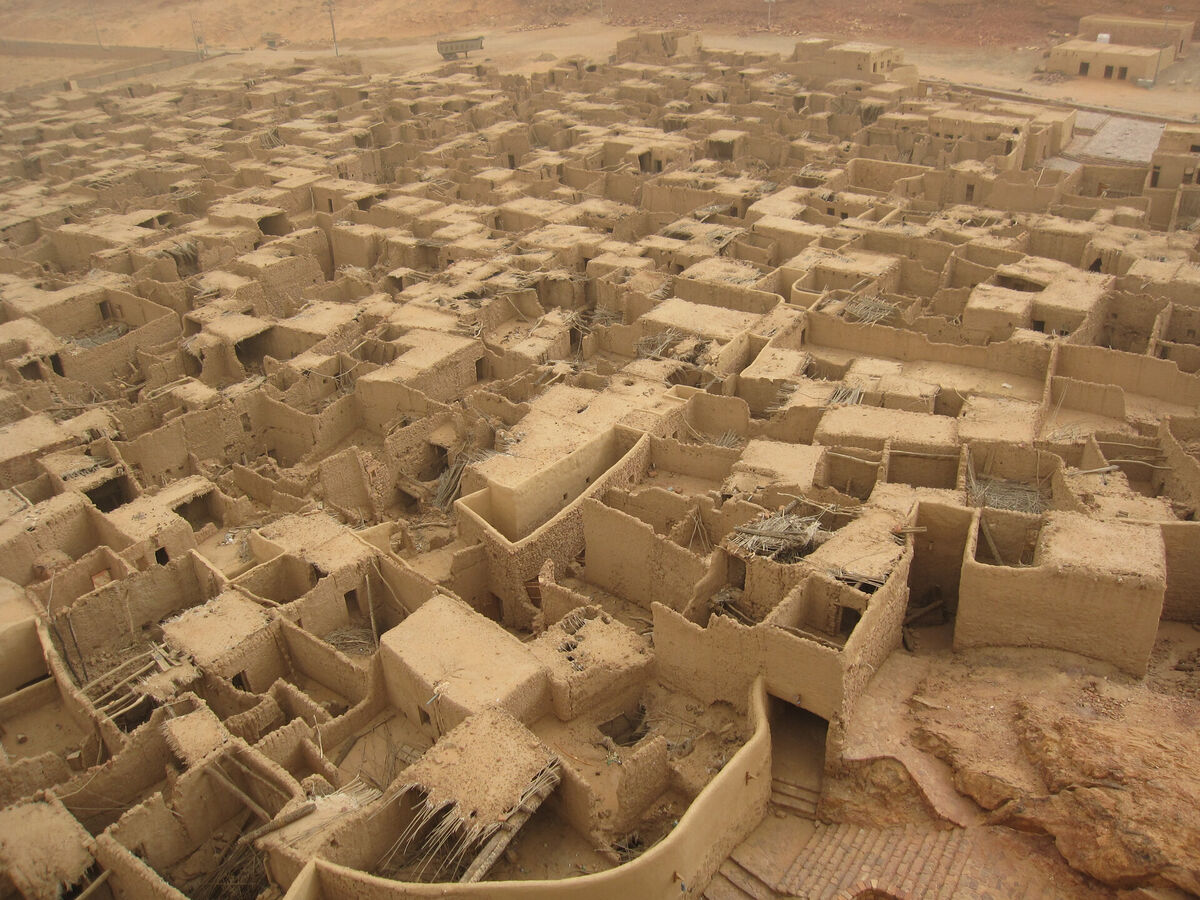
AlUla has become one of the most extraordinary art destinations in the world — a place where contemporary installations sit among 200,000 years of human history, sandstone canyons, and Nabataean tombs. The Royal Commission for AlUla (RCU) oversees the cultural programme, and the ambition is staggering.
Desert X AlUla
Desert X AlUla is the Saudi edition of the Desert X exhibition series (originally from California’s Coachella Valley). The 2026 edition, running from 16 January to 28 February, was themed “Space Without Measure,” inspired by Kahlil Gibran. Artistic directors Raneem Farsi and Neville Wakefield, with curators Wejdan Reda and Zoe Whitley, selected 11 artists including Sara Abdu, Agnes Denes, Tarek Atoui, and Hector Zamora.
Highlights included Tarek Atoui’s “The Water Song,” Agnes Denes’ “The Living Pyramid” (a planted structure in the oasis), and Basmah Felemban’s “Murmur of Pebbles” — monumental limestone sculptures set against AlUla’s sandstone canyons. The installations are spread across the desert landscape and are entirely free to visit.
Wadi AlFann: Valley of the Arts
Wadi AlFann (Valley of the Arts) is an open-air land art museum under development that will permanently host monumental works by some of the world’s most significant living artists: James Turrell, Agnes Denes, Michael Heizer, Manal AlDowayan, and Ahmed Mater. Turrell’s commission — a series of pathways, chambers, tunnels, skyspaces, and a Sun/Moon Chamber — was unveiled in preview form in January 2025, curated by Michael Govan (CEO of LACMA). When complete, Wadi AlFann will be one of the most ambitious permanent land art installations ever built.
Maraya Concert Hall
The Maraya concert hall holds the Guinness World Record for the largest mirrored building in the world, covered by approximately 9,740 reflective panels that make the structure virtually disappear into the surrounding desert landscape. The 500-seat venue, with a retractable 800-square-metre window opening directly to the canyon, hosts concerts, fashion shows, and cultural events. It has welcomed Andrea Bocelli, Alicia Keys, and Lionel Richie. Even if no event is scheduled during your visit, the building itself is worth seeing — particularly at golden hour when the desert reflects off its surfaces.
Tip: AlUla has limited accommodation, and rooms sell out quickly during Desert X and AlUla Moments season (October–March). Book well in advance. The easiest access is via AlUla Airport (ULH) with direct flights from Riyadh and Jeddah.
Dhahran: Ithra — Saudi Arabia’s Flagship Cultural Centre
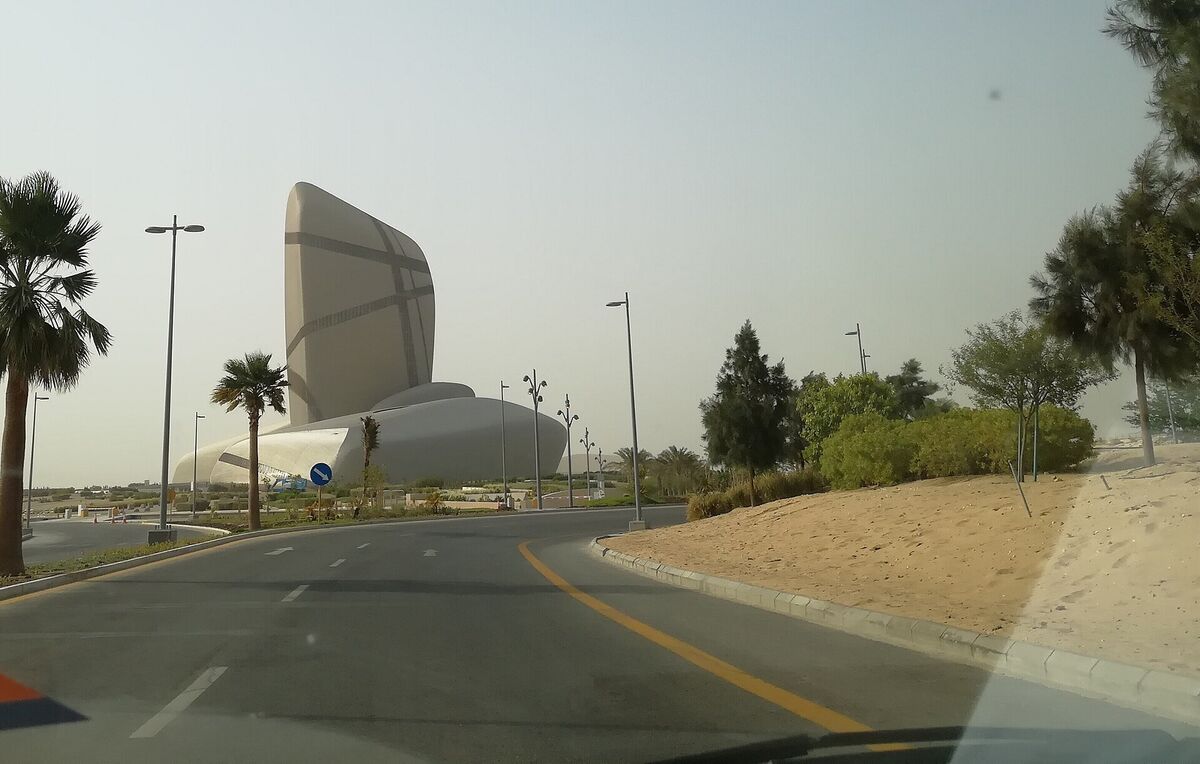
On the eastern coast, the King Abdulaziz Center for World Culture (Ithra) in Dhahran is Saudi Arabia’s most architecturally distinctive cultural institution. Designed by Norwegian firm Snøhetta and funded by Saudi Aramco, the building’s stainless-steel pebble-shaped exterior houses a museum, theatre, cinema, library, and rotating exhibition galleries.
Ithra regularly hosts international exhibitions and has become an important platform for contemporary Saudi artists. If your itinerary includes the Eastern Province, Ithra warrants a full half-day visit.
Saudi Artists to Know
Understanding Saudi Arabia’s art scene means knowing the artists who built it. Several have achieved international prominence:
- Ahmed Mater — Co-founder of Edge of Arabia (2003), Saudi Arabia’s first international contemporary art initiative. His work references heritage while engaging with social and political themes. Commissioned for a permanent installation at Wadi AlFann in AlUla.
- Manal AlDowayan — Born in Dhahran in 1973, working across photography, sound, sculpture, and participatory practice. Represented Saudi Arabia at the Venice Biennale 2024. Also commissioned for Wadi AlFann.
- Abdulnasser Gharem — A former lieutenant colonel in the Saudi army turned conceptual artist, known for politically engaged works. Founded Gharem Studio, a nonprofit for young Saudi artists. Had a solo show at LACMA.
- Dana Awartani — A Saudi-Palestinian artist selected to represent Saudi Arabia at the Venice Biennale 2026 (61st edition). Her work spans sculpture, painting, and installation, drawing on Islamic art-making traditions.
- Maha Malluh — Based in Riyadh, best known for her “Food for Thought” series using found objects — including a world map made from 3,840 audio cassettes in bread-baking trays.
- Rashed AlShashai — Painter and installation artist exploring social and cultural identity in Saudi Arabia through found materials.
The Art Calendar: When to Go
Saudi Arabia’s art season runs from November to April. Here is the annual rhythm:
| Month | Event | City | Admission |
|---|---|---|---|
| November–December | Noor Riyadh light festival | Riyadh | Free |
| January–February | Desert X AlUla | AlUla | Free |
| January–February | Tuwaiq Sculpture symposium | Riyadh | Free |
| January–May (odd years) | Islamic Arts Biennale | Jeddah | Free |
| January–May (even years) | Diriyah Contemporary Art Biennale | Riyadh (JAX) | Ticketed |
| April | Art Week Riyadh | Riyadh (JAX) | Varies |
| October–March | AlUla Moments season | AlUla | Varies |
| Year-round | teamLab Borderless | Jeddah | From SAR 50 |
Peak strategy: If you can visit only once, aim for late January to early February. This window catches Desert X AlUla, the Tuwaiq Sculpture symposium, and whichever biennale is running that year — all at once. Weather is mild (15–25°C in Riyadh, 22–28°C in AlUla).
Practical Information for Art Travellers
Getting Around
Saudi Arabia’s art scene is spread across three main cities plus AlUla. Domestic flights between Riyadh, Jeddah, and AlUla are frequent and affordable (from SAR 200/~$53 one-way on Saudia or flynas). Within cities, ride-hailing apps (Uber, Careem) are the easiest option. For AlUla, renting a car gives you the flexibility to explore Desert X installations at your own pace.
Visa
Most nationalities can obtain a Saudi tourist e-visa online in minutes. The e-visa is valid for one year with multiple entries of up to 90 days each. It covers tourism, cultural visits, and attending events.
Budget
Many of Saudi Arabia’s major art experiences are free — Noor Riyadh, Desert X AlUla, the Islamic Arts Biennale, public art across Riyadh and Jeddah, and most gallery spaces. Your main costs will be accommodation, flights, and food. Budget travellers can manage on $80–$120/day; mid-range visitors should plan for $150–$200/day including hotels and dining.
What to Wear
Saudi Arabia has relaxed its dress code significantly for tourists. Smart-casual clothing is fine for galleries and events. Women are not required to wear an abaya, though modest dress (shoulders and knees covered) is appreciated. For outdoor installations like Desert X AlUla, wear comfortable walking shoes and sun protection — the desert sun is intense even in winter.
Photography
Photography is generally permitted at outdoor installations and public art. Gallery and museum policies vary — always check before shooting. Noor Riyadh and Desert X actively encourage photography and social media sharing.
The Government Behind the Art
Saudi Arabia’s art boom is not accidental. It is the product of deliberate institutional design under Vision 2030:
- Ministry of Culture — Established 2018, operates 11 commissions. Initiated teamLab Borderless Jeddah and SAMoCA.
- Diriyah Biennale Foundation — Founded 2020, produces the Diriyah Contemporary Art Biennale and Islamic Arts Biennale on alternating years.
- Royal Commission for AlUla (RCU) — Oversees all cultural and tourism development in AlUla, including Desert X, Wadi AlFann, and Maraya.
- Riyadh Art Program — Under the Royal Commission for Riyadh City, manages Noor Riyadh, Tuwaiq Sculpture, and the city’s 1,000+ public art installations.
- Diriyah Art Futures (DAF) — A new digital art institute within the $62.2 billion Diriyah complex, launched December 2024.
The scale of investment has attracted criticism from some quarters about “artwashing,” but the practical result for visitors is undeniable: Saudi Arabia now has world-class art infrastructure, much of it free, in architectural settings that are genuinely extraordinary.
Suggested Art Itineraries
Three Days: Riyadh Art Intensive
- Day 1: JAX District — SAMoCA, Diriyah Biennale (in season), ATHR Gallery, At-Turaif heritage walk
- Day 2: Gallery belt — Naila Art Gallery, L’Art Pur, Al Mousa Centre, Sports Boulevard public art
- Day 3: Day trip to Diriyah Art Futures, or Noor Riyadh installations (November–December only)
Five Days: Riyadh + AlUla
- Days 1–2: Riyadh as above
- Day 3: Fly to AlUla. Afternoon at Hegra (Mada’in Saleh) — Nabataean tombs as the original land art
- Day 4: Desert X AlUla installations (January–February), Wadi AlFann preview, Maraya at sunset
- Day 5: AlUla Old Town, Dadan archaeological site, return flight
One Week: The Full Saudi Art Circuit
- Days 1–2: Riyadh — JAX District, galleries, public art
- Days 3–4: AlUla — Desert X, Wadi AlFann, Maraya, Hegra
- Days 5–6: Jeddah — teamLab Borderless, Corniche sculptures, Al-Balad heritage district, ATHR Gallery, Islamic Arts Biennale (if running)
- Day 7: Dhahran — Ithra (King Abdulaziz Center), then fly home from Dammam
Explore More Saudi Arabia Travel Guides
- Saudi Arabia Travel Guide 2026 — The complete guide to visiting the Kingdom
- Riyadh Travel Guide 2026 — Everything you need for Saudi Arabia’s capital city
- Jeddah Travel Guide 2026 — The Red Sea gateway, Al-Balad heritage, and the Corniche
- AlUla Travel Guide 2026 — Hegra, Elephant Rock, Desert X, and the ancient oasis
- Dammam and Al Khobar Travel Guide — The Eastern Province and Ithra cultural centre
- Saudi Arabia Visa Guide — Every visa type explained