
ABU DHABI — The United Arab Emirates absorbed more Iranian ordnance in the first week of the 2026 Iran war than any other Gulf state except Saudi Arabia — 189 ballistic missiles, 941 drone attacks, and three cruise missiles by 4 March alone — yet two weeks into a conflict it never sought and did not start, Abu Dhabi has not fired a single offensive shot in return. That restraint is now the most consequential strategic decision in the Gulf, and it is reaching its breaking point. With the Ruwais refinery offline, Dubai’s financial model haemorrhaging capital, and French Rafale jets patrolling Emirati skies on an active war footing, President Sheikh Mohamed bin Zayed Al Nahyan faces a choice his country has never confronted: whether to take the Emirates to war against Iran, or absorb the punishment and preserve the neutrality that built a $500 billion economy.
The stakes extend far beyond Abu Dhabi. The UAE’s decision will reshape the Saudi-Emirati alliance, determine whether the Gulf Cooperation Council fights as a bloc or fractures under fire into six separate wars, and test whether a small state built on commerce and connectivity can survive a conflict designed to destroy both. Every GCC capital is watching. Riyadh, in particular, needs Abu Dhabi’s answer — because MBS cannot win a war that his most powerful Arab partner refuses to join.
Table of Contents
- How Much Damage Has Iran Inflicted on the UAE?
- The Ruwais Shutdown and ADNOC’s Wartime Calculus
- What Is the UAE’s Military Actually Capable Of?
- France’s Rafales Over Abu Dhabi and the Limits of Foreign Protection
- Is the Dubai Model Broken?
- Goldman Left and the Millionaires Followed
- MBZ’s Strategic Calculus and the Unprecedented Strike Question
- The Gulf State Resilience Matrix
- What Does the War Mean for the Saudi-UAE Relationship?
- Can the UAE Afford a Prolonged War?
- After the Missiles — What the UAE Looks Like When the War Ends
- Frequently Asked Questions
How Much Damage Has Iran Inflicted on the UAE?
The scale of Iran’s assault on the United Arab Emirates exceeds anything the country has faced since its founding in 1971. Between 28 February and 10 March 2026, the Islamic Revolutionary Guard Corps launched 189 ballistic missiles, 941 drone attacks, and three cruise missiles at Emirati targets, according to the UAE Ministry of Defence. Six people were killed and 131 injured — a casualty count that would have been catastrophic had the Emirates not deployed one of the most sophisticated multi-layered air defence networks in the Middle East.
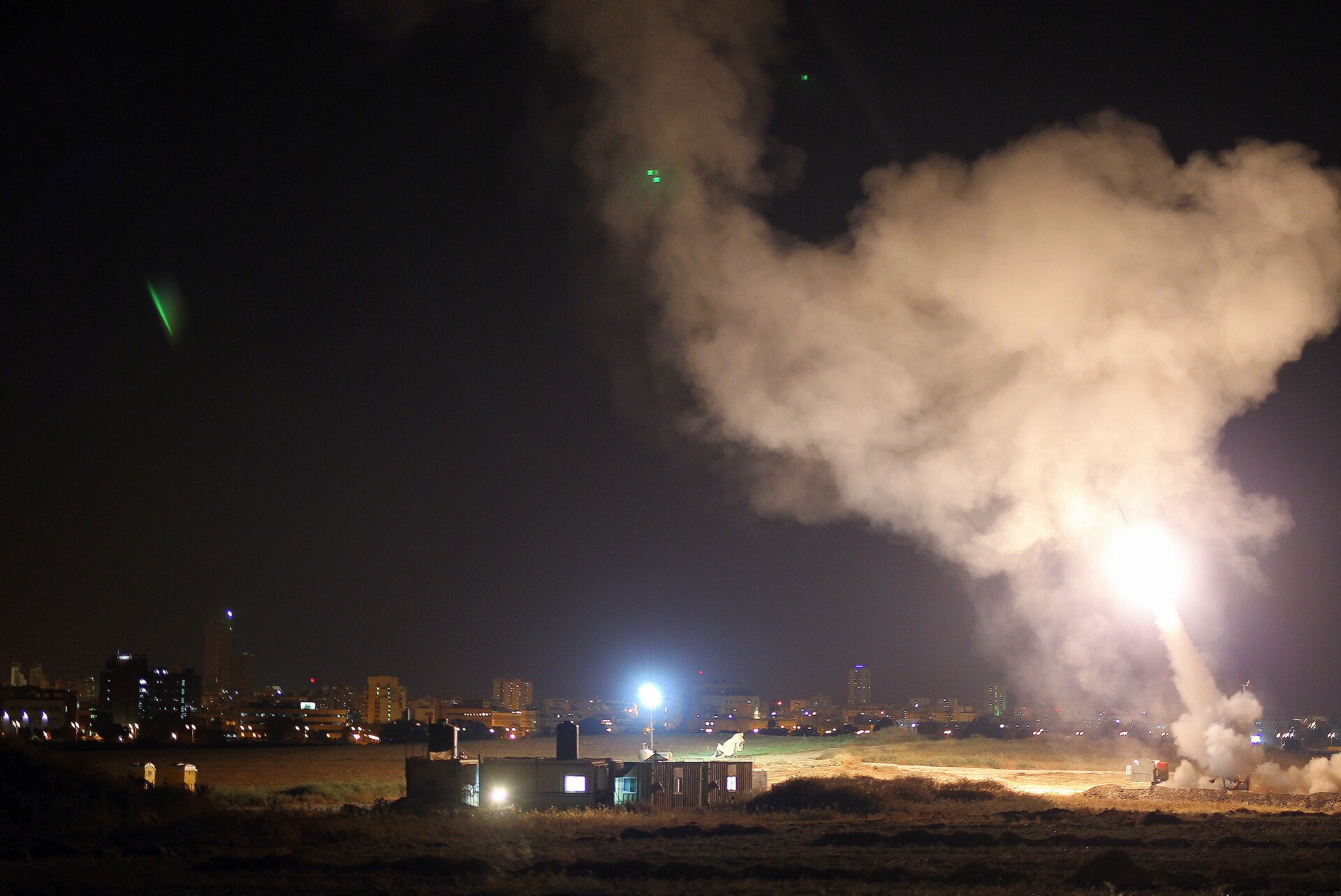
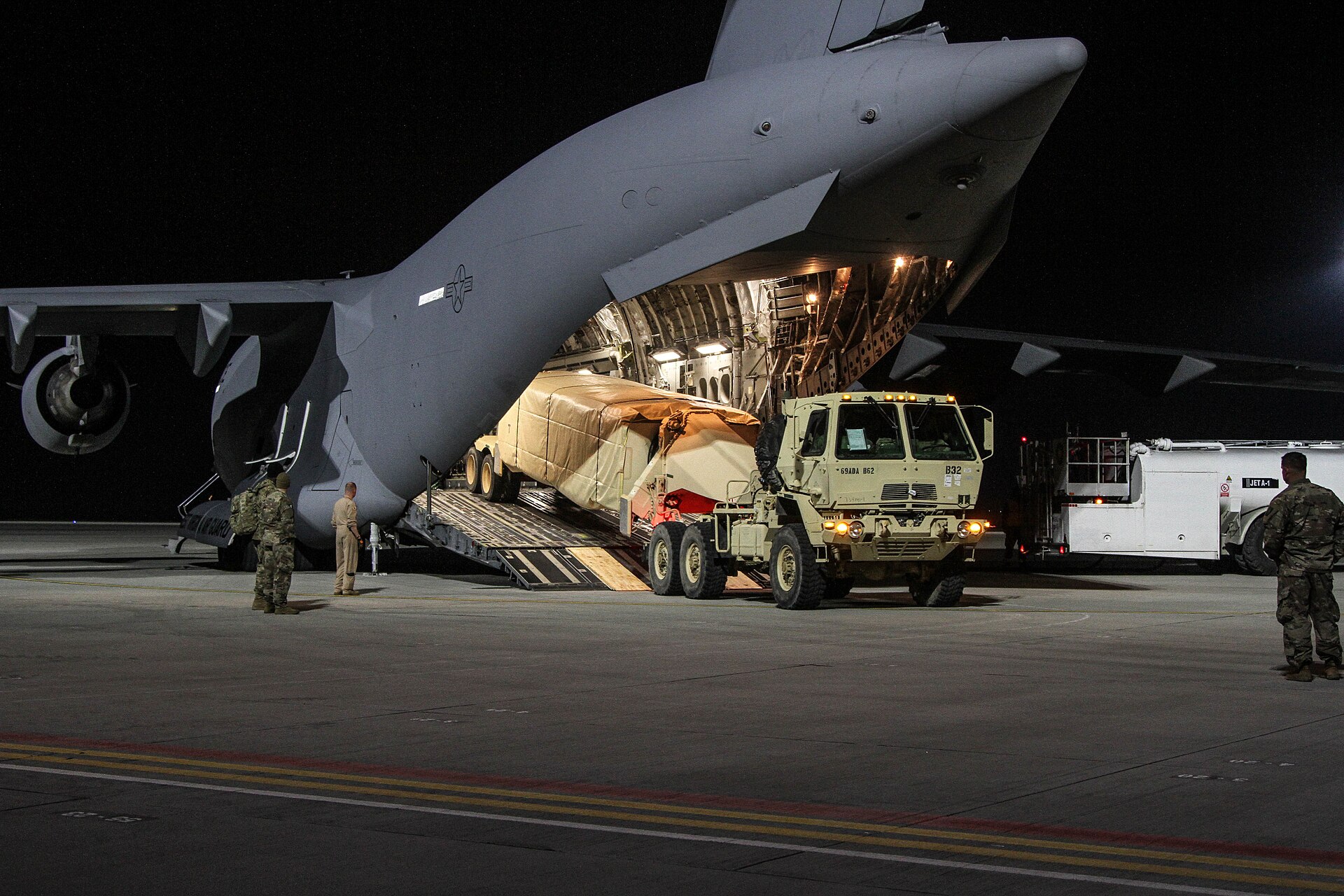
The Ministry of Defence reported intercepting 161 of 174 tracked ballistic missiles and 645 of 689 detected drones, an interception rate exceeding 90 percent for ballistic threats and 93 percent for unmanned aerial vehicles. Eight cruise missiles struck the country. The numbers reveal both the effectiveness of Emirati defences and their limits — the missiles and drones that penetrated killed civilians, shut down the region’s largest oil refinery, struck Dubai International Airport, and hit the Al Dhafra Air Base that houses American F-35 surveillance assets and approximately 3,500 US military personnel.
The geographical spread of strikes tells its own story. Iran targeted military infrastructure in Abu Dhabi, oil and gas facilities along the western coast, civilian airports in Dubai, and naval installations across the northern emirates. The IRGC made no distinction between military and civilian targets — a pattern that matches its attacks on Bahrain’s fuel depots and its strikes on Oman’s Salalah port.
| Category | Launched | Intercepted | Struck | Key Targets Hit |
|---|---|---|---|---|
| Ballistic missiles | 189 | 161 | 28 | Al Dhafra Air Base, Ruwais, Jebel Ali |
| Drone attacks | 941 | 645 | 296 | Dubai Airport, naval base Mina Zayed, multiple civilian sites |
| Cruise missiles | 3 | 0 | 3 | Not publicly disclosed |
For context, the UAE endured more strikes in thirteen days than Saudi Arabia absorbed during the entire Houthi drone campaign from 2019 to 2022. The IRGC’s message is blunt: no Gulf state hosting American forces is safe, and Iran’s missile inventory is deep enough to sustain this tempo for weeks.
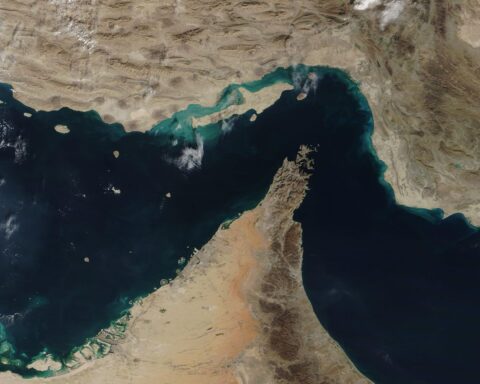
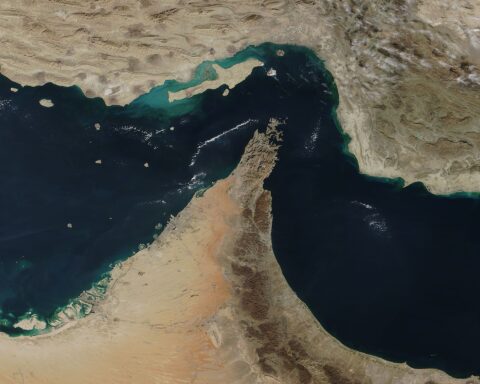
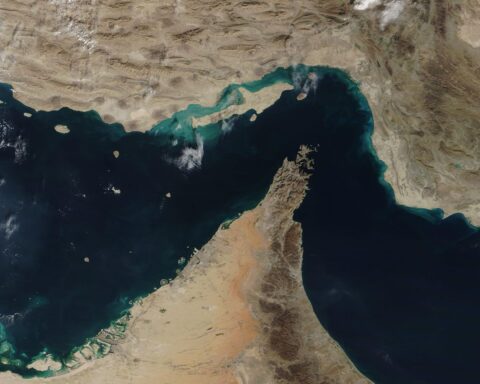
The attacks targeted a country of just 10 million people — smaller than the population of metropolitan London. Per capita, the UAE has absorbed more Iranian ordnance than any other state in the conflict. The Emirates’ compact geography compounds the vulnerability: the distance from the Iranian coast to Abu Dhabi is approximately 200 kilometres across the Gulf, placing every major Emirati city within range of even Iran’s shortest-range ballistic missiles. Dubai sits barely 150 kilometres from Iranian territorial waters at the nearest point. There is no strategic depth, no hinterland to retreat to, no distance buffer between civilian population centres and the incoming threat axis.
The Ruwais Shutdown and ADNOC’s Wartime Calculus
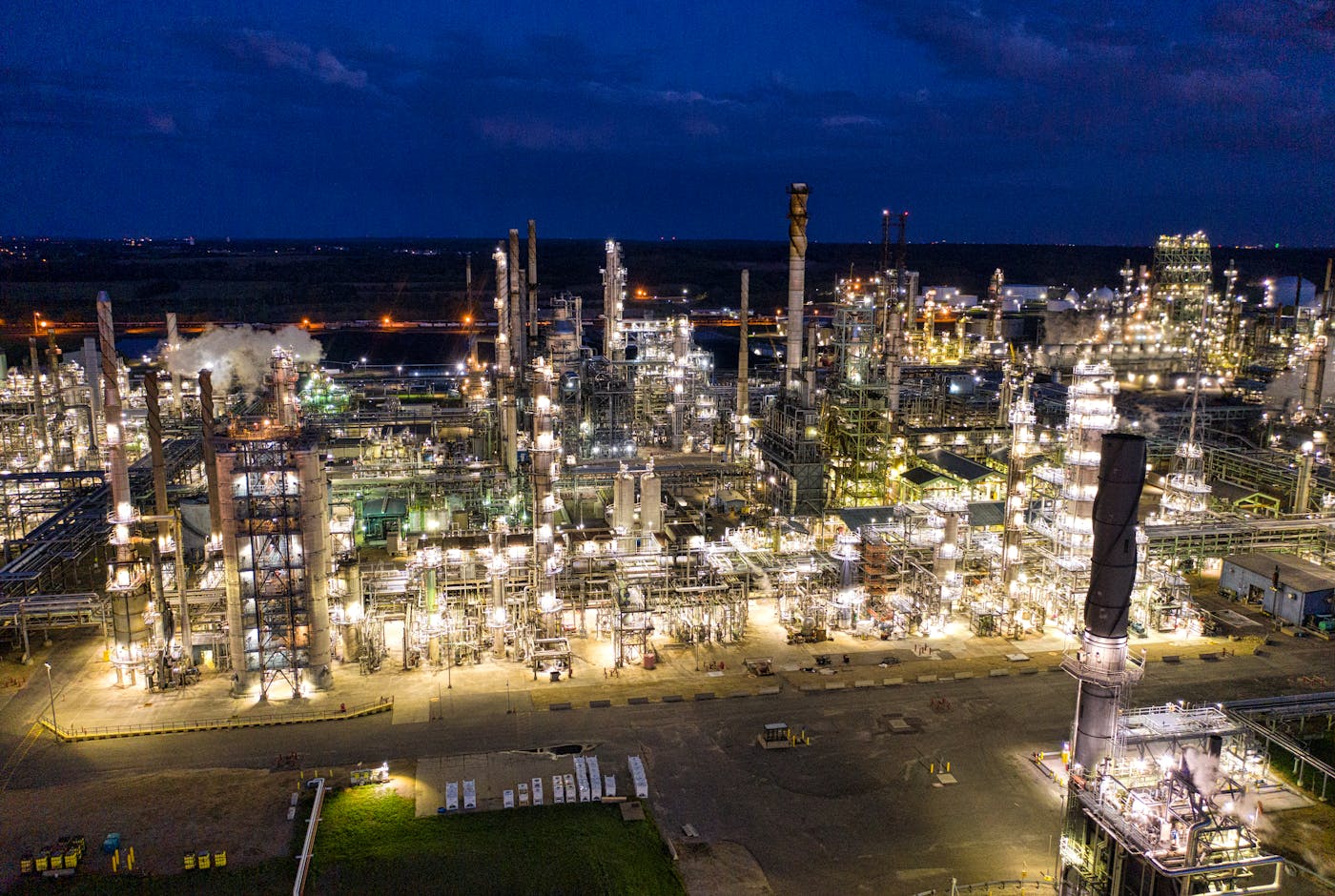
On 10 March, an Iranian drone penetrated UAE air defences and struck the Ruwais Industrial Complex in Abu Dhabi’s western Al Dhafra region. The resulting fire forced Abu Dhabi National Oil Company to shut down the Ruwais refinery as a precautionary measure, according to Bloomberg and The National. No injuries were reported, but the economic consequences are severe: Ruwais processes 922,000 barrels of crude oil and condensate per day, making it the largest single-site refinery in the Middle East and one of the largest in the world.
The shutdown removed nearly one million barrels per day of refining capacity from global markets at a moment when the Strait of Hormuz is effectively closed, the IEA has authorised its largest-ever strategic petroleum reserve release of 400 million barrels, and Brent crude has breached $110. ADNOC, which produces approximately 4 million barrels per day of crude across its upstream operations, now faces a cascading problem: even crude that can be extracted cannot be refined domestically or exported through the Gulf.
The Ruwais complex is more than a refinery. It anchors an integrated downstream industrial ecosystem that includes the Borouge petrochemicals joint venture, Fertil fertiliser production, and the Taweelah aluminium smelter. When refinery feedstock stops flowing, these adjacent operations lose their raw material. ADNOC’s downstream revenue — which reached $24 billion in 2024 — is effectively zeroed out for every day Ruwais remains offline.
ADNOC CEO Sultan Al Jaber, who simultaneously serves as the UAE’s climate envoy and COP28 president, described the Hormuz situation in an Aramco-adjacent briefing as potentially “catastrophic” for global oil markets. His company now faces the same dilemma as Saudi Aramco: pour resources into air defence and damage repair, or accept that production targets are meaningless until the Strait reopens.
What Is the UAE’s Military Actually Capable Of?
The United Arab Emirates fields the most technologically advanced armed forces in the Arab world after Saudi Arabia, and by some measures surpasses its larger neighbour in combat readiness and operational experience. Global Firepower ranks the UAE 54th of 145 nations in 2026, but that headline number understates the quality of its equipment and the competence of its officer corps. The Emirates has fought — not just purchased weapons — in Libya, Yemen, the Horn of Africa, and counter-terrorism operations across the Sahel.
The UAE Air Force and Air Defence operates a mixed fleet of approximately 79 F-16E/F Block 60 “Desert Falcon” fighters — the most advanced export variant of the F-16 ever produced — alongside 62 Mirage 2000-9 multirole aircraft and a growing number of Dassault Rafale F4 fighters that began reaching operational status in late 2025. The Desert Falcons carry the AN/APG-80 active electronically scanned array radar and the AIM-120C-7 AMRAAM, giving them beyond-visual-range engagement capability against cruise missiles and drones.
On the ground, the UAE operates THAAD and Patriot PAC-3 batteries for upper-tier ballistic missile defence, supplemented by the Pantsir-S1 short-range system acquired from Russia before the 2022 sanctions regime made further deliveries impossible. The Emirates purchased the THAAD system in 2011 for $3.49 billion — the first export sale of the system — and it has formed the backbone of the country’s ballistic missile defence architecture ever since.
Total active military personnel number approximately 65,000, supplemented by a national service programme that began in 2014 and has produced tens of thousands of trained reservists. Defence spending has averaged $22-24 billion annually in recent years, representing roughly 5.5 percent of GDP — one of the highest ratios in the world.
The EDGE Group, Abu Dhabi’s consolidated defence conglomerate, fields an increasingly capable domestic defence industrial base with estimated annual revenues of $5 billion. EDGE produces the Halcon Desert Sting family of precision-guided munitions, the Calidus B-250 light attack aircraft, and a range of counter-UAS systems that have been deployed in the current conflict. The Emirates is not merely a buyer of Western weapons — it manufactures, integrates, and exports its own.
| Domain | Platform | Quantity | Capability |
|---|---|---|---|
| Air superiority | F-16E/F Block 60 | 79 | AESA radar, AMRAAM, precision strike |
| Multirole | Mirage 2000-9 | 62 | Air-to-air and ground attack |
| Next-gen fighter | Rafale F4 | 80 (on order) | Meteor BVR, SPECTRA EW suite |
| BMD upper tier | THAAD | 2 batteries | Exo-atmospheric ballistic missile intercept |
| BMD lower tier | Patriot PAC-3 | 9 batteries | Terminal phase intercept |
| Short-range AD | Pantsir-S1 | 50+ | Counter-drone and cruise missile |
| Ground forces | Leclerc MBT | 388 | 120mm smoothbore, thermal imaging |
| Artillery | M142 HIMARS | 12+ | 300km precision strike |
The critical question is not whether the UAE can fight, but whether it should. Abu Dhabi’s military is configured for expeditionary operations and point defence — it excels at projecting power into weak states and defending high-value assets against limited threats. A sustained air campaign against Iran’s dispersed missile infrastructure is a fundamentally different proposition, and one that would require either American targeting data, basing access, and logistical support, or acceptance of significantly higher risk.
France’s Rafales Over Abu Dhabi and the Limits of Foreign Protection
When Iranian drones began striking Emirati targets on 28 February, France activated its military assets at Al Dhafra Air Base and the Mina Zayed naval facility in Abu Dhabi within hours. Approximately 900 French military personnel are permanently stationed in the UAE under a 2009 defence agreement — Paris’s only permanent military base in the Gulf — and Rafale fighters from the detachment were airborne and engaging Iranian drones before the first day of strikes concluded.
France 24 reported that Rafale patrols over Emirati airspace are now continuous, operating with Meteor beyond-visual-range air-to-air missiles, MICA infrared-guided missiles for close engagements, and the SPECTRA electronic warfare suite that can detect, classify, and jam incoming threats. French President Emmanuel Macron simultaneously ordered the Charles de Gaulle aircraft carrier and its escort group to set course for the eastern Mediterranean, extending France’s protective umbrella across the entire theatre.
The French deployment converts a long-standing peacetime presence into an active air policing and interception posture. It also reveals the limits of foreign protection: a Shahed-type drone still struck the Mina Zayed naval installation despite Rafale patrols, causing material damage. No air defence system — French, American, or Emirati — provides a perfect shield against saturation attacks from an adversary willing to launch hundreds of drones simultaneously.
For Abu Dhabi, the French response is both reassurance and reminder. France will defend its own installations and personnel, and will assist in broader air defence as a function of self-interest. But Paris has not committed to offensive operations against Iran on behalf of the UAE, and Macron has publicly called for restraint. The Emirates cannot outsource its security to France any more than it can outsource it to Washington — a lesson that the Saudi air defence experience has reinforced across the Gulf.
Is the Dubai Model Broken?
Dubai’s economic model rests on a simple proposition: a tax-free, cosmopolitan, hyper-connected hub where global capital, talent, and trade converge in a jurisdiction that offers safety, stability, and access to emerging markets. That proposition has attracted 237 centimillionaires and at least 20 billionaires to establish residency, drawn an estimated 9,800 millionaires who relocated in 2025 alone bringing $63 billion in wealth, and built a tourism industry generating over $30 billion annually. None of it works if Dubai is a war zone.
The cost has continued to mount, with the most dramatic incident coming on 16 March when an Iranian drone set a fuel tank ablaze at Dubai International Airport, forcing a seven-hour shutdown of the world’s busiest international hub.
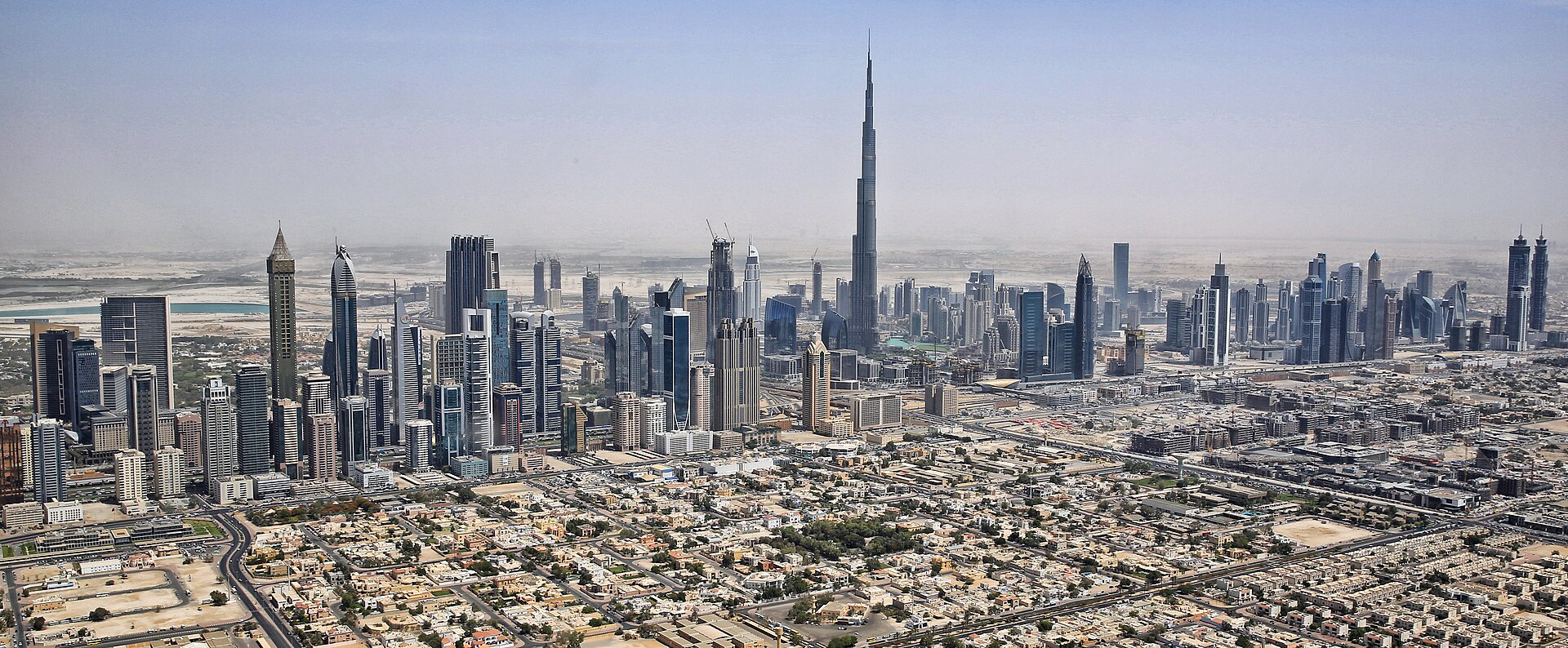
Iranian drone strikes on Dubai International Airport wounded four people and, while the facility continued operating, triggered the psychological shock that matters most to Dubai’s brand: images of military aircraft intercepting drones over the world’s busiest international airport. Air France suspended all flights to Dubai and Riyadh. Emirates Airlines grounded large portions of its fleet. Hotel bookings collapsed by more than 60 percent within the first week of strikes, according to Dubai Tourism and Commerce Marketing data.
DP World suspended operations at Jebel Ali port after a berth caught fire — a facility that, together with its adjacent free-trade zone, accounts for 36 percent of Dubai’s GDP. The suspension disrupted containerised trade flows across the entire Indian Ocean rim, from East African imports to South Asian re-exports that depend on Jebel Ali as their primary transhipment hub.
The threat to Jebel Ali deepened further on 14 March when Iran issued explicit evacuation warnings for three UAE ports, including Jebel Ali, before striking the Fujairah oil terminal and suspending loading operations at the world’s second-largest bunkering hub.
CNBC reported that wealthy families and professionals were focused on leaving, with charter companies reporting demand for private jets far exceeding available capacity. Fortune described the potential fallout as “catastrophic” for a city that “cannot function if everyone with a foreign passport flees.” Dubai is home to over 3 million expatriates who constitute roughly 85 percent of the emirate’s population. If the foreign workforce contracts by even 20 percent, the city’s service economy — from hospitality to healthcare to financial services — breaks down.
The conventional wisdom is that Dubai will bounce back, as it has after 2008, after the 2020 pandemic, and after every regional shock. But previous crises never included ballistic missiles falling on the city itself. The question confronting Dubai’s rulers is whether the emirate’s appeal can survive the revelation that it sits within range of a hostile state willing to fire nearly a thousand drones at its airport, port, and financial district in a single week.
Goldman Left and the Millionaires Followed
The first sign that the war was inflicting structural damage on Dubai’s financial ecosystem came on 12 March, when reports emerged that Goldman Sachs was relocating its Dubai operations and that HSBC was pulling back from Qatar. The moves, analysed in detail by House of Saud, signal a shift beyond temporary evacuation toward permanent repositioning of Gulf financial infrastructure.
Riyadh’s King Abdullah Financial District stands ready as the beneficiary. Saudi Arabia’s capital, while itself under Iranian fire, offers depth that Dubai cannot match: a domestic population of 35 million, a $1.1 trillion GDP, the world’s largest sovereign wealth fund in the Public Investment Fund, and a government that has spent $3.2 billion building financial district infrastructure specifically designed to attract international banks.
Oxford Economics downgraded GCC real GDP growth forecasts by 1.8 percentage points to 2.6 percent for 2026, driven by lower oil production, collapsed tourism, and depressed domestic demand across the bloc. The UAE’s economy, however, enters the crisis from a position of exceptional fiscal strength. S&P estimates that the UAE’s consolidated government net asset position reached approximately 184 percent of GDP in 2026, with liquid government assets at roughly 210 percent of GDP — the deepest fiscal reserves of any country on earth.
Gulf News identified six reasons the UAE economy can withstand Iran-US conflict shocks, including sovereign fund buffers exceeding $1.5 trillion across Abu Dhabi’s ADIA, Mubadala, and ADQ, diversified trade relationships spanning 200 countries, and an expatriate-driven service economy that adapts rapidly to changed circumstances. The analysis is correct on fundamentals — but fundamentals do not determine whether a hedge fund manager in the DIFC renews his lease when drones have struck the airport three kilometres away.
The war has created a two-speed crisis within the UAE itself. Abu Dhabi, backed by sovereign wealth and hydrocarbon reserves, can absorb years of conflict spending. Dubai, whose model depends entirely on international confidence, faces existential pressure to see the war end quickly. That internal tension shapes everything about how the Emirates responds.
MBZ’s Strategic Calculus and the Unprecedented Strike Question
Axios reported on 3 March that the United Arab Emirates was considering taking military action to stop Iranian missile and drone strikes — a step that would be unprecedented in the country’s history. An Emirati offensive strike on Iran would mark the first time a Gulf Arab state has directly attacked a non-Arab neighbour, and the fact that such action is even being discussed reflects the magnitude of anger within Abu Dhabi’s leadership over attacks targeting civilian infrastructure and energy facilities.
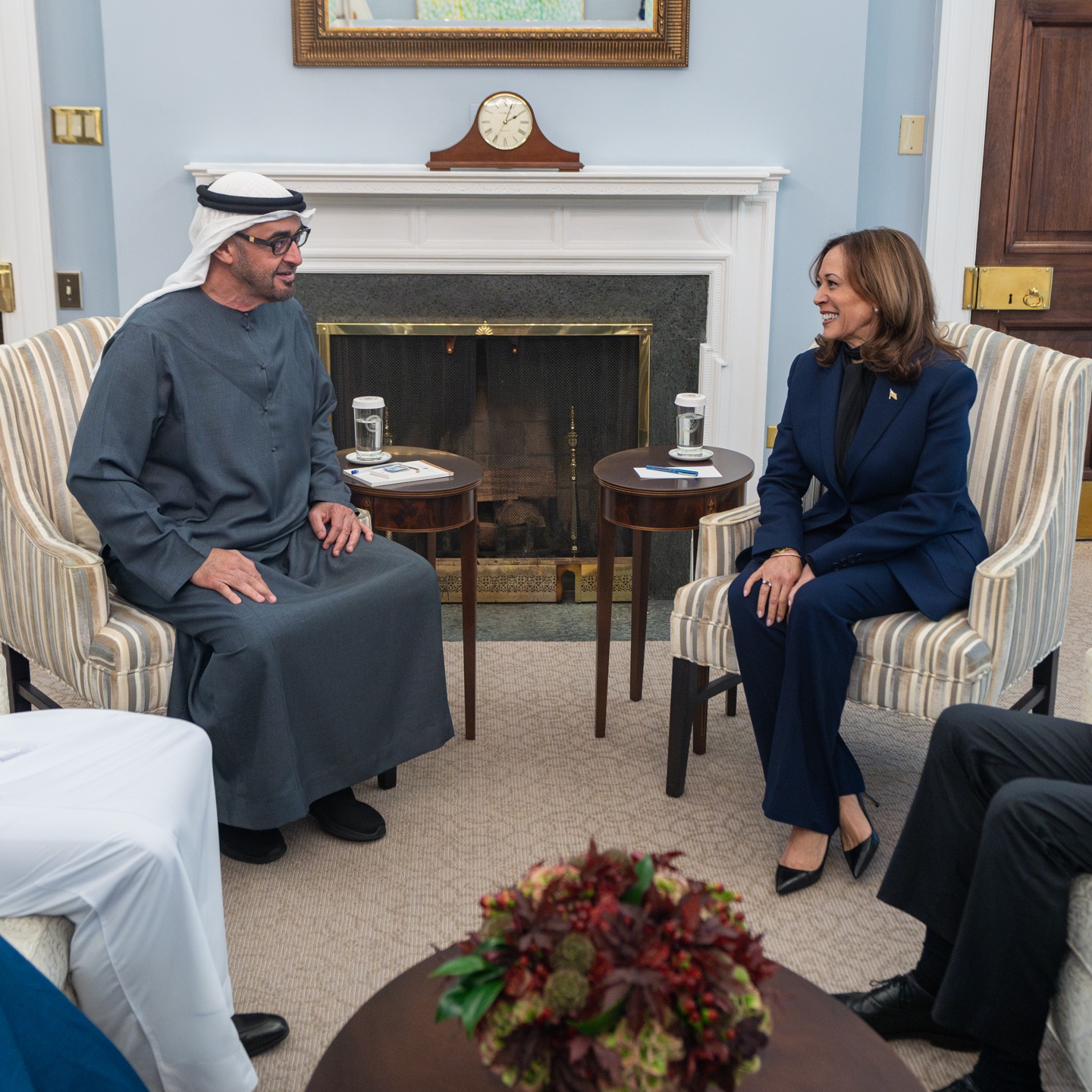
Sheikh Mohamed bin Zayed declared that “the UAE has thick skin and bitter flesh — we are no easy prey” and confirmed the country was in “a period of war.” The language is notably more combative than anything the Emirati leadership has said publicly in decades. Yet MBZ’s track record suggests his instinct is to accumulate leverage rather than expend it. He is a leader who built influence through quiet deals in Libya, Yemen, and the Horn of Africa — not through headline-grabbing offensives.
The arguments for restraint are powerful. The UAE’s economy depends on international connectivity and investor confidence, both of which would be further damaged by an offensive war. Abu Dhabi’s military, while capable, is not configured for sustained strikes against a dispersed Iranian missile infrastructure that the United States military, with orders of magnitude more capability, has not fully suppressed. And any Emirati strike would effectively end the distinction between Gulf states as victims of Iranian aggression and Gulf states as active belligerents — a distinction that currently shapes international sympathy and potential ceasefire mediation.
The arguments for action are equally compelling. Iranian attacks show no sign of abating. Each day the Ruwais refinery remains offline costs ADNOC hundreds of millions of dollars. The IRGC’s escalation from military targets to civilian infrastructure suggests a strategy of cumulative pressure that will only intensify — a pattern confirmed on 16 March when Iranian drones struck the Shah gas field in Abu Dhabi, setting the ADNOC-Occidental sour gas processing facility ablaze and expanding Tehran’s target list to include upstream production assets deep inside Emirati territory. And within the GCC, Saudi Arabia — which has borne the heaviest strikes — is watching to see whether its closest military partner will share the burden or shelter behind American and French forces while Riyadh absorbs the punishment alone.
MBZ’s most likely path is a middle course: continued defensive operations, deepened intelligence sharing with the US-led coalition, expanded French air defence coverage, and quiet preparation for retaliatory strikes that would be launched only if Iran crosses a specific red line — likely a mass-casualty attack on a civilian population centre or the destruction of critical desalination infrastructure that supplies Abu Dhabi’s drinking water.
The Gulf State Resilience Matrix
The Iran war has exposed fundamentally different levels of vulnerability across the six GCC member states. Each has faced Iranian ordnance, but the damage, defensive capacity, and strategic response differ sharply. A comparative analysis reveals which states are positioned to endure a prolonged conflict and which face structural breaking points.
| State | Strikes Absorbed | Key Asset Hit | Defence Spend ($B) | Fiscal Buffer (% GDP) | Offensive Posture | Resilience Rating |
|---|---|---|---|---|---|---|
| Saudi Arabia | 1,400+ | Ras Tanura, Prince Sultan AB | 74.8 | High (PIF $930B) | Defensive only | High |
| UAE | 1,133 | Ruwais refinery, Dubai Airport | 23.2 | Very High (184% GDP) | Considering strikes | High |
| Bahrain | 200+ | BAPCO refinery, US Naval base | 1.6 | Low (debt/GDP 133%) | Dependent on US/SA | Low |
| Kuwait | 150+ | Airport, oil export terminals | 7.8 | High (KIA $923B) | Airspace closed | Medium |
| Qatar | 100+ | Al Udeid AB (US CENTCOM) | 15.0 | High (QIA $510B) | Mediation focus | Medium-High |
| Oman | 80+ | Salalah port | 5.5 | Medium | Neutral / back channel | Medium |
Three factors distinguish the states most likely to weather extended conflict. First, fiscal depth: the UAE and Saudi Arabia hold sovereign wealth reserves that can sustain wartime spending for years without domestic austerity. Kuwait, with its $923 billion Investment Authority, has deep reserves but limited military capacity. Bahrain, by contrast, carries debt exceeding 133 percent of GDP and depends on Saudi financial support even in peacetime.
Second, air defence layering: states with THAAD, Patriot PAC-3, and short-range counter-UAS systems in integrated networks have intercepted over 90 percent of incoming threats. States relying on a single tier — or on allied coverage without domestic capacity — have suffered disproportionate damage.
Third, economic diversification determines how much each state loses from the Hormuz closure. The UAE and Bahrain, with significant non-oil GDP, suffer from disrupted commerce, tourism, and financial services. Saudi Arabia and Kuwait, more dependent on hydrocarbon exports, face catastrophic revenue losses as long as the Strait remains closed, but their domestic economies continue functioning. Qatar, with its LNG shipped partly through alternative routes and massive sovereign reserves, occupies a middle position.
The matrix reveals a counterintuitive finding: the most economically diversified Gulf states are not necessarily the most resilient in wartime. Dubai’s diversification into tourism, finance, and logistics created exactly the attack surface that Iran has exploited. Riyadh’s relative isolation from maritime trade routes has become an accidental strategic advantage. The states that built their economies around connectivity are the most vulnerable when that connectivity is severed by force.
What Does the War Mean for the Saudi-UAE Relationship?
The Saudi-Emirati relationship has been the Gulf’s most consequential bilateral partnership for a decade and its most complicated. Mohammed bin Salman and Mohamed bin Zayed were once portrayed as mentor and protégé — MBZ, the older and more experienced military strategist, guiding MBS through the early years of his consolidation of power. That dynamic has inverted. MBS now leads a kingdom with triple the UAE’s population, three times its GDP, and the Arab world’s largest military budget. The Iran war is testing whether the partnership can survive a reversal of roles.
Tensions preceded the conflict. Foreign Affairs warned in early 2026 of “the real risks of the Saudi-UAE feud,” citing incompatible proxy strategies in Yemen and Sudan, economic competition as Riyadh builds rival financial and tourism infrastructure, and personal friction between two leaders who each view the other as insufficiently respectful. The Institute for National Security Studies in Tel Aviv described relations as having shifted “from quiet competition to open rivalry.” Middle East Eye reported that Saudi-UAE tensions could reshape regional alignments throughout 2026.
The war has temporarily suppressed these rivalries — shared victimhood has that effect. MBS and MBZ spoke by phone within hours of the first Iranian strikes and issued coordinated condemnations through the GCC. The 50th extraordinary GCC ministerial council meeting issued a joint statement condemning “Iranian aggression against GCC states.” But behind the public solidarity, strategic divergences are widening.
Saudi Arabia wants the GCC to respond collectively — invoking the Peninsula Shield Force, coordinating offensive operations, and presenting a unified military front that would strengthen Riyadh’s hand in ceasefire negotiations. The UAE prefers bilateral arrangements with individual partners — France, the United States, and potentially India — that preserve Abu Dhabi’s freedom of action. Kuwait has closed its airspace and retreated into neutrality. Qatar is pursuing its own mediation track. Oman is running back-channel communications with Tehran.
The war is revealing that the GCC is not a military alliance in any meaningful sense. It is a collection of wealthy states with overlapping but distinct interests, different threat perceptions, and no integrated command structure. The Peninsula Shield Force — designed precisely for this scenario — has not been activated. The contrast with NATO, which coordinates defence through a permanent military command despite far greater diversity of membership, is stark.
For Saudi Arabia, the UAE’s restraint is simultaneously frustrating and useful. Frustrating because Riyadh needs every capable military partner it can muster. Useful because Dubai’s economic distress is accelerating the financial migration to Riyadh that MBS has pursued for years. Every Goldman Sachs banker who leaves the DIFC for the KAFD is a small victory for Vision 2030, even if the mechanism is not one MBS would have chosen.
Can the UAE Afford a Prolonged War?
The short answer is yes — the Emirates can sustain wartime expenditure for years without approaching fiscal distress. The longer answer is that financial capacity and economic resilience are different things, and the war is eroding the latter even as the former remains robust.
Abu Dhabi’s sovereign wealth complex — ADIA ($990 billion), Mubadala ($300 billion), and ADQ ($157 billion) — holds combined assets exceeding $1.4 trillion, more than any other city on earth. S&P’s estimate that UAE government liquid assets reach 210 percent of GDP places the country in a fiscal category shared only by Norway and Singapore. The Emirates can fund military operations, infrastructure repair, and economic support programmes simultaneously without issuing debt or cutting services.
ADNOC’s upstream operations, even with Ruwais offline and Hormuz closed, continue generating revenue from crude stored in strategic reserves and from condensate production that feeds domestic power generation. The company holds strategic petroleum reserves at the Kiln underground facility in Fujairah — accessible via the Arabian Sea rather than the Persian Gulf — providing a partial workaround to the Hormuz blockade.
Defence procurement, the most expensive component of wartime spending, is already funded through a defence budget that SIPRI places at $23.2 billion annually. The THAAD interceptors fired during the conflict cost approximately $11 million each, and Patriot PAC-3 missiles run $4 million per unit — expensive by any standard, but affordable for a country spending over $23 billion on defence before the war began. The real cost is not the munitions expended but the accelerated procurement cycle that follows: replacing depleted interceptor stocks, purchasing additional counter-drone systems, and advancing the Rafale F4 delivery timeline from Dassault.
The economic damage that cannot be solved with sovereign wealth is reputational. Every week the war continues, decision-makers in London, New York, Mumbai, and Singapore recalibrate their assessment of Gulf risk. Foreign direct investment commitments, which reached $23 billion for the UAE in 2024, require years of stability to crystallise. A six-month war could defer a decade of investment decisions. The Emirates can afford the missiles. It is the invisible costs — the conferences not held, the headquarters not relocated, the tourists not booked — that compound over time.
Dubai’s fiscal position is meaningfully different from Abu Dhabi’s. The emirate carries approximately $150 billion in government and government-related debt, much of it incurred during the 2008-2009 financial crisis and restructured with Abu Dhabi’s assistance. Dubai’s non-oil revenue model means it has no hydrocarbon cushion to fall back on. When tourism, trade, and financial services contract simultaneously, Dubai’s fiscal position deteriorates far more rapidly than Abu Dhabi’s. The 2008 crisis required a $20 billion bailout from Abu Dhabi; a prolonged war could require a second.
After the Missiles — What the UAE Looks Like When the War Ends
The Iran war will end — through ceasefire, exhaustion, or diplomatic intervention — and the UAE will need to rebuild both physical infrastructure and the intangible confidence that underpins its economic model. The reconstruction challenge is manageable: ADNOC has the engineering capacity to restore Ruwais within weeks of hostilities ending, Dubai Airport’s damage is superficial, and Jebel Ali port’s fire caused localised rather than structural destruction.
The confidence challenge is harder. Dubai’s brand was built over three decades on the premise that the Gulf is a zone of stability and opportunity. The images of Patriot missiles launching over the Burj Khalifa, of drones striking the world’s busiest airport, of millionaires queuing for evacuation flights — these do not disappear from institutional memory when a ceasefire is signed. Insurance premiums for Gulf-based assets will remain elevated for years. Corporate relocation decisions made during the war may not be reversed even if stability returns.
Several structural shifts are already visible. The UAE’s defence budget, which SIPRI placed at $23.2 billion before the war, will almost certainly increase significantly in the 2027-2030 fiscal cycle. The $19 billion Rafale deal signed with Dassault in 2021 — originally seen as a diversification play away from American equipment — now looks prescient: France’s willingness to deploy those aircraft in active defence of Emirati airspace demonstrates the value of a defence relationship not contingent on American political cycles.
EDGE Group is likely to accelerate development of counter-UAS systems and long-range precision strike capabilities, both of which the war has demonstrated are existential requirements rather than procurement luxuries. The Emirates may also revisit discussions with South Korea on the arms race that will outlast the missiles — Korean defence platforms, from the KF-21 fighter to the Cheongung medium-range SAM system, offer alternatives to both American and European supply chains.
Abu Dhabi’s sovereign wealth — the Abu Dhabi Investment Authority’s estimated $990 billion, Mubadala’s $300 billion, and ADQ’s growing portfolio — provides a financial buffer that few countries on earth can match. The Emirates can afford to spend its way through reconstruction and rearmament simultaneously. The question is whether it can spend its way back to the perception of invulnerability that made Dubai the world’s most attractive destination for mobile capital.
The war has also validated the UAE’s bet on domestic defence manufacturing. EDGE Group’s counter-UAS systems have been deployed alongside THAAD and Patriot in the current conflict, and the company’s ability to produce precision munitions domestically reduces dependence on supply chains that wartime logistics can disrupt. Abu Dhabi’s $5 billion annual investment in EDGE is no longer a prestige project — it is a survival requirement.
The most significant long-term consequence may be the recalibration of the Saudi-UAE relationship. The war has demonstrated that shared threats do not automatically produce shared responses. When it ends, both Riyadh and Abu Dhabi will need to decide whether their strategic futures converge or diverge — whether the GCC becomes a genuine security alliance or remains a consultative body that papers over fundamental disagreements. MBS and MBZ built the modern Gulf together. The Iran war is testing whether that partnership can survive the transition from economic competition to military crisis.
Frequently Asked Questions
How many Iranian missiles and drones have struck the UAE?
Between 28 February and 10 March 2026, Iran launched 189 ballistic missiles, 941 drone attacks, and three cruise missiles at UAE targets. The UAE Ministry of Defence intercepted 161 ballistic missiles and 645 drones, but strikes that penetrated defences killed six people, injured 131, shut down the Ruwais refinery, and damaged Dubai International Airport and Al Dhafra Air Base.
Why did ADNOC shut down the Ruwais refinery?
ADNOC shut the Ruwais refinery on 10 March 2026 after an Iranian drone strike sparked a fire at the Ruwais Industrial Complex. The refinery processes 922,000 barrels per day — the largest single-site facility in the Middle East — and the precautionary shutdown removed nearly one million barrels of daily refining capacity from global markets during an already acute supply crisis.
Is the UAE planning to strike Iran?
Axios reported on 3 March that the UAE was considering military action against Iranian missile sites. Such a strike would be unprecedented for a Gulf Arab state. President Sheikh Mohamed bin Zayed has maintained defensive posture while signalling readiness, stating the UAE is “no easy prey.” Analysts believe Abu Dhabi is most likely preparing contingency strikes that would be launched only if Iran crosses specific red lines, such as a mass-casualty civilian attack or destruction of desalination infrastructure.
How is the war affecting Dubai’s economy?
Dubai hotel bookings dropped by over 60 percent in the first week of Iranian strikes. DP World suspended operations at Jebel Ali port — which accounts for 36 percent of Dubai’s GDP — after a berth fire. Emirates Airlines grounded flights, Air France suspended Dubai and Riyadh services, and Goldman Sachs began relocating operations from the DIFC. Private jet charter companies report evacuation demand far exceeding capacity.
What role is France playing in UAE defence?
France deployed Rafale fighter jets from its permanent base at Al Dhafra to conduct continuous air patrols over UAE airspace, engaging Iranian drones with Meteor and MICA air-to-air missiles. Approximately 900 French military personnel operate from Al Dhafra and the Mina Zayed naval base. President Macron also ordered the Charles de Gaulle aircraft carrier to the eastern Mediterranean. France’s support has been described by UAE officials as “stellar” but does not extend to offensive operations against Iran.
How does the UAE’s military compare to Iran’s?
The UAE fields 65,000 active military personnel with advanced Western equipment including F-16E/F Block 60 fighters, THAAD and Patriot missile defences, and Leclerc main battle tanks. Iran has approximately 580,000 active troops and an arsenal of thousands of ballistic missiles and drones. The UAE has a qualitative technology advantage; Iran has overwhelming quantitative superiority. The war has shown that even the UAE’s sophisticated defences cannot stop every projectile in a saturation attack.