
Wars are often narrated as contests over territory, ideology or military prestige. For Saudi Arabia, the Iran war is already something else as well: a contest over time. Specifically, over whether Mohammed bin Salman can get back to the future he has been trying to build.
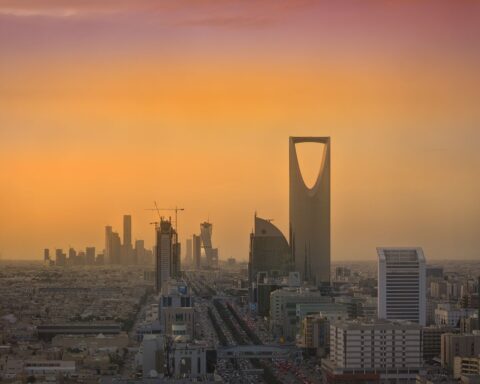
That future has a name, a budget and a political doctrine. It is Vision 2030. It is NEOM, tourism, logistics, sport, entertainment, advanced industry, sovereign scale, a wider private sector, and a Saudi state that wants to be judged less by the crises around it than by the post-oil economy it is trying to construct. The Kingdom’s wager has never been that geopolitics would disappear. It has been that Saudi Arabia could become so central, so investable and so administratively capable that regional instability would no longer wholly define it.
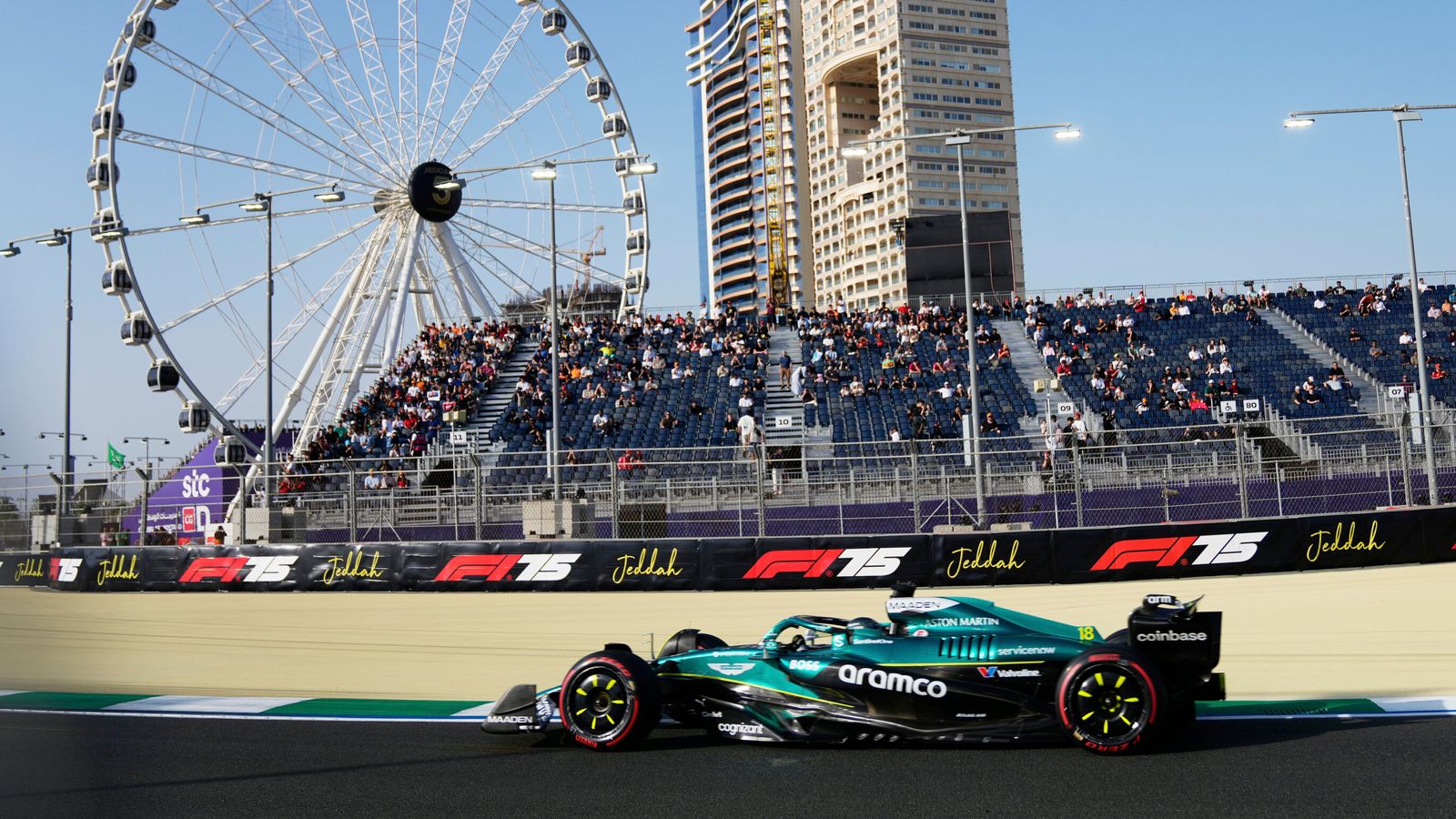
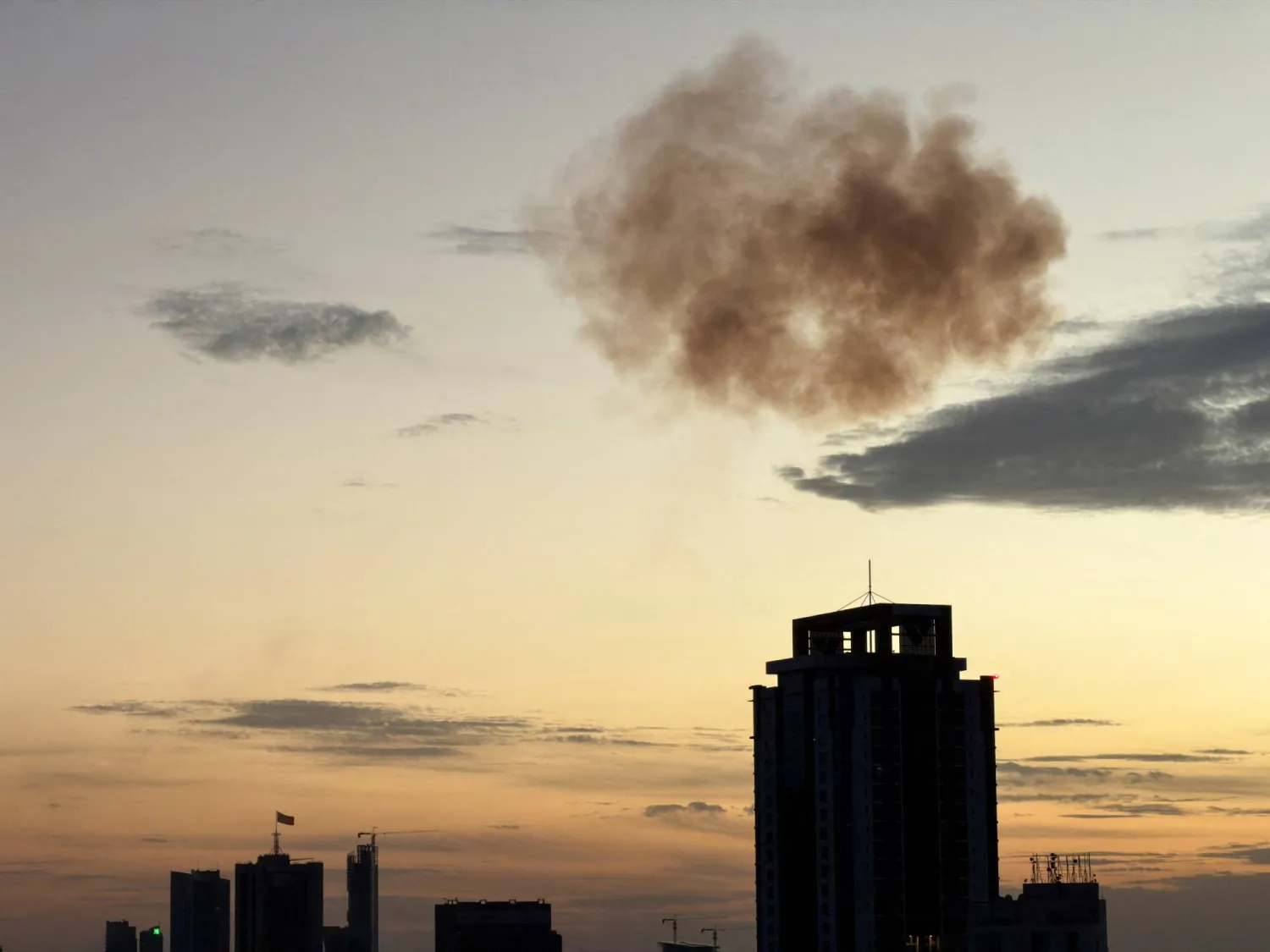
The past week has tested that wager hard. Iranian strikes and attempted strikes on Gulf states, including Saudi Arabia, have reminded everyone that the old Middle East still has veto power over the new one. Reuters reported on Sunday, March 8, that Riyadh warned Tehran further attacks on Saudi territory or energy infrastructure could force retaliation. AP, meanwhile, reported that Formula 1 delayed a decision over whether the Bahrain and Saudi races should proceed in April, a signal that the conflict is already touching the Gulf’s premium event economy. In recent days Saudi air defenses have intercepted repeated drones targeting Riyadh and the Shaybah oil field. The tactical story is serious enough. The strategic story is larger: every extra day of war taxes the Saudi future.
That is why the most important question for Riyadh is no longer only how the war is fought. It is how it ends, and what kind of Iran exists on the other side. If one strips away slogans, there are really two broad futures that matter for Saudi Arabia and for the Crown Prince. The first is a chastened, more pragmatic Iran: weaker, less ideological in its regional conduct, less willing or less able to threaten Gulf infrastructure, and more interested in economic survival than revolutionary projection. The second is a protracted conflict or a disorderly aftermath: an Iran that remains dangerous, fragmented, radicalized, or simply unstable enough to keep the Gulf locked in a long era of elevated risk.
Saudi Arabia can work with the first. The second would be a strategic tax on Mohammed bin Salman’s entire project.
What Riyadh Actually Wants
It is tempting to assume Saudi Arabia would welcome any outcome that dramatically weakens Iran. That is true only up to a point. Riyadh would certainly prefer an Iran that is less capable of attacking Saudi oil facilities, less able to arm or direct regional proxies, and less determined to define itself through confrontation with its Arab neighbors. But that does not mean the Kingdom wants Iranian state collapse, uncontrolled regime implosion, or a years-long civil conflict on the other side of the Gulf.
Recent reporting makes that clear. Reuters says Saudi Arabia has been warning Iran against continued attacks while at the same time emphasizing that Riyadh favors a diplomatic settlement and has not allowed its territory or airspace to be used for strikes on Iran. Bloomberg reported through syndication over the weekend that Saudi Arabia has stepped up backchannel contacts with Tehran to stop the conflict from widening. That combination of deterrence and de-escalation is not indecision. It is the clearest expression of Saudi interests.
The Kingdom wants Iran constrained, not detonated. It wants the missile threat reduced, the proxy architecture degraded, and the intimidation of Gulf infrastructure stopped. But it also wants an Iranian state capable of answering the phone, controlling its territory, honoring understandings and staying intact enough that the region does not inherit a second Iraq-style disorder on a much larger scale. This is a crucial distinction, because it explains why Saudi Arabia’s ideal outcome is not regime change in the maximalist sense heard in some American and Israeli rhetoric. Riyadh’s best-case scenario is more disciplined and more realistic: a weaker Iran that becomes more rational because it has fewer options.
Scenario One: A Moderate Iran
Let us define terms carefully. A more moderate Iran would not suddenly become pro-Saudi, pro-American or strategically harmless. That is fantasy. The more plausible version is an Iran whose leadership, whether under altered balances within the current system or under a new postwar political compact, concludes that survival now depends on reducing regional confrontation rather than exporting it. In that scenario, Tehran would remain proud, suspicious and difficult, but less revolutionary in practice. It would focus inward. It would prize sanctions relief, reconstruction, institutional continuity and economic breathing room over permanent escalation with Gulf monarchies.
For Saudi Arabia, that would be a major strategic opening. First, it would sharply improve the security environment around the Kingdom’s infrastructure. A Saudi growth model built around logistics, tourism, investment and events does not require the elimination of all regional risk. It requires that risk to become manageable and exceptional rather than chronic. A more pragmatic Iran would not remove every threat, but it could lower the frequency and credibility of attacks on airports, refineries, desalination plants, shipping routes and marquee commercial events. That alone would reduce the war premium now attaching itself to the Gulf economy.
Second, it would validate Mohammed bin Salman’s long bet on state-led pragmatism. Since the 2023 China-brokered Saudi-Iran rapprochement, Riyadh’s approach has been less about sentimental reconciliation than about structured coexistence. Saudi officials understood that they were unlikely to turn Iran into a friend. The aim was simpler and more valuable: make conflict less automatic. If a postwar Iran emerges more cautious and more transactional, MBS will be able to argue that Saudi Arabia’s patient diplomacy was not naïve but strategic. He will have something rare in Middle Eastern statecraft: a rival weakened not only by outside force, but by the eventual logic of de-escalation.
Third, a more moderate Iran could accelerate Saudi Arabia’s claim to regional leadership in a way military triumph alone never could. The Crown Prince’s strongest argument to investors and foreign governments is not that he can dominate every rival. It is that he can reorder the region around economic gravity. If Tehran turns inward and reduces its external militancy, Riyadh becomes the obvious center of Arab capital, Arab diplomacy and Arab reconstruction finance. Saudi Arabia would look not just richer than Iran, but more governable, more connected and more future-facing. MBS would not merely outlast his rival. He would outmodel it.
That matters because postwar regional influence is often decided less by who fired the most missiles than by who looks most capable of building the next order. A chastened Iran would create openings in Iraq, Lebanon, Syria and the wider Gulf for a different balance of influence. Saudi Arabia would be positioned to expand commercially and diplomatically, not through ideological confrontation but through money, mediation, infrastructure and institutional seriousness. It could deepen ties with Arab states anxious for stabilization, work with China and the United States from a position of greater confidence, and present itself as the region’s indispensable organizer rather than merely one of its contestants.
There is an economic dividend here too. A less threatening Iran would lower insurance costs, make the Gulf’s aviation and shipping networks easier to price, and strengthen the case for long-duration investment into Saudi mega-projects and urban transformation. It could also support a quieter but important psychological shift. Foreign executives do not need to believe the Middle East is peaceful. They need to believe Saudi Arabia is the safest and most serious place in it. A moderated Iran would make that proposition far easier to sustain.
For Mohammed bin Salman personally, this scenario would be close to ideal. He would emerge not as a wartime improviser but as the architect of a postwar settlement in which Saudi Arabia’s model outcompeted Iran’s. He could return focus to execution: tourism numbers, industrial policy, capital markets, giga-project delivery, sports diplomacy, Red Sea development and global positioning. The Crown Prince’s domestic compact is built on transformation through momentum. A calmer region would restore momentum.
The Limits of the Best Case
Even this favorable scenario has limits. A more moderate Iran would still be Iran: proud, bruised, politically opaque, and unlikely to abandon its missile program or regional networks overnight. There would still be mistrust. There would still be proxy residue. There would still be a nuclear file. Saudi Arabia would still have to spend heavily on air defense, redundancy and energy security. No serious strategist in Riyadh believes the Iranian challenge disappears because the rhetoric softens. The appointment of Mojtaba Khamenei as supreme leader on March 8 has made the hardline scenario considerably more likely.
But that is precisely why moderation matters. Saudi Arabia does not need utopia. It needs a neighborhood that is less punitive to its ambitions. Vision 2030 can survive a tense region; it struggles under a permanently combustible one. The difference between those two conditions is the difference between a future in which Saudi Arabia prices risk and one in which risk prices Saudi Arabia.
Scenario Two: A Protracted War or a Broken Aftermath
The darker scenario is not simply that the war continues for a few more weeks. It is that it creates a new normal of prolonged insecurity. That could take several forms. Iran’s current system may survive and harden, concluding that compromise invited attack and that only persistent coercion can restore deterrence. Or the Iranian state may weaken without stabilizing, producing factional conflict, uncontrolled proxy activity, economic free fall, refugee pressure, or a fragmented security landscape in which nobody fully controls the means of escalation. The details differ, but the consequence for Saudi Arabia is similar: the Gulf remains trapped in a security environment hostile to transformation.
This is the scenario Riyadh fears most, even if it will not say so publicly in blunt terms. A protracted war would initially produce some apparent advantages for Saudi Arabia. Higher oil prices can strengthen state revenues. A damaged Iran would remain less competitive than Saudi Arabia economically. Regional actors might lean more heavily on Riyadh for leadership. But those gains are deceptive. High oil prices during crisis are not the same as strategic advantage. They can improve the quarterly ledger while corroding the long-term plan.
The reason is simple. Mohammed bin Salman’s project is not to manage Saudi Arabia as a fortress petrostate forever. It is to turn it into a diversified power whose credibility rests on openness, execution and confidence. Protracted war pushes in the opposite direction. It raises insurance costs. It makes airlines and logistics firms more cautious. It complicates capital deployment. It makes event calendars fragile. It turns every international gathering into a risk-management exercise. It places a security discount on assets that Saudi Arabia wants valued as premium growth stories.
We have already seen the first signs of that problem. AP’s report on Formula 1 delaying a decision on Saudi and Bahrain races is one example. Reuters’ reporting on rising shipping rates and flight disruption is another. These are not side effects. They are early indicators of what a long war does to a region trying to sell itself as the crossroads of Europe, Asia and Africa. Saudi Arabia can absorb one shock. What it cannot easily absorb is the normalization of doubt. The paralysis gripping Europe’s response to the Iran war compounds the problem: European companies powering Vision 2030 are evacuating staff while European governments debate whether to restrict arms sales to the very Gulf states under attack.
A drawn-out conflict would also force hard choices inside the Saudi state. Money that might otherwise accelerate tourism, technology or urban development would have to flow more heavily into air defense, redundancy, emergency logistics and protection of critical infrastructure. None of that spending is wasted; security is a precondition for growth. But it changes the emotional and political texture of the Saudi story. The Crown Prince wants to lead a country that looks like it is moving toward the future. Protracted war would keep dragging the future back into the vocabulary of survival.
Then there is the question of strategic autonomy. One of Mohammed bin Salman’s most consequential achievements has been to widen Saudi Arabia’s room for maneuver between Washington, Beijing, regional powers and global capital. A long Iran war narrows that room. If Saudi territory and energy infrastructure remain under threat, Riyadh may be driven into deeper and more explicit dependence on American military protection, even if that is not its preferred posture. Reuters’ report that Saudi Arabia warned it could allow U.S. forces to use bases for operations if attacks continue is important precisely because it marks the pressure point. The longer the war runs, the harder it becomes for Riyadh to preserve maximum flexibility.
That would have implications far beyond defense. It could reshape how China reads Saudi Arabia’s strategic utility, how investors price geopolitical autonomy, and how regional states interpret MBS’s signature promise that the Kingdom can be simultaneously sovereign, modernizing and selectively aligned rather than subordinate. A prolonged war would not destroy that promise, but it would complicate it.
If Iran Breaks, Nobody Really Wins
There is an even harsher version of the second scenario: not just long war, but Iranian fragmentation. Some outside observers speak casually about regime collapse as if it were a clean strategic event. It is not. A fractured Iran would not necessarily become a calmer neighborhood for Saudi Arabia. It could become a vast zone of militias, border instability, black-market weapons flows, refugee movements, and unresolved command over missile assets and nuclear knowledge. For the Gulf states, that is not liberation. It is contagion.
This is where Saudi realism is often misunderstood abroad. Riyadh has no interest in preserving Iran’s aggressive capacities. But it does have an interest in avoiding a regional vacuum so dangerous that every gain from Iran’s weakening is consumed by the chaos of its unraveling. Saudi Arabia does not need Iran to be strong. It needs Iran to be governable enough that deterrence, diplomacy and containment still function.
This is also why Mohammed bin Salman is likely to view the postwar phase less as an ideological contest than as an exercise in systems management. The Kingdom will be asking practical questions. Who governs in Tehran? The widening rift between Iran’s civilian president and its IRGC-backed Supreme Leader suggests this question may not have a single answer. Who controls the security services? Can shipping lanes be stabilized? Can aviation normalize? Can regional markets de-risk? Can Iraq and the Gulf avoid becoming permanent relay zones for Iranian disorder? The answers will shape Saudi policy more than any abstract satisfaction over a rival’s humiliation.
The Two Futures of MBS
In the end, the two scenarios are not only about Iran. They are about which version of Mohammed bin Salman emerges from this war. In the better scenario, he becomes the statesman who navigated Saudi Arabia through the most dangerous regional shock in years and emerged with the Kingdom stronger, more central and more investable. He gets to say that Saudi Arabia defended itself, avoided strategic overreaction, and then led the shaping of a more disciplined regional order. That would enhance his domestic authority and his international stature in ways no public-relations campaign could manufacture.
In the worse scenario, he becomes something else: the permanent crisis manager of a country whose ambitions remain real but are repeatedly interrupted by the geography it cannot escape. He would still be powerful. Saudi Arabia would still be wealthy. Many projects would still move forward. But the terms of his leadership would change. Instead of being judged primarily as the man transforming the Kingdom, he would increasingly be judged as the man protecting the transformation from a region that keeps trying to set it on fire.
That may sound like a subtle distinction. It is not. Political legacies are often shaped by whether leaders are seen as authors of a new era or merely its defenders. Mohammed bin Salman wants to be the former. A moderated Iran makes that much more plausible. A protracted war makes it much harder.
Saudi Arabia’s Real Objective
So what should Saudi Arabia want from the end of this war? Not fantasy. Not vengeance for its own sake. Not a television version of victory. Riyadh’s real objective should be to secure the conditions under which its own transformation can resume at full speed: an Iran too constrained to threaten Gulf infrastructure routinely, too damaged to dominate Arab politics through proxies, but still coherent enough to negotiate, deter and contain.
That is not a romantic outcome. It is a Saudi one. It prioritizes governability over spectacle, markets over maximalism, and the long project of national transformation over the emotional satisfactions of total triumph. It also happens to be the scenario most compatible with Mohammed bin Salman’s central political need, which is not simply to survive this war, but to make sure it does not become the organizing fact of his era.
The postwar future of Saudi Arabia will therefore be decided by a brutally practical question: does the aftermath reduce the cost of being Saudi Arabia, or does it increase it? A more moderate Iran reduces that cost. A protracted war raises it across every sector that matters to the Crown Prince’s vision.
That is why the stakes are bigger than oil, missiles or deterrence doctrine. The war’s true legacy may be the answer to a more fundamental question: whether Mohammed bin Salman gets to return to building the future, or whether the future itself remains hostage to Iran’s unfinished collapse.