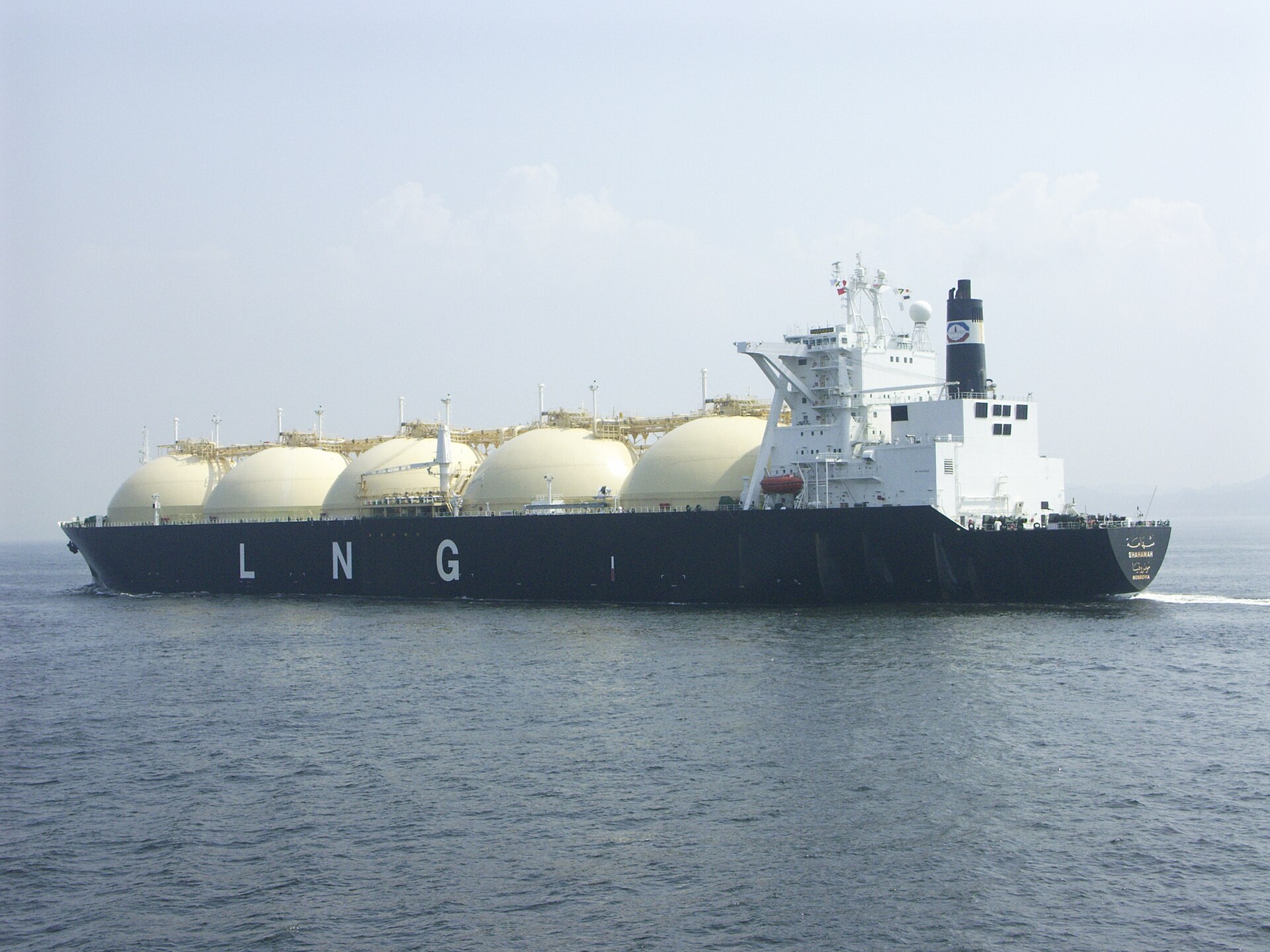
DUBAI — The Qatari LNG tanker Al Daayen was at 26.10°N / 55.77°E inside the Strait of Hormuz on Sunday morning, moving at 8.8 knots toward China with 149,613 cubic metres of liquefied natural gas in its tanks — the first laden Qatari cargo to transit the strait since Iran’s war with the United States began on February 28. The vessel that made it through was not escorted by the US Fifth Fleet, not cleared by any UN resolution, and not negotiated by any Western diplomat: it was brokered by Beijing, paid for in Chinese yuan through Kunlun Bank, and arranged with IRGC intermediaries on Kish Island at a reported cost of $2 million.
That transit, confirmed by MarineTraffic positional data on April 6, does not just move gas. It demolishes a month of Western analytical consensus — most pointedly a CSIS assessment titled “No One, Not Even Beijing, Is Getting Through the Strait of Hormuz” — and it does so on the very day Donald Trump’s deadline expires for Iran to reopen the waterway or face what he called “Power Plant Day and Bridge Day” strikes. While Washington frames Hormuz as a binary — open or closed, freedom-of-navigation or bomb — China has quietly built a third option: a yuan-denominated toll road through a war zone, operated by the force America is threatening to destroy.
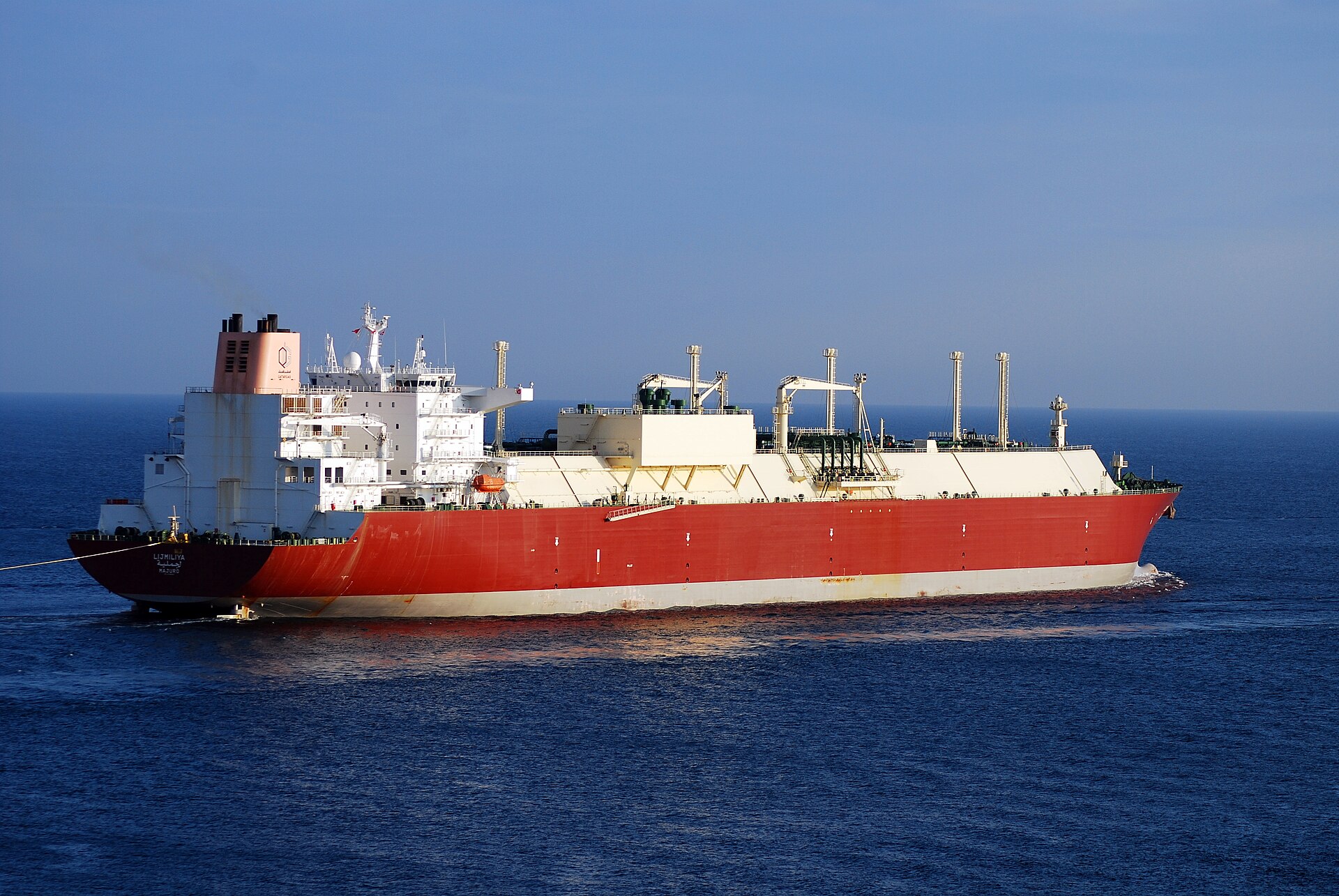
Table of Contents
What the Positional Data Shows
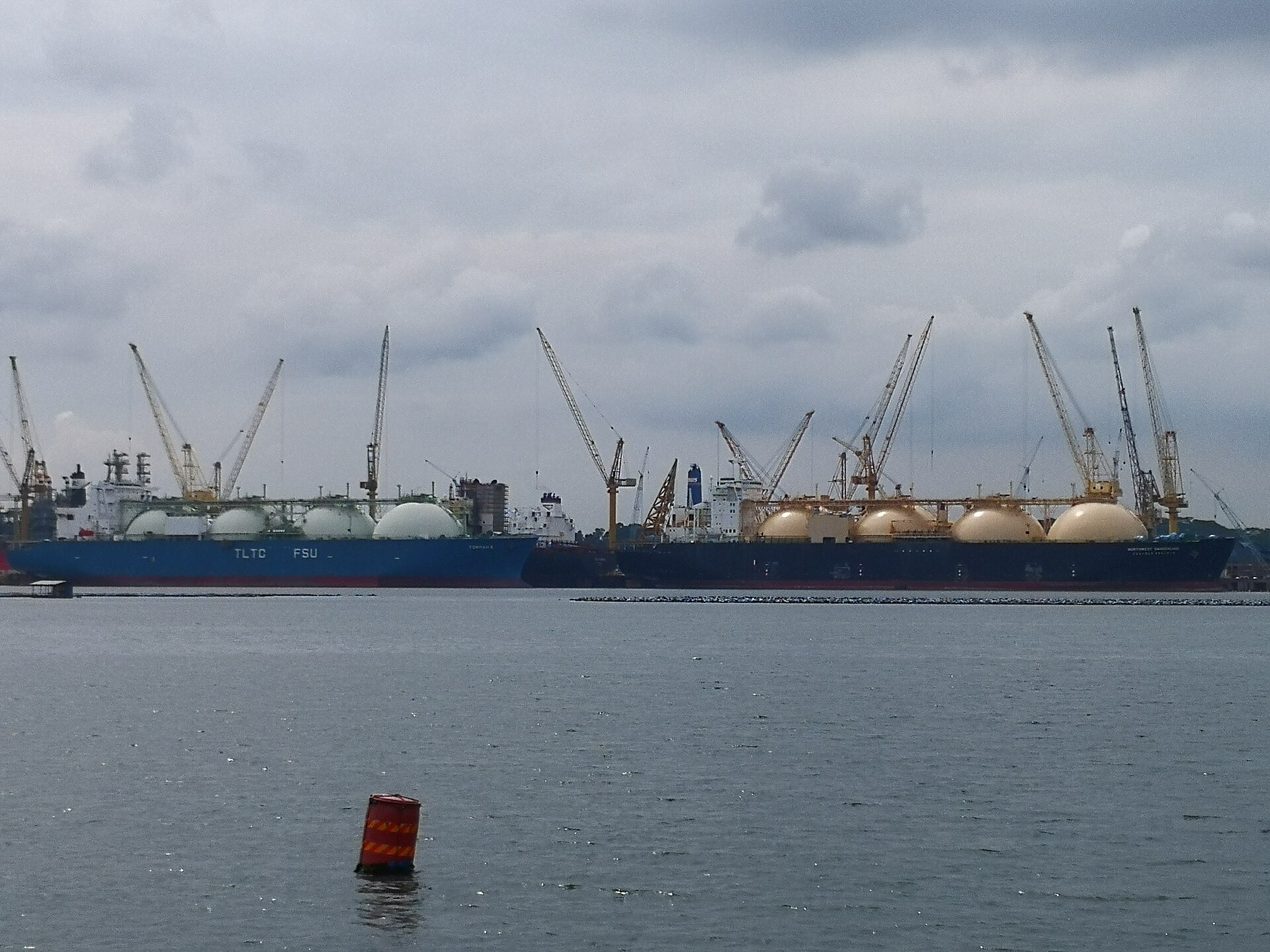
Al Daayen — IMO 9325702, a 288-metre Bahamas-flagged LNG carrier built by Daewoo Shipbuilding in 2007 and operated by Teekay Shipping Glasgow Ltd — loaded its cargo at Qatar’s Ras Laffan terminal in late February, days before the war began. It has been trapped ever since. As of Sunday morning, MarineTraffic data showed the vessel inside the Hormuz corridor, speed 8.8 knots, destination listed as China, with an estimated arrival of April 30.
A second Qatari vessel, the Rasheeda, which loaded at Ras Laffan around the same time, attempted the transit but “slowed and pulled back slightly,” according to Bloomberg. Al Daayen is the only confirmed active laden Qatari transit. Every previous passage since the war — three French, Omani, and Japanese vessels on April 3, plus the Sohar LNG in ballast — was either non-Qatari or sailing empty, as House of Saud reported on April 6.
The distinction matters enormously. Non-laden transits test the IRGC’s willingness to let hulls through. A laden Qatari LNG carrier heading for China tests something far more consequential: whether actual cargoes from the world’s largest LNG exporter can move through a strait that the IRGC has effectively turned into a tollbooth. The answer, as of Sunday, is yes — but only if Beijing is the one buying the ticket.
Why Did China Get the Key?
The simplest explanation is money and geology, in that order. China holds 8 million tonnes per annum of contracted Qatar LNG through two 27-year deals signed in 2022: CNPC committed to 4 MTPA in June and Sinopec to another 4 MTPA in November, according to Columbia University’s Center on Global Energy Policy. Both contracts came with 5% equity stakes in North Field East production trains — making CNPC and Sinopec not just buyers but co-owners of the infrastructure that Iran damaged when it struck Ras Laffan.
That equity stake is the detail no other outlet has connected to the transit facilitation. When Chinese state oil companies hold ownership shares in the very LNG trains that Iran’s attacks knocked offline — two of Qatar’s 14 trains, removing 12.8 MTPA from global supply, according to Natural Gas Intel — Beijing is not acting as a neutral diplomatic intermediary. It is protecting a physical asset. China’s 8 MTPA of contracted supply represents roughly 40% of contracted March and April LNG shipments from Qatar, per Kpler data. Force majeure has been declared on those contracts. Every day Hormuz stays functionally closed to Qatari LNG costs Chinese utilities real money.
Beijing confirmed its facilitation role on March 31, when Foreign Ministry spokesperson Mao Ning told reporters: “After coordination with relevant parties, three Chinese ships recently transited the Strait of Hormuz.” She added that China “expressed appreciation for the assistance of relevant parties” — a formulation that pointedly did not name Iran, let alone the IRGC. Three days later, Lloyd’s List Intelligence reported via Bloomberg that “at least two vessels that have transited the strait paid fees in yuan — China’s currency — with one transit brokered by a Chinese maritime services company acting as an intermediary.”
The pattern is now unmistakable. China’s facilitation is not charity, not diplomacy, and not a one-off. It is contract enforcement through a parallel payment channel, and Al Daayen’s transit proves it scales to Qatari-flagged cargoes carrying Qatari gas to Chinese ports.
The Yuan as Infrastructure Access Fee
The $2 million per-vessel IRGC transit fee, first reported by Bloomberg on April 1, is paid in Chinese yuan through Kunlun Bank and brokered by Kish Island-based trading firms. The arrangement requires 72 to 96 hours of advance coordination. That payment architecture is significant beyond its dollar value, because Kunlun Bank processes yuan transactions outside SWIFT — the messaging system that underpins virtually all international dollar-denominated trade.
This is the first operationally confirmed use of the yuan as an infrastructure access fee in global energy markets. Plenty of analysts have speculated about yuan-denominated oil and gas trades for years. What happened at Hormuz is different: this is not a commodity purchase settled in yuan, it is a transit toll — a fee to use a physical waterway — denominated in a currency that Washington cannot sanction through its usual financial plumbing. The IRGC cannot accept dollars even if it wanted to; US sanctions make that impossible. Yuan via Kunlun Bank solves the compliance problem from Tehran’s side while giving Beijing a structural role in every future transit.
Iran’s National Security Committee advanced the point further on March 31 by approving the “Strait of Hormuz Management Plan,” which codifies the IRGC’s existing toll practice and advances it toward a parliamentary vote, according to Claims Journal and Bloomberg. If enacted, the fee is no longer an improvised wartime revenue stream — it becomes Iranian statutory law, with yuan as the operating currency. The Atlantic Council has flagged this as a precedent that could reshape how chokepoint access is priced globally, though for now Hormuz is the only waterway where the arrangement is operational.
What Does a Chinese Transit Mean on Trump’s Deadline Day?
Donald Trump set an April 7, 8 PM EDT deadline for Iran to reopen the Strait of Hormuz — or face strikes he branded “Power Plant Day and Bridge Day” in an Easter morning Truth Social post, as NBC News and the Times of Israel reported. The deadline, which shifted by roughly one hour from an earlier 8 PM target and by a full 23 hours from the original April 6 evening timeframe, was already looking incoherent before Al Daayen entered the strait. Now it looks like a threat overtaken by events that Washington did not orchestrate.
The core problem for the White House is categorical. Trump’s framing requires Hormuz to be “closed” — a binary that justifies military escalation. Al Daayen’s transit at 8.8 knots, paid for in yuan, facilitated by Beijing, carrying Qatari LNG to China, demonstrates that Hormuz is not closed. It is selectively open, with the IRGC as gatekeeper and China as the preferred customer. That is arguably worse for American strategic interests than a full blockade, because it cannot be solved with carrier strike groups. You cannot bomb a payment channel.
CSIS published an analysis in late March arguing that “No One, Not Even Beijing, Is Getting Through the Strait of Hormuz.” The March 31 Chinese transits made that headline awkward. Al Daayen’s April 6 passage — a laden Qatari vessel, not a Chinese-flagged ship carrying Chinese cargo, but a Qatari LNG carrier sailing under a Chinese-brokered arrangement — makes it operationally false. Beijing did not just get through. It got Qatar through, on terms that bypass the US financial system entirely.
The franchised Hormuz corridor model that House of Saud identified in early April is now confirmed as a functioning logistics chain. The question for the 20,000 US troops in theater, as counted by the Soufan Center, is what exactly they are deterring — because the cargo is moving, the fee is paid, and the currency is not theirs.
Tehran’s Gas-Lane Logic
Iran has not publicly acknowledged Al Daayen’s transit. Tehran’s public posture, channelled through PressTV and state media, frames the Hormuz toll system as sovereign law enforcement under the forthcoming Strait of Hormuz Management Plan. PressTV reported on April 5 that Hormuz transit volume was down 94% from its pre-war baseline — a figure Tehran cites as evidence of Western shipping vulnerability, not Iranian aggression. Iran’s messaging has consistently cast exemptions as diplomatic courtesy: when an Iraqi Suezmax crude carrier was allowed through, PressTV reported Baghdad’s “gratitude.”
The structural reason Iran allows Qatari LNG — while keeping the crude lane shut — is geological, not political. Qatar’s North Field and Iran’s South Pars are the same gas reservoir, the largest on Earth, straddling the maritime border. Destroying Qatar’s LNG export capacity permanently, or preventing its restart indefinitely, damages Iran’s own long-term gas development because the shared reservoir pressure dynamics mean both countries’ extraction rates are interconnected. Iran needs Qatar pumping gas eventually, which means Iran needs Qatar’s LNG trains to survive.
That shared-reservoir constraint explains the gas-lane versus crude-lane asymmetry that has defined IRGC Hormuz management since March. Crude oil transits remain effectively blocked — Saudi Arabia has rerouted to the East-West Pipeline through Yanbu, handling roughly 7 million barrels per day through the Red Sea bypass. LNG, which cannot be piped, must go through Hormuz or not move at all. The IRGC has exploited that physical constraint to extract revenue from the only commodity that has no alternative route — and Beijing, which owns equity in the production, has agreed to pay.
Downstream: Who Gets Gas and Who Doesn’t
Al Daayen’s transit is good news for exactly one country’s gas buyers: China’s. For everyone else dependent on Qatari LNG through Hormuz, the picture remains bleak. South Korea relies on Qatar for approximately 15-35% of its total gas supply, according to Vortexa. Taiwan and Singapore fall in similar ranges. Singapore generates roughly 90% of its electricity from natural gas with limited fuel-switching capacity (Energy Market Authority of Singapore), meaning that a sustained Qatari LNG outage does not raise Singapore’s energy bill — it threatens its grid.
| Metric | Figure | Source |
|---|---|---|
| Al Daayen speed in Hormuz corridor | 8.8 knots | MarineTraffic, April 6 |
| Al Daayen LNG capacity | 149,613 m³ | MarineTraffic |
| IRGC transit fee per vessel | $2 million (in yuan) | Bloomberg, April 1 |
| China contracted Qatar LNG (CNPC + Sinopec) | 8 MTPA | Columbia SIPA CGEP |
| Qatar LNG trains offline | 2 of 14 (12.8 MTPA lost) | Natural Gas Intel |
| Qatari LNG tankers idling in Asia | 50+ | Bloomberg, April 6 |
| Hormuz transit volume vs pre-war | Down 94% | PressTV, April 5 |
| JKM spot price | $19.83–$19.97/MMBtu | Investing.com |
| Qatar share of global LNG through Hormuz | ~20% | EIA |
| Trump deadline | April 7, 8 PM EDT | NBC News |
More than 50 Qatari LNG tankers are currently idling across Asian waters — off western India, near Sri Lanka, in the northern Malacca Strait, and east of Singapore, according to Bloomberg. Those vessels represent contracted cargoes that cannot be delivered because the strait is functionally closed to anyone without a Chinese-brokered yuan payment. JKM — the benchmark Asian LNG spot price — sits at $19.83 to $19.97 per MMBtu, according to Investing.com, down from the $23.3 to $23.5 per MMBtu panic spike in early March, largely because demand destruction has set in. Buyers who cannot get Qatari gas have simply stopped buying, or switched to more expensive pipeline alternatives where available.
QatarEnergy CEO Saad Sherida al-Kaabi told the Financial Times that production from the damaged trains cannot restart until the conflict “ends completely,” and even then it takes “weeks” to resume. Qatar exported approximately 9.3 billion cubic feet per day of LNG through Hormuz in 2024, according to the EIA — roughly 20% of global LNG trade. Eighty percent of that went to Asian buyers. Kpler described the combined disruption in early March as the “largest combined energy supply shock in modern history.” That shock has not eased. It has simply been redirected: China gets through, everyone else waits.
“After coordination with relevant parties, three Chinese ships recently transited the Strait of Hormuz.”
— Mao Ning, Chinese Foreign Ministry spokesperson, March 31, 2026
Background: Hormuz Since February 28
The Strait of Hormuz carried roughly 21% of global petroleum liquids consumption before the war, according to the EIA. After Iran’s February 28 attacks, the IRGC moved from near-total traffic cessation to selective exemptions by mid-March — first Iraqi crude, then Chinese-flagged vessels — and the March 31 convergence of Beijing’s acknowledged facilitation and Iran’s formal Hormuz Management Plan created the architecture Al Daayen is now using. Oman has played a quiet intermediary role in shaping the transit rules, while Saudi Arabia has largely sidestepped the strait entirely by routing crude through its East-West Pipeline.
The human cost of the broader conflict — the Ras Laffan infrastructure damage, the strikes on Khuzestan bridges, the civilian casualties from Iranian counter-strikes on Gulf infrastructure including the Bapco storage tank in Bahrain and KPC headquarters in Kuwait — forms the backdrop against which a $2 million transit fee and a Chinese-brokered LNG cargo might seem trivially commercial. It is not. The toll model, if it survives the war, establishes a precedent for chokepoint monetisation that will outlast any ceasefire. Al Daayen is carrying gas. It is also carrying a proof of concept.
FAQ
What happens to Al Daayen’s cargo after it reaches China?
The vessel’s ETA is April 30, according to MarineTraffic data. Upon arrival at a Chinese regasification terminal — likely Tianjin, Dalian, or Guangdong based on CNPC and Sinopec’s receiving infrastructure — the LNG will be regasified and fed into China’s domestic pipeline network. Because the cargo was loaded pre-war in late February at pre-conflict contract pricing, the delivered cost to the Chinese buyer will be substantially below current JKM spot rates, making this an extremely profitable receipt for whichever state utility takes delivery. At current JKM spot rates of roughly $20 per MMBtu, the cargo’s commercial value is approximately $65-70 million.
Could other countries replicate China’s transit arrangement with the IRGC?
In theory, yes — Iran’s Hormuz Management Plan does not limit the toll system to Chinese vessels. In practice, the arrangement requires a payment channel outside SWIFT (Kunlun Bank currently serves that function exclusively for yuan), a diplomatic relationship with Tehran that can absorb the arrangement without triggering US secondary sanctions, and sufficient commercial volume to justify the IRGC’s operational overhead. India would be the most plausible next candidate: Nayara Energy, 49.1% owned by Rosneft, already operates outside conventional US compliance frameworks, and India took delivery of its first Iranian crude since May 2019 under OFAC General License U. Japan and South Korea, both under US security umbrellas, face prohibitive sanctions risk.
How does the IRGC physically manage the transit — is there a naval escort?
Open-source intelligence and Lloyd’s List reporting suggest the IRGC does not escort vessels through the strait in any conventional sense. Instead, the 72-to-96-hour advance coordination window involves a vessel identification protocol where the Kish Island-based broker confirms the vessel’s IMO number, cargo, and destination with IRGC Navy and IRGC Aerospace Force units that monitor the strait with shore-based anti-ship missile batteries and fast-attack craft. The vessel transits under its own navigation but within a pre-cleared time window. This is closer to an air traffic control slot than a naval convoy — the IRGC clears the path by not targeting the ship, rather than by actively protecting it.
What is Kunlun Bank and why is it central to this arrangement?
Kunlun Bank is a subsidiary of China National Petroleum Corporation (CNPC) headquartered in Karamay, Xinjiang. It was sanctioned by the US Treasury in 2012 for processing transactions with Iranian banks, and has operated outside the SWIFT messaging system since. After a brief period of reduced Iran business around the JCPOA era, Kunlun Bank re-emerged as the primary financial channel for Chinese-Iranian trade after the US withdrew from the nuclear deal in 2018. Analysts tracking Chinese-Iranian trade estimate it processes $10-15 billion annually in bilateral transactions, primarily in yuan. Its role in the Hormuz transit fee system gives it a new function: not just trade settlement, but waterway access pricing — a qualitative escalation in the yuan’s role in global energy infrastructure.