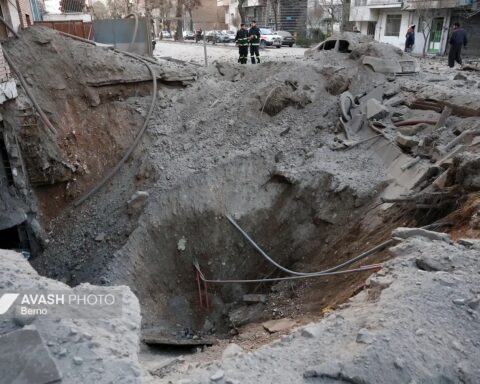

RIYADH — Saudi air defenses intercepted one ballistic missile and ten drones over Al-Kharj on April 2, 2026, but the debris from those successful intercepts fell on at least nine residential homes across two separate incidents — the first time Saudi state media has formally acknowledged that the act of shooting down an incoming threat, rather than the threat itself slipping through, caused civilian property damage inside the Kingdom. Two residents sustained minor injuries in the first debris fall, according to the Saudi Gazette and Qatar News Agency, and Saudi Civil Defense confirmed that “standard procedures for such incidents have been implemented” after fragments struck six more homes in a second incident hours later.
The distinction matters because Saudi defense briefings have consistently framed interceptions as unqualified successes — a missile destroyed is a missile defeated. But a PAC-3 hit-to-kill interceptor does not vaporise an incoming warhead; it collides with it at extreme velocity and shatters it into fast-moving fragments that rain down over whatever neighbourhood happens to sit beneath the intercept point. Al-Kharj, a city of approximately 376,000 people located roughly 18 miles from the perimeter of Prince Sultan Air Base, has become the place where the gap between “intercept success” and “zero consequence” is measured in shattered roof tiles, punctured vehicles, and — since March 8 — body bags.
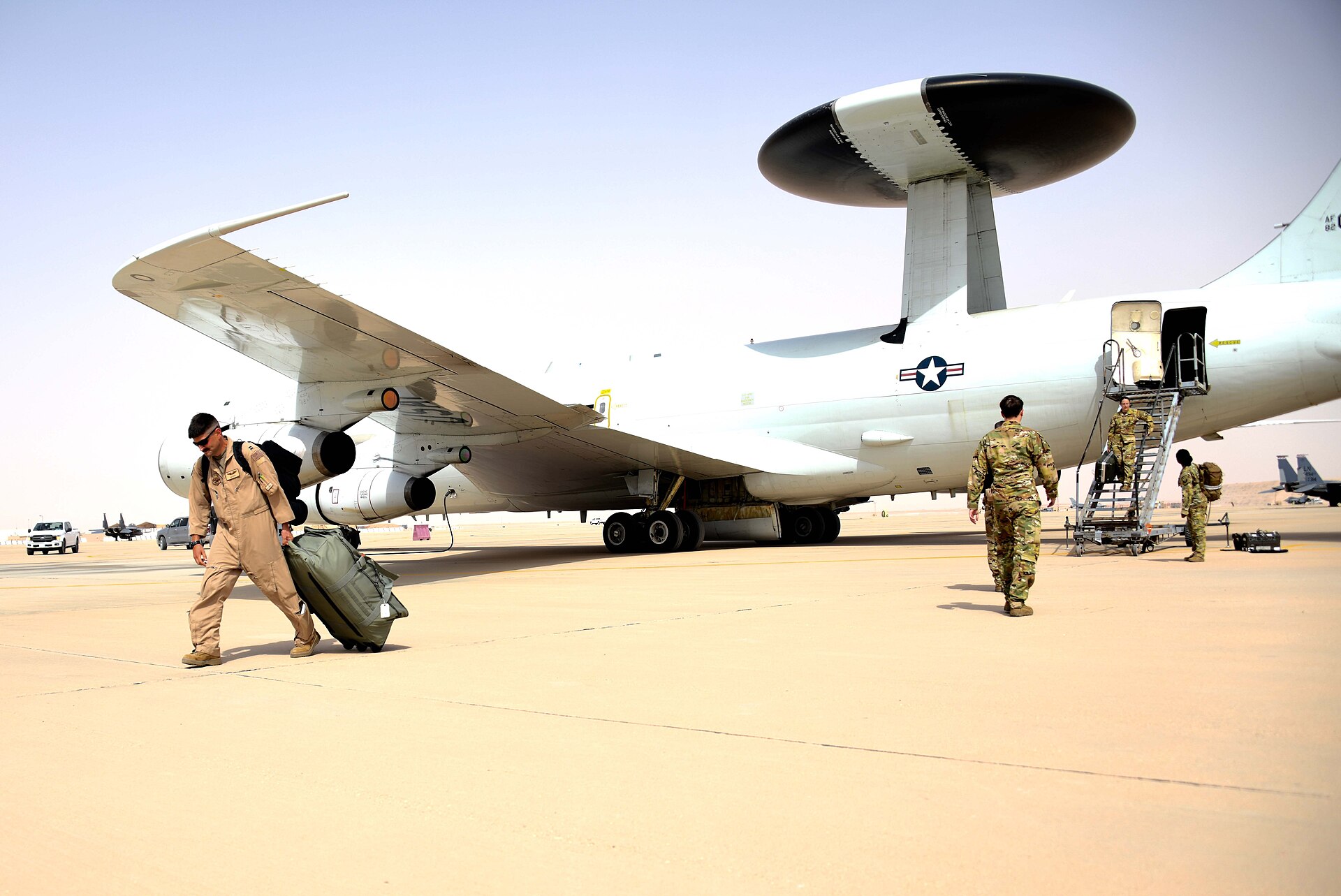
Table of Contents
What Happened in Al-Kharj on April 2
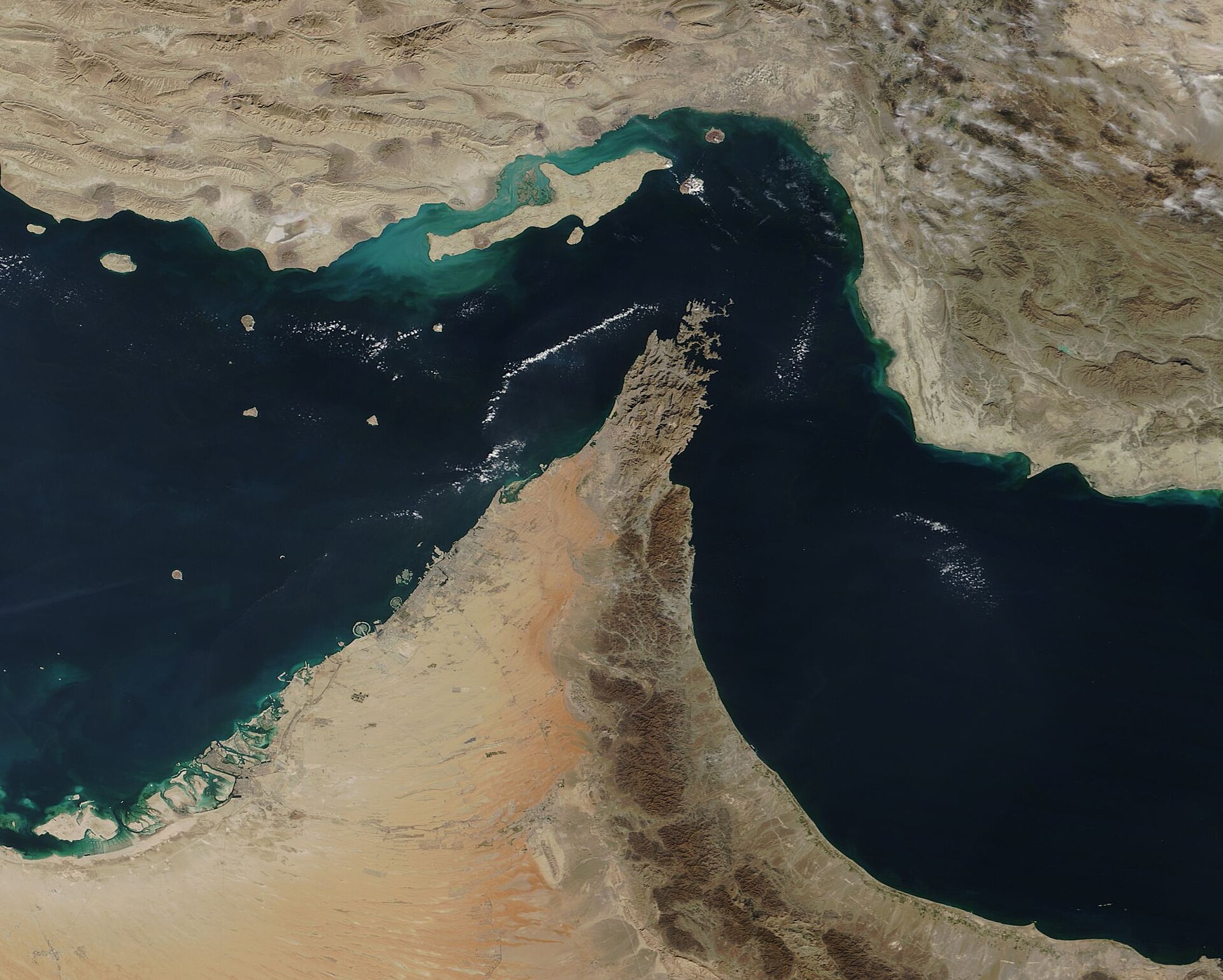
Ministry of Defense spokesman Maj. Gen. Turki Al-Malki confirmed that the ballistic missile “was heading toward the Eastern Province when it was intercepted” and that “10 drones were intercepted over the past several hours,” according to reporting by Saudi Gazette and Gulf Insider on April 2. The intercepts were logged as part of a wider defensive pattern that has seen Saudi Arabia shoot down 439 drones and 36 ballistic and cruise missiles since the war with Iran began on February 28, according to Arab News and Madhyamam Online.
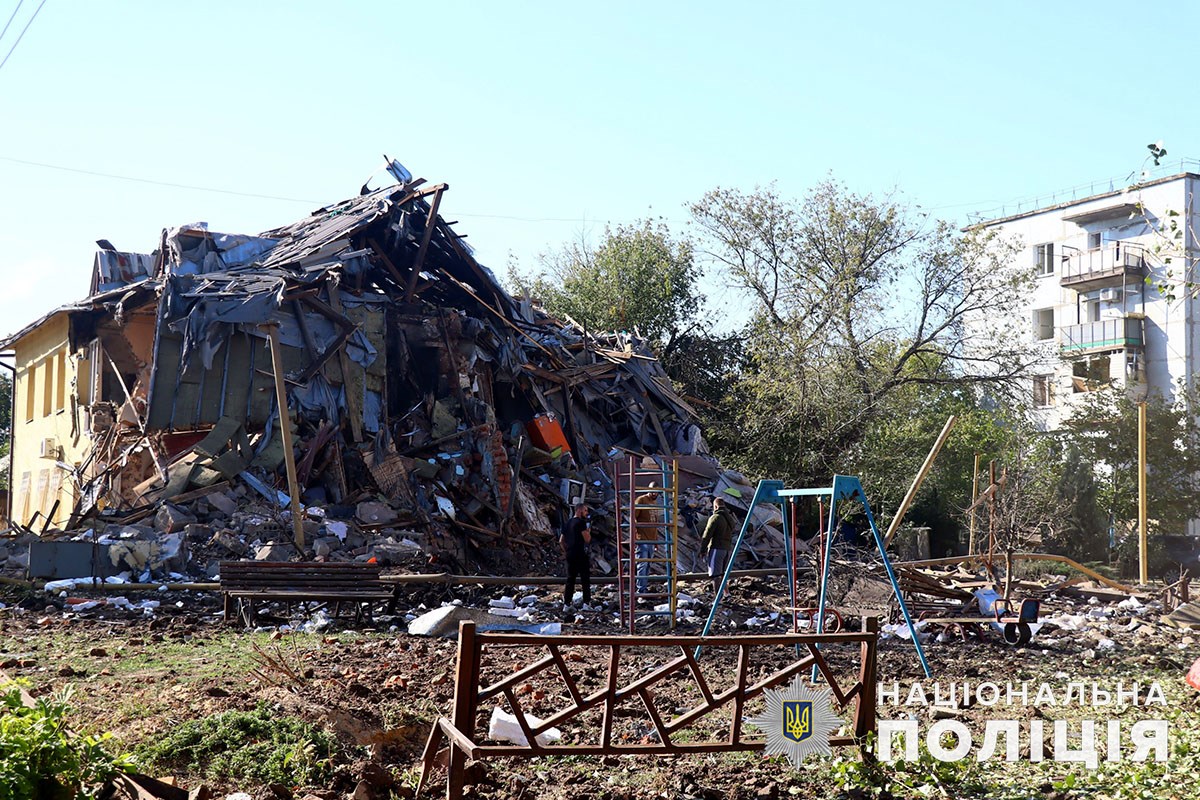
The first debris-fall incident struck three homes and several vehicles in Al-Kharj, injuring two civilians — one of whom was discharged after treatment, according to the Saudi Gazette. Hours later, a second shower of fragments landed on six homes in a residential neighbourhood, causing material damage but no injuries, as reported by Qatar News Agency. Saudi Civil Defense confirmed it had responded to both incidents but offered no explanation for why intercept debris was falling on a populated area — a question that, until April 2, Saudi officials had not been publicly required to answer.
The nine damaged homes represent a threshold in the Kingdom’s public messaging about air defense. Previous debris incidents, including one on March 31 in which two people were injured when drone fragments landed in Al-Kharj according to Al Arabiya, were reported without explicit acknowledgment that the damage came from a successful intercept rather than an incoming threat that penetrated defenses. The April 2 reporting, by attributing damage directly to intercept debris across two distinct events in a single day, closes that ambiguity — and opens a harder question about what communities near air defense batteries should expect going forward.
How Does a Successful Intercept Create a Debris Field?
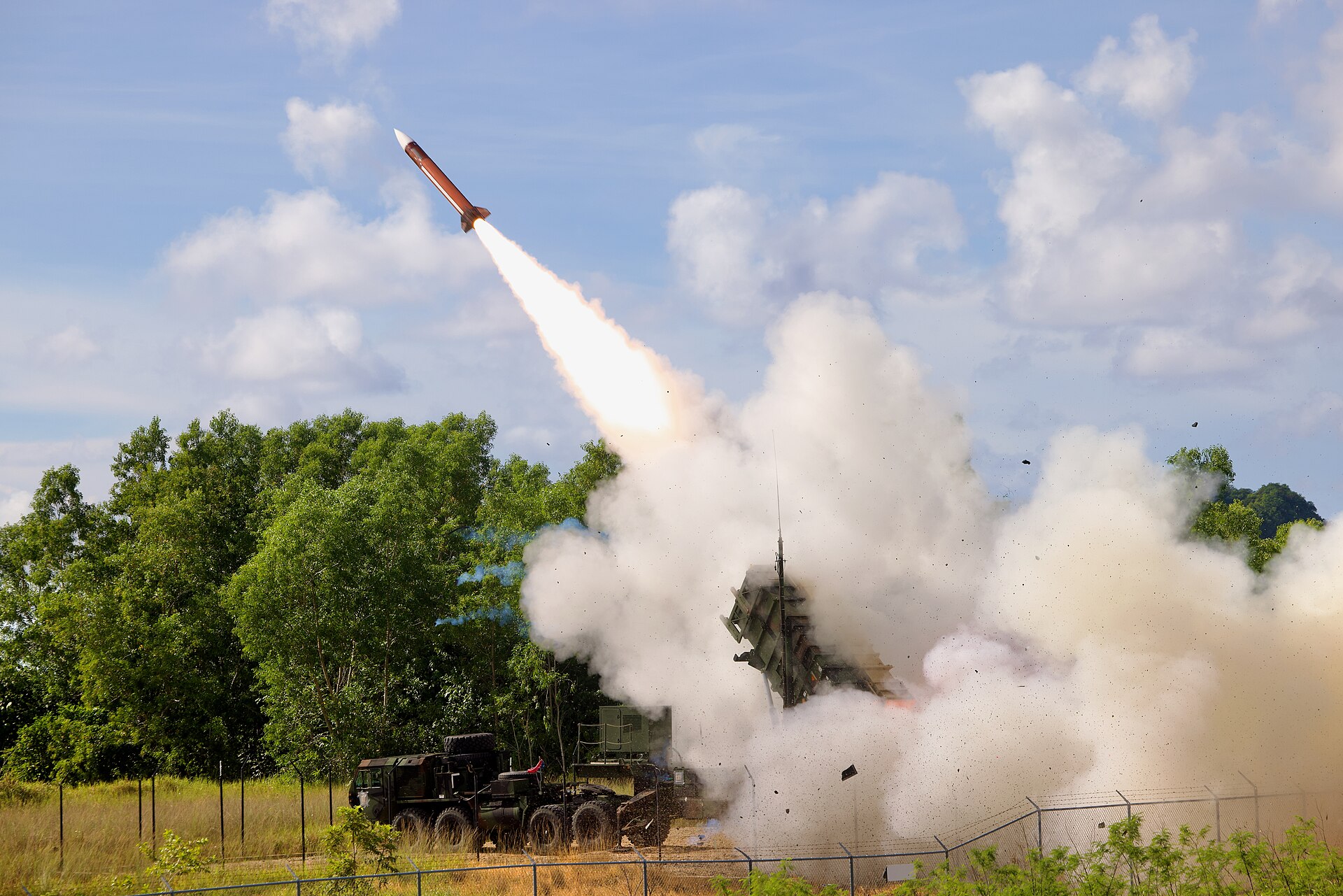
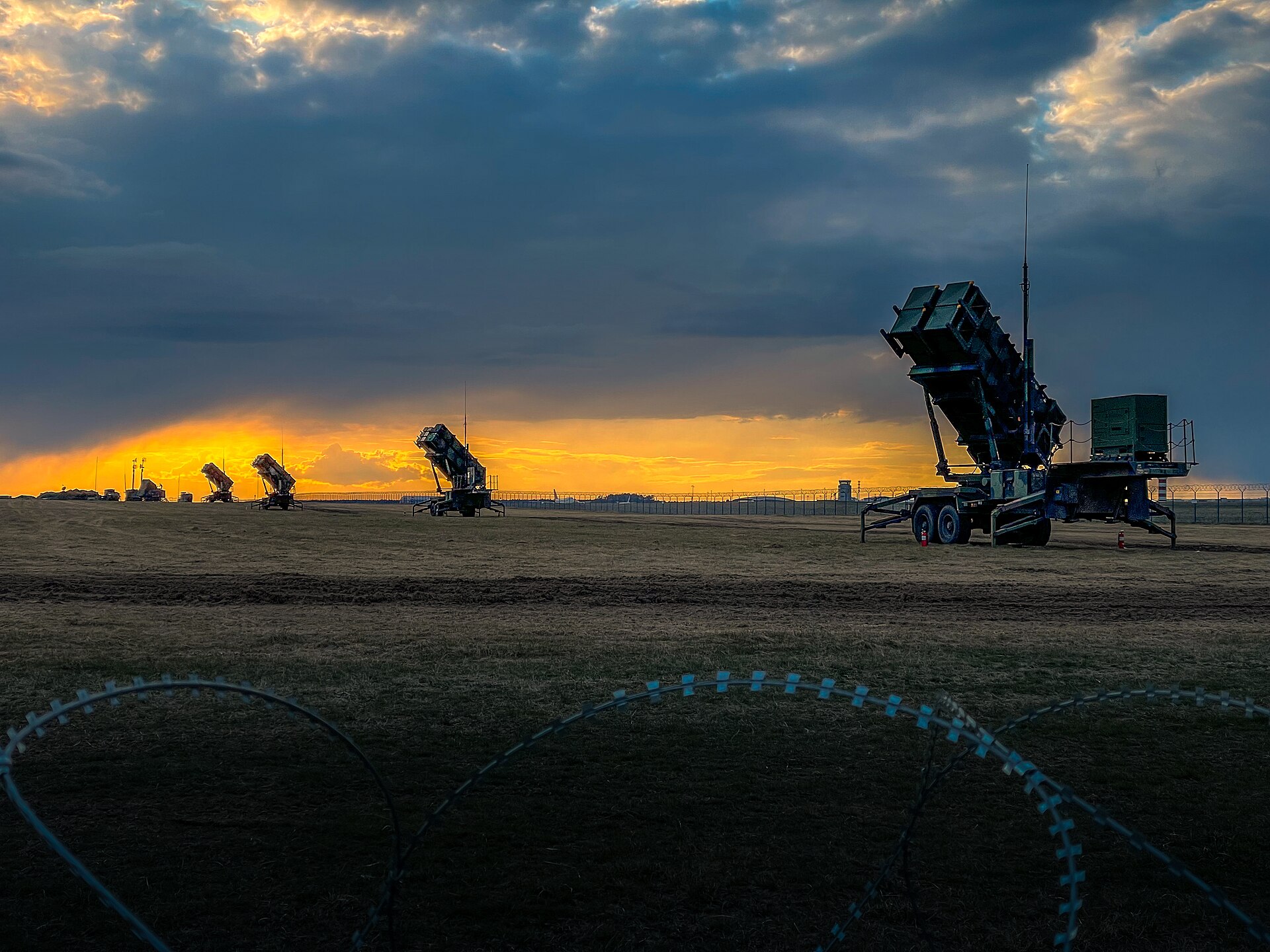
The PAC-3 interceptor uses what the defense industry calls “hit-to-kill” kinetic interception — a method described in detail by The War Zone and TheDefenseWatch. The interceptor does not detonate a conventional warhead near its target; instead, it physically rams the incoming missile or drone at extreme velocity, and the collision disintegrates the threat into fragments. Those fragments, which can include pieces of the missile body, unburned fuel, warhead casing, and parts of the interceptor itself, then fall as a debris field whose footprint depends on the altitude of the intercept, the velocity of both objects, and wind conditions.
When a PAC-3 destroys an incoming missile, it does not make that missile disappear — it shatters it into fast-moving fragments that fall wherever the intercept happened to occur, which, in Al-Kharj, is directly above someone’s house. The debris field from a high-altitude intercept can spread across a radius of several kilometres, and the fragments arrive with enough energy to punch through roofing materials, shatter vehicle windshields, and — as the March 8 incident demonstrated with lethal clarity — kill people on the ground.
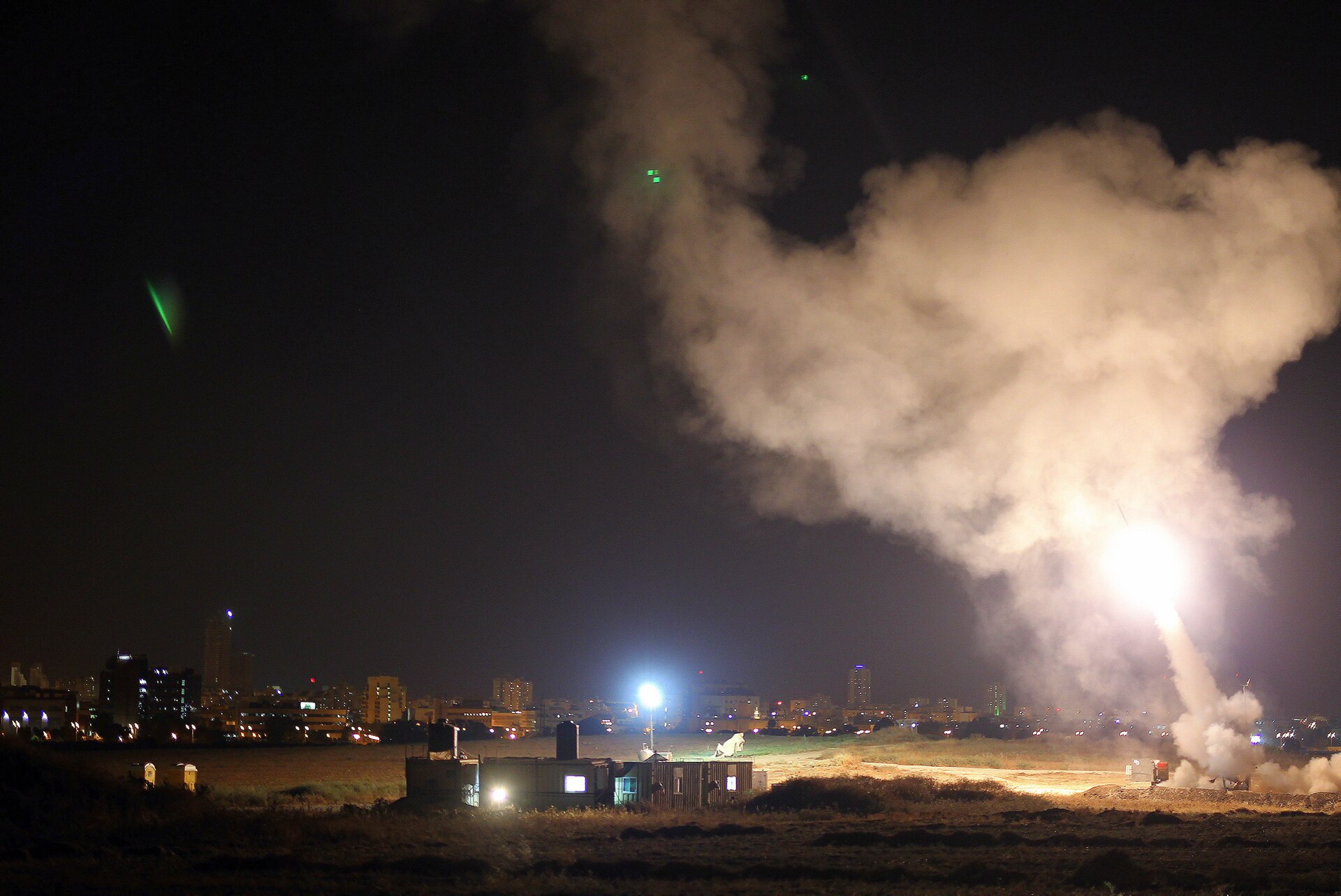
The precedent from Israel’s Iron Dome system is instructive, though the mechanism differs. Iron Dome interceptors explode near an approaching projectile and destroy it with shrapnel, but the result is the same: “falling debris can still cause considerable damage,” according to GlobalSecurity.org analysis, which noted that “most damage in Israel has been caused by falling debris” rather than by rockets that evaded interception. The PAC-3’s kinetic method generates a different debris profile — heavier fragments, higher terminal velocity — but the underlying physics is identical. A destroyed missile is still a missile’s worth of material that has to come down somewhere.
“Standard procedures for such incidents have been implemented.”Saudi Civil Defense spokesman, following debris fall on six homes in Al-Kharj, April 2, 2026 — Qatar News Agency
That statement — the entirety of the Civil Defense response to the second debris incident — frames the problem neatly. “Standard procedures” implies this is a known, managed category of event, not an anomaly. If debris falling on residential homes after a successful intercept is now procedurally routine, then Al-Kharj residents are not living near a defense system that protects them from missiles; they are living inside the blast radius of a defense system that protects other things from missiles, and absorbing the physical byproduct.
Al-Kharj: Four Incidents in Less Than a Month
The April 2 debris falls are not isolated. Al-Kharj has experienced four distinct debris or damage events in under 30 days, making it the most repeatedly struck civilian area in Saudi Arabia since the war began. On March 14, Saudi air defenses destroyed a ballistic missile over the area, as reported by Al Arabiya. On March 27-28, direct strikes hit Prince Sultan Air Base itself, wounding 10 to 15 US troops, destroying an E-3 AWACS surveillance aircraft, and damaging KC-135 Stratotanker refuelling aircraft, according to WION News and the Jerusalem Post — strikes that House of Saud covered in detail. On March 31, drone debris injured two people in Al-Kharj according to Al Arabiya. And on April 2, intercept debris damaged nine homes across two incidents.
The geography makes the pattern inevitable. Prince Sultan Air Base sits inside Al-Kharj Governorate, approximately 80 kilometres southeast of Riyadh, with Al-Kharj city centre located approximately 30 kilometres from the base perimeter, according to Wikipedia and HECT India. The base is one of the primary US-Saudi operational hubs for coalition air operations, which makes it a priority target for Iranian missile and drone campaigns. Every intercept of a weapon aimed at the base occurs in the airspace above or near a city of 376,000 people — a population figure drawn from the 2010 census on Wikipedia, and likely higher now after 16 years of growth driven by the base’s economic presence.
The deadliest incident so far came on March 8, when what Saudi Civil Defense described as “an unspecified military projectile” struck a residential compound in Al-Kharj housing foreign workers employed by a maintenance and cleaning company. Two Bangladeshi nationals were killed and 12 others injured — 11 Bangladeshi and one Indian — according to Al Jazeera and Arab Times Online. The IRGC subsequently claimed, via Al Jazeera’s reporting, that the March 8 strike had been directed at “radar systems” in Al-Kharj, effectively confirming that the weapon was aimed at military infrastructure near civilian housing. Saudi Civil Defense stated at the time that targeting civilian areas “constitutes a clear violation of international humanitarian law.”
That framing — Iran is violating international law by hitting civilians — becomes more complicated when the damage comes not from an Iranian weapon that reached its target but from a Saudi interceptor that did exactly what it was designed to do. The April 2 incidents fall into a different legal and moral category than the March 8 deaths, and the Saudi government has not yet articulated how it distinguishes between the two in terms of responsibility to affected residents.
What Is Iran Targeting — and Why Al-Kharj?
Iran’s Islamic Revolutionary Guard Corps has been explicit about its targeting priorities in the Gulf. Nearly 70 percent of Saudi-reported intercepted Iranian drones and missiles have targeted the Eastern Province or specific oil facilities, including the Shaybah oilfield and the Samref refinery, according to a CSIS analysis published via Small Wars Journal on March 30. But the analysis also notes that most ballistic missile launches — the higher-end, harder-to-intercept weapons — have been aimed at Al-Kharj and Prince Sultan Air Base, consistent with Iran’s broader strategy of bleeding Gulf defenses across multiple fronts.
The IRGC has escalated its rhetoric to match. On April 1, Tasnim News Agency — the IRGC’s semi-official media outlet — claimed that Iran had “destroyed the accommodation of US pilots and aircrew in Al Kharj air base, Saudi Arabia” using drones and missiles, targeting what it described as “a gathering of 200 individuals.” The claim, which appeared one day before the April 2 intercepts, demonstrates that Al-Kharj is not an incidental target but a deliberate, named objective in Iranian operational messaging.
Kateryna Bondar, a Fellow at the Wadhwani AI Center at CSIS, assessed that Iran’s drone campaign “reinforces Iran’s longstanding strategy of using attacks on energy assets and coalition operational hubs as leverage.” Al-Kharj, as the site of a coalition operational hub, absorbs the full weight of that strategy — both the incoming weapons and the fragments of the interceptors that destroy them. The IRGC has also issued broader warnings urging “civilians to leave areas where US forces are deployed across the Gulf region,” claiming that US forces are using civilians as shields, a framing reported across multiple outlets in March 2026 that effectively tells the city’s residents to relocate or accept the consequences.
The pattern of Iran’s defense exhaustion strategy is visible in the numbers. Since February 28, Saudi Arabia has intercepted 439 drones and 36 ballistic and cruise missiles, according to Arab News. Each of those 475 intercepts generated a debris field. Each debris field landed somewhere. The overwhelming majority fell on empty desert or military installations, but as the concentration of attacks on Al-Kharj increases, the probability that debris lands on populated areas increases with it — a statistical inevitability that the April 2 incidents have now converted from theoretical risk to documented reality.
The Depletion Math: 400 Rounds and Counting Down
The debris problem compounds a stockpile crisis that is already acute. Mark F. Cancian, Senior Adviser for Defense and Security at CSIS, assessed that “the Gulf states’ inventories of interceptors are reportedly running low,” and current estimates place GCC-wide PAC-3 interceptor stocks at approximately 400 rounds. At the rate Saudi Arabia has been consuming interceptors — 475 used across 33 days of conflict, roughly 14 per day — those 400 rounds represent less than a month of continued operations at current tempo, assuming Iran maintains its launch rate.
The cost asymmetry is staggering. Each PAC-3 MSE interceptor costs approximately $4.1 million, according to DSCA figures, while the Iranian Shahed-series drones it is being used to destroy cost between $20,000 and $50,000 to produce — a minimum cost ratio of 82 to 1 in Iran’s favour. The United States approved a potential $9 billion sale of 730 PAC-3 MSE missiles to Saudi Arabia on January 30, 2026, according to the Defense Security Cooperation Agency — a package that includes training, support equipment, and sustainment in addition to the missiles themselves — but those weapons have not been delivered, and the production timeline for PAC-3 rounds stretches well beyond the current operational horizon.
“Our Patriot batteries and their armaments serve to protect Polish skies and NATO’s eastern flank. Nothing is changing in this regard and we are not planning to move them anywhere.”Władysław Kosiniak-Kamysz, Polish Defense Minister, rejecting a US request to transfer a Patriot PAC-3 battery to the Gulf — Defense News, April 1, 2026
Poland’s refusal on March 31, reported by Defense News on April 1, to transfer even one of its Patriot PAC-3 batteries to the Gulf exposed the global scarcity of the system. There is no quick-fix resupply option. The IISS estimate of an 85-90 percent intercept rate means that for every 100 incoming projectiles, 10 to 15 get through — but it also means that 85 to 90 intercepts each generate a debris field. The better the air defense system performs, the more debris it creates. Al-Kharj is caught in a paradox where the system’s success rate and the system’s collateral damage are functions of the same variable.
As interceptor stocks decline, commanders face an increasingly brutal triage calculation: which incoming threats justify expending a $4.1 million round, and which should be allowed through because the target they are aimed at is less valuable than the interceptor? That calculus, which CSIS and defense analysts have framed as the central question of the war’s next phase, does not account for the debris cost of the intercepts that are authorised — a cost that Al-Kharj residents are paying in damaged homes and, on March 8, in lives.
Where Are the Shelters?
Israel’s experience with persistent missile threat offers the closest comparison for what Al-Kharj is enduring, and the gap between the two countries’ civil defense postures is stark. Israel’s Home Front Command issues ballistic missile warnings 15 to 30 minutes before expected impact, according to the Times of Israel, and sirens sound 90 seconds before arrival. Israeli civil defense law mandates reinforced safe rooms — known as mamad — in all residential construction, giving every household a hardened space designed to survive a near-miss.
Saudi Arabia operates a National Early Warning Platform using Cell Broadcast Technology to push alerts to mobile phones, and its Civil Defense infrastructure includes a siren system with three distinct tones, according to the Saudi Civil Defense portal at 998.gov.sa. But there is no equivalent mandatory shelter room standard for residential construction. Al-Kharj’s homes — the same homes now being hit by intercept debris — were built without reinforced safe rooms, without blast-resistant windows, and without the assumption that their occupants would need to survive falling fragments from a war fought in the airspace directly above them.
The cell broadcast system can tell residents that an attack is incoming. It cannot tell them where the intercept will occur, which direction the debris will travel, or how large the fallout radius will be — variables that depend on factors no alert system can predict in real time. For the residents of the nine homes damaged on April 2, the warning that a missile had been successfully intercepted was delivered not by their phones but by the sound of metal fragments hitting their roofs. The intercept succeeded, the system worked, and they were left standing in the wreckage of their own protection.
| Date | Incident Type | Damage | Casualties | Source |
|---|---|---|---|---|
| March 8 | Military projectile strike on residential compound | Residential compound housing foreign workers | 2 killed (Bangladeshi), 12 injured (11 Bangladeshi, 1 Indian) | Al Jazeera / Arab Times Online |
| March 14 | Ballistic missile intercepted over Al-Kharj | Not specified | Not specified | Al Arabiya |
| March 27-28 | Direct strikes on Prince Sultan Air Base | E-3 AWACS destroyed, KC-135 tankers damaged | 10-15 US troops wounded | WION News / JPost |
| March 31 | Drone debris fall in Al-Kharj | Property damage | 2 injuries | Al Arabiya |
| April 2 (Incident 1) | Intercept debris fall | 3 homes, several vehicles | 2 minor injuries (1 discharged) | Saudi Gazette |
| April 2 (Incident 2) | Intercept debris fall | 6 homes | None | Qatar News Agency |
Frequently Asked Questions
What compensation is available for residents whose homes are damaged by intercept debris?
Saudi Arabia has not announced a formal compensation programme for civilian property damage caused by intercept debris, as distinct from damage caused by incoming enemy weapons. Following the March 8 deaths, Saudi Civil Defense invoked international humanitarian law to assign responsibility to Iran, but the April 2 debris incidents — where damage resulted from successful Saudi intercepts — fall into an unaddressed category. In past Houthi-era intercept incidents over Riyadh, residents reported filing claims through municipal channels, but no standardised national framework for intercept-debris compensation has been made public.
Can PAC-3 batteries be repositioned to reduce debris risk to populated areas?
In theory, relocating Patriot batteries farther from Al-Kharj city centre would shift the intercept point — and therefore the debris field — away from residential areas. In practice, Patriot battery placement is dictated by the geometry of the incoming threat: batteries must be positioned to intercept missiles during the terminal phase of their trajectory, which constrains how far they can be moved from the asset they are defending, in this case Prince Sultan Air Base. Moving a battery 10 kilometres east to protect homes might open a gap in coverage that allows a missile to reach the base, which is the outcome the entire system exists to prevent.
How does the debris risk from PAC-3 compare to Israel’s Iron Dome?
The two systems create debris through different mechanisms but with comparable risk profiles. Iron Dome uses a proximity-fused warhead that detonates near the incoming rocket and destroys it with shrapnel, producing a cloud of smaller fragments. PAC-3 uses direct kinetic impact at extreme velocity, which tends to produce fewer but larger and heavier fragments with higher terminal energy. Israeli military assessments cited by GlobalSecurity.org concluded that “most damage in Israel has been caused by falling debris” — a finding that, based on the April 2 Al-Kharj incidents, appears to be replicating in Saudi Arabia.
Has Saudi Arabia considered layered or directed-energy alternatives that produce less debris?
Directed-energy weapons — high-energy lasers in particular — are being developed by the US, Israel, and others partly because they destroy targets without creating a debris field. Israel’s Iron Beam laser system, which began limited operational deployment in 2025, is designed to defeat drones and short-range rockets by burning through them rather than shattering them. Saudi Arabia signed a memorandum of understanding with the US in 2024 covering advanced defense technology cooperation, but no laser-based air defense system is currently operational or deployed in the Kingdom. The technology remains years from the kind of scaled deployment that could replace PAC-3 for ballistic missile defense.
What is the estimated total debris footprint across all 475 Saudi intercepts since February 28?
No official estimate exists, but defense analysts model a typical high-altitude ballistic missile intercept as producing a debris field of 1 to 3 square kilometres, depending on altitude, velocity, and wind conditions. Drone intercepts at lower altitudes produce smaller but more concentrated fields. Across 475 intercepts — 36 ballistic missiles and 439 drones — the cumulative debris footprint likely spans hundreds of square kilometres of Saudi and potentially Gulf-wide territory, the vast majority falling on uninhabited desert. The concentration of missile intercepts over Al-Kharj, however, means that a disproportionate share of the heaviest debris — from ballistic missile intercepts — falls near populated areas.