DHAHRAN — Aramco’s Official Selling Price for Arab Light crude to Asia is set to spike to approximately $40 per barrel above the Oman/Dubai benchmark for May-loading cargoes, according to Bloomberg. That is a sixteenfold increase from the $2.50 premium that prevailed before the Iran war began on February 28. No comparable repricing has occurred in the five-decade history of the OSP system. Asian buyers now face an effective delivered price exceeding $155 per barrel. The premium itself has become the market’s most precise financial verdict on the new geopolitical order.
The number matters because Aramco’s OSP is not a market price — it is an administered price set monthly, reflecting the company’s own assessment of supply, demand, and strategic priorities. For that premium to move from $2.50 to $40 is a structural repricing that tells buyers something the headline Brent number cannot: the oil they depend on most is now priced as a scarce, militarily threatened commodity. It flows through a single overloaded corridor. The question the market has not yet answered: how long can a $40 premium survive before it destroys the demand it feeds on?
Table of Contents
- What Is Aramco’s OSP and Why Has It Broken?
- The Anatomy of a $40 Premium
- Who Pays the Premium — and Who Cannot?
- Are Asian Buyers Revolting Against Saudi Pricing?
- The Yanbu Bottleneck and the Physics of Constrained Supply
- How Much Is Saudi Arabia Actually Making?
- Why Is the $40 Premium Structurally Fragile?
- No Precedent — How This Compares to 1973, 1979, and 1990
- The Premium as Accelerant — Long-Term Damage to Saudi Market Power
- Frequently Asked Questions
What Is Aramco’s OSP and Why Has It Broken?
Aramco’s Official Selling Price is not a market price. It is an administered price that the company sets at the start of each month for every crude grade it sells, differentiated by destination — Asia, Europe, and the Americas. For Asian buyers, which absorb the largest share of Saudi exports, the OSP is expressed as a premium or discount to the average of Oman and Dubai benchmark prices. For European buyers, it is referenced against ICE Brent.
The system has operated since the early 1980s with remarkable stability. Historically, the Arab Light premium to Asia has fluctuated within a band of roughly negative $3 to positive $10 per barrel, according to data compiled by MacroMicro and the U.S. Energy Information Administration. Even during the 2008 oil price spike, when Brent breached $140, Aramco’s premium stayed within this band. The premium has been a fine-tuning instrument, not a blunt weapon.
The $40 premium for May-loading cargoes shatters that convention entirely. It sits four times above the historical ceiling. Bloomberg reported on March 30 that Saudi oil price negotiations for May had “taken on added urgency.” The premium has reached $40 based on where physical crude is trading against the usual Oman/Dubai formula. The benchmark itself has not moved proportionally. Asian spot markets have become disconnected from the physical reality of constrained Gulf supply.
The breakdown has a specific cause. The OSP system assumes that the Oman/Dubai benchmark accurately reflects the marginal cost of acquiring medium-sour crude in Asia. When Hormuz was open and Gulf supply flowed freely, it did. Strait of Hormuz traffic has collapsed 94.6% — from 2,652 ship transits in March 1-25, 2025 to just 142 in the same period this year, according to shipping data. The benchmark has lost its connection to physical supply. Asian refiners have formally asked Saudi Arabia to switch to ICE Brent as the pricing reference, as Bloomberg reported on March 19. The Dubai benchmark no longer reflects the actual cost of moving oil to Asia.
The Anatomy of a $40 Premium
The premium is composed of three distinct layers, each with its own dynamics and vulnerabilities.
The scarcity layer accounts for approximately $15-20 of the premium. The International Energy Agency called the Hormuz shutdown “the largest supply disruption in the history of the global oil market” in its March 2026 Oil Market Report. Gulf countries have cut total oil production by at least 10 million bpd. Global oil supply fell by 8 million bpd in March alone. The 1973 Arab oil embargo, previously the benchmark for supply shocks, removed approximately 5 million bpd. The current disruption is double that magnitude. It occurred in days rather than months.
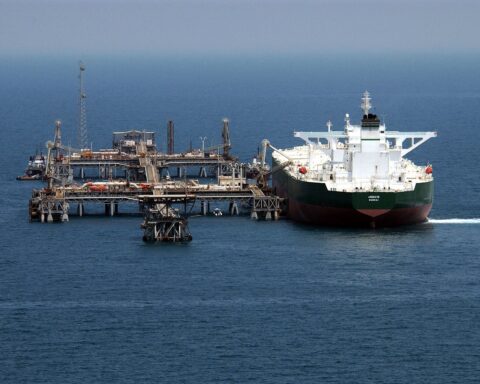
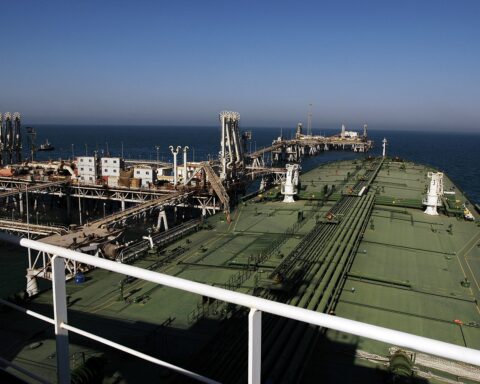
The logistics layer adds another $10-15. Saudi crude that once loaded at Ras Tanura and sailed east through Hormuz now travels west across the kingdom via the East-West Pipeline to Yanbu on the Red Sea. From there it sails south through the Bab al-Mandeb strait and around the Arabian Peninsula to reach Asian buyers. The voyage is longer by 5,000 nautical miles. Freight rates have tripled. Insurance premiums for tankers transiting Houthi-threatened waters have spiked. Every dollar of additional shipping cost gets capitalized into the premium.
The risk layer adds the remainder. Saudi infrastructure has absorbed more than 200 Iranian drones and missiles since February 28 without retaliating. Refineries, desalination plants, and industrial facilities have been struck. On March 30, an Iranian drone struck a Kuwait desalination plant, killing a worker. Bahrain’s Bapco refinery declared force majeure after taking hits. Buyers are pricing in the probability that the supply they are paying for may not arrive, or that the infrastructure producing it may be degraded further. The premium is partly an insurance charge against catastrophic loss of supply.
Who Pays the Premium — and Who Cannot?
The $40 premium falls most heavily on Asian refiners, who absorb approximately 65-70% of Saudi crude exports. The distribution of pain is uneven, determined by three factors: import dependence on Gulf crude, strategic petroleum reserve depth, and ability to source alternatives.
Japan and South Korea are the most exposed. Middle Eastern crude accounts for approximately 95% and 70% of their respective imports, according to the Middle East Council on Global Affairs. Both countries maintain strategic petroleum reserves exceeding 150 days of imports — a decision that now looks prescient. But reserves are a finite buffer against an indefinite premium. At $155 per barrel delivered, Japanese refiners face negative refining margins on some product grades. South Korean refiners have begun requesting force majeure clauses on long-term supply contracts, according to Bloomberg.
China is the largest single buyer of Gulf crude at 5.2 million bpd via Hormuz pre-war, representing 37% of total Hormuz exports. But China has diversified more aggressively than Japan or South Korea, with Russian pipeline crude and seaborne supplies from Brazil, West Africa, and the Americas providing alternatives. Beijing’s strategic reserves, estimated at 900 million barrels by the IEA, give it a longer runway to negotiate. Chinese state refiners have reportedly signaled they will resist the full $40 premium and are exploring term contracts with non-Gulf producers.
India is the most dangerously positioned of the major importers. Its strategic petroleum reserves amount to approximately 39 million barrels — enough for roughly 9.5 days of imports, against annual imports exceeding 900 million barrels. India depends on the Gulf for approximately 60% of its crude. Prime Minister Modi called Crown Prince Mohammed bin Salman on March 28. Indian media described the conversation as focused on “energy security cooperation.” The diplomatic language translates to one question: can India get a discount?
Are Asian Buyers Revolting Against Saudi Pricing?
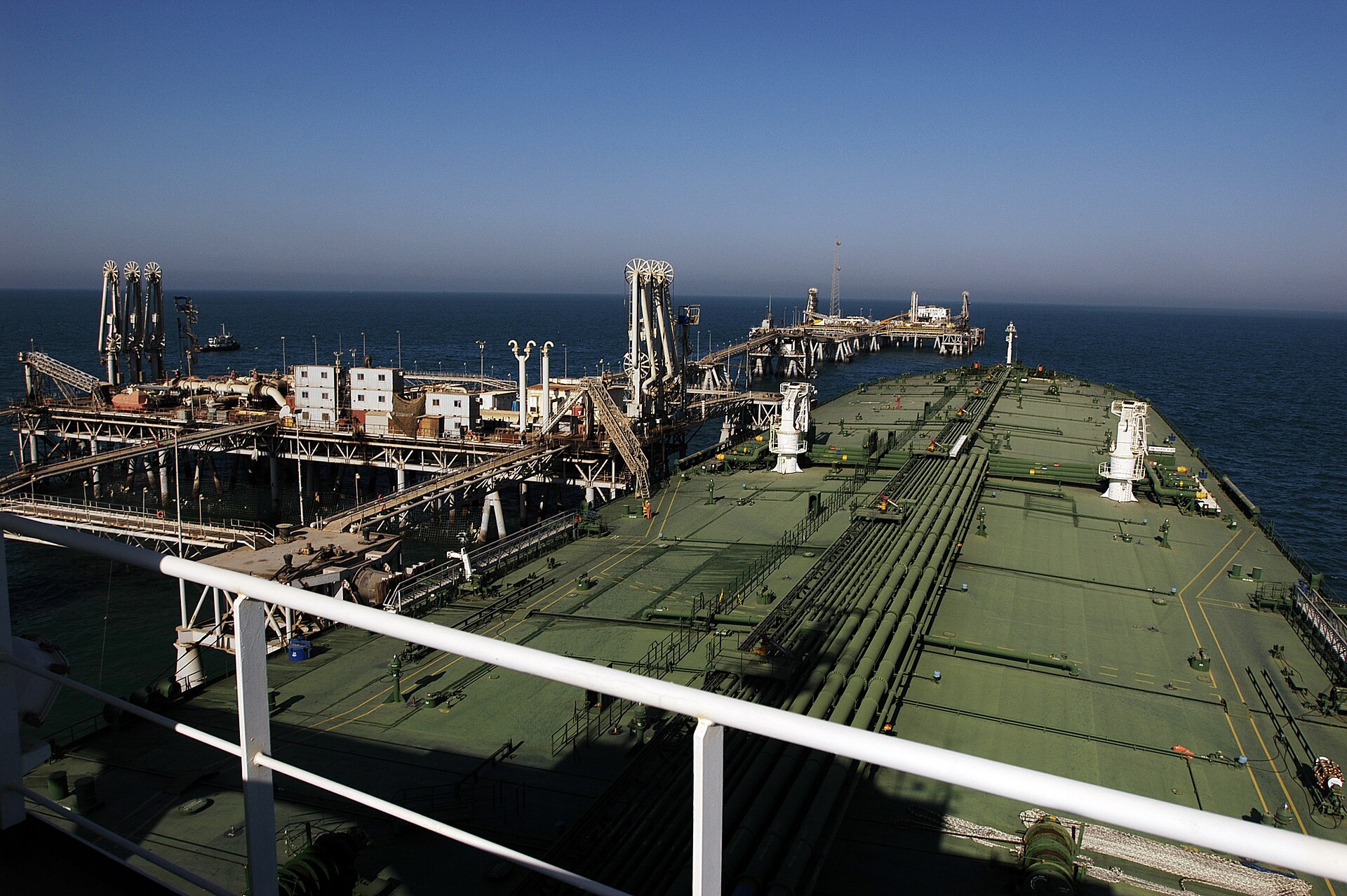
Asian refiners are not passively absorbing the $40 premium. They are pursuing three strategies simultaneously — each of which carries long-term consequences for Saudi market power.
Benchmark reform. The most immediate demand is changing the pricing mechanism itself. As noted above, Asia’s largest refiners have formally asked Aramco to switch to ICE Brent. The logic is straightforward: Brent reflects a broader Atlantic Basin supply picture and would produce a lower premium. Aramco has not agreed. Switching benchmarks would reduce the headline premium but would also cede pricing power to a benchmark Aramco does not control.
Supplier diversification. Asian buyers are signing new term contracts with non-Gulf producers. Brazil’s Petrobras, Guyana’s Stabroek block operators, and West African producers are all fielding inquiries for 2027-2030 term supply. The volumes are small relative to the Gulf’s pre-war dominance. Brazil’s total exports are approximately 1.5 million bpd against the Gulf’s lost 10 million bpd. But the intent matters. Every long-term contract signed away from the Gulf is a structural reduction in Saudi pricing power that will persist after the war ends.
Demand destruction. At $155 per barrel delivered, some industrial demand simply ceases. Wood Mackenzie has estimated that Asian oil demand has fallen by approximately 1 million bpd in March relative to pre-war levels. This is modest given the price spike, partly because strategic reserve releases are suppressing end-user price increases. But the longer the premium persists, the more permanent the demand destruction becomes. Asian governments are accelerating energy transition investments — Japan, South Korea, and India are all fast-tracking nuclear and renewable capacity that was in planning stages before the war.
The Yanbu Bottleneck and the Physics of Constrained Supply
The $40 premium exists because Saudi Arabia cannot physically deliver the oil its customers want to buy. The constraint is not production capacity. It is export logistics.
Saudi Arabia produced 10.4 million bpd in February, according to the IEA, with 1.71 million bpd of idle spare capacity that cannot be deployed because there is no way to ship it. The East-West Pipeline (Petroline) was converted to full capacity on March 11 and can now carry approximately 7 million bpd from the Eastern Province to Yanbu on the Red Sea coast.
But Yanbu’s port infrastructure cannot load 7 million bpd. Its nominal loading capacity is approximately 4-4.5 million bpd, with an effective throughput of roughly 4 million bpd. Saudi Arabia is currently exporting approximately 5 million bpd of crude via Yanbu, plus 700,000-900,000 bpd of oil products, by running the port at surge capacity with reduced turnaround times. This is not sustainable indefinitely. Equipment fatigue, maintenance deferral, and weather disruptions will all erode throughput over the coming weeks.
The arithmetic is merciless. Pre-war Saudi crude exports averaged approximately 7.5 million bpd. Current Yanbu throughput handles roughly 5-5.5 million bpd of total liquids. The gap is 2-2.5 million bpd — barrels that Saudi Arabia can produce but cannot ship. That stranded capacity is what the premium monetizes. Buyers are not paying $40 extra for oil that is abundant. They are paying $40 extra for oil that is physically scarce at the point of delivery.
Saudi oil storage, estimated at approximately 150 million barrels, provides a buffer. But storage is filling because production exceeds export capacity. If the war continues through April, Aramco will face the choice of cutting production — leaving money on the table — or overfilling storage and risking operational problems.
How Much Is Saudi Arabia Actually Making?
The headline revenue numbers are enormous. Brent crude averaged approximately $115.88 per barrel through March, according to the OPEC basket price, up 70% from $67.90 in February. At current production of roughly 9-10 million bpd and elevated prices, Saudi Arabia’s daily oil revenue approaches $900 million.
The kingdom’s 2026 budget assumed Brent at approximately $75-80 per barrel. At current prices, the annualized surplus above budget assumptions ranges from $49 billion to $72 billion, according to estimates compiled by Bloomberg and Fortune. Saudi fiscal reserves exceed $400 billion. The Public Investment Fund, despite cutting spending by 15%, remains among the world’s largest sovereign wealth funds.
But the net fiscal position is far less spectacular than these numbers suggest. The war is simultaneously generating revenue and destroying the assets that revenue was meant to build.
- Infrastructure damage: Iranian strikes have hit Saudi refineries, desalination plants, airports, and industrial facilities. Repair and reconstruction costs are not yet quantified but will run into billions.
- Defense spending surge: Saudi Arabia is burning through air defense interceptors at an extraordinary rate. Each Patriot missile costs approximately $4 million. At 200+ intercepts in 30 days, munitions costs alone approach $1 billion, before accounting for system wear, radar replacement, and the degradation of the air defense shield.
- Vision 2030 losses: NEOM has been effectively dismembered. Megaproject timelines have slipped by years. Foreign direct investment has frozen. The opportunity cost of the war — the economic transformation that is not happening — may ultimately exceed the oil windfall.
- Economic disruption: Aviation shutdowns, commercial port disruptions, supply chain breaks, and tourism collapse all impose costs that offset oil revenue gains.
Chatham House analysis published in late March concluded that Saudi Arabia is earning a significant wartime surplus but spending a substantial portion on damage repair, defense, and economic stabilization. The windfall is real but wasting. It will end when the war ends, leaving the kingdom with reconstruction needs and a damaged development timeline.
Why Is the $40 Premium Structurally Fragile?
The $40 premium depends on a specific set of conditions that are all temporary, though their duration is uncertain.
Hormuz must stay closed. The premium collapses if Hormuz reopens. Iran’s $2 million per-ship transit toll, imposed on March 13, has reduced but not eliminated traffic — 26 ships have used it since inception, according to shipping data compiled by House of Saud. If the toll becomes an established mechanism and traffic gradually resumes, the scarcity layer of the premium erodes. If the war ends and the toll is lifted, the premium collapses to near pre-war levels within weeks as tanker schedules normalize.
Yanbu must stay constrained. Any expansion of Red Sea export capacity — additional loading berths, floating storage and offloading units, or pipeline upgrades — reduces the logistics premium. Saudi Arabia is reportedly planning emergency port expansion, but construction timelines are measured in months, not weeks.
Alternatives must stay scarce. Non-Gulf supply is currently at or near capacity. U.S. shale producers are adding rigs but cannot materially increase output for 6-9 months. Brazil’s pre-salt fields are ramping but slowly. If the war extends through the second half of 2026, alternative supply will have time to respond, and the premium will face downward pressure.
Strategic reserves must deplete. The IEA authorized a 400 million barrel strategic reserve release in March, covering 40-50 days at current deficit rates. As long as reserves are being drawn down, end-user prices are suppressed below what the Saudi premium would otherwise demand. When reserves run low — and several countries will approach minimum thresholds by late April — the full premium passes through to consumers. At that point, demand destruction accelerates sharply.
The premium’s fragility runs in both directions. Escalation that damages Yanbu or the East-West Pipeline would not increase the premium — it would destroy it, because Saudi Arabia would have no export capacity at all. The premium is maximized in a narrow band of conflict: intense enough to keep Hormuz closed and Asian demand desperate, but contained enough to keep Yanbu operational. Any movement in either direction — peace or escalation — destroys the premium.
No Precedent — How This Compares to 1973, 1979, and 1990
The $40 premium has no parallel in modern oil history. Previous crises raised prices dramatically but never produced a comparable divergence between Aramco’s administered price and the prevailing market benchmark.
| Crisis | Duration | Supply removed (bpd) | Price impact | OSP premium behavior |
|---|---|---|---|---|
| 1973 Arab embargo | 5 months | ~5 million | Oil prices quadrupled ($3 to $12) | OSP system did not exist in current form |
| 1979 Iranian Revolution | 12+ months | ~3.5 million | Prices doubled ($14 to $35) | Premiums rose but stayed within $5-8 band |
| 1990 Gulf War | 7 months | ~4.3 million | Brent doubled briefly ($18 to $41) | Premiums stayed within normal range |
| 2026 Iran war | 30 days and continuing | ~10 million | Brent up 70% ($68 to $116) | Premium at $40 — 16x pre-war level |
The distinction is critical. In prior crises, the underlying commodity became more expensive, but Aramco’s pricing premium — the spread between its administered price and the benchmark — remained within historical norms. The price increase was shared relatively evenly across all producers and all crudes. In 2026, the premium itself has become the primary price driver, meaning Saudi crude specifically has been repriced relative to other crudes. Buyers are paying a Saudi-specific surcharge that reflects Saudi-specific supply constraints.
The Dallas Federal Reserve noted in a March 20 analysis that the current disruption removes “close to 20 percent of global oil supplies.” That makes it “three to five times larger than previous geopolitical disruptions.” For comparison: the 1973 embargo removed 6% of global supply, the 1979 revolution 4%, the 1990 Gulf War 6%. The pricing response has moved beyond historical precedent because the disruption itself has.
The Premium as Accelerant — Long-Term Damage to Saudi Market Power
The $40 premium is simultaneously Saudi Arabia’s greatest short-term windfall and its most dangerous long-term threat. Every month it persists accelerates three processes that erode the kingdom’s structural pricing power.
Energy transition acceleration. The demand destruction already visible in Asian markets is accelerating into permanent infrastructure change. Japan has restarted nuclear reactors dormant since Fukushima. South Korea has authorized emergency expansion of nuclear and LNG capacity. India has tripled renewable energy procurement targets for 2027-2030. The Ember energy research group noted that the war is “overcoming fossil lock-in” in Asia in ways that decades of climate policy could not. Every kilowatt of alternative capacity built during the premium era is a barrel of Saudi crude that will never be needed again.
Supplier diversification. The term contracts being signed now with non-Gulf producers will outlast the war. Capital is flowing into upstream development in the Atlantic Basin, the Permian, and offshore Southeast Asia at a pace unseen since 2014. The IEA projects that non-OPEC supply will grow by 1.8 million bpd by 2028 if prices remain above $100. That supply will arrive after the war ends, creating a structural oversupply that will compress Saudi premiums for years.
Buyer resentment and contract restructuring. The $40 premium is generating political resentment in Asian capitals that will shape energy policy for decades. Japan and South Korea, both U.S. allies that have supported the coalition effort, view the premium as Aramco monetizing a crisis that their own security partnerships helped create. India views it as exploitative pricing by a country that has received diplomatic cover from New Delhi. This resentment is translating into policy: mandatory strategic reserve expansion, accelerated nuclear construction, and explicit government targets to reduce Gulf crude dependence below 50% by 2035.
The paradox is that the premium is most profitable precisely when it is most destructive to Saudi Arabia’s long-term market position. A $40 premium sustained for six months generates perhaps $25-30 billion in additional revenue. But the demand destruction and supplier diversification it catalyzes may cost Saudi Arabia $10-15 billion annually in lost revenue from 2028 onward. The premium is a wasting asset that spends down the kingdom’s future market power to fund its present.
Crown Prince Mohammed bin Salman faces a decision no Saudi leader has confronted before. He can moderate the premium voluntarily, sacrificing near-term revenue to preserve long-term market share. Or he can extract maximum value from a crisis that may never recur. The collapse of the oil-for-security bargain with the United States makes this calculation harder. The kingdom can no longer assume its market share will be protected by American military guarantees. The premium may be the last unilateral lever Riyadh has, and the temptation to pull it hard is obvious.
Frequently Asked Questions
What would happen to oil prices if the Strait of Hormuz reopened tomorrow?
Brent crude would likely fall to the $80-90 range within two to three weeks as tanker traffic resumed normal patterns. Aramco’s OSP premium would compress to its historical band of $2-5 per barrel within one to two monthly pricing cycles. The speed of adjustment would depend on how quickly insurance rates for Hormuz transit normalized. Marine insurers typically maintain elevated war-risk premiums for 60-90 days after a ceasefire. That would keep a residual logistics surcharge of $3-5 per barrel for the first quarter after reopening.
Could Saudi Arabia voluntarily reduce its OSP premium during the war?
Technically, yes — the OSP is an administered price that Aramco can set at any level. Saudi Arabia reduced OSP premiums during the 2020 price war with Russia to gain market share. But the current premium partly reflects genuine logistics costs (longer shipping routes, higher freight and insurance), not just pricing power. Even if Aramco cut the premium by half, the delivered cost of Saudi crude to Asia would still exceed $135 per barrel given elevated Brent, freight surcharges, and war-risk insurance. A voluntary reduction would sacrifice revenue without meaningfully lowering the end-user price.
Are any oil-producing countries benefiting more than Saudi Arabia from the Hormuz closure?
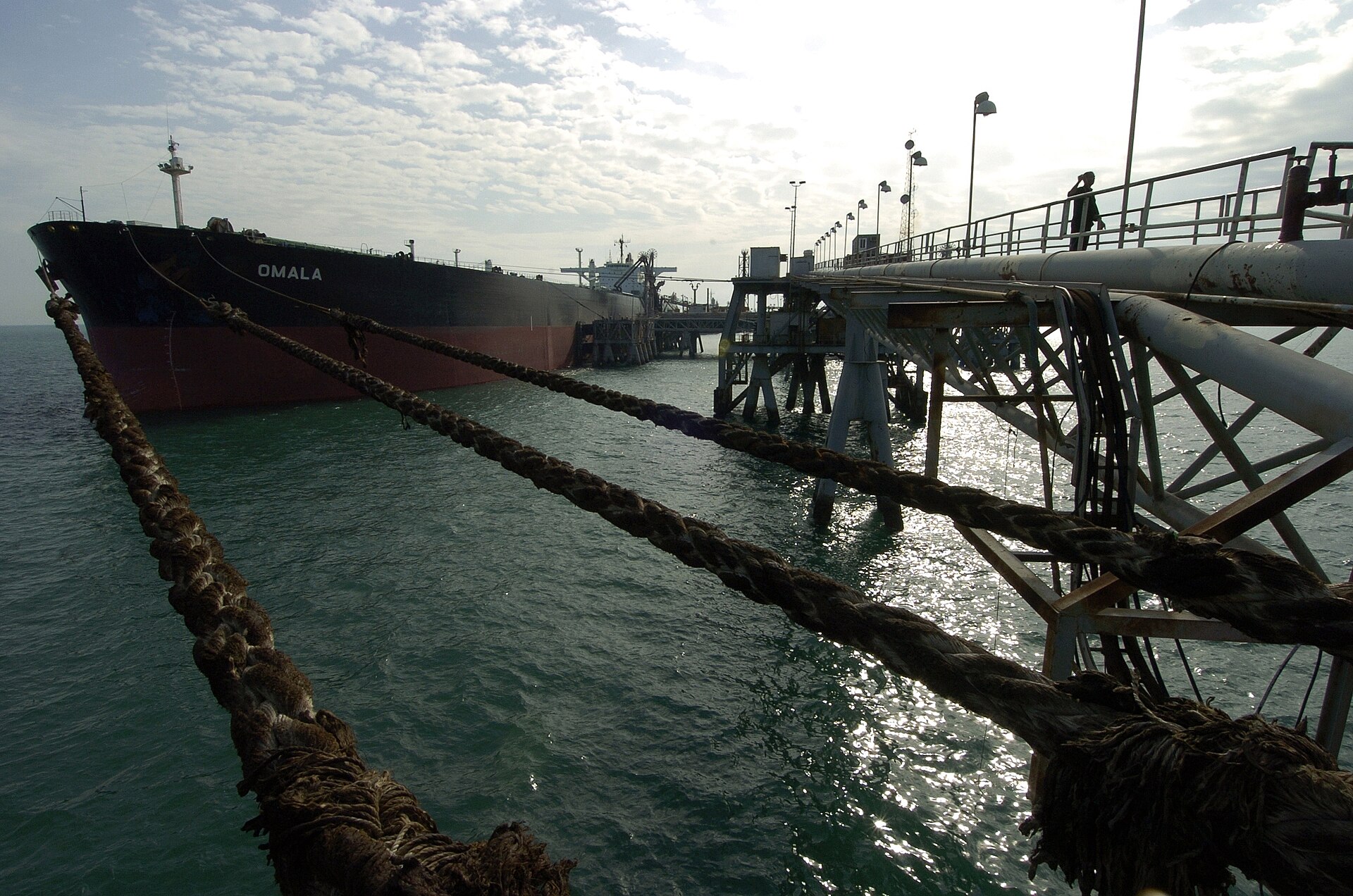
Iraq exports approximately 3.3 million bpd via its southern Basra terminal, also in the Persian Gulf. It has been equally constrained and benefits less because it lacks Saudi Arabia’s pipeline bypass to the Red Sea. The clear winners are Atlantic Basin producers — the United States, Brazil, and Norway. Their crude now commands premium prices in Asia without any infrastructure risk or logistics surcharge. U.S. crude exports to Asia have increased approximately 40% since March 1, according to Kpler vessel tracking data, at prices that would have been uneconomic six weeks ago.
How long can Asian strategic petroleum reserves sustain current consumption?
The IEA authorized a collective release of 400 million barrels in March, which covers approximately 40-50 days at the current supply deficit of 8-10 million bpd. Japan’s reserves (approximately 500 million barrels) could sustain the country for over 150 days at current consumption. South Korea holds roughly 96 million barrels covering 90+ days. China’s strategic and commercial reserves, estimated at 900-950 million barrels combined, provide approximately 80 days of total import coverage. India’s reserves cover fewer than 10 days — a vulnerability that the war has exposed as a critical strategic failure.
Will the $40 premium permanently change how Aramco prices its crude?
The pricing mechanism is likely to change even if the premium itself reverts after the war. Asian refiners’ formal request to switch from Oman/Dubai to ICE Brent as the pricing reference reflects a structural loss of confidence in Gulf-centric benchmarks. If Aramco agrees — and the pressure from its largest customers is substantial — it would be the most significant change to Middle Eastern crude pricing since the OSP system was established. The shift would reduce Aramco’s ability to capture logistics-based premiums in future disruptions but would provide more price transparency for buyers.