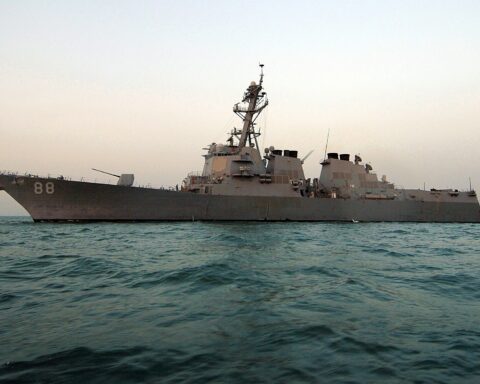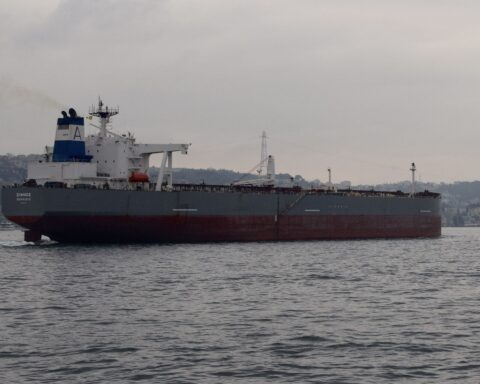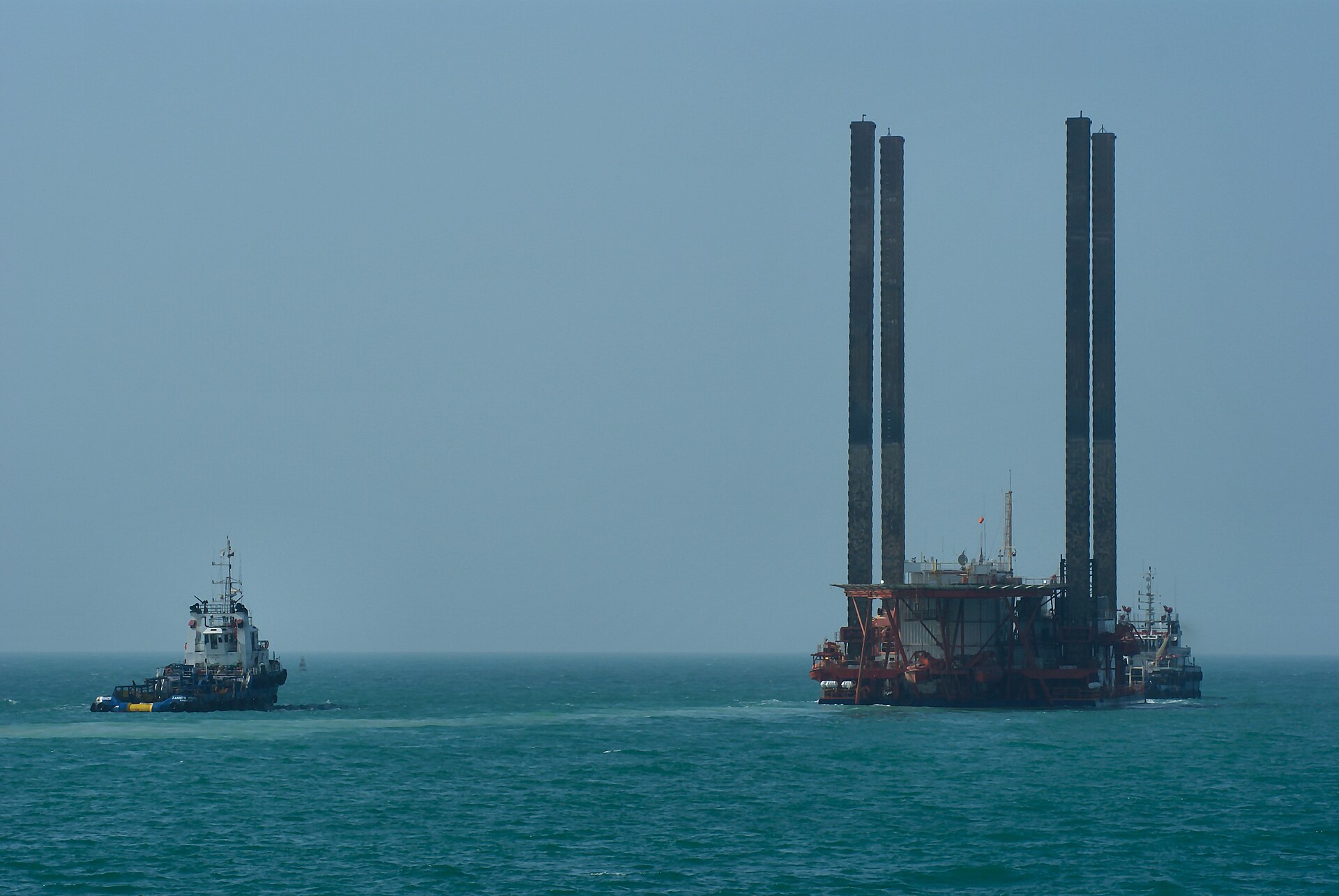

DHAHRAN — Saudi Aramco has shut down four of its largest offshore oil fields in the Persian Gulf, idling an estimated 2 to 2.5 million barrels per day of crude production as the Iran war forces the kingdom to throttle the very infrastructure that built its wealth. The closures of the Safaniya, Marjan, Zuluf, and Abu Safa fields — confirmed by Argus Media and the Wall Street Journal — represent the most significant forced production shutdown in Saudi Arabia’s modern history, surpassing even the aftermath of the 2019 Abqaiq drone strikes that briefly halved output.
The field shutdowns come as storage tanks across the Persian Gulf fill to capacity with crude that has nowhere to go. With the Strait of Hormuz effectively closed to commercial shipping since early March, Saudi Arabia’s primary export route has been severed. The East-West Pipeline to the Red Sea port of Yanbu — now operating at its emergency capacity of 7 million barrels per day — cannot absorb the full volume that the kingdom’s eastern fields produce. The arithmetic is brutally simple: Saudi Arabia can pump more oil than it can move, so the wells must stop.
Table of Contents
Which Fields Has Aramco Shut Down?
The four fields taken offline are among the most productive in Aramco’s portfolio, collectively holding more than 78 billion barrels of proven oil reserves. Their combined pre-war output exceeded 2.8 million barrels per day — roughly a quarter of Saudi Arabia’s total production capacity.
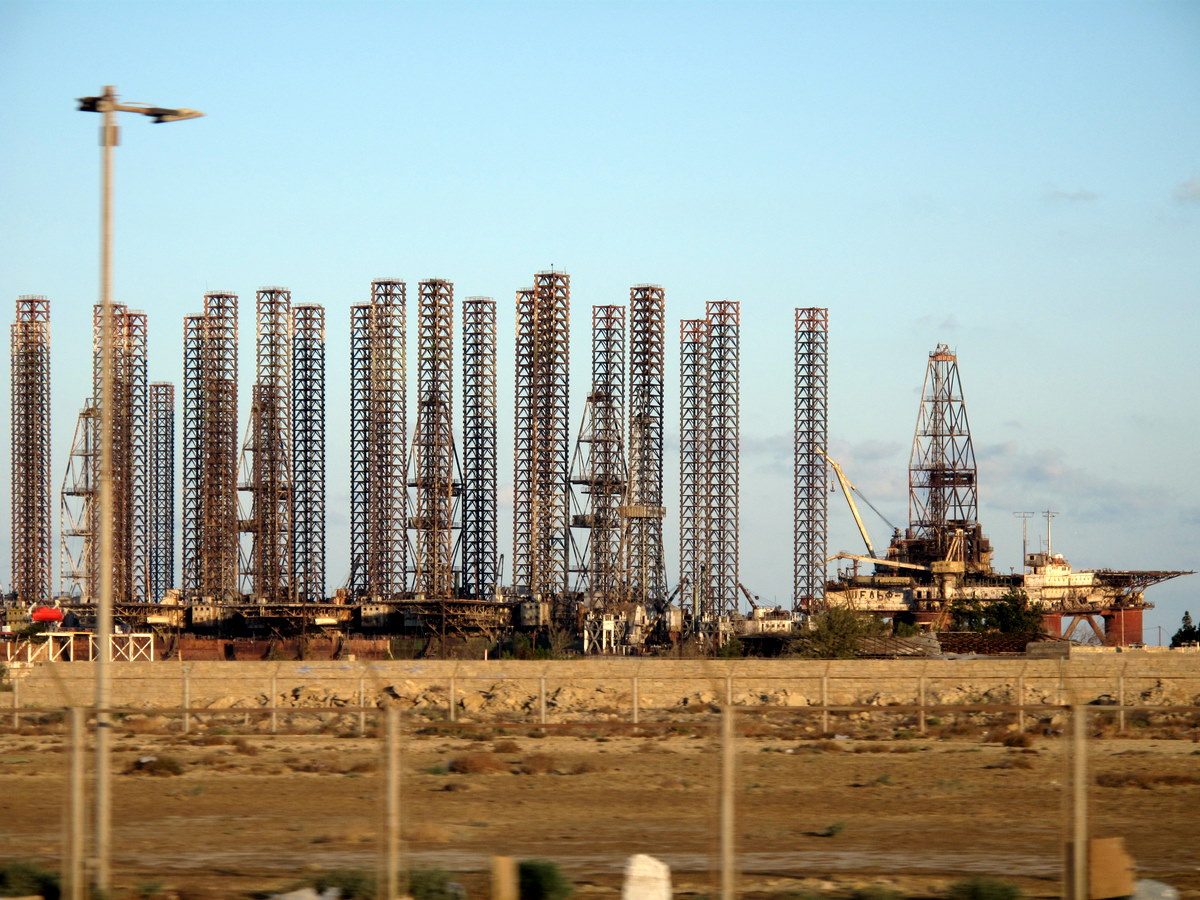
Safaniya, discovered in 1951 and producing since 1957, is the largest offshore oil field on earth. Located approximately 265 kilometres north of Dhahran and spanning 50 kilometres by 15 kilometres, it holds an estimated 37 billion barrels of recoverable crude and was producing roughly 1.2 million barrels per day before the shutdown. Its 160 interconnected multi-well platforms and more than 600 production and injection wells make it a sprawling industrial complex on the sea — one that now sits silent.
The Zuluf field, discovered in 1965 and situated 240 kilometres north of Dhahran in shallow waters roughly 36 metres deep, contributed 800,000 barrels per day of Arab Medium crude. Aramco had been planning a major expansion to boost Zuluf’s capacity to 1.4 million barrels per day, with Phase 1 expected to begin in 2026. That timeline is now in question.
Marjan, producing since the 1970s with a current capacity of approximately 500,000 barrels per day, was itself in the middle of an $18 to $21 billion expansion that would have raised output to 800,000 barrels per day. Construction of a fourth gas-oil separation plant, involving 24 new platforms and 200 kilometres of subsea cables, has been suspended.
Abu Safa, the smallest of the four at 300,000 barrels per day, holds particular geopolitical significance. The field straddles the maritime boundary between Saudi Arabia and Bahrain and has been operated by Aramco under a joint arrangement since the 1960s. Since 1996, the kingdom has granted all Abu Safa production to Bahrain, making its closure a bilateral economic crisis, not merely a Saudi one.
| Field | Discovered | Reserves (bn bbl) | Pre-War Output (bpd) | Crude Grade | Status |
|---|---|---|---|---|---|
| Safaniya | 1951 | 37 | 1,200,000 | Arab Heavy | Shut down |
| Zuluf | 1965 | 31 | 800,000 | Arab Medium | Shut down |
| Marjan | 1967 | 5+ | 500,000 | Arab Medium | Shut down |
| Abu Safa | 1963 | 6.1 | 300,000 | Arab Medium | Shut down |
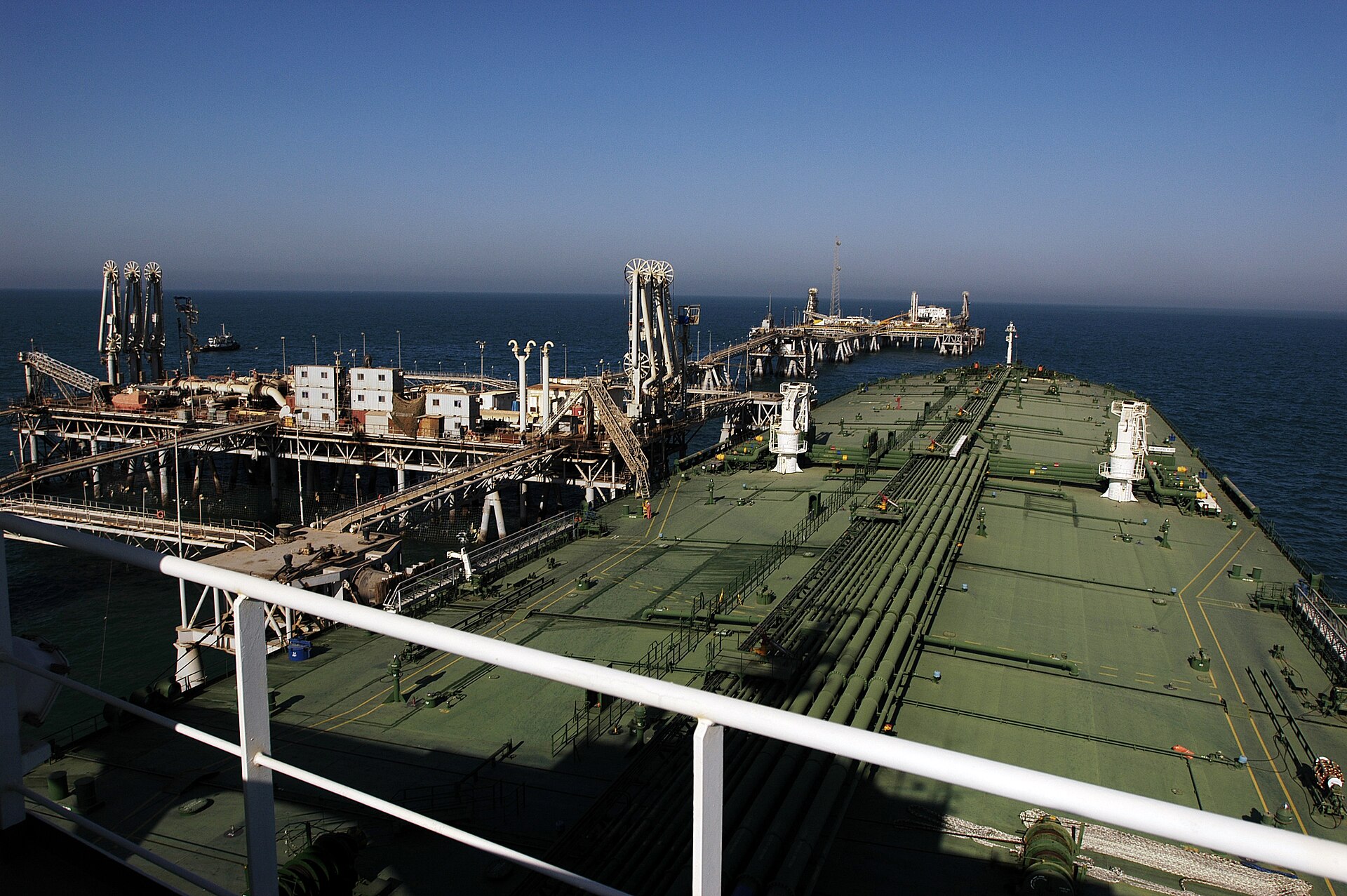
How Much Oil Has Saudi Arabia Lost?
Saudi Arabia’s total crude production has fallen from approximately 10.1 million barrels per day in February 2026 to an estimated 8 million barrels per day as of mid-March — a 20 percent reduction that represents the sharpest involuntary decline in the kingdom’s output since the Iraqi invasion of Kuwait in 1990.
The 2 to 2.5 million barrels per day lost from the four offshore fields accounts for the bulk of that decline, though additional cuts at smaller facilities and the continued shutdown of the Ras Tanura refinery — Saudi Arabia’s largest, with 550,000 barrels per day of capacity — have compounded the damage. The refinery has been offline since a drone strike on March 2 caused a fire that forced an emergency shutdown, according to reporting on Aramco’s operational crisis. The threat to Saudi energy infrastructure intensified further after Israel struck two Iranian nuclear facilities on March 27, prompting Tehran to vow disproportionate retaliation against Gulf targets.
Exports to Asian markets have contracted even more sharply. Aramco reduced crude shipments to Asia by 2.753 million barrels per day — from 7.108 million barrels per day in February to 4.355 million barrels per day in March, a 38.6 percent month-over-month decline, according to Discovery Alert citing Aramco allocation data. Japan, South Korea, India, and China are the largest affected buyers.
The crude grade impact is asymmetric. Arab Heavy and Arab Medium — produced almost exclusively from the now-shuttered eastern offshore fields — have, in the words of Rystad Energy’s MENA Research Director Aditya Saraswat, “effectively disappeared from the market.” Arab Light and Arab Extra Light crude, produced primarily from onshore fields that continue operating, remain available through Yanbu spot tenders, but at volumes far below normal.
Aramco CEO Amin Nasser put the crisis in stark terms during an emergency briefing on March 10. “We are no longer talking about a mere price spike,” Nasser said, according to Argus Media. “We are witnessing a systemic failure of the global energy architecture. Without an immediate de-escalation, the depletion of existing stocks will leave major economies with no margin for error, potentially halting industrial production across entire continents.”
Drilling Companies Suspend Gulf Operations
The field shutdowns have cascaded through Saudi Arabia’s drilling sector. Arabian Drilling, the kingdom’s largest drilling contractor by fleet size, announced the temporary suspension of several offshore rigs in the Persian Gulf. The company operates approximately 45 rigs in Saudi Arabia and the Kuwait Neutral Zone, including 7 offshore units and 38 onshore.
Arabian Drilling CEO Fahad Albani said the suspensions were precautionary. “Safety remains our absolute priority. The temporary suspensions reflect a disciplined and precautionary approach taken in close coordination with our client,” Albani said, according to Zawya. He added that the company expected “minimal financial impact in the first quarter of 2026, with recovery as soon as conditions normalise and operations resume.” The company’s 39 onshore rigs continue to operate at full capacity.
Arabian Drilling’s shares fell 2.1 percent on the announcement. The stock has dropped from 107 Saudi riyals at its 52-week high to 82.25 riyals as of March 16. Full-year 2025 results already showed strain: revenue declined 5.1 percent to 3.4 billion riyals, EBITDA fell 17.8 percent to 1.2 billion riyals, and adjusted net income collapsed 90.8 percent to 39 million riyals.
ADES Holding, the largest jack-up rig operator for Saudi Aramco with 123 rigs across 20 countries following its November 2025 merger with Shelf Drilling, confirmed a “handful” of its 33 Gulf-assigned rigs had been temporarily suspended. CEO Mohamed Farouk said the company’s geographic diversification provided insulation. “Our extended number of assets, geographic diversification and broader earnings base position us to navigate such developments with discipline,” Farouk said, according to AGBI.
Borr Drilling, a Norway-based contractor, suspended three of its four jack-up rigs in the Arabian Gulf — one in Saudi Arabia, one in the UAE, and two in Qatar. On March 7, the jack-up rig Arabia III was affected by an incident on a customer-operated platform, forcing a full shutdown and evacuation of all personnel, according to Drilling Contractor magazine. All four rigs remain under contract and insured.
| Company | HQ | Total Fleet | Gulf Rigs | Suspended | Onshore Impact |
|---|---|---|---|---|---|
| Arabian Drilling | Saudi Arabia | 45 | 7 offshore | Several | None — 39 land rigs active |
| ADES Holding | Saudi Arabia | 123 | 33 in Gulf | A handful | None — 40 onshore active |
| Borr Drilling | Norway | 22 | 4 in Gulf | 3 of 4 | N/A |
The East-West Pipeline Cannot Save Saudi Exports
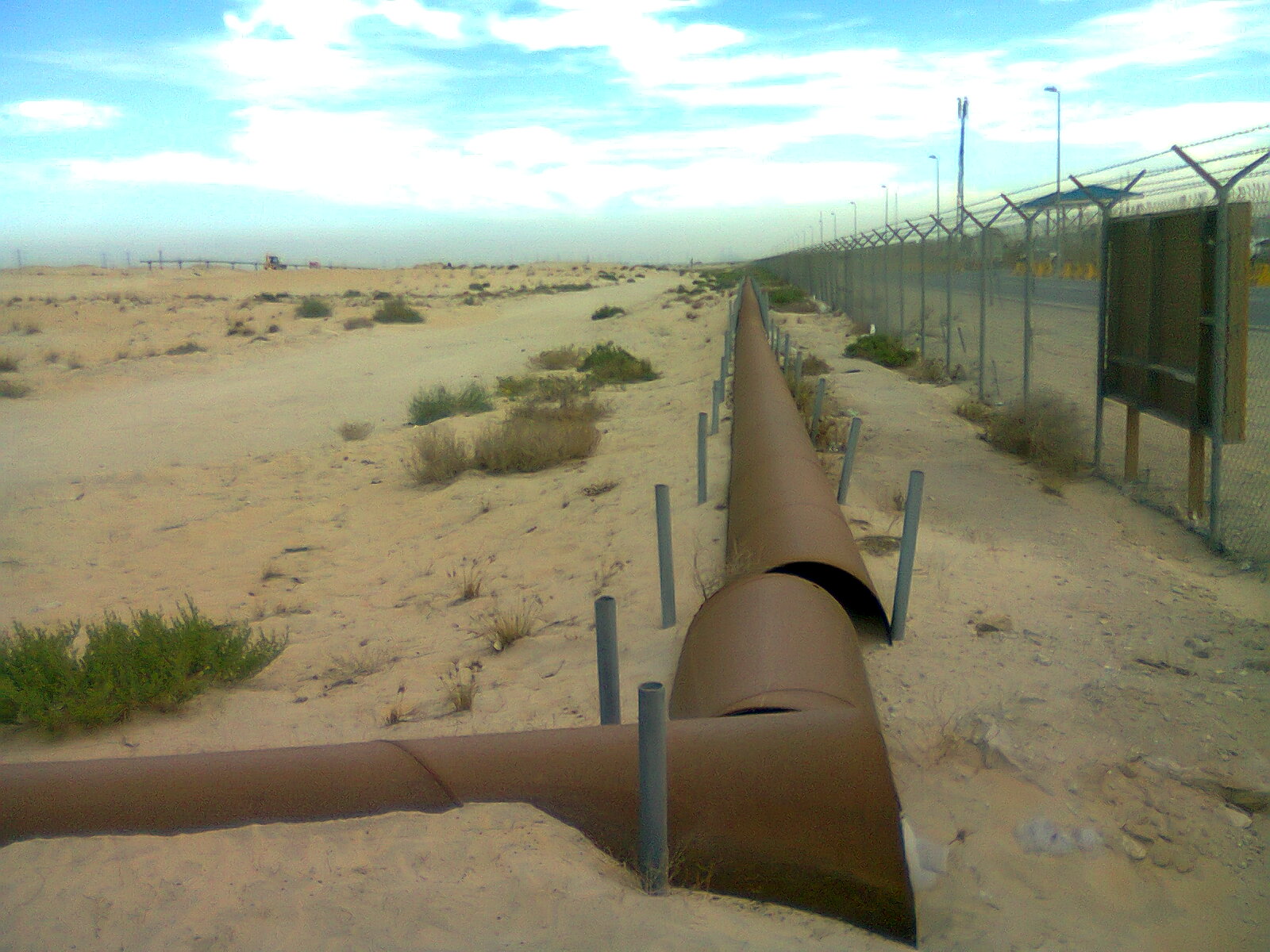
Saudi Arabia’s primary bypass strategy — routing crude through the 1,201-kilometre East-West Pipeline (known as the Petroline) from Abqaiq in the Eastern Province to the Red Sea port of Yanbu — has reached its physical limits. Aramco CEO Nasser announced on March 10 that the pipeline would hit its full emergency capacity of 7 million barrels per day within days, according to S&P Global.
Oil exports from Yanbu have surged to approximately 2.47 million barrels per day, a 330 percent increase over pre-war levels, according to maritime AI company Windward. But the port itself has become the chokepoint. Yanbu North and Yanbu South have a combined nominal loading capacity of roughly 4.5 million barrels per day, with the effective operationally tested figure closer to 4 million. The pipeline can move 7 million barrels per day of crude, but the port can only load tankers with roughly half that volume.
The gap between pipeline throughput and port loading capacity means approximately 3 million barrels per day of crude arrives at Yanbu with nowhere to go. Storage facilities along the pipeline route are filling rapidly, and Rystad Energy’s Saraswat has warned that “it is not clear if this can be sustained over a prolonged period.” The delivery crisis that has trapped Saudi spare capacity has only worsened as the war enters its fourth week.
Further cuts from major Middle East oil producers cannot be ruled out as storage tanks fill to the brim, bypass infrastructure approaches its limit, and the conflict shows no sign of a near-term resolution.
Aditya Saraswat, Rystad Energy MENA Research Director
The pipeline’s emergency capacity was first tested in 2019 after Houthi drone strikes on the Abqaiq processing facility temporarily halved Saudi output. At that time, Aramco converted accompanying natural gas liquids pipelines to carry crude, boosting total capacity from 5 million to 7 million barrels per day. That conversion was intended as a temporary measure for a crisis lasting days. The current disruption has lasted weeks, and the infrastructure was never designed for sustained operations at this level.
Why Storage Tanks Forced the Shutdown
The immediate trigger for the field shutdowns was not a military strike on the facilities themselves but the filling of storage capacity across the Persian Gulf. Saudi Arabia, alongside Iraq, Kuwait, the UAE, and Bahrain, collectively reduced crude output by 6.2 to 6.9 million barrels per day from February levels as of March 9, according to Argus Media calculations.
The mechanics are straightforward. Crude extracted from offshore wells must go somewhere — into a pipeline, onto a tanker, or into storage. With Hormuz closed, tanker loading at eastern terminals has stopped. The East-West Pipeline is maxed out. Storage tanks at Ras Tanura, Ju’aymah, and across the Eastern Province have been filling steadily since the first week of March. Once they reach capacity, the only option is to shut the wells.
Shutting down an offshore field is not the same as turning off a faucet. The process involves gradually reducing wellhead pressure, securing production platforms, and ensuring that subsea infrastructure — pipelines, risers, and manifolds — is placed in a safe standby condition. Workers must either remain on standby or be evacuated. For a field the size of Safaniya, with its 160 platforms and hundreds of wells, the shutdown process takes days to complete safely and weeks to reverse.
The Hormuz blockade that Iran built has proven devastatingly effective precisely because it targets the economic architecture of the Gulf rather than specific military installations. Saudi Arabia’s wells are intact. Its refineries — with the exception of Ras Tanura — are undamaged. But without a route to market, the oil is worthless.
Abu Safa Closure Hits Bahrain Hardest
The shutdown of the Abu Safa field has created a diplomatic and economic crisis that extends beyond Saudi borders. The field, discovered in 1963 and spanning 19 kilometres by 10 kilometres in the waters between Saudi Arabia and Bahrain, has been the foundation of Bahrain’s oil economy for decades.
Under a bilateral agreement dating to the 1990s, Saudi Arabia grants all Abu Safa production — approximately 300,000 barrels per day — to Bahrain, with Aramco operating the field and marketing the crude through its Ras Tanura terminal. Revenue is distributed equally between the two kingdoms. For Bahrain, a small island nation with limited hydrocarbon reserves of its own, the loss of Abu Safa income is proportionally far more damaging than the broader production cuts are to Saudi Arabia.
Bahrain’s economy had already been battered by the war. The island kingdom has absorbed 385 Iranian strikes since February 28, and its own Bapco refinery at Sitra has operated at reduced capacity due to supply disruptions. The Abu Safa closure removes Bahrain’s primary source of crude, forcing it to seek alternative supply at elevated wartime prices — an expense its relatively small fiscal reserves may not sustain.
How Long Will Recovery Take?
Even if the Strait of Hormuz were to reopen tomorrow, restoring Saudi Arabia’s offshore production to pre-war levels would take months, not days. Rystad Energy has estimated that Gulf energy infrastructure repair and restoration costs will exceed $25 billion, a figure expected to rise as the conflict continues.
“If and when the crisis reaches an end, it will take months to restore operations to pre-conflict levels, with the questions of infrastructure integrity and a re-calibrated geopolitical order still at play,” Saraswat said, according to Rystad’s analysis published in March.
The fields themselves have not been damaged — they were shut down as a precautionary measure, not destroyed by enemy action. But restarting a field the size of Safaniya requires methodical re-pressurization of wells, testing of subsea equipment that has sat idle in corrosive seawater, and the redeployment of drilling and production crews who have been evacuated or reassigned. Aramco’s expansion projects at Marjan and Zuluf, both in advanced stages before the war, face indefinite delays.
In the worst-case scenario modeled by Rystad, Middle East crude output could fall to approximately 6 million barrels per day — a 70 percent reduction from the pre-conflict baseline — if the war drags on and additional fields are shut. Some 12 million barrels of oil equivalent per day of Middle East oil and gas has already been taken offline, equivalent to roughly 7 percent of total global liquids demand.
The fourth great oil shock that analysts warned about in the war’s first week is no longer a hypothetical. Arab Medium crude has vanished from international markets. Arab Heavy is unavailable. The grades that powered refineries across Asia — from Jamnagar to Ulsan to Zhoushan — have simply ceased to flow.
Aramco’s maximum sustainable capacity of 12.2 million barrels per day was once the kingdom’s trump card in any supply crisis, the spare capacity that gave Saudi Arabia leverage over global markets. That capacity still exists on paper. The wells are still there. The reservoirs are still full. But with the Gulf’s export infrastructure paralysed, the second tanker war has achieved what no OPEC rival or shale revolution ever could: it has made Saudi oil irrelevant to the market it was meant to supply.
The regional picture is equally grim. Across the Gulf, more than 12 million barrels of oil equivalent per day of Middle East oil and gas production has been taken offline since the war began, according to Rystad Energy. Iraq has suffered the sharpest proportional cuts, with more than 60 percent of its pre-conflict volume curtailed. Kuwait, the UAE, and Bahrain have all throttled production for the same reason as Saudi Arabia: there is nowhere to put the crude and no way to ship it. The collective reduction of 6.2 to 6.9 million barrels per day from pre-war levels, documented by Argus Media as of March 9, has likely grown further as additional fields approach storage limits.
The implications extend well beyond the Gulf. Oil prices have swung violently, briefly falling below $100 per barrel on ceasefire hopes before rebounding above $107 as those hopes faded. Refineries across Asia that were configured to process Arab Heavy and Arab Medium grades — the specific crudes that Saudi Arabia’s shuttered offshore fields produce — face feedstock shortages that no alternative supplier can quickly fill. Russia, West Africa, and the Americas produce different crude grades that require significant reconfiguration of refinery processing units. The mismatch between what the world’s refineries need and what is available may persist long after the war ends, deepening the fourth great oil shock that analysts have compared to the crises of 1973, 1979, and 1990.
Frequently Asked Questions
Why did Aramco shut down offshore fields instead of continuing to produce?
With the Strait of Hormuz closed to commercial shipping and storage tanks across the Eastern Province nearing capacity, Aramco had no choice but to reduce production. The East-West Pipeline to Yanbu is operating at maximum capacity but cannot absorb the full volume of the kingdom’s output. Crude with nowhere to go forces wells to close.
Which is the largest offshore oil field that Aramco has shut down?
Safaniya is the world’s largest offshore oil field, holding approximately 37 billion barrels of recoverable crude and producing around 1.2 million barrels per day before the shutdown. It spans 50 kilometres by 15 kilometres in the Persian Gulf, roughly 265 kilometres north of Aramco’s headquarters in Dhahran.
How does the Abu Safa shutdown affect Bahrain?
Bahrain relies on the Abu Safa field for the majority of its crude oil supply under a bilateral agreement with Saudi Arabia. The field’s 300,000 barrels per day of production was granted entirely to Bahrain, making the closure a significant economic blow to the island kingdom, which has limited hydrocarbon reserves of its own.
When will Saudi Arabia’s offshore oil fields restart?
Rystad Energy estimates it will take months to restore production to pre-conflict levels even after a ceasefire. Restarting a major offshore field requires re-pressurization of wells, testing of subsea equipment, and redeployment of crews. Aramco’s expansion projects at Marjan and Zuluf also face indefinite delays.
How much of Saudi Arabia’s oil production has been lost?
Total Saudi crude output has fallen from approximately 10.1 million barrels per day in February 2026 to an estimated 8 million barrels per day — a 20 percent decline. Exports to Asia have contracted 38.6 percent, with Arab Heavy and Arab Medium grades effectively disappearing from international markets.