
DHAHRAN — Saudi Aramco on Tuesday reported fourth-quarter adjusted profit of $25.1 billion and announced a $3 billion share buyback programme, delivering results that beat analyst expectations even as Iranian drones struck the company’s largest refinery and a naval blockade choked the Strait of Hormuz. The numbers land in a market that has watched Aramco’s share price surge 13 percent since January, yet has no clear picture of how the world’s most valuable oil company is managing the operational chaos of a war that has shut down Ras Tanura, rerouted millions of barrels through a single desert pipeline, and transformed every tanker loading at Yanbu into a potential target. What Aramco said — and what it conspicuously did not say — on the earnings call carries implications that extend far beyond the company’s balance sheet, reaching into the fiscal foundations of Vision 2030, the solvency of the Public Investment Fund, and the question of whether Mohammed bin Salman can simultaneously fight a war and fund a $3.3 trillion economic transformation.
Table of Contents
- How Did Aramco Perform in Q4 2025?
- The War Paradox — Damaged Facilities, Surging Revenue
- What Is the Real Cost of Losing Ras Tanura?
- The East-West Pipeline Gamble
- Can Aramco Keep Paying the World’s Largest Dividend?
- How Does the War Affect PIF and Vision 2030 Funding?
- Why This Is Not Another Abqaiq
- The Wartime Resilience Matrix
- What Is the Market Telling Us About Aramco’s Future?
- Riyadh’s Wartime Fiscal Calculus
- OPEC+ Strategy in the Fog of War
- The Uncomfortable Truth About Aramco’s War Dividend
- Frequently Asked Questions
How Did Aramco Perform in Q4 2025?
Saudi Aramco’s fourth-quarter results tell a story of a company navigating a period of profound dislocation. The adjusted profit of $25.1 billion exceeded the median analyst consensus of $24.8 billion compiled by Refinitiv, a modest but symbolically important beat that signals operational continuity under fire. Net profit for the quarter, however, fell to $17.76 billion — down 20.5 percent from the $22.34 billion recorded in the same period of 2024, reflecting lower average crude prices throughout most of the quarter before the war-driven spike.
Full-year 2025 numbers paint a starker picture. Net income dropped 11.6 percent to $93.38 billion, weighed down by an average Brent price of $69.2 per barrel — more than $11 below the 2024 average of $80.2. Free cash flow reached $85.4 billion, comfortably covering the base dividend but leaving far less headroom for the performance-linked distributions that Riyadh has come to depend on. Operating cash flow of $136.2 billion remained robust, though down from the prior year, driven by steady upstream production and stronger downstream margins in the refining and chemicals segments.
| Metric | Q4 2025 | Q4 2024 | Change |
|---|---|---|---|
| Adjusted Profit | $25.1B | $24.8B (est.) | +1.2% |
| Net Profit | $17.76B | $22.34B | -20.5% |
| Base Dividend (Q4) | $21.89B | $21.14B | +3.5% |
| Avg. Brent Price (2025) | $69.2/bbl | $80.2/bbl | -13.7% |
| FY Free Cash Flow | $85.4B | $93.1B (est.) | -8.3% |
| 2026 Capex Guidance | $50-55B | $48-58B (2025) | Narrowed |
The earnings call, however, was defined less by the backward-looking financials than by the forward-looking silence. CEO Amin Nasser provided carefully calibrated remarks on operational resilience but declined to quantify the revenue impact of the Ras Tanura shutdown, the volume of crude currently transiting the East-West Pipeline to Yanbu, or the cost of emergency security measures across Aramco’s sprawling facility network. Analysts from Goldman Sachs, Morgan Stanley, and HSBC pressed for specifics; they received strategic generalities about “proven contingency planning” and “the resilience of our integrated model.”
The War Paradox — Damaged Facilities, Surging Revenue
The central paradox facing Aramco in March 2026 is mathematically elegant and strategically nightmarish. The same conflict that struck its largest refinery, threatened its Eastern Province export terminals, and forced a precautionary production cut has simultaneously driven Brent crude from $69 to $114 per barrel — a 65 percent increase in less than two weeks. At $114 per barrel, every barrel Aramco manages to sell generates roughly $45 more in revenue than the 2025 average. Even with reduced export volumes, the company’s daily revenue during the war period likely exceeds its pre-war earnings by a substantial margin.
This is not an abstract calculation. Iran’s bombardment campaign has taken approximately 3.2 million barrels per day of combined Gulf production offline across six countries, according to estimates from Kpler, the commodity data analytics firm. Iran’s own southern oilfield output has collapsed 70 percent — from 4.3 million barrels per day to just 1.3 million — under sustained US-Israeli airstrikes. Iraq, OPEC’s second-largest producer, has suffered a comparable decline. The result is the largest oil supply disruption in modern history, exceeding even the 1990 Gulf War, which removed approximately 4.3 million barrels from the market when Iraqi and Kuwaiti output was simultaneously zeroed out.
For Saudi Arabia specifically, the mathematics break down along several axes. Aramco’s total production capacity stands at approximately 12 million barrels per day, though the Kingdom was producing around 10 million barrels daily before the war. Of that, roughly 7 million barrels were exported each day. With the Hormuz blockade restricting eastern exports and storage filling up, Saudi authorities have begun reducing production — not because of damage, but because there is nowhere to put the oil. The East-West Pipeline, the 1,200-kilometre artery connecting the Eastern Province fields to the Red Sea port of Yanbu, has a maximum throughput of approximately 5 million barrels per day, creating a hard ceiling on exports that did not exist when Hormuz was open.
The financial implication is counterintuitive: Aramco is selling fewer barrels at much higher prices, and the net effect on revenue is positive. A rough calculation illustrates the dynamic. Pre-war, 7 million barrels per day at $69 per barrel generates approximately $483 million in daily crude revenue. During the war, even if exports drop to 4 million barrels per day but prices average $110, daily revenue reaches $440 million — a decline of only 9 percent despite a 43 percent drop in volume. If exports hold closer to 5 million barrels through maximum pipeline utilization, daily revenue actually increases to $550 million.
What Is the Real Cost of Losing Ras Tanura?
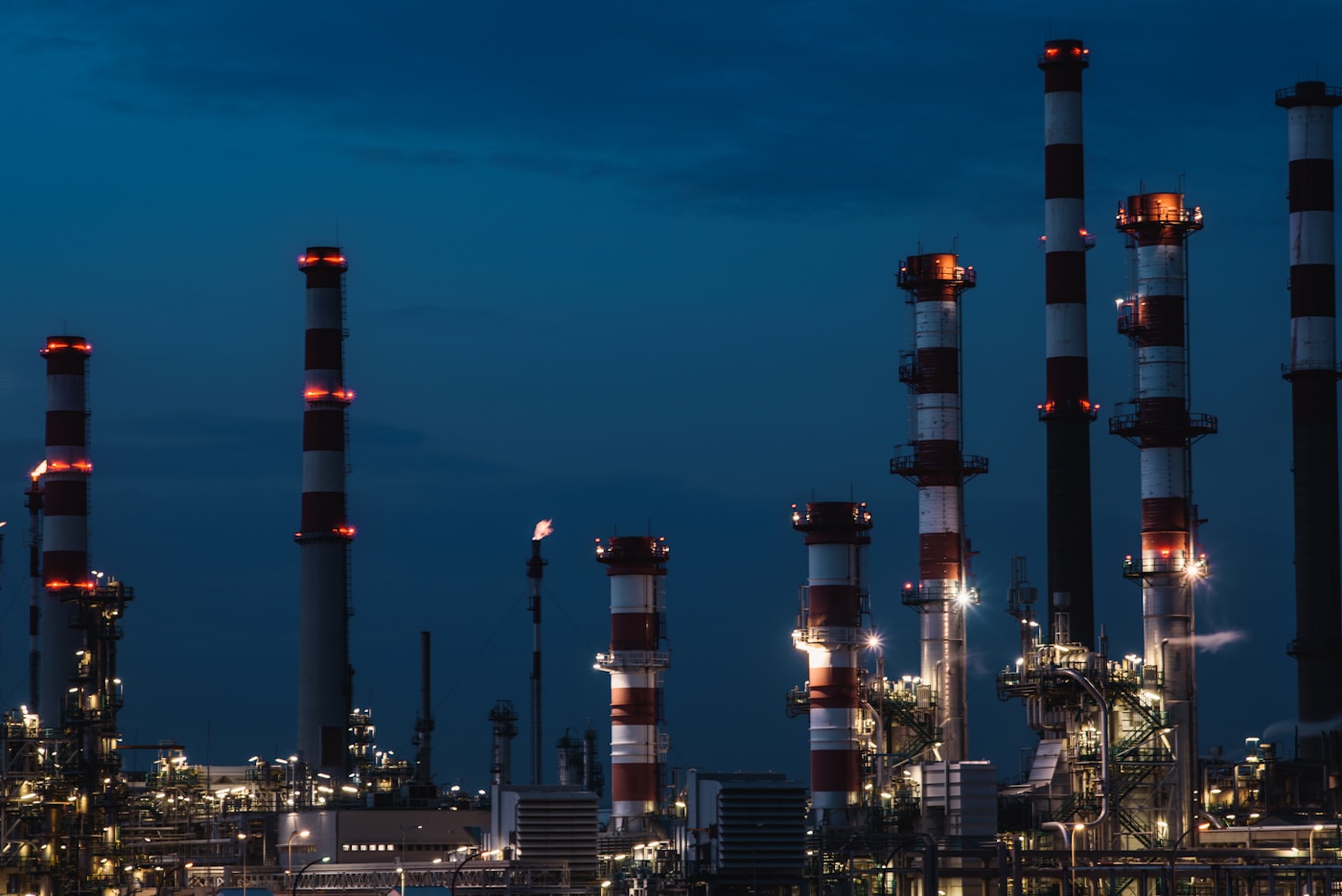
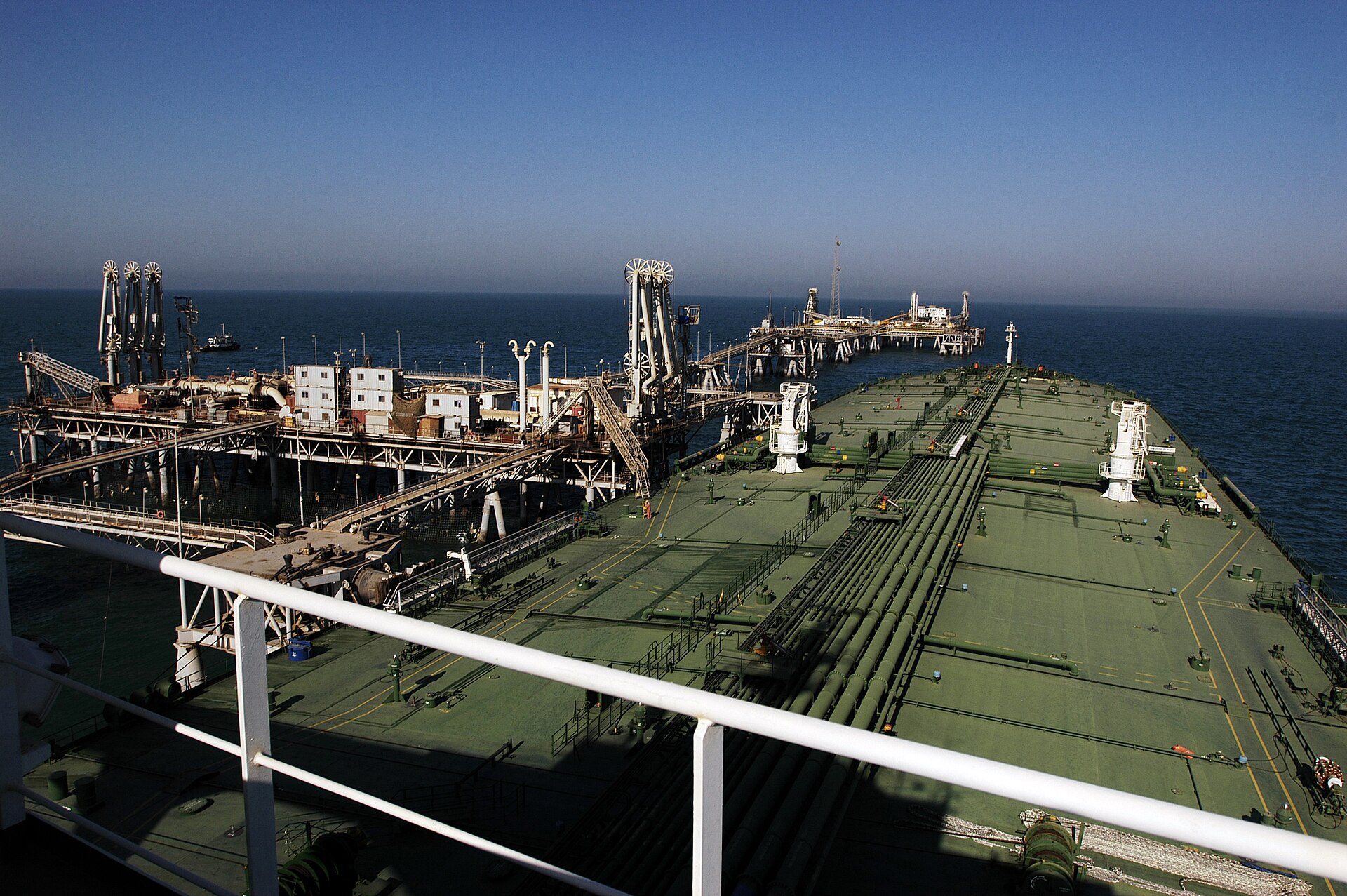
The shutdown of Ras Tanura on March 2 marked the first time in Aramco’s history that its largest refinery was taken fully offline by hostile action. Two Iranian drones targeted the facility, which processes 550,000 barrels per day and serves as one of Saudi Arabia’s primary crude export terminals on the Persian Gulf coast. Saudi air defenses intercepted both drones, but falling debris ignited a fire that, while quickly contained, prompted Aramco to halt all operations at the complex as a precautionary measure.
The direct damage was minor. Aramco’s internal assessment, shared with select analysts according to Reuters, characterized the physical destruction as limited to a secondary processing unit and several piping connections. Repair costs were estimated in the low hundreds of millions of dollars — significant for a normal refinery, trivial for a company with $136 billion in annual operating cash flow. The real cost lies elsewhere.
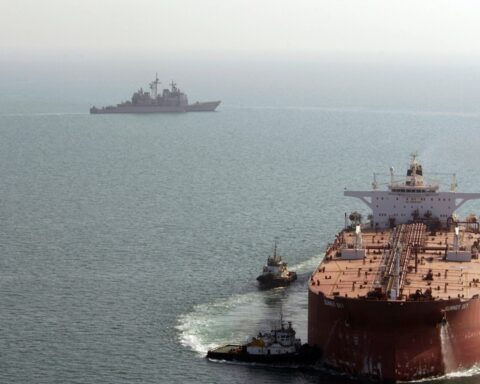
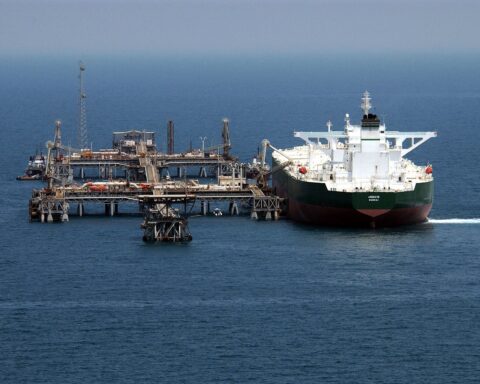
Ras Tanura is not merely a refinery. It is an integrated export complex encompassing crude oil loading facilities, product storage tanks, and a sea island terminal capable of berthing very large crude carriers. Its closure removed not just refining capacity but a major chunk of Aramco’s ability to load tankers on the eastern seaboard. Combined with the Hormuz shipping disruption — which has raised war risk insurance premiums to levels that effectively price many commercial tankers out of the waterway — the closure created a cascading bottleneck. Crude that would normally flow east through Hormuz to Asian customers now must flow west through the East-West Pipeline, pass through the Red Sea, and navigate Bab el-Mandeb, where Houthi forces retain the capacity, if not currently the inclination, to interdict shipping.
Three separate cost categories emerge from the Ras Tanura shutdown. First, the direct repair and reconstruction cost: estimated at $200-400 million. Second, the lost refining margin: Ras Tanura’s 550,000 barrels per day of refined products command higher prices than crude, and each day of downtime costs approximately $15-20 million in foregone margin, according to Rystad Energy estimates. Third, the logistical cost of rerouting: the East-West Pipeline charges internal transfer fees, Yanbu loading operations require additional staffing and tanker scheduling, and longer voyage times to Asian customers increase freight costs that Aramco partially absorbs through its spot and term contract pricing.
The East-West Pipeline Gamble
Every barrel of Saudi oil reaching the global market today passes through one of two chokepoints: the Strait of Hormuz, where Iranian mines and anti-ship missiles have made commercial transit a high-risk proposition, or the East-West Pipeline to Yanbu, a piece of Cold War-era infrastructure that was never designed to carry the full weight of Saudi Arabia’s export economy. The concentration of risk in a single pipeline represents the kind of strategic vulnerability that defence planners spend careers trying to avoid.
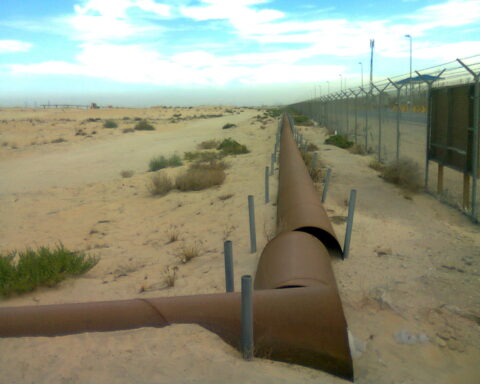
The Petroline, as the East-West Pipeline is formally known, was commissioned in 1981 during the Iran-Iraq War for precisely this contingency — a backup route to bypass Hormuz. It runs 1,200 kilometres from the Abqaiq processing complex in the Eastern Province to the King Fahd Industrial Port at Yanbu on the Red Sea coast. After decades of expansion, the system can now handle approximately 5 million barrels per day, though sustained throughput at maximum capacity has never been tested in operational conditions. The pipeline crosses some of the most inhospitable terrain on Earth — temperatures at the surface regularly exceed 50 degrees Celsius in summer — with 11 pumping stations maintaining flow pressure across the distance.
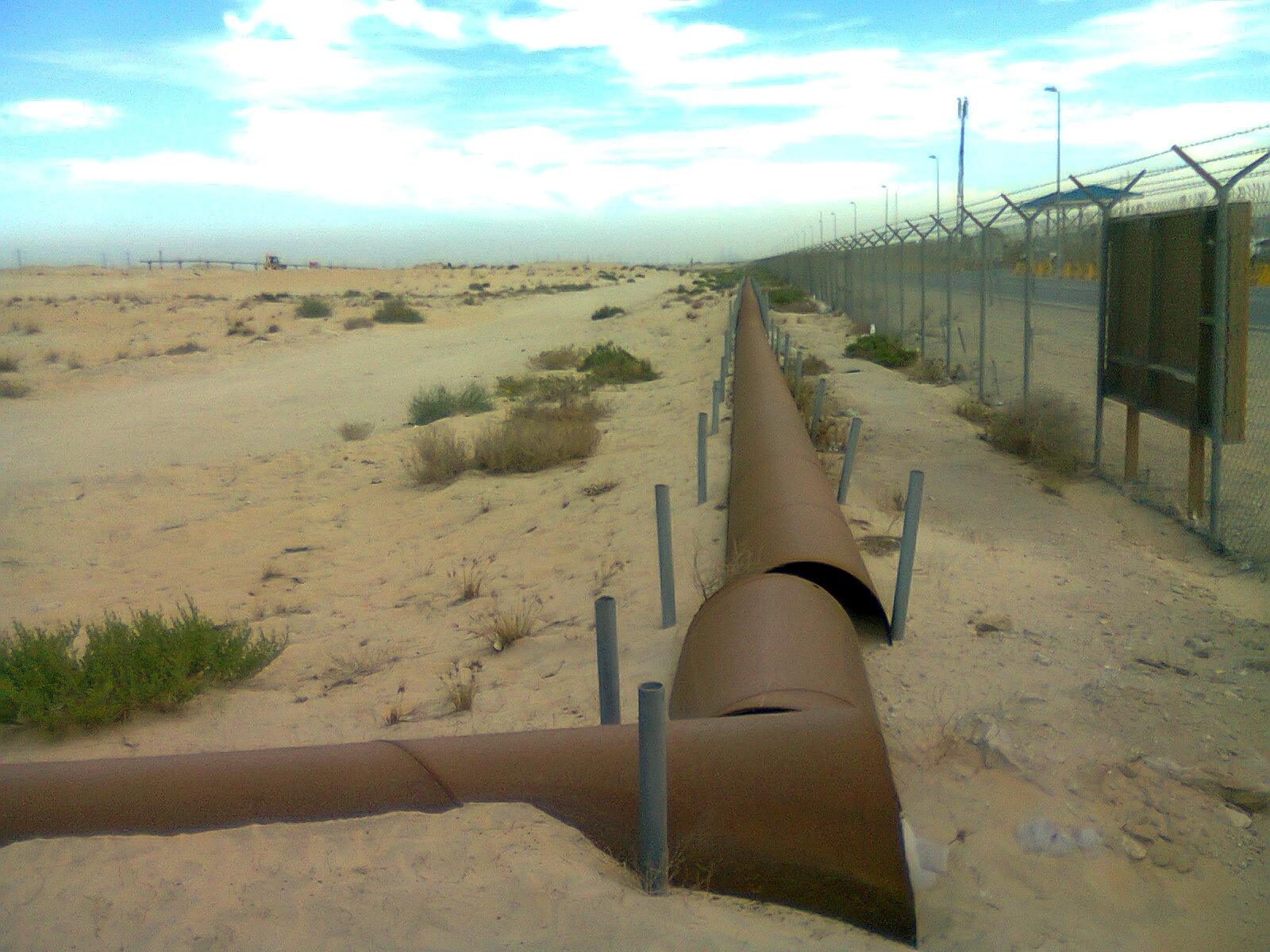
Aramco is now running that test in real time. Analysts estimate current pipeline throughput at between 3.5 and 4.5 million barrels per day, with Aramco gradually increasing volume while monitoring pipeline integrity. The system was last used at high capacity briefly during the 2019 Abqaiq attacks, but only for a matter of days. Sustained maximum-rate operations over weeks or months present different engineering challenges: metal fatigue at pumping stations, thermal expansion across desert terrain where daytime temperatures can exceed 45 degrees Celsius, and the sheer logistical complexity of scheduling tanker loadings at Yanbu for a volume the port was never configured to handle as its primary flow.
The pipeline also presents a security vulnerability. Its 1,200-kilometre route traverses open desert, and while Saudi security forces have hardened critical pumping stations, the pipeline itself is exposed infrastructure that could be targeted by drones, missiles, or sabotage. Iran has not yet struck the East-West Pipeline directly, but the possibility looms over every barrel that transits the system. A single well-placed strike on a pumping station could reduce throughput by 30-40 percent for weeks, effectively shutting Saudi Arabia out of global oil markets until Hormuz reopens or repairs are completed.
Can Aramco Keep Paying the World’s Largest Dividend?
Aramco’s dividend policy is not merely a corporate finance decision — it is the fiscal architecture of the Saudi state. The government holds approximately 82 percent of Aramco’s shares directly, while the Public Investment Fund owns a further 16 percent. Together, these two state entities receive approximately 98 percent of every dividend dollar Aramco distributes. When Aramco cuts its dividend, the Saudi government’s budget bleeds.
The numbers tell a story of mounting pressure. Total dividends for fiscal year 2025 fell to $85.5 billion, down sharply from $124.3 billion in 2024 — a $38.8 billion reduction that translated directly into lost government revenue. The decline was concentrated in the performance-linked dividend, which collapsed from 40 billion Saudi riyals ($10.8 billion) to a token 800 million riyals ($220 million). The base dividend, by contrast, rose 3.5 percent to $21.89 billion for the fourth quarter, a signal of commitment to the minimum payout even as underlying earnings weakened.
The war has inverted the dividend calculus. If Brent sustains prices above $100 per barrel through the second and third quarters of 2026, Aramco’s 2026 earnings could substantially exceed the 2025 figure of $93.38 billion. At an average of $100 per barrel — a conservative estimate given that Brent has traded between $85 and $120 since the conflict began — full-year 2026 net income could approach $120-130 billion, restoring the performance-linked dividend and providing the government with a revenue windfall precisely when it needs one most.
The complication lies in the gap between revenue and access. Higher prices are meaningless if Aramco cannot export the oil. Every barrel that stays in storage because the pipeline is full or Yanbu loading is at capacity is revenue forgone regardless of the price. The Kingdom’s oil storage capacity — estimated at approximately 60-75 million barrels across strategic and commercial facilities — was already filling rapidly by early March. Aramco has reportedly begun reducing production to avoid a storage overflow, an extraordinary step for a company that has historically used spare capacity as a strategic instrument to calm markets.
| Component | 2023 | 2024 | 2025 | 2026 (Est.) |
|---|---|---|---|---|
| Base Dividend | $78.0B | $81.2B | $84.0B | $87.0B |
| Performance Dividend | $22.0B | $43.1B | $1.5B | $20-40B |
| Total Dividend | $100.0B | $124.3B | $85.5B | $107-127B |
| Avg. Brent Price | $82.6 | $80.2 | $69.2 | $90-110 |
| Govt Share (~82%) | $82.0B | $101.9B | $70.1B | $88-104B |
| PIF Share (~16%) | $16.0B | $19.9B | $13.7B | $17-20B |
How Does the War Affect PIF and Vision 2030 Funding?
The Public Investment Fund — Mohammed bin Salman’s primary vehicle for economic transformation — finds itself caught in a contradiction that goes to the heart of Saudi Arabia’s development model. The sovereign wealth fund’s assets have tripled since 2015 to approximately $941 billion, and Governor Yasir Al-Rumayyan set a target of reaching $1 trillion by the end of 2026. The fund was planning to scale annual investments from $40 billion to $70 billion, deploying capital across tourism, entertainment, advanced manufacturing, renewable energy, and the constellation of giga-projects including NEOM. The fund has launched more than 100 companies and expanded its workforce from 40 to approximately 4,000 employees over the past decade.
That investment plan was predicated on two assumptions: stable Aramco dividends and continued access to international debt markets. The war has disrupted both. The 2025 dividend cut reduced PIF’s income from Aramco by approximately $6 billion compared to 2024 — a significant shortfall for a fund attempting to nearly double its annual deployment. Meanwhile, the war has increased the risk premium on Saudi sovereign and quasi-sovereign debt, making new bond issuance more expensive precisely when PIF needs to borrow more. Saudi sovereign CDS spreads have widened roughly 30 basis points since the war began, translating to approximately $150-200 million in additional annual borrowing costs on a $10 billion bond issuance.
The paradox echoes through every level of Vision 2030. Higher oil prices, if sustained, would restore PIF’s dividend income and arguably put the fund ahead of its pre-war trajectory. An average Brent price of $100 per barrel through 2026 could increase PIF’s Aramco dividend by $3-7 billion above the depressed 2025 level, partially offsetting higher borrowing costs and the operational disruptions to domestic giga-projects. The Saudi economy ministry’s 2026 growth forecast of 4.6 percent was issued before the war; the actual figure will depend on whether the oil price windfall outweighs the disruption to non-oil sectors.
Yet the non-oil economy that Vision 2030 was designed to build is precisely the economy most damaged by the war. Tourism — which surpassed the 100 million annual visitor target in 2023, seven years ahead of schedule, reaching 122 million visitors in 2025 — has collapsed as the US State Department issued a Level 3 travel advisory and ordered non-emergency embassy staff to leave the Kingdom. NEOM construction, already scaled back in a January restructuring, faces further delays as international contractors withdraw personnel and supply chains are disrupted by the Hormuz closure. The entertainment sector, from Riyadh Season to the Saudi Pro League, operates under the shadow of drone strikes on residential areas.
PIF’s new six-sector strategy — announced in January 2026, focusing on tourism, urban development, advanced manufacturing, logistics, renewable energy, and NEOM — was calibrated for a peacetime environment. At least three of those six sectors (tourism, urban development, and NEOM) are directly impaired by the conflict. The fourth edition of the PIF-Private Sector Forum, scheduled for 2026 with over 12,000 participants and 120 portfolio companies, faces obvious challenges when international travel to the Kingdom carries a wartime risk advisory. The $1 trillion asset target remains technically achievable — indeed, the surge in Aramco’s share price has likely added tens of billions to PIF’s portfolio value — but the composition of those assets is shifting away from productive diversification and back toward oil-linked valuation. A full accounting of PIF’s trillion-dollar wartime pivot reveals that the rebalancing extends far beyond Aramco into defense, agriculture, and strategic reserves.
The downstream consequences of this dividend squeeze — and the broader wartime fiscal trap confronting PIF’s $1.15 trillion portfolio — are examined in detail in a companion analysis of how the Iran war is eating Saudi Arabia’s trillion-dollar future.
Why This Is Not Another Abqaiq
Market participants reaching for historical parallels have inevitably cited the September 2019 Abqaiq-Khurais attack — the last time Aramco’s infrastructure suffered a significant strike. That comparison, while understandable, obscures more than it illuminates. The differences between September 2019 and March 2026 are not merely quantitative but qualitative, reflecting a fundamentally different threat environment.
The 2019 attack, attributed to Iran-backed Houthi forces using drones and cruise missiles, knocked out 5.7 million barrels per day of Saudi production — roughly half the Kingdom’s output and 5 percent of global supply. Oil prices spiked nearly 20 percent in a single session, with Brent jumping from $60 to $69 per barrel. The market reaction was dramatic but short-lived. Within two weeks, Aramco had fully restored lost production, oil prices fell below pre-attack levels, and the incident became a case study in supply disruption resilience.
Three factors made that rapid recovery possible. First, the physical damage, while spectacular in satellite imagery, was concentrated in processing equipment rather than wellheads or pipeline infrastructure. Second, Aramco maintained significant spare capacity and strategic inventory that could be deployed immediately. Third, and most critically, the 2019 attack was a one-off event. There was no ongoing military campaign, no sustained bombardment, no naval blockade, and no broader regional conflict forcing simultaneous production disruptions across multiple OPEC members.
| Factor | Abqaiq (September 2019) | Iran War (March 2026) |
|---|---|---|
| Saudi production offline | 5.7M bpd (48 hours) | 2-3M bpd (ongoing) |
| Total Gulf disruption | 5.7M bpd (Saudi only) | ~3.2M bpd (6 countries) |
| Duration | ~14 days to full recovery | 10+ days, no end in sight |
| Export route disruption | None (Hormuz open) | Hormuz near-closed |
| Oil price impact | $60 → $69 (+15%) | $69 → $114 (+65%) |
| Price recovery time | ~2 weeks | Ongoing, elevated |
| Attacker capability | One-off drone/missile strike | Sustained campaign, daily strikes |
| Regional context | Isolated incident | Multi-front regional war |
| IPO/market timing | Delayed Aramco IPO | Share price surging |
Every one of those 2019 recovery factors is absent in 2026. The damage from the Ras Tanura strike may be limited, but the threat is continuous — Saudi air defenses have intercepted over 50 incoming drones and missiles in ten days, and each interception carries a small but non-zero probability of failure. Aramco’s spare capacity is being consumed not by damage but by the storage bottleneck created by the Hormuz blockade. And the regional conflict shows no sign of ending quickly — Iran has rejected immediate ceasefire proposals and named Mojtaba Khamenei as its new Supreme Leader, consolidating hardline control over the war effort.
The Wartime Resilience Matrix
Aramco’s ability to sustain operations under fire depends on four interlocking factors: physical infrastructure integrity, export route availability, storage capacity, and financial reserves. Assessing these factors against the current threat environment reveals a company that is resilient but not invulnerable — and whose resilience depends on variables outside its control.
| Factor | Pre-War Status | Current Status (Day 10) | Risk Level | Key Vulnerability |
|---|---|---|---|---|
| Production Capacity | 12M bpd capacity, 10M bpd actual | Reduced to ~8M bpd (est.) | Moderate | Sustained drone strikes on processing facilities |
| Eastern Export Route (Hormuz) | ~5M bpd via Gulf terminals | Near zero (blockade) | Critical | Iranian mines, anti-ship missiles |
| Western Export Route (Yanbu) | Backup, ~2M bpd actual | Ramping to 4-5M bpd | Elevated | Pipeline attack, Bab el-Mandeb |
| Storage Capacity | 60-75M barrels available | Filling rapidly | High | Forces production cuts within weeks |
| Financial Reserves | $136B operating cash flow | Strengthening (higher prices) | Low | Revenue depends on export volume |
| Workforce Security | Normal operations | Non-essential staff relocated | Elevated | Expatriate departures, safety concerns |
| Refining Capacity | 3.2M bpd total | ~2.65M bpd (Ras Tanura offline) | Moderate | Further facility strikes |
| Air Defense Coverage | Patriot, THAAD at key sites | Active engagement, high intercept rate | Moderate | Interceptor stockpile depletion |
The matrix reveals a critical asymmetry: Aramco’s financial position strengthens as the war continues (through higher prices), but its operational position deteriorates (through accumulating physical risk and export constraints). The company is getting richer on paper while its ability to actually deliver oil to customers erodes. This tension is unsustainable over any extended timeline. If the war lasts one month, Aramco weathers it comfortably. If it lasts three months, the storage crisis forces progressively deeper production cuts that eventually overwhelm the price benefit. If it lasts six months, the accumulated infrastructure damage, workforce disruption, and customer diversion to alternative suppliers could permanently reshape global oil trade patterns in ways that disadvantage Saudi Arabia.
What Is the Market Telling Us About Aramco’s Future?
Aramco’s share price behavior since February 28 reads like a textbook case of war premium pricing — and its limitations. Shares surged 4.9 percent on March 8 — the largest single-day gain since April 2023 — as Brent crude crossed $100 for the first time since Russia’s 2022 invasion of Ukraine. Year-to-date, the stock has climbed 13 percent, adding approximately $245 billion to Aramco’s market capitalization and pushing the total above SAR 6.3 trillion (approximately $1.68 trillion). For context, that single-year market cap gain exceeds the entire GDP of countries like Egypt or Pakistan — nations with populations orders of magnitude larger than Saudi Arabia’s.
The Saudi Tadawul exchange has become a two-track market. Aramco and defense-adjacent companies have surged, while banks, construction, tourism, and retail stocks have declined sharply, reflecting the war’s lopsided economic impact. The Tadawul All Share Index (TASI) fell 4.2 percent in the first week of the conflict, but Aramco’s weighting — it accounts for more than 12 percent of the index — has partially masked the damage to the broader economy.
International investors are reading the share price move cautiously. The $3 billion buyback programme announced alongside earnings is notably modest — representing less than 0.2 percent of Aramco’s market capitalization. This is not a company aggressively returning capital to shareholders; it is a company preserving liquidity for an uncertain environment. The buyback signals confidence without commitment, a familiar posture for state-controlled enterprises navigating geopolitical complexity.
The more revealing signal comes from the bond market. Saudi sovereign credit default swaps (CDS) widened by approximately 30 basis points in the first week of the war, indicating that fixed-income investors perceive meaningfully higher risk even as equity investors chase the oil price rally. Aramco’s own bonds have traded lower, with the company’s 2049 dollar bond falling to 88 cents on the dollar from 94 cents pre-war. The divergence between equity exuberance and credit caution suggests the market has not reached consensus on how this ends.
Foreign investor behavior offers another data point. International holdings of Saudi equities have declined since the war began, with net foreign selling on the Tadawul averaging approximately SR 800 million per day in the first week of the conflict. This selling pressure has been absorbed by domestic institutional buying — primarily from government-related entities — suggesting that the Aramco share price surge is at least partially supported by state-adjacent capital rather than genuine international confidence. The dynamic is not unlike what occurred during the 2019 Aramco IPO, when domestic investors and Gulf sovereign funds provided the bulk of demand after international institutional interest fell short of expectations.
Insurance markets provide perhaps the most granular read on operational risk. Lloyd’s of London war risk premiums for tankers entering the Persian Gulf have surged from approximately 0.05 percent of hull value to over 2 percent — a forty-fold increase that effectively prices commercial vessels out of Hormuz transit. A very large crude carrier (VLCC) with a hull value of $100 million now faces a war risk premium of $2 million per voyage, on top of standard insurance costs. Several major P&I clubs have issued exclusion notices for Gulf waters, and a number of tanker operators have simply refused to enter the Strait. This insurance market signal suggests that the Hormuz disruption could persist well beyond any ceasefire, as re-insurers will demand evidence of sustained stability before reducing premiums.
Riyadh’s Wartime Fiscal Calculus
The Saudi government entered 2026 with a projected budget deficit of 165 billion Saudi riyals (3.3 percent of GDP), an improvement over the 2025 estimated deficit of 245 billion riyals (5.3 percent of GDP). Revenue was forecast at SR 1.15 trillion ($306 billion), with total expenditure set at SR 1.31 trillion. These projections assumed an oil price environment broadly consistent with 2025 — around $65-70 per barrel.
The war has shattered those assumptions in both directions. On the revenue side, higher oil prices could add tens of billions of dollars to government income if sustained. AGBI reported that the Iran war could actually reduce Saudi Arabia’s budget deficit, with each $10 increase in the average annual oil price adding approximately $26 billion to government revenues. At an average of $90 per barrel for 2026 — a conservative scenario — the deficit could narrow to near zero. At $100 per barrel, the government could post a surplus for the first time since 2022.
On the expenditure side, the war introduces costs that the 2026 budget did not anticipate. Increased military spending — Saudi air defense interceptors cost between $1-4 million per missile, and the Kingdom has fired dozens since March 1 — is the most visible new cost. Less visible but potentially larger are the economic support measures that will be required: subsidies for disrupted supply chains, support for affected businesses (particularly in the Eastern Province), compensation for foreign nationals killed or injured in strikes, and the cost of maintaining domestic social stability through a conflict that is testing public patience.
The fiscal impact flows through Mohammed bin Salman’s three-front war — military, diplomatic, and economic. Each front has its own cost structure. The military front consumes interceptors, logistics, and manpower. The diplomatic front, led by Foreign Minister Faisal bin Farhan, requires financial commitments to coalition partners and potentially to post-war reconstruction. The economic front demands sustained domestic spending to prevent the war from derailing Vision 2030’s non-oil economy, which now accounts for 55 percent of real GDP.
| Scenario | Avg. Brent Price | Est. Oil Revenue | War Costs | Budget Balance |
|---|---|---|---|---|
| Pre-war baseline | $65-70/bbl | SR 770B ($205B) | N/A | -SR 165B deficit |
| Short war (ends April) | $85-90/bbl | SR 920B ($245B) | SR 15-25B | -SR 30B to breakeven |
| Medium war (ends July) | $95-105/bbl | SR 1,050B ($280B) | SR 40-60B | SR 0-50B surplus |
| Prolonged war (6+ months) | $90-100/bbl | SR 980B ($261B) | SR 80-120B | -SR 80B to -SR 20B |
The scenario analysis reveals a narrow window in which the war actually improves Saudi Arabia’s fiscal position: a conflict lasting two to four months, long enough for oil prices to average significantly above budget assumptions but short enough that war costs remain manageable and the non-oil economy avoids permanent damage. Beyond that window, the cost curve steepens faster than the revenue curve flattens, and the fiscal calculus turns negative.
The precariousness of that fiscal window was laid bare when a false claim by Energy Secretary Chris Wright about tanker escorts through the Strait of Hormuz crashed oil prices by 17 percent in minutes, vaporizing billions in Saudi revenue before the statement was walked back. For Aramco’s wartime balance sheet, the incident confirmed that the Kingdom’s fiscal fortunes now hinge not only on barrels shipped but on every public utterance about the strait’s status.
OPEC+ Strategy in the Fog of War
OPEC+’s decision to resume output increases — adding 206,000 barrels per day starting in April — landed days before the war began, and the alliance has not formally revisited the decision since. The increase, modest by historical standards, was designed to reclaim market share from non-OPEC producers. In the current environment, it reads like a footnote to a script that has been completely rewritten.
Saudi Arabia, as OPEC’s de facto leader and largest producer, faces a strategic dilemma within the cartel. Under normal circumstances, a supply disruption of this magnitude would trigger an emergency OPEC meeting, a coordinated increase in spare capacity utilization, and a public commitment to market stability. The Kingdom has played this role repeatedly — most recently during the 2022 energy crisis following Russia’s invasion of Ukraine, when Saudi Arabia’s spare capacity was the primary mechanism preventing oil from reaching $200 per barrel.
In March 2026, the dynamics are different. Saudi Arabia itself is a conflict participant — not by choice, but by geographic proximity and Iranian targeting. The Kingdom’s spare capacity is theoretically available (Aramco can produce 12 million barrels per day, roughly 2 million above current output) but practically constrained by the export bottleneck. Producing more oil only fills storage faster if it cannot be shipped. OPEC+ partners like the UAE, Kuwait, and Iraq face similar constraints: their production capacity exists, but their ability to export through Hormuz does not.
The war’s enrichment of Saudi Arabia through higher prices creates a moral hazard that Riyadh must carefully manage. Any perception that the Kingdom is benefiting from the conflict — or worse, failing to use its spare capacity to moderate prices — would damage its reputation as a responsible producer and invite retaliation from energy-consuming nations. The G7 is already considering the largest strategic reserve release in history to cool prices, a move that Saudi Arabia has historically opposed as market manipulation.
The OPEC+ dynamic is further complicated by the destruction of Iranian and Iraqi production capacity. Iran’s southern oilfield output has collapsed 70 percent — from 4.3 million barrels per day to approximately 1.3 million — under sustained US-Israeli bombardment, according to Kpler satellite tracking data. Iraq, the cartel’s second-largest producer, has suffered a comparable decline as infrastructure damage and security concerns shut down major fields. Kuwait has implemented precautionary production cuts and Bahrain’s BAPCO refinery declared force majeure after a direct Iranian strike. The cumulative disruption removes approximately 3.2 million barrels per day from the global market — roughly equivalent to the production of a mid-sized OPEC member disappearing overnight.
For Aramco, the OPEC+ question is inseparable from the commercial question. The company’s customer relationships — particularly with major Asian buyers like China, Japan, and South Korea — depend on reliable supply. Extended delivery disruptions create opportunities for competitors, particularly US shale producers and Brazilian deepwater operators who face no Hormuz risk. Every week that Aramco cannot guarantee term contract volumes to its Asian customers is a week in which those customers diversify their supply chains away from Saudi crude. The commercial damage from customer diversion could persist long after the war ends and Hormuz reopens.
The Uncomfortable Truth About Aramco’s War Dividend
The conventional narrative frames Aramco as a victim of the Iran war — a target of drone strikes, a hostage to Hormuz, a company under siege. This narrative is not wrong, but it is incomplete. The fuller picture reveals a company that is, on net, financially strengthened by the very conflict that threatens its physical operations.
Consider the arithmetic across a twelve-month horizon. If the war ends within four to six weeks and oil prices gradually normalize to $80-85 per barrel, Aramco’s 2026 earnings will still benefit from several months of elevated pricing. The company’s capex guidance of $50-55 billion for 2026 implies continued investment in expansion projects that, in a post-war environment, would be ready to capitalize on the eventual demand recovery. The share buyback programme positions Aramco to repurchase stock at a discount if prices correct after the war. And the forced pipeline rerouting, while costly and risky, demonstrates a resilience capability that will be priced into Aramco’s strategic value for decades.
The uncomfortable corollary is that every day the war continues, Aramco’s revenue outperformance grows — up to the point where operational constraints overwhelm the price benefit. This is not a conspiracy; it is the mechanical result of an inelastic commodity market where a supply disruption raises prices faster than it reduces the surviving producers’ output. Saudi Arabia did not start this war and has actively worked to prevent it from escalating further, communicating with Tehran’s ambassador in Riyadh on a near-daily basis and advising Gulf allies to avoid provocative actions. But the Kingdom’s financial benefit from the conflict creates a credibility problem that Riyadh will need to address in the post-war order.
The fundamental question for Aramco is not whether it can survive this war — it can — but whether the war will accelerate or delay the strategic transition from oil dependency that the company and the Kingdom have been pursuing under Vision 2030 for a decade.
Editorial analysis, March 2026
The answer depends on duration. A short war — resolved by April — leaves Vision 2030 bruised but intact, with a fiscal windfall that could actually accelerate investment in non-oil sectors. A prolonged conflict lasting into summer fundamentally alters the trajectory, not because Aramco runs out of money, but because the non-oil economy that Vision 2030 was building — tourism, entertainment, international business services — cannot function in a war zone. The ultimate irony of Aramco’s war dividend may be that it reinforces precisely the oil dependency that the Kingdom’s long-term strategy was designed to escape.
The earnings windfall, however, represents only one side of the ledger. A comprehensive accounting of the war costs Saudi Arabia is not counting reveals that military expenditure, tourism losses, capital flight, and deferred investment already exceed the short-term revenue gains by a significant margin.
Frequently Asked Questions
What were Aramco’s Q4 2025 earnings?
Saudi Aramco reported fourth-quarter 2025 adjusted profit of $25.1 billion, beating the consensus estimate of $24.8 billion. Net profit for the quarter was $17.76 billion, down 20.5 percent from $22.34 billion in Q4 2024. Full-year 2025 net income fell 11.6 percent to $93.38 billion, primarily due to lower average crude prices of $69.2 per barrel compared to $80.2 in 2024.
How has the Iran war affected Aramco’s share price?
Aramco shares have surged 13 percent year-to-date in 2026, including a 4.9 percent single-day gain on March 8 — the largest since April 2023. The rally reflects investor expectations of higher revenue from elevated oil prices, with Brent crude rising from $69 to above $114 per barrel since the war began. The company’s market capitalization has exceeded SAR 6.3 trillion ($1.68 trillion).
Is the Ras Tanura refinery still shut down?
Aramco shut down operations at the Ras Tanura refinery on March 2 after Iranian drone debris ignited a fire at the 550,000-barrel-per-day facility. Physical damage was characterized as minor, but the refinery remains offline as a precautionary measure amid ongoing Iranian drone and missile attacks. Aramco has redirected crude exports through the East-West Pipeline to the Red Sea port of Yanbu.
What is the East-West Pipeline and why is it critical?
The East-West Pipeline, formally known as the Petroline, is a 1,200-kilometre crude oil pipeline running from the Abqaiq processing complex in Saudi Arabia’s Eastern Province to the Red Sea port of Yanbu. Commissioned in 1981, it has a maximum capacity of approximately 5 million barrels per day and is currently Aramco’s sole reliable export route due to the near-closure of the Strait of Hormuz by Iranian forces.
How does Aramco’s dividend affect the Saudi government budget?
The Saudi government owns approximately 82 percent of Aramco shares and the Public Investment Fund holds 16 percent, meaning 98 percent of dividends flow to state entities. Total 2025 dividends fell to $85.5 billion from $124.3 billion in 2024, reducing government revenue by approximately $32 billion. If oil prices sustain above $100 per barrel through 2026, dividends could recover to $107-127 billion, potentially eliminating the budget deficit.
How does the 2026 war compare to the 2019 Abqaiq attack?
The 2019 Abqaiq attack was a one-off strike that temporarily removed 5.7 million barrels per day but was fully repaired within two weeks, with oil prices returning to pre-attack levels quickly. The 2026 conflict involves sustained daily attacks across six countries, a naval blockade of the Strait of Hormuz, and an ongoing multi-front regional war with no defined endpoint, making it qualitatively different and far more consequential for Aramco’s operations.