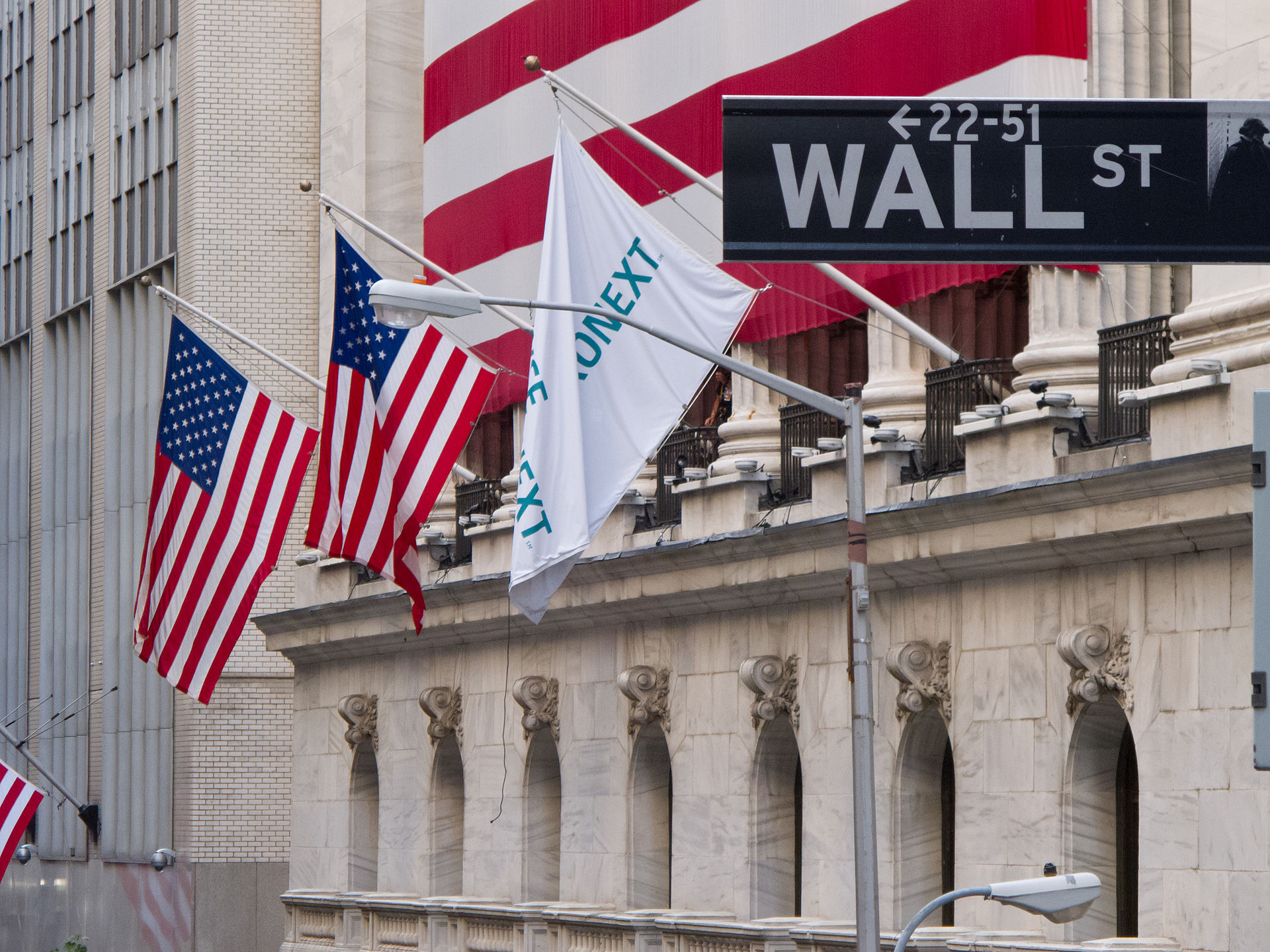

RIYADH — Asian stock markets suffered their steepest single-day losses since the Iran war began on Monday, with Japan’s Nikkei 225 plunging four percent and South Korea’s KOSPI shedding 4.5 percent, as investors braced for the expiry of President Donald Trump’s 48-hour ultimatum demanding Iran reopen the Strait of Hormuz. Brent crude surged past $114 a barrel in early trading before easing to $112, and Wall Street futures pointed to further declines when New York opens. The selloff has direct consequences for Saudi Arabia, whose Tadawul stock exchange reopens on Tuesday after a week-long Eid al-Fitr closure, and whose $1.15 trillion Public Investment Fund holds significant exposure to global equities now losing value by the hour.
The rout marks the worst day for Asian equities since the war’s opening days in early March, when the initial US-Israeli strikes on Iran erased trillions from global markets. Analysts warn that the convergence of Trump’s expiring deadline, Iran’s vow to close Hormuz permanently if its power grid is attacked, and oil prices firmly above $110 a barrel has created a risk environment that could trigger further contagion when European and American exchanges open.
Table of Contents
- How Far Did Asian Markets Fall on Monday?
- Why Is Trump’s Iran Deadline Triggering the Selloff?
- Oil Prices Surge Past $114 on Escalation Fears
- What Awaits Saudi Arabia’s Tadawul When It Reopens?
- PIF’s $1.15 Trillion Portfolio Faces Global Headwinds
- Aramco’s Revenue Paradox in a $114 Oil World
- Gulf Economies Absorb the Shock
- Three Weeks of War and $9 Trillion in Lost Value
- Frequently Asked Questions
How Far Did Asian Markets Fall on Monday?
Asian equity markets opened Monday to a wave of selling that deepened as the trading session progressed, driven by the approaching expiry of Trump’s ultimatum to Iran and renewed fears of an escalation that could permanently shut the Strait of Hormuz to global shipping.
Japan’s Nikkei 225 index fell four percent in early trading, its worst single-session decline since March 9, when the war’s opening salvos created what economists have called the fourth great oil shock. The benchmark had already lost more than 12 percent since the conflict began on February 28, according to data from the Tokyo Stock Exchange.
South Korea’s KOSPI dropped 4.5 percent, extending its monthly decline to approximately 12 percent, Reuters reported. The index has been particularly vulnerable because South Korea imports roughly 70 percent of its crude oil through the Strait of Hormuz, and the country’s export-dependent manufacturing sector faces acute pressure from rising energy costs.
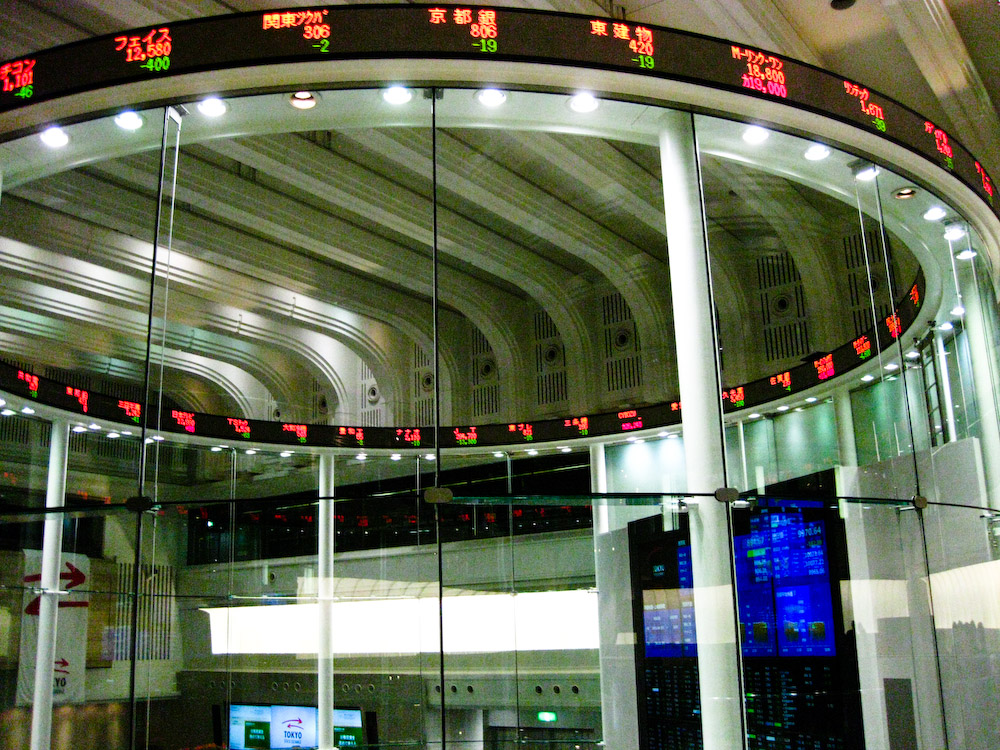
Hong Kong’s Hang Seng Index tumbled approximately two percent, while Australia’s ASX 200 fell 1.6 percent and New Zealand’s NZX 50 dipped 1.3 percent. MSCI’s broadest index of Asia-Pacific shares outside Japan lost 2.5 percent, and Chinese blue chips dropped 1.9 percent, according to Reuters.
Wall Street futures signalled further pain ahead. S&P 500 and Nasdaq Composite futures were both down approximately 0.5 percent ahead of the New York open, suggesting the contagion would extend to American markets for a second consecutive week of losses.
| Index | Country | Change | Month-to-Date |
|---|---|---|---|
| Nikkei 225 | Japan | -4.0% | -12%+ |
| KOSPI | South Korea | -4.5% | -12% |
| Hang Seng | Hong Kong | -2.0% | -8%+ |
| ASX 200 | Australia | -1.6% | -6%+ |
| NZX 50 | New Zealand | -1.3% | -5%+ |
| MSCI Asia-Pacific ex-Japan | Regional | -2.5% | -9%+ |
Why Is Trump’s Iran Deadline Triggering the Selloff?
The immediate catalyst for Monday’s crash was the approaching expiry of President Trump’s 48-hour ultimatum to Iran, which he issued via Truth Social on Saturday, March 22. Trump threatened to “obliterate” Iran’s power plants, starting with the largest, if Tehran failed to fully reopen the Strait of Hormuz within 48 hours. The deadline falls at approximately 23:44 GMT on Monday night.
Iran’s military responded within hours, vowing to close the strait completely and indefinitely if the United States attacks its power infrastructure, according to Time magazine. Tehran also threatened to strike the energy and water systems of Gulf neighbours that host American military forces, a warning directed squarely at Saudi Arabia, the UAE, Bahrain, Kuwait, and Qatar.
The standoff has created a binary risk event that markets are struggling to price. If Trump follows through, the resulting Iranian retaliation could escalate attacks on Saudi Arabia’s already-strained energy infrastructure and push oil toward $150 a barrel, according to analysts cited by Al Jazeera. If Trump backs down, the political cost domestically could be severe, but markets might rally on de-escalation signals.
“The war could still go on for many weeks yet and see oil prices rise say to $150 a barrel,” one energy analyst told Al Jazeera on Monday, reflecting the deeply uncertain outlook that has frozen risk appetite across global markets.
Iran has maintained what it describes as a “selective blockade” of the Strait of Hormuz since March 2, allowing ships from China, India, Pakistan, and most recently Japan to transit, while blocking vessels linked to the United States, Israel, and their allies. Tehran has simultaneously claimed the strait remains open while its military threatens complete closure, a contradiction that has kept shipping insurers and energy traders on edge for three weeks.
Oil Prices Surge Past $114 on Escalation Fears
Brent crude futures climbed more than 1.5 percent in early Monday trading to top $114 a barrel before easing to approximately $112 as of 02:00 GMT, according to market data cited by Al Jazeera. The May 2026 Brent contract opened at $107.17 and traded in a wide range between $105.05 and $113.11, reflecting extreme volatility.
Oil prices have now surged more than 50 percent since the US-Israeli war on Iran began on February 28, Al Jazeera reported. Brent crude has not traded consistently below $100 a barrel since early March, and briefly touched $126 a barrel on March 8, the highest level since 2022, according to data compiled by the International Energy Agency.
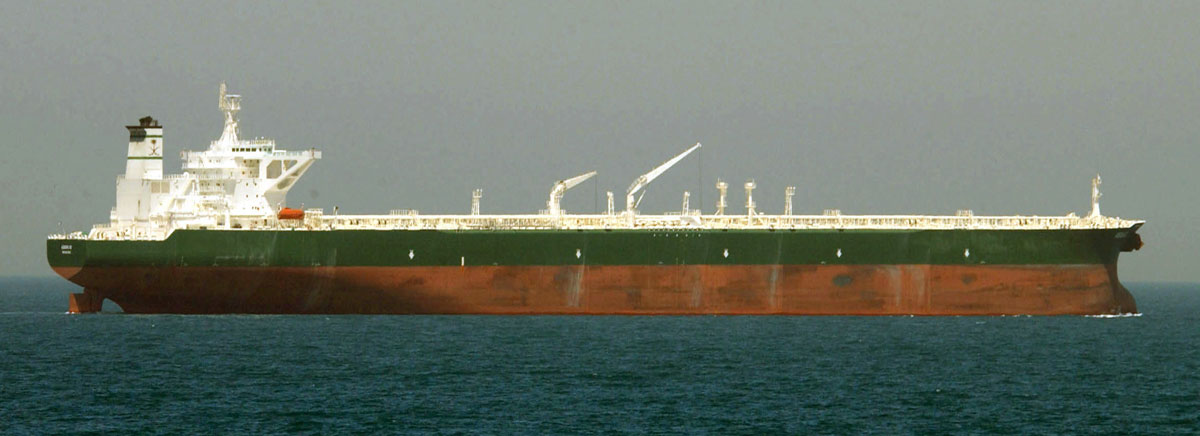
The disruption is staggering in scale. Approximately one-fifth of global oil and natural gas exports normally transit through the Strait of Hormuz, according to the US Energy Information Administration. Since Iran began targeting shipping at the outbreak of the war, just 21 tankers have transited the route, compared with more than 100 ships daily before the conflict, according to S&P Global Market Intelligence.
Goldman Sachs warned clients last week that oil could reach $150 a barrel if the strait remains effectively closed through the second quarter, and some forecasters have raised the possibility of $200 oil if the conflict escalates further. The CNN report on Monday cited analysts predicting that “energy prices will rise significantly if the strait remains effectively closed.”
Saudi Arabia has responded by redirecting crude exports through its East-West pipeline to the Red Sea port of Yanbu, where loadings have reached approximately 3.66 million barrels per day, roughly half of pre-crisis export levels, according to Bloomberg ship-tracking data. Aramco has said its pipeline network can move up to seven million barrels per day to the Red Sea, of which five million would be available for export. But the Yanbu infrastructure was itself targeted by Iranian strikes on March 20, briefly halting loadings and raising questions about the vulnerability of Saudi Arabia’s Hormuz bypass.
What Awaits Saudi Arabia’s Tadawul When It Reopens?
Saudi Arabia’s Tadawul All Share Index (TASI) has been closed since March 17 for the Eid al-Fitr holiday and is scheduled to resume trading on Tuesday, March 25. The exchange will reopen into the most hostile global market environment since the war began, with every major Asian index in sharp decline and oil prices above $112 a barrel.
Before the Eid closure, the Tadawul had shown relative resilience. TASI closed its final pre-holiday session at 10,946.26 points, gaining 0.55 percent, according to The Saudi Times. But the index had already fallen to 10,365 points earlier in March, its lowest level since October 2023, representing a 13.88 percent decline from twelve months earlier, Middle East Insider analysis showed.
The week-long absence from trading means the Tadawul has missed an extraordinary period of global market turbulence. Since the exchange closed on March 17, Trump issued his 48-hour ultimatum, Iran threatened permanent Hormuz closure, three ballistic missiles targeted Riyadh Province, and Asian markets have suffered multiple days of steep losses.
“The Tadawul reopening will likely see significant selling pressure as the exchange catches up with a week of deteriorating global conditions,” a Gulf-based fund manager told Arab News. Saudi banking and petrochemical stocks, which dominate TASI by market capitalisation, face particular pressure from rising credit risk and disrupted supply chains.
However, some analysts have argued that the war is paradoxically accelerating certain elements of Saudi Arabia’s economic diversification, which could provide selective support for defence, logistics, and domestic consumption stocks when trading resumes.
PIF’s $1.15 Trillion Portfolio Faces Global Headwinds
Saudi Arabia’s Public Investment Fund, the world’s fifth-largest sovereign wealth fund with $1.15 trillion in assets under management, holds substantial exposure to global markets that are now deteriorating rapidly.
The fund’s US-listed equity holdings stood at $12.9 billion at the end of the fourth quarter of 2025, down from $19.4 billion at the close of the third quarter, according to regulatory filings cited by Arab News. Key positions include Lucid Group, Electronic Arts, Uber Technologies, Allurion Technologies, and Claritev Corp. With the S&P 500 and Nasdaq both trending lower, these holdings face further mark-to-market losses.
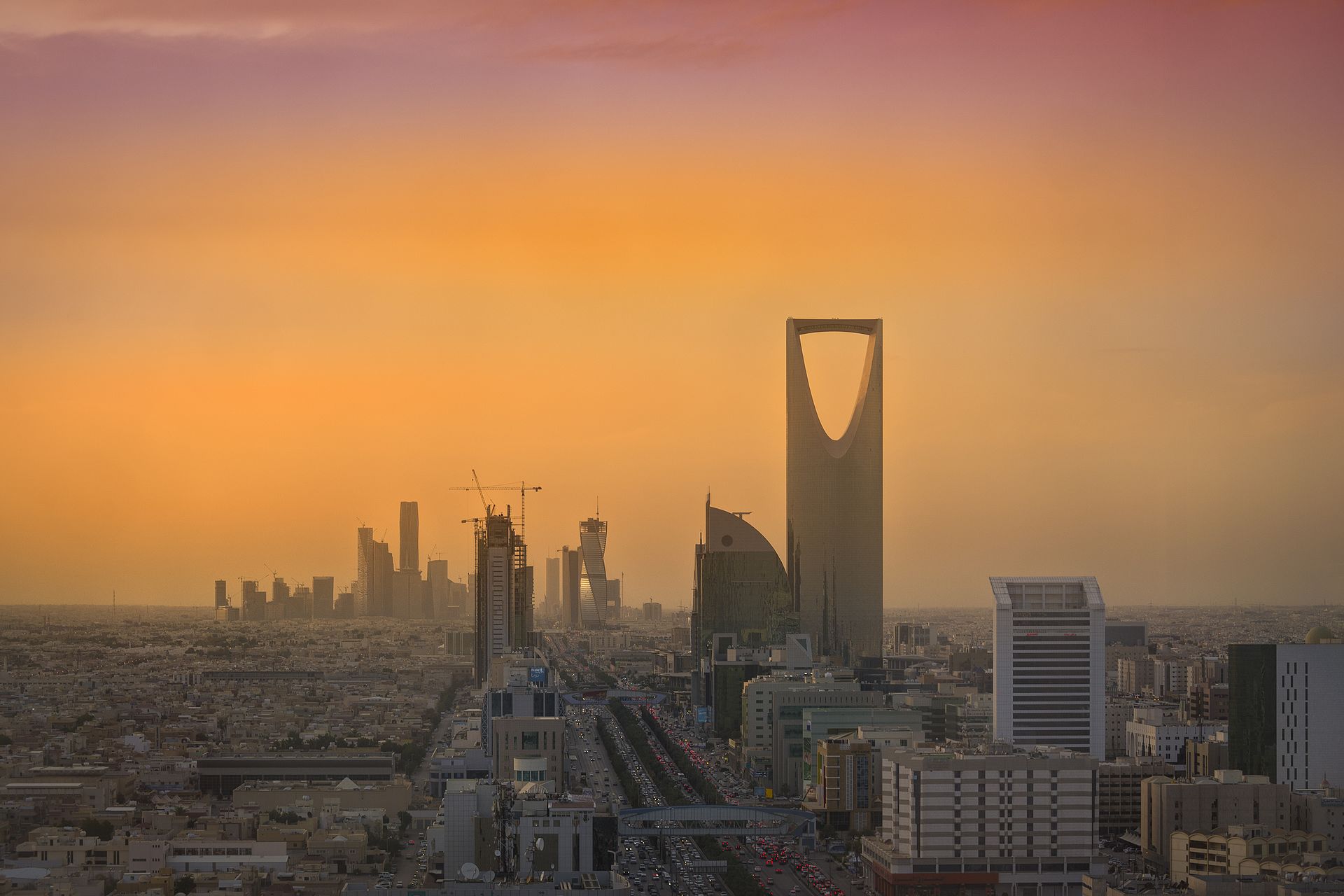
PIF’s domestic portfolio, which accounts for approximately 80 percent of its $1.15 trillion in assets, is also under pressure. The fund holds a 16 percent stake in Saudi Aramco, whose share price has been volatile amid the operational disruptions caused by Iranian strikes and the Hormuz closure. PIF also has large positions in Saudi National Bank, stc Group, and other Tadawul-listed companies that will face selling pressure when the exchange reopens.
Cash reserves at PIF had already fallen to approximately $15 billion by late 2024, their lowest level since 2020, Bloomberg reported. The fund approved a minimum 20 percent reduction in spending across its portfolio of more than 100 companies, including over 50 development entities linked to giga-projects, as it adjusted to lower-than-expected revenues. PIF governor Yasir Al Rumayyan indicated that the fund was finalising a revised 2026-2030 strategy aimed at becoming “a more efficient and returns-driven investment vehicle.”
The Aramco dividend, PIF’s single largest income source, has also come under strain. Aramco reduced its 2025 dividend payout by roughly one-third, to approximately $84.5 billion, cutting PIF’s income from that stake by at least $6 billion, according to Middle East Briefing.
Aramco’s Revenue Paradox in a $114 Oil World
Oil above $114 a barrel would ordinarily be a bonanza for Saudi Aramco and, by extension, for the Saudi state budget and PIF’s Aramco dividend income. But the Iran war has created an unusual paradox: prices are high precisely because Saudi Arabia cannot deliver its crude to market through its primary export route.
Before the war, Saudi Arabia exported approximately seven million barrels per day, the majority through terminals on the Persian Gulf coast that depend on the Strait of Hormuz for access to Asian markets. With Hormuz effectively closed, Aramco has been forced to reroute exports through the 1,200-kilometre East-West pipeline to Yanbu on the Red Sea, a system built during the Iran-Iraq war of the 1980s.
Bloomberg ship-tracking data shows that crude exports from Yanbu have reached a five-day rolling average of 3.66 million barrels per day, with loadings at times exceeding four million barrels per day. Aramco has said its pipeline system can handle up to seven million barrels per day to the Red Sea, of which five million would be available for export. But Aramco is fighting the largest operational crisis in its history, and the Yanbu port’s two terminals have a nominal combined loading capacity of about 4.5 million barrels per day, with the effective figure closer to four million, market sources told Bloomberg.
The result is that Saudi Arabia is exporting roughly half its normal volume at roughly double the normal price, an equation that leaves total revenue roughly flat while creating enormous logistical strain and physical vulnerability. Iran’s March 20 strike on the Yanbu refinery demonstrated that the Red Sea bypass is not immune to attack, and analysts have warned that any sustained disruption to the pipeline or the Yanbu port would remove Saudi Arabia’s last functioning export route.
Gulf Economies Absorb the Shock
The financial market turmoil extends across the Gulf Cooperation Council. The Dubai Financial Market and Abu Dhabi Securities Exchange, which remained open through parts of the Eid period, have both recorded losses in recent sessions. The Kuwait Stock Exchange has faced particular pressure given the country’s dependence on Hormuz for virtually all of its oil exports.
The broader economic impact of the war on the Gulf is mounting. Goldman Sachs warned last week that the Gulf faces its worst recession in a generation, with GDP growth projections for 2026 slashed from approximately three percent to negative territory for several GCC states. The cost of the war to Gulf economies has already exceeded the impact of Covid-19, according to analysis by the Future Investment Initiative Institute, which is holding its Priority Summit in Miami this week with Trump as guest of honour.
Food prices across the Gulf have surged as the Hormuz blockade disrupts supply chains. Roughly 70 percent of food consumed in GCC states moves through the Strait of Hormuz, according to AFP. Meat prices in Bahrain have nearly doubled, Kuwait has recorded a 30 percent increase in meat and fish prices, and the Kuwaiti government has been forced to freeze prices on basic products and subsidise meat imports, France24 reported.
Gulf states are heavily import-dependent for staple foods, with import reliance exceeding 77 percent for rice, 89 percent for corn, 95 percent for soybeans, and 91 percent for vegetable oils, according to the International Food Policy Research Institute.
| Commodity | Gulf Import Dependence | Price Impact (March 2026) |
|---|---|---|
| Meat | High | Nearly doubled (Bahrain); +30% (Kuwait) |
| Rice | 77% | Rising — supply disrupted |
| Corn | 89% | Rising — supply disrupted |
| Soybeans | 95% | Severe disruption |
| Vegetable oils | 91% | Severe disruption |
The Saudi riyal’s peg to the US dollar, which has anchored the Kingdom’s monetary policy since 1986, faces its most significant stress test in decades. With oil revenues constrained by export bottlenecks and government spending rising to fund wartime defence needs, the Saudi Arabian Monetary Authority has drawn down foreign reserves to defend the peg, Bloomberg reported. SAMA’s net foreign assets stood at approximately $420 billion before the war, providing a substantial buffer, but the rate of depletion has accelerated since Hormuz closed.
Three Weeks of War and $9 Trillion in Lost Value
The Monday selloff comes at the end of three weeks of conflict that have reshaped global markets, energy flows, and geopolitical alliances across the Middle East.
The war began on February 28, when the United States and Israel launched a coordinated air campaign against Iran’s nuclear and military infrastructure. Iran retaliated with missile and drone strikes across the Gulf, targeting US military bases, oil and gas infrastructure, airports, and civilian areas in Saudi Arabia, the UAE, Bahrain, Kuwait, Qatar, and Oman.
Since the war began, Iran has launched more than 2,000 missiles and drones at Gulf targets, according to the International Crisis Group. Saudi Arabia’s air defences have intercepted hundreds of incoming projectiles, including three ballistic missiles directed at Riyadh Province on March 22. The Kingdom expelled five Iranian diplomats, including the military attache, on March 21, and closed the Iranian embassy.
The cumulative toll on global financial markets has been severe. The initial shock in the war’s first week erased approximately $6 trillion from global equity markets, and analysts estimate the total loss of market capitalisation since February 28 now exceeds $9 trillion across global exchanges, accounting for Monday’s additional decline.
US bond yields have hit eight-month peaks as investors reassess inflation expectations in an environment where oil could remain above $100 a barrel for months, Reuters reported. The yield on the 10-year US Treasury, a benchmark for global borrowing costs, has climbed sharply, raising the cost of capital for governments and corporations worldwide and threatening to deepen the economic slowdown already underway in energy-importing nations.
For Saudi Arabia, the combination of elevated oil prices, constrained export volumes, a hostile security environment, and a Tadawul reopening into global market turmoil creates the most complex economic challenge the Kingdom has faced since the oil price collapse of 2014-2016. The war MBS did not want is now stress-testing every pillar of the economic transformation he built.
Frequently Asked Questions
When does Saudi Arabia’s Tadawul stock exchange reopen after Eid?
The Tadawul All Share Index (TASI) suspended trading on March 17 for the Eid al-Fitr holiday and is scheduled to resume on Tuesday, March 25, 2026. The exchange will reopen after a week in which global markets have suffered steep losses, with the Nikkei falling four percent, the KOSPI dropping 4.5 percent, and oil prices surging past $114 a barrel.
What is Trump’s 48-hour ultimatum to Iran?
On Saturday, March 22, President Trump posted on Truth Social threatening to “obliterate” Iran’s power plants if Tehran did not fully reopen the Strait of Hormuz within 48 hours. The deadline expires at approximately 23:44 GMT on Monday, March 23. Iran’s military responded by threatening to close Hormuz permanently and strike Gulf energy and water infrastructure if its power grid is attacked.
How much have global markets lost since the Iran war began?
The cumulative loss of market capitalisation since the war began on February 28 is estimated to exceed $9 trillion across global exchanges, with Asian markets particularly hard hit. Japan’s Nikkei has lost more than 12 percent for the month, South Korea’s KOSPI has declined 12 percent, and Hong Kong’s Hang Seng has fallen approximately eight percent. The Monday selloff added further to these losses.
How is the Strait of Hormuz closure affecting oil prices?
Brent crude has surged more than 50 percent since the war began, from approximately $75 a barrel to above $114 on Monday. The Strait of Hormuz normally handles one-fifth of global oil exports, but traffic has fallen from more than 100 ships daily to just 21 tankers since the conflict started, according to S&P Global. Analysts warn oil could reach $150 or even $200 a barrel if the disruption continues through the second quarter of 2026.
What is Saudi Arabia’s Public Investment Fund exposure to global markets?
PIF, the world’s fifth-largest sovereign wealth fund with $1.15 trillion in assets under management, held $12.9 billion in US-listed equities at the end of 2025, down from $19.4 billion in the prior quarter. The fund also holds a 16 percent stake in Saudi Aramco and large positions in Tadawul-listed companies, all of which face market pressure from the war and its economic consequences.