
MANAMA — Bahrain’s armed forces have now intercepted 143 missiles and 242 drones fired by Iran since the war began on February 28, the Bahrain Defence Force announced on March 21, bringing the total number of Iranian projectiles destroyed over the tiny island kingdom to 385. The figures, reported by the Anadolu Agency and confirmed by the Bahrain state news agency, make Bahrain one of the three most-attacked nations in a conflict that has drawn in more than a dozen countries across the Middle East.
The bombardment has killed two civilians, wounded more than 50 others, shut down Bahrain International Airport, set the country’s only oil refinery ablaze, damaged a desalination plant that supplies 90 percent of the nation’s freshwater — a vulnerability Iran has now explicitly threatened to exploit across the Gulf, and forced the evacuation of thousands of American military personnel and their families from the US Navy’s Fifth Fleet headquarters in Manama’s Juffair district. For a country smaller than New York City, the sustained aerial assault represents an existential stress test of both its air defense capabilities and its political resilience.
Table of Contents
- How Many Iranian Projectiles Has Bahrain Intercepted?
- What Happened to the US Fifth Fleet Headquarters?
- Civilian Casualties and Infrastructure Damage
- What Air Defense Systems Does Bahrain Have?
- Saudi Arabia and GCC Defense Cooperation
- Bahrain’s Economy Under Bombardment
- Domestic Tensions and the Shia Question
- How Does Bahrain Compare to Other Gulf States Under Attack?
- Frequently Asked Questions
How Many Iranian Projectiles Has Bahrain Intercepted?
Bahrain has intercepted 385 Iranian projectiles in 22 days of war, according to the Bahrain Defence Force’s most recent statement on March 21. The breakdown includes 143 ballistic missiles and 242 drones, including Iranian-manufactured Shahed-136 one-way attack unmanned aerial vehicles. The overall interception rate exceeds 96 percent, according to data compiled by Breaking Defense, placing Bahrain’s air defense performance on par with significantly larger and better-equipped Gulf neighbours.
The pace of attacks has fluctuated sharply over the three weeks of conflict. In the first 72 hours after Iran’s retaliatory strikes began on February 28, the Bahrain Defence Force reported intercepting 95 projectiles, including 61 missiles and 34 drones, according to the News of Bahrain. The tempo intensified during the first week as Iran expanded its target set beyond military installations to civilian infrastructure and energy facilities.
| Date | Missiles | Drones | Total |
|---|---|---|---|
| March 2 | 61 | 34 | 95 |
| March 7 | 86 | 148 | 234 |
| March 11 | 106 | 177 | 283 |
| March 15 | 125 | 203 | 328 |
| March 17 | 129 | 233 | 362 |
| March 20 | 141 | 242 | 383 |
| March 21 | 143 | 242 | 385 |
On a single day in early March, the Bahrain Defence Force’s air defense systems shot down 45 missiles and nine drones, including multiple Shahed-136 attack drones, in what the General Command described as one of the heaviest bombardments of the war. The intensity of the assault reflects Iran’s strategic calculus: Bahrain sits just 200 kilometres from the Iranian coast and hosts the headquarters of the US Navy’s Fifth Fleet, making it a high-value target in Tehran’s broader campaign to punish the coalition defending the Gulf states.
What Happened to the US Fifth Fleet Headquarters?
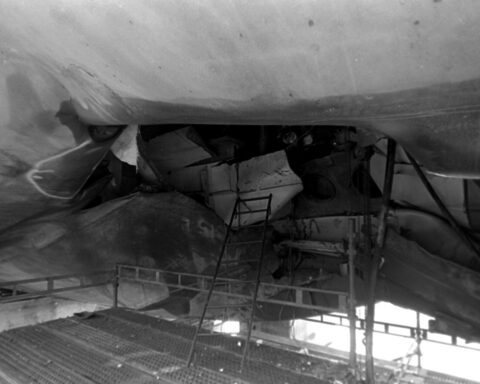
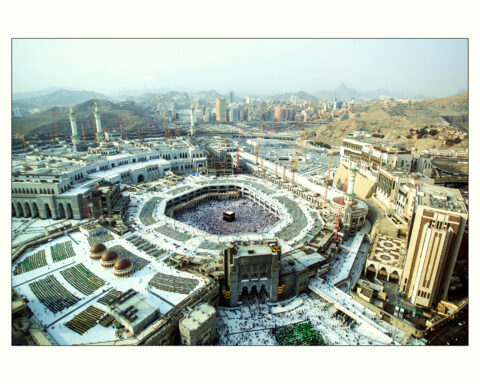
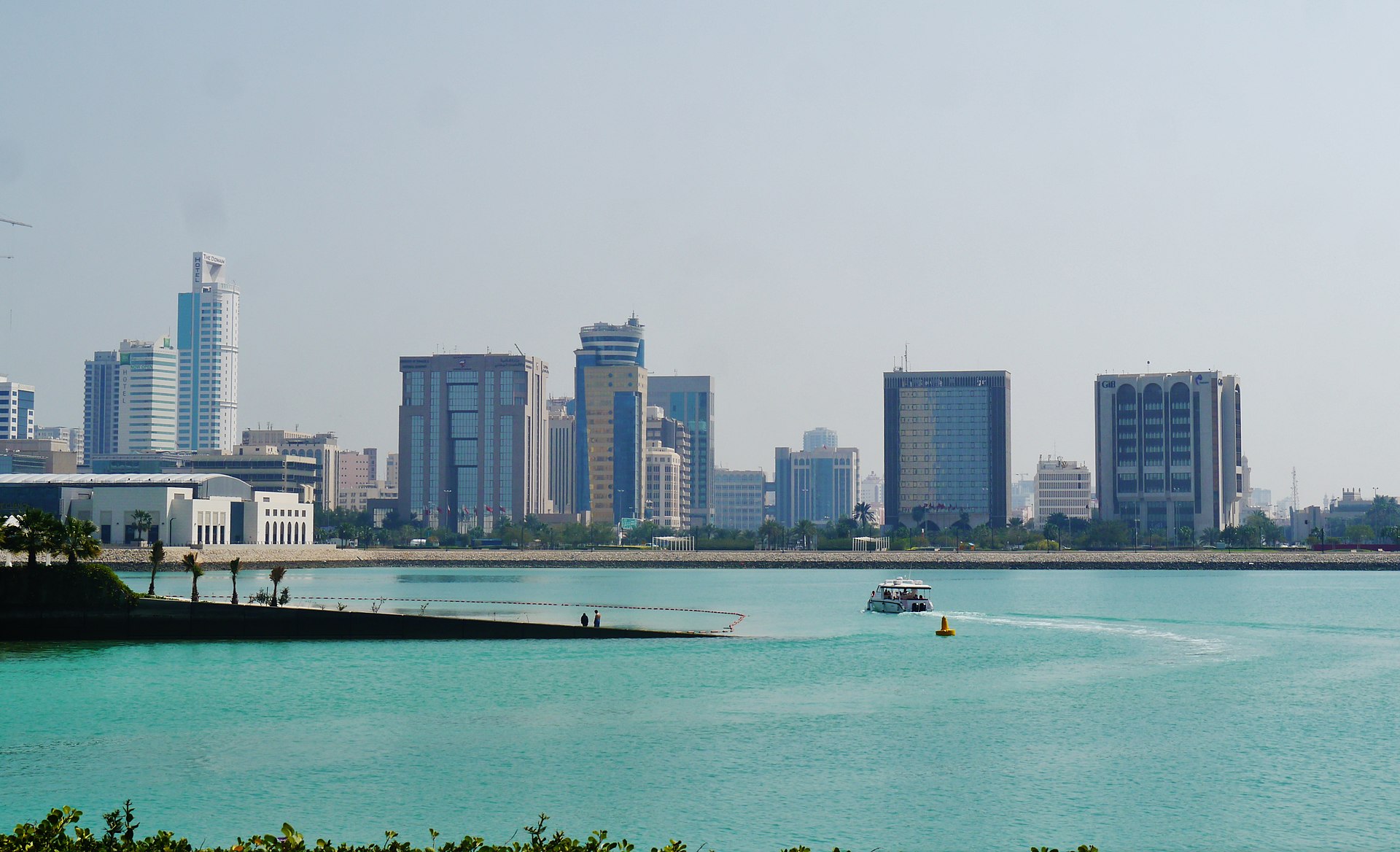
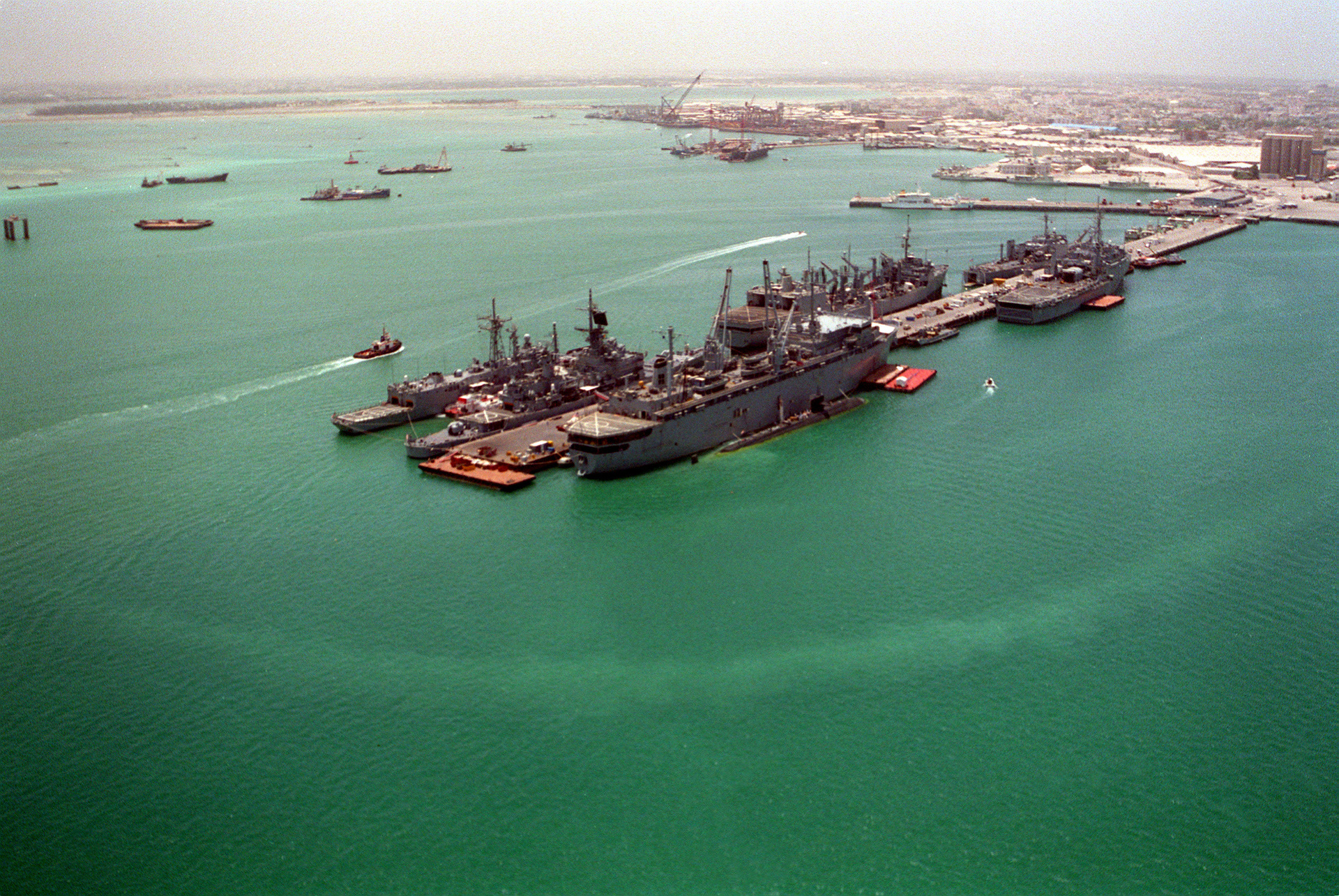
Iran struck Naval Support Activity Bahrain, the headquarters of the US Navy’s Fifth Fleet in Manama’s Juffair district, within hours of the war’s opening salvos on February 28. Satellite imagery analysed by the Maritime Executive confirmed the destruction of two satellite communications terminals and the levelling of half a warehouse complex at the base. Several additional buildings sustained extensive damage from a combination of missile impacts and drone strikes.
The Middle East briefing 3,000+ readers start their day with.
One email. Every weekday morning. Free.
Approximately 8,300 US sailors were stationed at NSA Bahrain before the war began, according to US Naval Forces Central Command. The Pentagon had already begun withdrawing personnel and dependents in the days before the planned US-Israeli strikes on Iran, and an exercise drill the night before the attack had placed the base on “mission critical” status, pre-positioning personnel away from the most exposed structures. Those precautions almost certainly prevented mass casualties.
No American fatalities were reported at the base, though the Iranian Revolutionary Guard Corps claimed 21 soldiers had been killed, a figure the Pentagon has not confirmed. Two US Department of Defense employees were wounded when an Iranian strike hit the Crowne Plaza Hotel in central Manama on March 1, according to Middle East Monitor.
Naval Forces Central Command subsequently declared the Juffair area “no longer assessed as safe for US personnel” and ordered servicemembers to relocate to hotels elsewhere in the capital, according to Defense One. The decision marked an extraordinary admission of vulnerability for the most important US naval installation in the Middle East. By the war’s third week, the Pentagon had ordered the departure of all military dependents and non-essential civilians from Bahrain entirely, with evacuees routed to the Kaiserslautern Military Community in Germany, Stars and Stripes reported.
Civilian Casualties and Infrastructure Damage
Two civilians have been killed in Bahrain since the Iranian bombardment began, with more than 50 others wounded, according to Bahrain’s Ministry of Interior. The first fatality was Abul Mohsin Tareq, a Bangladeshi shipyard worker killed on March 2 when debris from an intercepted missile struck a foreign vessel at Salman Industrial City. Two others suffered serious injuries in the same incident.
The second death came on March 10 when Sara Dashti, a 29-year-old Bahraini woman, was killed by falling debris after an Iranian Shahed drone struck the Era Views Tower in Manama’s Seef district. Dashti was at a coffee shop below the tower when the impact occurred, Gulf Daily News reported. Eight others were injured in the attack.
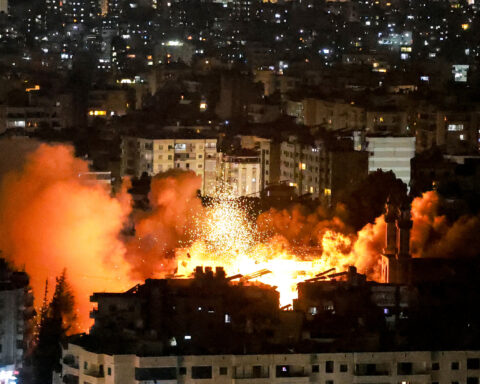
The damage to civilian infrastructure across the capital has been extensive. The Breaker residential tower in the Seef district sustained a direct drone impact that blackened its exterior and caused a section to collapse inward across two to three floors. Bahrain International Airport has been fully closed since March 2, with all commercial flights suspended and Gulf Air halting operations indefinitely. Bahrain’s desalination plant, which supplies approximately 90 percent of the country’s freshwater, was damaged by a drone strike on March 7, temporarily disrupting water supply to roughly 30 villages.
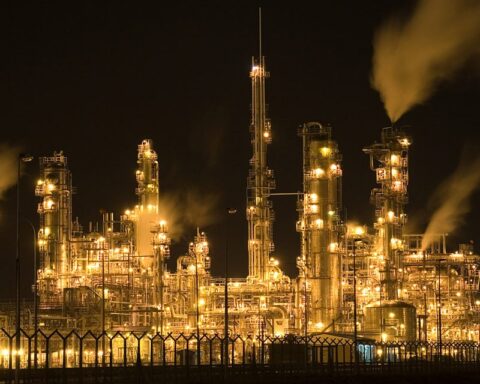
The most significant infrastructure strike came on March 9, when Iranian projectiles set fire to the BAPCO oil refinery in Maameer, Bahrain’s only refinery, which processes up to 400,000 barrels per day. The strike injured 32 civilians, including four seriously, and forced BAPCO to declare force majeure on oil shipments, according to Euronews. The company said domestic fuel supplies remained secured, but the refinery’s operational status remains uncertain.
What Air Defense Systems Does Bahrain Have?
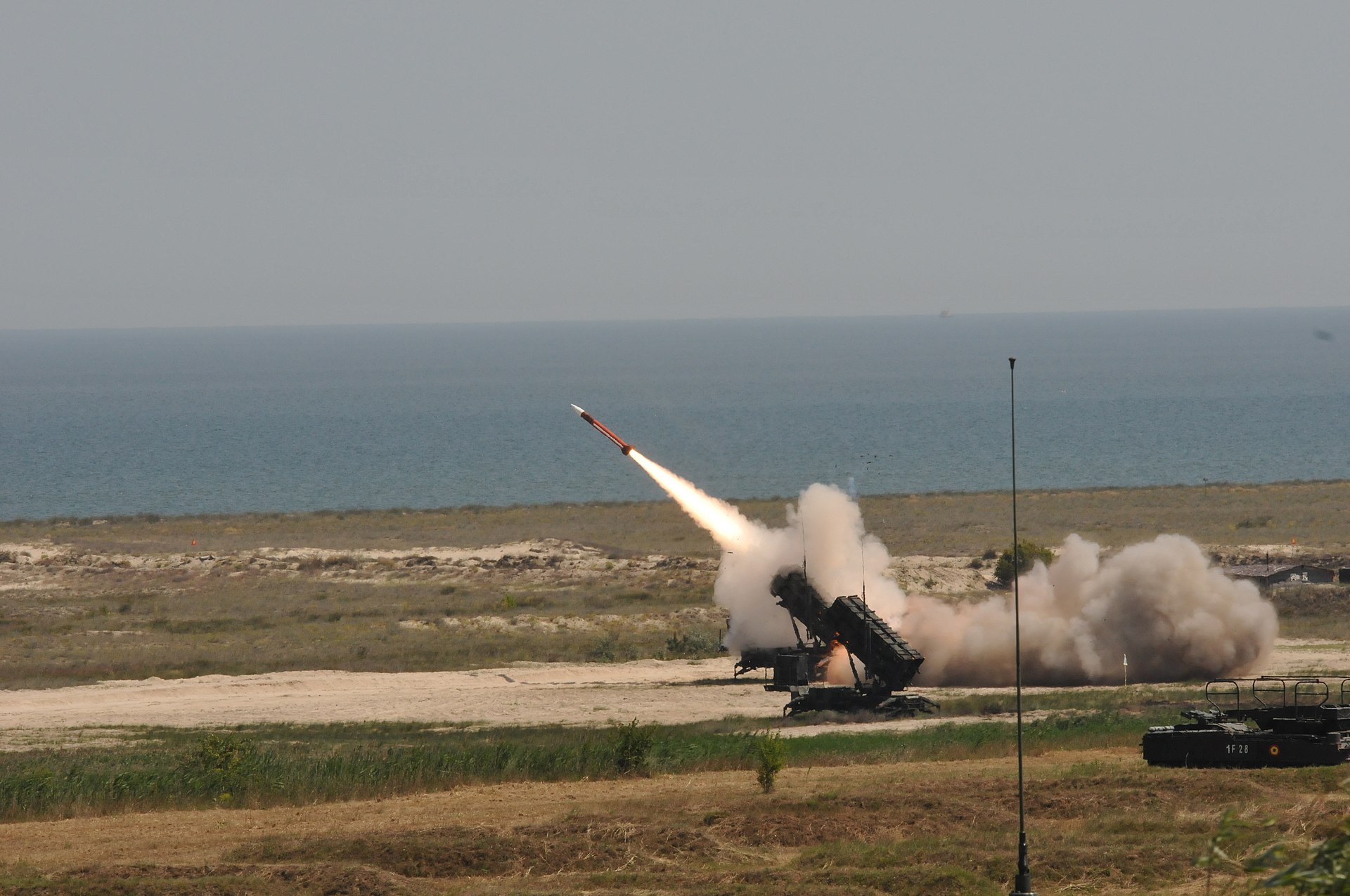
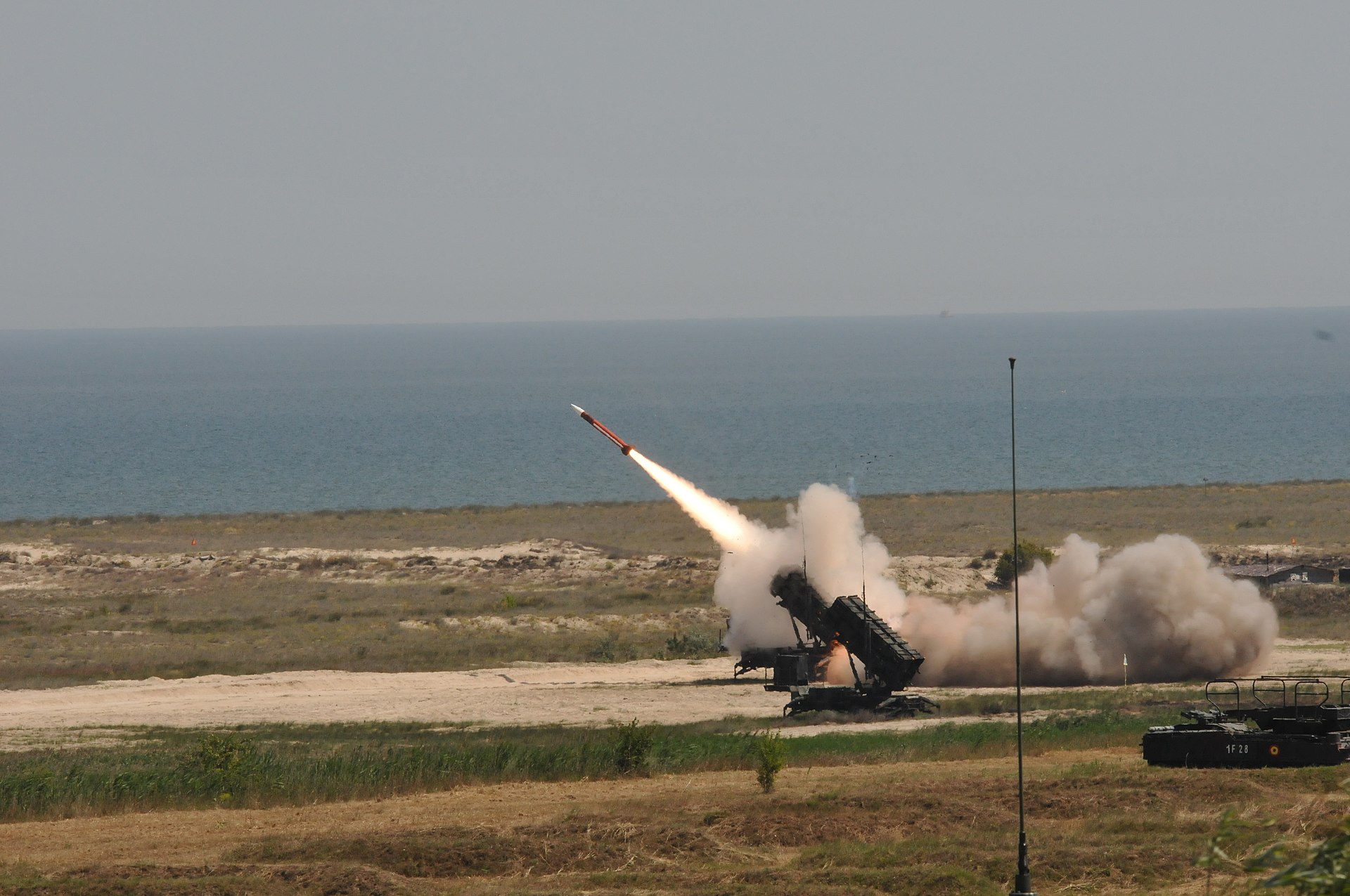
Bahrain’s primary air defense system is the Patriot PAC-3 Missile Segment Enhancement, acquired under a $2.5 billion deal approved by the US State Department in 2019. The first PAC-3 MSE shipment arrived from Lockheed Martin in 2024, and the system became operational at the newly inaugurated Patriot air defense base at Ras-al Bar Camp, according to Breaking Defense. Bahrain’s order includes 60 PAC-3 MSE interceptors and 36 Patriot MIM-104E GEM-T missiles.
On March 21, the Bahrain Defence Force publicly acknowledged that a Patriot system had intercepted an Iranian drone directly over residential homes, Al Jazeera reported, an unusually specific disclosure that underscored both the precision of the system and the proximity of the threat to civilian areas.
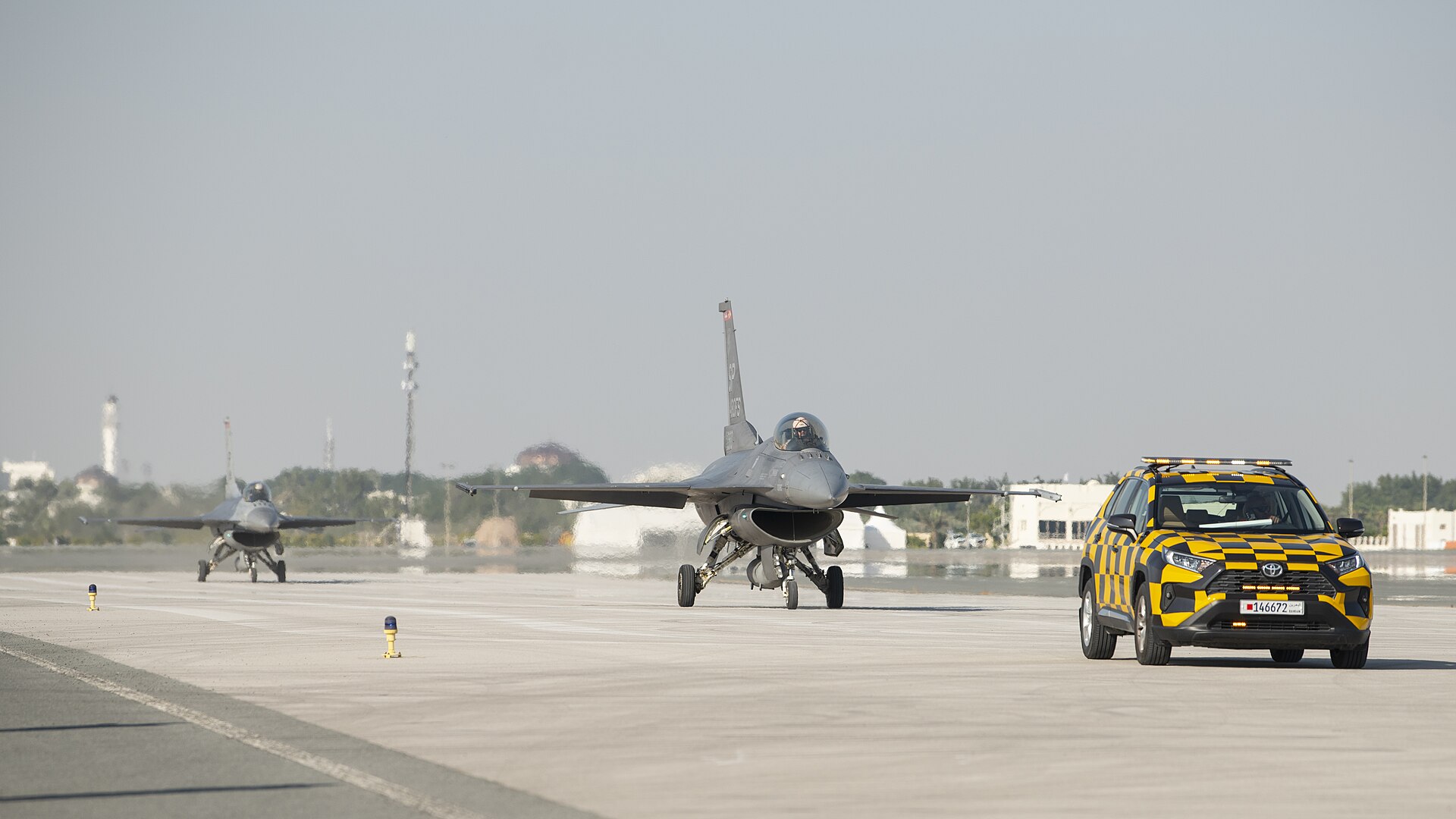
The Royal Bahraini Air Force operates a fleet of 44 combat aircraft, including F-16C/D Block 40 fighters being upgraded to the F-16V standard and 16 newer F-16 Block 70 aircraft, of which 11 have been delivered and nine are operational, according to Global Military. The air force also fields AH-1Z Viper attack helicopters. Total annual defense spending stands at approximately $1.4 billion, or 2.9 percent of GDP.
Despite its high interception rate, Bahrain faces a fundamental arithmetic problem that confronts every Gulf state in this conflict: each PAC-3 MSE interceptor costs between $4 million and $12 million, according to congressional budget estimates, while the Iranian Shahed-136 drones it destroys cost an estimated $20,000 to $50,000 each. The Gulf International Forum has identified Bahrain as maintaining “the region’s most limited stockpile of ballistic missile interceptors,” raising questions about sustainability if the war continues for weeks or months. That cost asymmetry has driven Gulf states including Bahrain to explore Ukrainian-made interceptor systems that cost as little as $6,000 per unit. The broader Gulf arms procurement crisis is accelerating purchases from Korean, Chinese, and Turkish suppliers who offer comparable performance at a fraction of American prices.
Saudi Arabia and GCC Defense Cooperation
Bahrain’s ability to withstand three weeks of sustained bombardment owes as much to its GCC partnerships as to its own military. Saudi Arabia and Bahrain are connected by the 25-kilometre King Fahd Causeway, which links Khobar in Saudi Arabia’s Eastern Province to Al Jasra in Bahrain. An Iranian drone struck the causeway on March 3, starting a fire and triggering a temporary shutdown, according to Travel and Tour World. The bridge was fully reopened by March 10, Time Out Bahrain reported.
The GCC’s Peninsula Shield Force, a joint military formation led by Saudi Arabia, was observed mobilizing in Bahrain in early March, according to multiple regional sources. The deployment marked the first significant activation of the force since the 2011 Arab Spring, when Saudi-led troops entered Bahrain to quell anti-government protests. Bahrain currently chairs the Gulf Cooperation Council, giving King Hamad a direct role in coordinating the bloc’s collective response to Iran’s attacks.
The broader GCC defense posture has been reinforced by the $16.5 billion emergency arms sale approved by the US State Department on March 19. While that package was directed at the UAE, Kuwait, and Jordan, it reflects the urgency of shoring up allied air defenses across the region. The UAE faces particular pressure after Iran threatened to strike Ras al-Khaimah over the disputed Gulf islands, adding a territorial dimension to the air defense challenge. Secretary of State Marco Rubio invoked an emergency waiver to bypass the mandatory congressional review period for the sales, Defense News reported.
Crown Prince Salman bin Hamad Al Khalifa, who also serves as Prime Minister, met with US Defense Secretary Pete Hegseth during the early days of the conflict, according to a Department of Defense transcript. Bahrain has also received diplomatic support from Britain, with UK Prime Minister Keir Starmer calling Crown Prince Salman on March 21 to discuss the regional situation, according to the UK government.
Bahrain’s Economy Under Bombardment
Bahrain entered the war in the worst fiscal condition of any Gulf state, according to an analysis by Arabian Gulf Business Insight. The country’s gross government debt stood at 142.5 percent of GDP in 2025, the highest in the Middle East after Lebanon, and S&P had downgraded Bahrain from B+ to B in November 2025, placing its credit rating on par with Egypt and Kenya, Bloomberg reported. The overall fiscal deficit ran at 10.5 percent of GDP.
The war has compounded every existing vulnerability. Bahrain International Airport remains fully closed, with Gulf Air’s operations suspended and more than 2,000 flights cancelled in the first days of the conflict. The BAPCO refinery, the country’s sole refining facility, declared force majeure after the March 9 Iranian strike. The Central Bank of Bahrain issued a statement affirming that the banking and financial sector “continues to operate at highest levels of readiness” and that capital adequacy ratios remain above regulatory requirements, according to ZAWYA. But the statement itself underscored the anxiety: sovereign bond spreads, refinancing costs, and deposit confidence are all under pressure in a country that relies heavily on its role as a Gulf financial centre.
Bahrain’s water security has emerged as an acute concern. Approximately 90 percent of the country’s freshwater comes from desalination, and the drone strike on a desalination plant in early March disrupted supply to dozens of communities. For an island nation of 1.7 million people with no natural freshwater reserves, the vulnerability of desalination infrastructure to aerial attack represents a strategic threat that Iran’s low-cost drone arsenal is uniquely positioned to exploit.
Domestic Tensions and the Shia Question
Bahrain is the only GCC state with a Shia majority population, a demographic reality that has shaped its politics for decades and adds a volatile domestic dimension to the Iranian bombardment. Protests erupted in Shia-majority communities following reports of the assassination of Iran’s Supreme Leader Ayatollah Khamenei, with demonstrators mourning a figure revered by many Bahraini Shia, according to Middle East Eye.
The Bahraini government’s response has been forceful. Human Rights Watch documented at least 60 arrests, including minors, for offences including protesting, mourning Khamenei publicly, and posting footage of attacks on social media. The Public Prosecution has requested death sentences for some defendants on espionage charges, HRW reported on March 19. Five Pakistani men and one Bangladeshi man were also arrested for filming and sharing videos of the bombardment’s effects.
Bahrain brought in anti-riot troops from Jordan to help suppress demonstrations, the first time foreign security forces have been deployed for domestic unrest since Saudi-led Peninsula Shield troops entered the country during the 2011 Arab Spring, according to Defense Mirror. Tear gas was fired directly at crowds, with anger directed at both the ruling Al Khalifa family and the US military presence that many protesters view as making Bahrain a target.
Iran’s historical claim to Bahrain adds a layer of complexity that distinguishes this conflict from the bombardment of other Gulf states. Tehran claimed sovereignty over the island from pre-Islamic times until 1783, and a 1970 UN-supervised survey determined that Bahrainis preferred independence, a result endorsed by UN Security Council Resolution 278. But Iranian officials have periodically revived the claim: in 2009, Ali Akbar Nategh Nouri, an advisor to Iran’s Supreme Leader, declared that “Bahrain was the fourteenth province of Iran until 1970,” triggering a diplomatic crisis. Bahrain severed diplomatic ties with Iran entirely in January 2016.
King Hamad bin Isa Al Khalifa described Iran’s attacks as “unprecedented” and stated that they “cannot be justified under any pretext,” according to Al Jazeera. The king affirmed that Bahrain “has always been and will remain a nation of peace, never initiating hostilities against anyone.” Crown Prince Salman stated that Bahrain “reserves the right to exercise its legitimate right to defend its sovereignty” under Article 51 of the UN Charter.
How Does Bahrain Compare to Other Gulf States Under Attack?
Iran has struck six Gulf Cooperation Council member states and Jordan since the war began, but the distribution of attacks has been uneven. The UAE has absorbed the largest share of projectiles, with 165 ballistic missiles and 541 drones intercepted, three civilian deaths, and more than 58 injuries, according to Al Jazeera. Kuwait has intercepted 97 missiles and 283 drones, suffering eight deaths, including four soldiers, and sustained strikes on the Mina Al-Ahmadi refinery during Eid al-Fitr.
| Country | Missiles Intercepted | Drones Intercepted | Deaths | Injuries |
|---|---|---|---|---|
| UAE | 165 | 541 | 3 | 58+ |
| Bahrain | 143 | 242 | 2 | 50+ |
| Kuwait | 97 | 283 | 8 | 32 |
| Saudi Arabia | — | — | 2 | — |
| Qatar | — | — | 0 | 16 |
| Oman | — | — | 3 | 5 |
Relative to its size, Bahrain’s exposure is disproportionate. The kingdom covers just 620 square kilometres, roughly one-quarter the area of greater London, with a population of 1.7 million and a GDP of approximately $47 billion. By contrast, the UAE spans 83,600 square kilometres and Saudi Arabia 2.15 million square kilometres. Iran’s ability to saturate Bahrain’s limited airspace with hundreds of projectiles poses challenges that larger nations with greater territorial depth do not face to the same degree. The disparity has not prevented Bahrain from crossing from defensive interception to active participation in the conflict.
The UN Security Council addressed the attacks on March 11 in Resolution 2817, adopted by a vote of 13 in favour, zero against, and two abstentions from China and Russia. The resolution, co-sponsored by 135 UN member states and drafted by Bahrain on behalf of GCC members and Jordan, condemned “in the strongest terms” Iran’s attacks on civilian areas across the Gulf. Iran’s UN Ambassador Amir Saeid Iravani called the resolution “a blatant misuse of the Security Council mandate,” according to UN Press. The condemnation followed parallel ceasefire mediation efforts that have so far failed to produce results.
Twenty-one confirmed attacks on commercial vessels and offshore infrastructure have been recorded since March 1, according to UK Maritime Trade Operations, underscoring that the threat extends well beyond national airspace. As President Trump’s 48-hour ultimatum to Iran over the Strait of Hormuz approaches its deadline, Bahrain’s position at the geographic centre of the conflict zone ensures it will remain among the most exposed nations in a war it did not choose and cannot escape.
International support for Bahrain’s defence continued to grow. On 20 March, Egyptian President Sisi visited Manama during a rapid tour of four Gulf capitals, praising Bahrain’s “extraordinary resilience” and issuing a joint call with King Hamad for international cooperation to protect the Strait of Hormuz.
Frequently Asked Questions
How many Iranian missiles and drones has Bahrain intercepted?
As of March 21, 2026, Bahrain has intercepted 143 ballistic missiles and 242 drones fired by Iran, totalling 385 projectiles since the war began on February 28. The Bahrain Defence Force’s interception rate exceeds 96 percent, according to data compiled by Breaking Defense.
Is the US Fifth Fleet still operating from Bahrain?
The US Fifth Fleet headquarters at Naval Support Activity Bahrain in Manama’s Juffair district sustained significant damage from Iranian strikes on February 28. Two satellite communications terminals and half a warehouse complex were destroyed. The Pentagon has evacuated military dependents and non-essential civilians, but Fifth Fleet operations continue from distributed locations in Bahrain and the wider Gulf region.
How many civilians have been killed in Bahrain during the Iran war?
Two civilians have been killed and more than 50 wounded in Bahrain since Iranian attacks began. The fatalities include Abul Mohsin Tareq, a Bangladeshi shipyard worker killed on March 2, and Sara Dashti, a 29-year-old Bahraini woman killed on March 10 when drone debris struck a residential tower in Manama’s Seef district.
What air defense system does Bahrain use?
Bahrain’s primary air defense system is the Patriot PAC-3 Missile Segment Enhancement, acquired under a $2.5 billion deal with the United States approved in 2019. The system includes 60 PAC-3 MSE interceptors and 36 Patriot MIM-104E GEM-T missiles. Bahrain also operates F-16 Block 70 fighter aircraft and AH-1Z Viper attack helicopters.
Why is Iran attacking Bahrain?
Iran targets Bahrain primarily because it hosts the US Navy’s Fifth Fleet headquarters at Naval Support Activity Bahrain, making it a direct participant in the US military presence that Iran views as hostile. Bahrain sits approximately 200 kilometres from Iran’s coast, the closest US military installation to Iranian territory. Iran has historically claimed sovereignty over Bahrain and severed diplomatic ties with the kingdom in 2016.