
MANAMA — At 4:17 a.m. on February 28, 2026, Iranian ballistic missiles struck Naval Support Activity Bahrain, damaging the radar facility that helps the United States Navy monitor every vessel transiting the Strait of Hormuz. Within hours, falling debris had killed a port worker, set an oil tanker ablaze, and scattered shrapnel across residential neighborhoods in Manama and Muharraq. For a country smaller than New York City, the margin for error is measured in city blocks.
Six days later, on March 6, Iranian drones targeted the Financial Harbour Towers in downtown Manama — the building that houses the Israeli embassy, opened as a direct consequence of the 2020 Abraham Accords. The symbolism was unmistakable. Iran was not merely attacking American military infrastructure. It was attacking the political choices that brought Bahrain into alignment with both Washington and Jerusalem, and it was betting that a majority-Shia population ruled by a Sunni monarchy might not rally to the flag when the missiles stopped falling.
Bahrain is the smallest state in the Gulf Cooperation Council. It is also the most exposed — though neighbouring Qatar has faced an equally dramatic transformation from peacemaker to combatant since Iranian bombers targeted Al Udeid Air Base. Its 13,000-strong military is a fraction of its neighbors’ forces. Its 800,000 citizens are split along a sectarian fault line that Iran has tried to exploit for four decades. And it hosts the forward headquarters of the very military command — U.S. Central Command’s naval component — that is prosecuting the war against Tehran. Every dimension of vulnerability converges on this archipelago of 33 islands, making Bahrain not just a target but perhaps the single most consequential pressure point in the entire Gulf theater.
Table of Contents
- The Geography of Vulnerability: Why Size Is Bahrain’s Greatest Liability
- From Radar to Rubble: A Timeline of Iran’s Strikes on Bahrain
- Why Does the US Fifth Fleet Make Bahrain a Magnet for Iranian Fire?
- The Sectarian Fault Line: Can Bahrain Hold Together Under Fire?
- The Vulnerability Matrix: Bahrain Compared to Other GCC States
- The Saudi Lifeline: One Causeway Between Survival and Collapse
- How Did the Abraham Accords Paint a Target on Manama?
- Can 13,000 Troops and Nine Vipers Defend an Archipelago?
- Financial Hub, Fragile Foundation: Bahrain’s Economic Exposure
- The Arithmetic of Attrition: Drones, Interceptors, and the Cost of Survival
- The Nightmare Scenario: External Attack Meets Internal Revolt
- Will the Peninsula Shield Force Save Bahrain Again?
- What Comes Next for the Gulf’s Most Vulnerable State?
- Frequently Asked Questions
The Geography of Vulnerability: Why Size Is Bahrain’s Greatest Liability
Bahrain’s total land area is 780 square kilometres — roughly the size of a mid-sized European city. The main island, where most of the population lives, measures approximately 55 kilometres from north to south and 18 kilometres at its widest point. In military terms, this means that a missile launched from Iran’s western coast can reach any point in Bahrain within seven to twelve minutes, and the entire country falls within the blast radius of a sustained barrage.
Compare this to Saudi Arabia, whose 2.15 million square kilometres allow for strategic depth — the ability to absorb strikes, disperse forces, and relocate critical assets. Bahrain has no strategic depth. Its military bases, civilian airports, government buildings, financial district, and population centers are all within a radius that a single battery of Iranian Fateh-110 missiles can cover in a single salvo.
The archipelago’s flat terrain compounds the problem. Bahrain’s highest natural point, the Mountain of Smoke (Jabal ad-Dukhan), rises to just 134 metres. There are no mountain ranges to shelter behind, no deep valleys for hardened bunkers, no vast deserts to disperse into. What exists is a dense, low-lying urban sprawl pressed against the Persian Gulf — a geography that favors the attacker in almost every respect.
The proximity to Iran is the final variable. Bahrain sits approximately 200 kilometres from the Iranian coastline across the Persian Gulf. For context, this is less than the distance from Washington, D.C. to Richmond, Virginia. Iranian fast-attack craft based at Bandar Abbas can reach Bahraini territorial waters in hours. Iranian drones launched from the Bushehr region can arrive overhead in under 30 minutes. The warning time for ballistic missiles is measured in single-digit minutes.
Geography, in Bahrain’s case, is not just a factor. It is a verdict. Every other vulnerability — demographic, military, economic — is amplified by the simple, irreducible fact that there is nowhere to hide.
From Radar to Rubble: A Timeline of Iran’s Strikes on Bahrain
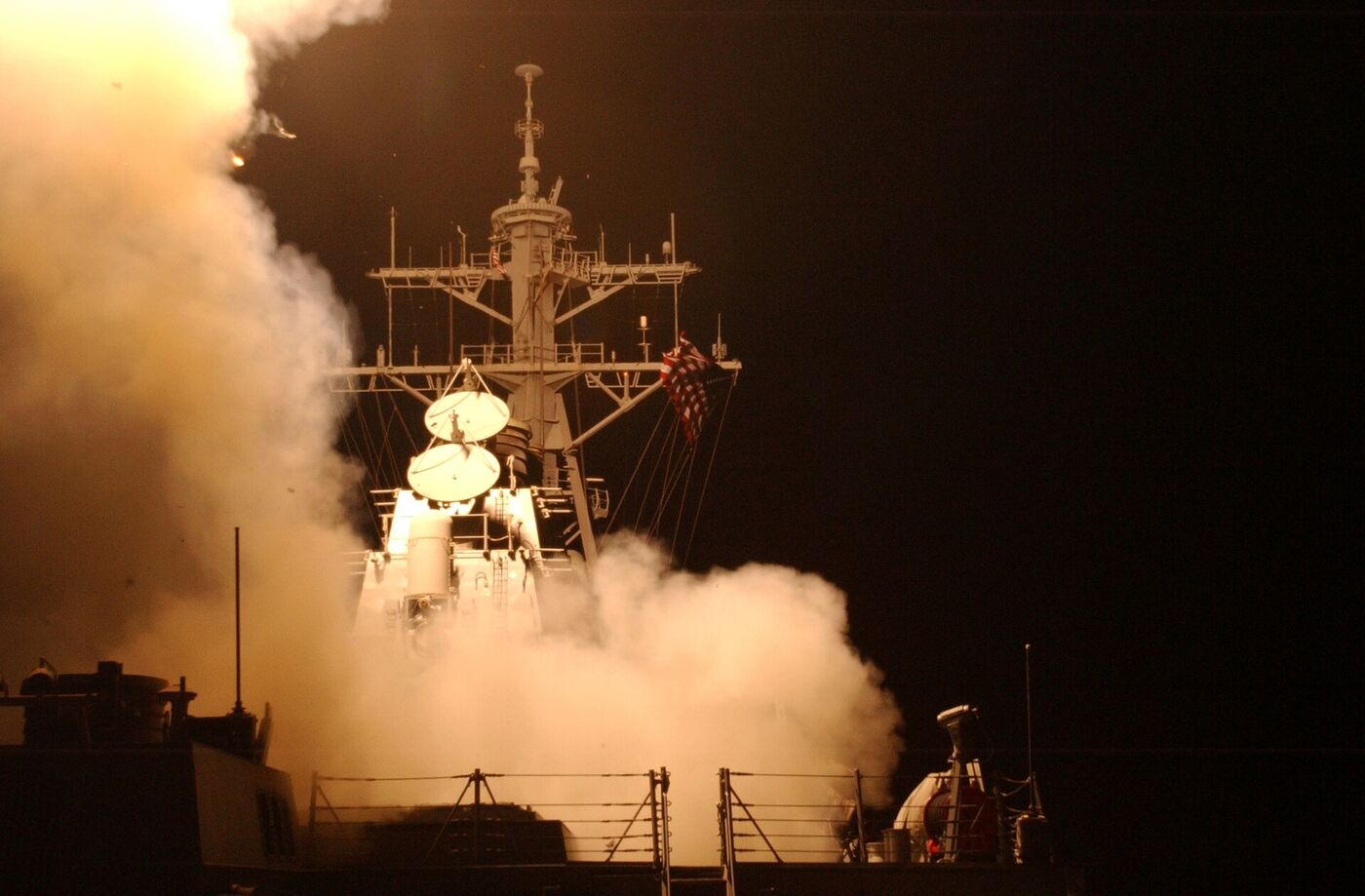
The first Iranian strikes on Bahrain came in the early hours of February 28, 2026, as part of Tehran’s broader retaliatory campaign across the Gulf. The initial targets were military: Naval Support Activity Bahrain, the sprawling base that serves as headquarters for the U.S. Navy’s Fifth Fleet, took direct hits. A radar facility on the compound — part of the early-warning network that tracks maritime traffic through the Strait of Hormuz — sustained significant damage. The strike was precise enough to suggest pre-war intelligence collection, possibly aided by commercial satellite imagery or human sources.
But precision, in a country this small, is a relative term. The same February 28 strikes sent debris and shrapnel into residential neighborhoods in both Manama and Muharraq, the island city that hosts Bahrain International Airport. No official civilian casualty figures have been released by the Bahraini government, which has imposed wartime information controls. Independent verification remains difficult.
On March 1, the targeting shifted. Iranian missiles struck Mina Salman Port, a dual-use facility that handles both commercial shipping and naval logistics. The MT Stena Imperative, a crude oil tanker registered in Sweden, was set ablaze at its berth. One port worker — a migrant laborer whose nationality has not been publicly confirmed — was killed by falling debris. The fire burned for over six hours before Bahraini civil defense teams, assisted by U.S. Navy firefighting units, brought it under control. The attack on a commercial vessel in port represented an escalation: it signaled that Iran would not limit its strikes to purely military targets.
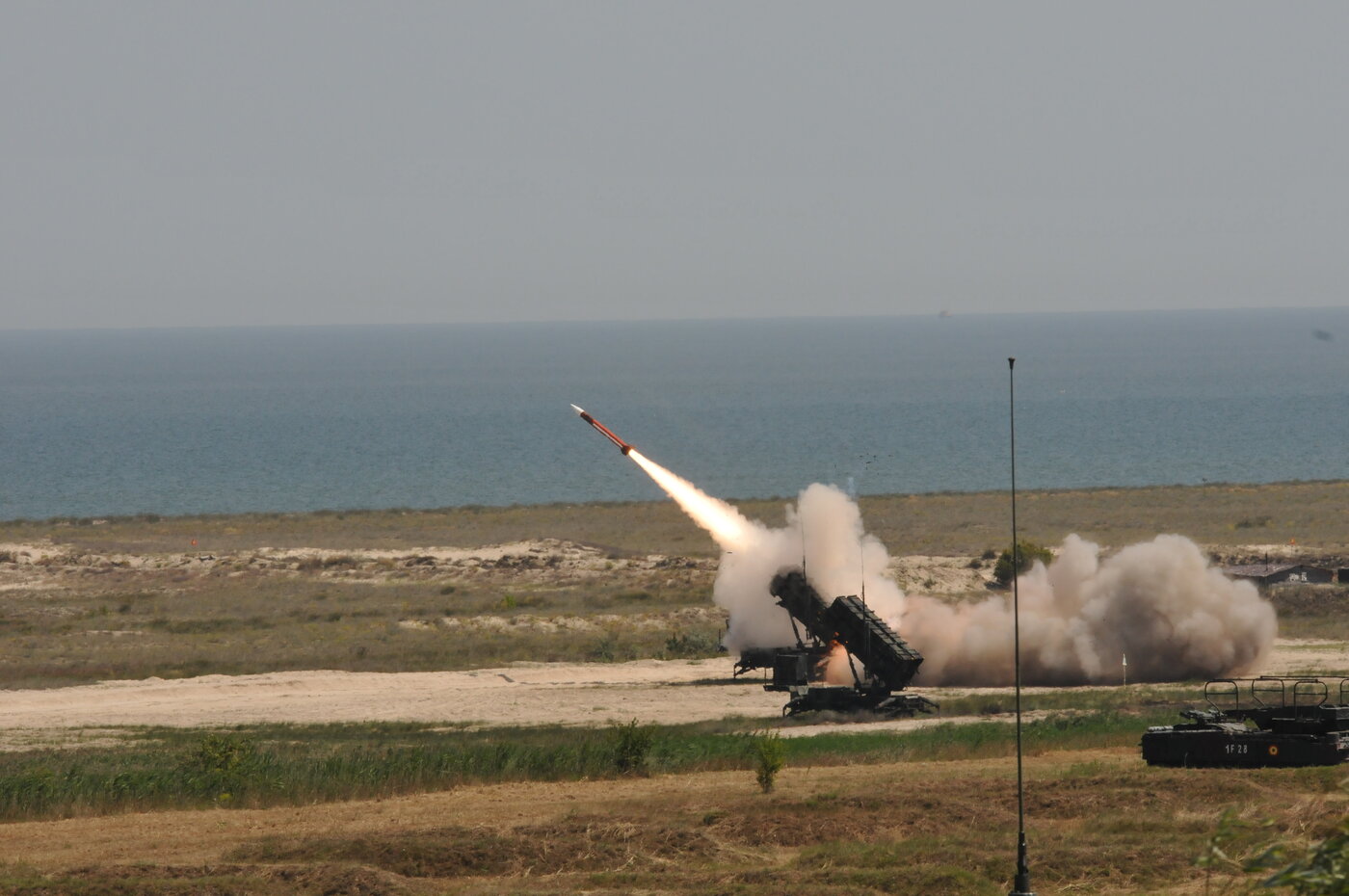
From March 2 through March 5, Bahrain endured a sustained campaign of drone and missile attacks, varying in intensity but never fully ceasing. The Bahrain Defence Force reported intercepting the majority of incoming threats, but the sheer volume — a mix of one-way attack drones, cruise missiles, and shorter-range ballistic missiles — tested the kingdom’s air defenses to their limits.
Then, on March 6, Iran launched a drone swarm targeting the Financial Harbour Towers in central Manama. The towers house the Israeli embassy, which Bahrain opened following the September 2020 Abraham Accords normalization. The strike was both military and symbolic — a message to every Arab state that normalized relations with Israel that Iran considers those diplomatic choices legitimate military targets.
As of March 6, the Bahrain Defence Force reported intercepting a cumulative total of 78 missiles and 143 drones since the war began. The interception rate, if these figures are accurate, suggests a capable if strained defense. But the numbers also reveal the scale of the threat: 221 incoming weapons directed at a country with a population smaller than that of San Diego.
| Date | Target | Weapon Type | Known Damage / Casualties |
|---|---|---|---|
| Feb 28 | NSA Bahrain (Fifth Fleet HQ) | Ballistic missiles | Radar facility damaged; residential debris in Manama, Muharraq |
| Mar 1 | Mina Salman Port | Missiles | MT Stena Imperative set ablaze; 1 port worker killed |
| Mar 2–5 | Multiple military and infrastructure sites | Drones and missiles (sustained) | AWS data center hit by debris; electricity disruptions |
| Mar 6 | Financial Harbour Towers (Israeli embassy) | Drone swarm | Under assessment; symbolic and diplomatic target |
Iran’s strikes on Bahrain have continued to escalate. On 12 March, Iranian missiles struck a fuel storage facility on Muharraq Island near Bahrain International Airport, igniting a major fire and forcing residents in four districts to shelter indoors.
Why Does the US Fifth Fleet Make Bahrain a Magnet for Iranian Fire?
The United States Navy’s Fifth Fleet has been headquartered in Bahrain since 1995, when the facility was formally re-established after a post-Vietnam drawdown. Today, Naval Support Activity Bahrain is the nerve center of American naval power across the Middle East. The numbers convey the scale: between 8,000 and 9,000 U.S. military personnel are stationed in or rotate through the facility, alongside approximately 300 British personnel from the United Kingdom’s nearby naval support facility, HMS Juffair.
The Fifth Fleet’s area of responsibility covers roughly 2.5 million square miles of water — the Arabian Gulf, the Gulf of Oman, the Red Sea, parts of the Indian Ocean, and three critical chokepoints: the Strait of Hormuz, the Bab el-Mandeb Strait, and the Suez Canal. Approximately 20% of the world’s traded oil passes through the Strait of Hormuz alone. The fleet’s mission is, in essence, to keep the global economy’s arteries open.
For Iran, this makes Bahrain a two-for-one target. A strike on Bahrain hits both a GCC member state and the primary forward operating base of the U.S. Navy in the region. Damaging the Fifth Fleet’s radar infrastructure — as the February 28 strike achieved — degrades the ability to track Iranian naval movements, monitor mine-laying operations, and coordinate carrier strike group operations in the confined waters of the Gulf.
The concentration of American military assets in such a small geographic area creates what military planners call a “target-rich environment.” Aircraft carriers, guided-missile destroyers, mine countermeasures ships, and logistics vessels all operate out of or pass through Bahraini ports. The base includes intelligence fusion centers, communications nodes, and command-and-control facilities that, if degraded, would force a temporary reversion to secondary facilities in the UAE, Qatar, or afloat commands — each with associated delays and reduced capability.
According to a 2024 assessment by the Center for Strategic and International Studies, the concentration of Fifth Fleet assets in Bahrain represents “the single most significant vulnerability in the U.S. military posture in the Persian Gulf.” The report recommended dispersal of key command functions, but budget constraints and the practical advantages of Bahrain’s central location delayed implementation. The war has now made that assessment prophetic.
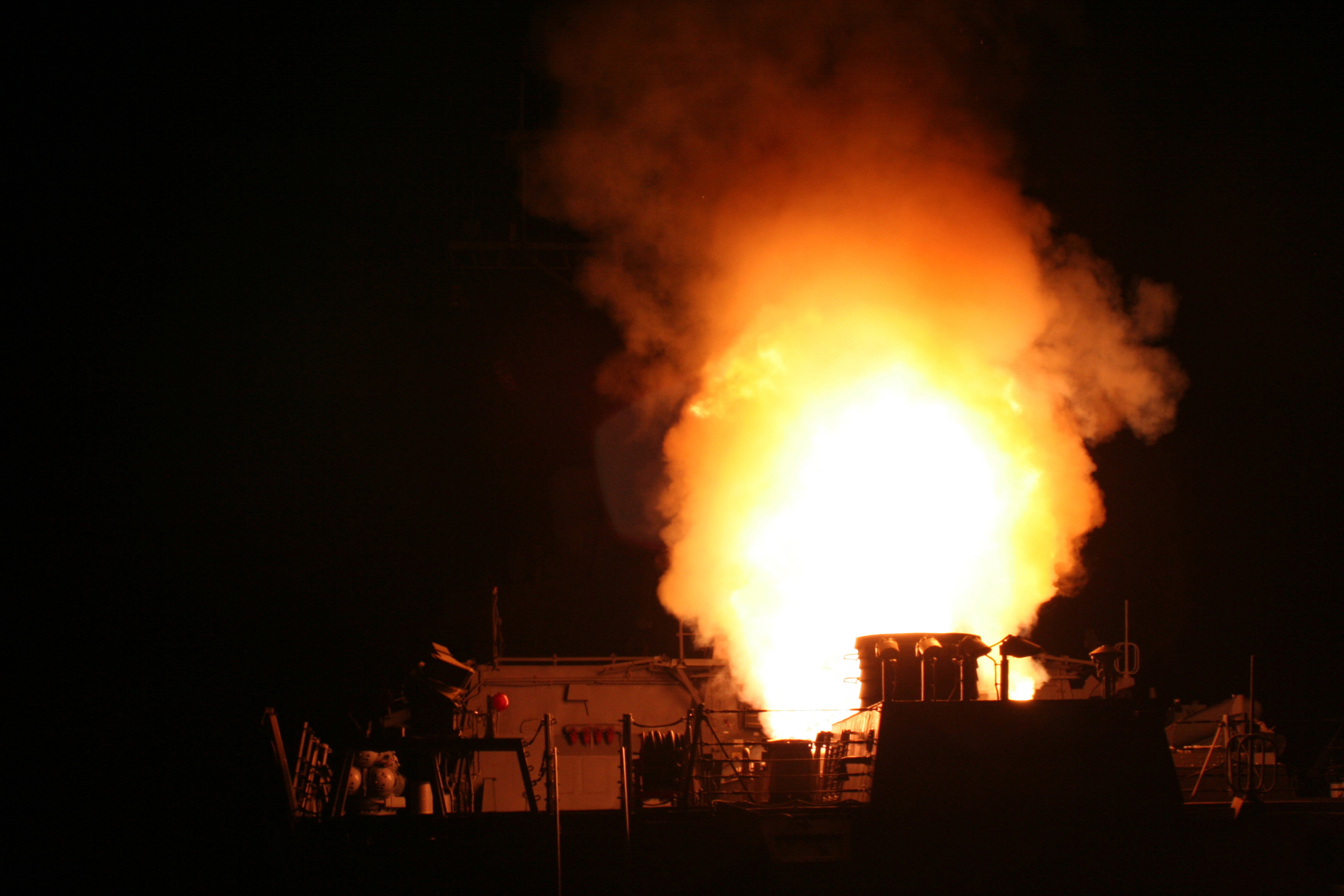
There is an additional dimension. The presence of 8,000 to 9,000 American service members means that any Iranian strike on Bahrain risks American casualties — a fact that Tehran understands and may be deliberately probing. Killing American soldiers on a GCC ally’s soil would force a U.S. response, potentially escalating the conflict in directions that serve Iran’s strategy of widening the war to strain the coalition. Bahrain, in this reading, is not just a target. It is a trigger.
The British presence adds a further layer. The approximately 300 UK personnel stationed at HMS Juffair represent Britain’s commitment to Gulf security, a legacy of the colonial era but also a signal of ongoing NATO-adjacent involvement in the region. An Iranian strike that killed British personnel would draw the United Kingdom deeper into the conflict — another potential escalation vector that runs directly through Bahrain.
The Sectarian Fault Line: Can Bahrain Hold Together Under Fire?
Most Western analysis of Bahrain’s vulnerability focuses on its military exposure and the Fifth Fleet presence. This framing, while accurate, misses the deeper structural risk: Bahrain is the only GCC state where the ruling family’s sect is a minority of the citizen population. The Al Khalifa dynasty, which has governed since 1783, is Sunni. The majority of Bahraini citizens — estimated at between 49% and 60%, depending on the source and methodology — are Shia.
The exact figures are politically sensitive and officially contested. The Bahraini government has not conducted a sectarian census in decades. Independent estimates, including those cited by the U.S. State Department’s annual human rights reports, consistently place the Shia share of the citizen population above 50%. Some Shia political organizations claim the figure is closer to 65-70%, though this is difficult to verify independently.
What is not in dispute is the political and economic marginalization that has characterized the Shia experience in Bahrain for generations. Shia Bahrainis have historically been underrepresented in government, the military, and the security services. The 2011 uprising — which began as part of the Arab Spring and drew hundreds of thousands of protesters into the streets — was overwhelmingly Shia in composition, though its initial demands were nonsectarian: constitutional monarchy, an elected government, and an end to discrimination.
The 2011 crackdown was severe. Saudi Arabia dispatched between 1,000 and 1,200 troops across the King Fahd Causeway as part of the GCC’s Peninsula Shield Force. The Bahraini government declared a state of emergency. Protesters were cleared from the Pearl Roundabout, the symbolic center of the movement, and the monument itself was demolished. International human rights organizations, including Amnesty International and Human Rights Watch, documented widespread arrests, torture, and extrajudicial killings. The main Shia opposition society, al-Wefaq, was eventually dissolved by court order in 2016.
Since then, dissent has been driven underground. Protests are rare. When they occur, they are small and quickly dispersed. The security apparatus — staffed in part by naturalized Sunni migrants from Pakistan, Jordan, and Syria, a practice that Shia activists call “political naturalization” — maintains close surveillance of Shia communities, particularly in villages like Duraz, Sitra, and A’ali.
Now the war has cracked this surface. In the days following the initial Iranian strikes, Bahraini security forces arrested more than 65 individuals — predominantly Shia — for publicly celebrating the attacks on social media or in private gatherings. The arrests, reported by Bahraini opposition media in exile and partially confirmed by regional journalists, suggest that at least a segment of the Shia population views the Iranian strikes not as an attack on their country but as a blow against the government that has marginalized them.
The greatest threat to Bahrain is not a missile through the roof of the Fifth Fleet headquarters. It is the possibility that a significant portion of the population sees the incoming fire as liberation rather than aggression.
— Former British diplomat with Gulf experience, speaking on condition of anonymity, March 2026
Reports of rare civil unrest have also emerged. In several predominantly Shia areas, small but significant protests broke out in early March, with participants chanting religious slogans associated with the Shia tradition and, in some cases, expressing solidarity with Iran. Security forces responded with tear gas. The scale of these protests — dozens to low hundreds of participants, according to exile media — is far smaller than 2011. But the context is different. In 2011, there was no external military threat. Now, internal unrest coincides with incoming missiles, creating a scenario that Bahraini security planners have feared for decades.
The Vulnerability Matrix: Bahrain Compared to Other GCC States
To understand why Bahrain stands apart as the Gulf’s most exposed state, it is useful to compare it systematically against its GCC peers across the dimensions that matter most in a shooting war with Iran. The following framework — a Vulnerability Matrix — assesses each state on five axes: geographic exposure, military capability, demographic risk, foreign military presence (as both asset and target), and economic resilience.
| Dimension | Bahrain | Saudi Arabia | UAE | Kuwait | Qatar | Oman |
|---|---|---|---|---|---|---|
| Distance to Iran (km) | ~200 | ~500–1,500 | ~200–350 | ~300 | ~300 | ~50–350 |
| Land Area (sq km) | 780 | 2,149,690 | 83,600 | 17,818 | 11,586 | 309,500 |
| Active Military Personnel | ~13,000 | ~227,000 | ~63,000 | ~17,500 | ~12,000 | ~42,600 |
| Advanced Air Defense (Patriot/THAAD) | Limited (Patriot coordination) | Patriot + THAAD | Patriot + THAAD | Patriot | Patriot (pending THAAD) | Limited |
| Shia Population Share | 49–60% | 10–15% | ~15% | 20–30% | <10% | ~5% (Ibadi majority) |
| Major US Base Presence | Fifth Fleet HQ (8,000–9,000) | Multiple facilities | Al Dhafra (~3,500) | Camp Arifjan (~13,000) | Al Udeid (~10,000) | Limited cooperation |
| Strategic Depth | None | Extensive | Moderate | Minimal | Minimal | Moderate |
| Economic Diversification | Moderate (finance-dependent) | Moderate (oil-dominant) | High | Low (oil-dominant) | Low (gas-dominant) | Low (oil-dominant) |
| Overall Vulnerability Rating | Extreme | Moderate | Elevated | High | Elevated | Moderate-Low |
Several patterns emerge from this comparison. First, Bahrain is the only GCC state that scores at the highest risk level across every dimension simultaneously. Saudi Arabia has geographic depth and military mass. The UAE has advanced air defenses and economic diversification. Kuwait and Qatar have significant U.S. base presences but lack Bahrain’s sectarian fault line. Oman, which maintains its traditional neutrality, is geographically close to Iran but has largely stayed out of the conflict.
Second, the interaction effects matter more than any single factor. Bahrain’s small size would be manageable if it had Saudi Arabia’s military. Its sectarian demographics would be manageable if it had the UAE’s economic resources to co-opt dissent. Its hosting of the Fifth Fleet would be manageable if it had Kuwait’s geographic buffer from the Iranian coast. But it has none of these mitigating factors. Every vulnerability reinforces every other.
Third, the Matrix reveals that Bahrain occupies a unique structural position: it is the only GCC state where a realistic scenario exists for simultaneous external military attack and internal civil breakdown. No other Gulf state faces this dual threat. This is the core argument for why Bahrain is not merely one target among several but the single most vulnerable pressure point in the entire GCC.
The Saudi Lifeline: One Causeway Between Survival and Collapse
The King Fahd Causeway is a 25-kilometre bridge-and-causeway system that connects Saudi Arabia’s Eastern Province to Bahrain’s main island. Opened in 1986 at a cost of approximately $1.2 billion (adjusted for inflation), it was conceived as an infrastructure project to facilitate trade and tourism. In practice, it has become Bahrain’s single most critical strategic asset — and its single most critical vulnerability.
Saudi Arabia is Bahrain’s largest trading partner. The Causeway carries the majority of overland commerce, as well as the roughly 40,000 to 60,000 vehicles that cross daily in normal times — Saudi tourists heading to Bahrain’s more liberal social environment, Bahraini workers commuting to jobs in the Eastern Province, and commercial trucks carrying everything from food to construction materials. For an island nation with limited domestic agriculture, the Causeway is a supply artery.
It is also a military corridor. In March 2011, when the Bahraini uprising threatened to overwhelm the security forces, Saudi Arabia sent between 1,000 and 1,200 troops across the Causeway as part of the GCC’s Peninsula Shield Force. The deployment was officially described as protecting vital installations — the Saudi embassy, oil facilities, the Causeway itself. In practice, it provided the security backbone that allowed the Bahraini government to suppress the protests. The message was clear: Saudi Arabia would not permit a Shia-majority government on its doorstep, regardless of the political cost.
The relationship between Crown Prince Mohammed bin Salman and Bahrain’s Crown Prince Salman bin Hamad Al Khalifa is among the closest bilateral ties in the Gulf. The two co-chair a bilateral coordination council that covers defense, economic integration, and security cooperation. When MBS speaks of Gulf unity, Bahrain is the state that most fully embodies that concept — a small monarchy whose survival depends directly on Saudi commitment.
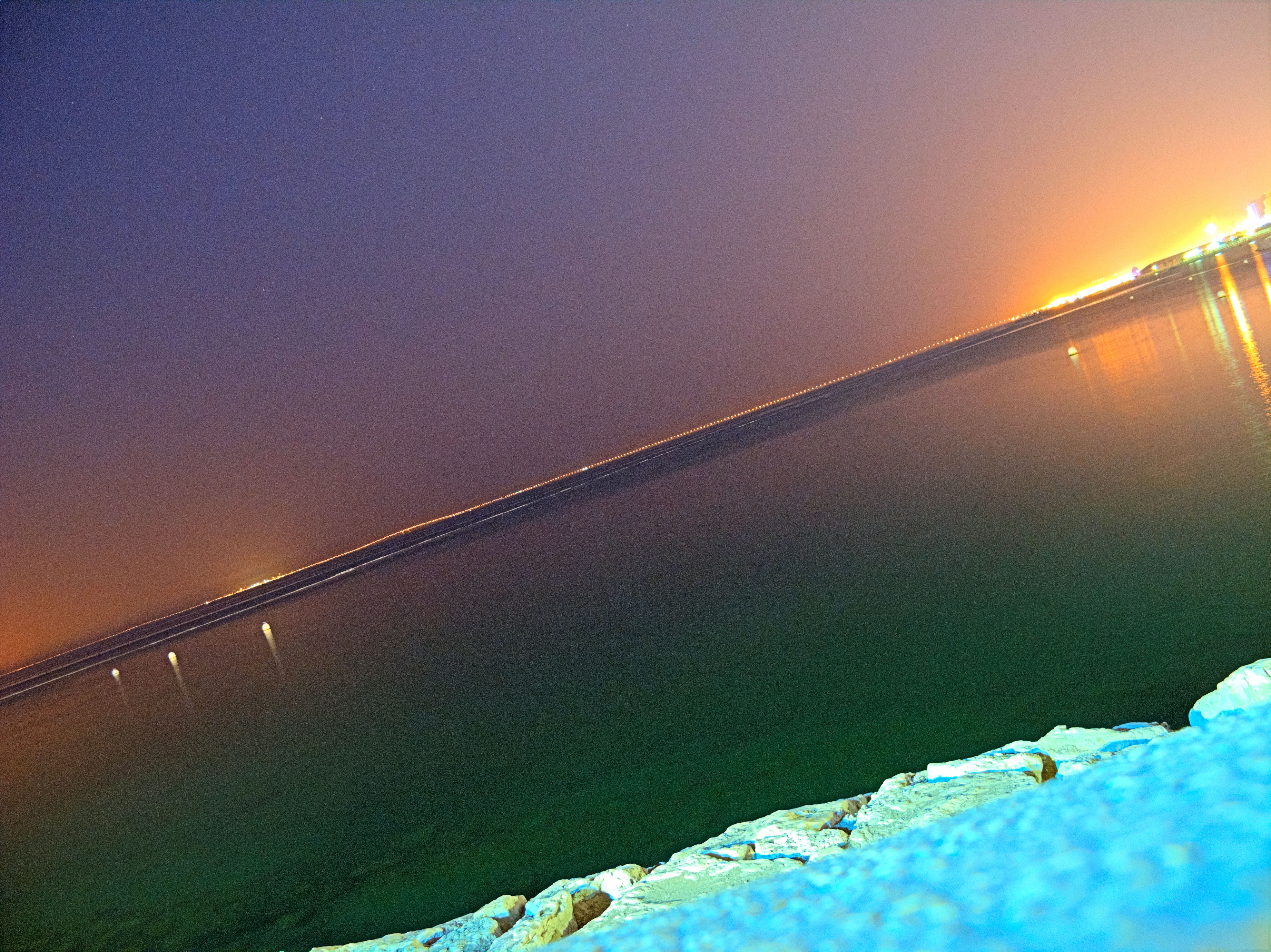
But the Causeway is also a chokepoint. A single well-placed strike — a cruise missile hitting a bridge span, a drone targeting the customs plaza, or even a mining of the shallow waters beneath — could sever Bahrain’s only land link to the outside world. The kingdom has air and sea connections, but these are more expensive, lower capacity, and themselves vulnerable to interdiction. If Iran were to damage the Causeway while simultaneously sustaining pressure on Bahraini ports and airfields, the archipelago could face a supply crisis within days.
Iranian military planners are certainly aware of this. The Causeway has appeared in Iranian state media discussions of Gulf vulnerabilities, and its destruction is a scenario that GCC defense planners have war-gamed repeatedly. Whether Iran would actually strike it — given that doing so would draw an immediate Saudi military response — is a matter of strategic calculation. But the very existence of this single point of failure defines Bahrain’s dependence on Saudi Arabia in terms that no amount of diplomatic rhetoric can obscure.
How Did the Abraham Accords Paint a Target on Manama?
On September 15, 2020, Bahrain became the fourth Arab state to normalize relations with Israel, signing the Abraham Accords alongside the United Arab Emirates at a White House ceremony hosted by President Donald Trump. The agreement, brokered with heavy American involvement and tacit Saudi approval, was celebrated in Washington and Jerusalem as a historic breakthrough. In Tehran, it was received as a declaration of ideological war.
Iran’s Supreme Leader Ayatollah Ali Khamenei — before his reported death in the current conflict — described the normalization as “a stab in the back of the Palestinian people” and warned that states participating in the Accords would face consequences. The Islamic Revolutionary Guard Corps’ Quds Force, which manages Iran’s regional proxy network, was reportedly tasked with developing contingency plans for targeting Israeli diplomatic facilities in both the UAE and Bahrain.
Bahrain’s Israeli embassy, located in the Financial Harbour Towers complex in central Manama, opened in September 2021. It represented something more than a diplomatic mission. For Iran, it was physical proof that the Gulf Arab states had crossed a line — normalizing relations with the state that Iran’s revolutionary ideology defines as an existential enemy of the Muslim world. For Bahrain’s Shia opposition, it was an additional grievance layered atop decades of political exclusion.
The March 6 drone attack on the Financial Harbour Towers was, in this context, not a random escalation but a deliberate targeting of the Abraham Accords’ physical infrastructure. Iran’s message was directed at multiple audiences simultaneously: to Israel, that normalization does not provide security; to the United States and its allies, that the Accords carry a military cost; and to Arab publics across the region, that Iran is willing to act on the anti-normalization sentiment that many polls suggest remains widespread.
The diplomatic fallout is already measurable. The Israeli embassy staff in Manama was reportedly evacuated before the first strikes on February 28 — a standard security precaution. But the question of whether and when the embassy will resume operations speaks to a larger strategic dilemma. If Israel cannot maintain embassies in the Abraham Accords states during wartime, the normalization framework’s durability in a hostile regional environment comes into question.
For Bahrain specifically, the Abraham Accords created a category of vulnerability that did not exist before 2020. The kingdom was already a target as a Fifth Fleet host and a Saudi ally. The Israeli embassy added an ideological and symbolic target that Iran was always likely to strike if given the opportunity. The war provided that opportunity.
Can 13,000 Troops and Nine Vipers Defend an Archipelago?
The Bahrain Defence Force is a professional but small military, with approximately 13,000 active-duty personnel across all branches. To put this in perspective, the New York City Police Department has approximately 36,000 uniformed officers. Bahrain’s entire military establishment is smaller than the security force of a single American city.
The air force — the branch that matters most in the current conflict — operates a fleet of 28 F-16C/D Block 40 fighters, supplemented by newer F-16 Block 70 “Viper” variants. Of the 16 Block 70 aircraft ordered from Lockheed Martin in a deal approved by the U.S. State Department in 2017, nine were operational as of February 2026. These aircraft carry AIM-120 AMRAAM medium-range air-to-air missiles and AIM-9X Sidewinder II short-range missiles — capable systems, but limited in number.
Air defense is the critical gap. Bahrain operates HAWK medium-range surface-to-air missile systems — a platform first deployed in the 1960s that has been upgraded multiple times but remains a generation behind the Patriot and THAAD systems operated by Saudi Arabia and the UAE. Bahrain coordinates with regional Patriot missile batteries, including those operated by the United States at NSA Bahrain, but it does not possess sovereign Patriot or THAAD capability.
The Bahrain Defence Force’s reported interception of 78 missiles and 143 drones as of March 6 is, on its face, an impressive performance for a military of this size. The figure suggests an interception rate of roughly 85-90%, though independent verification is not possible under wartime conditions. Some of these intercepts were undoubtedly assisted by U.S. Navy Aegis-equipped ships in the Gulf and by Saudi-operated Patriot batteries providing coverage from across the Causeway.
| Category | Platform / System | Quantity | Notes |
|---|---|---|---|
| Fighter Aircraft | F-16C/D Block 40 | 28 | Primary air defense; aging but upgraded avionics |
| Fighter Aircraft | F-16 Block 70 (Viper) | 9 (of 16 ordered) | Advanced radar, conformal fuel tanks; deliveries ongoing |
| Air-to-Air Missiles | AIM-120 AMRAAM / AIM-9X | Classified stocks | BVR and short-range capability |
| Surface-to-Air Missiles | HAWK (upgraded) | ~4 batteries | Medium-range; limited against ballistic missiles |
| Air Defense Coordination | Patriot (US-operated at NSA Bahrain) | ~2 batteries | Not sovereign; requires US authorization |
| Active Military Personnel | All branches | ~13,000 | Includes army, navy, air force, royal guard |
The honest assessment is that Bahrain cannot independently defend itself against a sustained Iranian campaign. The mathematics are unfavorable: Iran’s missile and drone production capacity, estimated by the International Institute for Strategic Studies at several hundred ballistic missiles and several thousand drones per year, vastly exceeds Bahrain’s ability to intercept them. Without American and Saudi defensive assistance, Bahrain’s air defenses would be overwhelmed within days of a concentrated assault.
This dependency is not a secret. Bahraini military officials have acknowledged it in off-the-record conversations with Western defense journalists for years. The kingdom’s defense strategy is explicitly coalition-based: it contributes what it can — airfields, port access, intelligence cooperation, and its own pilots and air defenders — while relying on allies for the mass and capability it cannot generate alone.
Financial Hub, Fragile Foundation: Bahrain’s Economic Exposure
Bahrain’s economy is more diversified than most of its Gulf neighbors, which is both an achievement and a specific vulnerability. While oil accounts for approximately 16% of GDP — compared to over 40% in Saudi Arabia and Kuwait — the kingdom has built its post-oil identity around financial services, which contribute roughly 17% of GDP. Bahrain is the primary banking hub for the Persian Gulf and holds the top global ranking for Islamic finance regulation, according to the Islamic Financial Services Board.
This financial infrastructure is concentrated in a handful of buildings in downtown Manama — precisely the area that Iranian drones targeted on March 6. The Financial Harbour Towers, which house not only the Israeli embassy but also dozens of regional bank offices, investment firms, and fintech companies, sit at the heart of Bahrain’s economic model. A sustained campaign against this district would not merely damage buildings. It would strike at the confidence that underpins Bahrain’s value proposition as a financial center.
The economic numbers reveal a country operating with thin margins. Bahrain’s budget deficit runs at approximately 3.1% of GDP, and the kingdom carries a debt-to-GDP ratio that has risen steadily over the past decade. GDP growth, at 3-4% in recent years, has been respectable but insufficient to build the kind of fiscal reserves that Saudi Arabia and the UAE maintain. Bahrain lacks a sovereign wealth fund comparable to Saudi Arabia’s Public Investment Fund or Abu Dhabi’s ADIA.
Tourism, which the government has aggressively promoted as a growth sector with a target of 14.1 million visitors by 2026, has obviously collapsed in the first weeks of the war. Bahrain International Airport is operating under military restrictions. The hotels and entertainment venues that cater to Saudi visitors arriving via the Causeway are largely empty. The tourism revenue that was projected to contribute significantly to diversification has evaporated overnight.
The technology sector represents another exposure. Bahrain had positioned itself as a regional cloud computing hub, with cloud spending expected to contribute $1.2 billion — representing roughly 23% of GDP — by 2026, according to government projections citing IDC research. An Amazon Web Services data center in Bahrain was struck by debris during the March 2-5 strikes, causing electricity disruptions that affected cloud service availability. For a country betting its economic future on digital infrastructure, the physical vulnerability of data centers to kinetic attack is an uncomfortable revelation.
The economic resilience dimension of the Vulnerability Matrix is where Bahrain’s position is most nuanced. The kingdom is more diversified than Kuwait or Qatar, but its diversification has concentrated economic value in physical infrastructure — office towers, data centers, port facilities — that are vulnerable to the very attacks it is now experiencing. Diversification, in other words, has not eliminated economic fragility. It has changed its character.
The Arithmetic of Attrition: Drones, Interceptors, and the Cost of Survival
The cost asymmetry between Iranian offensive weapons and allied defensive interceptors is nowhere more acute than in Bahrain. The math is simple and brutal. An Iranian Shahed-136 one-way attack drone costs an estimated $20,000-$50,000 to produce. A U.S.-made Patriot PAC-3 interceptor missile costs approximately $4 million. Even a cheaper short-range interceptor like the Evolved Sea Sparrow Missile runs to roughly $2 million per round.
The 143 drones that Bahrain’s combined defenses intercepted by March 6 represent, at their maximum estimated unit cost, perhaps $7 million worth of Iranian hardware. The interceptors used to shoot them down likely cost ten to twenty times that amount. This is the arithmetic of attrition that Iran’s military strategists have designed for: force the coalition to spend itself into ammunition shortages while Iran continues producing cheap drones in quantities that the defense industrial base cannot match.
For Bahrain specifically, the problem is compounded by inventory limits. The kingdom’s HAWK batteries carry a finite number of missiles that, once expended, require resupply from American stockpiles — stockpiles that are simultaneously being drawn down by the defense of Saudi Arabia, the UAE, and U.S. forces across the region. The Bahrain Defence Force does not have the depth of inventory to sustain a months-long interception campaign without continuous allied resupply.
The cost dynamic also applies to infrastructure. When an Iranian drone costing $30,000 damages a data center worth hundreds of millions of dollars, or sets ablaze an oil tanker carrying $80 million in crude, the economic exchange ratio massively favors the attacker. Iran does not need to destroy Bahrain. It needs only to impose costs — in interceptors expended, infrastructure damaged, insurance premiums raised, and investor confidence shaken — that exceed the kingdom’s capacity to absorb them.
This is the strategic logic behind Iran’s sustained, moderate-intensity campaign against Bahrain. Rather than a single devastating strike, Tehran has chosen a pattern of daily harassment that forces Bahrain to keep its defenses at maximum readiness around the clock, burning through interceptor stocks and exhausting the human capital of radar operators, fighter pilots, and air defense crews who cannot sustain 24/7 operations indefinitely.
The Nightmare Scenario: External Attack Meets Internal Revolt
The contrarian argument about Bahrain — the one that most Western analysis avoids because of its sensitivity — is that the country’s most dangerous vulnerability is not its small size, its limited military, or even its proximity to Iran. It is the possibility that the war catalyzes an internal crisis that the security forces cannot contain while simultaneously defending against external attack.
This is not hypothetical. The arrest of more than 65 Bahraini citizens for celebrating Iranian strikes reveals that a measurable segment of the population — concentrated in the Shia community — does not identify with the government’s war effort. The protests that broke out in several Shia-majority areas, though small by 2011 standards, occurred in a security environment where any public demonstration has been effectively impossible for over a decade. The fact that people protested at all, in the face of certain arrest, suggests a depth of alienation that the war is now surfacing.
The nightmare scenario for Bahrain’s rulers runs approximately as follows. Iran sustains its missile and drone campaign, gradually degrading air defenses and infrastructure. Civilian casualties mount, particularly in densely populated Shia neighborhoods adjacent to military targets. The Shia community, already alienated, begins to view the government’s alliance with the United States and Israel — the countries whose military presence makes Bahrain a target — as the cause of their suffering. Protests escalate. The security forces, already stretched by the external military threat, must divert resources to internal control. The army, which includes Sunni conscripts and naturalized citizens whose loyalty in a sectarian crisis may be uncertain, faces the impossible task of fighting on two fronts simultaneously.
Iran would actively seek to promote this scenario. The Islamic Revolutionary Guard Corps maintains networks within Bahrain’s Shia community — a reality that the Bahraini government has alleged for years and that the U.S. State Department has partially corroborated. In 2015, Bahraini authorities seized a large weapons cache that they attributed to an IRGC-linked cell. Whether such networks remain operational in 2026 is unknown, but the structural conditions for their activation — a disaffected community, an external patron, and a government distracted by war — are all present.
Bahrain in 2026 faces a scenario that no GCC state has confronted since the Iranian Revolution: a simultaneous external military assault and internal sectarian mobilization. The Al Khalifa government cannot fight both at once without Saudi troops on the ground.
— Regional security analyst, Gulf States Analytics, March 2026
The historical parallel most often cited is Iran itself in 1979 — a state that collapsed not because of military defeat but because internal revolution made defense impossible. The parallel is imperfect: Bahrain’s Shia opposition is fragmented, leaderless after years of repression, and lacks the organizational infrastructure of the Iranian revolutionary movement. But the parallel is not entirely inapplicable, either. In a small country, disruption does not require mass mobilization. A few hundred determined individuals blocking roads, disabling utility infrastructure, or providing targeting intelligence to an external attacker could create chaos disproportionate to their numbers.
The Bahraini government is aware of this risk. The mass arrests, the tear gas deployments, and the visible increase in internal security patrols all suggest a leadership that is fighting on two fronts already — one pointing outward toward Iran and one pointing inward toward its own population. The question is whether it can sustain both postures simultaneously.
Will the Peninsula Shield Force Save Bahrain Again?
In 2011, the GCC’s Peninsula Shield Force — dominated by Saudi troops but including contingents from the UAE and other member states — crossed the King Fahd Causeway to secure Bahrain. The intervention was decisive. Within days, the protest movement was suppressed, key infrastructure was secured, and the Al Khalifa government’s survival was assured.
In March 2026, the Peninsula Shield Force is mobilizing again. Reports from Gulf-based media, partially confirmed by Saudi government statements, indicate that Saudi military units are preparing for deployment to Bahrain. Saudi Defence Minister Prince Khalid bin Salman has publicly affirmed the kingdom’s commitment to Bahrain’s security, describing the two states’ fates as “inseparable.” That commitment was formalized at the multilateral level when Arab League foreign ministers invoked collective defense rights on March 8, declaring that an attack on one member state constitutes an attack on all.
But 2026 is not 2011. The differences are significant. In 2011, Saudi Arabia was not itself under attack. It could deploy troops to Bahrain without weakening its own defenses. In 2026, Saudi Arabia is a primary target of Iranian strikes, with missiles hitting Riyadh and other cities. The Saudi military is managing its own air defense campaign, its own infrastructure protection, and its own potential internal security concerns in the Shia-majority Eastern Province. Deploying significant forces to Bahrain means accepting reduced capability at home.
The Causeway itself is a vulnerability that did not apply in 2011. A military convoy moving across a 25-kilometre bridge in a war zone is a target. Iran did not have the motivation to strike the Causeway in 2011 because the intervention was an internal GCC matter. In 2026, Iran has every incentive to interdict Saudi reinforcements headed for Bahrain. A single cruise missile strike on the Causeway could strand a Saudi mechanized column in the open — a scenario that GCC military planners are certainly war-gaming.
The composition of any 2026 deployment would also differ. In 2011, the Peninsula Shield Force was essentially a police reinforcement — securing buildings, manning checkpoints, showing the flag. In 2026, the requirement is for military forces capable of contributing to air defense, civil defense, and potentially counterinsurgency operations in an active war zone. This requires different equipment, different rules of engagement, and different levels of political commitment.
The broader proxy war dynamic adds another complication. If Iran activates Hezbollah, the Houthis, and Iraqi Shia militias in a coordinated multi-front campaign — which is consistent with its stated doctrine of a “ring of fire” strategy — the GCC states may find their forces stretched across multiple theaters simultaneously. Bahrain would be competing for Peninsula Shield resources with contingencies in Yemen, Iraq, and potentially Lebanon.
The most likely outcome is a Saudi deployment to Bahrain that is smaller than 2011 in number but more lethal in capability — perhaps a Patriot battery, a special forces contingent for internal security, and a mechanized company to secure the Causeway and critical infrastructure. Whether this is sufficient depends entirely on how far Iran is willing to escalate and whether the internal security situation in Bahrain remains manageable.
What Comes Next for the Gulf’s Most Vulnerable State?
Bahrain’s immediate future depends on three variables, none of which the kingdom controls.
The first is the duration and intensity of Iran’s campaign. If the conflict is resolved through diplomatic means or a decisive military outcome within weeks, Bahrain will sustain damage but survive structurally intact. If the war extends for months — as some analysts at the International Crisis Group have suggested is the base case — the cumulative toll on Bahrain’s economy, infrastructure, and social cohesion could be transformative. Every additional week of strikes degrades the kingdom’s position.
The second variable is the U.S. military commitment. The Fifth Fleet’s presence in Bahrain is both the reason the kingdom is a target and the primary reason it has survived the first week of attacks. If the United States maintains its defensive umbrella — Aegis-equipped warships, Patriot batteries, intelligence sharing, and the implicit threat of devastating retaliation against Iran for strikes that kill American personnel — Bahrain’s defense is viable. If American political will wavers, or if U.S. forces are drawn to other theaters, Bahrain’s margin of survival narrows dramatically.
The third variable is internal. Can the Al Khalifa government maintain domestic order while managing a war? The 65-plus arrests suggest a zero-tolerance approach that may contain dissent in the short term but risks deepening alienation over time. The Shia community’s response to the war will be shaped by whether Iranian strikes kill Shia civilians — an outcome that is statistically inevitable given Bahrain’s small size and mixed demographics — and whether the government responds to that suffering with empathy or repression.
The strategic implications extend beyond Bahrain. If the Gulf’s smallest state can be destabilized by a combination of external attack and internal unrest, it sets a precedent that threatens every Gulf monarchy with significant minority populations. Saudi Arabia’s Eastern Province, Kuwait’s Shia community, and even the UAE’s large expatriate populations all become potential pressure points in a model that Iran has now tested in real time. Across the Gulf, Abu Dhabi’s wartime calculus reveals a parallel fracture — a federation in which one emirate absorbs 941 drone strikes while another watches its financial centre empty out, raising the same question Bahrain faces: how long a small state can sustain a war it did not choose.
Bahrain’s vulnerability is not a temporary condition created by the current war. It is a permanent structural feature of a state whose geography, demographics, and strategic alignments converge to make it the Gulf’s most exposed target. The Al Khalifa dynasty has survived for nearly 250 years through a combination of external alliances, internal control, and strategic pragmatism. The 2026 Iran war is testing all three simultaneously.
The kingdom is still standing. The air defenses are still firing. The Causeway is still open. But the margin between survival and crisis in Bahrain has never been thinner, and the next Iranian salvo could narrow it further still.
Britain’s naval base at HMS Jufair in Bahrain sits near the facilities targeted by Iranian strikes, adding urgency to London’s decision to deploy additional military assets. The reactivation of the UK-Saudi defense alliance has implications for all Gulf states, including Bahrain, as Western powers increase their commitment to regional security.
Frequently Asked Questions
Why is Bahrain considered the most vulnerable GCC state in the 2026 Iran war?
Bahrain is uniquely vulnerable because it faces maximum risk across every relevant dimension simultaneously. It is the smallest GCC state by area (780 square kilometres), with no strategic depth to absorb attacks. It hosts the U.S. Navy’s Fifth Fleet headquarters, making it a high-value military target. Its population is split between a Sunni ruling family and a Shia citizen majority estimated at 49-60%, creating a sectarian fault line that Iran has historically tried to exploit. Its military of approximately 13,000 troops cannot independently defend against a sustained Iranian campaign. And its proximity to Iran — roughly 200 kilometres across the Gulf — means warning times for incoming missiles are measured in single-digit minutes. No other GCC state combines all of these vulnerabilities in a single package.
What has Iran targeted in Bahrain during the 2026 conflict?
Iran’s strikes on Bahrain have targeted both military and civilian-adjacent infrastructure. On February 28, ballistic missiles struck Naval Support Activity Bahrain, damaging a radar facility associated with the U.S. Fifth Fleet. On March 1, Mina Salman Port was hit, setting the oil tanker MT Stena Imperative ablaze and killing one port worker. Between March 2 and 5, sustained drone and missile attacks struck multiple sites, including causing debris damage to an AWS data center. On March 6, Iranian drones targeted the Financial Harbour Towers in Manama, which house the Israeli embassy — a direct strike against the Abraham Accords’ diplomatic infrastructure. The Bahrain Defence Force reported intercepting 78 missiles and 143 drones cumulatively by March 6.
How does the US Fifth Fleet’s presence in Bahrain affect the conflict?
The Fifth Fleet headquarters at Naval Support Activity Bahrain hosts 8,000 to 9,000 U.S. military personnel and commands American naval operations across 2.5 million square miles of water, including the critical Strait of Hormuz through which 20% of global oil transits. This presence creates a paradox: it provides Bahrain with a defensive umbrella (Aegis-equipped warships, Patriot batteries, and intelligence capabilities) while simultaneously making the kingdom a higher-priority target for Iran. Striking Bahrain allows Iran to hit both a GCC state and the primary U.S. naval command in the Middle East with the same weapons. The damage to NSA Bahrain’s radar facility on February 28 demonstrated that Iran can degrade the fleet’s operational capability through strikes on its host nation.
Could Bahrain face internal unrest during the war?
There are early signs of internal strain. Bahraini authorities have arrested more than 65 individuals — predominantly Shia — for celebrating Iranian strikes on social media or in private gatherings. Small but significant protests have erupted in Shia-majority areas, with participants chanting religious slogans, prompting security forces to deploy tear gas. These are the first notable public demonstrations since the 2011 uprising, which was crushed with the help of Saudi troops. The risk of a simultaneous external attack and internal revolt — the “nightmare scenario” for Bahrain’s rulers — is higher than at any point since the 1979 Iranian Revolution, though the Shia opposition remains fragmented after years of repression and lacks the organized leadership that characterized the 2011 movement.
What role does Saudi Arabia play in defending Bahrain?
Saudi Arabia is Bahrain’s most important security guarantor. The two states are connected by the 25-kilometre King Fahd Causeway, which serves as both an economic lifeline and a military corridor. In 2011, Saudi Arabia deployed 1,000-1,200 troops to Bahrain to suppress the uprising. In 2026, the Peninsula Shield Force is mobilizing again, though the circumstances are more challenging: Saudi Arabia is itself under Iranian attack, the Causeway is potentially vulnerable to interdiction, and the requirement is for military forces rather than police reinforcement. Crown Prince Mohammed bin Salman and Bahrain’s Crown Prince Salman bin Hamad co-chair a bilateral coordination council, and Saudi officials have described the two nations’ security as “inseparable.”
How has the Abraham Accords normalization with Israel affected Bahrain’s security?
Bahrain’s September 2020 normalization with Israel added an ideological and symbolic target to the kingdom’s existing military vulnerabilities. The Israeli embassy in Manama, located in the Financial Harbour Towers, was specifically targeted by Iranian drones on March 6, 2026. Iran views the Abraham Accords as a fundamental threat to its revolutionary ideology and has warned participating states of consequences. The normalization also deepened resentment among segments of Bahrain’s Shia population and the broader Arab public. While the embassy staff was reportedly evacuated before the first strikes, the attack raises questions about whether Abraham Accords states can maintain Israeli diplomatic missions during active conflict with Iran.
What military capabilities does Bahrain have to defend itself?
Bahrain’s military is professional but small. The air force operates 28 F-16C/D Block 40 fighters and 9 operational F-16 Block 70 “Viper” variants (of 16 ordered), armed with AIM-120 AMRAAM and AIM-9X Sidewinder II missiles. Air defense relies on upgraded HAWK surface-to-air missile batteries and coordination with U.S.-operated Patriot systems at NSA Bahrain. The total active military is approximately 13,000 personnel. The Bahrain Defence Force has intercepted 78 missiles and 143 drones as of March 6, but this performance depends heavily on allied support from U.S. Navy Aegis ships and Saudi Patriot batteries. Without this coalition support, Bahrain’s defenses would be overwhelmed within days of a concentrated Iranian assault.
What are the economic consequences of the war for Bahrain?
The war threatens the pillars of Bahrain’s diversified economy. The financial services sector, which accounts for roughly 17% of GDP and is concentrated in downtown Manama’s towers, has been directly targeted. Tourism, with a pre-war target of 14.1 million visitors by 2026, has collapsed under wartime conditions. An AWS data center was damaged by debris, disrupting cloud services that were expected to contribute $1.2 billion (approximately 23% of GDP) by 2026. Port operations have been disrupted by the Mina Salman attack. Bahrain’s limited fiscal reserves — it carries a budget deficit of approximately 3.1% of GDP and lacks a major sovereign wealth fund — mean the kingdom has less capacity than its wealthier neighbors to absorb sustained economic disruption. The Strait of Hormuz blockade has further complicated Bahrain’s trade-dependent economy.