
BEIJING — Four weeks into the most consequential Middle East conflict since the 2003 invasion of Iraq, the conventional wisdom has settled on a tidy narrative: China is winning. Beijing’s ships sail through the Strait of Hormuz while everyone else’s sit stranded. Chinese refineries gorge on discounted Iranian crude while Brent trades above $100 a barrel. Chinese diplomats whisper about peace while American pilots drop ordnance. It is a compelling story. It is also, on closer examination, largely wrong.
The 2026 Iran war has not been a strategic windfall for China. It has been an exposure event — the kind that reveals the distance between how a great power talks about influence and what it can actually deliver when the bombs fall. Beijing brokered the Saudi-Iranian rapprochement in March 2023. Three years later, that agreement lies in pieces, Saudi Arabia has expelled Iranian diplomats, and both nations regard Chinese mediation with a scepticism that did not exist before. The $400 billion, 25-year cooperation pact that was supposed to anchor Beijing’s Middle Eastern future has produced barely $9 billion in actual investment. Iran’s infrastructure — the railways, ports, and energy facilities that the Belt and Road Initiative was supposed to build — is now being systematically destroyed by the country China cannot confront. And this week, Iran blocked two Chinese-flagged container vessels from transiting the very strait that was supposed to be Beijing’s privileged corridor.
China is not winning the Iran war. It is surviving it — and the difference matters for every capital from Riyadh to Washington.
Table of Contents
- How Did China Position Itself Before the Iran War?
- What Has Beijing Actually Done Since the Strikes Began?
- The $400 Billion Promise That Vanished
- Is China Buying Iran’s Oil at a Wartime Discount?
- Why Did Iran Let Chinese Ships Through Hormuz?
- Beijing’s Invisible Hand — Satellite Intelligence and Military Aid
- The Wartime Leverage Matrix
- Can China Mediate the Peace It Failed to Prevent?
- What Does the War Mean for the Saudi-Chinese Relationship?
- The Belt and Road’s Most Expensive Detour
- The Power That Cannot Choose
- Frequently Asked Questions
How Did China Position Itself Before the Iran War?
Beijing entered 2026 holding what appeared to be the strongest hand of any external power in the Middle East. China was simultaneously Saudi Arabia’s largest oil customer, Iran’s economic lifeline, and the only great power that maintained productive diplomatic relationships with every government in the region. The 2023 Saudi-Iranian normalisation deal, brokered in Beijing, had been China’s single most impressive diplomatic achievement of the decade — proof, in Chinese eyes, that economic engagement could accomplish what American military force could not.
The numbers underpinned the confidence. China imported 11.55 million barrels of crude oil per day in 2025, according to Chinese customs data — an all-time record. Saudi Arabia accounted for 1.72 million barrels per day, or 21.1 percent of total imports. Iran contributed another 1.61 million barrels per day, representing 19.6 percent. Between them, Riyadh and Tehran supplied more than 40 percent of China’s crude. Forty-one percent of all Chinese oil imports came from sanctioned nations — Iran, Russia, and Venezuela — according to the Columbia University Center on Global Energy Policy, giving Beijing a dependency on geopolitical instability that it rarely acknowledged publicly.
The 25-year comprehensive cooperation agreement signed with Iran in March 2021 was the centrepiece of this strategy. On paper, it committed China to invest $400 billion in Iran’s economy — $280 billion in oil, gas, and petrochemicals, and $120 billion in transport and manufacturing — in exchange for heavily discounted crude, according to details leaked to The New York Times and confirmed by Iranian officials. The agreement also encompassed military cooperation, intelligence sharing, and the integration of Iran into China’s Belt and Road Initiative through railway electrification, port development at Chabahar and Jask, and metropolitan transit systems.
But the distance between paper commitments and actual investment was already vast before the first American missile struck Iranian soil on February 28. Despite the $400 billion headline, China had invested approximately $9 billion in Iran over the preceding decade, according to the Middle East Institute — and nothing since the reimposition of US secondary sanctions in 2018. The cooperation agreement was less a binding contract than a statement of intent, and even that intent was hedged by Beijing’s unwillingness to provoke Washington’s sanctions apparatus. China’s Middle East strategy depended on a stability that China itself was unwilling to guarantee.
What Has Beijing Actually Done Since the Strikes Began?
When the United States and Israel launched Operation Decisive Force on February 28, 2026 — an operation that killed Supreme Leader Ali Khamenei and destroyed significant portions of Iran’s nuclear and military infrastructure — Beijing’s response was immediate and carefully calibrated. It was also, in the judgement of virtually every regional government, inadequate.
The Chinese Foreign Ministry issued a statement calling for “restraint from all parties” within six hours of the strikes, according to the ministry’s official transcript. Foreign Minister Wang Yi made calls to his Iranian, Saudi, and American counterparts over the following 48 hours. China voted for a UN Security Council resolution calling for an immediate ceasefire — a resolution the United States vetoed. None of these actions cost Beijing anything or changed the trajectory of the conflict by a single degree.
What China did not do is more revealing. It did not threaten economic consequences for the United States. It did not activate the mutual defence provisions of its strategic partnership with Iran, because no such binding provisions exist. It did not deploy naval assets to the Persian Gulf to escort Chinese-flagged vessels, despite maintaining the largest navy in the world by hull count. It did not announce an emergency expansion of Iranian oil purchases to offset the sanctions regime. It did not even recall its ambassador to Washington for consultations — a step that would have signalled genuine displeasure without committing to action.
The London School of Economics published an assessment on March 26 arguing that both Russia and China’s strategic partnerships with Iran “amount to little more than non-binding forms of cooperation, with neither Moscow nor Beijing appearing ready to escalate decisively to defend Iran.” The Observer Research Foundation in New Delhi reached a similar conclusion, noting that “Beijing’s response has been limited to diplomatic statements” that have had no observable impact on the course of the war.
This passivity is not a mystery. China’s core interest is not the survival of the Iranian government — it is the uninterrupted flow of energy to Chinese refineries and the preservation of a regional order in which Beijing can extract economic value without bearing military costs. When those two objectives conflict, energy wins. And energy, at the moment, requires not antagonising the United States.
The $400 Billion Promise That Vanished
The 25-year cooperation agreement now reads less like a strategic partnership and more like an alibi — the kind of document that allows Beijing to claim it tried while Iran burns. The $400 billion investment promise was always more aspirational than operational. Iran’s sanctions environment, its opaque regulatory system, and Beijing’s own risk aversion ensured that the vast majority of the pledged capital never arrived.
Rasanah, the International Institute for Iranian Studies in Riyadh, published a detailed assessment in 2024 concluding that “the $400 billion headline figure bears no resemblance to actual Chinese capital flows into Iran.” The analysis identified three structural barriers: US secondary sanctions that deter Chinese state-owned enterprises from large-scale investment; Iran’s insistence on terms that Chinese companies find commercially unviable; and Beijing’s preference for purchasing discounted crude rather than building permanent infrastructure that could be seized or sanctioned.
| Metric | Agreement Promise (2021) | Actual (Pre-War, Feb 2026) | Wartime Status (March 2026) |
|---|---|---|---|
| Total investment commitment | $400 billion over 25 years | ~$9 billion total (decade) | Frozen |
| Energy sector investment | $280 billion | Negligible new projects | Infrastructure under bombardment |
| Transport investment | $120 billion | Chabahar port partial work | Construction halted |
| Oil purchases | Discounted long-term supply | 1.61M bpd (2025 average) | Reduced, route disrupted |
| Military cooperation | Joint exercises, tech transfer | Limited intelligence sharing | Covert support alleged |
| BRI integration | Railway, ports, transit | Minimal progress | Projects in war zone |
China invested more in Saudi Arabia’s entertainment and technology sectors in a single year than it invested in Iran’s energy infrastructure over a decade. The numbers are not even close. The Public Investment Fund received more than $3.5 billion in Chinese capital for its various technology ventures in 2024 alone, according to PIF’s annual report. Iran received commitments. There is a difference between the two that the war has made painfully clear.
Is China Buying Iran’s Oil at a Wartime Discount?
China continues to purchase Iranian crude, but the mechanics of that trade have shifted significantly since February 28. Before the war, Chinese refineries — particularly the independent “teapot” refineries in Shandong province — purchased approximately 1.61 million barrels per day of Iranian crude at a discount of $8 to $10 per barrel below Brent, according to traders quoted by Reuters and Bloomberg. The oil moved through an elaborate sanctions-evasion infrastructure: ship-to-ship transfers with disabled transponders, rebranding as Malaysian or Middle Eastern crude, and settlement through informal financial networks that bypass the SWIFT system.
The war has disrupted but not destroyed this trade. The closure of the Strait of Hormuz on March 2, 2026 — when the IRGC officially declared the waterway closed to hostile shipping — initially threatened all oil exports from the Persian Gulf. Before the war, 5.35 million barrels per day of China’s oil supply transited Hormuz. That figure dropped to roughly 1.22 million barrels per day by mid-March, according to Foreign Policy, consisting almost exclusively of Iranian exports loaded at terminals outside the strait’s chokepoint.
On March 20, the US Treasury issued a general licence permitting the sale and delivery of previously sanctioned Iranian oil cargoes that had been loaded before that date — a move designed to tamp down global oil prices, which had breached $120 per barrel on March 8. Bloomberg reported on March 23 that Chinese state-owned refineries, including subsidiaries of Sinopec and PetroChina, had begun exploring Iranian oil deals under the new waiver. But the vast majority of Iranian crude remains destined for China regardless of the waiver, because China is the only major customer with the infrastructure and political willingness to handle sanctioned oil at scale.
The discount, however, has widened. Traders told Asia Times that Iranian crude is now selling at $15 to $20 below Brent, up from the pre-war discount of $8 to $10. This is not because China has more leverage — it is because Iran has fewer customers. With the Hormuz blockade making Saudi, Emirati, Kuwaiti, and Iraqi crude unavailable to most buyers, Iran’s crude is competing for the same Chinese refining capacity against Russian Urals crude, which carries its own sanctions discount. China saves money per barrel, but the total volume of Gulf crude available to Chinese refineries has collapsed.
The net effect on China’s energy security is negative. China’s strategic petroleum reserve was approximately 60 percent full at the start of 2026, according to Rystad Energy, which means Beijing has roughly 40 to 50 days of emergency supply. That buffer is being drawn down. China stockpiled 430,000 barrels per day throughout 2025, building 169 million barrels of new storage capacity. That preparation looks prescient now — but reserves deplete, and the war shows no sign of ending.
Why Did Iran Let Chinese Ships Through Hormuz?
On March 16, Iran announced that vessels from five nations — China, Russia, India, Iraq, and Pakistan — would be permitted to transit the Strait of Hormuz safely. The announcement was widely interpreted as evidence of Beijing’s privileged relationship with Tehran. The reality is more complicated and less flattering to China.
Iran’s selective access policy was not a gift to Beijing. It was a weapon aimed at the United States. By allowing Chinese ships through while blocking American allies, Iran created a two-tier maritime system that deepened the economic pain for Washington’s coalition while rewarding non-participants. The logic was punitive, not preferential. China happened to benefit, but only because it had done nothing to earn Tehran’s enmity — which is another way of saying it had done nothing at all.
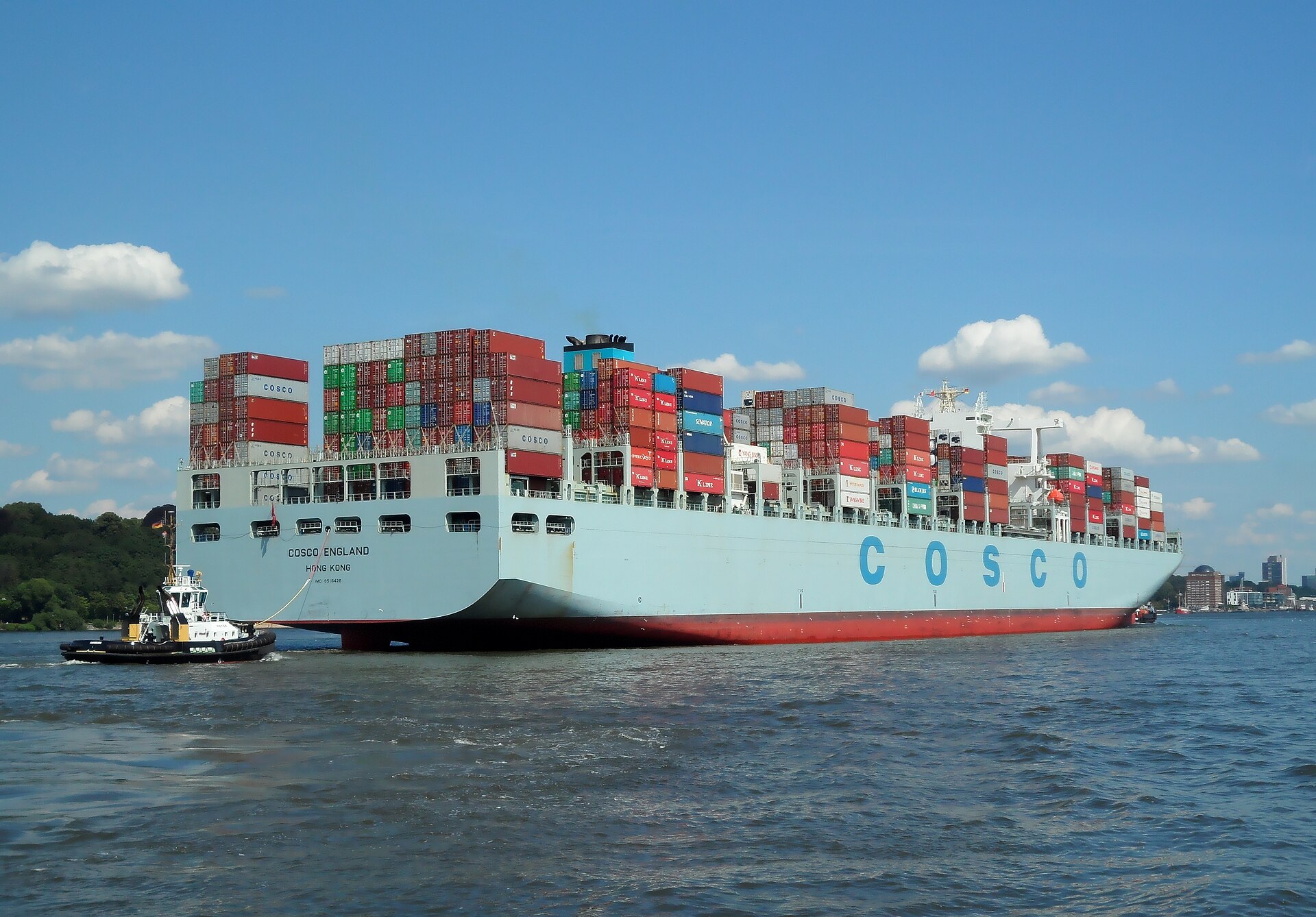
The arrangement proved more fragile than headlines suggested. COSCO, China’s state-owned shipping giant, resumed standard container bookings from Asia to Gulf destinations on March 25, according to logistics platform Freightos. The first confirmed Chinese-owned container ship, the Newvoyager, sailed through the strait without incident. The narrative of Chinese shipping dominance appeared confirmed.
Then, on March 27, Iran blocked two Chinese-flagged container vessels — the CSCL Indian Ocean and CSCL Arctic Ocean — from transiting near Larak Island, according to the Foundation for Defense of Democracies. The ships turned back. Iran offered no public explanation. The incident was not an anomaly; it was a reminder. Access through Hormuz is not a Chinese right. It is an Iranian concession, revocable at will, and the terms are dictated by Tehran’s war calculus, not Beijing’s economic interests.
An Iranian lawmaker told the London-based satellite channel Iran International that Tehran has been charging some vessels $2 million to pass through the strait — a toll booth imposed on the world’s most important energy chokepoint. Whether Chinese vessels pay remains unclear. What is clear is that China’s access is conditional, unpredictable, and insufficient to replace the 5.35 million barrels per day that used to flow freely before February 28.
Beijing’s Invisible Hand — Satellite Intelligence and Military Aid
While China’s public posture has been one of diplomatic neutrality, evidence has accumulated throughout March that Beijing’s actual involvement in the conflict is significantly deeper than official statements acknowledge. The Small Wars Journal published a detailed investigation on March 20 identifying four dimensions of China-Iran intelligence cooperation during the 2026 war.
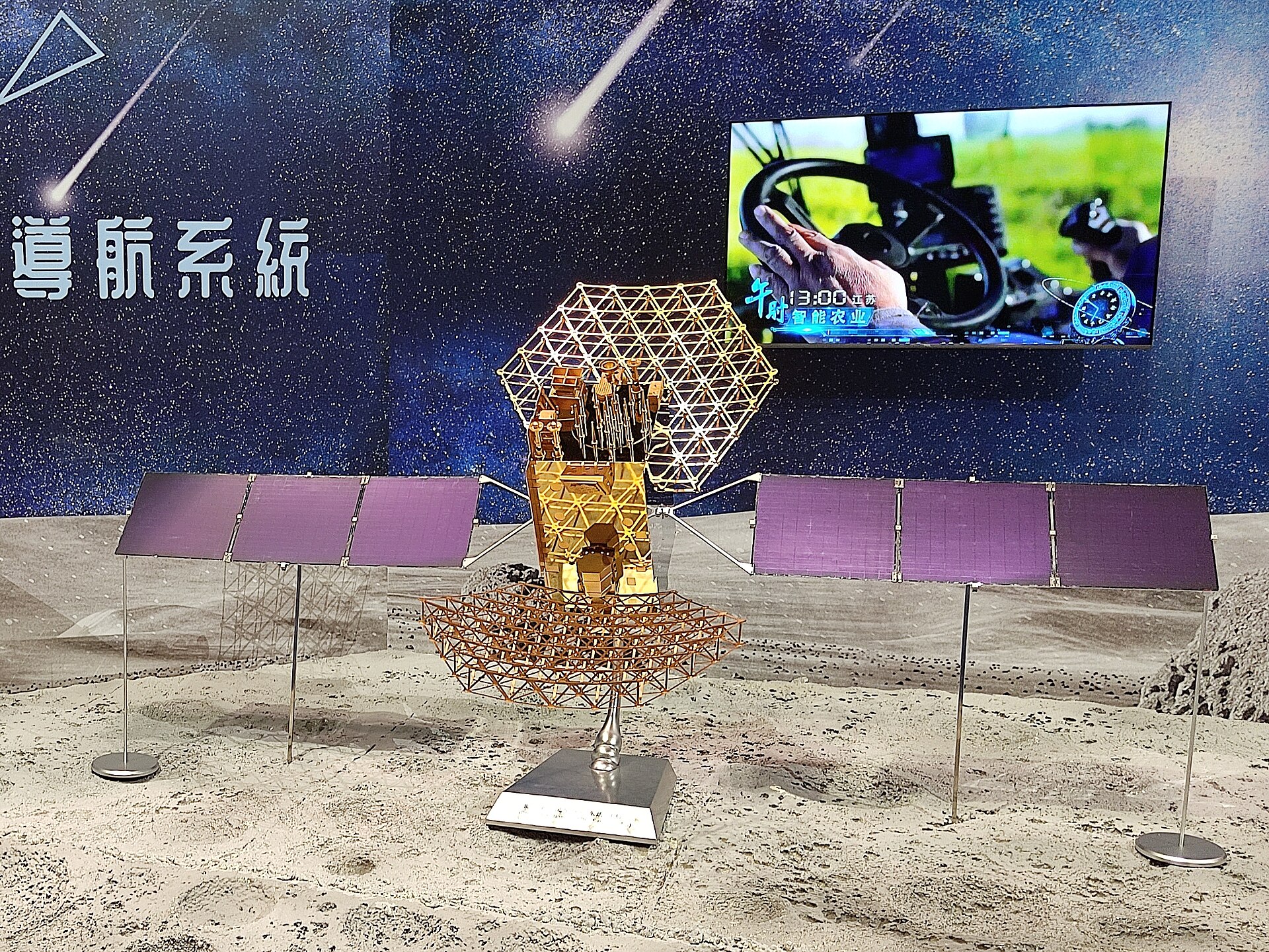
The first and most consequential is satellite intelligence. China’s BeiDou navigation satellite system, which achieved global coverage in 2020 with 35 operational satellites, has reportedly been providing precision targeting data to Iranian military forces. Unlike GPS, which the United States can selectively deny to adversaries, BeiDou operates under Chinese sovereign control — meaning Washington cannot degrade Iranian access to the system without confronting Beijing directly.
The second dimension is radar networking. Palo Alto Networks’ Unit 42 threat intelligence team published an updated brief on March 26 documenting the operational sophistication of Iran’s electronic warfare capabilities, which analysts assess have benefited from Chinese technology transfers. Iranian radar systems have demonstrated improved detection ranges against stealth aircraft, according to IISS assessments, though they remain unable to reliably track fifth-generation platforms.
The third is signals intelligence sharing. China operates extensive satellite communications monitoring systems, including the Kashgar and Korla facilities in Xinjiang that provide coverage over Central and Southwest Asia. The Small Wars Journal investigation cited unnamed intelligence officials asserting that processed intelligence from these facilities has been shared with Iran’s signals intelligence directorate, though Beijing has categorically denied all military cooperation claims.
The fourth is the supply of dual-use components. Kharon, a global risk analytics firm, reported in March that Chinese-manufactured rocket components and electronic systems continue to reach Iran through intermediary companies in the UAE and Malaysia. These supply chains predate the war, but their continuation during hostilities represents a material contribution to Iran’s ability to sustain its drone and missile campaign against Saudi Arabia, the UAE, and other Gulf states.
None of these activities amount to the kind of military alliance that would fundamentally alter the war’s trajectory. Iran’s forces are being degraded systematically by American and Israeli strikes, and Chinese intelligence sharing has not prevented the destruction of major military installations, nuclear facilities, or IRGC command structures. But the covert support creates a diplomatic liability for Beijing that its public neutrality cannot fully obscure. When the war ends, every government in the region will remember which satellites helped guide Iranian drones toward Riyadh.
The Wartime Leverage Matrix
The conventional assessment that China is “winning” the Iran war collapses under systematic comparison with other great powers’ positions. An analysis of five external powers across six dimensions of wartime leverage reveals that no single actor has gained comprehensively — and China has lost more than is commonly acknowledged.
| Dimension | United States | China | Russia | India | Turkey |
|---|---|---|---|---|---|
| Military influence | Dominant — leading strikes | Zero — no forces deployed | Limited — intelligence only | Minimal — naval escort | Rising — mediation leverage |
| Economic leverage | Sanctions power intact | Declining — supply disrupted | Gaining — oil price windfall | Constrained — energy crisis | Growing — alternative route |
| Diplomatic standing | Polarised — allies divided | Damaged — failed to protect Iran | Stable — low expectations | Rising — balancing role | Rising — mediator credibility |
| Energy security | Net exporter — insulated | Severe disruption — 77% Hormuz loss | Net exporter — benefits | Critical — 9-day reserves | Moderate — pipeline supply |
| Investment exposure | Minimal in conflict zone | $100B+ in Iran at risk | ~$25B in Iran | ~$10B in Iran (Chabahar) | ~$30B in Iran trade |
| Net position change | Mixed — military gains, political cost | Negative — exposed as paper partner | Positive — elevated prices, rival weakened | Negative — energy emergency | Positive — geographic advantage |
The matrix reveals several conclusions that challenge conventional analysis. Russia, not China, is the external power gaining most from the conflict. Moscow benefits from elevated oil prices — Russian crude has traded at a premium since the Hormuz closure — while its strategic rival Iran is being weakened without Russian forces firing a shot. Russia’s intelligence sharing with Iran, documented by the EU in its March 26 statement, carries fewer costs than China’s because Moscow has already been sanctioned to its practical limit.
Turkey, often overlooked in assessments of the conflict, has accumulated significant leverage. Ankara controls alternative energy transit routes to Europe, has maintained diplomatic relationships with all parties, and has positioned itself as a credible mediator — a role China once monopolised in the region. Turkey’s geographic position astride the conflict zone gives it a natural advantage that maritime powers like China cannot replicate.
China’s position is weakest on the dimension that matters most to Beijing: energy security. Before the war, 5.35 million barrels per day of Chinese crude transited Hormuz. That figure has fallen by approximately 77 percent. No amount of discounted Iranian crude or covert intelligence sharing compensates for the loss of reliable access to Saudi, Emirati, Kuwaiti, and Iraqi oil. China’s strategic petroleum reserve provides a buffer, but it is being consumed faster than it can be replenished through non-Hormuz routes.
Can China Mediate the Peace It Failed to Prevent?
Beijing’s March 2023 triumph — brokering the Saudi-Iranian rapprochement — was supposed to demonstrate that Chinese-style diplomacy could succeed where American coercion had failed. The agreement restored diplomatic relations, reopened embassies, and produced a series of bilateral meetings that raised genuine hopes for regional stability. Xi Jinping’s December 2022 visit to Riyadh, where he was received with extraordinary ceremony by Crown Prince Mohammed bin Salman, had laid the groundwork.
That diplomatic architecture is now rubble. Saudi Arabia expelled Iran’s military attaché and four embassy staff on March 21, giving them 24 hours to leave the country. The expulsion followed weeks of Iranian drone and missile strikes on Saudi territory that, according to the Saudi Ministry of Defence, have totalled more than 500 projectiles since February 28. Whatever trust the 2023 Beijing agreement had built between Riyadh and Tehran has been obliterated by high explosive.
China’s mediation credibility has suffered collateral damage. On March 27, the Chinese and Pakistani foreign ministers agreed to jointly push for a ceasefire in the US-Iran conflict, with Beijing explicitly endorsing Islamabad’s offer to host direct talks between Washington and Tehran. The Chinese Foreign Ministry spokesperson expressed hope that “all parties involved will seize every opportunity for peace.” But this language is indistinguishable from what Beijing said on March 1, March 7, March 15, and every other day of the conflict. Repetition without escalation is not diplomacy; it is background noise.
The structural problem is that China lacks the coercive tools that make mediation work. Successful mediators need either the ability to reward compliance (economic inducements, security guarantees) or the ability to punish defiance (sanctions, military threats). China can offer economic incentives to Iran but not to the United States. It cannot threaten military consequences against any party. It will not impose sanctions on its own energy suppliers. The result is a mediation posture that amounts to asking everyone to be reasonable — a request that has never, in the history of armed conflict, ended a war.
China’s Middle East strategy depended on a stability that China itself was unwilling to guarantee. When that stability collapsed, so did the strategy.
Analysis based on ORF and LSE assessments, March 2026
Pakistan, by contrast, has emerged as the more credible intermediary precisely because it has something concrete to offer: a venue, a pre-existing relationship with Iran’s military establishment, geographic proximity to the conflict zone, and — critically — the United States’ trust as a logistics partner. Vice President JD Vance’s reported willingness to engage with Pakistan as a channel suggests that Washington sees Islamabad, not Beijing, as the viable mediator.
What Does the War Mean for the Saudi-Chinese Relationship?
Saudi Arabia was China’s largest oil supplier in 2025, shipping 1.72 million barrels per day to Chinese refineries — more than any other country, including Russia. The Public Investment Fund held joint venture stakes with Chinese technology companies. MBS had hosted Xi Jinping with a reception that surpassed what any American president had received in Riyadh. The relationship appeared to be the strongest it had ever been.
The war has introduced a strain that diplomatic niceties cannot conceal. Riyadh’s core expectation of any strategic partner is straightforward: when we are attacked, you respond. China’s response to Iranian strikes on Saudi territory — strikes that damaged oil infrastructure, killed civilians, and forced the evacuation of thousands of foreign workers — has been to call for “restraint from all parties.” For a Kingdom that prides itself on reciprocal relationships, this is not a neutral statement. It is a choice, and the choice was to treat the aggressor and the victim as morally equivalent.
The contrast with other responses is instructive. Britain deployed air defence missiles to Saudi Arabia, Kuwait, and Bahrain within days of the first Iranian strikes. France deepened its defence cooperation agreement with Riyadh on March 25. Ukraine signed a defence pact with Saudi Arabia on March 27, offering anti-drone technology and deploying more than 200 specialists to Gulf states. Even India, which maintains significant ties with Iran, has provided naval escorts for commercial shipping near the Arabian Sea. China has provided statements.
| Country | Response | Military Commitment | Defence Agreement |
|---|---|---|---|
| United States | Leading strikes on Iran; 2,000 paratroopers deployed to Gulf | Major — carrier groups, air assets, ground forces | Existing alliance reinforced |
| United Kingdom | Air defence missiles deployed; mine-clearing coalition | Significant — missile systems, naval assets | New deployment agreement |
| France | Deepened defence cooperation agreement (March 25) | Moderate — naval presence, training | New bilateral agreement |
| Ukraine | Defence pact signed; 200+ anti-drone specialists deployed | Moderate — drone expertise, technology | First-ever Gulf defence deal |
| India | Naval escort operations; diplomatic balancing | Limited — naval only | No formal agreement |
| China | Diplomatic statements; “restraint from all parties” | None | No new commitments |
This does not mean the Saudi-Chinese relationship is broken. Saudi Arabia is too pragmatic to sever ties with its largest oil customer over ideological frustration. China’s market remains essential to Aramco’s revenue base, to the Kingdom’s fiscal planning, and to the diversification of Saudi Arabia’s customer portfolio away from excessive Western dependence. But the war has recalibrated expectations. Riyadh now understands, viscerally rather than theoretically, that Beijing will not provide the security umbrella that Washington offers. China is a customer, not a protector. The distinction will shape Saudi defence procurement, diplomatic alignment, and energy strategy for the next decade.
The Belt and Road’s Most Expensive Detour
China has invested more than $100 billion in energy and infrastructure projects in Iran over the past two decades, according to the American Enterprise Institute’s China Global Investment Tracker. The Belt and Road Initiative designated Iran as a critical node in the China-Central Asia-West Asia Economic Corridor, connecting Chinese manufacturers to European markets through Iranian railways, ports, and highways.
Twenty-eight days of American and Israeli bombardment have rendered much of that investment framework inoperative. The strikes have targeted military facilities, nuclear installations, and dual-use infrastructure across Iran. While the United States has avoided deliberately destroying civilian economic infrastructure — Trump’s threat to target Iran’s power grid has so far been held in reserve as a coercive tool — the cumulative damage to transportation networks, communications systems, and industrial zones has been extensive. An estimated 82,000 buildings have been destroyed or damaged, according to reporting from March 25.
The BRI’s Iran corridor is now a war zone. Railway electrification projects, port development at Chabahar and Jask, and metropolitan transit systems that were supposed to carry Chinese goods to European markets are either under construction in bombed areas, abandoned by workers who have fled, or simply unfeasible in a country where the supreme leader has been assassinated and the government’s authority is fragmenting. The Diplomat assessed in March that “a prolonged war that destroys infrastructure across Iran and its neighbors not only threatens oil flows, but will also have ripple effects for China’s Belt and Road Initiative” — an understatement that captures the scale of Beijing’s problem.
China’s LNG vulnerability adds another dimension. Qatar and the UAE together supply approximately 30 percent of China’s liquefied natural gas imports, according to the Atlantic Council. QatarEnergy declared force majeure on all LNG exports after the Hormuz closure, cutting off a critical supply channel. China is the world’s largest LNG importer, and while it can partially substitute with pipeline gas from Russia and Central Asia, those pipelines are already running near capacity. Winter 2026 will test China’s energy resilience in ways that the current spring weather obscures.
The Power That Cannot Choose
The deepest problem with China’s position in the Iran war is not tactical. It is structural. Beijing’s Middle East strategy requires maintaining productive relationships with countries that are now trying to destroy each other. Iran expects Chinese support — intelligence, economic lifelines, diplomatic protection — as the price of the strategic partnership. Saudi Arabia expects Chinese neutrality at minimum, and preferably active sympathy, as the price of continued oil purchases. The United States expects China to avoid materially supporting an adversary that American forces are actively bombing. These expectations are mutually exclusive. Satisfying any one of them alienates the other two.
The result is what analysts at Chatham House described as “strategic paralysis masquerading as strategic patience.” China calls its position “balanced.” The countries actually fighting the war call it “useless.” Both descriptions contain truth. China’s unwillingness to choose a side preserves its theoretical flexibility, but it eliminates its practical influence. A mediator who offends nobody convinces nobody. A partner who helps everybody helps nobody.
Beijing’s response to the 2026 Iran war has revealed the structural contradictions within China’s Middle East strategy — maximising economic engagement while minimising political and military commitments is not a sustainable model when the region is on fire.
Bruegel Institute analysis, March 2026
The war will end eventually. When it does, China will still be the world’s largest oil importer, and the Gulf will still be the world’s largest oil exporter. Economic gravity will reassert itself. But the war has destroyed the narrative that China built its regional strategy on — the story that engagement without commitment could produce influence without risk. The 2023 Saudi-Iranian deal was supposed to prove that narrative. The 2026 war disproved it. The question now is not whether China has won or lost, but whether Beijing can construct a new strategy for a Middle East that no longer believes Chinese promises come with guarantees.
For Mohammed bin Salman, the lesson is practical rather than ideological. China will remain Saudi Arabia’s most important energy customer. But the next time Riyadh needs an air defence system that works, a diplomatic ally that fights, or a security partner that deploys, it will not be calling Beijing. The Crown Prince’s decision to sign defence agreements with Ukraine, deepen ties with France and Britain, and grant the US military access to King Fahd Air Base tells the story more clearly than any communiqué. Saudi Arabia’s China policy has not changed. Its China expectations have.
And that shift — from expectation to understanding — may be the most consequential outcome of the Iran war for the global order that emerges after the last missile falls.
Frequently Asked Questions
Is China winning the Iran war?
China is not winning the Iran war in any strategic sense. While Beijing benefits from discounted Iranian oil purchases and selective Strait of Hormuz transit, these tactical gains are offset by severe energy supply disruption — a 77 percent reduction in crude transiting Hormuz — the destruction of over $100 billion in Belt and Road-linked investments in Iran, the collapse of its 2023 Saudi-Iranian mediation achievement, and damaged credibility with both Gulf Arab states and Iran. Russia has gained more from the conflict at lower cost.
Why does Iran allow Chinese ships through the Strait of Hormuz?
Iran’s selective access policy permits vessels from five nations — China, Russia, India, Iraq, and Pakistan — to transit Hormuz. This is not a reward for Chinese support but a weapon aimed at the United States and its allies. By creating a two-tier maritime system, Iran deepens the economic pain for Washington’s coalition while rewarding non-participants. The access has proven unreliable: on March 27, Iran blocked two Chinese-flagged vessels without explanation, demonstrating that transit remains an Iranian concession, not a Chinese right.
How much oil does China buy from Iran?
China purchased approximately 1.61 million barrels per day of Iranian crude in 2025, representing about 19.6 percent of China’s total oil imports and roughly 90 percent of Iran’s total oil exports. This oil is typically bought at a discount of $8 to $10 per barrel below Brent crude, though wartime discounts have reportedly widened to $15 to $20 per barrel. The trade operates through elaborate sanctions-evasion infrastructure including ship-to-ship transfers, disabled transponders, and rebranding of cargo origins.
Is China providing military support to Iran?
Evidence suggests China is providing covert support across four dimensions: BeiDou satellite navigation data for targeting, signals intelligence from monitoring facilities in Xinjiang, advanced radar technology, and dual-use electronic components shipped through intermediaries in the UAE and Malaysia. Beijing categorically denies military cooperation. This support has not altered the war’s trajectory but creates diplomatic liability as regional governments track which technologies contribute to attacks on their territory.
What happened to China’s $400 billion deal with Iran?
The 25-year comprehensive cooperation agreement signed in March 2021 promised $400 billion in Chinese investment — $280 billion in energy and $120 billion in transport and manufacturing. In practice, China invested approximately $9 billion in Iran over the preceding decade and made no significant new investments after 2018 due to US secondary sanctions. The agreement was more aspirational than operational, and the war has rendered its infrastructure commitments moot as targeted sites fall within active combat zones.
How has the war affected the Saudi-Chinese relationship?
The war has exposed the limits of the Saudi-Chinese partnership. While China remains Saudi Arabia’s largest oil customer (1.72 million barrels per day in 2025), Beijing’s failure to respond meaningfully to Iranian strikes on Saudi territory — offering only calls for “restraint from all parties” — has recalibrated Riyadh’s expectations. Saudi Arabia has instead deepened defence ties with the US, UK, France, and Ukraine, signalling that it now views China as a commercial partner rather than a potential security guarantor.