ABU DHABI — UAE air defenses intercepted every incoming Iranian missile over the Ruwais Industrial Complex at 6:44 AM on Saturday, April 5 — a perfect score — and the debris from those successful kills fell on the world’s largest single-site polyolefin plant, sparked multiple simultaneous fires, and shut down a $60 billion petrochemical operation that had completed its corporate restructuring five days earlier. Borouge, the ADNOC-Borealis joint venture that produces five million tonnes per annum of the polyethylene and polypropylene used in everything from water pipes to medical devices, suspended all operations immediately while firefighters worked to contain what Abu Dhabi’s Media Office described as an active damage assessment.
The intercept worked. The plant went offline anyway. And that is the problem that no air defense system fielded by any GCC state — not PAC-3, not THAAD, not the layered architecture the UAE has spent billions assembling — was designed to solve, because these systems destroy incoming warheads rather than vaporise them, and the fragments of a successful kill rain down on whatever sits beneath the engagement altitude with enough kinetic energy to ignite petrochemical feedstock. Borouge Ruwais is the third confirmed UAE industrial facility to suffer operational shutdown from defensive debris rather than direct impact in the past 48 hours, following the Habshan gas plant fire on April 3 that killed an Egyptian national and injured four workers and the Fujairah Oil Industry Zone debris fire — a pattern that turns every successful intercept into a secondary attack vector Iran does not need to plan, claim, or pay for.
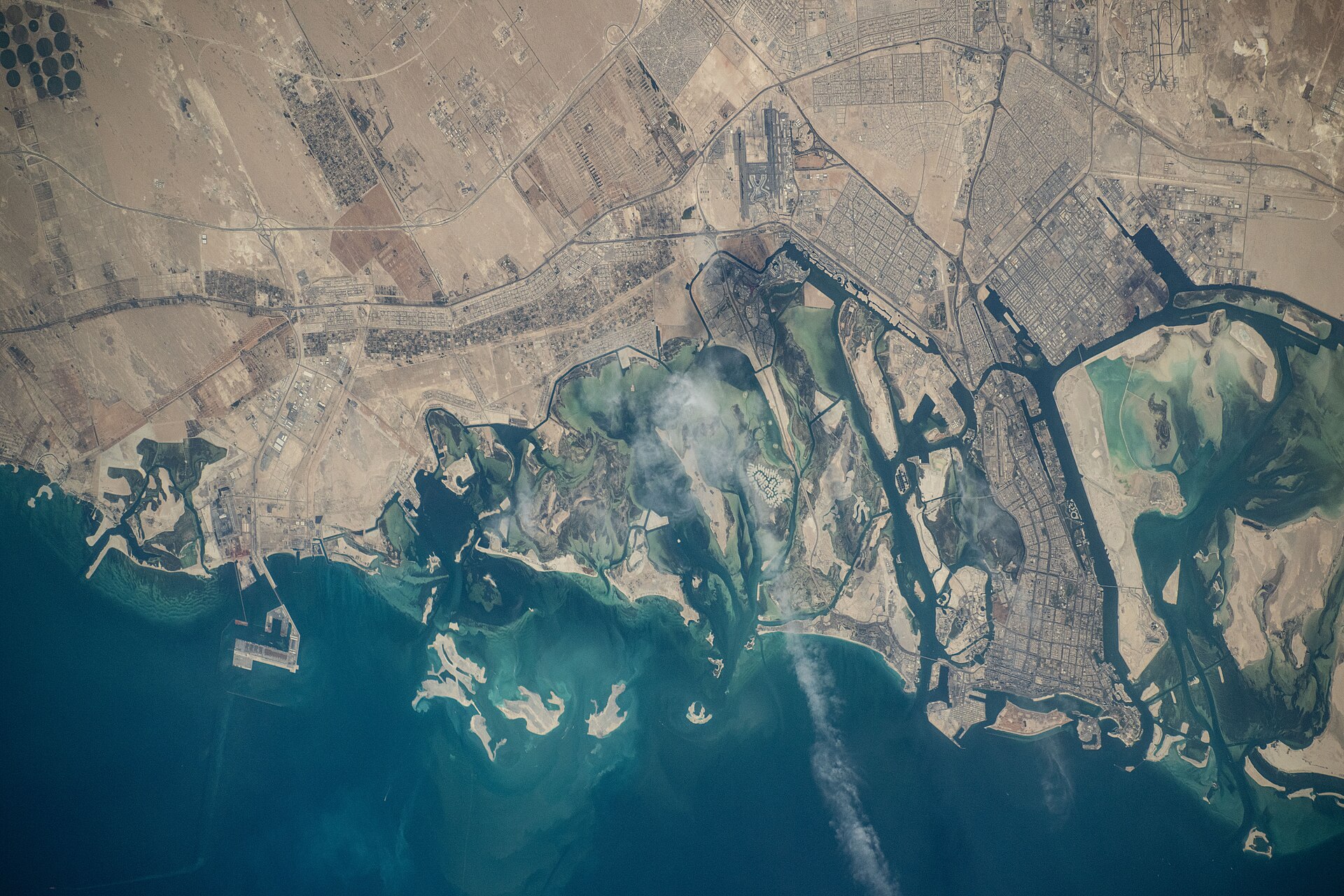
Table of Contents
A $60 Billion Target Five Days Old
On March 31, 2026, ADNOC’s petrochemical arm XRG and Austria’s OMV completed the combination of Borouge and Borealis into Borouge Group International, a merged entity valued at over $60 billion that created the world’s fourth-largest polyolefin producer with 13.6 million tonnes per annum of global capacity. The deal had been years in the making. The Ruwais fires arrived before the ink had time to dry on the corporate filings, and the immediate suspension of operations at the group’s flagship production site raised the question of what a prolonged shutdown would mean for a company whose 2024 annual revenue stood at $6.03 billion and whose market capitalisation on the Abu Dhabi Securities Exchange had reached approximately $76.9 billion.
Borouge is not a marginal facility. It is the anchor of Abu Dhabi’s industrial diversification strategy, the physical proof of the emirate’s argument that its economy extends beyond crude exports — and the UAE’s non-oil sector had just reached a record-high 77.3 percent contribution to real GDP in the first quarter of 2025, the highest in the country’s history. A sustained shutdown at Ruwais does not merely dent production numbers; it undermines the narrative that Abu Dhabi has built a non-oil industrial base resilient enough to attract the foreign investment and expatriate talent that keep the emirate’s economic model functioning — TIME Magazine had reported that Iran’s strikes had already “shaken the Gulf region’s image of stability and safety, which had helped it cultivate investment, draw in expatriates, and attract tourism.” The April 5 debris fires turned that observation from abstract risk into a $60 billion case study.
The $6.2 billion Borouge 4 expansion — the newest production line, designed to lift total output from five million to 6.4 million tonnes per annum — had been in its ramp-up phase when the fires hit. ADNOC holds 54 percent of Borouge PLC, with Borealis (wholly owned by OMV of Austria) at 36 percent and a ten percent public float dating from the company’s June 2022 IPO, the largest ever on the Abu Dhabi exchange, which raised $2 billion. Every day that Ruwais stays offline costs the merged entity production revenue and risks delaying the ramp-up timeline for Borouge 4, compounding the financial damage from a single debris event into a longer-term industrial setback.
Why Does a Successful Intercept Start Fires?
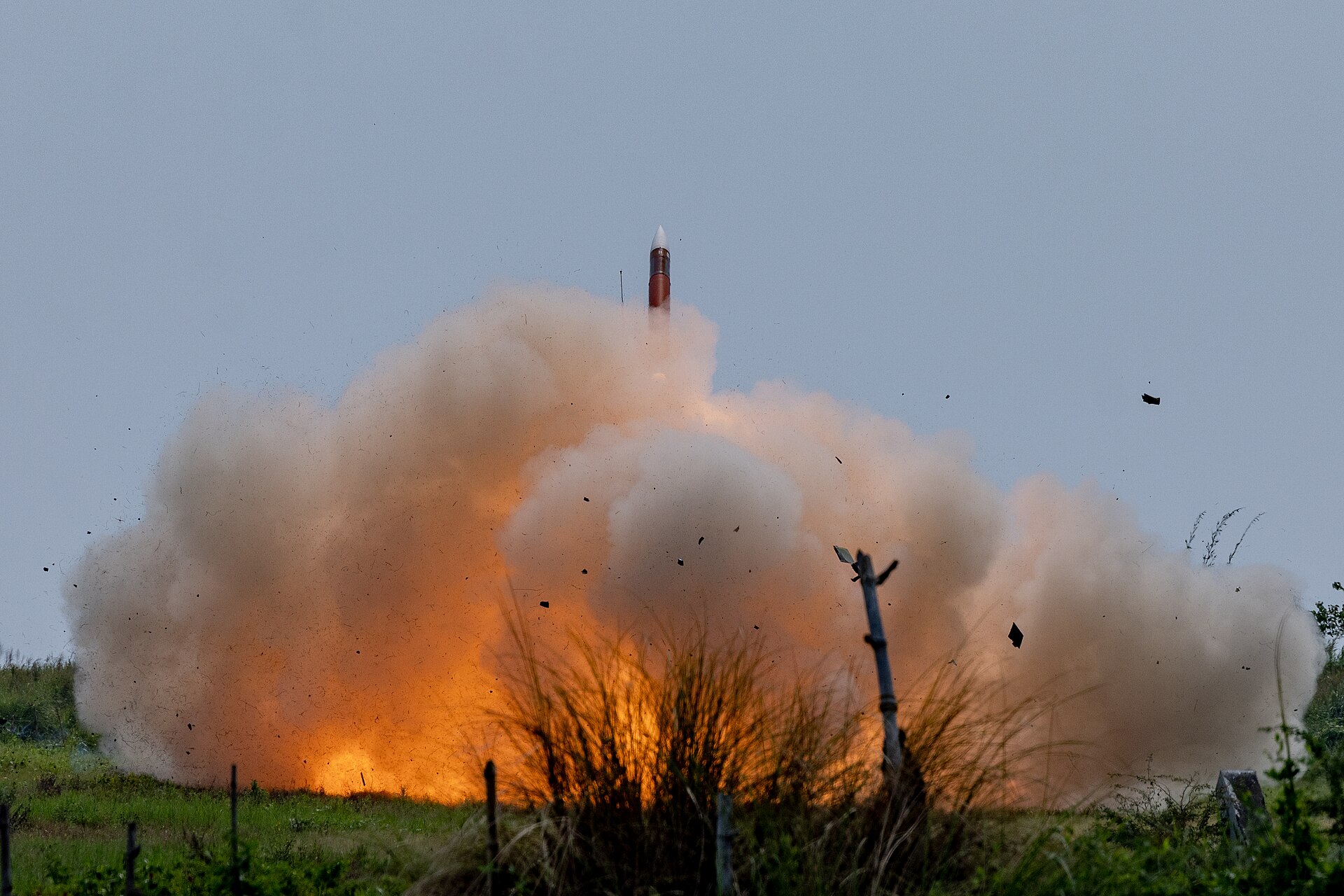
The PAC-3 interceptor, the system that forms the backbone of GCC point-defense against ballistic missiles, uses a hit-to-kill kinetic mechanism — it destroys incoming warheads by ramming them at closing speeds that can exceed Mach 5. But the PAC-3 also carries a “lethality enhancer,” an explosive charge containing 24 tungsten-alloy cycloids each weighing approximately 95 grams, designed to generate a metal fragment cloud around the interceptor body that increases the probability of a disabling hit even if the kinetic vehicle does not achieve a direct centre-of-mass impact. The result is a kill mechanism that shatters rather than disintegrates, scattering casing, engine components, unburned fuel, warhead fragments, and interceptor debris across a wide area beneath the engagement point.
Neither PAC-3 nor THAAD is designed to vaporise its target. The physics of missile defense at the terminal phase — the final seconds of an incoming warhead’s trajectory — prioritise destroying the guidance and detonation capability of the threat, not eliminating every fragment of the threat’s physical mass. When that engagement occurs at altitude above an industrial complex housing millions of tonnes of flammable polyolefin feedstock, hydrocarbon processing units, and petrochemical storage, the debris field becomes an ignition source that no amount of defensive engineering can prevent. The “multiple fires” described by Abu Dhabi’s Media Office are consistent with scattered debris from a single intercept event hitting multiple points across a facility that stretches kilometres along the coast of Abu Dhabi’s Western Region.
The Haifa precedent confirms the vulnerability at smaller scale. Debris from intercepted missiles struck the Bazan Group refinery compound in Israel on multiple occasions during the current conflict, causing gasoline tank fires and power outages — establishing that even minor debris events at petrochemical facilities can trigger operational shutdowns because the proximity of flammable feedstock means any ignition source, however small, creates a fire risk that forces immediate evacuation and suspension. Borouge Ruwais, at five million tonnes per annum, operates at an order of magnitude larger than Bazan — and the consequences of a fire spreading through interconnected processing units scale accordingly.
Three Shutdowns in 48 Hours
Borouge was not an isolated incident. In the 48 hours before the Ruwais fires, two other UAE industrial facilities had already suffered operational shutdowns from the same mechanism — air defense debris falling on infrastructure that the defense systems were designed to protect. On April 3, debris from successful intercepts struck the Habshan gas processing facility, one of ADNOC’s core upstream assets, killing one Egyptian national and injuring four workers in what became the first confirmed fatality from defensive debris on UAE soil. The Fujairah Oil Industry Zone, on the country’s eastern coast, sustained a separate debris fire in the same window.
The UAE Ministry of Defence had acknowledged the problem in language that stopped short of admitting its scale. In a statement carried through official channels and compiled on the Wikipedia documentation of the 2026 strikes, the ministry confirmed that “debris fell in scattered areas of the country as a result of air defense systems intercepting ballistic missiles and drones, leading to minor and moderate material damage in a number of civilian properties.” Three industrial shutdowns in 48 hours — one of them fatal, one of them involving the world’s largest polyolefin plant — tests the limits of what “minor and moderate” can credibly describe.
The closest analog for recovery time comes from Emirates Global Aluminium. EGA’s Al Taweelah smelter, which sustained damage on approximately March 28 in a strike-and-debris event, has warned that repairs could take up to 12 months. Six workers were injured and the entire complex was evacuated. If the Borouge damage assessment returns anything approaching that timeline, the merged Borouge Group International would be operating its flagship facility at reduced capacity — or no capacity — for a period that would span the entire ramp-up window for the Borouge 4 expansion and drag on the production figures the new corporate entity needs to justify its $60 billion valuation.
What Else Sits Inside the Ruwais Blast Radius?
Borouge does not sit alone at Ruwais. The industrial complex, located approximately 250 kilometres west of Abu Dhabi city near the Saudi border, is a multi-plant cluster that houses the UAE’s largest oil refinery (ADNOC Refining), the FERTIL fertilizer plant, and the ADNOC LNG terminal — making the polyolefin facility one element within a concentrated industrial geography where debris from a single intercept event can initiate cascading shutdowns across multiple operators. An earlier drone strike had already caused a separate fire at the Ruwais refinery, establishing that the complex has been targeted more than once and that Iran — or the defensive debris Iran’s salvos generate — has already reached multiple nodes within the cluster.
The concentration is a feature, not a bug, of Abu Dhabi’s industrial planning. Ruwais was developed as an integrated downstream hub precisely because co-locating refineries, petrochemical plants, fertilizer production, and LNG processing creates efficiency gains through shared feedstock pipelines, utilities, and logistics. That integration, which made Ruwais an economic engine, now makes it a single point of failure where a debris event at one facility can force precautionary shutdowns at adjacent plants — not because they were hit, but because fire risk at a petrochemical plant in a tightly clustered industrial zone threatens everything connected to the same feedstock and utility network.
The National Emergency Crisis and Disaster Management Authority, NCEMA, had issued an early-morning statement on April 5 confirming the air defense engagement and urging residents to “stay in safe locations and follow official channels.” The guidance was directed at civilians, but the industrial implications are broader: every worker at every facility in the Ruwais complex — refinery operators, fertilizer plant technicians, LNG terminal staff — operates under the knowledge that the next successful intercept could scatter debris across their workplace. That awareness, and the precautionary responses it triggers, amounts to an operational drag on the entire cluster even when debris does not physically reach every plant.
Kuwait, Bahrain, Abu Dhabi: The 24-Hour Pattern
The Borouge fires did not occur in isolation from the wider war. Within a 24-hour window spanning April 4 and 5, Iranian strikes and the debris they generated hit industrial and energy infrastructure across three separate GCC states — Kuwait, Bahrain, and the UAE — in what amounted to a cross-border campaign that stretched across the full width of the Persian Gulf. On April 5, drones struck the Kuwait Petroleum Corporation headquarters in Kuwait City and a Bapco Energies storage tank in Bahrain, alongside power and water desalination plants in Kuwait and the Ministry of Finance building. On April 4, an IRGC drone had struck a container ship at Bahrain’s port, extending the campaign to maritime commercial targets.
The simultaneity is the strategic message. The International Institute for Strategic Studies had already assessed, in its March 2026 analysis of the campaign, that Iran had launched wide-ranging drone and missile attacks against all six GCC states “to put pressure on them, spread the cost of the war and expose the limits of US capabilities and will.” The April 5 pattern — three countries, multiple target categories, one operational window — is the live demonstration of that assessment, forcing Kuwait, Bahrain, and the UAE to manage simultaneous industrial crises while their air defense networks absorb ongoing salvos. Saudi Arabia had already experienced the same debris dynamic at Al-Kharj, where intercept wreckage from successful engagements over Prince Sultan Air Base fell on residential neighborhoods, damaging nine homes and hospitalising two people on March 31 alone.
“All bases, facilities, and assets of the hostile forces in the region shall be regarded as legitimate military objectives.”
— Abbas Araghchi, Iranian Foreign Minister, March 2026
Araghchi’s declaration, reported by TIME Magazine, provides the doctrinal umbrella under which every GCC industrial shutdown — whether caused by a penetrating warhead or by defensive debris — serves Tehran’s strategic purpose. Iran does not need to claim the Borouge fire specifically, because the damage occurred regardless of the intercept outcome, and the foreign minister’s broad designation of “all bases, facilities, and assets” as legitimate targets creates rhetorical cover for industrial disruption whether Tehran planned it or not. The IRGC has not publicly named Borouge or the Ruwais petrochemical complex as a target. It did not need to.
The 92.5 Percent Problem
As of April 1, 2026, Iran had fired a cumulative total of 438 ballistic missiles, 2,012 drones, and 19 cruise missiles at UAE targets since the war began on February 28. UAE air defenses intercepted 161 of 174 ballistic missiles that entered engagement envelopes — a 92.5 percent intercept rate that, in any previous conflict, would be considered an extraordinary defensive achievement. Yet each of those 161 successful intercepts generated a debris field, and those debris fields have now shut down a $60 billion petrochemical plant, killed a worker at a gas facility, and forced evacuations at an aluminium smelter that will take a year to repair.
The arithmetic exposes a structural paradox that Arash Marzbanmehr, a senior analyst at the Tehran-based Meshkat Think Tank, had identified as central to Iran’s campaign design. Writing for the Al Jazeera Centre for Studies, Marzbanmehr described Iran as pursuing “a lower-volume but persistent campaign of asymmetric drone and missile strikes, imposing cumulative risk” — with “financial strain on Arab states — including collateral damage in urban centres resulting from missile interceptions, degradation of shared military infrastructure, and revenue losses across tourism, hospitality and aviation” constituting Iran’s indirect economic leverage. The Borouge shutdown is the industrial-scale confirmation of that analysis. Iran does not need a 100 percent penetration rate when a 92.5 percent intercept rate generates enough debris to achieve industrial disruption as a byproduct of defensive success.
The record 79-projectile barrage the UAE absorbed earlier in the campaign had already demonstrated the saturation pressure that drives this dynamic — more incoming threats mean more intercepts, and more intercepts mean more debris falling on the industrial infrastructure clustered beneath the engagement zones. The Ras Laffan precedent in Qatar, where air defenses intercepted four of five incoming missiles on March 18 but the single penetrating missile caused “extensive damage” to the LNG hub, showed what happens when the intercept rate falls below perfection. Borouge shows what happens when the intercept rate is perfect and the damage occurs anyway.
The Saudi decision to route seven million barrels per day through the East-West Pipeline to Yanbu was one answer to Iran’s chokepoint doctrine — bypassing the Strait of Hormuz by moving crude overland to the Red Sea. But there is no pipeline bypass for a polyolefin plant. Borouge’s output cannot be rerouted, dispersed, or produced at an alternative site; the five million tonnes per annum of polyethylene and polypropylene that feed supply chains across Asia, Africa, and the Middle East either come from Ruwais or they do not come at all. And as long as Iranian salvos continue to arrive over the industrial complex, every successful intercept carries the same risk — that the debris from a defeated missile will do what the missile itself could not, and shut down a facility that no air defense architecture on earth was built to protect from the consequences of its own success.
Background and Context
The US-Israeli military operation against Iran, designated Operation Epic Fury, began on February 28, 2026, with Iran retaliating under its “Operation True Promise 4” framework. The opening salvo on March 1 established the pace for what has become the most sustained air defense campaign in Gulf history, with all six GCC states absorbing daily strikes and the UAE bearing the heaviest volume — nearly 2,500 projectiles in the first 37 days. The Borouge shutdown on Day 37 joins a growing list of UAE industrial casualties that includes EGA’s Al Taweelah smelter, the Habshan gas plant, the Fujairah Oil Industry Zone, and multiple residential and commercial properties across Abu Dhabi, Dubai, and the northern emirates.
Borouge was founded in 1998 as a joint venture between ADNOC and Borealis to produce polyolefins at Ruwais. Its first plant came online in 2001, with successive expansions raising capacity to five million tonnes per annum through a series of additions that concluded with the Borouge 4 ramp-up phase currently underway — making the Ruwais site, in the near term, irreplaceable.
Frequently Asked Questions
Were there any casualties at Borouge Ruwais on April 5?
No casualties were reported at the Borouge facility following the April 5 debris fires, according to the Abu Dhabi Media Office statement. The immediate suspension of operations and evacuation protocols appear to have prevented injuries at the site itself. However, the broader debris pattern across the UAE has produced fatalities — one Egyptian national was killed and four workers injured at the Habshan gas facility just two days earlier on April 3, and six workers were injured at EGA’s Al Taweelah smelter in late March. The absence of casualties at Borouge likely reflects the 6:44 AM timing, before full shift operations would have been underway at peak capacity.
What products does Borouge produce and who depends on them?
Borouge produces polyethylene and polypropylene — the two most widely used plastics in the world — which are transformed into water and gas pipes, food packaging, medical devices, agricultural film, and automotive components. The company’s primary export markets span Asia, the Middle East, and Africa, with particular concentration in India, China, and Southeast Asia where Borouge polyolefins are feedstock for manufacturing sectors employing millions of workers. A sustained shutdown at Ruwais would create supply chain disruptions extending far beyond the UAE, as the facility’s five million tonnes of annual output cannot be readily replaced by alternative producers operating near capacity globally.
How does the Borouge shutdown compare to previous Iranian strike damage in the UAE?
In terms of the value of the asset affected, the Borouge shutdown is the costliest single industrial disruption of the war in the UAE. The merged Borouge Group International carries a valuation exceeding $60 billion, compared to EGA’s Al Taweelah smelter — previously the most severe UAE industrial casualty, with a 12-month estimated recovery — which is part of a company valued at a fraction of that figure. In terms of mechanism, Borouge is distinctive because the fires were caused entirely by defensive debris from successful intercepts, not by a warhead that penetrated air defenses, making it the highest-value demonstration of the debris-as-damage-vector problem that has defined the UAE’s defensive experience in this war.
Could the Ruwais fires spread to adjacent facilities in the industrial complex?
The risk of cascading damage across the Ruwais cluster is real but mitigated by the firebreaks and safety protocols built into the complex’s original design. ADNOC Refining, the FERTIL fertilizer plant, and the ADNOC LNG terminal all operate within the same industrial zone, connected by shared feedstock pipelines and utility networks. Abu Dhabi’s Civil Defence and ADNOC’s own emergency response teams were deployed to contain the fires, and the Media Office’s reference to an ongoing “damage assessment” suggests that the extent of fire spread — and whether adjacent facilities required precautionary shutdowns — was still being determined at the time the suspension was announced. The complex was designed for industrial accident scenarios, not for the sustained external ignition risk that repeated debris events now present.
Has Iran claimed responsibility for targeting the Borouge facility?
No. The IRGC has not publicly claimed any strike aimed specifically at Borouge or the Ruwais petrochemical complex. UAE authorities attributed the fires explicitly to debris from their own successful air defense intercepts — a framing that removes any direct Iranian operational “credit” for the damage while simultaneously demonstrating the structural problem that debris damage creates. Iran’s broader doctrinal position, articulated by Foreign Minister Araghchi’s designation of all “bases, facilities, and assets of the hostile forces in the region” as legitimate targets, provides rhetorical cover for industrial disruption without requiring specific targeting claims. PressTV’s April 1 account of Operation True Promise 4 claimed destruction of UAE-based radar and electronic warfare installations but named no petrochemical facilities — Tehran is framing its campaign around military infrastructure while the industrial damage accumulates as an unattributed consequence.