
LONDON — Britain announced on Monday that it is deploying short-range air defense systems to Saudi Arabia, Kuwait, and Bahrain, and distributing air defense missiles to Gulf partners, in the most significant expansion of the United Kingdom’s military commitment to the region since the Iran war began on 28 February. Prime Minister Keir Starmer told a parliamentary committee that the deployments were being made “at speed” and warned that the country must prepare for a conflict that could continue “for some time,” cautioning against what he called “false comfort” about a rapid end to hostilities.
The announcement came as Defence Minister John Healey confirmed to Parliament that Britain would deploy its Rapid Sentry anti-drone system to Kuwait, describing it as a “battle-tested ground-based air defence missile system that has already proved highly effective for UK forces taking down drones in the region.” Starmer added that the same short-range systems were being sent to Bahrain and Saudi Arabia, and that Britain was working with defense industry to distribute air defense missiles directly to its Gulf partners, according to reports from AFP, Al-Monitor, and France24.
Table of Contents
- What Is Rapid Sentry and How Does It Work?
- Deployment Details Across Three Gulf States
- Britain’s Largest Gulf Military Buildup in 15 Years
- Why Is Britain Expanding Its Gulf Presence Now?
- The Drone Threat Saudi Arabia and Its Neighbours Face
- Starmer Calls Cobra Meeting on Economic Fallout
- How Does This Fit Into Saudi Arabia’s Multinational Air Defense Shield?
- What Comes Next for UK Forces in the Gulf?
- Frequently Asked Questions
What Is Rapid Sentry and How Does It Work?
Rapid Sentry is a short-range air defense system operated by the RAF Regiment, designed specifically to counter drone threats that survive electronic jamming. The system fires the Lightweight Multirole Missile, known as Martlet, manufactured by Thales, with an effective range of up to eight kilometres against small, fast-moving targets. It pairs a radar unit — believed to be based on Saab’s Giraffe 1X 3D radar, 11 of which Britain ordered in 2023 — with a missile launcher capable of engaging unmanned aerial vehicles, helicopters, fast inshore attack craft, and vehicle-borne explosive devices.
According to Air Commodore Paul Hamilton, Commandant General of the RAF Regiment, “Rapid Sentry gives us a credible kinetic safeguard when a drone cannot be defeated electronically.” The system forms the hard-kill layer of a three-tiered counter-drone architecture operated by the RAF: ORCUS for detection, NINJA for electronic disruption, and Rapid Sentry for physical destruction. The layered approach means that RAF personnel “always have options: detect, disrupt, or defeat,” as the force described it in an official statement.
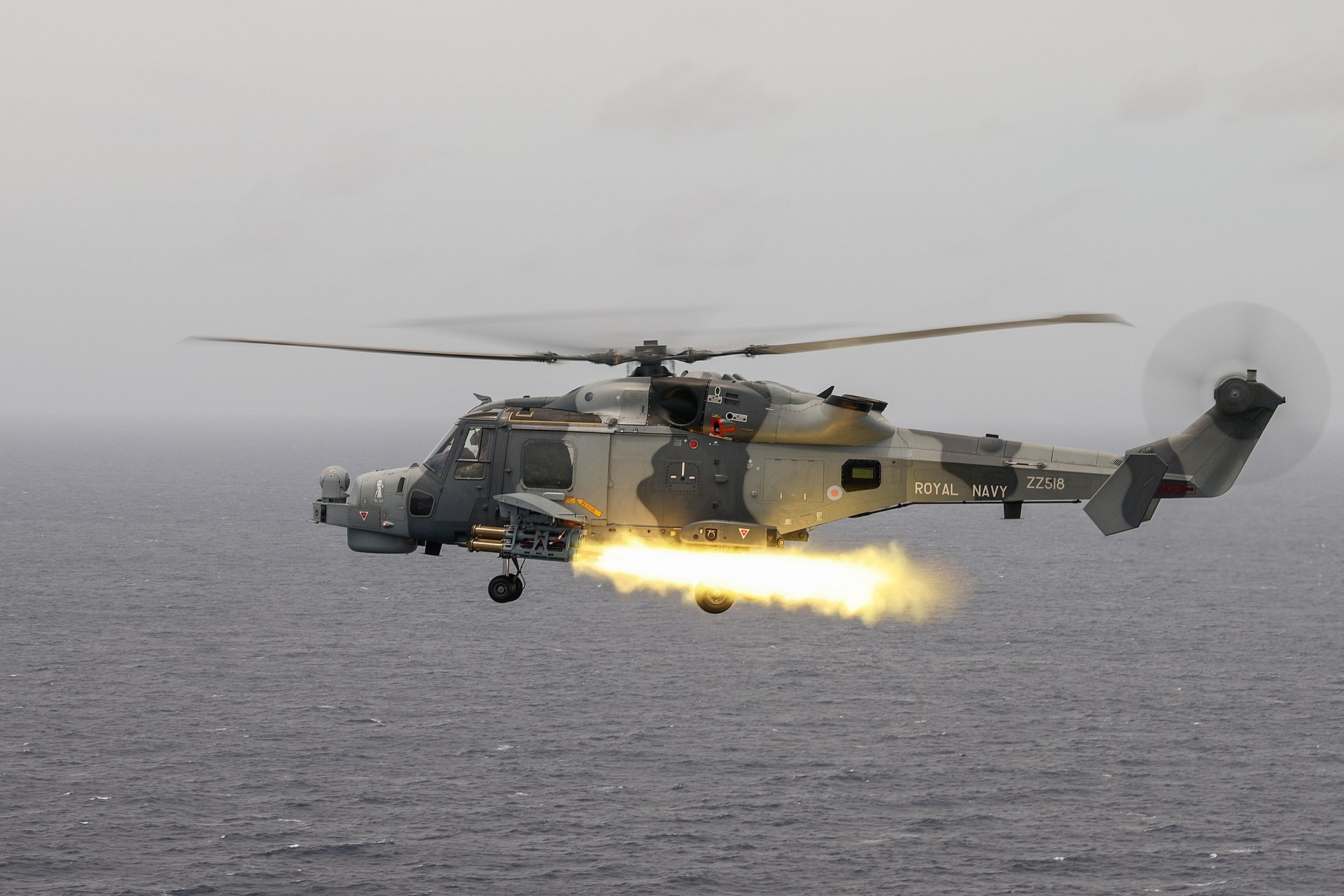
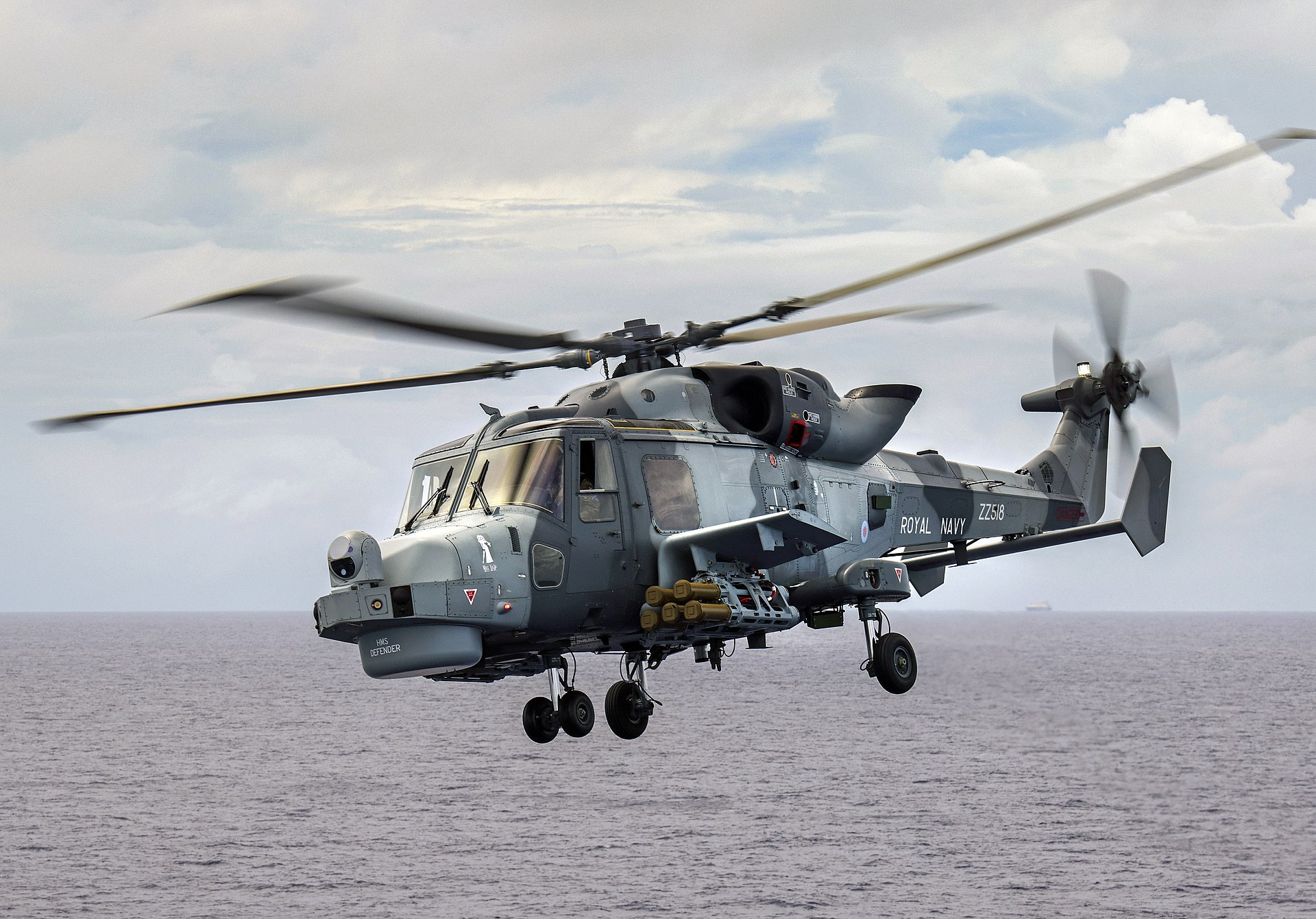
The Martlet missile itself was first fired operationally from a Royal Navy Wildcat helicopter aboard HMS Defender in the Bay of Bengal during the Carrier Strike Group 21 deployment. It is a laser beam-riding missile, meaning it tracks a laser designator held on the target rather than using an autonomous seeker, giving operators precise control over the engagement. The missile’s versatility — it can be shoulder-fired by ground troops or launched from helicopter and ground platforms — makes it a flexible addition to the Gulf’s increasingly strained air defense network.
Deployment Details Across Three Gulf States
Starmer confirmed on Monday that Britain is deploying short-range air defense systems to three Gulf Cooperation Council member states simultaneously. “We’re deploying short-range air defence systems to Bahrain at speed,” Starmer told a parliamentary committee, adding that the UK was “doing the same with Kuwait and Saudi Arabia,” according to AFP.
Defence Minister Healey provided additional detail in a separate statement to Parliament. He confirmed that the Rapid Sentry system was being sent specifically to Kuwait, where it would bolster defenses against the persistent Iranian drone campaigns that have triggered air defense alarms at least seven times in a single night in recent days, according to Al Jazeera’s reporting on Day 25 of the conflict.
Beyond the deployment of specific systems, Starmer disclosed that Britain was also working with its defense industry to “distribute air defence missiles to Gulf partners” directly. This represents a significant step beyond providing military platforms — it means Gulf nations will receive additional ammunition stocks to replenish interceptor inventories that have been rapidly depleted by 25 consecutive days of Iranian drone and missile barrages. Britain has also embedded airspace specialists in the three Gulf states, providing real-time expertise in managing contested airspace.
| Asset | Type | Location | Announced |
|---|---|---|---|
| Rapid Sentry | Short-range air defense (anti-drone) | Kuwait | 23 March |
| Short-range air defense systems | Air defense | Bahrain, Saudi Arabia | 23 March |
| Air defense missiles | Munitions distribution | Gulf partners | 23 March |
| RAF Typhoon FGR4 fighters | Fast jets (x4 additional) | Al Udeid, Qatar | 5 March |
| RAF F-35B Lightning | Stealth fighters (x6) | RAF Akrotiri, Cyprus | Late February |
| HMS Dragon (D35) | Type 45 destroyer | Eastern Mediterranean | 10 March |
| Wildcat helicopters | Anti-drone armed helicopters | Gulf / Mediterranean | 3 March |
| Voyager tankers (x3) | Air-to-air refueling | RAF Akrotiri, Cyprus | Early March |
| Airspace specialists | Personnel embedded | Saudi Arabia, Kuwait, Bahrain | 23 March |
Britain’s Largest Gulf Military Buildup in 15 Years
Healey told Parliament that Britain now has “more military jets in the region than at any time in the last 15 years,” a marker that places the current deployment above even the peak of Operation Shader, the UK’s contribution to the anti-ISIS coalition in Iraq and Syria. The last time Britain maintained a comparable fast-jet presence in the Gulf was during the drawdown from Operation Telic in Iraq around 2011.
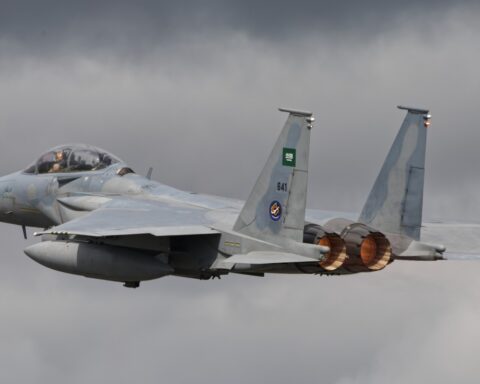
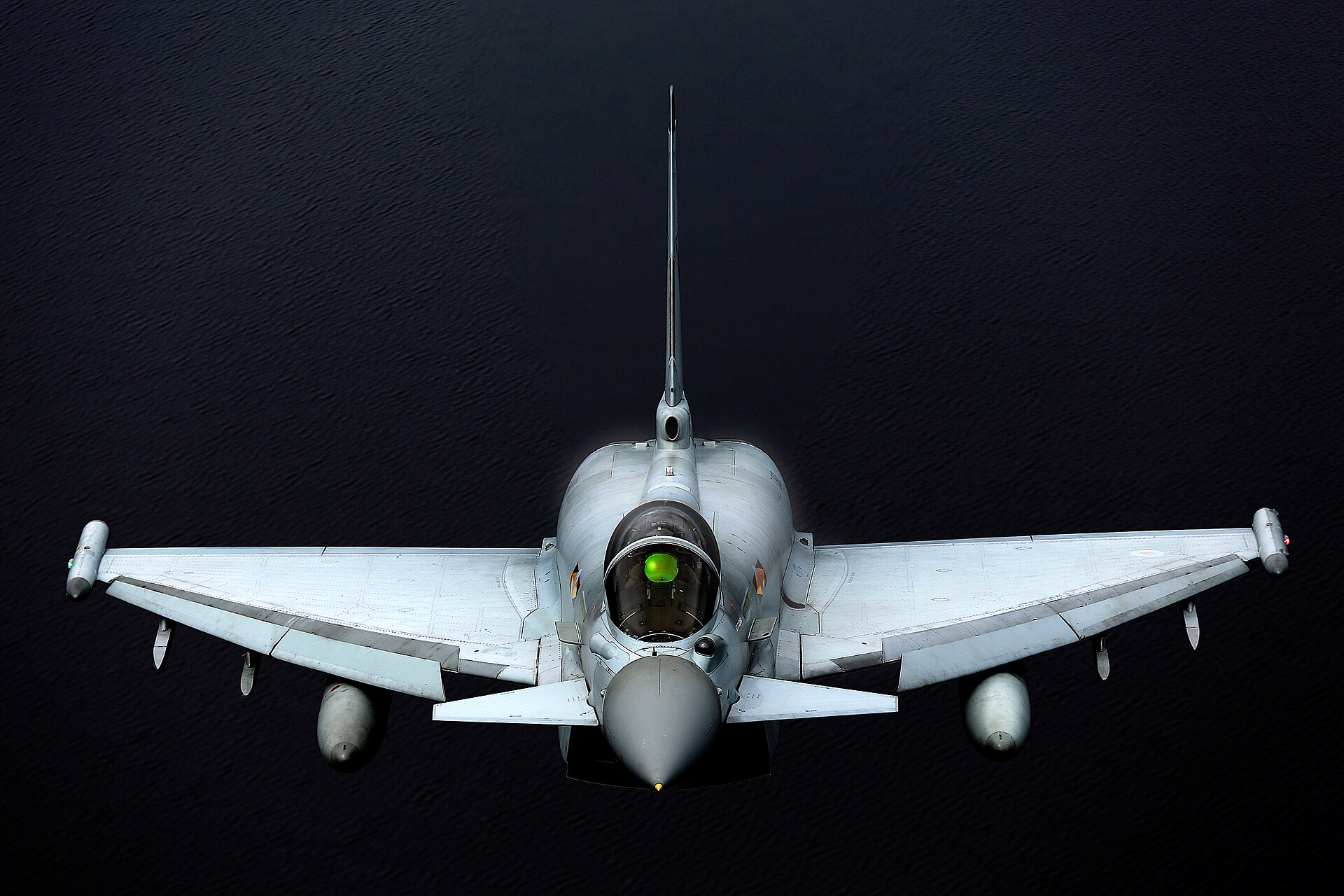
UK pilots have logged nearly 900 hours of defensive flying missions since the war began on 28 February, according to the Ministry of Defence. RAF F-35B Lightning stealth fighters have used ASRAAM missiles to destroy Iranian Shahed drones over Jordan, while Typhoon fighters operating from Al Udeid airbase in Qatar have intercepted drones approaching Qatari airspace, the MoD confirmed.
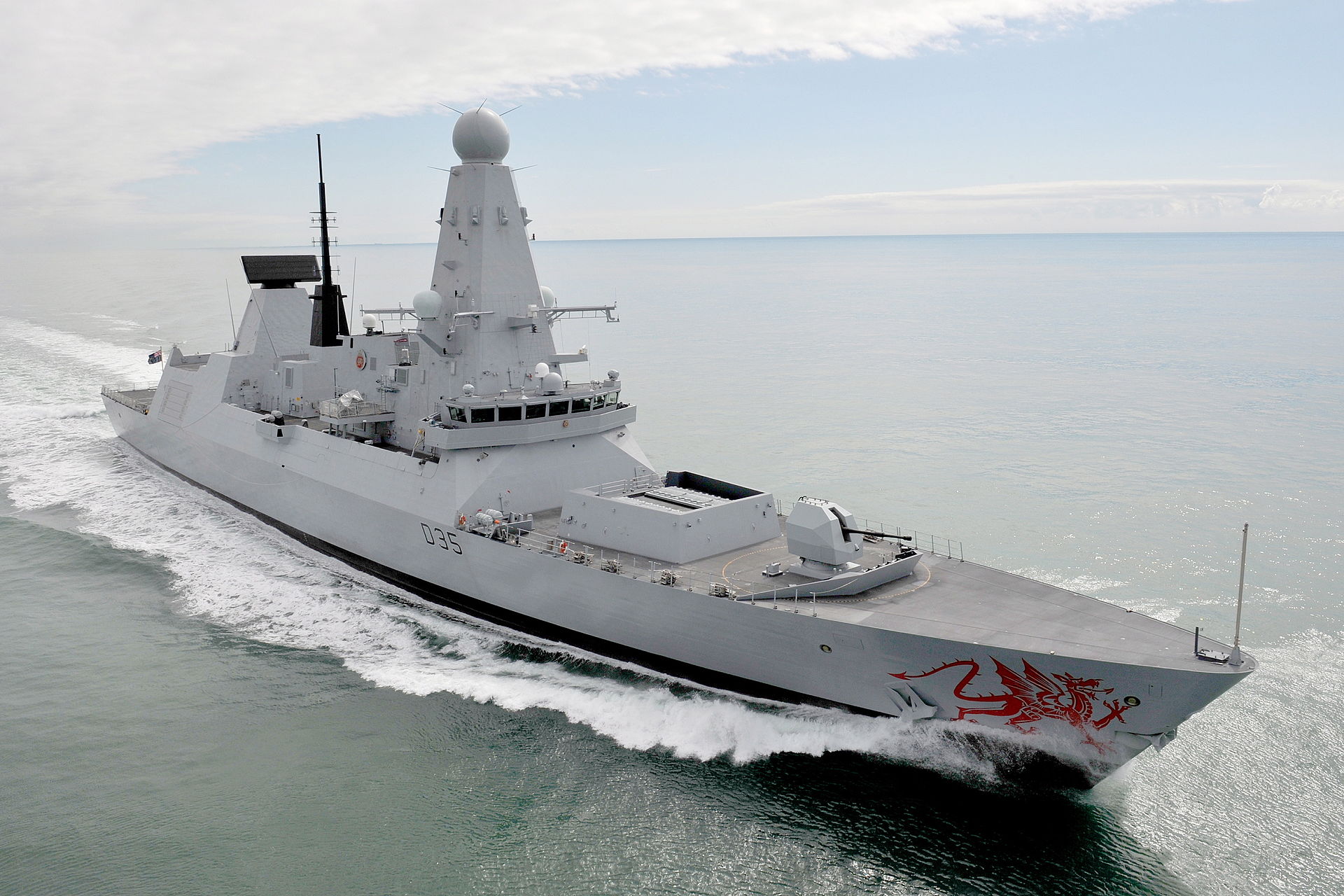
The Royal Navy’s contribution centers on HMS Dragon, a Type 45 air defense destroyer fitted with the Sea Viper missile system, which can launch eight missiles in under ten seconds and guide up to 16 simultaneously. The warship departed Portsmouth Harbour on 10 March and arrived in the Eastern Mediterranean to defend Cyprus, where Britain maintains sovereign base areas at Akrotiri and Dhekelia. Healey confirmed that air defense personnel at RAF Akrotiri had been boosted by 500.
Britain also allows the United States to use RAF bases at Diego Garcia in the Indian Ocean and Fairford in Gloucestershire for bombing missions against Iran, according to multiple reports. Diego Garcia itself came under Iranian fire on 21 March, when Tehran launched two intermediate-range ballistic missiles at the base — neither reached the target, with one malfunctioning in flight and the other intercepted, CNBC reported. The strike demonstrated that Iran’s missile reach extends far beyond the Gulf, putting the facility approximately 2,500 miles from Iranian launch sites.
Why Is Britain Expanding Its Gulf Presence Now?
The timing of Starmer’s announcement reflects three converging pressures. First, the volume of Iranian attacks on Gulf states has increased sharply as the war enters its fourth week. Saudi Arabia intercepted approximately 20 drones targeting its Eastern Province on 24 March alone, according to the Saudi Ministry of Defense, while Kuwait’s air defense alarms sounded at least seven times overnight, Al Jazeera reported. Since 28 February, Saudi forces have shot down more than 575 drones and 49 missiles, according to data compiled from MoD statements cited by multiple outlets.
Second, Saudi Arabia and the UAE have taken steps toward directly joining the conflict, according to a Wall Street Journal report published on 24 March. Saudi Arabia agreed to give the US military access to King Fahd Air Base in Taif, an apparent reversal after previously stating its bases could not be used to attack Iran. The UAE, meanwhile, closed an Iranian-state-linked hospital in Dubai and shut multiple Iranian schools, cutting off what officials described as institutions linked to the Islamic Revolutionary Guard Corps. The growing Gulf involvement increases the demand for allied air defense support.
Third, Iran has explicitly threatened to escalate attacks on Gulf energy and water infrastructure. On 23 March, Iran’s parliamentary speaker Mohammad Bagher Qalibaf warned that Tehran would consider “vital infrastructure across the region to be legitimate targets, including energy and desalination facilities critical for drinking water in Gulf nations,” if the United States struck Iranian power plants, Reuters reported. Iran’s Defense Council further warned that any attack on Iran’s coasts or islands would trigger mine-laying across all Gulf sea lanes, according to Time magazine.
The Drone Threat Saudi Arabia and Its Neighbours Face
The nature of the threat confronting Saudi Arabia and its neighbours has become clear over 25 days of sustained Iranian aerial attacks. Iran has deployed a combination of ballistic missiles, cruise missiles, and — most persistently — waves of low-cost drones, including Shahed-136 kamikaze drones that cost an estimated $20,000 to $50,000 each. Saudi Arabia downed 60 drones and intercepted three ballistic missiles targeting Riyadh on 22 March, in one of the heaviest single-day attacks of the conflict.
The cost asymmetry is severe. A single Patriot Advanced Capability-3 (PAC-3) interceptor costs between $2 million and $5.5 million, according to the Center for Strategic and International Studies. The Martlet missile fired by Rapid Sentry, by contrast, costs a fraction of that — estimated at around $30,000 per round according to defense industry analysts, making it a far more sustainable solution for the high-volume, low-cost drone threat that dominates the daily Iranian aerial campaign.
This is precisely the gap that Rapid Sentry is designed to fill. Rather than expending expensive Patriot or THAAD interceptors against $20,000 drones, the system provides what the RAF describes as “a credible hard-kill option against the drones that survive jamming, operate autonomously, or press directly toward aircraft shelters, fuel farms, or command nodes.” For the Gulf states, whose air defense inventories are being depleted at unprecedented rates, the arrival of a cost-effective drone-killing system addresses one of the war’s most pressing operational challenges.
The UAE has absorbed the heaviest single-country bombardment. Since the start of Iran’s retaliatory campaign, UAE air defense systems have engaged 352 ballistic missiles, 15 cruise missiles, and 1,789 drones, according to figures compiled by Al Jazeera. Bahrain has endured more than 385 Iranian strikes, according to Bahraini military data. Kuwait, despite its smaller profile, has faced repeated overnight attacks that have triggered civil defense alarms across the country.
Starmer Calls Cobra Meeting on Economic Fallout
Alongside the military announcements, Starmer convened an emergency Cobra committee meeting on Monday to address the war’s economic impact on Britain. The meeting brought together Chancellor Rachel Reeves, Foreign Secretary Yvette Cooper, Energy Secretary Ed Miliband, and the governor of the Bank of England, according to multiple UK media outlets including ITV News and the Cyprus Mail.
The economic backdrop is stark. Iran’s effective closure of the Strait of Hormuz — through which approximately 20 percent of global oil transit passed before the war — has pushed Brent crude oil to over $100 per barrel, with spikes above $119 earlier in March. The OPEC reference basket price averaged $112.35 per barrel in March, up from $67.90 in February, according to OPEC data. British motorists have already seen petrol prices rise, while mortgage rates have come under renewed pressure as markets price in higher-for-longer inflation driven by energy costs.
Starmer told reporters ahead of the Cobra session that the public had “already seen everyday prices for things like petrol and mortgages rise” and that his cabinet would discuss “what measures could be implemented to help ease these rising costs for the public.” The meeting aimed to map immediate support for families and businesses and to consider energy security contingencies.
The International Energy Agency’s executive director Fatih Birol underscored the urgency on Monday, warning at Australia’s National Press Club that the global economy faces a “major, major threat” from the war’s disruption to oil and gas flows. “No country will be immune to the effects of this crisis if it continues to go in this direction,” Birol said, according to NBC News. Shipping through the Strait of Hormuz has fallen by 95 percent since the war began, with just 138 commodity carrier crossings between 1 March and 23 March compared to peacetime norms, CNBC reported.
How Does This Fit Into Saudi Arabia’s Multinational Air Defense Shield?
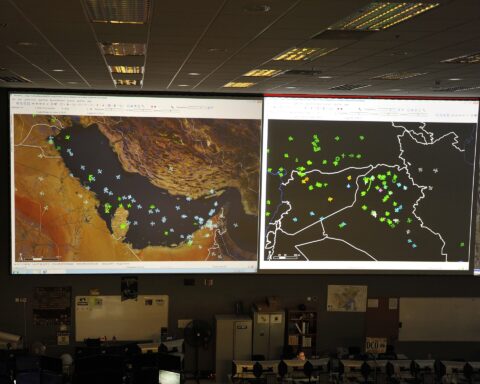
Britain’s latest deployments add another layer to the multinational air defense network that has formed over the Gulf since the war began — a coalition that Saudi Arabia’s pre-war alliance map did not anticipate. Greece deployed a Patriot battery that has intercepted Iranian missiles over Saudi territory. France has contributed military forces. Pakistan has deployed troops and air defense assets to the Kingdom. India and Pakistan have independently sent warships to escort oil tankers through contested waters, according to reporting by Al Jazeera and Reuters.
The UK contribution is distinct in two respects. First, Rapid Sentry fills the counter-drone gap that expensive American-made Patriot and THAAD systems were never designed to address. Patriot was built to defeat ballistic missiles and high-performance aircraft, not swarms of cheap UAVs. Second, Britain’s decision to distribute air defense missiles directly to Gulf states — rather than merely deploying its own forces — represents a deeper level of commitment, effectively integrating UK munitions into Gulf national defense stockpiles.
| Country | Contribution | Operational Focus |
|---|---|---|
| United States | Patriot, THAAD, Aegis BMD, fighter aircraft | Ballistic missile and air defense command |
| United Kingdom | Rapid Sentry, Typhoons, F-35Bs, HMS Dragon, Wildcat helicopters, air defense missiles | Counter-drone, fast-jet intercept, naval air defense |
| Greece | Patriot PAC-3 battery | Missile interception over Saudi territory |
| France | Military forces (details classified) | Air and naval defense |
| Pakistan | Troops and air defense systems | Ground defense and air defense augmentation |
| India | Warships | Maritime escort and tanker protection |
| South Korea | Naval vessels | Strait of Hormuz escort operations |
The practical question is whether the combined allied effort can keep pace with Iran’s rate of fire. Tehran has launched over 2,000 drones at Gulf targets alone in 25 days, according to UAE military data. Saudi Arabia’s Eastern Province, home to the vast majority of the Kingdom’s oil infrastructure including Ras Tanura and Jubail, remains the primary Iranian target set. The arrival of Rapid Sentry and additional missile stocks will bolster point defense of critical facilities, but the sheer volume of incoming fire — at times exceeding 50 drones in a single wave — continues to strain even the most capable systems.
Starmer acknowledged as much in his warning that Britain must plan for the war to continue “for some time.” At the same time, he urged Iran to seize what he described as “an opportunity for peace,” aligning himself with European allies who have advocated for diplomacy alongside military deterrence.
What Comes Next for UK Forces in the Gulf?
Britain’s military commitment to the Gulf now spans air, land, sea, and embedded advisory roles. The trajectory suggests further escalation is possible. Foreign Policy reported in early March that Iran’s drone threat was already exposing what the publication called “Britain’s shrinking military reach,” noting the strain on a defense establishment that has been cut to its smallest size since the Napoleonic Wars.
HMS Dragon’s deployment to the Eastern Mediterranean rather than the Persian Gulf itself reflects the limits of what Britain can project. The Type 45 destroyer is defending Cyprus and the RAF’s Akrotiri base, not operating in the Strait of Hormuz, where the US Navy has borne the primary burden of mine clearance and escort operations. Whether Britain will send additional warships deeper into the Gulf remains uncertain.
The distribution of air defense missiles to Gulf partners may prove the most consequential element of Monday’s announcement. Gulf states have fired hundreds of interceptors over the past 25 days, and global interceptor stockpiles are under unprecedented pressure. Britain’s willingness to transfer munitions directly signals a recognition that the war’s duration and intensity demand shared logistical sacrifice, not just symbolic solidarity.
For Saudi Arabia specifically, the British deployments add to a defense posture that has evolved rapidly since 28 February. The Kingdom entered the war relying primarily on American-supplied Patriot and THAAD batteries. Within 25 days, it has acquired a Greek Patriot battery, Pakistani ground forces, and now British short-range air defense systems and embedded airspace specialists. Crown Prince Mohammed bin Salman, who has been speaking regularly with both Trump and Starmer, reportedly views the multinational defense architecture as both a military necessity and a political signal that Saudi Arabia does not face Iran alone.
Frequently Asked Questions
What air defense systems is Britain sending to Saudi Arabia?
Britain is deploying short-range air defense systems to Saudi Arabia, Kuwait, and Bahrain. Defence Minister John Healey specifically named the Rapid Sentry anti-drone system for Kuwait, describing it as “battle-tested.” Britain is also distributing air defense missiles to Gulf partners and embedding airspace specialists in the three countries. The Rapid Sentry fires the Thales Martlet missile with a range of up to eight kilometres.
Why is Britain deploying these systems now?
The deployments respond to 25 consecutive days of Iranian drone and missile attacks on Gulf states since the war began on 28 February 2026. Saudi Arabia, Kuwait, and Bahrain have absorbed thousands of incoming drones and hundreds of ballistic missiles. PM Starmer warned that Britain must prepare for a conflict that could last “for some time,” signaling that the military commitment is not a short-term measure.
How does Rapid Sentry compare to Patriot and THAAD?
Rapid Sentry fills a different niche. Patriot and THAAD are designed to defeat ballistic missiles and high-performance aircraft, with interceptors costing $2 million to $5.5 million each. Rapid Sentry targets low-cost drones using the Martlet missile at an estimated $30,000 per round, making it far more cost-effective against the swarms of Shahed-136 drones that Iran has used to saturate Gulf air defenses.
How many UK military jets are currently in the Gulf?
Defence Minister Healey told Parliament that Britain has more military jets in the Gulf region “than at any time in the last 15 years.” The force includes Typhoon FGR4 fighters at Al Udeid airbase in Qatar — doubled from four to eight since the war began — and F-35B Lightning stealth fighters at RAF Akrotiri in Cyprus. UK pilots have flown nearly 900 hours of defensive missions since 28 February.
Has Iran attacked any British military positions?
Iran fired two intermediate-range ballistic missiles at Diego Garcia, a joint US-UK military base in the Indian Ocean, on 21 March. Neither reached the target — one malfunctioned in flight and the other was intercepted, the UK confirmed. The attack demonstrated missile range capabilities that Tehran had not previously acknowledged, placing most of Western Europe within Iran’s strike envelope at approximately 2,500 miles from launch sites.