
VIENNA — The heads of the International Atomic Energy Agency and Russia’s state nuclear corporation Rosatom held an emergency phone call on March 23 to discuss the safety of Iran’s Bushehr nuclear power plant after a projectile struck a structure just 350 metres from the only operating nuclear reactor in the Middle East. IAEA Director General Rafael Mariano Grossi warned that an attack on a live reactor would cross “the reddest line of all” in nuclear safety, as Rosatom’s Alexey Likhachev disclosed that 72 tons of fissile material and 210 tons of spent nuclear fuel remain on site — a radiological inventory that, if breached, could contaminate the entire Persian Gulf basin, including Saudi Arabia’s eastern coastline and its critical desalination infrastructure.
The call, confirmed by the IAEA and reported by Anadolu Agency, came five days after an unidentified projectile destroyed a metrological service building within the Bushehr compound on March 18, rattling the approximately 450 Russian technicians still on site and prompting renewed demands for a protected zone around the facility. For Saudi Arabia, which draws 70 percent of its drinking water from Gulf-coast desalination plants and sits fewer than 300 kilometres across the water from Bushehr, the stakes extend far beyond Iran’s borders.
Table of Contents
- What Hit Bushehr and How Close Was It to the Reactor?
- Why Has Russia Called for a Safety Island Around Bushehr?
- What Does Bushehr’s Nuclear Fuel Inventory Mean for the Gulf?
- How Would a Nuclear Accident at Bushehr Affect Saudi Arabia?
- The Evacuation That Has Already Begun
- What Has the IAEA Done to Prevent a Nuclear Disaster?
- Saudi Arabia’s Own Nuclear Ambitions Amid the War
- Timeline of Threats to Bushehr Since the War Began
- Frequently Asked Questions
What Hit Bushehr and How Close Was It to the Reactor?
On March 18, at 15:11 GMT, an unidentified projectile struck the grounds of Iran’s Bushehr Nuclear Power Plant, destroying a structure belonging to the facility’s metrological service approximately 350 metres from the VVER-1000 pressurised water reactor. The IAEA confirmed the incident in a statement, noting that “a structure 350 metres from the Bushehr NPP reactor was hit and destroyed.” No casualties were reported and no damage to the reactor itself or its core safety systems was detected.
Iran’s Atomic Energy Organization attributed the strike to the ongoing US-Israeli military campaign, though neither Washington nor Jerusalem confirmed responsibility. Israeli military officials told reporters they were “unaware” of any operation targeting the plant. Grossi assessed that the projectile appeared to have been a drone, and that the physical damage was “not very significant” — but he emphasised that the proximity to an operating reactor made the incident gravely concerning regardless of the weapon’s size.
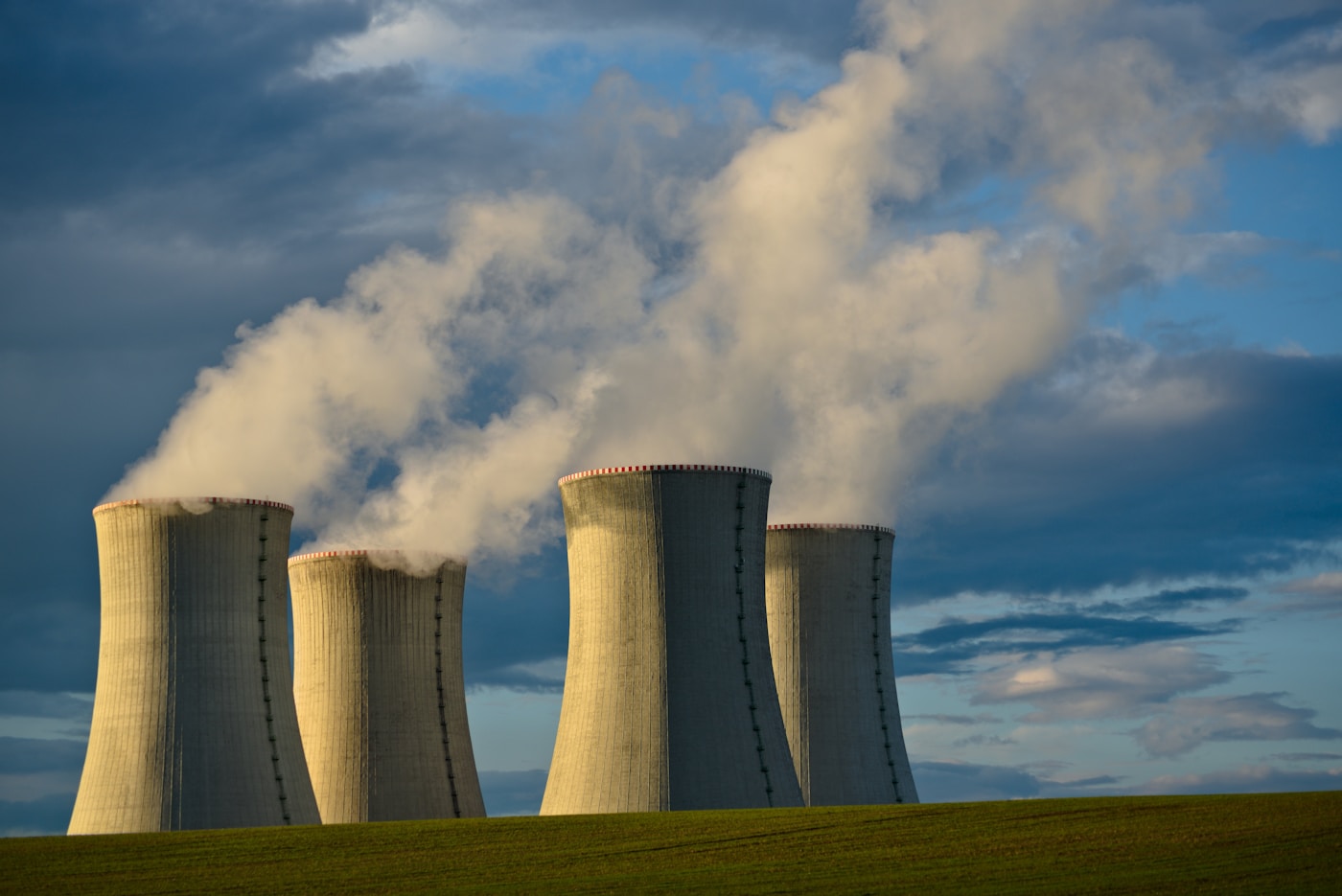
The Bushehr plant is a 1,000-megawatt VVER-1000 V-446 model light-water reactor, connected to Iran’s national grid since 2011. It was built by Russia’s Atomstroyexport — a Rosatom subsidiary — on a site originally started by the German firm Kraftwerk Union in the 1970s before the Islamic Revolution interrupted construction. The plant sits 17 kilometres southeast of the city of Bushehr on Iran’s Persian Gulf coast, approximately 1,200 kilometres south of Tehran, between the fishing villages of Halileh and Bandargeh.
Unlike the enrichment facilities at Natanz and Fordow, which have been primary targets of US-Israeli strikes since the war began on February 28, Bushehr contains no weapons-grade material. It is, however, the only operating nuclear power reactor in the region — and operating reactors present vastly greater radiological risk than dormant or decommissioned facilities because their cores contain live nuclear fission reactions.
Why Has Russia Called for a Safety Island Around Bushehr?
On March 19, a senior Russian official called for the creation of a designated safety zone — described as a “safety island” — around the Bushehr plant to prevent what Rosatom termed a potential “regional disaster.” The demand, reported by Al-Monitor and Al Arabiya, came two days after the metrological service building was destroyed and reflected escalating anxiety in Moscow about the security of its most significant nuclear export project in the Middle East.
Rosatom head Alexey Likhachev was blunt about the consequences of a direct strike on the reactor. In consultations with the IAEA, he disclosed that the site contains 72 tons of fissile material and 210 tons of spent nuclear fuel. “If an incident were to occur, it would be at least regional in scale and would affect a large number of countries in the Middle East,” Likhachev said, according to Russian state media. “None of the parties to the conflict would avoid radiation exposure.”
Russia’s concern is not purely technical. Moscow built the reactor, supplies its fuel, manages its spent fuel under bilateral agreements, and maintains roughly 450 personnel at the site. Before the war, an additional 250 Russian employees and their families were stationed there; most were evacuated in two waves during March. The Kremlin’s diplomatic exposure is acute — any radiation release from a Russian-built, Russian-fuelled facility would implicate Moscow in a humanitarian catastrophe affecting its own Gulf trading partners.
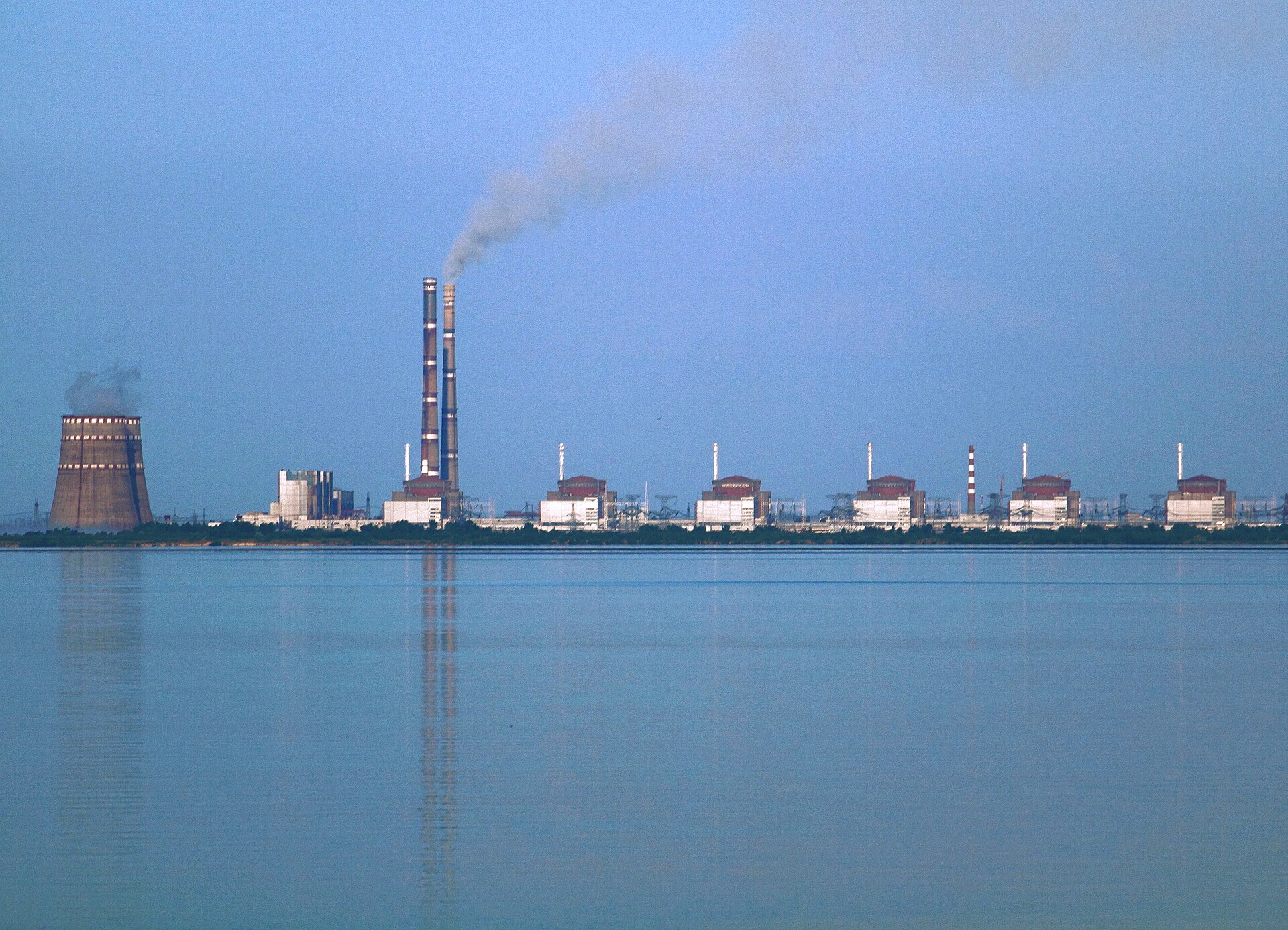
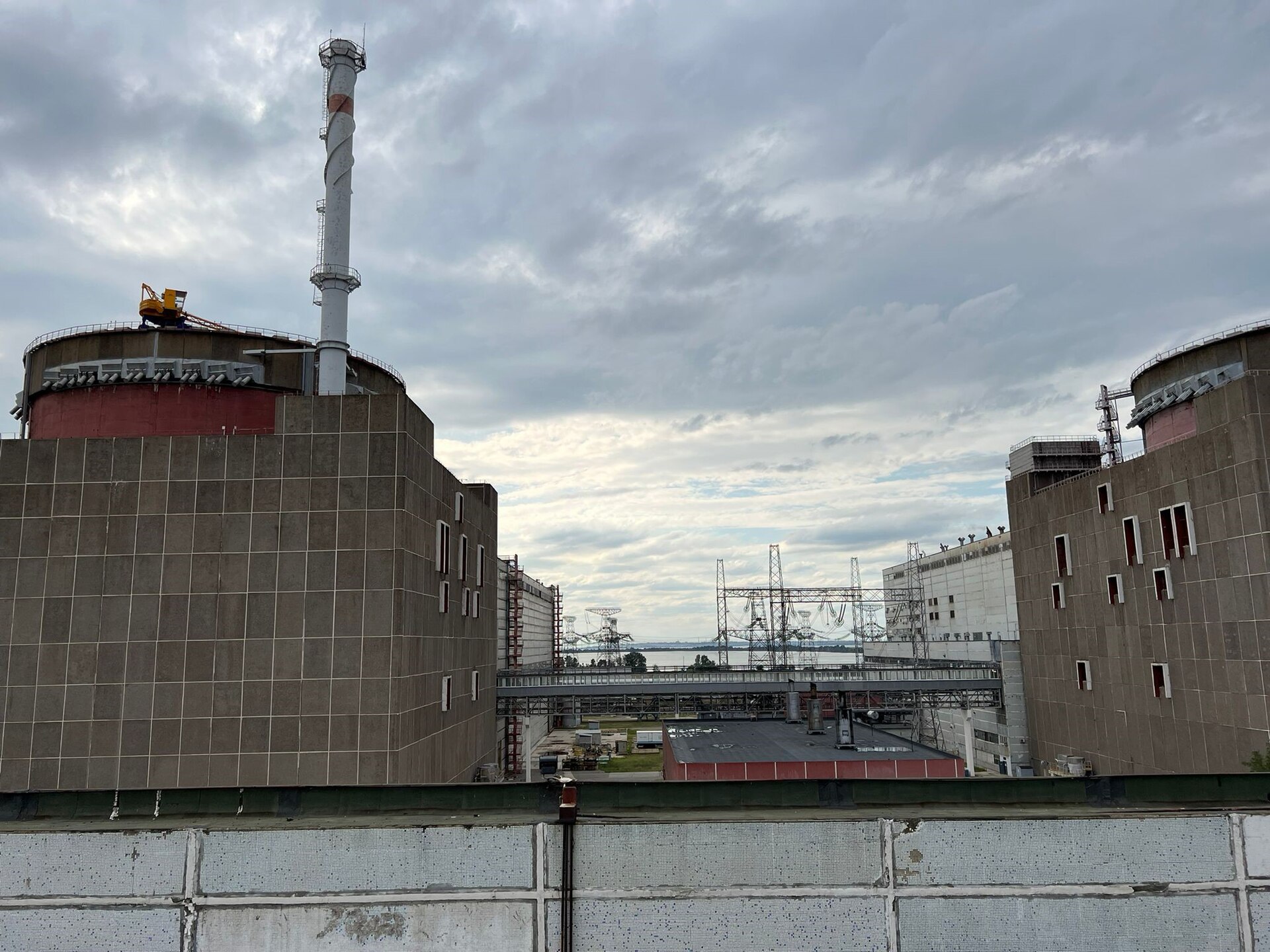
The “safety island” concept mirrors arrangements the IAEA attempted — with mixed success — around Ukraine’s Zaporizhzhia Nuclear Power Plant during the Russian invasion. That facility, which uses the same VVER reactor design as Bushehr, endured months of shelling that raised global alarm about nuclear safety during armed conflict. The Zaporizhzhia precedent has shaped Grossi’s urgency on Bushehr, and both facilities operate under the same seven IAEA “indispensable pillars” for nuclear safety during war, a framework Grossi established in 2022.
What Does Bushehr’s Nuclear Fuel Inventory Mean for the Gulf?
The 282 tons of nuclear material at the Bushehr site — 72 tons of fissile fuel in or near the reactor core, plus 210 tons of spent fuel in storage pools — represent a radiological hazard that dwarfs any conventional weapon in the current conflict. A 2021 study published in the journal Science and Global Security modelled the consequences of a spent fuel pool fire at Bushehr and found that prevailing Gulf winds could carry radioactive contamination across the Persian Gulf within hours, reaching the coastlines of Kuwait, Bahrain, Qatar, the United Arab Emirates, and Saudi Arabia.
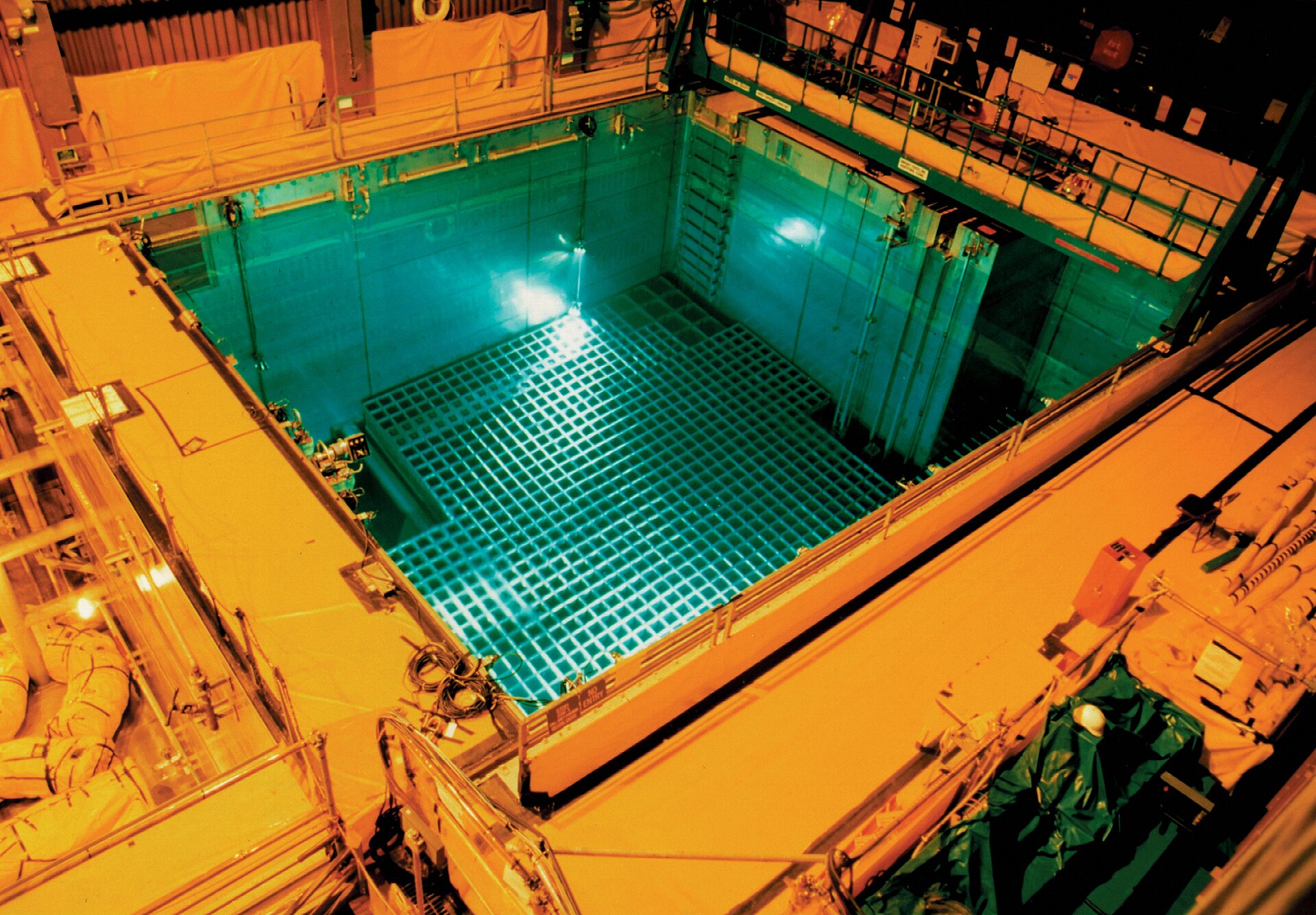
Spent fuel pools are considered by nuclear safety experts to be among the most vulnerable points at any power plant. Unlike the reactor core itself, which sits inside a reinforced concrete containment dome designed to withstand significant impact, spent fuel pools are typically housed in less fortified structures. The spent fuel requires continuous water circulation for cooling; if a strike ruptured the pool or disabled its cooling systems, the fuel assemblies could overheat, ignite, and release a plume of caesium-137, strontium-90, and other long-lived radioactive isotopes into the atmosphere.
The Bushehr plant’s 3-gigawatt thermal capacity generates heat that must be managed even during shutdown. A loss of external power — not unlikely given that US-Israeli strikes have targeted Iranian energy infrastructure across at least 26 of Iran’s 31 provinces — could compromise both reactor cooling and spent fuel pool circulation. Diesel backup generators can sustain emergency cooling for a limited period, but the Fukushima disaster in 2011 demonstrated how quickly cascading failures can overwhelm backup systems when external power is lost and primary cooling is disrupted simultaneously.
| Material | Location | Quantity | Primary Risk |
|---|---|---|---|
| Fissile fuel | Reactor core and storage | 72 tons | Core meltdown if cooling fails |
| Spent nuclear fuel | On-site storage pools | 210 tons | Pool fire releasing caesium-137 |
| Total nuclear material | Bushehr complex | 282 tons | Regional contamination plume |
How Would a Nuclear Accident at Bushehr Affect Saudi Arabia?
Saudi Arabia’s Eastern Province — home to Aramco’s headquarters, the Ghawar oil field, and the bulk of the Kingdom’s petrochemical industry — lies directly across the Persian Gulf from Bushehr. The distance from the reactor to the nearest Saudi coastal installations near Khafji, Al Safaniyah, and Manifah is approximately 250 to 300 kilometres, well within the modelled fallout zones of a significant radiological release.
The most immediate threat to Saudi Arabia would be contamination of its desalination infrastructure. The Kingdom depends on desalination for approximately 70 percent of its drinking water, according to the Saudi Water Authority. Many of the country’s largest desalination plants — including the Ras al-Khair facility, one of the world’s biggest — draw intake water directly from the Gulf. A radioactive plume drifting south across the Gulf could contaminate intake water, forcing shutdowns at facilities that supply millions of people in Riyadh, Dammam, and Khobar.
Saudi Arabia has conducted radiological monitoring of its Gulf coast near Bushehr for years. A peer-reviewed study published in Marine Pollution Bulletin established baseline radiation readings along the Saudi Arabian Gulf coastline specifically to track potential contamination from the Bushehr plant during normal operations. These monitoring stations would be the first line of detection in an accident scenario.
GCC leaders have privately expressed alarm about the Bushehr risk since the war began, according to diplomats cited by CNN. The concern is not hypothetical: Iran has already threatened Gulf desalination plants as a retaliatory measure, demonstrating willingness to target water infrastructure. A nuclear contamination event — even an unintentional one caused by a stray projectile — could render parts of the Gulf coast uninhabitable and trigger the evacuation of population centres in multiple countries.
A detailed assessment of the nuclear disaster risk Bushehr poses to Gulf desalination infrastructure and Saudi water security examines how the reactor’s 282-ton radiological inventory could contaminate seawater intakes across the entire western Gulf coastline within hours of a breach.
| City | Country | Distance from Bushehr (km) | Key Infrastructure at Risk |
|---|---|---|---|
| Kuwait City | Kuwait | ~370 | Doha desalination, Shuaiba power |
| Manama | Bahrain | ~350 | Hidd desalination, US Fifth Fleet |
| Dammam/Dhahran | Saudi Arabia | ~400 | Aramco HQ, Ras al-Khair desalination |
| Doha | Qatar | ~500 | Ras Laffan LNG, desalination |
| Abu Dhabi | UAE | ~750 | Taweelah desalination, Barakah NPP |
The Evacuation That Has Already Begun
Russia began preparing to withdraw non-essential personnel from Bushehr within days of the war’s outbreak on February 28. By March 9, Rosatom confirmed it was preparing for “several waves of evacuation,” according to reports by the Moscow Times and MarketScreener. The first wave removed approximately 100 staff and their family members. The second evacuation, conducted overnight between March 10 and 11, removed another 150 specialists, according to Anadolu Agency.
Approximately 450 Russian personnel remain at the plant, described by Rosatom as essential for maintaining reactor operations and safety systems. These technicians cannot leave without either shutting down the reactor or transferring operational control entirely to Iranian counterparts — a step neither Moscow nor Tehran has been willing to take. The reactor continues to operate and supply electricity to Iran’s battered grid, making it both strategically valuable and operationally vulnerable.
The partial evacuation itself signals the severity of the threat assessment. Rosatom has operated nuclear power plants in conflict-adjacent environments before — most notably at Zaporizhzhia in Ukraine — but the pace and scale of the Bushehr withdrawals suggest Moscow considers the risk of a direct strike or collateral damage to be more than theoretical. The March 18 projectile impact, which came within the facility’s perimeter, validated those fears.

What Has the IAEA Done to Prevent a Nuclear Disaster?
The IAEA’s response has unfolded in three phases. In the first days of the conflict, Grossi invoked the agency’s seven “indispensable pillars” for protecting nuclear facilities during armed conflict — a framework originally developed for Zaporizhzhia — and called on all parties to respect the physical integrity of nuclear installations. On March 13, Grossi held consultations with Russian Defence Ministry officials, described by Sputnik as “very important” for nuclear safety coordination.
After the March 18 projectile strike, Grossi escalated his language dramatically. “An accident on an operating nuclear power plant would be something very, very serious,” he said. “This is the reddest line of all that you have in nuclear safety. The possibility of dispersion in the atmosphere of radioactivity is very high if you get to the core of the reactor.”
The March 23 phone call between Grossi and Likhachev — the event that prompted this report — focused on what the IAEA described as “recent concerning reports” about military activity near Bushehr. Grossi “recalled that no military action should put at risk the physical integrity and safety of Nuclear Power Plants and their operating staff, who must be able to carry out their vital work in safe conditions,” the agency said in a statement.
The IAEA has not, however, been able to conduct an on-site inspection of Bushehr since the war began. Available satellite imagery suggests the March 18 damage is contained to the auxiliary structure and has not affected the reactor or its safety systems. But without on-the-ground verification, the agency is relying on Iranian and Russian reporting — a limitation that Grossi has acknowledged presents challenges for independent assessment.
An accident on an operating nuclear power plant would be something very, very serious. This is the reddest line of all that you have in nuclear safety.
Rafael Mariano Grossi, IAEA Director General, March 2026
Saudi Arabia’s Own Nuclear Ambitions Amid the War
The Bushehr crisis arrives at a moment when Saudi Arabia’s own nuclear energy programme is accelerating. Crown Prince Mohammed bin Salman has stated that the Kingdom will pursue uranium enrichment if Iran acquires nuclear weapons capability — a red line that the war has simultaneously made more relevant and more complicated. Saudi Arabia is working with multiple international partners on plans for two nuclear power reactors, with bids expected from South Korean, French, and Chinese vendors.
The Bushehr incident underscores the vulnerability that nuclear power infrastructure introduces into the Gulf security equation. A Saudi reactor on the Gulf coast — the most likely location given the need for seawater cooling — would face precisely the same risks that Bushehr now confronts: proximity to adversaries, exposure to missile and drone attack, and the potential for catastrophic radiological release in a region where tens of millions of people live within fallout range. The scale of that risk is explored in a separate analysis of how a Bushehr meltdown could threaten three hundred and fifty metres from nuclear catastrophe across the Gulf.
For MBS and Saudi planners, the lesson from Bushehr may be that nuclear power in a contested region requires either total air superiority over the plant’s airspace — a condition Saudi Arabia cannot guarantee even over its own territory, given the daily Iranian drone and missile barrages — or deep underground siting, which is technically feasible for small modular reactors but prohibitively expensive and operationally constrained for conventional large-scale plants.
Timeline of Threats to Bushehr Since the War Began
| Date | Event | Source |
|---|---|---|
| February 28 | US-Israeli strikes begin; explosions reported kilometres from Bushehr’s defence perimeter | Rosatom / Moscow Times |
| March 3 | Rosatom CEO Likhachev warns of “rising threat” to Bushehr; discloses 72 tons of fissile material on site | Moscow Times |
| March 9 | Rosatom announces preparation for “several waves of evacuation” | MarketScreener |
| March 10-11 | Second evacuation wave: 150 Russian staff and families depart Bushehr overnight | Anadolu Agency |
| March 13 | Grossi holds consultations with Russian Defence Ministry on nuclear safety | Sputnik / GlobalSecurity |
| March 17 | IAEA confirms structure 350 metres from reactor hit and destroyed by projectile | IAEA / World Nuclear News |
| March 19 | Russia calls for “safety island” around Bushehr; Rosatom details 210 tons of spent fuel on site | Al-Monitor / US News |
| March 23 | Grossi and Likhachev hold emergency phone call; IAEA reiterates seven safety pillars | Anadolu Agency / IAEA |
The frequency and proximity of military activity near Bushehr has escalated throughout March. While no party has acknowledged deliberately targeting the plant, the March 18 strike demonstrated that the facility’s perimeter is not immune to the broader conflict. With US-Israeli strikes hitting infrastructure across 26 of Iran’s 31 provinces, the risk of an accidental hit — or deliberate escalation — grows with each day the war continues.
Frequently Asked Questions
Has Bushehr nuclear plant been directly hit during the Iran war?
A projectile struck a metrological service building 350 metres from the operating reactor on March 18, 2026, destroying the structure. No damage to the reactor itself was reported, and radiation levels remained normal according to Rosatom. The IAEA confirmed the incident and warned it violated its nuclear safety principles for armed conflict, with Director General Grossi calling it the crossing of the “reddest line.”
Could a nuclear accident at Bushehr affect Saudi Arabia?
Saudi Arabia’s Eastern Province lies approximately 250 to 400 kilometres across the Gulf from Bushehr. Scientific modelling published in Science and Global Security shows that a significant radiological release could contaminate Gulf waters within hours, threatening Saudi desalination plants that provide 70 percent of the Kingdom’s drinking water. Coastal installations near Khafji, Al Safaniyah, and the Ras al-Khair desalination plant would be particularly exposed.
How much nuclear material is stored at Bushehr?
Rosatom disclosed that the site holds 72 tons of fissile nuclear fuel — in or near the reactor core — and 210 tons of spent nuclear fuel in on-site storage pools, totalling 282 tons of radioactive material. Rosatom CEO Likhachev warned that a breach of this inventory would cause contamination “at least regional in scale,” affecting multiple countries across the Middle East.
Why is Russia evacuating staff from Bushehr?
Russia has withdrawn approximately 250 of its 700 personnel from Bushehr in two evacuation waves during March 2026, citing the escalating military threat. About 450 essential staff remain to maintain reactor operations and safety systems. The evacuations reflect Moscow’s assessment that the risk of direct or collateral damage to the plant has moved from theoretical to operational since the war began on February 28.
What is the IAEA doing about Bushehr?
The IAEA has invoked its seven “indispensable pillars” for nuclear safety during armed conflict, held consultations with Russian officials, and repeatedly warned belligerents against military activity near the plant. On March 23, Director General Grossi called Rosatom chief Likhachev to discuss “recent concerning reports.” However, the IAEA has not been able to conduct an on-site inspection of Bushehr since the war began, limiting its ability to independently verify conditions.