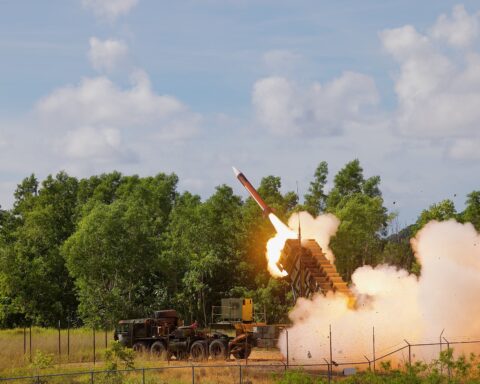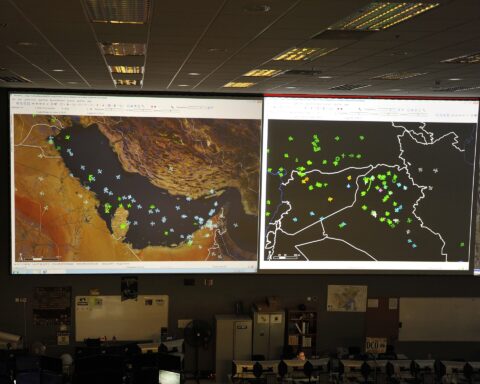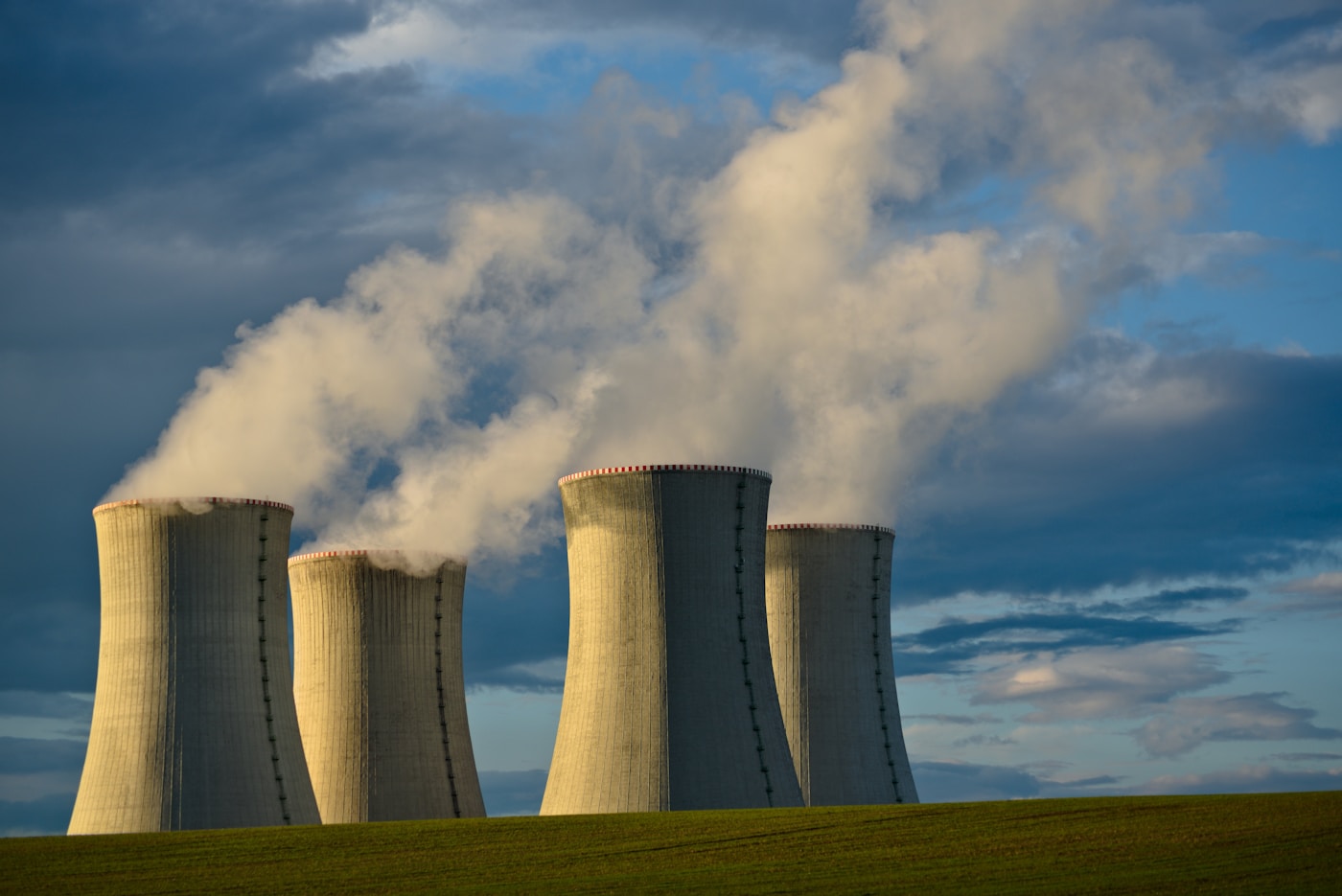

BUSHEHR — A projectile struck a structure three hundred and fifty metres from the only operating nuclear reactor on the Persian Gulf on March 18, and the governments most at risk from a radiological disaster — Saudi Arabia, Kuwait, Qatar, Bahrain, and the United Arab Emirates — had no coordinated response plan ready. The incident at Iran’s Bushehr Nuclear Power Plant, confirmed by the International Atomic Energy Agency and condemned by Russia’s Rosatom, brought the 2026 Iran war to the threshold of a catastrophe that would dwarf every oil disruption, every missile barrage, and every drone strike of the past three weeks combined.
The reactor contains 72 tons of active nuclear fuel and 210 tons of spent fuel — roughly 282 tons of material capable, under worst-case conditions, of contaminating the Gulf’s water supply for decades. Prevailing northwesterly winds carry airborne particles directly from Bushehr across the shallow Persian Gulf toward Kuwait, Bahrain, Qatar, and Saudi Arabia’s Eastern Province, where more than four million people depend on desalinated seawater drawn from those same waters. Rosatom’s chief executive, Alexei Likhachev, warned that any serious accident would be “at least regional in scale” and that “none of the parties to the conflict would avoid radiation exposure.” Yet as of March 23, no Gulf state has publicly released a nuclear emergency evacuation plan for its civilian population, and the IAEA has acknowledged it lacks any mechanism to enforce a ceasefire around the plant.
Table of Contents
- What Happened at Bushehr on March 18?
- How Close Did the Projectile Come to the Reactor Core?
- What Is Inside the Bushehr Nuclear Facility?
- The Zaporizhzhia Precedent That Nobody in the Gulf Wants to Repeat
- Where Would the Radiation Go?
- The Gulf’s Water Supply Sits Downwind of a Reactor at War
- Russia Built the Reactor and Cannot Protect It
- Can the IAEA Protect Bushehr?
- The Gulf Nuclear Proximity Risk Matrix
- How Prepared Is Saudi Arabia for a Nuclear Emergency?
- Why the Gulf’s Greatest Threat Is Not Oil
- Frequently Asked Questions
What Happened at Bushehr on March 18?
An unidentified projectile struck and destroyed an auxiliary structure within the Bushehr Nuclear Power Plant complex on the evening of Tuesday, March 18, 2026. The IAEA confirmed the impact site was approximately 350 metres from the VVER-1000 reactor building — the sole operating nuclear power reactor in the Middle East outside of Israel’s Dimona facility and the UAE’s Barakah plant. No casualties were reported. Radiation levels remained normal. The reactor itself suffered no structural damage.
The incident occurred on the twenty-first day of the US-Israeli military campaign against Iran, which began on February 28. Neither Washington nor Tel Aviv claimed responsibility for the strike, and Tehran declined to identify the type of munition. The IAEA’s Director General, Rafael Grossi, issued an extraordinary statement within hours, calling the event “something very, very serious” and warning that a direct hit on an operating reactor would cross “the reddest line of all that you have in nuclear safety.”
The response from Gulf capitals was notably muted. Saudi Arabia’s Foreign Ministry, which had expelled Iran’s military attaché just three days later over separate missile and drone attacks, made no public statement about the Bushehr incident. Kuwait, which lies closer to Bushehr than any other Gulf capital, issued a generic call for “all parties to exercise restraint around critical infrastructure.” Qatar’s Prime Minister, Sheikh Mohammed bin Abdulrahman Al Thani, was the sole Gulf leader to address the nuclear dimension directly, warning that an attack on Iran’s nuclear facilities could “entirely contaminate” Persian Gulf waters.
The restraint of the Gulf response did not reflect the magnitude of the threat. It reflected the absence of any established protocol for what to do when a nuclear reactor in a neighbouring country comes under fire during a war you did not start.
How Close Did the Projectile Come to the Reactor Core?
The 350-metre gap between the impact site and the reactor building is both a comfort and a warning. In nuclear safety terms, 350 metres is an extraordinarily narrow margin. The exclusion zone around Chernobyl extends 30 kilometres. The evacuation advisory radius for a reactor accident under IAEA guidelines begins at 3 to 5 kilometres. The VVER-1000 reactor’s reinforced containment dome at Bushehr is designed to withstand seismic events and internal pressure accidents, but it was not engineered to survive a direct hit from a precision-guided munition or ballistic missile.
Rosatom has confirmed that the Bushehr 1 reactor was operating at full capacity at the time of the strike. A VVER-1000 pressurised water reactor operates with coolant temperatures exceeding 320 degrees Celsius and pressures of approximately 160 atmospheres. A breach of the primary coolant loop — whether from a direct strike, shrapnel damage, or loss of external power supply — would initiate a loss-of-coolant accident, the same category of event that produced the Fukushima Daiichi disaster in 2011.
The March 18 projectile destroyed what Iranian authorities described as an “ancillary building.” The IAEA has not disclosed the building’s function. In a typical VVER plant layout, structures within 350 metres of the reactor include cooling water intake facilities, electrical switchyard buildings, backup diesel generator houses, and spent fuel handling areas. Damage to any of these would compromise the reactor’s safety systems without directly breaching the containment dome — a scenario that nuclear engineers describe as a “beyond-design-basis event” precisely because it was never anticipated in the original safety analysis.
What Is Inside the Bushehr Nuclear Facility?
Bushehr contains approximately 282 tons of nuclear material distributed across two locations within the plant. The active reactor core holds 72 tons of uranium fuel enriched to approximately 3.5 percent, arranged in 163 fuel assemblies. The spent fuel pool, located in an elevated structure 7.45 metres above ground level inside the reactor building, contains approximately 210 tons of irradiated fuel assemblies cooled by circulating water.
The spent fuel pool represents the greater radiological hazard. Research published in Science and Global Security estimated that the steady-state inventory of caesium-137 in Bushehr’s spent fuel pool could reach 2,600 petabecquerels (PBq) — more than ten times the amount of caesium-137 released during the Chernobyl disaster in 1986, which deposited approximately 85 PBq across Europe. The pool’s elevated design, similar to the pools at Fukushima Daiichi, means that a loss of cooling water — whether from a structural breach, loss of electrical power, or deliberate attack — could expose spent fuel rods to air within hours, initiating a zirconium fire that would disperse radioactive material into the atmosphere.
| Parameter | Specification |
|---|---|
| Reactor type | VVER-1000 (pressurised water reactor) |
| Electrical capacity | 915 MWe |
| Grid connection | September 2011 |
| Builder/operator | Rosatom (Russia) / AEOI (Iran) |
| Active fuel load | 72 tons |
| Spent fuel inventory | ~210 tons |
| Cs-137 in spent fuel pool | ~2,600 PBq (estimated) |
| Spent fuel pool elevation | 7.45 metres above ground |
| Units under construction (Phase II) | 2 x VVER-1000 (18% complete, suspended) |
| Rosatom staff on site (March 2026) | ~480 (after two evacuations) |
| Distance to nearest Gulf capital (Kuwait City) | ~270 km across the Gulf |
| Distance to Tehran | ~1,200 km |
The Bushehr complex also includes the partially constructed Phase II expansion — two additional VVER-1000 units that were 18 percent complete when Rosatom suspended all construction work in early March 2026. While these units contain no nuclear fuel, the construction site includes heavy equipment, excavated foundations, and partially assembled containment structures that could generate radiological hazards if damaged alongside the operating reactor.
A critical detail: Bushehr sits closer to the capitals of five Gulf states than it does to Tehran. Kuwait City is approximately 270 kilometres across the water. Manama, Bahrain’s capital, is roughly 350 kilometres away. Doha lies approximately 450 kilometres to the south. Riyadh is 750 kilometres distant, but Saudi Arabia’s Eastern Province cities of Dammam, Dhahran, and Al Khobar are just 400 kilometres from Bushehr — and those cities house the Kingdom’s largest concentration of desalination plants and petrochemical facilities.
The Zaporizhzhia Precedent That Nobody in the Gulf Wants to Repeat
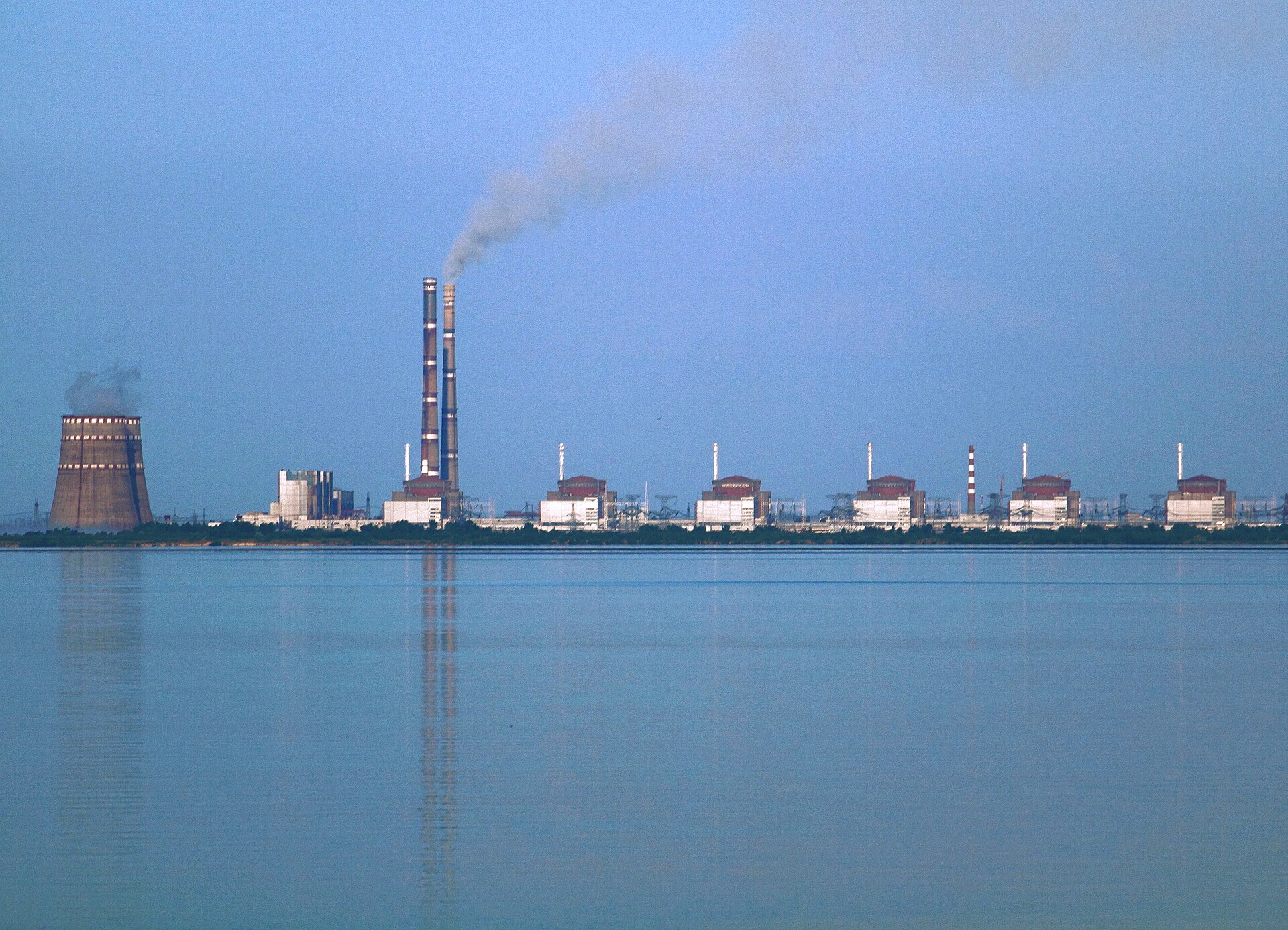
The Zaporizhzhia Nuclear Power Plant in southeastern Ukraine became the first operational nuclear facility to be seized during an active armed conflict when Russian forces attacked and occupied it on March 4, 2022. Four years later, the plant remains under Russian military control, its six VVER-1000 reactors in cold shutdown, its external power supplies severed at least eleven times, and its safety status described by the IAEA as “highly precarious.”
Zaporizhzhia established a legal and operational precedent that the Gulf now faces. The IAEA responded to the Ukrainian crisis by formulating its “Seven Indispensable Pillars of Nuclear Safety” — principles governing the physical integrity, safety systems, staff operations, supply chains, radiation monitoring, communication, and transport routes required to maintain a nuclear facility in a conflict zone. By the IAEA’s own assessment, every one of those seven pillars was violated at Zaporizhzhia. Four years into the crisis, no mechanism exists to compel compliance.
Bushehr’s situation differs from Zaporizhzhia in three respects that make it potentially more dangerous. Zaporizhzhia’s reactors were shut down before the most intense fighting around the plant. Bushehr was operating at full power when the projectile struck. Zaporizhzhia’s spent fuel pools sit at ground level within robust containment structures. Bushehr’s pool is elevated, increasing the risk of water loss from structural damage. And Zaporizhzhia is located in an agricultural inland region where contamination would affect soil and groundwater. Bushehr sits on the coast of a semi-enclosed sea that six nations use as their primary source of drinking water.
“An accident on an operating nuclear power plant would be something very, very serious. This is the reddest line of all that you have in nuclear safety.”Rafael Grossi, Director General of the IAEA, March 18, 2026
Where Would the Radiation Go?
Atmospheric dispersion modelling conducted by researchers at Princeton University and the American University of Beirut, published in Science and Global Security in 2021, mapped the probable distribution of caesium-137 from a hypothetical spent fuel fire at Bushehr across the Gulf region. The study used the HYSPLIT transport and dispersion model with twenty years of meteorological data to generate probability maps showing which cities would face contamination above the IAEA’s 1.5 megabecquerel per square metre threshold — the level that triggers mandatory relocation orders.
The findings are sobering. In approximately two percent of meteorological scenarios, the Iranian city of Ahvaz (population 1.3 million) would receive contamination above the relocation threshold. Shiraz (population 1.9 million), Iran’s cultural capital located 250 kilometres east, faces the highest probability of severe contamination. But the modelling also shows significant probabilities of contamination reaching across the Gulf. Kuwait City, Basrah, and the Saudi Arabian coastline from Khafji to Jubail all fall within plausible plume trajectories during periods when southeasterly or easterly winds prevail — a pattern that occurs most frequently between April and September.
The marine contamination pathway is potentially more consequential than the atmospheric one. The Persian Gulf is a shallow, semi-enclosed body of water with an average depth of just 50 metres and a water residence time estimated at three to five years. Radioactive material entering the Gulf — whether through direct atmospheric deposition, runoff from contaminated coastal areas, or drainage through the Bushehr plant’s cooling water discharge — would circulate through the entire basin before flushing through the Strait of Hormuz into the Gulf of Oman. Research published in the Journal of Marine Science and Engineering in 2023 modelled long-term caesium-137 concentrations and found that contamination levels would peak in the northwestern Gulf — precisely where Saudi Arabia, Kuwait, and Bahrain draw seawater for desalination.
| City | Distance from Bushehr (km) | Probability Above 1.5 MBq/m² | Primary Exposure Pathway |
|---|---|---|---|
| Shiraz, Iran | 250 | Highest | Atmospheric (direct fallout) |
| Ahvaz, Iran | 380 | ~2% | Atmospheric |
| Kuwait City, Kuwait | 270 | Low-moderate | Atmospheric + marine |
| Basrah, Iraq | 350 | Low-moderate | Atmospheric + marine |
| Manama, Bahrain | 350 | Low | Marine (desalination intake) |
| Doha, Qatar | 450 | Low | Marine (near-total desalination dependency) |
| Dammam/Dhahran, Saudi Arabia | 400 | Low | Marine (desalination + industrial intake) |
| Abu Dhabi, UAE | 700 | Very low | Marine (long-term Gulf circulation) |
| Riyadh, Saudi Arabia | 750 | Negligible | Atmospheric only (rare wind patterns) |
The modelling carries an important caveat: it was based on a spent fuel fire scenario, not on a direct reactor breach. A loss-of-coolant accident at the operating reactor would release a different mix of radionuclides — including iodine-131, strontium-90, and various plutonium isotopes — in potentially larger quantities and at higher altitudes, depending on the severity of the event. No published study has modelled a Bushehr reactor breach under current conflict conditions, an omission that itself constitutes a failure of regional preparedness.
The Gulf’s Water Supply Sits Downwind of a Reactor at War
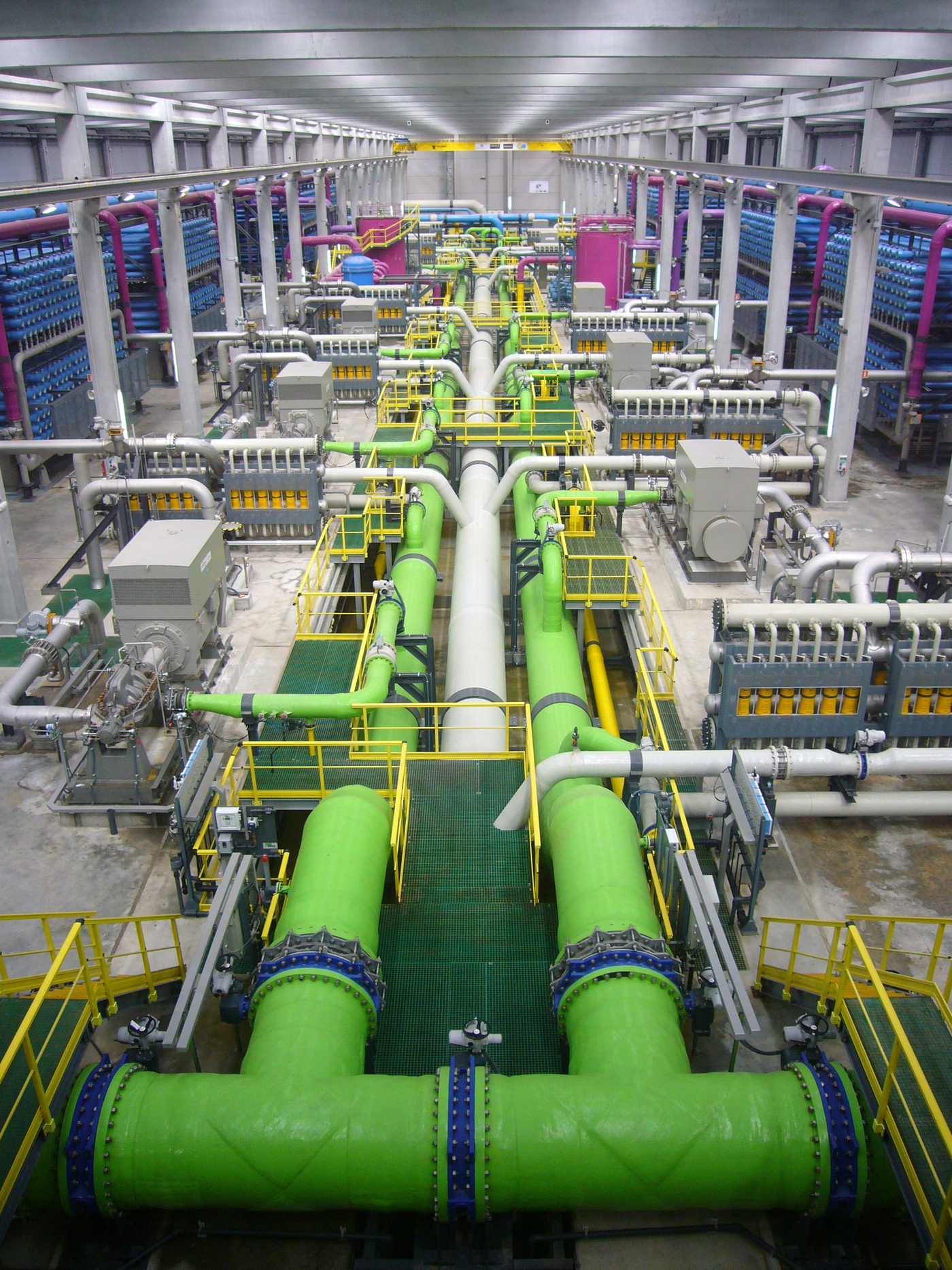
The Persian Gulf’s desalination infrastructure represents the single largest vulnerability in the event of a Bushehr radiological release. Gulf Cooperation Council member states collectively operate more than 60 percent of the world’s desalination capacity, producing approximately 22 million cubic metres of fresh water daily from Gulf seawater. For several countries, this is not a supplement to natural water sources — it is the water supply itself.
Qatar derives approximately 99 percent of its municipal water from desalination. The UAE relies on desalinated water for more than 80 percent of its drinking supply, according to its federal water authority. Kuwait depends on desalination for approximately 90 percent of potable water. Bahrain’s dependency exceeds 75 percent. Saudi Arabia, with larger groundwater reserves, still sources roughly 50 percent of its water supply from desalination — but the percentage is far higher in the Eastern Province, where plants along the Gulf coast at Jubail, Ras Al Khair, and Khobar serve the industrial heartland and an urban population exceeding three million.
Standard reverse osmosis desalination membranes are designed to filter dissolved salts, bacteria, and organic contaminants from seawater. They are not designed to remove dissolved radionuclides, particularly caesium-137, which behaves chemically like potassium and passes through conventional filtration with varying degrees of efficiency. Tritium, another common fission product, is isotopically identical to hydrogen and cannot be separated from water by any desalination technology currently deployed at scale.
Iran has explicitly threatened Gulf desalination infrastructure as a retaliatory target during the current conflict. The nuclear contamination risk adds a second dimension: even without deliberate attack, a radiological release at Bushehr would compromise the Gulf’s desalination intakes not through physical damage but through contamination of the source water itself. The Atlantic Council warned in a March 2026 analysis that “attacks on desalination plants in the Iran war forecast a dark future” — but that assessment focused on kinetic strikes. The radiological contamination scenario is qualitatively different because it cannot be repaired, rerouted, or rebuilt. Contaminated seawater would remain contaminated for years.
| Country | Desalination Dependency (%) | Daily Output (million m³) | Gulf Coastline Intake | Alternative Sources |
|---|---|---|---|---|
| Qatar | ~99% | 1.8 | Yes — all major plants | Minimal groundwater reserves |
| Kuwait | ~90% | 2.4 | Yes — all major plants | Limited brackish groundwater |
| UAE | >80% | 7.5 | Gulf + Gulf of Oman coasts | Some plants on Oman coast (Fujairah) |
| Bahrain | ~75% | 0.8 | Yes — all plants | Limited groundwater (declining) |
| Saudi Arabia (national) | ~50% | 7.2 | Gulf + Red Sea coasts | Red Sea plants unaffected; groundwater |
| Saudi Arabia (Eastern Province) | >70% | 3.1 | Yes — Jubail, Ras Al Khair | Limited; distant Red Sea plants |
Russia Built the Reactor and Cannot Protect It
Russia occupies a uniquely conflicted position in the Bushehr crisis. Rosatom designed, constructed, fuelled, and continues to service the reactor under a long-term cooperation agreement with Iran’s Atomic Energy Organisation. Approximately 480 Russian nuclear engineers and technicians remained at the Bushehr site as of mid-March, following two rounds of partial evacuations. A third evacuation was being prepared when the March 18 projectile struck.
Rosatom’s CEO, Alexei Likhachev, issued the most detailed public warning of any official involved in the crisis. On March 3 — more than two weeks before the strike — Likhachev stated that the reactor was operating at full capacity and contained material capable of causing a “regional-scale disaster.” He specified the quantities: 72 tons of active fuel, 210 tons of spent fuel. He warned that “none of the parties to the conflict would avoid radiation exposure” in the event of a serious accident. On March 19, the day after the strike, Russia formally called for the creation of a “safety island” around Bushehr — a demilitarised perimeter that would prohibit military operations within a defined radius of the plant.
The demand went nowhere. Washington has not acknowledged any role in the Bushehr strike and has not responded to the safety island proposal. Israel, which has conducted strikes against Iranian nuclear facilities at Natanz and Isfahan, has said nothing about Bushehr publicly. Iran, which might be expected to support a safety zone around its own reactor, has complicated the issue by positioning military assets near civilian infrastructure throughout the country as a deterrent against precision strikes — a practice that blurs the line between civilian and military targets under international humanitarian law.
Russia’s leverage is limited by its broader geopolitical position. Moscow has maintained formal neutrality in the US-Israeli campaign against Iran while providing diplomatic support to Tehran at the United Nations Security Council. Russia cannot threaten the United States or Israel with consequences for striking near Bushehr without risking its own carefully calibrated positioning. Nor can Russia withdraw its personnel from the site without effectively abandoning the reactor to an operator — Iran’s Atomic Energy Organisation — that lacks the technical capacity to manage the plant independently under crisis conditions.
The Rosatom personnel at Bushehr are, in practical terms, human shields. Their presence at the site provides Russia with a vested interest in the reactor’s safety and gives the United States and Israel a reason to avoid a direct strike — a calculus that may explain why the March 18 projectile hit an auxiliary structure rather than the reactor itself. But human shield logic has an expiration date. As the third evacuation round progresses, each departing Russian technician reduces both the political deterrent and the technical expertise available to prevent an accident.
Can the IAEA Protect Bushehr?
The IAEA’s mandate covers nuclear safety, security, and safeguards — the prevention of nuclear weapons proliferation. It does not include the authority to enforce demilitarised zones, impose ceasefires, or compel states to refrain from military operations near nuclear facilities. Director General Grossi’s “reddest line” warning carried moral weight but no enforcement mechanism.
The IAEA convened a special session of its Board of Governors within 48 hours of the Bushehr strike. The session produced a resolution “urging all parties” to exercise maximum restraint around nuclear facilities. It did not name a responsible party. It did not establish a monitoring mission at Bushehr. It did not set consequences for further strikes. The resolution’s language mirrored similar statements issued regarding Zaporizhzhia since 2022 — statements that had no measurable effect on the safety situation at that plant over four years.
The institutional weakness is structural. The IAEA is a technical agency, not a security body. It can verify radiation levels, inspect facilities, and issue warnings. It cannot deploy peacekeepers, establish no-fly zones, or impose economic penalties. Those powers reside with the UN Security Council, where Russia holds a veto and has used it to block resolutions it considers hostile to Iranian interests. The United States, as the lead belligerent in the campaign against Iran, is unlikely to support a resolution that constrains its own military operations. The result is an institutional vacuum: the only international body with the technical competence to assess the Bushehr risk lacks the authority to mitigate it, and the only body with the authority to act is structurally incapable of reaching consensus.
Grossi has attempted to replicate at Bushehr the personal diplomacy he employed at Zaporizhzhia, where he negotiated direct access to the plant through separate channels with Moscow and Kyiv. In the Gulf context, this would require simultaneous engagement with Tehran, Washington, and Tel Aviv — a triangulation that the current diplomatic environment makes exceedingly difficult. As of March 23, no IAEA monitoring mission has been established at Bushehr.
The Gulf Nuclear Proximity Risk Matrix
The risk to each Gulf state from a Bushehr incident is not uniform. It depends on a combination of geographic proximity, atmospheric exposure probability, desalination dependency, population concentration near the coast, and civil defence preparedness. These five factors, weighted and combined, produce a composite vulnerability score that reveals which countries face existential threats and which face manageable disruptions.
| Country | Proximity (1-5) | Atmospheric Exposure (1-5) | Desalination Dependency (1-5) | Coastal Population (1-5) | Civil Defence Readiness (1-5) | Composite Risk (5-25) |
|---|---|---|---|---|---|---|
| Kuwait | 5 | 4 | 5 | 5 | 2 | 21 |
| Bahrain | 4 | 3 | 4 | 5 | 2 | 18 |
| Qatar | 3 | 2 | 5 | 4 | 2 | 16 |
| Saudi Arabia (Eastern Province) | 3 | 3 | 4 | 4 | 3 | 17 |
| UAE (Abu Dhabi/Dubai) | 2 | 1 | 4 | 5 | 3 | 15 |
| Oman | 2 | 1 | 2 | 2 | 2 | 9 |
| Iraq (Basrah) | 4 | 4 | 2 | 3 | 1 | 14 |
Kuwait emerges as the most vulnerable Gulf state, scoring 21 out of a maximum 25. Its capital sits just 270 kilometres across the water from Bushehr, directly within the most probable plume trajectories. Kuwait depends on desalination for approximately 90 percent of its potable water and has no significant alternative supply. Its entire population of 4.3 million is concentrated in a narrow coastal strip along the Gulf. And its civil defence infrastructure, while improved since the 1990 Iraqi invasion, has never been tested against a radiological emergency.
Saudi Arabia’s risk is geographically split. Riyadh, the capital, sits 750 kilometres inland and faces negligible atmospheric exposure. But the Eastern Province — home to Aramco’s headquarters in Dhahran, the industrial city of Jubail, and major population centres including Dammam and Al Khobar — faces a composite risk score of 17, driven by its Gulf coast desalination dependency and proximity to the most vulnerable stretch of water. The Kingdom’s advantage over smaller Gulf states lies in geographic diversity: its Red Sea coast desalination plants at Yanbu, Jeddah, and Shoaiba would be unaffected by a Bushehr release, providing a partial backup that Qatar, Kuwait, and Bahrain simply do not have.
Qatar’s vulnerability is counterintuitive: it scores lower on proximity and atmospheric exposure than Kuwait, but its near-total dependency on desalinated Gulf water (99 percent) means that even low-level marine contamination would create an existential water supply crisis. Qatar has among the lowest per capita natural freshwater reserves of any country on Earth — approximately 25.6 cubic metres per person per year, compared with a global average of roughly 6,000.
How Prepared Is Saudi Arabia for a Nuclear Emergency?
Saudi Arabia has invested more in nuclear emergency preparedness than any other Gulf state, but the programme remains in its early stages. The King Abdulaziz City for Science and Technology (KACST) operates a national network of 140 radiation detection stations distributed across the Kingdom, with plans to expand to 240 stations. The IAEA conducted training exercises with Saudi first responders as recently as 2024, covering duties from site monitoring and decontamination to public communication.
A 2023 assessment published in the journal Radioprotection evaluated nuclear and radiological emergency preparedness across 21 referral hospitals designated by the Saudi Ministry of Health. The average overall preparedness score was 67.5 percent — a “moderate” grade that the authors described as “insufficient for a large-scale radiological event.” Specific gaps included limited availability of potassium iodide tablets for thyroid blocking (effective against iodine-131 exposure), inadequate decontamination facilities at emergency receiving points, and insufficient training in radiation triage protocols among emergency department physicians.
The broader civil defence picture is more concerning. Saudi Arabia’s General Directorate of Civil Defense has published guidance for earthquakes, floods, and chemical spills, but no publicly available nuclear or radiological emergency evacuation plan exists for civilian populations in the Eastern Province. The Kingdom’s 2016 Civil Defense Regulation makes no reference to transboundary radiological events. The GCC’s joint emergency coordination mechanisms, which include a regional radiation monitoring centre, have conducted tabletop exercises but never a full-scale nuclear emergency drill involving civilian evacuation.
This preparedness gap is not unique to Saudi Arabia. It reflects a region-wide assumption, maintained for the fifteen years since Bushehr went critical in 2011, that Iran’s nuclear facilities would never come under military attack. The 2026 war has destroyed that assumption. The question is whether the Gulf’s emergency preparedness systems can close a fifteen-year gap while missiles are already falling.
Why the Gulf’s Greatest Threat Is Not Oil
The international response to the Iran war has focused overwhelmingly on energy. Oil prices, tanker routes, Hormuz shipping data, and Aramco production figures dominate every briefing from the IEA, every Bloomberg terminal, and every diplomatic conversation between Gulf capitals and Washington. This focus is understandable. Oil is the Gulf’s economic oxygen, and the disruption to energy markets has already surpassed the 1973 and 1979 oil shocks in scale, according to the International Energy Agency.
But oil infrastructure, however critical, is rebuildable. Refineries can be repaired. Pipelines can be rerouted. Tanker routes can be re-established once hostilities end. The 2019 attack on Aramco’s Abqaiq processing facility — the single largest disruption to oil production in history at the time — was fully repaired within two weeks. Oil markets, for all their volatility, have short memories. Prices normalise. Supply chains adapt.
Radioactive contamination of the Persian Gulf is not rebuildable, not reroutable, and not repairable on any human timescale. Caesium-137 has a half-life of 30.17 years. A significant release into Gulf waters would render desalination intakes along the Arabian coast unsafe for decades — or require the installation of specialised ion-exchange filtration technology that does not currently exist at the scale needed to serve populations of millions. Strontium-90, with a half-life of 28.8 years, bioaccumulates in bone tissue and enters the marine food chain. Plutonium-239, if released from spent fuel damage, has a half-life of 24,100 years.
The asymmetry between the attention paid to oil and the attention paid to nuclear risk is itself a form of strategic blindness. Saudi Arabia has spent billions of dollars on Patriot missile batteries, THAAD systems, and layered air defence to protect oil facilities, military bases, and population centres from Iranian missiles and drones. No equivalent investment has been made in radiological emergency preparedness, mass casualty decontamination, or alternative water supply infrastructure for a Bushehr scenario. The assumption that “it won’t happen” persisted until March 18, when a projectile landed 350 metres from proof that it could.
“If an incident were to occur, it would be at least regional in scale and would affect a large number of countries in the Middle East. None of the parties to the conflict would avoid radiation exposure.”Alexei Likhachev, CEO of Rosatom, March 3, 2026
The contrarian position is not that a Bushehr disaster is likely. The reactor’s reinforced containment dome, the precautionary shutdown of the reactor following the March 18 strike, and the continued presence of experienced Rosatom personnel all reduce the probability of a catastrophic release. The contrarian position is that the consequences of a low-probability event are so severe — potentially rendering the Gulf coast uninhabitable for human settlement at current population densities for a generation — that it demands a level of preparation and diplomatic urgency that the Gulf’s governments have not yet demonstrated. In risk management terms, the Gulf is treating a high-consequence, low-probability nuclear event with the same institutional response it applies to a routine border dispute. The March 18 projectile should have changed that calculus. It has not yet.
Frequently Asked Questions
Was the Bushehr nuclear reactor directly hit during the Iran war?
No. A projectile struck and destroyed an auxiliary structure approximately 350 metres from the Bushehr 1 reactor building on March 18, 2026. The IAEA confirmed no damage to the reactor itself, no casualties, and no change in radiation levels. However, Rosatom reported that the reactor was operating at full power at the time, and the impact was close enough to prompt the IAEA Director General to describe it as crossing “the reddest line” of nuclear safety.
How much nuclear material is stored at Bushehr?
The facility contains approximately 282 tons of nuclear material: 72 tons of active fuel in the reactor core and approximately 210 tons of spent fuel in the plant’s elevated storage pool. Research estimates place the caesium-137 inventory in the spent fuel at approximately 2,600 petabecquerels, more than ten times the amount released during the 1986 Chernobyl disaster.
Could radiation from Bushehr reach Saudi Arabia?
Atmospheric dispersion modelling published in Science and Global Security shows that radiation from a significant Bushehr release could reach Saudi Arabia’s Eastern Province under certain wind conditions, particularly between April and September when southeasterly winds prevail. The marine pathway poses a greater long-term risk: contaminated Gulf waters would circulate toward Saudi desalination intakes at Jubail, Ras Al Khair, and Khobar over a period of months to years.
Can desalination plants filter out radioactive contamination?
Standard reverse osmosis membranes can remove some radionuclides from seawater, but their effectiveness varies by element. Caesium-137, which mimics potassium chemically, passes through conventional filtration with reduced but not eliminated concentrations. Tritium, which is chemically identical to hydrogen, cannot be removed by any desalination technology currently deployed at industrial scale. Specialised ion-exchange resins could supplement existing systems, but these have never been tested at the throughput volumes required by Gulf desalination plants.
What is Russia’s role at the Bushehr nuclear plant?
Russia’s Rosatom corporation designed, built, fuelled, and continues to operate the Bushehr 1 reactor under a long-term cooperation agreement with Iran. Approximately 480 Rosatom personnel remained at the site as of mid-March 2026, following two rounds of partial evacuations. Rosatom CEO Alexei Likhachev has issued the most detailed warnings about the plant’s vulnerability and has called for a “safety island” demilitarised zone around the facility. Russia, however, lacks the geopolitical leverage to enforce such a zone while maintaining its broader neutrality in the conflict.
Has the IAEA established a monitoring mission at Bushehr?
As of March 23, 2026, no dedicated IAEA monitoring mission has been deployed to Bushehr. The IAEA Board of Governors convened a special session and passed a resolution urging restraint, but the agency lacks enforcement authority. Director General Grossi has signalled interest in replicating the personal diplomacy he employed at Ukraine’s Zaporizhzhia plant, but the three-way diplomatic requirements — involving Tehran, Washington, and Tel Aviv — make this significantly more complex than the bilateral Ukraine negotiation.