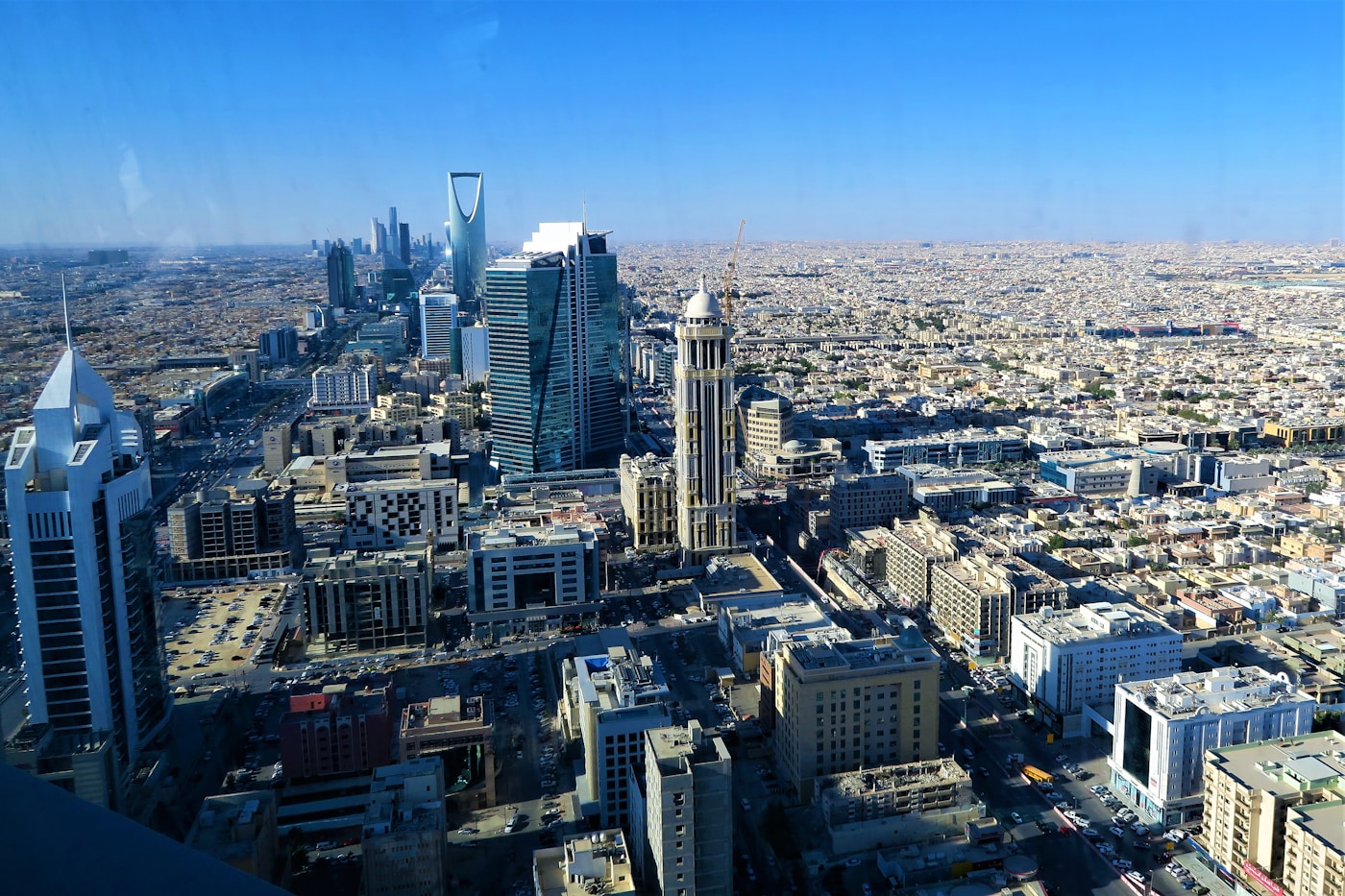

Saudi Arabia has undergone a radical transformation from one of the world’s most restrictive investment environments to one of its most ambitious. In 2026, the Kingdom stands at an inflection point: a new Investment Law guarantees equal treatment for foreign and domestic investors, the Tadawul stock exchange has opened its doors to all international participants, and foreigners can now own property for the first time. Backed by a trillion-dollar sovereign wealth fund and a national strategy that demands economic diversification, the opportunity set is unlike anything the Gulf has produced before.
This guide examines every major avenue for investing in Saudi Arabia — from public equities and real estate to venture capital and direct business formation — with the regulatory detail, data, and strategic context required to make informed decisions.
The Investment Climate: Why 2026 Is a Turning Point
Three landmark reforms have converged to reshape the Saudi investment landscape in a single year. Together, they represent the most significant liberalisation programme in the Kingdom’s modern economic history.
The Updated Investment Law, issued in August 2024 and now fully operational, replaced the Foreign Investment Law of 2000. Its central principle is national treatment: foreign and domestic investors are to be treated equally under similar circumstances. The old licensing regime — where foreigners needed explicit government permission to invest — has been replaced by a streamlined registration system administered by the Ministry of Investment (MISA). This shift from a permit-led to a registration-led framework has reduced bureaucratic friction substantially.
On 1 February 2026, the Capital Market Authority (CMA) abolished the Qualified Foreign Investor (QFI) programme entirely. Before this date, non-resident foreigners needed to meet specific criteria — including minimum assets under management of nearly SAR 1.9 billion — just to access the main stock exchange. That barrier is gone. Any foreign investor, whether institutional or retail, can now trade directly on the Tadawul.
The Law of Real Estate Ownership by Non-Saudis, which entered force on 22 January 2026, permits foreign individuals and entities to own property in Saudi Arabia for the first time through a designated-zone framework. Combined with the Kingdom’s giga-project pipeline, this creates entirely new asset classes for international capital.
The macroeconomic backdrop supports these reforms. The IMF projects Saudi GDP growth of 3.9 per cent in 2026, with non-oil sectors expanding even faster. Foreign direct investment inflows grew 24 per cent year-on-year in 2024, and the government has set a target of FDI reaching 5.7 per cent of GDP by 2030 — up from approximately 1.6 per cent in 2024.
The Tadawul: How to Access the Saudi Stock Market
The Saudi Exchange (Tadawul) is the largest stock market in the Middle East and one of the most significant in emerging markets globally, with a market capitalisation exceeding $2.7 trillion. It is home to Saudi Aramco, the world’s most valuable listed company, alongside major banks, petrochemicals groups, and a growing roster of technology and consumer firms.
What Changed on 1 February 2026
The CMA’s decision to eliminate the QFI regime was the single most important capital markets reform in Saudi history. Previously, foreign investors could access the Main Market only through QFI registration (requiring approximately $500 million in assets under management) or through participation notes and swap agreements — both costly and operationally complex.
Now, any foreign investor can open a brokerage account and trade directly on Tadawul’s Main Market and Nomu (the parallel market for growth companies). The existing ownership caps remain in place — 10 per cent for any individual non-resident foreign investor and 49 per cent aggregate foreign ownership per company — but analysts at Jefferies estimate that if the 49 per cent cap is eventually lifted, a review for which is slated for later in 2026, the Kingdom could attract between $3.4 billion and $10.2 billion in passive index-fund inflows alone.
By Q3 2025, foreign investors held over SAR 590 billion in Saudi equities. The removal of qualification barriers is expected to increase liquidity, compress bid-ask spreads, and bring greater index weight to Saudi stocks in MSCI and FTSE benchmarks.
Routes for International Investors
Direct Tadawul access: In late 2024, Interactive Brokers (IBKR) partnered with SNB Capital to become the first global brokerage offering direct foreign access to the Saudi stock market. International investors can now buy Saudi-listed shares through IBKR without needing a local broker or physical presence in the Kingdom. Additional global brokerages are expected to follow.
Exchange-traded funds: The iShares MSCI Saudi Arabia ETF (ticker: KSA), listed on the NYSE, remains the most accessible vehicle for passive exposure. With net assets exceeding $750 million, it tracks a broad index of Saudi equities. As of mid-March 2026, the ETF shows a year-to-date return of approximately 4.2 per cent, with an expense ratio of 0.75 per cent. Other options include the Franklin FTSE Saudi Arabia ETF (FLSA), which offers a lower expense ratio.
Domestically listed ETFs: Tadawul itself lists several ETFs, including the Alawwal Invest MSCI Tadawul 30 Saudi ETF, which tracks the 30 largest companies on the exchange. These are now accessible to foreign investors following the QFI removal.
Key Sectors on Tadawul
Saudi Aramco dominates index weight, but the exchange has diversified considerably. Banking (Al Rajhi, SNB), materials (SABIC, Ma’aden), telecommunications (stc), healthcare (Dr Sulaiman Al Habib), and consumer retail (Jarir, BinDawood) offer exposure to the domestic consumption story. The Public Investment Fund has also signalled plans to list up to eight portfolio companies in 2026, which could include assets in entertainment, logistics, and digital infrastructure.
The Public Investment Fund: The Engine of Transformation
The PIF is not merely a sovereign wealth fund — it is the primary execution vehicle for Vision 2030. With assets under management reaching $1.15 trillion, it has climbed to fifth place among the world’s largest sovereign wealth funds, up from $925 billion at end-2024.
In 2025, the PIF was the world’s most active sovereign wealth fund by investment spending, deploying $36.2 billion — an 81 per cent increase from 2024. Approximately 80 per cent of its assets are allocated domestically, with 55 per cent of the portfolio in alternative assets including real estate, infrastructure, and private equity.
The fund’s portfolio encompasses more than 100 companies, including over 50 development entities linked to giga-projects such as NEOM, Red Sea Global, Qiddiya, Roshn, and ACWA Power. In December 2024, the PIF board approved a minimum 20 per cent spending reduction across its portfolio as part of a strategic recalibration. Governor Yasir Al Rumayyan has indicated that a revised 2026–2030 strategy will prioritise efficiency and returns over scale.
For investors, the PIF matters in three ways. First, its planned IPOs of portfolio companies create direct investment opportunities on Tadawul. Second, its co-investment programmes allow institutional investors to participate alongside sovereign capital in major projects. Third, its spending trajectory — even after the efficiency pivot — sets the pace for private-sector activity across construction, technology, hospitality, and services.
Real Estate: A Market Opening for the First Time
The Law of Real Estate Ownership by Non-Saudis, effective 22 January 2026, represents one of the most significant property market reforms in the Gulf region. For decades, real estate ownership was restricted to Saudi nationals and GCC citizens. That exclusion has now ended, under a structured framework.
What Foreigners Can Now Own
Foreign individuals and entities — whether resident in the Kingdom or abroad — can own and invest in real estate within designated zones that the Council of Ministers will specify through a Geographic Scope Document expected in Q1 2026. These zones are anticipated to include major urban centres, giga-project areas, and economic cities.
Foreign residents in Saudi Arabia receive an additional benefit: they may purchase one residential property for personal use outside the designated zones, anywhere in the Kingdom.
The law also permits foreign investment in shares of mega-projects — NEOM, Qiddiya, Red Sea Global, Diriyah Gate — and tokenised fractional ownership stakes in real estate, opening the market to smaller investors.
Key Restrictions
Ownership of property in Makkah and Madinah remains prohibited for non-Muslims, with narrow exceptions for inheritance and religious endowments (waqf). All real estate rights acquired by non-Saudis must be formally registered in the national Real Estate Registry. The law introduces a transfer fee on dispositions by non-Saudis, capped at 5 per cent of the property value, in addition to standard transaction taxes.
The Market Opportunity
Saudi Arabia’s residential real estate market has experienced sustained price growth, driven by population expansion, urbanisation, and the government’s target of increasing home ownership to 70 per cent by 2030. The giga-projects alone are expected to generate demand for hundreds of thousands of residential units, hotel rooms, and commercial spaces. Riyadh, which aims to grow its population from 7.5 million to 15 million by 2030, represents the largest single opportunity in the region.
Sector Opportunities: Where the Capital Is Flowing
Technology and Digital Economy
The Kingdom aims to increase the digital economy’s contribution to GDP to 19 per cent by 2030. Artificial intelligence, cloud computing, cybersecurity, and enterprise software are priority areas. NEOM’s Tonomus division is building what it describes as the world’s first cognitive city, creating demand across the entire technology stack. The National Technology Development Programme (NTDP) offers grants and co-investment for both local and international technology companies.
Tourism and Entertainment
Tourism is one of the fastest-growing sectors under Vision 2030. The giga-project pipeline — NEOM, The Line, Qiddiya, Diriyah Gate, Red Sea Global, and Trojena (the 2029 Asian Winter Games venue) — is creating an entirely new hospitality and entertainment industry. The Kingdom targets 150 million annual visits by 2030. For investors, the opportunities span hotel development, food and beverage, experiential entertainment, tour operators, and supporting infrastructure.
Mining and Critical Minerals
Mining has been designated the third pillar of Saudi industry, after oil and petrochemicals. The Kingdom’s latent mineral wealth is estimated at over SAR 5 trillion ($1.3 trillion), including significant deposits of gold, copper, zinc, phosphate, and rare earth elements. Ma’aden, the national mining company (PIF-controlled and Tadawul-listed), is the primary vehicle. The new Mining Investment Law offers exploration and extraction licences to foreign companies, and the government has signalled that mining could contribute $75 billion annually to GDP by 2035.
Renewable Energy and Green Hydrogen
Saudi Arabia plans to generate 50 per cent of its electricity from renewable sources by 2030. ACWA Power, a PIF portfolio company listed on Tadawul, is a leading global developer of desalination and power generation assets. The NEOM Green Hydrogen project, a joint venture between ACWA Power, Air Products, and NEOM, aims to produce 600 tonnes of carbon-free hydrogen daily. Solar and wind projects under the National Renewable Energy Programme offer procurement and development opportunities for international firms.
Financial Services and Fintech
Fintech dominates the Saudi startup investment landscape. In the first half of 2025, the sector raised $969 million across 20 deals — the largest share of national startup investment. The Saudi Central Bank (SAMA) has established a regulatory sandbox for fintech, and the CMA has introduced rules for crowdfunding, digital asset custody, and open banking. Riyadh is positioning itself as the fintech capital of the MENA region.
Venture Capital and the Startup Ecosystem
Saudi Arabia’s startup ecosystem has undergone explosive growth. In the first half of 2025, Saudi startups attracted a record $1.34 billion in funding — approximately 64 per cent of total MENA venture capital and a 342 per cent increase over H1 2024. Riyadh jumped 60 places in global startup ecosystem rankings to 23rd worldwide.
Over 900 technology startups are now registered in the Kingdom, up from fewer than 200 in 2018. STV, the largest technology-focused VC fund in MENA with over $500 million in assets under management, is backed by PIF and Saudi Telecom. The Saudi Venture Capital Company (SVC) has committed over SAR 2.8 billion across more than 50 funds, indirectly supporting hundreds of early-stage companies.
For international investors, co-investment opportunities with Saudi VCs and participation in SVC-backed funds offer structured exposure to the ecosystem. The government’s Regional Headquarters (RHQ) Programme, which offers a 30-year tax exemption to qualifying companies, has attracted over 500 multinational firms to establish regional bases in Riyadh.
Starting a Business: The Company Formation Route
The updated Investment Law has fundamentally changed the process for establishing a foreign-owned business in Saudi Arabia. The old SAGIA licensing system, which could take months and required minimum capital thresholds, has been replaced by a registration-based system under MISA.
Key Features of the New Framework
100 per cent foreign ownership is now permitted across nearly all sectors, from advanced manufacturing and AI to professional consultancy. The negative list — sectors closed to foreign investment — has been substantially reduced.
Registration replaces licensing: Foreign investors register with MISA rather than seeking approval. The process is designed to be completed within days rather than weeks.
Equal treatment: The law explicitly guarantees that foreign investors enjoy the same rights as domestic investors, including access to government incentives, subsidies, and dispute resolution mechanisms.
Dispute resolution: Foreign investors have access to Saudi commercial courts, the Saudi Centre for Commercial Arbitration (SCCA), and international arbitration under bilateral investment treaties.
Common Structures
The most common vehicle for foreign investors is the Limited Liability Company (LLC), which requires a minimum of one shareholder and one manager. Joint-stock companies are required for listed entities and larger enterprises. Branch offices are permitted for companies with existing contracts in the Kingdom. Free zones — including King Abdullah Economic City (KAEC) and the Special Economic Zone at NEOM — offer additional incentives including reduced tax rates and customs exemptions.
The Premium Residency (Golden Visa) Programme
Saudi Arabia’s Premium Residency programme, launched in its current form in January 2024, offers five pathways to long-term residency for foreign nationals. The investor track is the most relevant for those seeking to combine residency with business activity.
The investor visa requires an economic investment of at least SAR 7 million (approximately $1.9 million) within two years and the creation of at least 10 jobs. In return, holders receive permanent residency with the right to establish and run businesses, hire staff, open local bank accounts, purchase property within approved areas, and sponsor immediate family members.
For high-net-worth individuals, the Talent and Gifted tracks offer alternative routes based on professional expertise, academic credentials, or exceptional ability — without the investment and job-creation requirements.
Tax and Regulatory Framework
Taxation
Saudi Arabia does not impose personal income tax on individuals. Corporate tax for foreign-owned entities is levied at a flat rate of 20 per cent on net adjusted profits. Saudi and GCC-owned companies are subject to Zakat (2.5 per cent on net worth) rather than corporate tax. Value-added tax (VAT) applies at 15 per cent on most goods and services. Withholding tax of 5 to 20 per cent applies to certain cross-border payments (dividends, royalties, management fees).
The RHQ Programme offers a 30-year exemption from corporate income tax and withholding tax for qualifying multinational headquarters established in Riyadh — one of the most generous tax incentives in the region.
Regulatory Bodies
Investors should understand the roles of the key regulatory institutions:
Ministry of Investment (MISA): The primary gateway for foreign investors. Handles registration, investor services, and policy coordination.
Capital Market Authority (CMA): Regulates securities markets, fund management, and listed companies. Its February 2026 reforms opened the Tadawul to all foreign investors.
Saudi Central Bank (SAMA): Regulates banking, insurance, and payments. Oversees the fintech sandbox and digital banking licences.
Real Estate General Authority (REGA): Administers the new foreign property ownership framework, including designated zones.
Risks and Challenges
No investment guide is complete without an honest assessment of the risks. Saudi Arabia offers extraordinary opportunities, but the environment demands informed navigation.
Oil Price Dependency
Despite diversification progress, hydrocarbon revenues still account for a significant share of government income. A sustained oil price decline would affect government spending, project timelines, and overall economic momentum. The fiscal breakeven oil price — the price needed to balance the budget — remains above current market levels, which means the government is running deficits to fund Vision 2030 investments.
Execution Risk on Mega-Projects
The giga-project pipeline is unprecedented in scale and ambition. NEOM alone carries an estimated price tag exceeding $500 billion. The PIF’s 20 per cent spending reduction signals that timelines and scopes are being recalibrated. Investors should assess individual project viability rather than assuming all announced developments will proceed as originally planned.
Regulatory Evolution
Saudi Arabia’s regulatory environment is modernising rapidly, but it remains a work in progress. New laws — including the Investment Law, real estate ownership law, and CMA reforms — are all recent, and implementing regulations are still being drafted. Investors should expect a period of interpretation and adjustment as regulators, courts, and market participants adapt to the new frameworks.
Currency Risk
The Saudi riyal is pegged to the US dollar at a fixed rate of 3.75, which eliminates exchange-rate risk for dollar-based investors. However, the peg constrains monetary policy independence and, in a scenario of prolonged fiscal deficits, could come under speculative pressure — though this remains a tail risk given the Kingdom’s substantial foreign reserves.
Labour Market and Saudisation
The Nitaqat programme mandates minimum quotas for Saudi national employment in the private sector. Compliance requirements vary by sector and company size, and can increase operational costs. Investors establishing businesses should factor Saudisation targets into workforce planning and budgeting.
Geopolitical Factors
Regional dynamics — including the Kingdom’s relationships with Iran, Yemen, and broader Middle Eastern security considerations — can affect investor sentiment. While Saudi Arabia has pursued diplomatic normalisation in several directions, the region’s structural instability remains a background factor for risk-adjusted return calculations.
How to Get Started: A Practical Roadmap
For investors considering Saudi Arabia in 2026, the entry strategy depends on the scale and type of investment:
Passive equity exposure: Open a brokerage account with a platform offering NYSE access and purchase the iShares MSCI Saudi Arabia ETF (KSA) or the Franklin FTSE Saudi Arabia ETF (FLSA). This requires no Saudi-specific account or registration.
Direct stock trading: Open an account with Interactive Brokers (which has direct Tadawul access via SNB Capital) or a Saudi-licensed brokerage. Following the February 2026 reforms, no QFI registration is required.
Real estate: Monitor the Geographic Scope Document (expected Q1 2026) for designated zones. Engage a Saudi-licensed real estate agent and legal counsel. Property purchases by non-Saudis must be registered in the national Real Estate Registry.
Business formation: Register with MISA through the Invest Saudi portal. Select a legal structure (LLC is most common for foreign investors), appoint a local legal representative, and complete commercial registration. The process has been streamlined under the new Investment Law.
Venture capital: Engage with Saudi VCs (STV, Raed Ventures, Impact46) or apply to participate in SVC-backed fund allocations. The NTDP offers co-investment for technology companies entering the Kingdom.
Residency-linked investment: Explore the Premium Residency investor track if committing SAR 7 million or more and planning long-term presence in the Kingdom.
The Bottom Line
Saudi Arabia in 2026 is no longer an emerging market in the conventional sense — it is a $1 trillion economy undergoing a deliberate, state-directed transformation backed by the fifth-largest sovereign wealth fund on earth. The convergence of the new Investment Law, Tadawul liberalisation, and real estate ownership reform has created the most investor-friendly environment in the Kingdom’s history.
The opportunities are substantial. So are the risks. The investors who will benefit most are those who approach the market with rigorous due diligence, local expertise, and a realistic understanding of both the pace and the limits of reform. Vision 2030 is not a guarantee — it is a thesis. But it is a thesis backed by sovereign capital, regulatory momentum, and a demographic dividend that few markets can match.
For a complete picture, explore our guides to the Saudi economy, free zones and SEZs offering reduced corporate tax, and the Saudi tax system including VAT, Zakat, and withholding tax rules.