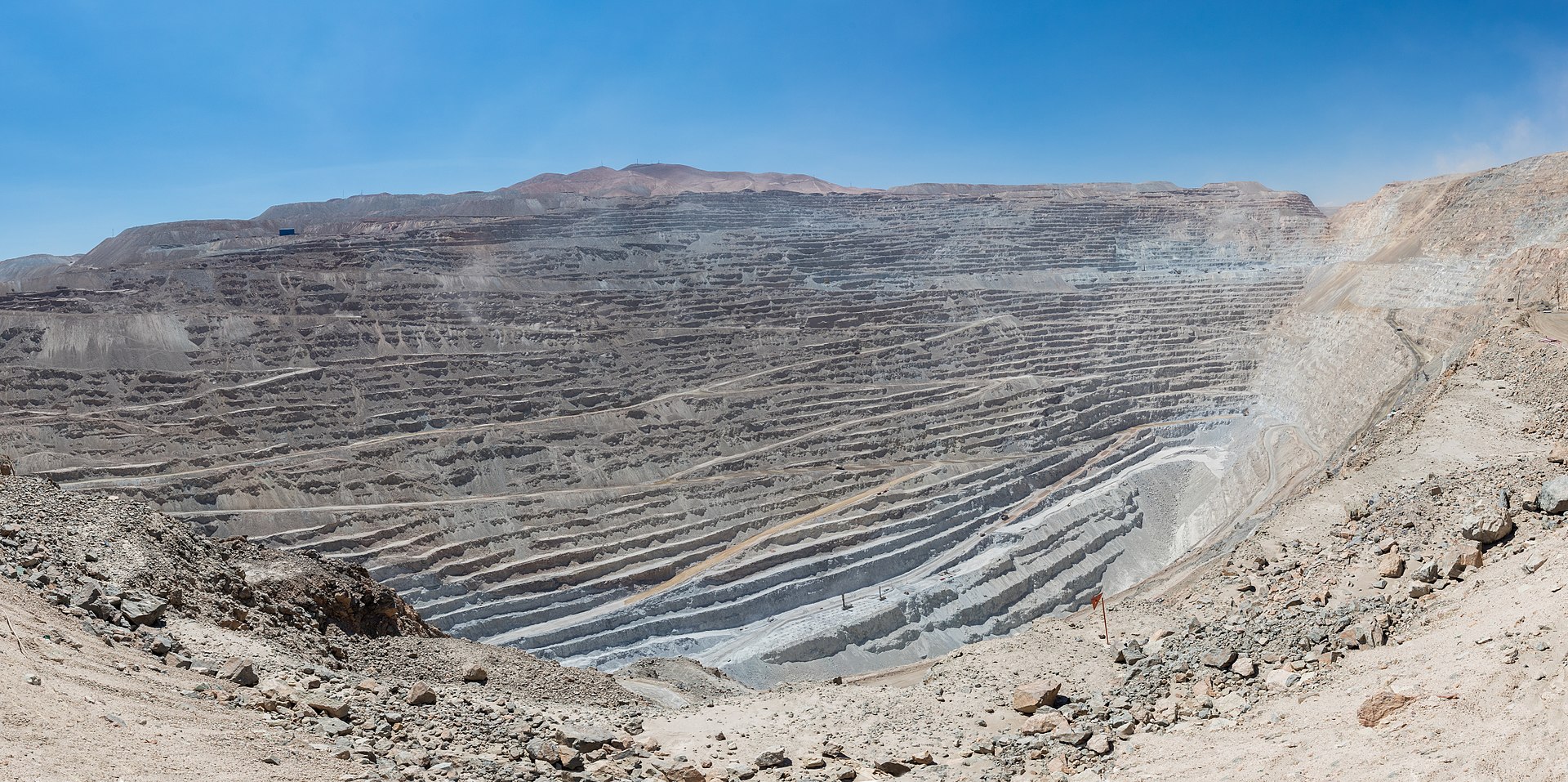

Saudi Arabia is engineering one of the most dramatic mining transformations in modern history. Long defined by its oil wealth, the Kingdom is now unlocking an estimated $2.5 trillion in untapped mineral reserves — positioning mining as the “third pillar” of the national economy alongside hydrocarbons and petrochemicals. From lithium extraction in the Ghawar oil field to a new rare-earth refinery backed by the US Department of War, the scale of ambition is reshaping global commodity markets.
At the centre of this transformation is Saudi Arabian Mining Company (Ma’aden), the state-backed mining champion that announced a $110 billion investment plan at the Future Minerals Forum in January 2026. The plan targets tripling gold and phosphate production, doubling aluminium output, and developing eight megaprojects over the next decade — a programme that would vault Ma’aden into the ranks of the world’s top three mining companies.
The Scale of the Opportunity
Saudi Arabia’s mineral wealth was revalued in 2025 to SAR 9.375 trillion ($2.5 trillion) by the National Minerals Program, driven by new discoveries of rare earth elements and transition metals. The figure represents a substantial upgrade from earlier estimates of $1.3 trillion and reflects the results of intensive geological surveying across the Arabian Shield — the ancient crystalline basement rock that underlies the western third of the Kingdom.
The Saudi Geological Survey (SGS) has identified 933 exploration locations at various stages of development, comprising 691 sites for gold and associated minerals and 242 sites for base metals such as zinc and copper. Through the Regional Geological Survey Program and the Accelerated Exploration Program, SGS is building a comprehensive national geological database to attract international investment.
| Metric | 2022 | 2025 | 2030 Target |
|---|---|---|---|
| Mining GDP Contribution | SAR 45B | SAR 64B | SAR 240B ($64B) |
| Exploration Spending | $21M | $280.5M | $500M+ |
| Active Exploration Projects | 58 | 160+ | 250+ |
| Direct & Indirect Jobs | ~80,000 | ~120,000 | 200,000 |
| Foreign Investment Target | — | — | $27B |
Vision 2030 targets increasing mining’s GDP contribution to SAR 240 billion ($64 billion) by 2030, creating 200,000 direct and indirect jobs, and attracting $27 billion in new investment. The minesite exploration budget alone surged 595%, reaching $146 million in 2025 from $21 million in 2022, while total exploration spending hit SAR 1.05 billion ($280.5 million) in 2024.
Gold: The Arabian Shield’s Oldest Treasure
Saudi Arabia’s gold mining heritage stretches back millennia — the legendary King Solomon’s mines are believed by some scholars to have been located in the Arabian Peninsula. Today, the Kingdom operates six major gold mines, and Ma’aden is aggressively expanding its gold portfolio with an eye on becoming a global top-tier producer.
The Mansourah-Massarah mine, which began production in 2022, is the Kingdom’s largest gold operation with an annual production target of 320,000 ounces. Other major operations include the historic Mahd Ad Dahab (“Cradle of Gold”), Ad Duwayhi (producing approximately 180,000 ounces annually), Al Amar, Bulghah, and As Suq.
In January 2026, Ma’aden reported the addition of 7.8 million ounces of new gold resources across four key areas, spanning operating mines, early-stage prospects, and new discoveries. Drilling continues through 2026 with expectations of further growth. The Ar Rjum gold mine is also advancing, with the first development contract awarded and construction progressing toward production.
Exploration spending reflects the gold focus: in 2025, 72% of the total exploration budget was allocated to gold and 23% to copper. With copper and gold reserves expected to last 15 and 40 years respectively, Saudi Arabia is positioning itself to enter the global top 20 for both commodities.
Lithium: From Oil Wells to Battery Metals
Perhaps the most strategically significant development in Saudi mining is the push into lithium — the critical mineral underpinning the global electric vehicle revolution and energy storage systems.
In January 2025, Aramco and Ma’aden signed non-binding Heads of Terms to form a minerals exploration and mining joint venture focused on energy transition minerals, with lithium extraction as the headline objective. Aramco has identified “promising lithium concentrations” in its oil and gas fields, with several areas showing concentrations of up to 400 parts per million — high enough to merit commercial extraction using direct lithium extraction (DLE) technology.
The pilot programme, launched in 2025 at the Ghawar oil field — the world’s largest conventional oil field — is designed to prove the viability of extracting lithium from oilfield brines. If successful, commercial lithium production could commence by 2027.
The Aramco-Ma’aden lithium venture represents a paradigm shift: repurposing oil infrastructure for critical mineral extraction. It is a powerful symbol of Saudi Arabia’s energy transition strategy — leveraging existing hydrocarbon assets to build a position in the minerals that will power the post-oil economy.
Rare Earth Elements: A Pentagon-Backed Refinery
In November 2025, Ma’aden signed a binding term sheet with MP Materials and the US Department of War to build and operate a rare earth refining and separation facility in the Kingdom. The deal represents one of the most geopolitically significant mining agreements of the decade.
Under the agreement, Ma’aden holds at least 51% equity, with MP Materials and the US DoW jointly holding up to 49%. The US contribution is financed non-recourse by the Department of War, while MP Materials contributes its world-class technical expertise in rare earth separation and refining.
The facility is designed to process rare earth feedstock sourced from Saudi Arabia and other global regions, producing separated light and heavy rare earth oxides. These refined products will support US and Saudi manufacturing and defence sectors and be marketed to allied nations — a direct challenge to China’s dominance of the rare earth supply chain, where it currently controls approximately 60% of global mining and 90% of processing.
The agreement follows a broader strategic framework for cooperation on securing critical supply chains signed between the United States and Saudi Arabia in Washington, D.C., underscoring the geopolitical dimensions of the Kingdom’s mining ambitions.
Phosphate and Aluminium: Industrial Powerhouses
Ma’aden’s phosphate and aluminium operations form the backbone of its current revenue and are set for massive expansion.
Phosphate
Saudi Arabia is already one of the world’s largest phosphate producers, and Ma’aden plans to triple its phosphate business over the coming decade. The Phosphate 3 project will add 1.5 million tonnes of annual capacity, with phase one completion expected by the end of 2026 and production starting in 2027. Ma’aden’s Phosphate business has secured a five-year agreement with major Indian fertiliser producers for 3.1 million metric tonnes annually — reflecting the company’s growing dominance in global fertiliser markets.
Aluminium
Ma’aden fully acquired Alcoa’s 25.1% stake in Ma’aden Aluminium Company (MAC) and Ma’aden Bauxite and Alumina Company (MBAC), giving it complete control of its aluminium value chain from bauxite mining at Al Baitha to alumina refining and aluminium smelting at Ras Al Khair Industrial City. A new aluminium recycling plant at Ras Al Khair has been approved with a production capacity of nearly 400,000 tonnes per year, supporting the Kingdom’s circular economy goals.
Ma’aden Bauxite and Alumina Company has also signed a deal with EMERGE to supply renewable energy at the Al Baitha bauxite mine — part of the company’s commitment to net-zero operations by 2050.
Copper, Zinc, and Base Metals
The Arabian Shield’s base metal potential is only beginning to be understood. Several major discoveries in 2025 and 2026 have highlighted the Kingdom’s potential as a significant copper and zinc producer.
The Jabal Sayid copper mine, a joint venture between Ma’aden and Barrick Gold, continues to be a cornerstone operation. Meanwhile, Almasane Alkobra Mining Company (AMAK) announced in 2025 the discovery of potentially economically viable copper, zinc, gold, and silver resources within an exploration licence in the Najran region of southern Saudi Arabia. AMAK has drilled more than 27,000 metres since February 2025, with preliminary studies indicating a mineral resource of nearly 11 million tonnes — and drilling so far covers less than 10% of the total licence area.
The Khnaiguiyah zinc-copper project, based on Saudi Geological Survey data, holds ore reserves of approximately 25 million tonnes with grades of 4.11% zinc and 0.56% copper — a globally significant deposit that is attracting international attention.
International mining companies are taking notice. Moxico Resources is advancing exploration in the Kingdom, while Ajlan & Bros Mining and other domestic players are scaling up operations across the base metals spectrum.
The New Mining Investment Law
Saudi Arabia’s regulatory transformation has been as dramatic as its geological discoveries. The new Mining Investment Law, part of a broader package of economic reforms, has fundamentally reshaped the investment landscape.
Key provisions include:
- Reduced tax rate: The mining tax rate has been cut to 20% from 45%, aligning Saudi Arabia with international norms and significantly improving project economics.
- Lower royalties: Reduced royalty rates for qualifying projects, with additional incentives for strategic minerals and remote locations.
- Extended licence durations: Exploration and mining licences have been extended to provide greater certainty for long-term investment.
- Streamlined permitting: The Ministry of Industry and Mineral Resources has overhauled the permitting process to reduce bureaucratic delays.
- Equal treatment: The updated Investment Law, which came into force on 12 February 2025, introduces a unified framework applicable to both foreign and domestic investors, enhancing competitiveness and protecting investor rights.
- Renewable energy integration: By 2025, more than 60% of gold mining operations in Saudi Arabia source energy from renewables. Ma’aden’s commitment to net-zero operations by 2050 includes solar-powered desalination for water use in extraction.
- Water management: Given the Kingdom’s arid climate, the Ministry has prioritised responsible water resource management, including recycling treated water for industrial purposes and investing in desalination infrastructure at mine sites.
- Environmental impact assessments: Rigorous assessments are now required for all mining projects, with advanced monitoring of impacts on water, soil, and local ecosystems.
- Circular economy: The new aluminium recycling plant at Ras Al Khair and broader waste reduction initiatives reflect a commitment to minimising the environmental footprint of mining operations.
- Critical minerals processing: The rare earth refinery, lithium extraction, and battery materials processing represent opportunities to participate in the energy transition supply chain.
- Gold and base metals exploration: With 691 gold sites and 242 base metal sites identified, the exploration pipeline is vast and largely untapped.
- Mining services and technology: The rapid scaling of operations creates demand for engineering, environmental services, autonomous mining technology, and digital solutions.
- Downstream manufacturing: Saudi Arabia’s strategy emphasises value-added processing, creating opportunities in fertiliser production, aluminium products, and specialty chemicals.
The incentives package also offers tax exemptions for qualifying projects and has been credited with Saudi Arabia’s dramatic rise in global mining investment rankings. Exploration spending surged from SAR 205 million in 2020 to SAR 1.05 billion in 2024, ranking the Kingdom among leading mining jurisdictions worldwide.
Future Minerals Forum: The Davos of Mining
The Future Minerals Forum (FMF), held annually in Riyadh, has rapidly established itself as one of the world’s premier mining conferences — a deliberate effort by the Kingdom to position itself at the centre of global minerals diplomacy.
The fifth edition, held from 13 to 15 January 2026 under the theme “Dawn of a Global Cause,” drew more than 500 leaders from governments, industry, multilateral organisations, academia, and civil society. The 2025 edition facilitated 126 agreements worth SAR 107 billion across exploration, research and development, and sustainability initiatives.
Key announcements at FMF 2026 included Ma’aden’s $110 billion investment plan, new international partnerships (including Canada’s MOU on critical minerals cooperation and a partnership between Northern Graphite and Saudi Arabia’s Obeikan Investment Group for a battery anode material processing facility), and the Kingdom’s updated geological survey data.
The Forum has become the platform where Saudi Arabia signals its mining ambitions to the world — and where international companies come to secure their position in what is rapidly becoming the Middle East’s most dynamic mining jurisdiction.
Environmental Sustainability and ESG
Saudi Arabia’s mining expansion faces a fundamental challenge: how to scale industrial extraction in one of the world’s most water-scarce environments while meeting increasingly stringent global ESG standards.
The Ministry of Industry and Mineral Resources has made sustainability a central pillar of its mining strategy. Key initiatives include:
However, challenges remain. Operational risks are heightened by water scarcity and infrastructure gaps in remote mining regions, requiring substantial investment in roads, power, and communications. International observers note that sustained success will depend on continued improvements in transparency and governance to meet global ESG benchmarks.
Ma’aden: Financial Performance and Global Ambitions
Ma’aden’s financial trajectory reflects the broader mining boom. In H1 2025, the company reported revenue of SAR 17.93 billion, up 23% year-on-year, with net profit surging 73% to SAR 3.47 billion. The company’s eight megaprojects — two already underway and six in various stages of planning — represent the most ambitious expansion programme in its history.
| Ma’aden Megaproject | Sector | Status |
|---|---|---|
| Phosphate 3 | Phosphate | Under construction (completion late 2026) |
| Aluminium Recycling (Ras Al Khair) | Aluminium | Approved |
| MP Materials Rare Earth Refinery | Rare Earths | Binding term sheet signed |
| Aramco-Ma’aden Lithium JV | Lithium | Pilot stage (Ghawar) |
| Ar Rjum Gold Mine | Gold | Development contract awarded |
| Gold Exploration (4 new areas) | Gold | Drilling through 2026 |
| Baosteel Integrated Steel Plant | Steel | Planning |
| Hadeed Steel Expansion | Steel | SAR 25B investment announced |
The Public Investment Fund (PIF), Saudi Arabia’s sovereign wealth fund, continues to be a driving force behind the metals and mining sector, with a focus on sustainability, value chain integration, and global competitiveness. PIF’s strategy aims to develop the full mining value chain domestically — from exploration and extraction through processing, refining, and manufacturing — rather than simply exporting raw materials.
Investment Opportunities and Market Access
For international investors, Saudi Arabia’s mining sector presents a rare combination of geological potential, regulatory reform, and state-backed capital. The Kingdom hosts 24 exploration and 17 advanced projects, and the new regulatory framework is designed to provide competitive returns.
Key investment themes include:
The Kingdom’s strategic location — bridging Asian, European, and African markets — provides logistics advantages for mineral exports, while the domestic Vision 2030 development programme creates substantial internal demand for construction materials, industrial inputs, and energy transition minerals.
Looking Ahead
Saudi Arabia’s mining transformation is still in its early chapters. The $2.5 trillion mineral wealth figure, the $110 billion Ma’aden investment plan, and the geopolitically charged rare earth refinery all point to a Kingdom that is serious about building a post-oil industrial economy.
The challenges are real — water scarcity, infrastructure development in remote areas, ESG compliance, and the need to develop a skilled mining workforce in a country with no modern mining tradition. But the combination of geological endowment, sovereign capital, regulatory reform, and geopolitical alignment with Western critical mineral strategies creates a uniquely powerful platform for growth.
Mining may never rival oil as a revenue generator for the Saudi state. But as a pillar of economic diversification, a creator of high-skilled jobs, and a strategic asset in the global competition for critical minerals, the Kingdom’s mining boom is one of the most significant industrial developments in the Middle East in decades.
For more on Saudi Arabia’s economic transformation, see our guides to doing business in Saudi Arabia, investment opportunities, and the renewable energy sector.