
What Is NEOM?
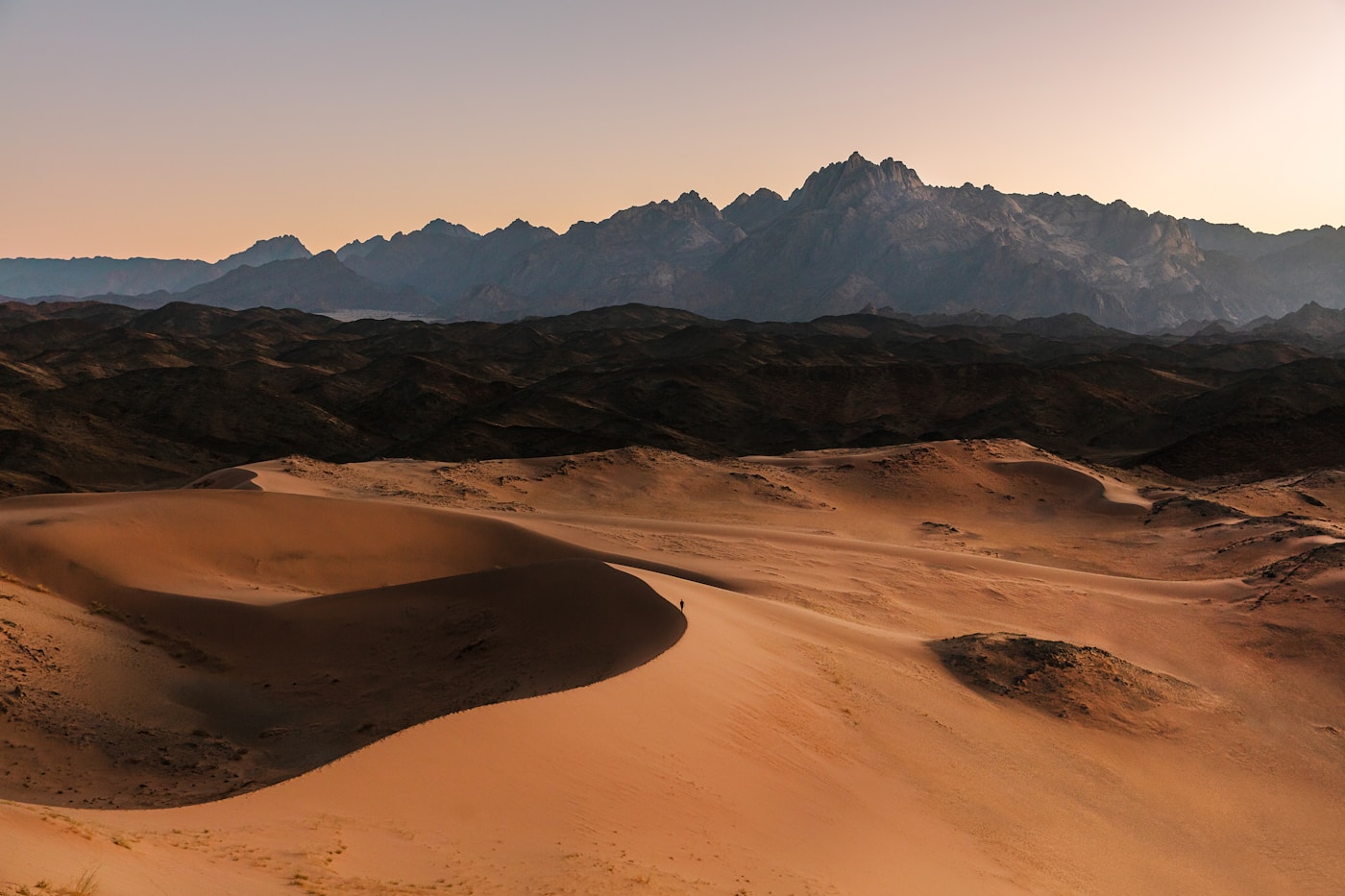
NEOM is a $500 billion megaproject in northwest Saudi Arabia that Crown Prince Mohammed bin Salman announced in October 2017 as the centrepiece of Vision 2030. Spanning 26,500 square kilometres along the Red Sea coast — an area roughly the size of Belgium — NEOM was conceived as an entirely new kind of city: a living laboratory for advanced technology, renewable energy, and cognitive urbanism, funded by the Public Investment Fund and governed by its own regulatory framework independent of Saudi Arabia’s existing legal system.
The name itself is a compound of the Greek prefix neo (new) and the Arabic letter meem, the first letter of mustaqbal (future). The branding captured the ambition: a clean-sheet jurisdiction where autonomous vehicles, drone delivery, robotic services, and artificial intelligence would be woven into the urban fabric from day one. International architects, management consultants, and engineering firms were recruited in their thousands. At its peak, NEOM employed more than 5,000 direct staff and engaged tens of thousands of contractor personnel across what became the world’s largest construction site.
By 2026, however, NEOM has entered a period of strategic recalibration. The original vision of a 170-kilometre linear city housing 9 million people, a floating industrial port, a mountain ski resort, and a luxury island chain has collided with fiscal reality, engineering constraints, and lower oil revenues. Understanding what NEOM actually is today — versus what it was announced as — is essential for any business or investor considering engagement with the project.
NEOM’s Major Components: What Is Actually Being Built
NEOM is not a single project. It is an umbrella for several distinct sub-projects, each at a different stage of development and viability. For businesses evaluating opportunities, the distinction matters enormously. A contract with Oxagon carries a fundamentally different risk profile than a contract linked to The Line.
The Line: Scaled Back but Not Abandoned
The Line was NEOM’s signature proposition — a pair of parallel 500-metre-tall mirrored skyscrapers stretching 170 kilometres through the desert, housing 9 million people with zero cars, zero streets, and zero carbon emissions. It was, by any measure, the most audacious urban planning concept ever announced by a sovereign state.
Reality has intervened decisively. Construction on The Line was suspended in September 2025. In March 2026, NEOM terminated a $1 billion tunnel contract with Hyundai Engineering & Construction that sat at the heart of the project. The first phase has been scaled down to approximately 2.4 kilometres in length with a target completion date pushed to 2034 — timed for Saudi Arabia’s hosting of the FIFA World Cup rather than any organic demand milestone. The original target of 1.5 million residents by 2030 has been reduced to 300,000.
For businesses, The Line is now a long-horizon play. Construction and engineering contracts linked to it carry execution risk that was not present when the project was advancing at full speed. Firms already engaged may find contracts restructured, deferred, or terminated outright, as the Hyundai case demonstrates.
Oxagon: The Industrial Anchor
Oxagon is NEOM’s industrial and innovation zone, situated on the Red Sea coast near the existing port town of Duba. Of all NEOM’s components, Oxagon has the strongest commercial logic and the clearest path to operational viability.
The zone is anchored by two flagship developments. First, the NEOM Green Hydrogen Company — an $8.4 billion joint venture between NEOM, ACWA Power, and Air Products — which reached 90 percent completion in early 2026 and is on track for first commercial production in 2027. The facility will produce 600 tonnes of green hydrogen per day, converted into green ammonia for export, powered by 4 GW of dedicated solar and wind capacity.
Second, Oxagon secured a $5 billion partnership with DataVolt in February 2026 to build a 1.5 GW hyperscale AI data centre campus, expected to be operational by 2028. The facility will use Red Sea seawater for cooling and proximity to subsea fibre-optic cables for low-latency international data transmission. This partnership signals a strategic pivot: NEOM’s leadership now sees AI infrastructure as a more commercially viable use of the zone’s renewable energy assets than many of the original residential and tourism concepts.
For businesses in clean energy, data infrastructure, advanced manufacturing, and logistics, Oxagon represents the most tangible NEOM opportunity available today.
Sindalah: The Luxury Island That Stalled
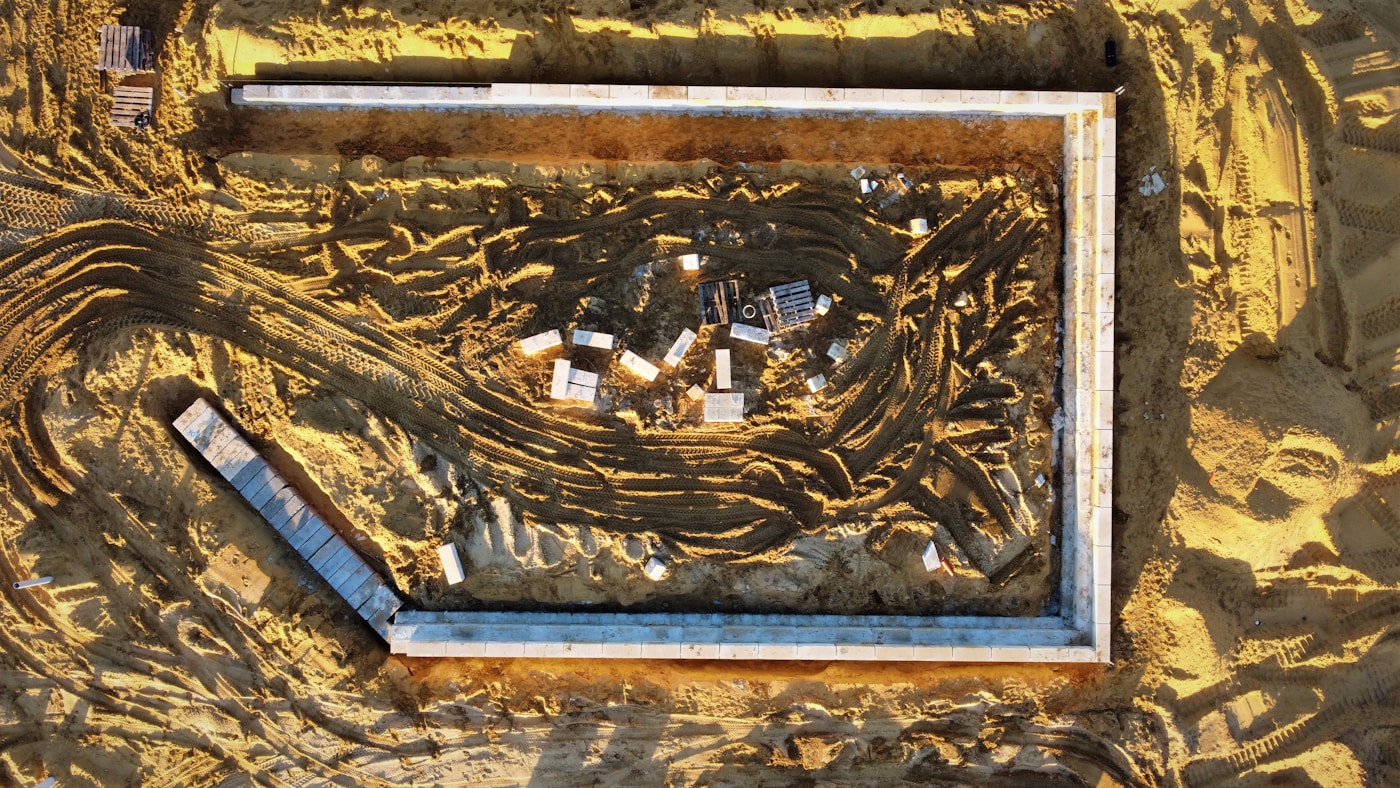
Sindalah, a luxury resort island in the Red Sea, held a “grand opening” event in October 2024 attended by international celebrities and media. Yet as of early 2026, the island remains closed to public guests. The project arrived approximately three years behind schedule and reportedly at three times its initial budget, with costs approaching $4 billion. Management of the island is being transferred to a different entity as part of NEOM’s broader restructuring.
For hospitality and tourism businesses, Sindalah illustrates a recurring pattern in NEOM’s development: ambitious announcements followed by protracted delays and management changes. Firms considering hospitality partnerships should conduct thorough due diligence on counterparty stability and contractual protections.
Trojena: The Mountain Resort in Difficulty
Trojena was designed as a year-round mountain tourism destination at 1,500 metres elevation in the Sarawat Mountains, centred on an outdoor ski facility. Its marquee event — hosting the 2029 Asian Winter Games — was indefinitely postponed in January 2026. Industry analysts score Trojena in the low-viability, critical-risk category among NEOM’s sub-projects.
Investment exposure to Trojena-linked contracts should be approached with particular caution. The postponement of the Asian Winter Games removes the hard deadline that was driving construction timelines and procurement activity.
The $500 Billion Reality Check
When Crown Prince Mohammed bin Salman announced NEOM in 2017, the $500 billion headline figure captured global attention. Nine years later, the financial picture looks materially different.
At a December 2024 board meeting, PIF approved a minimum 20 percent reduction in spending across its portfolio of over 100 companies, including more than 50 development entities linked to giga-projects. Some individual project budgets were reduced by as much as 60 percent. PIF’s cash reserves fell to approximately $15 billion by late 2024 — their lowest level since 2020.
In August 2025, PIF took an $8 billion writedown on its megaproject portfolio. PIF Governor Yasir Al-Rumayyan indicated that the fund is finalising a revised 2026–2030 strategy aimed at becoming a more “efficient and returns-driven investment vehicle,” with a further 15 percent reduction in capital spending anticipated.
The workforce has been affected directly. NEOM considered laying off up to 1,000 employees — roughly 20 percent of its direct staff — with remaining employees relocated from the remote construction site to Riyadh, losing on-site benefits including housing and meals in what amounted to a de facto pay cut. NEOM’s founding CEO Nadhmi Al-Nasr departed and was replaced by Aiman Al-Mudaifer, who launched a comprehensive review of project scope and priorities.
None of this means NEOM is “cancelled.” It means the project has entered a phase of fiscal discipline where spending must demonstrate commercial returns rather than merely advancing a national narrative. For investors, this is arguably a healthier foundation than the blank-cheque era that preceded it — but it requires recalibrating expectations around timelines, scale, and counterparty reliability.
Investment Opportunities: Where the Money Is Going
Despite the restructuring, NEOM continues to offer genuine investment opportunities — provided investors focus on the components that have survived the strategic review with their funding intact.
Green Hydrogen and Clean Energy
The NEOM Green Hydrogen Company is the most advanced and commercially credible element of the entire NEOM portfolio. The $8.4 billion facility, a joint venture between NEOM, ACWA Power, and Air Products, is over 90 percent complete. Powered by 4 GW of dedicated solar and wind generation, it will produce green ammonia for export to Asian and European markets where hydrogen demand is growing rapidly. ENOWA, NEOM’s dedicated energy and water company, manages the broader energy infrastructure and is actively seeking investment partners.
Opportunities exist in solar and wind component supply chains, electrolyser technology, ammonia transport logistics, and downstream hydrogen applications. The green hydrogen sector at NEOM benefits from genuine competitive advantages — abundant solar irradiance, Red Sea port access, and a regulatory environment designed to fast-track renewable projects.
AI Infrastructure and Data Centres
The $5 billion DataVolt partnership represents NEOM’s strategic pivot toward AI infrastructure. The hyperscale data centre campus at Oxagon will integrate high-density computing architectures designed for generative AI workloads. Opportunities exist in data centre construction, cooling systems, networking equipment, power distribution, and managed services. Saudi Arabia’s broader ambition to become a regional AI hub provides policy tailwinds that extend beyond NEOM itself.
Advanced Manufacturing
Oxagon’s industrial zone is positioned to attract manufacturers in robotics, autonomous systems, construction technology, and industrial IoT. Firms that can combine manufacturing capability with innovation credentials are well-positioned for procurement opportunities. NEOM’s supplier portal (SAP Ariba-based) remains the primary registration channel for contractors and service providers across all categories, from construction materials to IT services, catering, and professional services.
Real Estate and Hospitality
While The Line and Sindalah have been scaled back, NEOM’s tourism ambitions have not been entirely abandoned. Oxagon’s waterfront development and any eventual restart of Sindalah’s guest operations will create hospitality management, food and beverage, and luxury retail opportunities. However, these are longer-horizon plays with less certainty than the energy and technology sectors. Minimum investment thresholds for real estate developments start at $50 million, with technology ventures from $10 million.
How Businesses Can Engage with NEOM
Engaging with NEOM as a business partner, supplier, or investor follows a structured process that differs from typical Saudi commercial interactions. NEOM operates under its own regulatory framework with distinct procurement channels.
The NEOM Supplier Portal
All contractors and service providers must register through NEOM’s official procurement portal, built on SAP Ariba. Registration requires demonstrating relevant experience, financial capacity, and compliance with NEOM’s sustainability and innovation standards. The portal covers everything from large-scale construction and engineering contracts to IT services, human resources, facilities management, and professional advisory.
Firms based in Riyadh can also register directly through NEOM’s local procurement presence. The prequalification database segments firms by construction, technology, and professional services categories. Registration is free but the qualification review process can take several weeks.
NEOM Investment Fund (NIF)
The NEOM Investment Fund is NEOM’s strategic investment arm, supporting 15 economic sectors through new commercial ventures. NIF backs technology startups, infrastructure projects, and commercial businesses that align with NEOM’s development priorities. Investment structures include joint ventures, build-operate-transfer arrangements, and public-private partnerships.
Firms seeking NIF investment should approach through the NEOM Investment Office, which evaluates proposals based on technology differentiation, scalability within the NEOM ecosystem, and alignment with the zone’s sustainability objectives.
NEOM’s Regulatory Framework and Free Zone Benefits
NEOM operates as a special economic zone with its own regulatory authority, distinct from the broader Saudi free zone system. Key benefits include 100 percent foreign ownership across most commercial and industrial sectors, a distinct tax regime with potential tax holidays, duty-free imports, subsidised utilities, and faster permit and visa approvals compared to mainland Saudi Arabia.
Company registration in NEOM typically takes two to four weeks and can be completed remotely without travelling to Saudi Arabia, provided the applicant works with a verified consultant. However, it is worth noting that some implementation details regarding zone-specific regulations, maximum ownership percentages in certain sectors, and complete regulatory guidelines are still being finalised by authorities — a consequence of the broader restructuring underway.
NEOM Tech & Digital Company
NEOM Tech & Digital Company is the technology subsidiary responsible for building NEOM’s digital backbone — the networks, platforms, and cognitive systems that are supposed to differentiate NEOM from every other special economic zone on earth. The division covers smart city infrastructure, IoT sensor networks, digital twin platforms, and AI-powered urban management systems.
In practice, NEOM Tech’s scope has been affected by the same cost pressures as other NEOM divisions. The original vision of a fully autonomous, AI-managed urban environment has been tempered by the reality that you need residents and operating businesses before you need a cognitive city platform to manage them. Nonetheless, NEOM Tech continues to recruit — primarily in software engineering, data science, cybersecurity, and network architecture — and technology firms with solutions in smart infrastructure, edge computing, or urban automation may find partnership opportunities.
Working at NEOM: Jobs and Careers
NEOM has employed personnel from more than 100 countries across engineering, construction, technology, finance, hospitality, and administration. At its peak, the direct workforce exceeded 5,000, with tens of thousands more employed by contractors including Bechtel, AECOM, Parsons, and Jacobs.
The 2025–2026 restructuring has materially changed the employment landscape. Direct staff reductions of approximately 20 percent were implemented, with remaining employees relocated from the remote site to Riyadh — losing on-site benefits that constituted a significant portion of total compensation. Approximately 90 percent of the workforce works for contractors rather than NEOM directly, meaning that contract terminations like the Hyundai case have ripple effects through the supply chain.
Current opportunities are concentrated in energy (green hydrogen operations), technology (data centre build-out), and project management. NEOM continues to recruit through its official careers portal at careers.neom.com and through LinkedIn. Compensation remains competitive by regional standards — tax-free salaries above Dubai and Riyadh benchmarks — though the relocation of operations to Riyadh has reduced the premium associated with site-based roles.
Risks and Due Diligence Considerations
Any business or investor evaluating NEOM opportunities should conduct rigorous due diligence across several dimensions.
Counterparty risk. NEOM’s restructuring has resulted in contract terminations, project deferrals, and management changes. Contracts should include robust termination compensation clauses and milestone-based payment structures rather than large upfront commitments.
Timeline risk. Every major NEOM sub-project has experienced significant delays. The Line’s first phase completion has moved from 2025 to 2034. Sindalah arrived three years late. Trojena’s anchor event was indefinitely postponed. Business plans predicated on NEOM timelines should build in substantial contingency.
Regulatory uncertainty. While NEOM’s independent regulatory framework offers attractive benefits on paper, implementation details remain under development. Firms should seek written regulatory commitments rather than relying on promotional materials.
Reputational risk. NEOM has faced international criticism over the displacement of the Huwaitat tribe, labour conditions on the construction site, and environmental concerns. Companies with ESG commitments should assess reputational implications of NEOM association.
Concentration risk. Over-reliance on a single NEOM contract or sub-project creates vulnerability to the kind of strategic pivots that have characterised the project since 2024. Diversification across NEOM components — or treating NEOM as one element of a broader Saudi market entry — is advisable.
The Strategic Pivot: From Megacity to AI Hub
The most significant development for NEOM’s commercial future is not any individual construction milestone but the emerging strategic pivot from futuristic megacity to industrial and digital infrastructure hub. The DataVolt data centre partnership, the green hydrogen plant nearing completion, and the de-emphasis of residential mega-structures like The Line all point in the same direction: NEOM’s leadership and its PIF shareholders now prioritise projects that generate commercial returns over projects that generate headlines.
For businesses, this pivot creates a more rational operating environment. Data centres need power, cooling, connectivity, and maintenance — conventional business inputs with established supply chains. Green hydrogen production requires engineering, logistics, and offtake agreements. These are sectors where commercial logic can be evaluated using standard financial metrics, unlike the original vision of a 170-kilometre mirrored city that defied conventional cost-benefit analysis.
The question is no longer whether NEOM will become everything it promised to be. It will not. The question is whether the scaled-back, commercially focused NEOM that is emerging from the restructuring represents a viable business opportunity. For firms in energy, AI infrastructure, and advanced manufacturing with the risk appetite and contractual protections to operate in a project still finding its final shape, the answer is cautiously yes.
Key Resources for Businesses
Firms evaluating NEOM engagement should consult the following resources:
- NEOM Supplier Portal: neom.com/en-us/our-business/suppliers — procurement registration and tender access
- NEOM Investment Office: neom.com/en-us/invest/neom-investment-office — investment structures and NIF opportunities
- ENOWA (Energy): enowa.neom.com — energy and water investment opportunities
- NEOM Careers: careers.neom.com — direct employment opportunities
- U.S. Commercial Service: trade.gov — NEOM construction opportunity assessments for American firms
For broader context on doing business in the Kingdom, see our guides to doing business in Saudi Arabia, investing in Saudi Arabia, and the Public Investment Fund.