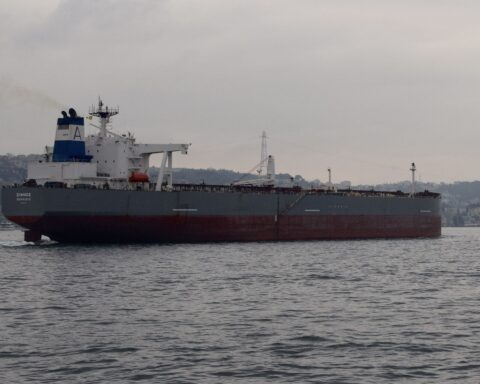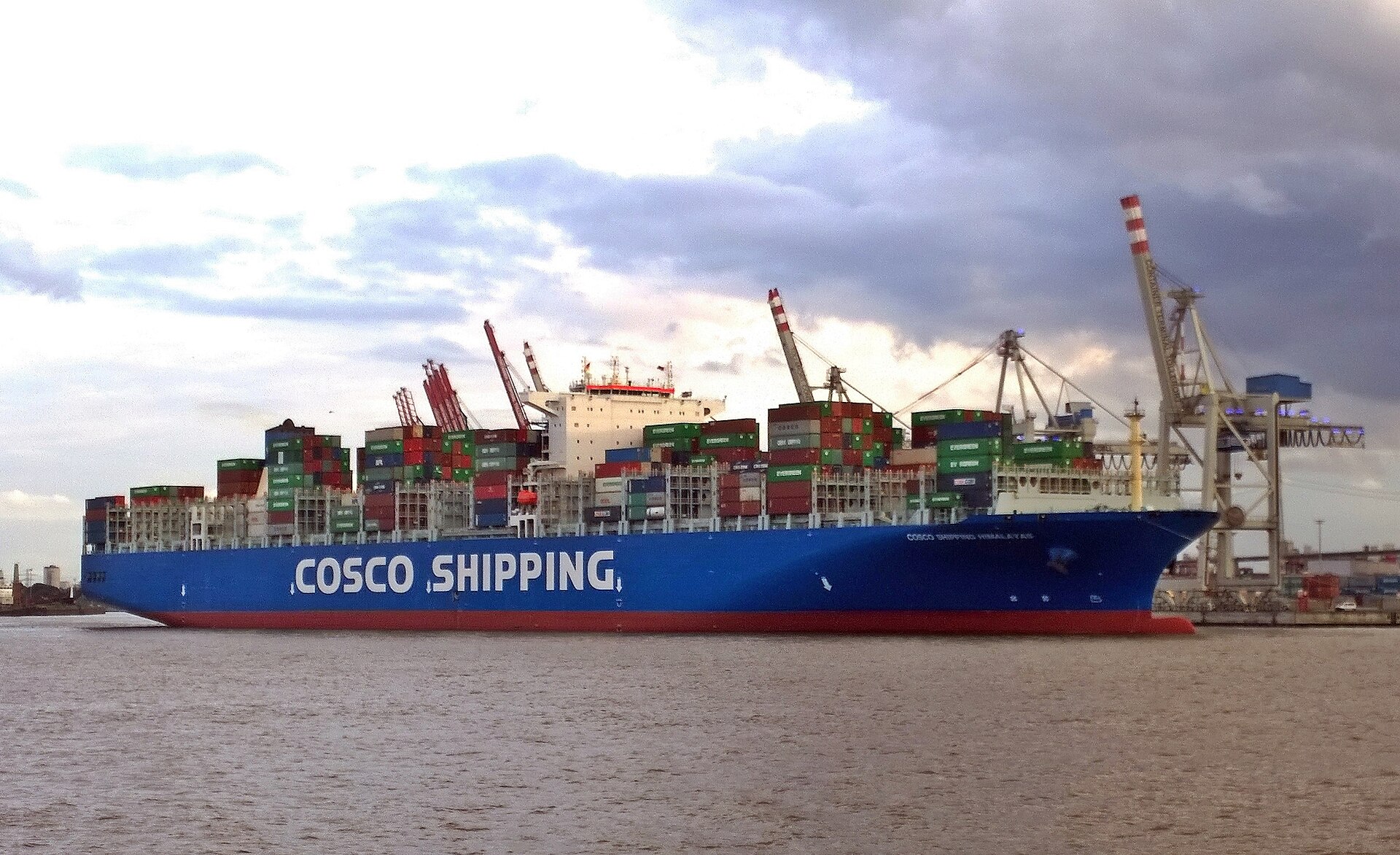

JEDDAH — China’s state-owned shipping giant COSCO resumed commercial deliveries to the Persian Gulf on March 25, making it the first major international carrier to restore services to the region since Iran effectively closed the Strait of Hormuz nearly four weeks ago. The move followed a series of quiet transits by Chinese-owned vessels through the strait under what amounts to a selective access regime imposed by Tehran, transforming the world’s most critical energy chokepoint into a geopolitical sorting mechanism that separates Iran’s allies from its adversaries.
The resumption carries enormous implications for Saudi Arabia, whose largest oil customer is China. With container and tanker traffic through Hormuz down more than 90 percent since the US-Israeli bombing campaign against Iran began on February 28, Riyadh has been forced to reroute exports through the Red Sea port of Yanbu at great expense. Beijing’s ability to move ships through the strait — while Western-flagged and Gulf-flagged vessels remain locked out — threatens to redraw the commercial map of the Gulf in ways that outlast the war itself.
Table of Contents
- COSCO Restores Gulf Routes After Three-Week Suspension
- Which Chinese Ships Have Transited the Strait of Hormuz?
- How Is Iran Deciding Which Ships Can Pass Through Hormuz?
- The Yuan Toll Booth at the World’s Oil Chokepoint
- What Does This Mean for Saudi Arabia’s Oil Exports?
- From 138 Ships a Day to Six
- Beijing’s Neutrality Pays a Dividend
- Frequently Asked Questions
COSCO Restores Gulf Routes After Three-Week Suspension
China Ocean Shipping Company, known as COSCO, handles roughly 10 percent of all global seaborne freight, according to industry data compiled by Lloyd’s List Intelligence. On March 4, one week after the Iran war began, COSCO suspended all container services to the Middle East, citing the risk of Iranian attacks on commercial shipping in and around the Strait of Hormuz.
Three weeks later, on March 25, the company announced it was accepting standard container bookings from Asia to ports in the United Arab Emirates, Saudi Arabia, Bahrain, Qatar, Kuwait, and Iraq. A notice to customers stated that “bookings and transportation were subject to change in view of the volatile situation in the Middle East,” according to a copy of the advisory reviewed by Newsweek.
The decision made COSCO the first major global carrier to resume Gulf services. European shipping lines Maersk, MSC, and Hapag-Lloyd have not yet followed, and none of the major Japanese or South Korean carriers have signalled plans to resume. The contrast between COSCO’s willingness to enter the strait and the continued absence of Western carriers reflects a new reality in the Persian Gulf: China’s commercial fleet now operates in a space that remains effectively closed to almost everyone else.
Which Chinese Ships Have Transited the Strait of Hormuz?
At least three Chinese-owned vessels have completed transits of the Strait of Hormuz since the war began, according to ship-tracking data from Lloyd’s List Intelligence and maritime analytics firm Windward.
The first confirmed Chinese transit involved the Danuta I, a Palau-flagged liquefied petroleum gas carrier owned by a Chinese company. The vessel passed through the strait around March 6 — barely a week into the conflict — and has since passed through the Strait of Malacca near Singapore en route to Fujian province in southeastern China, the South China Morning Post reported.
A second transit was completed by the Newvoyager, a medium-sized Chinese-owned container ship that passed through the strait on a Sunday in late March. According to Lloyd’s List Intelligence, the vessel “slipped down a narrow channel past the red sands of Larak Island soon after sunrise” and emerged safely in the Arabian Sea while broadcasting the message “ALL CREW CHINA,” as reported by the Christian Science Monitor.
The most recent confirmed transit involved the Lucky Gas, a Panama-flagged LPG carrier owned by Hong Kong-registered Shunhang Ship Management. The vessel navigated near Larak Island in Iranian waters on March 25 and arrived at Sohar, Oman, the following morning. It was the first Chinese-owned LPG carrier to transit the strait since Iran proposed its “safe corridor” system in mid-March, the South China Morning Post reported.
A Thai crude oil tanker that had been anchored since March 11 also transited the strait in the same period, suggesting that access is not limited exclusively to Chinese vessels but extends to nations that have avoided taking sides in the conflict.
How Is Iran Deciding Which Ships Can Pass Through Hormuz?
Iran’s Foreign Minister Abbas Araghchi announced on March 26 that ships from five nations — China, Russia, India, Iraq, and Pakistan — would be permitted to transit the Strait of Hormuz. In a statement carried by Iranian state media, Araghchi declared: “The Strait of Hormuz is open to everyone, and ships can pass through safely. But countries currently at war are not under consideration.”
The announcement formalized what had already become apparent from ship-tracking data. In a letter sent to the 176 members of the International Maritime Organization, Iran said “non-hostile vessels” could “benefit from safe passage through the Strait of Hormuz in coordination with the competent Iranian authorities,” provided they neither participate in nor support “acts of aggression” against Iran and “fully comply with declared safety and security regulations.”
The five-nation list is notable for what it reveals about Tehran’s strategic calculus. China and Russia are Iran’s most important diplomatic and economic partners, and both have declined to condemn the original US-Israeli strikes that triggered the war. India, despite its close defence ties to the United States, has maintained a deliberately neutral posture and remains one of Iran’s largest oil customers. Iraq shares a 1,458-kilometre border with Iran and hosts powerful Iranian-backed militias. Pakistan has positioned itself as the primary diplomatic intermediary between Washington and Tehran, relaying messages between the two governments.
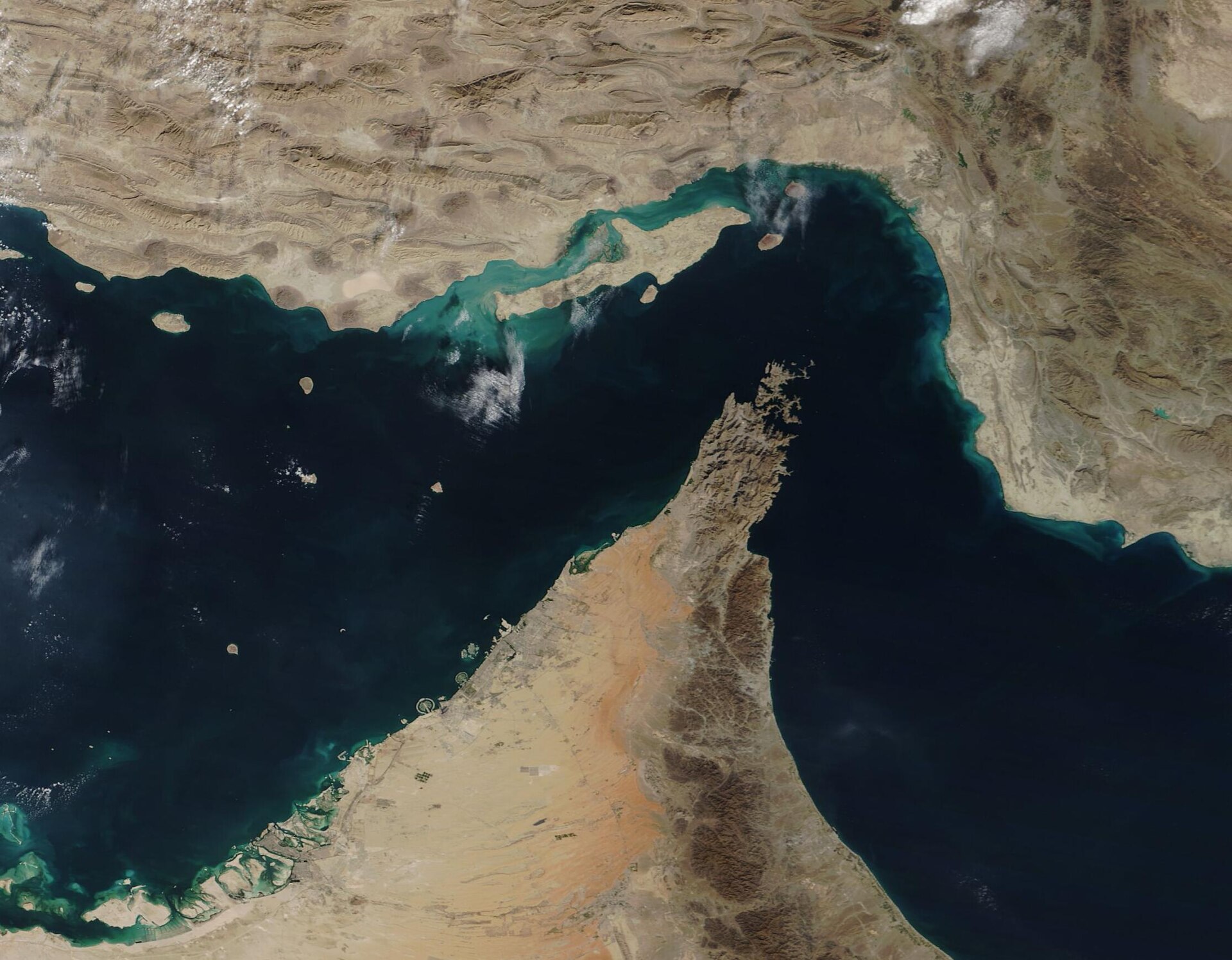
The nations excluded from the arrangement include the United States, the United Kingdom, France, Israel, and the six Gulf Cooperation Council states — Saudi Arabia, the UAE, Kuwait, Bahrain, Qatar, and Oman — whose territory has been used to support or facilitate coalition operations against Iran. Iran’s Islamic Revolutionary Guard Corps Navy has attacked approximately 20 civilian vessels in or near the strait since the war began, according to data compiled by Al Jazeera, targeting ships based on their flag state, ownership, and perceived affiliation with belligerent nations.
The Yuan Toll Booth at the World’s Oil Chokepoint
Iranian parliamentarian Alaeddin Boroujerdi told state media that Tehran would charge $2 million per vessel for safe passage through the strait. “After 47 years, there is a new, de facto sovereign regime in the Strait of Hormuz,” Boroujerdi declared, a reference to Iran’s claims of sovereignty over the waterway dating back to the 1979 revolution.
Iran’s embassy in India subsequently walked back the fee claim, stating that Boroujerdi’s comments “merely reflect the personal views of individuals and do not, in any way, represent the official position of the Islamic Republic of Iran.” The denial, however, was contradicted by ship-tracking and financial data that pointed to payments being made.
According to Lloyd’s List Intelligence, at least two vessels that have transited the strait paid fees in yuan — China’s currency — with one transit brokered by a Chinese maritime services company acting as an intermediary. The use of yuan rather than dollars for transit fees carries symbolic and practical significance. It signals that the Chinese-mediated commerce flowing through the strait is operating entirely outside the US dollar system, in a corridor policed by Iranian naval forces and facilitated by Chinese commercial brokers.
Before the conflict, standard war-risk insurance premiums for a Hormuz transit ran between 0.15 and 0.25 percent of hull value for a one-week policy. Since the fighting began, premiums have surged to between 5 and 10 percent of hull value, according to data reported by Bloomberg and Insurance Journal. For a very large crude carrier worth approximately $100 million, that translates to several million euros in additional costs for a single transit — a figure that makes commercial shipping economically unviable for most operators even if physical access were restored.
What Does This Mean for Saudi Arabia’s Oil Exports?
China imported an average of 1.72 million barrels per day of crude oil from Saudi Arabia in 2025, according to data from Trading Economics, accounting for 21.1 percent of China’s total crude imports. The bilateral crude trade was worth $47.91 billion in 2024. Saudi Arabia is consistently China’s second- or third-largest oil supplier, behind Russia and competing with Malaysia for position.
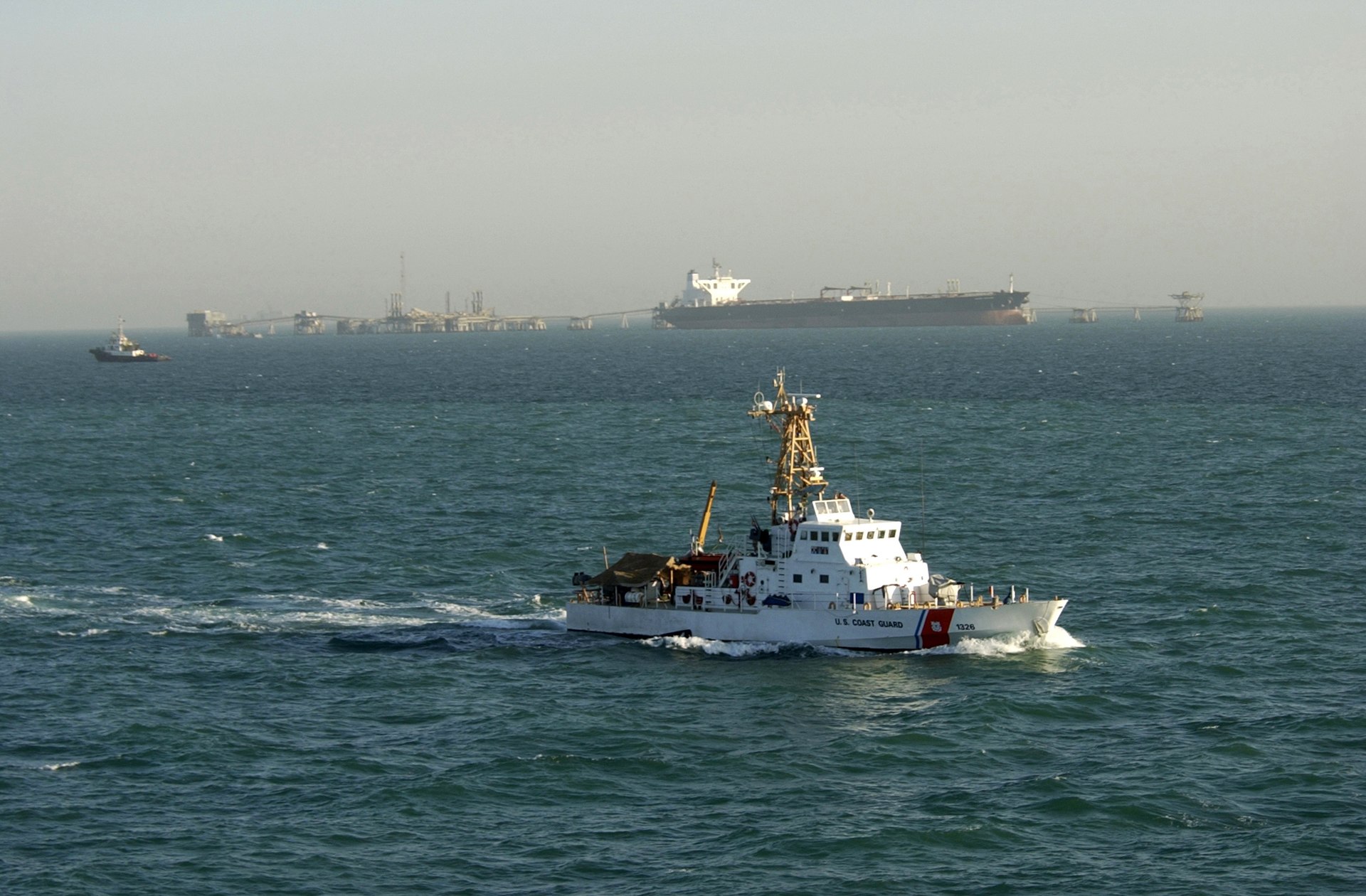
The Hormuz closure has forced Saudi Aramco to reroute the bulk of its exports through the 1,200-kilometre East-West Crude Oil Pipeline to the Red Sea port of Yanbu. Ship-tracking data cited by Bloomberg shows that crude exports from Yanbu have surged to a five-day rolling average of 3.66 million barrels per day — roughly half of Saudi Arabia’s pre-crisis export levels. More than 30 tankers were present at Yanbu port and anchorage as of late March, with 64 additional crude oil tankers signalling Yanbu as their destination.
Yet the Yanbu workaround has limits. The East-West Pipeline has a maximum capacity of approximately 5 million barrels per day, and it was not designed to handle sustained full-capacity throughput. Aramco has already cut overall production by 20 percent and shut down two supergiant offshore oil fields in the Eastern Province, according to a report by OilPrice.com.
China’s ability to move its own ships through Hormuz complicates the picture for Riyadh. If Chinese-flagged or Chinese-owned tankers can load directly at Saudi terminals in the Eastern Province — Ras Tanura, Ju’aymah — and transit the strait under Iranian protection, Beijing could theoretically bypass the Yanbu bottleneck entirely. That would give China preferential access to Saudi crude at a time when European and Japanese buyers are scrambling for alternative supplies routed through the Red Sea at higher cost.
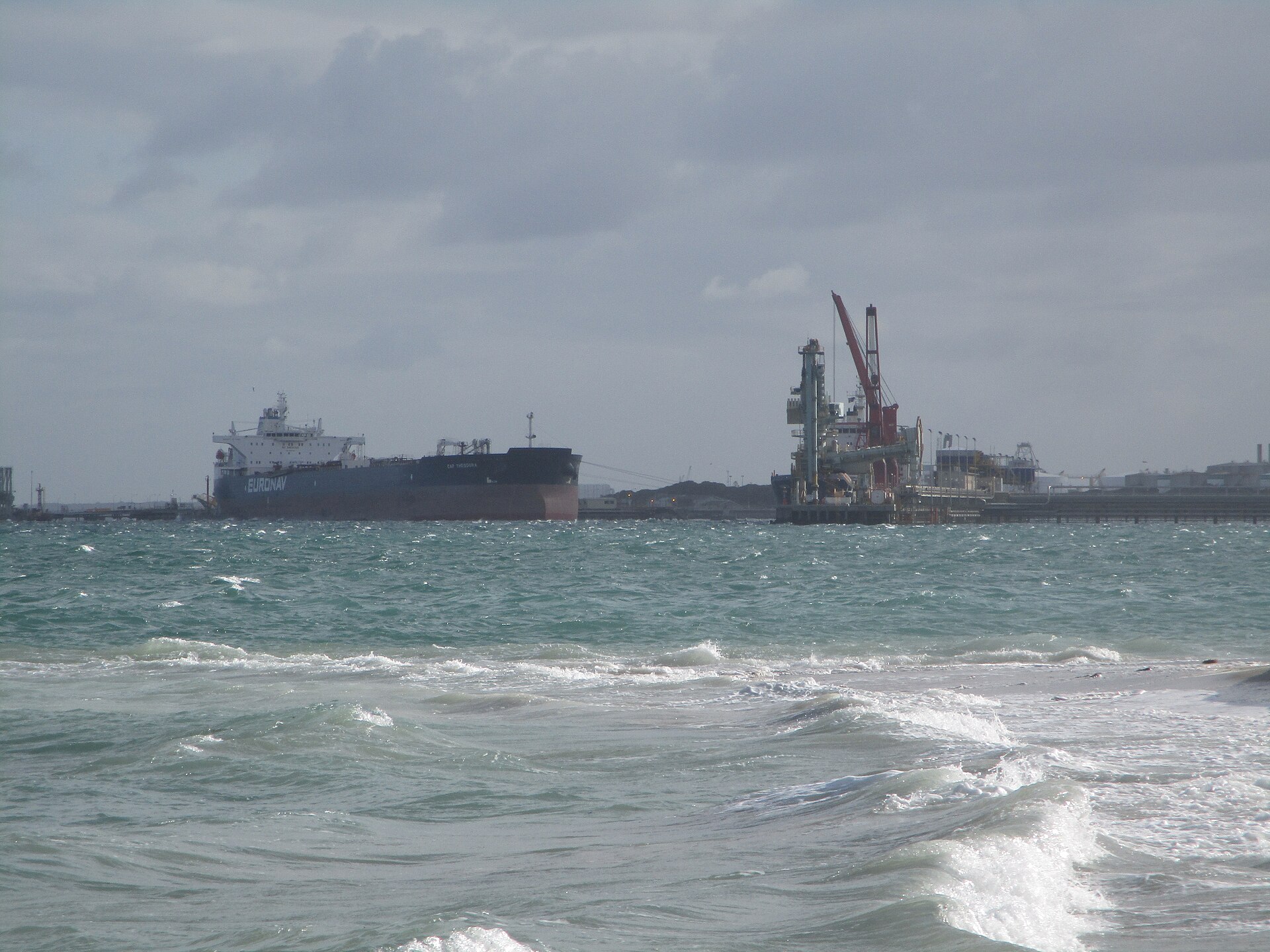
No public evidence yet confirms that Chinese tankers have loaded Saudi crude from Eastern Province terminals and transited Hormuz outbound. But the infrastructure and permissions now exist for such movements, and the commercial incentive is considerable. Brent crude stood at $105.85 per barrel on March 26, according to Fortune, roughly $32 above its price a year earlier. Any customer that can obtain crude more cheaply by avoiding the Red Sea detour has a powerful incentive to do so.
From 138 Ships a Day to Six
The scale of the Hormuz shutdown is without precedent in modern maritime history. Before the war, an average of 138 commercial vessels transited the strait daily, carrying approximately 20 million barrels of oil per day — roughly 20 percent of all global seaborne oil trade, according to the International Energy Agency.
By late March, daily transits had fallen to single digits. On one recent Monday, just six ships passed through the strait, according to Newsweek. During the third week of the conflict, maritime analytics firm Windward recorded only 16 vessels transiting the strait across the entire seven-day period — barely two per day.
The collapse is largely driven by the withdrawal of war-risk insurance. Lloyd’s of London’s Joint War Committee expanded its list of high-risk maritime areas to include waters around Oman, effectively placing the entire approach to the strait under elevated risk classification. While Lloyd’s confirmed that cover remains technically available, the cost — 5 to 10 percent of hull value per transit — has priced most operators out of the market.
| Metric | Pre-War (February 2026) | Late March 2026 | Change |
|---|---|---|---|
| Daily vessel transits | 138 | 6 | -96% |
| Weekly vessel transits | ~966 | ~16 | -98% |
| Oil throughput (million bpd) | ~20 | <1 | -95%+ |
| War-risk insurance (% of hull) | 0.15-0.25% | 5-10% | +2,000-4,000% |
| Civilian vessels attacked | 0 | ~20 | — |
The IEA reported on March 12 that global crude oil production was being curtailed by at least 8 million barrels per day, with significant reductions from Iraq, Qatar, Kuwait, the UAE, and Saudi Arabia — all producers dependent on Hormuz for export access. The agency described the disruption as the largest supply shock in recorded history, exceeding the 1973 Arab oil embargo and the 1979 Iranian Revolution.
US Treasury Secretary Scott Bessent announced on March 26 that a $20 billion reinsurance programme backed by the US International Development Finance Corporation would begin “soon,” offering insurance guarantees paired with naval escorts to help revive tanker traffic through the strait. No timeline for the programme’s activation was provided, and shipping industry analysts have expressed scepticism that government-backed insurance alone can overcome the physical risk posed by Iranian naval and drone operations in the strait’s narrow channels.
Beijing’s Neutrality Pays a Dividend
China’s ability to sail through a waterway that remains closed to most of the world reflects a deliberate strategic positioning by Beijing since the war began. Chinese Foreign Minister Wang Yi told his Iranian counterpart Araghchi that “China will continue to maintain an objective and impartial stance” on the conflict. A Chinese Foreign Ministry spokesperson added that Beijing was “deeply concerned about the continued escalation and spillovers, which have dealt a blow to regional and international peace and stability.”
Beneath the diplomatic language, China has adopted a posture that maximizes commercial advantage while minimizing political exposure. Beijing has not joined Western sanctions on Iran, has not contributed military assets to the US-led coalition operating in the Gulf, and has not voted in favour of the UN resolution demanding Iran halt attacks. Simultaneously, China has voiced displeasure with Iran’s attacks on Gulf countries, maintaining enough distance from Tehran to avoid being drawn into the conflict while remaining close enough to benefit from the access Iran is offering.
The result is a form of strategic free-riding that rewards Beijing at the expense of virtually every other major economy. European and Japanese manufacturers, unable to source Gulf crude through Hormuz, are paying premium prices for oil rerouted through longer supply chains. South Korea has declared a partial energy emergency. Indian crude imports from the Gulf have been severely disrupted despite India’s inclusion on Iran’s five-nation access list, because Indian refiners rely heavily on tankers flagged to third countries that do not qualify for passage.
For Saudi Arabia, China’s ability to operate in the strait creates a complex diplomatic challenge. Riyadh cannot afford to alienate its largest oil customer at a time when the Houthis threaten Red Sea shipping lanes and Aramco is operating at reduced capacity. But the spectacle of Chinese vessels sailing freely through waters that Saudi-flagged ships cannot enter — with the tacit approval of the Iranian government that has been attacking Saudi territory — underscores a power imbalance that no amount of coalition diplomacy can quickly resolve.
The 609 foreign-flagged vessels that remained in the broader Arabian Gulf as of late March, according to Windward data, included 88 vessels with Chinese company ownership or management — the third-largest national contingent after Panama and the Marshall Islands. Whether those vessels eventually attempt outbound transits through Hormuz carrying Gulf crude will be among the most consequential commercial decisions of the war.
China’s record 11.6 million barrels per day of crude oil imports in 2025, according to US Energy Information Administration data, mean that any disruption to Gulf supply channels is felt acutely in Beijing. The five largest sources of Chinese crude last year — Russia, Saudi Arabia, Malaysia, Iraq, and Brazil — accounted for 62 percent of total imports. Three of those five suppliers (Saudi Arabia, Iraq, and to some extent Malaysia) depend on Hormuz-adjacent shipping routes. Maintaining access to the strait is not merely a commercial preference for Beijing but a matter of national energy security.
The broader question for the region is whether China’s preferential access becomes permanent. If the war ends and the strait reopens to all traffic, the episode may be remembered as a temporary anomaly. But if the conflict drags on — or if Iran retains the capacity to restrict access even after a ceasefire — the precedent of a two-tier Hormuz, in which certain nations enjoy guaranteed passage and others do not, could reshape the geopolitics of the Gulf energy trade for a generation. A deeper analysis of how Beijing’s broader Iran war strategy has exposed the limits of Chinese power suggests the two-tier Hormuz may be less an advantage than it appears.
China’s preferential access to the Strait raises a deeper strategic question. If Beijing is the only power maintaining commercial ties with Iran during the war, it may also position itself as the dominant force in Iran’s postwar reconstruction — a prospect that Saudi Arabia and the Gulf states cannot afford to ignore.
Frequently Asked Questions
Has COSCO fully resumed shipping to the Persian Gulf?
COSCO began accepting standard container bookings from Asia to the UAE, Saudi Arabia, Bahrain, Qatar, Kuwait, and Iraq on March 25, 2026. The company cautioned that operations remain subject to change given regional volatility. No other major international carrier has followed COSCO’s lead.
Which countries can send ships through the Strait of Hormuz?
Iran’s Foreign Minister Abbas Araghchi announced on March 26 that ships from China, Russia, India, Iraq, and Pakistan would be permitted to transit the strait. Vessels from nations participating in or supporting the US-Israeli military campaign against Iran are excluded. The five permitted nations share a pattern of diplomatic neutrality or alignment with Tehran.
How much does it cost to transit the Strait of Hormuz during the war?
An Iranian parliamentarian claimed Tehran would charge $2 million per vessel, though Iran’s embassy in India denied this was official policy. Lloyd’s List Intelligence reported that at least two vessels paid transit fees in yuan, brokered by a Chinese maritime services company. War-risk insurance premiums have surged from 0.15 to 0.25 percent of hull value to between 5 and 10 percent — making a single transit potentially cost several million euros for a large tanker.
Can Saudi oil still reach China?
Saudi Arabia has rerouted the majority of its crude exports through the Red Sea port of Yanbu via the 1,200-kilometre East-West Pipeline. China imported 1.72 million barrels per day of Saudi crude in 2025. If Chinese-owned tankers can load at Saudi Eastern Province terminals and transit Hormuz under Iranian protection, Beijing could bypass the Yanbu bottleneck — though no such movement has been publicly confirmed.
How much has Hormuz shipping traffic declined?
Daily vessel transits have fallen from a pre-war average of 138 to as few as six — a decline of more than 95 percent. During the third week of the conflict, only 16 vessels transited the strait across the entire week. Approximately 20 civilian vessels have been attacked by Iranian forces since the war began on February 28.