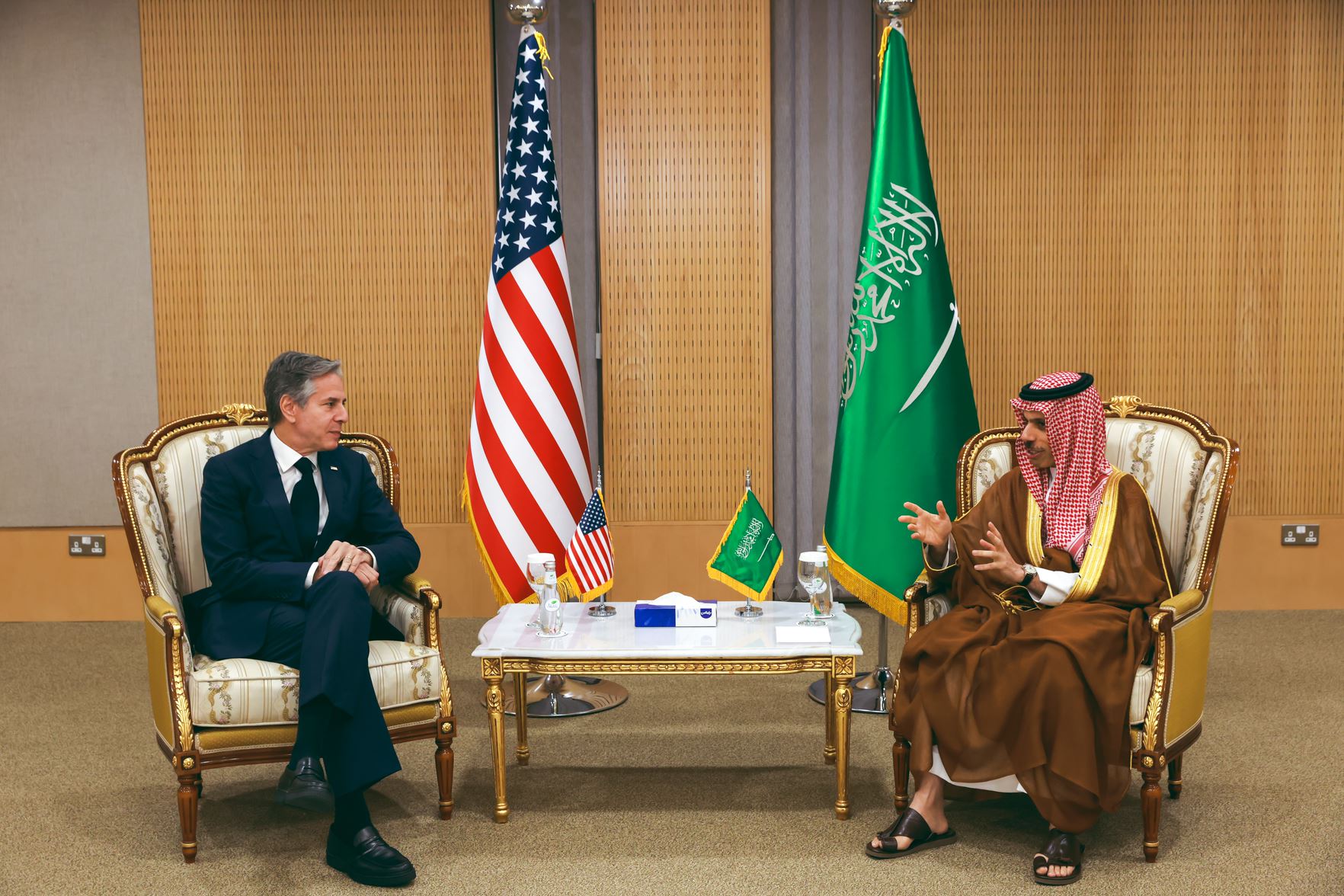

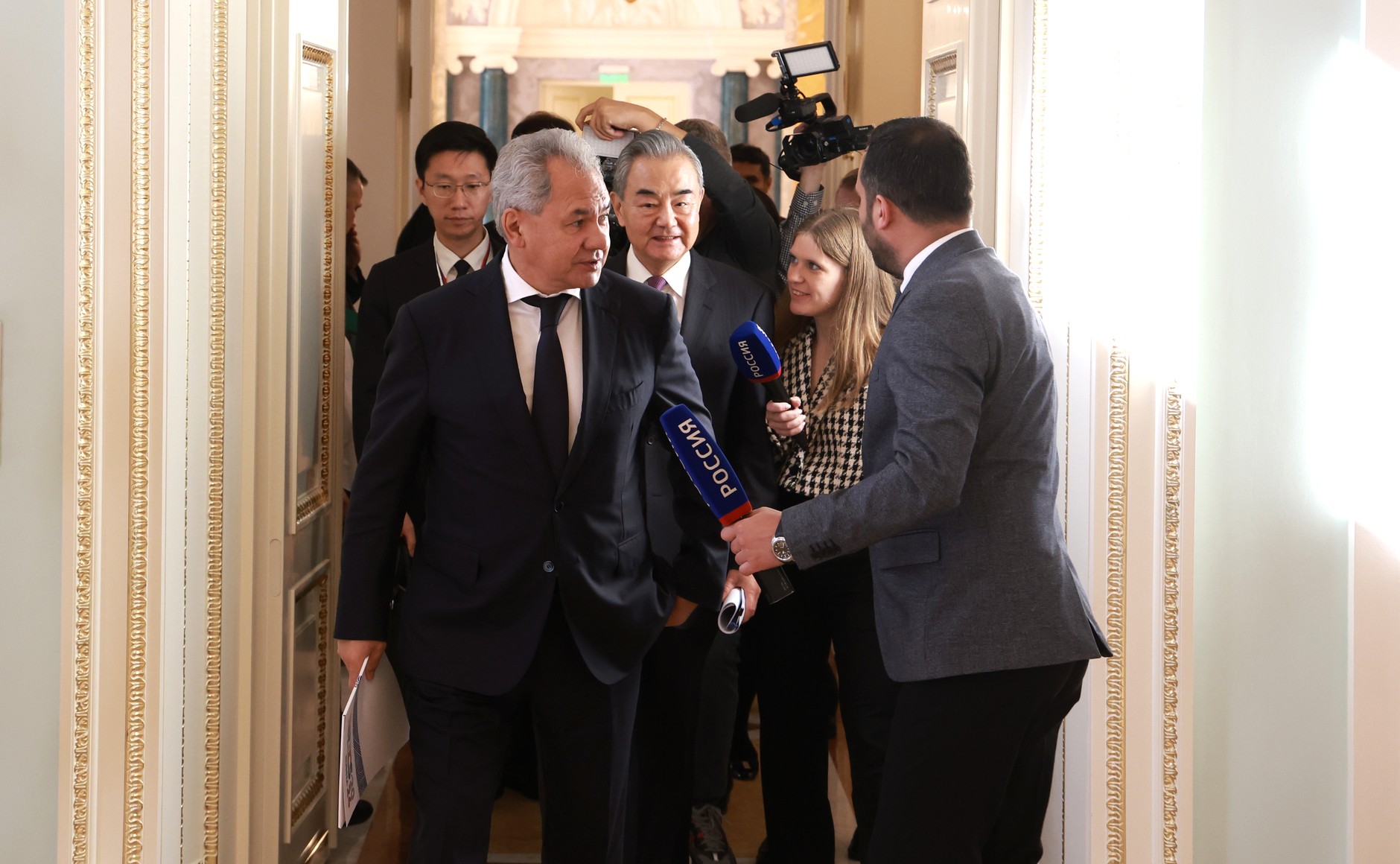
RIYADH — China’s special envoy on Middle East affairs, Zhai Jun, met Saudi Foreign Minister Prince Faisal bin Farhan Al Saud in Riyadh on Saturday, delivering Beijing’s five-point ceasefire proposal as the Iran war entered its second week with no end in sight. The meeting, confirmed by both China’s Ministry of Foreign Affairs and Saudi state media, marks the most significant diplomatic intervention by a non-Western power since US-Israeli strikes killed Ayatollah Ali Khamenei on February 28 and triggered a regional conflagration that has now reached every Gulf capital.
Zhai also met Jassim Mohammed Al-Budaiwi, secretary-general of the Gulf Cooperation Council, during his Riyadh visit, according to Arab News. The dual meetings signal Beijing’s determination to position itself as the only credible mediator between Washington and Tehran at a moment when European capitals have been largely absent and the United Nations Security Council remains paralysed by American vetoes.
The envoy’s arrival comes as Iranian missiles and drones continue to strike Saudi cities and infrastructure, oil prices remain above $110 per barrel, and the US State Department has ordered non-emergency personnel to leave the Kingdom. For Riyadh, the Chinese visit represents a diplomatic lifeline from its largest trading partner — and for Beijing, a chance to demonstrate that it can deliver what Washington cannot: a path to peace.
Table of Contents
- What Did China’s Envoy Discuss With Saudi Arabia’s Foreign Minister?
- What Is China’s Five-Point Ceasefire Plan?
- Why Is Beijing Mediating the Iran War?
- Saudi Arabia’s Diplomatic Balancing Act
- How Does the China-Saudi Trade Relationship Factor Into the Mediation?
- The GCC Closes Ranks as Attacks Continue
- Wang Yi Warns Against Regime Change in Iran
- What Comes Next for Ceasefire Efforts?
- Frequently Asked Questions
What Did China’s Envoy Discuss With Saudi Arabia’s Foreign Minister?
Zhai Jun told Faisal bin Farhan that “promoting peace and ending hostilities is the fundamental way out of the current predicament,” according to a readout published by China’s Ministry of Foreign Affairs on March 9. The envoy reaffirmed that “the sovereignty, security and territorial integrity of Gulf countries are inviolable” and that “any attacks on innocent civilians and non-military targets should be condemned.”
The Saudi foreign minister described the region as facing “an unprecedented crisis, with the conflict spreading to Gulf countries including Saudi Arabia, seriously threatening regional stability and affecting global energy supply and maritime security,” according to the Chinese readout. Faisal stressed that Saudi Arabia has “exercised maximum restraint” despite Iranian strikes on its territory since March 1, and expressed appreciation for what he called China’s “consistent commitment to fairness and justice.”
The meeting followed a phone call between Chinese Foreign Minister Wang Yi and Faisal bin Farhan on March 4, during which the Saudi minister briefed Wang on the latest developments and said that “Saudi Arabia does not wish to see the region engulfed in war,” according to China’s Ministry of Foreign Affairs. That conversation laid the groundwork for Zhai’s in-person visit four days later.
Zhai pledged that China would “continue to play a constructive role” and expressed willingness to “actively engage with all parties” to safeguard regional peace and stability. The envoy also met GCC Secretary-General Al-Budaiwi, who expressed appreciation for China’s condemnation of Iranian attacks on GCC states and for Beijing’s efforts to halt the escalation, Arab News reported.
What Is China’s Five-Point Ceasefire Plan?
Wang Yi outlined China’s five-point position for resolving the Iran conflict at a press conference on the sidelines of the Fourth Session of the 14th National People’s Congress in Beijing on March 8, according to CGTN and the Express Tribune. The five points represent Beijing’s most detailed public position on the war to date.
| Point | Core Demand | Detail |
|---|---|---|
| 1 | Immediate ceasefire | All parties must immediately halt military operations to prevent further escalation and greater harm to civilian populations across the region |
| 2 | Prevention of force abuse | Military might should not determine international outcomes; civilians must not become victims of armed conflict |
| 3 | Non-interference in internal affairs | Countries in the Middle East should determine their own future without outside intervention; regime change attempts lack popular support |
| 4 | Political solution | All parties should pursue political resolution through dialogue and negotiation rather than military confrontation |
| 5 | Return to dialogue | A return to political dialogue is essential; disputes must be resolved at the negotiating table, not on the battlefield |
The plan’s third point — non-interference and opposition to regime change — represents a direct challenge to elements within the US and Israeli military establishments that have publicly discussed the possibility of toppling the Iranian government. Wang Yi warned at the same press conference that “plotting a ‘colour’ revolution or seeking government change will find no popular support,” according to CNN.
Analysts noted the plan’s deliberate ambiguity. It does not assign blame for the war’s outbreak, does not call for the withdrawal of US forces from the region, and does not demand that Iran cease its retaliatory strikes on Gulf states. Instead, it frames the conflict as one that all parties bear responsibility for ending — a diplomatic formulation designed to keep doors open with both Washington and Tehran.
Wang described the war as one that “should never have happened” and called it “a war that does no one any good,” according to NPR’s reporting from the NPC press conference. The statement marked Beijing’s strongest public condemnation of the conflict to date.
Why Is Beijing Mediating the Iran War?
China has three interlocking reasons to seek a ceasefire, each rooted in economic self-interest as much as geopolitical ambition. The war threatens China’s energy security, its diplomatic credibility, and its most important bilateral relationship in the Middle East.
First, China imports approximately 2 million barrels per day from Saudi Arabia alone, making the Kingdom China’s second-largest crude oil supplier, according to data from Trading Economics. The closure of the Strait of Hormuz and ongoing Iranian strikes on Saudi energy infrastructure have disrupted these flows at a moment when China’s economy remains fragile. Brent crude above $110 per barrel translates directly into higher costs for Chinese manufacturers and consumers. The G7’s consideration of a historic oil reserve release underscores how seriously the supply disruption is being taken by consuming nations.
Second, Beijing sees an opportunity to demonstrate that its model of engagement — economic partnership without military entanglement — can deliver results where American hard power has failed. China brokered the landmark Saudi-Iran normalisation agreement in March 2023, which restored diplomatic relations between Riyadh and Tehran after seven years of rupture. That deal, facilitated by Wang Yi and signed by Faisal bin Farhan and his Iranian counterpart, was widely regarded as China’s most significant diplomatic achievement in the Middle East. The current war has shattered the agreement, but Beijing believes the institutional relationships built during that process can be leveraged again.
Third, the timing is critical. A Trump-Xi summit is planned for later in March, according to CNN’s reporting. Beijing wants to arrive at that meeting having demonstrated constructive engagement, not obstructionism. Wang Yi’s careful language — condemning the war without directly attacking the United States — reflects China’s effort to balance its strategic partnership with Iran against its need for stable relations with Washington.
Saudi Arabia’s Diplomatic Balancing Act
For Crown Prince Mohammed bin Salman, the Chinese visit represents one strand of an extraordinarily complex diplomatic web. Saudi Arabia is simultaneously the target of Iranian attacks, a host to US military forces conducting strikes on Iran, and a back-channel interlocutor with Tehran — maintaining a secret diplomatic line even as missiles fall on Saudi cities.
Faisal bin Farhan’s language in the meeting with Zhai was carefully calibrated. He described the situation as “unprecedented” and said the Kingdom had “exercised maximum restraint” — phrasing that simultaneously acknowledges Saudi Arabia’s victimhood and signals its preference for de-escalation over retaliation. The Saudi foreign minister has spoken with his counterparts in Russia, China, the UK, Turkey, and several Gulf states in the past two weeks, according to readouts from multiple foreign ministries.
Riyadh’s willingness to welcome China’s mediation also sends a message to Washington. While the US remains Saudi Arabia’s primary security guarantor — the Kingdom’s arsenal is overwhelmingly American-made — the decision to publicly embrace Beijing’s peace envoy signals that the Kingdom does not intend to be a passive participant in a war it did not start. Saudi Arabia wants the fighting to stop, and it will work with any major power willing to help achieve that outcome.
MBS has also received calls from the leaders of Kuwait, Bahrain, Qatar, the UAE, Jordan, Turkey, and the UK since the war began, according to Al Arabiya. Each conversation has reinforced the same message: the Gulf wants the war to end before it destroys the region’s economic infrastructure and global credibility.

How Does the China-Saudi Trade Relationship Factor Into the Mediation?
Bilateral trade between China and Saudi Arabia reached $107 billion in 2024, according to data compiled by the Observatory of Economic Complexity — surpassing Saudi Arabia’s combined trade with the European Union ($75 billion) and the United States ($26 billion). The relationship has grown at a compound annual growth rate of 15.9 percent since 2000, when two-way trade stood at just $3.1 billion.
Oil remains the foundation. China imported $47.91 billion worth of Saudi crude in 2024, making the Kingdom Beijing’s second-largest oil supplier after Russia, according to Trading Economics. Saudi Arabia sends approximately 70 percent of its crude exports to Asian markets, with China as the single largest buyer. The disruption to Gulf oil flows has hit every major Asian economy, but China’s scale of dependence makes it uniquely vulnerable.
| Metric | Value | Source |
|---|---|---|
| Total bilateral trade | $107 billion | OEC |
| China imports from Saudi Arabia | $57.53 billion | Trading Economics |
| China exports to Saudi Arabia | $50.05 billion | Trading Economics |
| Saudi crude oil exports to China | $47.91 billion | Trading Economics |
| Saudi crude shipped to China | ~2 million bpd | EIA |
| Trade growth since 2000 | 15.9% CAGR | OEC |
Beyond oil, the relationship has deepened under Vision 2030. Chinese firms are involved in Saudi construction, telecommunications, and artificial intelligence projects. Huawei has built 5G infrastructure across the Kingdom. Chinese automakers including BYD and Changan are establishing manufacturing facilities in Saudi Arabia. The Public Investment Fund has invested in Chinese technology companies. These economic ties give Beijing both leverage and incentive to protect Saudi Arabia from the war’s worst consequences.
S&P Global has noted the growing importance of renminbi-based oil trade between the two countries — a trend that could accelerate if the war disrupts dollar-denominated energy markets. For Beijing, protecting the Saudi relationship is not merely about one conflict; it is about securing the infrastructure for a new global financial architecture.
The GCC Closes Ranks as Attacks Continue
Zhai Jun’s meeting with GCC Secretary-General Al-Budaiwi reflected the bloc’s unified position against Iranian attacks. All six GCC member states — Saudi Arabia, the UAE, Bahrain, Kuwait, Qatar, and Oman — have been affected by the war, though to varying degrees. Bahrain and the UAE have suffered direct strikes alongside Saudi Arabia, while Kuwait lost six US service members to an Iranian drone attack on a military facility at the Port of Shuaiba on March 1, according to the Pentagon.
Al-Budaiwi told Zhai that the GCC appreciates China’s condemnation of Iranian attacks on member states and expressed hope that Beijing would continue working to halt the escalation, Arab News reported. The secretary-general’s presence in the meeting signalled that China’s mediation has the institutional backing of the Gulf bloc, not just individual member states.
The GCC’s collective stance has hardened since the war began. On March 6, the Saudi Defence Ministry reported intercepting three ballistic missiles aimed at Prince Sultan Air Base, according to Qatar’s QNA news agency. The following day, Saudi air defences neutralised a fresh wave of drone attacks, including 16 drones heading toward the Shaybah oil field — one of the Kingdom’s largest energy sites, producing approximately 1 million barrels per day, according to Arab News.
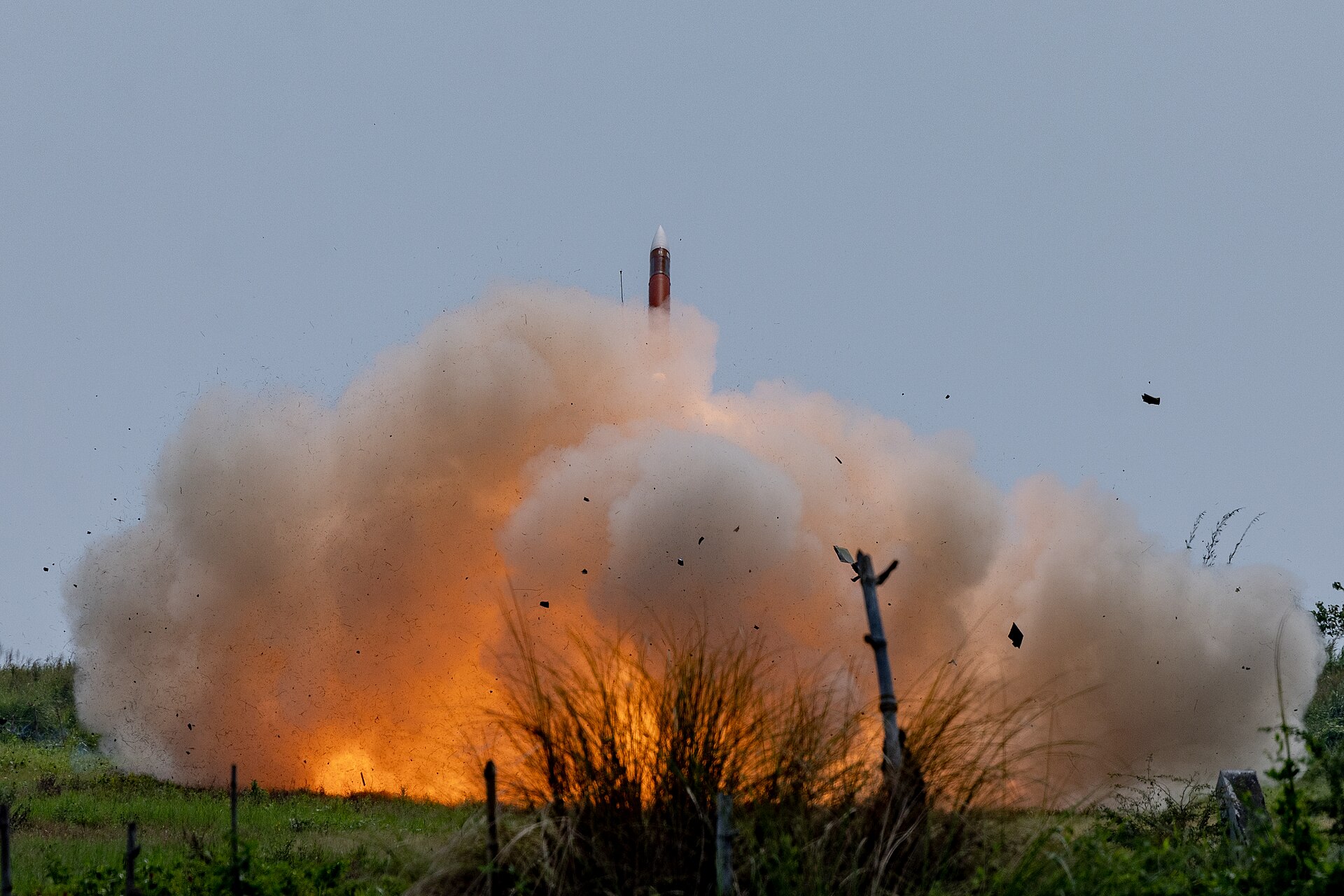
The human cost has also mounted. Two civilians were killed and twelve injured when a projectile struck a residential compound in Saudi Arabia’s Al-Kharj governorate on Sunday, according to Al Jazeera. A seventh US service member — identified as Sgt. Benjamin Pennington, 26, of the 1st Space Battalion based at Fort Carson, Colorado — died from wounds sustained during the March 1 Iranian strike on Prince Sultan Air Base, CNN reported. Ukraine has offered to send drone defence teams to assist Gulf states in countering Iran’s aerial threat.
Wang Yi Warns Against Regime Change in Iran
In his most pointed comments on the war, Wang Yi used the NPC press conference to explicitly warn against attempts to topple Iran’s government. “Plotting a ‘colour’ revolution or seeking government change will find no popular support,” the foreign minister said, according to Al Jazeera and CNN reporting from Beijing.
The warning came hours after Iran’s Assembly of Experts named Mojtaba Khamenei — the 56-year-old son of the slain supreme leader — as the country’s new religious and political authority. President Trump called the selection “a big mistake” in a statement posted to Truth Social, according to Al Jazeera’s live reporting on March 9.
Wang’s comments reflected a broader strategic calculus. China has maintained a “comprehensive strategic partnership” with Iran since 2016 and signed a 25-year cooperation agreement in 2021 reportedly worth $400 billion, covering energy, infrastructure, and technology. While Beijing has carefully avoided providing military support to Tehran during the current conflict, it has also refused to condemn Iran’s retaliatory strikes on Gulf states — a position that has drawn quiet frustration from Riyadh.
The tension in China’s position is evident. Beijing condemns attacks on Gulf civilians but refuses to hold Iran solely responsible for a war it frames as having been initiated by US-Israeli aggression. Wang’s call for dialogue “with all parties” implicitly treats Iran as both an aggressor and a victim — a framing that may prove difficult to sustain as the war’s civilian toll rises.
Despite this ambiguity, Riyadh appears willing to accept Beijing’s help. Saudi Arabia has positioned itself as a peace broker throughout the conflict, and China’s involvement adds a powerful voice to the de-escalation camp. The structural barriers to a ceasefire remain formidable, but the Kingdom and Beijing share a common interest in stopping the fighting before it causes irreparable damage to Gulf infrastructure and the global economy.
What Comes Next for Ceasefire Efforts?
The immediate test of Beijing’s mediation will be whether Zhai Jun can secure a meeting with Iranian officials. China’s Ministry of Foreign Affairs confirmed that Wang Yi has spoken with his Iranian counterpart in recent days, but no visit by Zhai to Tehran has been announced as of March 9. Iran’s new supreme leader, Mojtaba Khamenei, has close ties to the Islamic Revolutionary Guard Corps, according to multiple analysts cited by NBC News and Al Jazeera — a relationship that may complicate diplomatic outreach.
Iran has ruled out an immediate ceasefire, CNBC reported on March 9, even as its president, Masoud Pezeshkian, has signalled a preference for de-escalation. The split between Iran’s civilian government and its military-religious establishment — what Fortune described as “conflicting signals” in a March 7 analysis — makes it unclear who has the authority to agree to a halt in hostilities.
On the American side, Trump has announced he will hold a press conference on Monday — his first since the strikes began — which may provide clearer signals about Washington’s appetite for a negotiated settlement, according to Euronews. The planned Trump-Xi summit later in March could also become a venue for ceasefire discussions, though both leaders would need to navigate significant domestic political pressures.
For Saudi Arabia, the calculus is straightforward. Every day the war continues, Iranian missiles and drones strike the Kingdom’s cities and energy infrastructure. Every day oil above $110 per barrel may benefit Saudi revenues in the short term, but the long-term damage to investor confidence, tourism plans, and Vision 2030 megaprojects far outweighs any windfall. Riyadh will continue to welcome any mediator — Chinese, European, Omani, or otherwise — willing to work toward ending a war that Saudi Arabia did not choose but cannot escape.
Frequently Asked Questions
Who is Zhai Jun, China’s special envoy on the Middle East?
Zhai Jun has served as China’s special envoy on Middle East affairs since 2019. He is a career diplomat who has been involved in Beijing’s regional engagement for years and played a role in the 2023 Saudi-Iran normalisation agreement brokered by China. His visit to Riyadh on March 8 represents his most significant mission since the Iran war began.
What is China’s five-point ceasefire plan for the Iran war?
Announced by Foreign Minister Wang Yi on March 8, the five points are: immediate ceasefire, prevention of force abuse against civilians, non-interference in Middle Eastern countries’ internal affairs, pursuit of political solutions through dialogue, and a return to negotiation. The plan does not assign blame for the war’s outbreak and does not call for the withdrawal of any forces.
Why did Saudi Arabia welcome China’s mediation efforts?
Saudi Arabia is under direct Iranian attack and wants the war to end. China is the Kingdom’s largest trading partner with $107 billion in bilateral trade, and Beijing brokered the 2023 Saudi-Iran normalisation deal. Riyadh views China as a credible interlocutor with Tehran and has publicly expressed appreciation for Beijing’s “commitment to fairness and justice,” according to the Chinese Foreign Ministry readout.
Has Iran agreed to China’s ceasefire proposal?
As of March 9, Iran has ruled out an immediate ceasefire, according to CNBC. While President Masoud Pezeshkian has signalled interest in de-escalation, the newly appointed supreme leader Mojtaba Khamenei has close ties to the IRGC, and Iran’s military establishment appears determined to continue retaliatory operations against Gulf states and US military positions in the region.
How does the China-Saudi trade relationship affect the mediation?
China imports approximately 2 million barrels per day of Saudi crude oil, worth nearly $48 billion annually. The war has disrupted these flows and pushed Brent crude above $110 per barrel. Beijing has a direct economic interest in restoring stability to the Gulf and protecting its largest Middle Eastern trading relationship. The depth of economic ties gives China both leverage and credibility as a mediator. However, Beijing’s mediation faces a fundamental obstacle: Iran has rejected all ceasefire proposals while the United States demands unconditional surrender. The task is made harder by the reality that the 2023 Beijing deal that China brokered between Saudi Arabia and Iran has been destroyed in just eleven days of fighting.