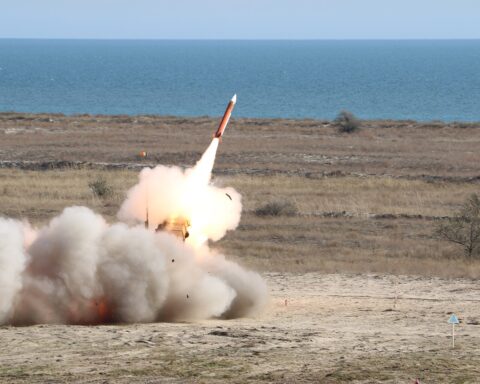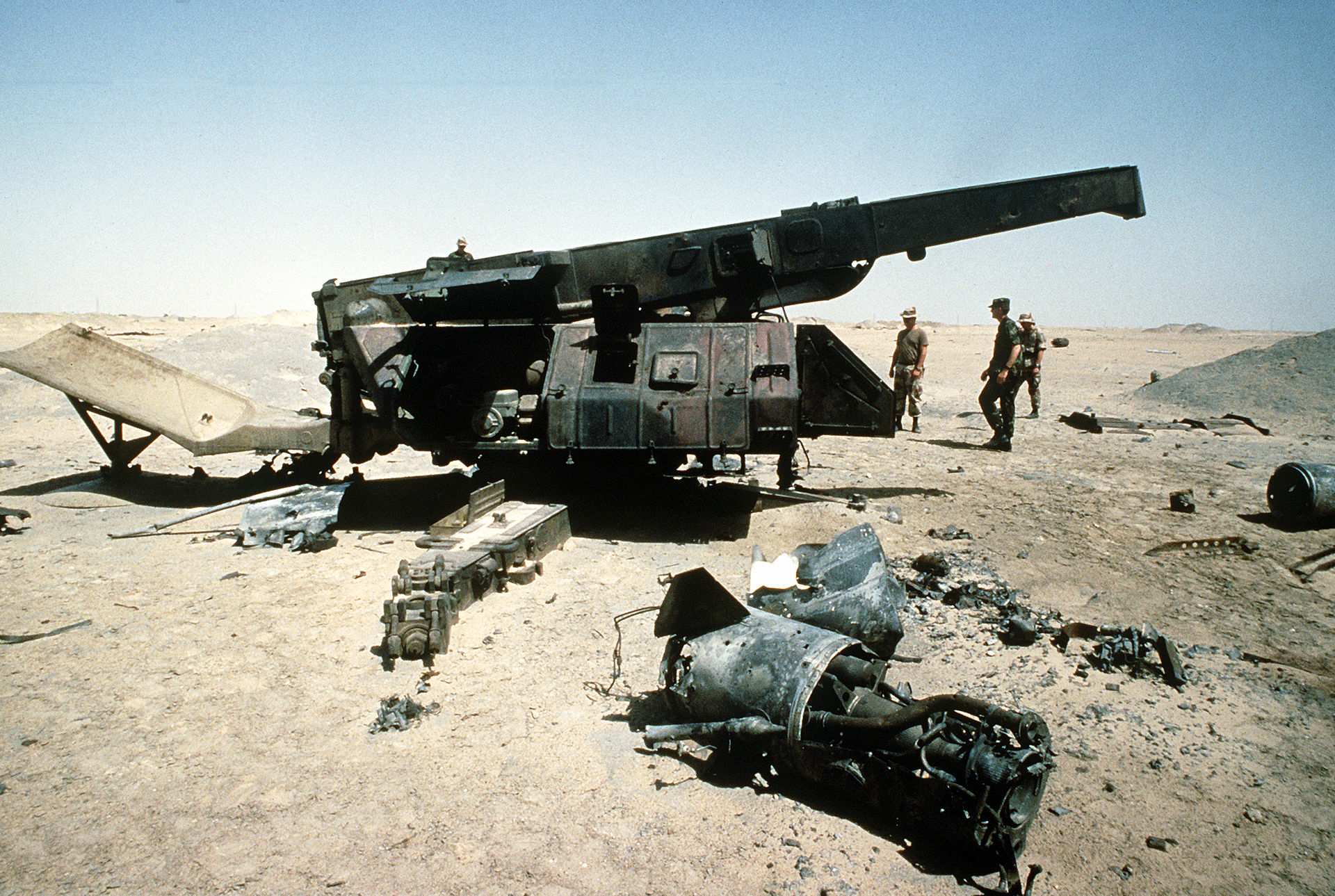

RIYADH — The numbers are extraordinary, and they tell a story that military planners in Washington and Riyadh want the world to hear. Two-thirds of Iran’s arms manufacturing facilities lie in ruins. Seventy percent of its ballistic missile launchers have been destroyed. More than 15,000 targets have been struck across the country. The fire rate of Iranian ballistic missiles has collapsed from 480 launches on Day One to roughly 40 by Day Ten — a 92 percent decline that, on any spreadsheet, looks like total victory. Benjamin Netanyahu has ordered a 48-hour final blitz on Iran’s remaining arms factories, timed to Donald Trump’s March 27 deadline for Tehran to reach a deal. The Islamic Republic’s military-industrial complex, painstakingly assembled over four decades of sanctions evasion and indigenous engineering, appears to be heading for extinction. Yet the uncomfortable question that nobody in the coalition seems willing to answer is what comes after the rubble stops smoldering. Destroying Iran’s arsenal is a feat of precision bombing. Ensuring that its destruction makes the Middle East safer is a problem of political engineering that no air campaign in modern history has solved.
Contents
- The Scale of Destruction
- How Did Iran Build a Military-Industrial Complex Under Sanctions?
- What Survives When the Factories Are Gone?
- The Disarmament Paradox Matrix
- Did Iraq and Libya Teach the Coalition Anything?
- The Proxy Manufacturing Problem
- Does Disarmament Create a Nuclear Incentive?
- Saudi Arabia’s Own Arsenal Is Growing
- Can the Coalition Afford Its Own Success?
- What Happens If Iran Simply Collapses?
- Russia, China, and North Korea Are Watching
- Destroying Iran’s Bargaining Chips
- The Arms Race That Nobody Planned
- Frequently Asked Questions
The Scale of Destruction
The campaign against Iran’s military infrastructure has been the most concentrated application of airpower against a state’s industrial base since Operation Desert Storm. United States Central Command reports that coalition forces have destroyed two-thirds of Iran’s arms manufacturing facilities, a figure that encompasses production lines for ballistic missiles, cruise missiles, drones, and conventional munitions. The Israeli Defense Forces claim to have eliminated 330 of an estimated 470 ballistic missile launchers — a 70 percent attrition rate that would cripple any nation’s strategic deterrent.
More than 700 ballistic missiles have been destroyed in storage before they could be fired. Forty-three Iranian naval vessels have been destroyed or damaged, gutting the Islamic Republic of Iran Navy and the IRGC Navy that once threatened to close the Strait of Hormuz. Air defense degradation stands at approximately 80 percent, leaving Iran’s remaining military infrastructure exposed to follow-up strikes with minimal risk to coalition aircraft.
The fire rate data tells the most dramatic story. On the first day of hostilities, Iran launched approximately 480 ballistic missiles and drones at targets across the Gulf and Israel. By Day Ten, that number had plummeted to around 40 — a collapse driven not by a lack of will but by a lack of weapons. Secretary of State Marco Rubio’s assertion that Iran was producing more than 100 ballistic missiles per month before the war now reads as a historical footnote. The production lines that sustained that output are ash.
Netanyahu’s order for a final 48-hour blitz on remaining arms factories before Trump’s March 27 deadline suggests the coalition believes it can achieve something approaching total industrial disarmament. The question is whether total industrial disarmament is the same thing as security.
How Did Iran Build a Military-Industrial Complex Under Sanctions?
Understanding what has been destroyed requires understanding what Iran built and why it proved so difficult to prevent. The Islamic Republic’s defense ecosystem was not a single factory or a handful of secret facilities. It was a distributed network of more than 300 companies operating under the Ministry of Defense and Armed Forces Logistics, known by its Persian acronym MODAFL. The Defense Industries Organization, or DIO, served as the umbrella for this sprawling enterprise, coordinating production across at least 200 to 240 sites spread not only across Iran but in allied states including Syria, Tajikistan, and Venezuela.
Tehran claimed 93 percent self-sufficiency in military needs — a figure that was exaggerated but not fabricated from whole cloth. The country had developed the capacity to manufacture 38,000 distinct military equipment and hardware components. Approximately 5,000 knowledge-based companies cooperated with the defense industry, creating a web of dual-use civilian and military production that made targeting decisions extraordinarily complex. A factory producing washing machine motors in Isfahan might also be machining components for drone engines. A pharmaceutical plant outside Shiraz might share its chemical supply chain with a warhead facility.
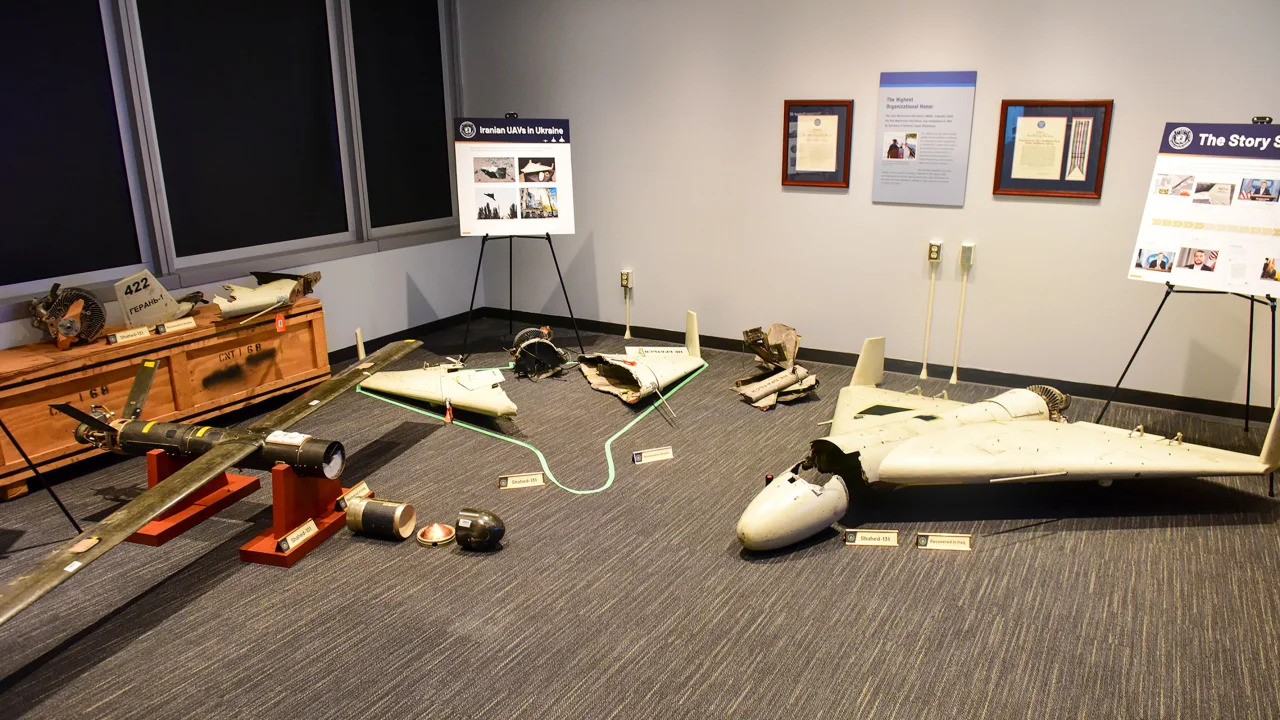
Iran’s defense export portfolio had expanded dramatically. By 2006, the country was selling military equipment to 57 nations. By 2024, defense exports had increased four to five times over, driven largely by the Shahed drone family, which became the signature weapon of the war in Ukraine and subsequently found buyers across the Global South. The Shahed-136, a one-way attack drone that costs between $20,000 and $50,000 to produce, became the most consequential weapon system of the 2020s precisely because it inverted the cost calculus of modern warfare.
The critical weakness in Iran’s military-industrial complex was always the same: it lacked access to modern electronics, avionics, engines, and propellers. Indigenous production could handle airframes, warheads, and basic guidance systems, but the most sophisticated components depended on a shadow procurement network that smuggled Western and East Asian technology through front companies in the UAE, Turkey, and Malaysia. Sanctions made this procurement expensive and unreliable, but they never stopped it entirely.
What Survives When the Factories Are Gone?
The coalition has destroyed buildings, machine tools, assembly lines, and stockpiles. It has not destroyed knowledge. Iran’s defense workforce — the engineers, metallurgists, propulsion specialists, and guidance systems designers who built the Islamic Republic’s arsenal over four decades — remains largely intact. Many of them were evacuated from production facilities in the opening hours of the conflict. Others never worked in the facilities that were bombed, operating instead from university laboratories, private sector firms, and residential workshops that would be illegal to strike under international humanitarian law.
This distinction between hardware and human capital is the fault line on which every post-disarmament scenario fractures. Iraq’s nuclear program after the Gulf War was dismantled by UN inspectors who physically removed centrifuges and destroyed facilities. But the scientists who designed those centrifuges remained in Iraq, and when sanctions eroded and international attention wandered, the knowledge base was still there. It took a second invasion to address what the first had left standing.
Iran’s dispersal strategy was deliberate and informed by exactly these precedents. The 200-plus production sites were scattered across the country in part because Iranian military planners studied what happened to Iraq’s concentrated facilities in 1991 and 2003. They built redundancy into every critical production chain. They ensured that no single strike package could eliminate the ability to resume production. The coalition’s 15,000-strike campaign has tested this dispersal doctrine more severely than Iran’s planners ever anticipated, but the doctrine’s core logic remains valid: you cannot bomb expertise out of existence.
The Disarmament Paradox Matrix
History offers four models for what happens when a state’s military-industrial capacity is destroyed, and they map onto a matrix defined by two variables: whether the disarmed state retains internal cohesion, and whether it has external allies willing to help it rearm. The intersection of these variables produces outcomes that range from stable acquiescence to catastrophic collapse.
| High External Support | Low External Support | |
|---|---|---|
| High State Cohesion | REARMAMENT — North Korea Model: State rebuilds arsenal with foreign assistance. Disarmament becomes a temporary setback, not a permanent condition. Timeline to reconstitution: 3-7 years. | DORMANCY — Japan Model: State acquiesces under occupation or security guarantees. Requires sustained external presence and credible alternatives to military power. Timeline: indefinite, contingent on guarantor commitment. |
| Low State Cohesion | PROXY FRAGMENTATION — Syria Model: External arms flow to internal factions rather than the central state. Military capacity persists but becomes decentralized and unpredictable. Timeline: immediate and self-sustaining. | COLLAPSE — Libya Model: State dissolves into competing armed groups. No central authority to negotiate with, no entity capable of enforcing agreements. Timeline: rapid and potentially irreversible. |
Iran, as it stands in late March 2026, occupies a position somewhere between the Rearmament quadrant and the Proxy Fragmentation quadrant. It retains external support — Russia, China, and North Korea have all demonstrated willingness to assist Iran’s military programs, and none of them have endorsed the coalition’s war aims. But Iran’s internal cohesion, already strained by years of economic crisis and the 2022-2023 protest movement, is deteriorating under the pressure of sustained bombardment and the regime’s inability to deliver on its promise of national defense.
The worst-case scenario for Saudi Arabia and its allies is not that Iran rebuilds. It is that Iran fragments. A coherent Iranian state, even a hostile one, can be deterred, negotiated with, and ultimately integrated into a regional security architecture. A fragmented Iran — with IRGC splinter groups controlling weapons caches, ethnic militias seizing border regions, and millions of refugees streaming toward Turkey, Iraq, and the Gulf states — would be a security nightmare of a kind that no number of THAAD batteries can address.
Did Iraq and Libya Teach the Coalition Anything?
The two most relevant precedents for what the coalition is attempting in Iran are Iraq after 2003 and Libya after 2011, and neither inspires confidence. The United States and its allies spent approximately $220 billion on Iraqi reconstruction between 2003 and 2014, a figure that dwarfs the cost of the military campaign itself. That expenditure produced a state that remained so fragile it nearly fell to the Islamic State a decade after Saddam Hussein was toppled. The Iraqi military, rebuilt from scratch at American expense, collapsed in 2014 when confronted by a few thousand ISIS fighters — a failure that demonstrated how difficult it is to reconstitute a functional security apparatus after the original one has been demolished.
Libya offers an even darker lesson. NATO’s 2011 intervention destroyed Muammar Gaddafi’s military and facilitated the regime’s overthrow, but no coalition member committed to what came next. The result was a failed state that fractured into competing militia fiefdoms, became a transit point for human trafficking that produced slave markets documented by CNN cameras, and destabilized the entire Sahel region. Libyan weapons — including man-portable air defense systems — proliferated across North Africa and into the hands of groups from Boko Haram to Tuareg separatists.
The parallels to Iran are imperfect but instructive. Iran is a larger country than either Iraq or Libya, with a population of 88 million and an ethnic and linguistic diversity that includes Persians, Azeris, Kurds, Arabs, Baluchis, and Turkmen. It shares borders with seven countries and has coastlines on both the Persian Gulf and the Caspian Sea. The logistical requirements of stabilizing a post-collapse Iran would exceed anything the international community has attempted since the end of the Second World War.
Every precedent for military-industrial disarmament without a comprehensive political settlement has produced either rearmament or state failure. There is no historical example of a middle path.
Assessment drawn from post-war case studies of Iraq, Libya, Japan, and North Korea
The coalition’s implicit theory — that destroying Iran’s arsenal will force Tehran to negotiate from a position of such weakness that it accepts terms favorable to Saudi Arabia, Israel, and the United States — requires Iran’s government to remain coherent enough to negotiate and implement an agreement. This is the paradox at the heart of the campaign: the more thoroughly the coalition destroys Iran’s military capacity, the more it risks destroying the state’s ability to function as a negotiating partner.
The Proxy Manufacturing Problem
Even if every Iranian arms factory were reduced to rubble tomorrow, the proliferation of Iranian weapons technology would continue through a channel that no air campaign can reach: proxy manufacturing. Iran’s strategy over the past two decades has been to transfer not just finished weapons but blueprints, techniques, and manufacturing know-how to allied groups across the region. The Houthis in Yemen now assemble weapons independently, using designs and processes taught to them by Iranian engineers. This capability does not depend on shipments from Iran. It depends on knowledge that has already been transferred and cannot be un-transferred.
The scale of this transfer became visible after the ceasefire when a 750-ton vessel was intercepted carrying Iranian missiles destined for the Houthis. But the maritime interdiction, while successful, illustrated the problem’s surface rather than its depth. The Houthis do not need that shipment to continue operating. They have been manufacturing their own versions of Iranian designs for years, using commercially available components and locally fabricated parts. As Iran’s network of proxy forces across the Gulf demonstrates, the Islamic Republic invested heavily in distributed capability precisely because it anticipated a scenario in which its homeland production would be targeted.
Hezbollah in Lebanon, the Popular Mobilization Forces in Iraq, and various Shia militia groups in Syria all possess varying degrees of independent manufacturing capacity. The most sophisticated can produce short-range rockets, improvised explosive devices, and armed drones without any ongoing Iranian supply. The least sophisticated can still assemble weapons from pre-positioned component kits. Destroying Iran’s factories addresses the source of new weapons but does nothing about the weapons already distributed or the manufacturing knowledge already shared.
Does Disarmament Create a Nuclear Incentive?
The most dangerous consequence of destroying Iran’s conventional military-industrial complex may be the one least discussed in coalition capitals: it strengthens the argument within Tehran for pursuing a nuclear weapon. Iran’s conventional deterrent — its ballistic missile arsenal, its drone fleet, its naval capacity in the Gulf — served as a substitute for the nuclear weapon that the country never built. If that conventional deterrent is permanently eliminated, the strategic logic for acquiring the ultimate deterrent becomes overwhelming.
This is not speculation. It is the explicit lesson that every non-nuclear state has drawn from the fate of Iraq and Libya. Saddam Hussein abandoned his weapons of mass destruction programs under international pressure and was subsequently invaded and killed. Gaddafi voluntarily surrendered his nuclear program in 2003, received international praise and economic engagement, and was dragged from a drainage pipe and beaten to death by rebels eight years later. North Korea, which refused to surrender its nuclear program, remains in power. The lesson is unambiguous, and Iranian strategists have articulated it publicly for years.
Iran’s nuclear infrastructure has been degraded but not eliminated. The Fordow enrichment facility, buried deep inside a mountain near Qom, has reportedly survived coalition strikes. Iran had already enriched uranium to 60 percent purity before the war — a level that has no civilian justification and sits just below the 90 percent threshold for weapons-grade material. The technical distance between Iran’s current enrichment capability and a functional nuclear device is measured in months, not years.
The destruction of Iran’s conventional arsenal removes the primary argument that Iranian moderates have used against the nuclear option: that Iran’s extensive conventional capabilities make a nuclear weapon unnecessary. With those conventional capabilities in ruins, the moderates have lost their case. The hardliners — who have always argued that only a nuclear weapon can guarantee regime survival — now have the most compelling evidence imaginable: the conventional deterrent failed.
The global rearmament spiral triggered by the Iran war adds another dimension. If Iran perceives that its neighbors are building arsenals faster than it can rebuild its own — and the $23 billion in fast-tracked US arms sales to Gulf states confirms that perception — the nuclear shortcut becomes strategically rational. A single nuclear device, even an untested one, provides more deterrence than a thousand Shahed drones.
Saudi Arabia’s Own Arsenal Is Growing
While the coalition dismantles Iran’s military-industrial complex, Saudi Arabia is building one of its own. The irony has not been lost on observers in Tehran, Moscow, or Beijing. The Kingdom’s defense transformation — driven by Crown Prince Mohammed bin Salman’s Vision 2030 agenda — aims to convert the world’s largest arms importer into a significant arms producer. The vehicle for this ambition is Saudi Arabian Military Industries, or SAMI, a subsidiary of the Public Investment Fund that aspires to rank among the world’s top 25 defense companies by 2030.
The numbers tell a story of radical acceleration. Saudi defense localization stood at 4 percent in 2018. By 2023, it had climbed to 19.35 percent. The General Authority for Military Industries, or GAMI, has set a target of 50 percent by 2030 — a goal that the war with Iran has transformed from an aspirational benchmark into a national security imperative. At the World Defense Show 2026, SAMI unveiled two new subsidiaries: the SAMI Autonomous Company, focused on unmanned systems, and SAMI Land Company, dedicated to ground combat platforms. Prince Khalid bin Salman, the Minister of Defense, inaugurated a new defense industrial complex in Riyadh in February 2026.
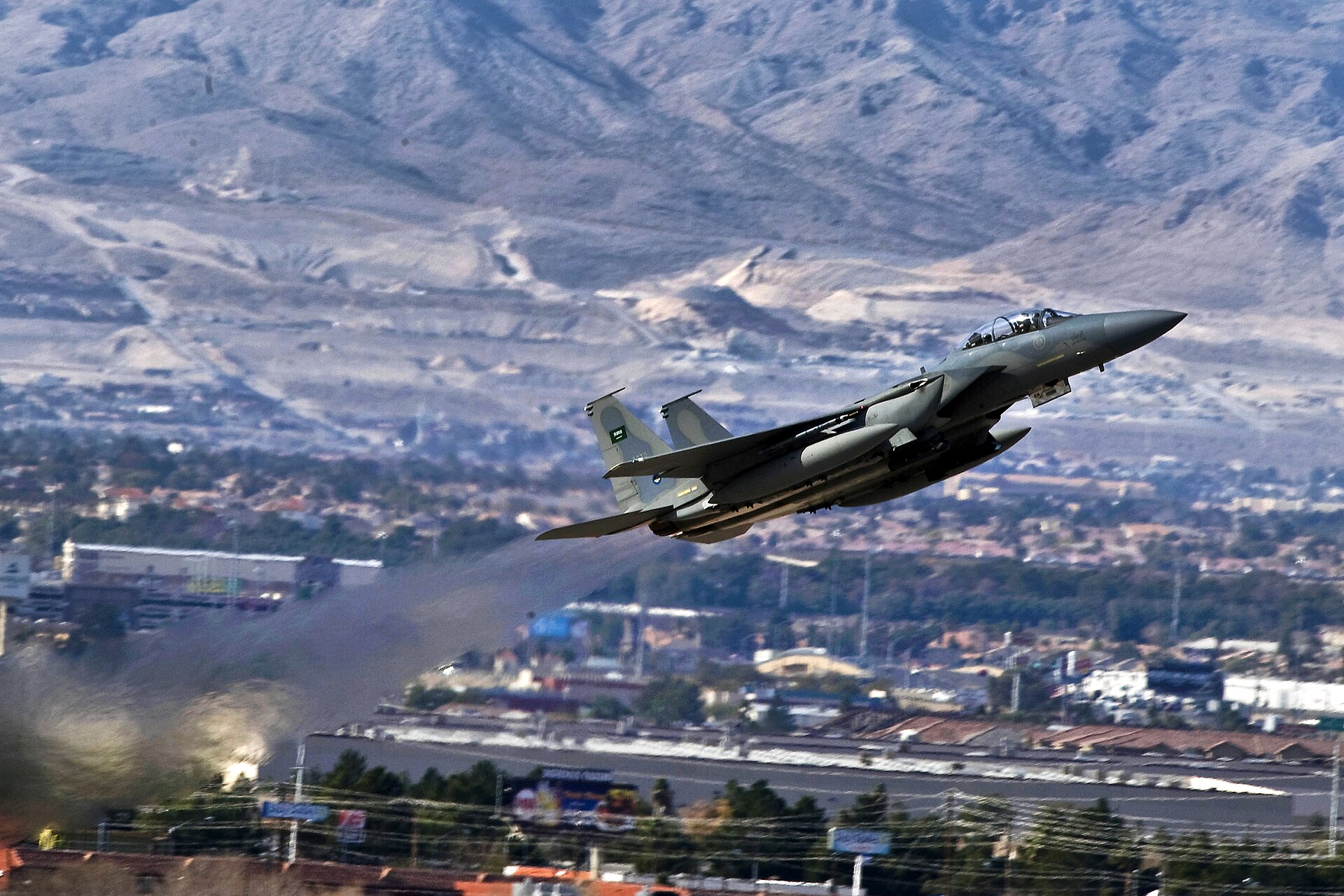
Saudi Arabia’s military performance in the Iran war has demonstrated both the Kingdom’s growing capabilities and its persistent vulnerabilities. The Royal Saudi Air Force has conducted strike operations with a proficiency that surprised skeptics. Saudi air defenses, integrating Patriot, THAAD, and indigenous systems, have intercepted the vast majority of Iranian missiles and drones targeting the Kingdom. But the war has also exposed an uncomfortable dependency: nearly every interceptor, every precision-guided munition, and every spare part for Saudi Arabia’s front-line platforms comes from the United States, the United Kingdom, or France.
The $142 billion arms deal framework signed with Washington in 2025, followed by $9 billion in approved weapons sales in January 2026, underscores the scale of this dependency. Saudi Arabia is simultaneously trying to reduce its reliance on foreign arms and placing the largest arms orders in its history. The tension between these two objectives is the defining feature of the Kingdom’s defense posture.
Can the Coalition Afford Its Own Success?
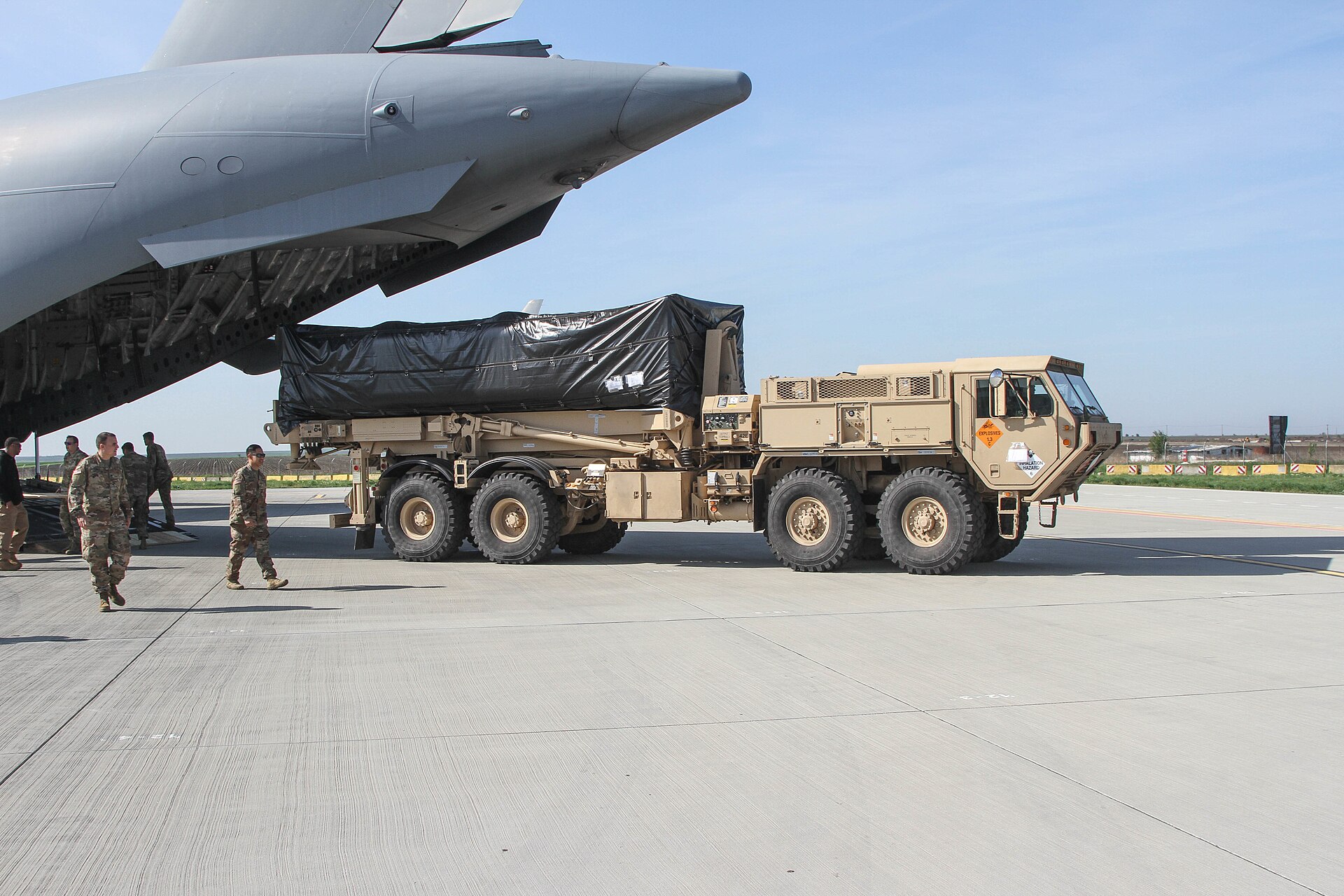
The economics of the Iran campaign contain a paradox that military accountants understand but politicians prefer to ignore. Every interceptor fired over Riyadh is one fewer available for Taipei, as the depletion of allied missile stockpiles has created vulnerabilities far from the Middle East. A single THAAD interceptor costs approximately $12 million. A Patriot PAC-3 missile costs around $4 million. The Shahed-136 drones they are shooting down cost between $20,000 and $50,000 each. The cost-exchange ratio favors the attacker by a factor of 80 to 600.
This arithmetic was sustainable when Iran’s drone and missile attacks were episodic — the occasional Houthi strike on Saudi infrastructure, the one-off Iranian barrage that could be absorbed and answered. It is not sustainable as a permanent feature of Gulf security. If Iran’s capacity to produce cheap drones is reconstituted — and the technology required to produce a Shahed-class drone is basic enough that any country with a light industrial base could do it — the coalition will face an indefinite drain on its most expensive and scarce munitions.
The global arms race triggered by the conflict has further strained supply chains. The United States has fast-tracked $23 billion in arms sales to Gulf states, including $8.4 billion to the UAE, approximately $8 billion to Kuwait, and $9 billion to Saudi Arabia. But American defense industrial capacity is already stretched by commitments to Ukraine, Taiwan contingency planning, and NATO’s post-2022 rearmament. Raytheon’s Patriot production line runs at approximately 500 interceptors per year. Lockheed Martin’s THAAD line produces fewer than 100. The coalition has been consuming these weapons faster than they can be manufactured.
What Happens If Iran Simply Collapses?
The scenario that receives the least attention in Riyadh, Washington, and Tel Aviv is the one that should receive the most: the possibility that the sustained destruction of Iran’s military and industrial capacity tips the Islamic Republic into state failure. Iran is not a monolithic entity. It is a complex, multi-ethnic state held together by a combination of national identity, institutional inertia, security force coercion, and the economic patronage networks controlled by the IRGC and the bonyads — the religious foundations that control an estimated 20 percent of the economy.
The war has degraded all four of these binding forces simultaneously. National identity has been strained by a conflict that many ordinary Iranians did not want and that the regime cannot credibly claim to be winning. Institutional capacity has been damaged by strikes on government infrastructure and the disruption of basic services. The security forces’ coercive capacity has been reduced by the same strikes that destroyed military infrastructure. And the IRGC’s economic networks have been disrupted by the combination of intensified sanctions and physical destruction of dual-use facilities.
Iran’s population of 88 million includes significant minority populations with historical grievances. Kurdish regions in the northwest, Arab-majority Khuzestan in the southwest, and Baluchi-majority Sistan-Baluchestan in the southeast all have separatist movements that have been suppressed by force. If the central government’s coercive capacity falls below a critical threshold, these centrifugal forces could accelerate. The result would not be a neatly partitioned country but a chaotic fragmentation that would make Syria’s civil war look contained.
For Saudi Arabia, an Iranian collapse would produce immediate and severe consequences. Refugee flows through Iraq and across the Gulf would strain absorption capacity. IRGC remnants and proxy groups would operate without central direction, making them less predictable and potentially more dangerous. Iran’s remaining weapons stockpiles — including whatever nuclear material exists — would become unsecured. Saudi Arabia’s peace demands assume a counterparty capable of implementing an agreement. State collapse eliminates that counterparty.
Russia, China, and North Korea Are Watching
Iran’s external relationships ensure that disarmament, if it can be achieved at all, will be temporary. North Korea has supplied Iran with missile technology since the 1980s, beginning with Scud variants during the Iran-Iraq War and progressing through No Dong, Musudan, and Hwasong platforms. This relationship has survived every international effort to sever it. There is no reason to believe that the destruction of Iran’s production facilities will end a partnership that has endured for four decades.
Russia’s relationship with Iran has deepened since 2022, driven by Moscow’s need for Iranian drones in Ukraine and Tehran’s need for Russian air defense technology. The war has not weakened this relationship; if anything, it has strengthened Moscow’s incentive to ensure that Iran remains capable of diverting American attention and resources to the Middle East and away from Europe. A rearmed Iran that pins down US forces in the Gulf is a strategic asset for Russia, regardless of whatever public statements the Kremlin offers about supporting negotiations.
The scope of Russian assistance became clearer on March 26, when EU High Representative Kaja Kallas accused Moscow of providing satellite intelligence and drone components to help Iran target and kill Americans stationed at Gulf bases, including Prince Sultan Air Base in Saudi Arabia.
China’s interests are more complex but equally consequential. Beijing’s energy security depends on stable oil flows through the Strait of Hormuz, which argues against supporting Iranian military adventurism. But China also opposes the precedent of a US-led coalition destroying a sovereign state’s military capacity without UN Security Council authorization, viewing it as a template that could be applied to Chinese contingencies in the Taiwan Strait. Beijing’s likely response will be to publicly support diplomacy while quietly ensuring that Iran’s rearmament pipeline remains open through Chinese commercial channels.
The Disarmament Paradox Matrix places Iran in the zone of high external support, which historically correlates with rearmament rather than permanent disarmament. North Korea’s post-Korean War trajectory is instructive: despite the near-total destruction of its industrial base during the 1950-1953 conflict, Pyongyang rebuilt its military capacity with Soviet and Chinese assistance and eventually developed nuclear weapons. The timeline was measured in decades, but the outcome was a more dangerous adversary, not a less dangerous one.
Destroying Iran’s Bargaining Chips
Diplomacy requires both parties to have something to offer and something to lose. By systematically destroying Iran’s military assets, the coalition is eliminating the very capabilities that Tehran would need to trade in a negotiated settlement. This creates a paradox: the more successful the military campaign, the less Iran has to put on the table, and the less reason it has to come to the table at all.
Consider the structure of any plausible deal. The coalition’s demands — cessation of uranium enrichment, dismantlement of proxy networks, recognition of Gulf sovereignty, and acceptance of arms control restrictions — require Iran to make concessions. But concessions are only meaningful if the conceding party is giving up something it possesses. An Iran stripped of its ballistic missile arsenal cannot offer to limit that arsenal. An Iran whose drone factories are rubble cannot offer to cap drone production. An Iran whose naval capacity has been sunk cannot offer to demilitarize the Strait of Hormuz. The coalition has already taken by force what it would have demanded through negotiation.
Trump’s March 27 deadline for Iran to reach a deal presupposes that Tehran’s leadership can deliver terms the coalition will accept. But the destruction of Iran’s military bargaining power has empowered precisely the faction within the Iranian system that opposes any deal: the hardliners who argue that the West will take everything regardless, that negotiation is surrender by another name, and that the only security guarantee is one that Iran builds for itself — whether conventionally or, eventually, nuclear.
The coalition has taken by force what it would have demanded through negotiation. An Iran stripped of its arsenal cannot offer to limit that arsenal. The bargaining chips have been bombed into irrelevance.
Strategic assessment of coalition negotiating position, March 2026
Oil falling below $100 for the first time since the war began has reduced one source of pressure on the coalition to settle quickly, but it has not resolved the fundamental asymmetry: the coalition wants a deal that restricts Iran’s future capabilities, but it has already destroyed the capabilities that would make such restrictions meaningful. This is the negotiator’s equivalent of demanding a ransom after you have already freed the hostages.
The Arms Race That Nobody Planned
The final irony of the campaign to destroy Iran’s military-industrial complex is that it has triggered the most extensive arms buildup in the Middle East since the oil embargo era. The $142 billion US-Saudi arms framework, the $23 billion in fast-tracked Gulf sales, and the defense industrial investments being made by every GCC state collectively represent an arms race that dwarfs anything Iran ever built.
Saudi Arabia’s annual defense budget of $75 to $80 billion exceeds Iran’s entire pre-war military spending by a factor of roughly six. The Kingdom’s GAMI localization drive, which aims to build indigenous manufacturing capacity for everything from armored vehicles to unmanned systems, is creating precisely the kind of distributed military-industrial complex that the coalition has just finished destroying in Iran. The difference is scale: Saudi Arabia’s version will be funded by the world’s largest sovereign wealth fund and supported by technology transfers from the world’s most advanced defense companies.
The economic costs of the war have been severe, with the OECD estimating that the conflict has erased a year of global growth. But for the defense industry, the war has been a bonanza. Lockheed Martin, Raytheon, BAE Systems, and their competitors are operating at maximum capacity with order backlogs stretching years into the future. The destruction of Iran’s arsenal has not reduced the total quantity of weapons in the Middle East. It has initiated a cycle in which Iran’s neighbors arm themselves against the threat of Iranian reconstitution, which in turn gives Iran reason to reconstitute, which in turn drives further Gulf procurement.
Zelenskyy’s visit to Saudi Arabia to offer drone defense expertise illustrates how the war has created new defense relationships that will outlast the conflict. Ukraine, having developed counter-drone tactics against the same Iranian Shaheds now threatening the Gulf, has become an unlikely partner for Gulf states. These relationships add layers of complexity to an already tangled regional security architecture and make arms control agreements harder, not easier, to negotiate.
The historical pattern is consistent: wars that produce decisive military outcomes but inconclusive political settlements generate arms races. The 1967 Arab-Israeli War was followed by a Soviet-backed Arab rearmament that produced the 1973 war. The 1991 Gulf War was followed by two decades of escalating Gulf military spending. The current conflict appears destined to accelerate this cycle, not break it. Iran’s decentralized naval doctrine in the Strait of Hormuz already demonstrated that asymmetric threats persist even when conventional forces are degraded. The next iteration of Iran’s military strategy will incorporate lessons from its current defeat.
The coalition has accomplished something militarily extraordinary. It has dismantled a military-industrial complex that took 40 years to build in a matter of weeks. But the assumption that this destruction equates to lasting security is contradicted by every available historical precedent, by the strategic incentives facing Iran’s remaining leadership, by the rearmament commitments of Iran’s external patrons, and by the arms race dynamics already visible across the Gulf. Destroying Iran’s arsenal was the easy part. The hard part — building a regional order that makes the arsenal unnecessary — has not yet begun, and there is no indication that anyone in the coalition has a plan for it.
The Iran war’s trajectory suggests that the coming months will be defined not by the satisfaction of military victory but by the dawning realization that military victory, absent political settlement, is a depreciating asset. Every day that passes without a comprehensive agreement is a day in which Iran’s allies plan reconstitution, Iran’s hardliners strengthen their case for nuclear weapons, and the Kingdom’s leadership faces the question that air campaigns cannot answer: what does peace actually look like?
Frequently Asked Questions
How much of Iran’s military-industrial capacity has been destroyed?
According to CENTCOM, coalition forces have destroyed approximately two-thirds of Iran’s arms manufacturing facilities. The IDF reports eliminating 330 of an estimated 470 ballistic missile launchers, representing a 70 percent attrition rate. More than 15,000 targets have been struck, 700-plus ballistic missiles destroyed in storage, 43 naval vessels destroyed or damaged, and air defenses degraded by 80 percent. Iran’s missile fire rate collapsed by 92 percent within ten days of hostilities.
Can Iran rebuild its military-industrial complex?
Historically, states whose military-industrial capacity is destroyed tend to rebuild if they retain state cohesion and external support. Iran has both: its scientific and engineering workforce remains largely intact, and Russia, China, and North Korea all have strategic reasons to assist reconstitution. North Korea rebuilt after near-total industrial destruction in the Korean War and eventually developed nuclear weapons. The timeline for Iranian reconstitution likely ranges from three to ten years depending on the extent of external assistance and the survival of the current regime.
What is the Disarmament Paradox Matrix?
The Disarmament Paradox Matrix is a framework that maps post-disarmament outcomes along two axes: external support (whether allies help the disarmed state rebuild) and state cohesion (whether internal order is maintained). The four outcomes are Rearmament (high support, high cohesion — like North Korea), Dormancy (low support, high cohesion — like post-war Japan), Proxy Fragmentation (high support, low cohesion — like Syria), and Collapse (low support, low cohesion — like Libya). Iran currently sits between the Rearmament and Proxy Fragmentation quadrants.
Does destroying Iran’s conventional weapons make nuclear proliferation more likely?
The destruction of Iran’s conventional deterrent removes the primary argument against pursuing nuclear weapons. Iran’s conventional arsenal served as a substitute for a nuclear capability, giving the regime a credible threat without crossing the nuclear threshold. With that conventional deterrent eliminated, hardliners within the Iranian system gain a stronger case for the nuclear option. Iran has already enriched uranium to 60 percent purity, and the technical gap to weapons-grade 90 percent enrichment is narrow.
How much is the Middle East arms race costing?
The United States has fast-tracked $23 billion in arms sales to Gulf states, including $8.4 billion to the UAE and $9 billion to Saudi Arabia. The broader framework agreement with Saudi Arabia encompasses $142 billion. Saudi Arabia’s annual defense budget is $75 to $80 billion, and the Kingdom’s GAMI localization initiative aims to build indigenous manufacturing capacity that would make the country a major arms producer. The OECD estimates the war has erased approximately one year of global economic growth.
What happened in Iraq and Libya after their military capacity was destroyed?
Iraq required approximately $220 billion in reconstruction spending between 2003 and 2014 and still nearly fell to the Islamic State. Libya descended into state failure after NATO’s 2011 intervention, splitting into competing militia fiefdoms that produced human trafficking networks and destabilized the entire Sahel region. Neither precedent produced lasting stability, and both demonstrate the gap between destroying military capacity and building sustainable security.
How advanced is Saudi Arabia’s defense localization effort?
Saudi Arabia’s defense localization has increased from 4 percent in 2018 to 19.35 percent in 2023, with a target of 50 percent by 2030. The Saudi Arabian Military Industries company, or SAMI, is a PIF subsidiary aiming to become a top-25 global defense company. At the World Defense Show 2026, SAMI launched subsidiaries focused on autonomous systems and land platforms. Prince Khalid bin Salman inaugurated a new defense industrial complex in Riyadh in February 2026.
Can Iran’s proxy forces manufacture weapons independently?
Yes. Iran has spent decades transferring not just finished weapons but manufacturing knowledge to allied groups. The Houthis in Yemen now assemble weapons independently using Iranian designs and commercially available components. Hezbollah, the Popular Mobilization Forces in Iraq, and various Syrian militia groups all possess varying degrees of independent production capacity. Destroying Iran’s factories does not eliminate this distributed manufacturing network, which operates on knowledge that has already been transferred and cannot be retrieved.