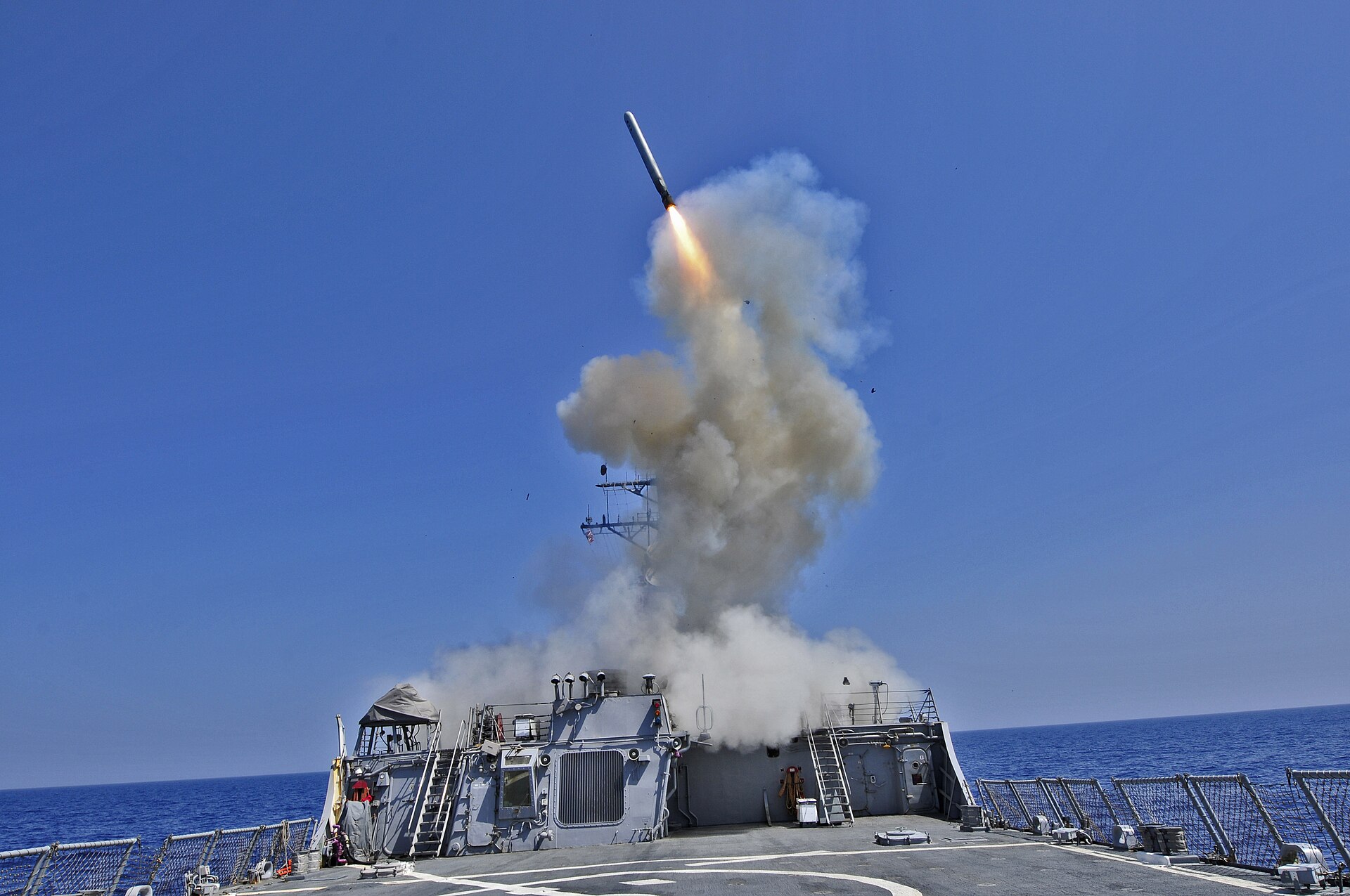

A Tomahawk cruise missile launches from the USS Barry guided-missile destroyer, the type of precision strike weapon the United States would use to target Iranian power infrastructure. Photo: US Navy / Public Domain

Destroying Iran’s Power Grid Won’t Open Hormuz

Trump threatens to destroy Iran's 477 power plants to reopen Hormuz. Three wars prove infrastructure bombing creates humanitarian catastrophe without strategic gain.

RIYADH — Destroying Iran’s power grid will not reopen the Strait of Hormuz, and three wars worth of evidence proves it. President Donald Trump’s 48-hour ultimatum, posted on Truth Social on March 22, threatens to “obliterate” Iran’s power plants “starting with the biggest one first” unless Tehran fully opens the strategic waterway. The threat targets a network of 477 power plants generating 78,439 megawatts of electricity for 85 million people. But the Islamic Revolutionary Guard Corps operates on independent power systems, underground bunkers, and decentralised command structures specifically designed to function without the civilian grid. History — from Iraq in 1991 to Serbia in 1999 to Ukraine in 2022 — shows that infrastructure bombing inflicts catastrophic humanitarian damage while consistently failing to compel the strategic concessions it promises. For Saudi Arabia, which hosts the American bases from which such strikes would launch, the calculus is especially dangerous. Riyadh faces the prospect of being a co-belligerent in a campaign that could plunge a Muslim-majority nation of 85 million into darkness, trigger retaliatory strikes on Gulf desalination plants, and generate a humanitarian catastrophe that unites global opinion against the very coalition Riyadh depends on for its own defence.

What Did Trump Actually Threaten?

Trump’s threat is the most explicit infrastructure-targeting ultimatum issued by an American president since the Gulf War. “If Iran doesn’t FULLY OPEN, WITHOUT THREAT, the Strait of Hormuz, within 48 HOURS from this exact point in time, the United States of America will hit and obliterate their various POWER PLANTS, STARTING WITH THE BIGGEST ONE FIRST,” Trump wrote on Truth Social on March 22, 2026. The capitalisation is his own. The deadline, if taken literally, places the expiration at approximately midday on March 24.

The statement arrived amid a week of striking contradictions in American strategy. Hours before the ultimatum, Trump had told reporters the United States was “getting very close to meeting our objectives” and considering winding down operations. Hours after, the Pentagon announced the deployment of three additional warships and approximately 2,500 Marines to the Gulf region, according to CBS News. The mixed signals — de-escalation rhetoric paired with escalation actions — have become a defining feature of the administration’s approach to the conflict now entering its fourth week.

Iran’s response came within hours. The Iranian army warned that it would “target all energy infrastructure belonging to the United States and Israel in the region” if Iranian power facilities were struck, according to Al Jazeera. Separately, Iran’s Foreign Ministry spokesperson said Tehran would “specifically target desalination facilities across the Gulf” in retaliation — a threat that puts the drinking water of tens of millions of Gulf residents at risk, as reported by Bloomberg. The threat followed Iran’s retaliation against Dimona after the Natanz nuclear strike, confirming Tehran’s willingness to target the most sensitive infrastructure on both sides.

The ultimatum frames the destruction of civilian power infrastructure as a lever to achieve a specific military objective: reopening the Strait of Hormuz. This framing is the core of the strategic error. It assumes that cutting electricity to Iranian homes, hospitals, and water treatment plants will somehow compel the IRGC — which controls the Hormuz blockade — to reverse a policy that has become the regime’s most effective wartime asset.

High-voltage power transmission towers and lines carrying electricity across a national grid, representing the type of infrastructure Trump has threatened to destroy in Iran. Photo: Wikimedia Commons / CC BY 2.0
High-voltage power transmission towers of the kind that form the backbone of Iran’s 83,808 km electrical grid. Destroying these towers is technically straightforward; restoring electricity to 85 million people is not. Photo: Wikimedia Commons / CC BY 2.0

How Large Is Iran’s Power Grid and Who Depends on It?

Iran’s electrical infrastructure is one of the largest in the Middle East. The country operates 477 power plants with a combined installed capacity of 78,439 megawatts, connected by 83,808 kilometres of transmission lines, according to OpenStreetMap infrastructure data. The grid serves a population of approximately 85 million people across 31 provinces.

The system is overwhelmingly dependent on fossil fuels. Approximately 75 percent of electricity generation comes from natural gas-fired plants, with oil accounting for roughly a quarter of the remainder, according to the International Energy Agency. Hydroelectric plants, nuclear power from the Bushehr reactor, and a negligible amount of wind and solar make up the balance. Iran’s three largest thermal power facilities are the Damavand Combined Cycle Power Plant near Tehran at 2,868 megawatts, the Ramin Steam Turbine Power Plant in Khuzestan at 1,890 megawatts, and the Neka Steam Turbine Power Plant in Mazandaran at 1,760 megawatts.

The grid extends beyond Iran’s borders. Iran exports electricity to seven neighbouring countries — Afghanistan, Pakistan, Iraq, Turkey, Armenia, Azerbaijan, and Turkmenistan — totalling approximately 5.5 terawatt-hours annually, according to Iran’s power ministry. Iraq is particularly dependent: an estimated 30 to 40 percent of Iraq’s electricity imports come from Iran, meaning that destroying Iranian power infrastructure would cascade into a humanitarian crisis in a country that is nominally an American ally.

Iran’s Power Grid at a Glance
Metric Value Source
Total power plants 477 Open Infrastructure Map
Installed capacity 78,439 MW Open Infrastructure Map
Transmission lines 83,808 km OpenStreetMap
Population served ~85 million World Bank, 2025
Natural gas share of generation ~75% IEA
Countries receiving Iranian electricity exports 7 Iran Power Ministry
Annual electricity exports 5.5 TWh Iran Power Ministry
Iraq’s dependence on Iranian imports 30-40% IEA Iraq Report
Largest single plant (Damavand) 2,868 MW Power Technology

The grid was already in crisis before the war. Iran has endured six consecutive years of drought, and rainfall totals in Tehran dropped 42 percent below the long-term average, according to Al Jazeera. The capital’s five main reservoirs held only approximately 13 percent of their capacity in early 2025, with the vital Lar Dam almost empty at 1 percent, according to CSIS satellite analysis. One-third of all water entering Tehran’s supply system is lost to leaks and theft before reaching consumers, according to the Carnegie Endowment for International Peace. Groundwater tables are subsiding by up to 30 centimetres per year in some urban areas. Every one of these problems — water pumping, desalination, sewage treatment, hospital operations — depends on electricity.

Why Won’t Destroying the Civilian Grid Disable Iran’s Military?

The assumption embedded in Trump’s ultimatum — that destroying power plants will pressure Iran into reopening Hormuz — requires a chain of causation that does not exist. The Islamic Revolutionary Guard Corps, the force that controls the Strait of Hormuz blockade, does not depend on the civilian power grid for its operations.

Each of Iran’s 31 provinces has its own IRGC headquarters with an independent command-and-control structure and chain of command, according to Radio Free Europe/Radio Liberty. The IRGC has activated what it calls a “mosaic” defensive strategy, designed to empower local commanders during wartime so that units can operate independently based on general instructions given in advance, without relying on centralised communications or power infrastructure. This decentralised architecture was built specifically to survive the kind of infrastructure campaign Trump is threatening.

The IRGC’s military installations operate on independent power supplies. Underground tunnel complexes, such as those on Qeshm Island in the Strait of Hormuz itself, house long-range ballistic and cruise missiles in reinforced bunkers designed to withstand aerial bombardment, according to the Middle East Forum. These facilities include their own desalination plants, fuel storage with capacities estimated in the hundreds of thousands of cubic metres, and independent electrical generation. The Bandar Abbas underground fuel bunkers serve as a primary hub for bunkering IRGC naval vessels and refuelling the fast-attack craft that enforce the Hormuz blockade.

The IRGC Navy, which directly controls the Strait of Hormuz chokepoint, relies on small, fast boats, shore-based anti-ship missiles, and naval mines — none of which require the civilian power grid. A commander operating a fast-attack boat from a cave in the Musandam Peninsula needs fuel, ammunition, and a radio. Destroying the Damavand power plant near Tehran will not affect his ability to launch a Noor anti-ship missile at a tanker.

Cutting electricity to Tehran does exactly one thing with certainty: it punishes 15 million civilians. It does not remove a single mine from the shipping lanes. It does not disable a single IRGC fast-attack boat. It does not ground a single Shahed drone. The military logic of the ultimatum is a fiction dressed in the language of coercion.

The Infrastructure Targeting Calculus

Three previous conflicts provide a dataset for evaluating whether infrastructure bombing achieves its stated objectives. In each case, the attacking power destroyed civilian electrical infrastructure to coerce an adversary into changing behaviour. In each case, the civilian toll was enormous. In none did the bombing achieve its strategic objective on the timeline promised.

Infrastructure Targeting Calculus — Three Conflicts Compared
Factor Iraq 1991 Serbia 1999 Ukraine 2022-23 Iran 2026 (Projected)
Population affected 18 million 7 million 44 million 85 million
Grid capacity destroyed 85% 70% 50% TBD
Time to restore partial power 4+ months (20-25% restored) Weeks (with NATO aid) Ongoing (rolling repairs) Months to years (sanctions block parts)
Civilian deaths (direct + indirect) 110,000+ ~2,000 Thousands (ongoing) Potentially catastrophic
Child mortality surge 47,000 under-5 deaths (Aug 1991 survey) Limited (short duration) Significant (winter 2022-23) Severe risk (pre-existing water crisis)
Strategic objective achieved? Kuwait liberated (by ground war, not grid bombing) Milosevic withdrew (after 78 days, not immediately) No strategic concession Hormuz reopened? Extremely unlikely
Adversary military impaired? Partially (C2 degraded) Minimal (military adapted) No measurable effect IRGC operates independently
International legal consequences None (pre-ICC) ICTY reviewed, no charges filed ICC arrest warrants for 4 officials ICC jurisdiction applies
Collateral cascade Water/sanitation collapse, disease epidemics Water shortages, hospital reliance on generators Heating crisis, mass displacement Water system collapse in drought-stricken megacity
Effect on adversary public opinion Increased anti-US sentiment Reinforced victimhood narrative United Ukrainian resistance Likely unites Iranians behind regime

The pattern across all three cases is consistent. Infrastructure bombing inflicts disproportionate harm on civilians while producing minimal degradation of military capability. In each case, the adversary’s military adapted within days while civilian suffering persisted for months or years. The projection for Iran is worse than any precedent because of four compounding factors: Iran’s population is larger than any previous target, the pre-existing water crisis in Tehran creates an immediate humanitarian cascade, international sanctions prevent rapid repair, and the IRGC’s decentralised architecture makes it functionally immune to grid disruption.

What Did Iraq’s Power Grid Destruction in 1991 Teach the Pentagon?

The most direct historical parallel is Iraq in 1991. During Operation Desert Storm, coalition forces systematically destroyed Iraq’s electrical infrastructure as part of a broader campaign to eject Iraqi forces from Kuwait. A Harvard study team found that 17 of Iraq’s 20 major generating plants were damaged, with 11 classified as total losses, according to Human Rights Watch. Four months after hostilities ceased, electricity generation remained at only 20 to 25 percent of pre-war capacity.

The civilian consequences were catastrophic. The United Nations sent a survey team to Iraq in March 1991. Its report described conditions as “near-apocalyptic,” stating that Iraq had been bombed back into “a pre-industrial age,” according to the UN assessment. Without electricity, water purification plants could not operate. Sewage treatment ceased. Hospitals lost the ability to refrigerate medicine or power life-support equipment. The collapse of the public health, water, and sanitation systems led to outbreaks of dysentery, cholera, and other waterborne diseases.

The first comprehensive post-war epidemiological survey, conducted in August 1991, reported the deaths of 47,000 children under the age of five, according to a study published in the New England Journal of Medicine. The Washington Institute for Near East Policy later estimated that the total civilian death toll from infrastructure destruction — as distinct from direct combat casualties — exceeded 110,000. The vast majority of these deaths were caused not by the impact of bombs but by the secondary effects of infrastructure collapse: contaminated water, untreated sewage, and the inability to deliver basic medical care.

The lesson was supposed to be learned. The Pentagon’s own after-action reviews acknowledged that grid destruction produced humanitarian costs far exceeding the military advantage gained. Iraqi forces in Kuwait were defeated by the ground campaign, not by electrical blackouts in Baghdad. Saddam Hussein’s grip on power was not loosened by the suffering of Iraqi civilians — if anything, the destruction strengthened his ability to blame the West and consolidate domestic support.

A US Navy destroyer silhouetted against the sunset while transiting the Strait of Hormuz, the strategic waterway Iran has vowed to keep closed despite Trump ultimatum. Photo: US Navy / Public Domain
A US Navy guided-missile destroyer transits the Strait of Hormuz. The waterway handles roughly 20 percent of global oil and gas supplies during peacetime, but only 21 tankers have passed through since the war began on February 28, according to CNBC tracking data. Photo: US Navy / Public Domain

What Happened When NATO Bombed Serbia’s Power Grid in 1999?

NATO’s 78-day air campaign against Serbia in 1999 included the deliberate targeting of the country’s electrical infrastructure using specialised carbon-fibre “soft bombs” designed to short-circuit power lines without permanently destroying generators. At the campaign’s peak, NATO’s strikes knocked out power across as much as 70 percent of Serbia, according to the Washington Post. Belgrade went dark. Water systems failed. Hospitals relied on backup generators.

NATO defended the targeting of civilian infrastructure as a legitimate strategy to degrade the Yugoslav military’s command-and-control systems and pressure President Slobodan Milosevic into withdrawing forces from Kosovo. But the strategy took 78 days to produce the desired result — far longer than the 48 hours Trump has granted Iran. Serbian military forces adapted quickly, dispersing command functions, relying on hardened communications, and operating independently of the civilian grid. The eventual withdrawal from Kosovo owed more to the threat of a NATO ground invasion and diplomatic pressure from Russia than to power blackouts in Serbian cities.

The ICTY — the International Criminal Tribunal for the former Yugoslavia — established a committee to review the legality of NATO’s infrastructure targeting. The committee’s final report to the prosecutor noted that attacks on electrical infrastructure “raise serious legal issues” because of the civilian population’s dependence on electrical power for essential services, according to the tribunal’s published findings. No charges were filed, but the committee’s analysis established that power grid targeting sits on the boundary of what international humanitarian law permits.

The long-term political consequences were the opposite of what the campaign intended. The bombing reinforced a narrative of Serbian victimhood and resilience, fuelling lasting distrust of the West that continues to shape Serbian politics and its resistance to Euro-Atlantic integration, according to Modern Diplomacy analysis. A generation of Serbians learned to associate Western military power not with liberation but with the experience of sitting in the dark while hospitals struggled to keep patients alive.

The Ukraine Precedent and the ICC’s Red Line

Russia’s systematic campaign against Ukraine’s power grid from October 2022 onward represents the most recent and legally consequential precedent. Between October 2022 and April 2023, Radio Free Europe documented 223 separate damage events to Ukrainian electrical infrastructure across 23 of Ukraine’s 24 oblasts, at a rate of more than seven per week. About half of Ukraine’s power generation capacity was either occupied, destroyed, or damaged, according to the International Energy Agency.

The humanitarian toll was severe. Attacks on November 23, 2022 alone interrupted access to power for millions of Ukrainians, according to HRW. The United Nations Office for the Coordination of Humanitarian Affairs reported that the campaigns deprived civilians of access to electricity, water, heat, and related vital services during winter months. The Atlantic Council warned that continued bombardment of Ukraine’s power grid could force millions to flee the country.

The legal consequences were unprecedented. A UN Commission found that “the waves of attacks from 10 October 2022 on Ukraine’s energy-related infrastructure by the Russian armed forces may amount to crimes against humanity,” according to the UN’s published findings. In June 2024, the International Criminal Court issued arrest warrants for four Russian military officials and officers specifically for the bombing of civilian power infrastructure — the first time the ICC had treated power grid targeting as a potential crime under its jurisdiction.

The precedent is directly relevant to any American campaign against Iran’s power infrastructure. The United States is not a signatory to the Rome Statute and does not recognise ICC jurisdiction over its nationals. But Saudi Arabia, which hosts the bases from which such strikes would be launched, operates in a diplomatic environment where ICC pronouncements carry weight. The Gulf states — all of which depend on international legal frameworks to protect their sovereignty — cannot afford to be seen endorsing the kind of infrastructure targeting that the ICC has just established as potentially criminal.

How Would Iran Retaliate Against Power Grid Strikes?

Iran has already outlined its response. The Iranian army stated that it would “target all energy infrastructure belonging to the United States and Israel in the region” if Iranian power facilities were struck, according to Al Jazeera reporting. The Foreign Ministry spokesperson added the specific threat of targeting Gulf desalination plants. These are not idle threats — they represent a calculated escalation ladder.

The Gulf states depend on desalinated seawater for the majority of their drinking water supply. Saudi Arabia operates the world’s largest desalination capacity, producing approximately 7.3 million cubic metres of freshwater daily, according to the Saudi Water Authority. The UAE generates roughly 42 percent of its water supply through desalination. Qatar, Bahrain, and Kuwait are even more dependent. A successful strike on desalination infrastructure would create a water emergency within 48 to 72 hours — the same timeline Trump has imposed on Iran for Hormuz.

Iran’s retaliatory toolkit for such a campaign is extensive. The 575 drone strikes already launched against Saudi Arabia since the war began, according to the Saudi Defence Ministry’s tally, demonstrate the ability to sustain prolonged precision attacks. Iran has fired cruise missiles at targets as far as Diego Garcia, doubling its previously estimated range. It has struck oil facilities, refineries, airports, and residential areas across six Gulf states. Desalination plants, which are large, static, coastal facilities with minimal hardening, represent a significantly softer target than the military installations Iran has already hit.

Iran’s Demonstrated Retaliatory Capability (as of March 22, 2026)
Capability Evidence Source
Sustained drone campaigns 575+ drone strikes on Saudi Arabia since Feb 28 Saudi Defence Ministry
Single-day mass barrage 100 drones in one day (March 17) Bloomberg
Extended-range missile strikes Missiles fired at Diego Garcia, 4,600+ km range Wall Street Journal
Multi-country targeting Strikes on Saudi Arabia, UAE, Bahrain, Kuwait, Oman, Qatar Various wire services
Energy infrastructure hits Jubail, Yanbu refinery, Shah gas field, Fujairah oil terminal Bloomberg, Reuters
Declared retaliatory escalation Threat to target Gulf desalination plants Iran Foreign Ministry

The retaliatory calculus is asymmetric in Iran’s favour. Destroying an Iranian power plant requires precision-guided munitions costing millions of dollars per sortie. Striking a Gulf desalination plant requires a Shahed-136 drone costing approximately $20,000. For every power plant the United States destroys, Iran can threaten multiple water facilities across six nations at a fraction of the cost.

Tehran illuminated at night with the Milad Tower dominating the skyline, a city of 15 million people that could be plunged into darkness if the United States strikes Iranian power plants. Photo: Wikimedia Commons / CC BY-SA 4.0
Tehran at night, with the Milad Tower illuminated against the skyline. A city of 15 million people, Tehran already faces a water crisis with reservoir levels at 13 percent capacity. Cutting electrical power would disable water pumping stations, creating a humanitarian emergency within hours. Photo: Wikimedia Commons / CC BY-SA 4.0

Saudi Arabia Cannot Host These Strikes and Escape the Consequences

Saudi Arabia finds itself in the most uncomfortable position of any party to this escalation. The Kingdom hosts the American military bases from which strikes on Iranian power infrastructure would likely originate. King Fahd Air Base, Prince Sultan Air Base, and multiple facilities in the Eastern Province house American fighter aircraft, refuelling tankers, and the command infrastructure for CENTCOM operations in the Gulf, as confirmed by Pentagon statements in March 2026.

Crown Prince Mohammed bin Salman has reportedly urged Trump to “keep hitting Iran hard,” according to White House officials speaking to the New York Times. But there is a vast difference between supporting strikes on IRGC military installations — which have clear military justification — and hosting strikes designed to cut electricity to 85 million civilians, including the population of a fellow Muslim-majority nation.

The diplomatic fallout would be immediate. Saudi Arabia serves as the custodian of the Two Holy Mosques and positions itself as a leader of the Islamic world. Being complicit in a campaign that plunges Iran’s civilian population into a humanitarian crisis would undermine that role fundamentally. The Organisation of Islamic Cooperation, headquartered in Jeddah, would face enormous pressure to condemn the action. Pakistan — which just signed a defence pact with Saudi Arabia and deployed troops to the Kingdom — would face impossible domestic pressure, given that Iran borders Pakistan’s Balochistan province and Iranian refugees would flow toward the Pakistani border.

The operational risk is equally stark. Iran has already declared that it would target “all US energy infrastructure in the region” in retaliation. Saudi Arabia’s Eastern Province — which contains the vast majority of the Kingdom’s oil production capacity, including the Abqaiq processing facility and the Ghawar field — sits within easy range of Iranian drones and cruise missiles. An escalatory cycle that begins with power grid strikes and ends with retaliatory attacks on Saudi oil infrastructure would achieve the opposite of Trump’s stated objective: oil prices would spike further, not fall.

Tehran Was Already Running Out of Water Before the War

Tehran’s vulnerability to a power grid strike is uniquely severe because the city was already in a water emergency. Iran is in its sixth consecutive year of drought — a scale, intensity, and duration unprecedented in modern times, according to Al Jazeera reporting. The country’s average annual rainfall has dropped to 45 percent below normal, and 19 of its 31 provinces are in severe drought, according to the Carnegie Endowment for International Peace.

The crisis in Tehran is acute. CSIS satellite imagery analysis confirmed that the capital’s five main reservoirs held approximately 13 percent of their capacity in early 2025. The Lar Dam, one of the city’s critical water sources, was essentially empty at 1 percent capacity. Iran’s president called for contingency plans to potentially relocate the capital away from its drought-stricken location — an acknowledgement that the megacity’s water supply was approaching a breaking point even before the war began.

The connection between electricity and water is total. Tehran depends on electric pumping stations to move water from distant reservoirs to the city. Its water treatment facilities, which are essential because untreated water from depleted reservoirs carries increasing concentrations of contaminants, require continuous electrical power. Sewage treatment plants — critical for preventing waterborne disease in a city of 15 million — cannot function without electricity.

A Foreign Policy analysis published in March 2026 warned that “targeting Iran’s fragile water infrastructure puts the whole region in danger.” The World Resources Institute separately assessed that the Iran war could worsen the Middle East’s existing water crises, noting that the interconnection between energy and water systems creates cascading vulnerabilities. Destroying power plants does not merely cut lights. In a country with Tehran’s water profile, it cuts the lifeline that prevents a drought-stricken megacity from becoming uninhabitable.

The Iraqi precedent is directly instructive. When coalition forces destroyed Iraq’s electrical grid in 1991, the collapse of water treatment and sanitation systems killed an estimated 47,000 children under the age of five within six months, according to the epidemiological survey published in the New England Journal of Medicine. Iran’s pre-existing water crisis — worse than Iraq’s in 1991 — suggests the humanitarian cascade would be faster and more severe.

The Escalation Trap Nobody in Washington Is Discussing

The conventional wisdom in Washington treats the power grid ultimatum as a show of strength — a credible threat designed to force Iranian capitulation on Hormuz. The contrarian reality is that it is the single most counterproductive move available to the United States at this stage of the conflict.

Consider what a power grid strike would accomplish. It would not disable the IRGC, which operates independently. It would not remove mines from shipping lanes, which require minesweeping operations regardless of Iran’s electrical supply. It would not disable shore-based anti-ship missile batteries, which have independent power and are dispersed along hundreds of kilometres of coastline. It would not stop the production of Shahed drones, which are manufactured in decentralised facilities with their own power generation. It would not compel Iran’s new supreme leader, Mojtaba Khamenei, to reverse the Hormuz closure — if anything, a humanitarian catastrophe would eliminate whatever domestic political space exists for a negotiated opening.

What it would accomplish is a list of consequences that damage American and Saudi interests. First, it would unite Iranian public opinion behind the regime. Iran’s population is not monolithically supportive of the IRGC’s war policy. Significant segments of Iranian society — particularly the urban middle class that drove the 2022 Mahsa Amini protests — are deeply opposed to the regime’s militarism. Bombing their power plants, their water systems, and their hospitals transforms domestic opponents of the regime into victims of American aggression. Every authoritarian government in history has benefited from external attacks on civilian infrastructure, which collapse the distinction between government and population and generate rallying effects that no propaganda campaign could achieve.

Second, it would fracture the international coalition. The 22 nations that demanded Iran reopen the Strait of Hormuz did so on the basis that freedom of navigation is a universal principle. Targeting civilian power infrastructure — which the ICC has just established as potentially criminal in the Ukraine context — transforms the coalition’s moral position. European nations that contributed military assets to the Gulf, including Greek Patriot batteries and British destroyers, signed up to defend shipping lanes, not to participate in a campaign against civilian infrastructure. The coalition would begin to fragment within days.

Third, it would generate a humanitarian crisis requiring the very resources currently deployed for military operations. The United States would face pressure to provide humanitarian assistance to the Iranian civilian population it has just plunged into darkness. The refugee flows — potentially millions of Iranians moving toward Turkey, Iraq, Afghanistan, and Pakistan — would create a secondary crisis that consumes diplomatic bandwidth for years. The United Nations has already estimated that 3.2 million people have been internally displaced by the war; a grid collapse would magnify that number dramatically.

Fourth, and most consequentially for Saudi Arabia, it would trigger the retaliatory cycle against Gulf desalination plants that Iran has explicitly promised. Saudi Arabia intercepts Iranian drones at an impressive but imperfect rate. The Kingdom has shot down 575 drones since February 28, but drones have still struck the Yanbu refinery, reached the diplomatic quarter in Riyadh, and hit targets across the Eastern Province. Desalination plants are large, coastal, and difficult to defend. A sustained campaign against Gulf water infrastructure would create precisely the kind of crisis for Saudi civilians that the grid strikes would create for Iranian civilians — only the Gulf states’ water dependency is even more acute than Iran’s.

“The most effective measure for bringing down oil prices would be to reopen the Strait of Hormuz. But reopening Hormuz requires either a negotiated agreement with Iran or a minesweeping and naval escort operation that secures the waterway by force. Neither of those objectives is advanced by bombing Iranian power plants.”Strategic logic analysis, based on expert assessments compiled by Fortune and CNBC, March 2026

The path to reopening Hormuz runs through one of two routes: negotiation or naval force. A negotiated opening requires offering Iran something — sanctions relief, a ceasefire framework, or security guarantees — in exchange for restoring commercial transit. A forced opening requires minesweeping the waterway, establishing naval escort corridors, and neutralising the IRGC Navy’s fast-attack capability along the coast. Both routes are difficult. Neither is advanced by a single watt of electricity removed from Iranian homes.

The ultimatum reveals a pattern that has defined American strategy throughout this conflict: the substitution of spectacular threats for patient operational execution. Reopening Hormuz is a naval problem requiring minesweepers, escort frigates, and sustained commitment. It is not a bombing problem. The five European nations and Japan that have signalled willingness to contribute to Hormuz security, according to Euronews reporting, understand this distinction. The Pentagon understands it. The question is whether the 48-hour clock expires with action that matches the rhetoric — or whether, as with previous ultimatums, the deadline passes with a pivot to the operational work that actually addresses the problem.

Frequently Asked Questions

Would destroying Iran’s power grid force it to reopen the Strait of Hormuz?

Almost certainly not. The IRGC, which controls the Hormuz blockade, operates on independent power systems with decentralised command structures designed to function without the civilian grid. Three historical precedents — Iraq 1991, Serbia 1999, and Ukraine 2022 — show that infrastructure bombing consistently fails to compel the specific strategic concessions it targets, while inflicting catastrophic civilian harm.

How many people would be affected by strikes on Iran’s power infrastructure?

Approximately 85 million Iranians depend on the country’s 477 power plants and 78,439 megawatts of installed capacity. Additionally, seven neighbouring countries import Iranian electricity, with Iraq depending on Iran for 30 to 40 percent of its power. Tehran alone has 15 million residents facing a pre-existing water crisis with reservoir levels at 13 percent capacity.

Is targeting civilian power infrastructure legal under international law?

International humanitarian law expressly prohibits targeting civilian installations unless they are directly used for military purposes. The ICRC has stated that ensuring the proportionality of attacks on energy infrastructure “is likely to be difficult” given the severe and long-lasting impact. The ICC issued arrest warrants in 2024 for four Russian officials specifically for bombing Ukrainian power infrastructure, establishing a new legal precedent.

What has Iran threatened to do in retaliation?

Iran has stated it would target all US and Israeli energy infrastructure in the region and specifically threatened Gulf desalination plants. With 575 drone strikes already launched against Saudi Arabia and demonstrated capability to hit targets across six Gulf states, Iran possesses the means to carry out these threats. The asymmetric cost structure — a $20,000 drone versus a multimillion-dollar desalination facility — favours Iran in any retaliatory exchange.

What happened when the United States bombed Iraq’s power grid in 1991?

Coalition forces damaged 17 of 20 major power plants, with 11 classified as total losses. The UN described post-war conditions as “near-apocalyptic.” The collapse of water treatment and sanitation systems led to 47,000 child deaths under age five within six months, according to a New England Journal of Medicine study. Total civilian deaths from infrastructure destruction exceeded 110,000. Iraq’s strategic defeat in Kuwait was achieved by ground forces, not by power grid bombing.

How would Saudi Arabia be affected by US strikes on Iranian power infrastructure?

Saudi Arabia hosts the American military bases from which such strikes would likely launch, making the Kingdom a co-belligerent in the campaign. Iran has promised to retaliate against Gulf energy and water infrastructure. Saudi Arabia’s Eastern Province oil facilities and coastal desalination plants would be primary targets. The diplomatic fallout — hosting strikes that plunge a Muslim-majority nation into humanitarian crisis — would undermine Saudi Arabia’s role as custodian of the Two Holy Mosques and complicate its relationships across the Islamic world.

Soldiers from the 82nd Airborne Division file onto a C-17 Globemaster III aircraft for deployment to the Middle East. Photo: U.S. Army / Public Domain
Previous Story

Pentagon Prepares Ground Force for Iran From Saudi Bases

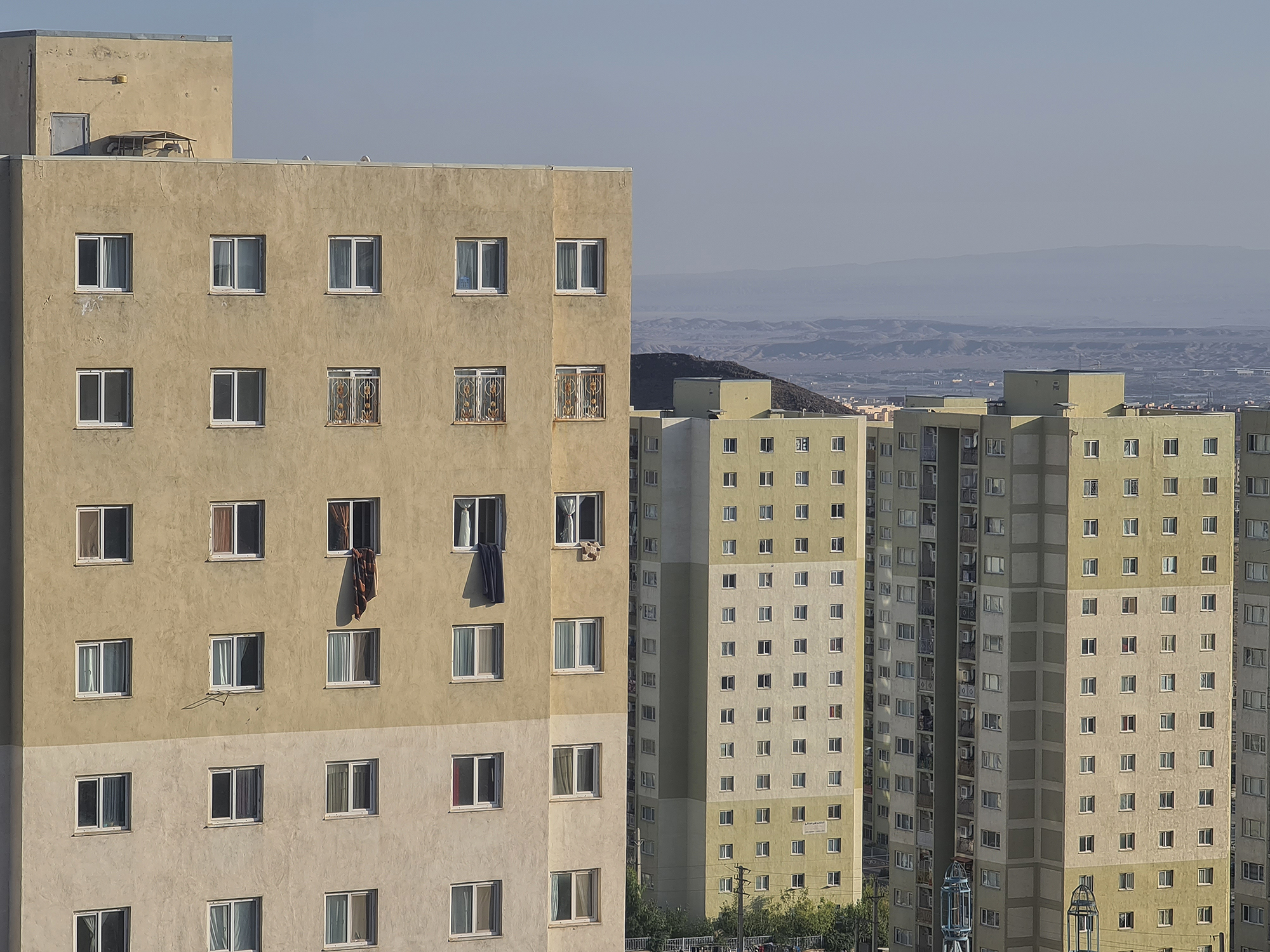
Residential apartment blocks in Tehran Province, Iran. Similar buildings in eastern Tehran near Risalat Square were struck by airstrikes on March 10 and March 21, 2026, killing seven children including a 10-day-old infant.
Next Story

Trump's Glorious War — 7 Children Killed in Tehran

Latest from Iran War