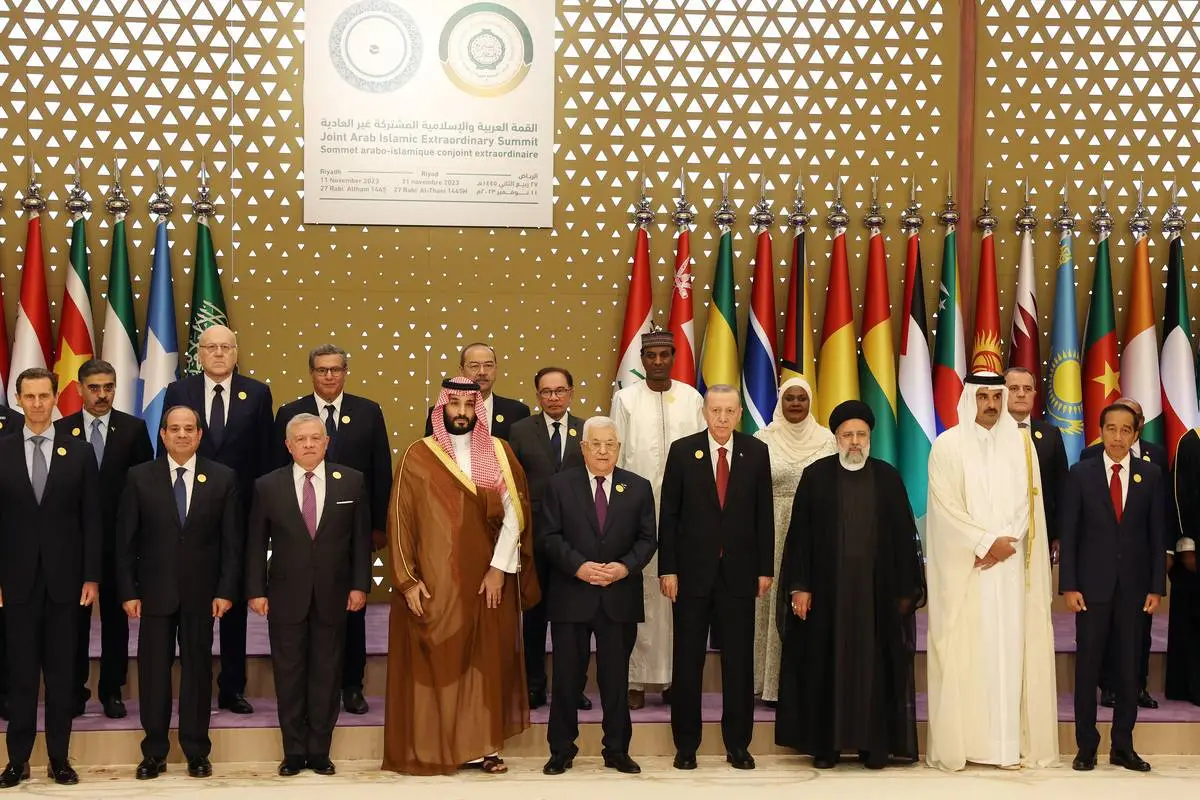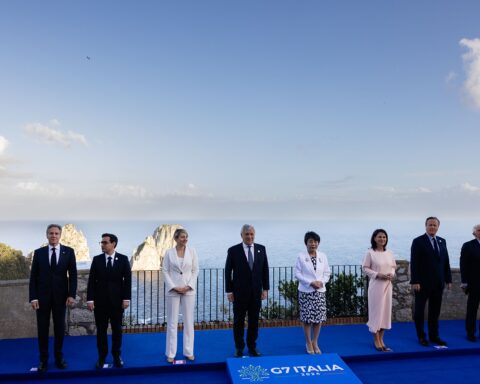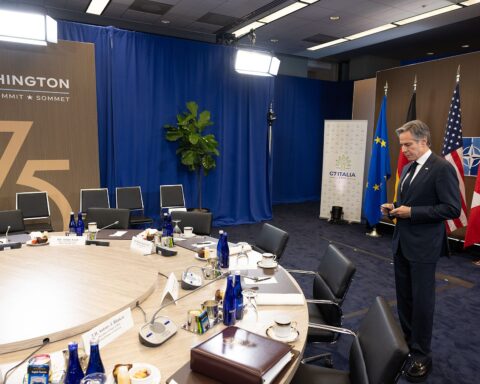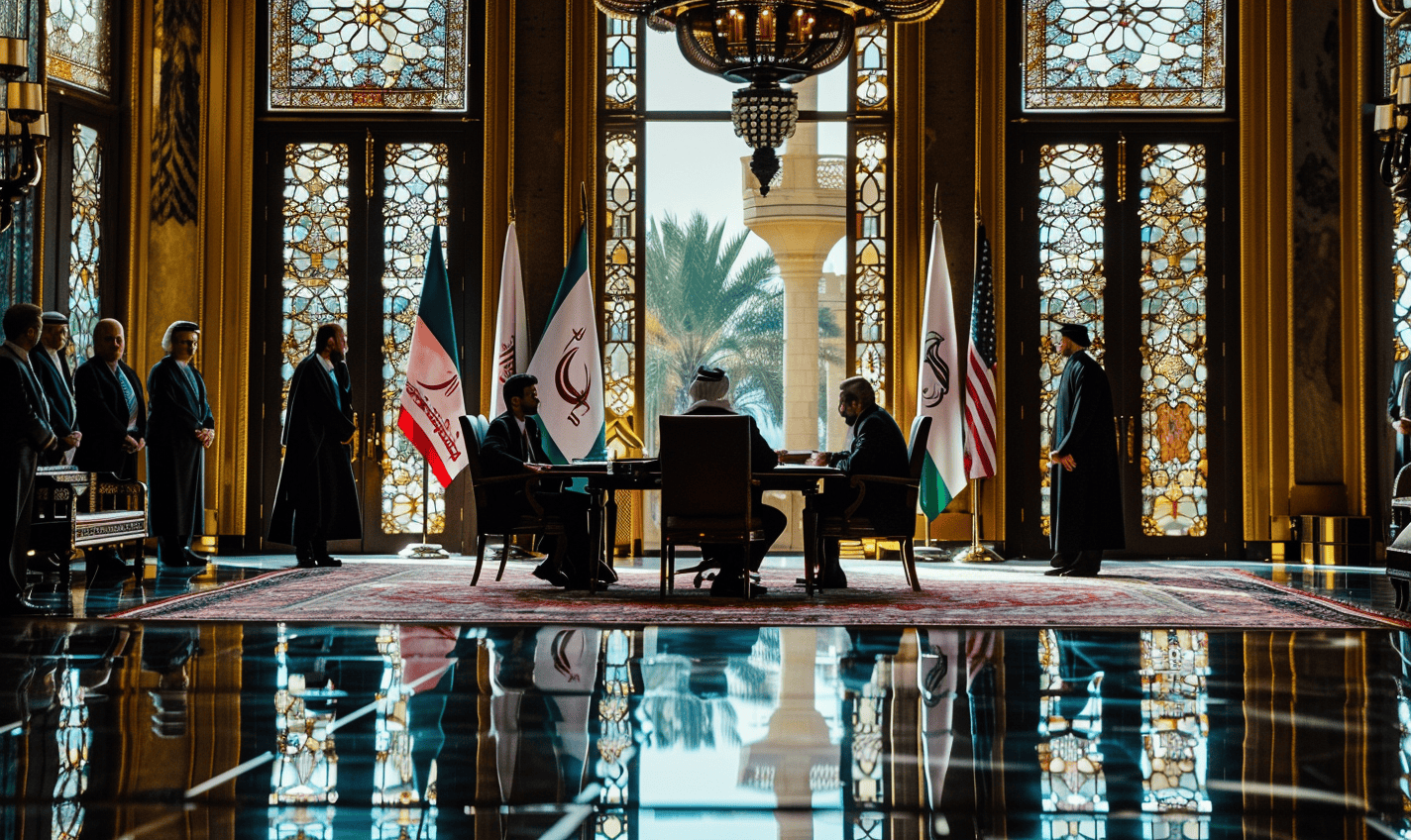

From the office of the U.S. Department of State, news emerged that Secretary of State Antony Blinken has been in talks with Crown Prince Mohammed bin Salman of Saudi Arabia and Egyptian President Abdel Fattah el-Sisi. The conversations centered around the escalating crisis in Gaza and the continuing quest for a two-state solution.
Within the last two days, these communications have taken place as part of Blinken’s sixth diplomatic journey to the Middle East post-war outbreak.
During his sit-down with the prince in Jeddah, Bahrain, Blinken emphasized the immediate necessity to tackle Gaza’s humanitarian predicament, stated the U.S. State Department with relative poignancy. Blinken gave his assurance for America’s role in striving for the persistent cessation of conflict in Gaza and the prospective initiation of a Palestinian state with previsions for the protection of Israel.
Egypt was his next stop where he met with chief officials including President el-Sisi. The detailed discussion revolved around ensuring a ceasefire of not less than six weeks and securing the release of all captives; both directives highlighted by the State Department.
In a subsequent press conference, flanked by Egyptian Foreign Minister Sameh Shoukry, Blinken outlined his proposed blueprint for post-war Gaza: prohibiting it from becoming a terrorism hub; avoiding the expulsion or reoccupation by Israel of Gaza’s inhabitants.
Blinken found himself addressing questions over the seemingly contradictory stance of the U.S., which both supports Israel’s defense and eyes mitigating the Gaza humanitarian disaster, apparently rooted in the military equipment furnished to Israel. Blinken stood firm, acknowledging Israel’s right to safeguard itself and vowing U.S. commitment towards disaster mitigation.
UN experts have forecast a devastating famine in Gaza, the consequence of Israel’s blockade. President Biden had previously cautioned Israel on leveraging humanitarian assistance in Gaza as a negotiation tool. He reiterated Israel’s need to refrain from undertaking a broad ground incursion in Rafah, a city providing refuge to displaced Palestinians in the millions.
Rafah was also on Blinken’s agenda, where he remarked, a militaristic invasion would be detrimental.
The Israeli military has claimed approximately 32,000 Palestinian lives in Gaza since the onslaught led by Hamas on Israel’s southern territory in October, which resulted in the loss of over 1,139 lives.
The high death toll hasn’t dissuaded the Biden administration from rendering continued financial aid and diplomatic solidarity to Israel. Efforts are ongoing to secure congressional approval for an additional $14bn in assistance. The Security Council’s three proposed resolutions calling for a ceasefire have been vetoed by the U.S.
Rather than endorsing an end to the war, the Biden administration focuses on putting hostile activities on hold, facilitating captive release and delivering emergency aid to Gaza.
Blinken, a frequent flyer to the Middle East to finalize negotiations for a ceasefire, indicates that while advances have been made, genuine challenges persist.
The secretary of state plans to conclude his trip in Israel, amid heightened criticism of Israeli Prime Minister Netanyahu from members of Biden’s Democratic Party. Notwithstanding, the U.S. affirms a continued pro-Israel policy stance.
During a meeting with Saudi Arabia’s Crown Prince, Blinken alluded to bolstering integration amongst neighbouring countries, an echo of Biden’s drive to foster normalized relations between Israel and Arab states. However, the persistence of conflict in Gaza complicates this agenda.
Over the last month, in reaction to the White House’s implication that Saudi Arabia-Israel normalisation talks are ongoing despite hostilities, the kingdom denied such claims.
Saudi Arabia asserts conditions for diplomatic relations with Israel demand the recognition of an independent Palestinian state within the pre-1967 borders with East Jerusalem as its capital. This stipulation accompanies an end to Israeli aggression in Gaza and Israeli forces exiting from the Gaza Strip.
Israeli Prime Minister Netanyahu contests the creation of a Palestinian state, stressing that Israel’s security control over the Palestinian territories should be full and unimpeded.