AL KHARJ — Ground-level photographs and satellite imagery geolocated to Prince Sultan Air Base have confirmed the destruction of a U.S. Air Force E-3G Sentry airborne warning and control aircraft, serial number 81-0005, in an Iranian ballistic missile and drone strike on March 27. The loss marks the first combat destruction of an E-3 in the aircraft type’s 47-year operational history and removes an irreplaceable asset from a fleet that has shrunk to just 15 airframes.
The destruction transforms the narrative from one of damage to one of permanent capability loss. Boeing closed the E-3 production line in 1992. No replacement airframe exists. The U.S. Air Force’s planned successor, the E-7A Wedgetail, will not deliver its first operational aircraft until 2028 at the earliest. Every E-3 lost now is a hole that cannot be filled during this conflict, and it widens at the worst possible time: the USAF had deployed six of its 16 remaining E-3s to the Gulf theater before the strike, according to The War Zone.
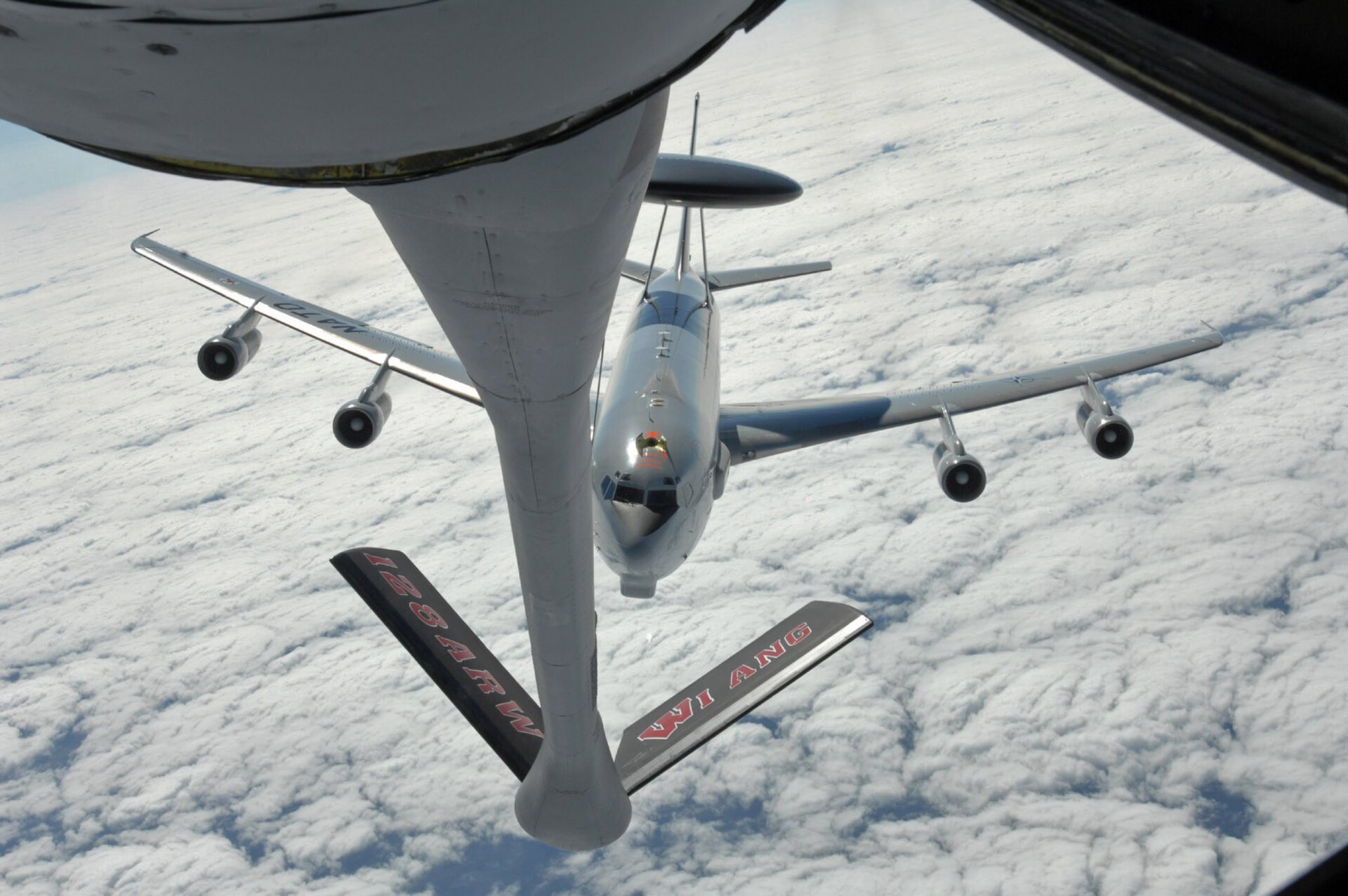
Table of Contents
What Happened on March 27
The Islamic Revolutionary Guard Corps Aerospace Force launched a coordinated assault against Prince Sultan Air Base at Al Kharj, approximately 60 miles south of Riyadh, on March 27, 2026. The strike package comprised six ballistic missiles and 29 one-way attack drones, according to U.S. Central Command and multiple defense outlets including The Aviationist.
At least 15 U.S. service members were wounded in the attack, with five classified as serious, up from initial Pentagon reports of 10 wounded and two serious, according to CNN. The casualty toll adds to more than 300 service members wounded across Operation Epic Fury since its start on March 1, as reported by Air & Space Forces Magazine.
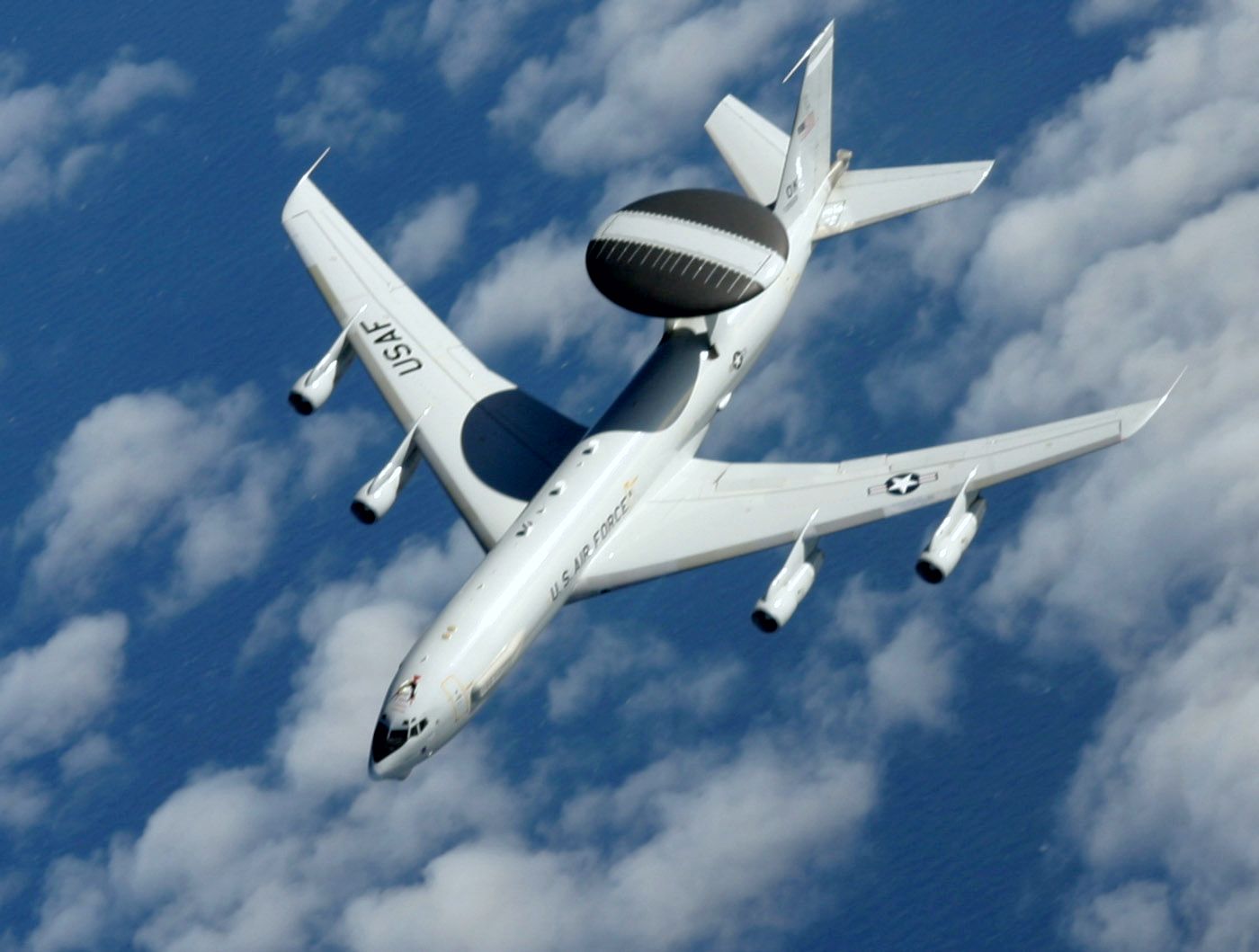
The attack struck aircraft parked on the PSAB flight line, destroying or damaging multiple high-value platforms. The E-3G Sentry, serial 81-0005, assigned to the 552nd Air Control Wing at Tinker Air Force Base, Oklahoma, sustained catastrophic structural damage concentrated at the rear fuselage, precisely where the aircraft’s rotating radar dome and AN/APY-2 surveillance radar system are mounted. Ground-level photographs show the rear fuselage burned out, with debris scattered across the surrounding taxiway.
Five KC-135 Stratotanker refueling aircraft were also damaged in the same attack, according to satellite imagery analyzed by Defence Security Asia. At least three of those KC-135s appear destroyed outright, though some analysts dispute whether visible burn scars represent total aircraft losses or lesser damage.
Damage Assessment and Verification
Confirmation of the E-3’s destruction came through three independent evidence streams. Ground-level photographs, first published on social media, were geolocated by CNN to coordinates on a taxiway at Prince Sultan Air Base (24.063730, 47.545924). Post-strike satellite imagery from Landsat 8 and Landsat 9 showed extensive burn scars, debris fields, and structural damage along the flight line, according to The Defense News.
Chinese commercial satellite firm MizarVision provided additional medium-resolution imagery that confirmed the E-3’s positioning across the base, per The War Zone. Open-source intelligence analysts matched the wreckage to tail number 81-0005, an E-3G that had deployed to PSAB in recent weeks as part of Operation Epic Fury.
Iran released its own before-and-after satellite imagery claiming verification of the strike results. The IRGC stated that the E-3 had been “100% destroyed,” according to Iranian state media and reporting by RT. The Iranian satellite images aligned with the ground-level photographs already in public circulation.
The Pentagon has not officially confirmed the number of aircraft destroyed. Air & Space Forces Magazine initially reported the E-3 as “damaged,” though subsequent imagery made clear the extent of destruction renders the aircraft beyond repair. The USAF has described the damage as “significant” without specifying total aircraft losses from the March 27 strike.
Why Is the E-3 Sentry Irreplaceable?
The E-3 Sentry cannot be replaced because the aircraft no longer exists in production. Boeing delivered the last E-3 to the U.S. Air Force in 1992, closing a production line based on the Boeing 707 commercial airframe, which itself ceased production in 1979. No new E-3s can be built.
The USAF operated 31 E-3 Sentry aircraft as recently as 2023. Aggressive retirements to cut sustainment costs on the aging fleet reduced that number to 16 by early March 2026, according to Air & Space Forces Magazine. The destruction of serial 81-0005 brings the inventory to 15. Congress has blocked further retirements through the end of Fiscal Year 2026, but the fleet’s operational health remains poor: in FY2024, E-3s achieved a mission-capable rate of approximately 56 percent, meaning barely eight or nine aircraft could fly and execute their missions at any given time.
Each E-3 provides 360-degree radar surveillance out to more than 250 nautical miles, tracking over 600 targets simultaneously while directing fighter aircraft, managing aerial refueling, and coordinating battle space operations. No other platform in the U.S. inventory replicates this combination of capabilities at the same scale.
The planned replacement is the E-7A Wedgetail, based on the Boeing 737-700 airframe and equipped with the Northrop Grumman Multi-role Electronically Scanned Array (MESA) radar. In March 2026, the USAF awarded Boeing two contracts totaling $2.43 billion to continue development of two E-7A prototypes, according to The Defense Post. The first prototype Boeing 737-700 fuselage arrived in the United Kingdom for conversion work in late March 2026. Boeing delayed the first flight test by nine months to May 2027 due to a required critical security architecture change. The first operational E-7A is not expected to reach the USAF until 2028 at the earliest, with a full fleet of 26 aircraft years further out.
| Metric | E-3G Sentry | E-7A Wedgetail |
|---|---|---|
| Airframe | Boeing 707 | Boeing 737-700 |
| Production status | Closed 1992 | In development |
| USAF fleet size | 15 (post-loss) | 0 (first delivery ~2028) |
| Radar system | AN/APY-2 (rotating dome) | MESA (fixed dorsal array) |
| First operational year | 1977 | ~2028 (USAF estimate) |
| Approximate unit cost | $300 million | Not finalized |
| Mission-capable rate (FY2024) | ~56% | N/A |

How Did PSAB Air Defenses Fail to Protect the Flight Line?
Prince Sultan Air Base hosts both Patriot and THAAD missile defense batteries, yet Iranian munitions still reached the flight line and destroyed the highest-value aircraft stationed there. The question of how this happened points to a structural vulnerability in Saudi and coalition air defenses that a reported 85 percent intercept rate does not fully capture.
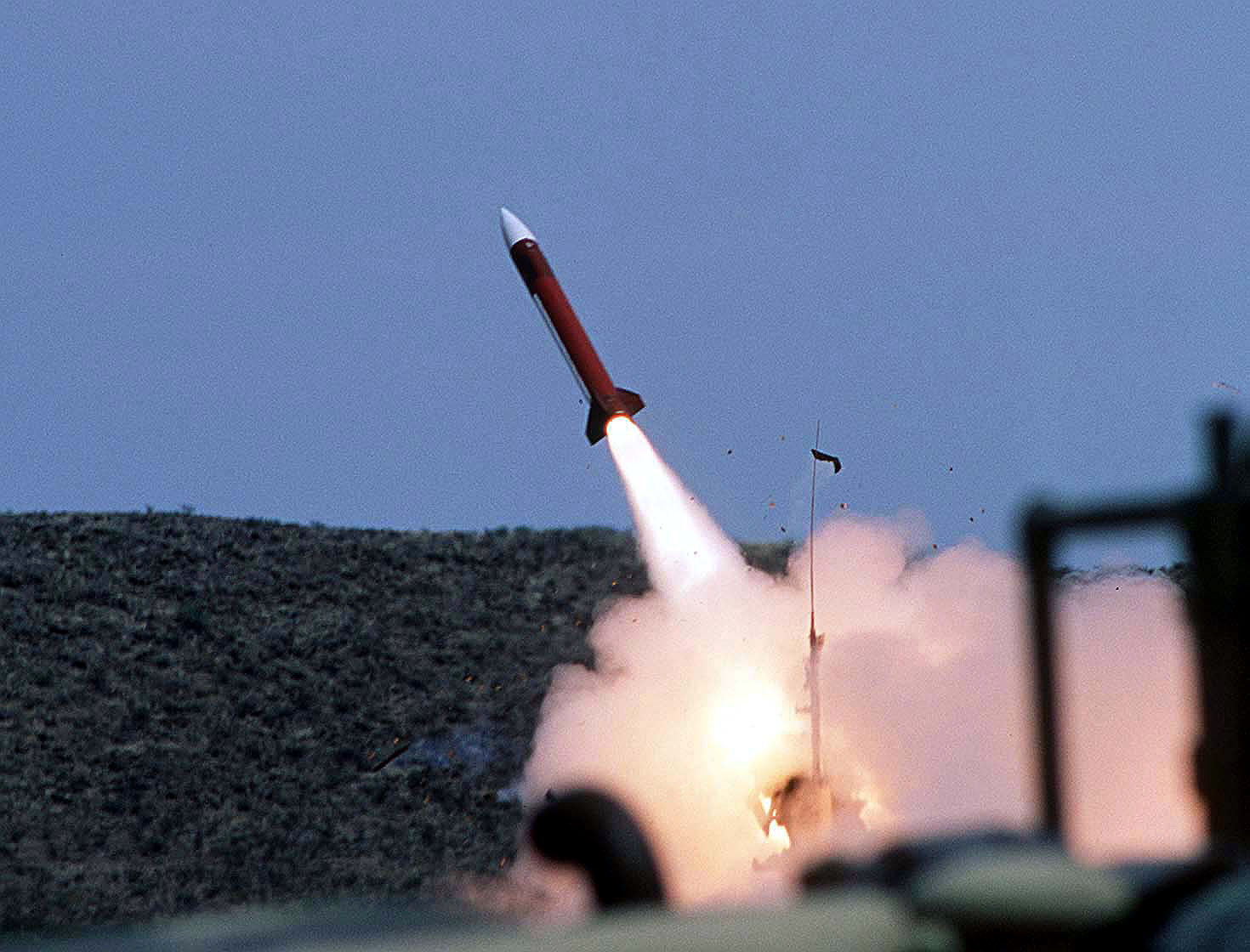
The March 27 attack used a combined arms approach: drones and ballistic missiles arriving in a coordinated wave. The drones serve a dual purpose, according to defense analysts. Some carry warheads intended to damage infrastructure. Others function as bait, forcing Patriot and THAAD radars to track and engage them, depleting interceptor stocks and creating detection gaps through which ballistic missiles can penetrate. Each Patriot interceptor costs between $3 million and $6 million per missile, making attrition economics heavily favor the attacker.
The base’s THAAD radar had already been compromised before the March 27 strike. Satellite imagery from March 1 showed smoke rising from a compound near PSAB where a THAAD radar was previously stationed. A tent used to shelter the AN/TPY-2 radar was badly charred, with debris scattered around it, according to CNN’s investigative reporting on radar base strikes across the region. With the THAAD radar degraded, PSAB’s defense posture relied more heavily on Patriot batteries, which are optimized for lower-altitude threats and can be overwhelmed by high-volume salvos.
The March 13 attack on PSAB, which damaged five KC-135 tankers two weeks before the E-3 was destroyed, should have served as a warning that the base’s flight line was vulnerable. The fact that high-value assets remained exposed on the apron rather than dispersed or sheltered in hardened facilities raises questions about force protection decisions at the base.
What Does This Mean for Coalition Air Operations Over Saudi Arabia?
The destruction of the E-3 opens a gap in the coalition’s ability to manage the air war over the Gulf at a time when that air war is intensifying. With one of the six E-3s deployed to the Gulf now destroyed, the USAF has five in theater and 10 worldwide to cover all other operational commitments, including NATO, the Pacific, and homeland defense.
Heather Penney, a former F-16 pilot and senior resident fellow at the Mitchell Institute for Aerospace Studies, told CNN that “the loss of this E-3 is incredibly problematic, given how crucial these battle managers are to everything from airspace deconfliction, aircraft deconfliction, targeting and providing other lethal effects that the entire force needs for the battle space.”
Kelly Grieco, a defense analyst at the Stimson Center, told CNN the loss was “significant” for the war in the short term. “There are going to be coverage gaps,” Grieco said.
Retired U.S. Air Force Colonel John Venable told The Wall Street Journal that the attack “hurts the US ability to see what’s happening in the Gulf and maintain situational awareness.” The E-3 does not simply watch the sky. It functions as a flying command post, managing dozens of aircraft simultaneously, deconflicting friendly operations, and directing intercepts against incoming threats. Without adequate AWACS coverage, fighter pilots lose the comprehensive picture that allows them to operate efficiently, and the multinational air shield defending Saudi Arabia becomes harder to coordinate.
The KC-135 losses compound the operational damage. With 10 tankers damaged or destroyed across two attacks at PSAB, the coalition’s ability to sustain fighter combat air patrols over Saudi airspace diminishes. Fighters without tanker support fly shorter sorties with less time on station, meaning fewer aircraft are airborne at any given moment to respond to incoming Iranian salvos. The tanker and AWACS losses feed on each other: less airborne battle management means less efficient use of a shrinking tanker fleet, which means less fighter coverage.
| Date | Target | Damage | Source |
|---|---|---|---|
| March 1 | THAAD radar compound, PSAB | Radar tent charred, debris scattered | CNN |
| March 13 | KC-135 flight line, PSAB | 5 KC-135s damaged (repairable) | Military Times |
| March 27 | Flight line, PSAB | 1 E-3G destroyed, 3-5 KC-135s destroyed/damaged | The War Zone, Air & Space Forces Magazine |
Iran’s Counter-Air Campaign
The destruction of the E-3 fits a deliberate Iranian strategy that defense analysts have characterized as an asymmetric counter-air campaign. Rather than challenging coalition fighters in the air, where Iranian aircraft would be outmatched, the IRGC has targeted the enabling infrastructure that allows coalition air power to function: radars that detect threats, tankers that keep fighters airborne, and the AWACS that direct the entire operation.
The campaign has been systematic. In the opening days of the conflict, Iran struck AN/TPY-2 radars at THAAD sites in the UAE, Jordan, and near Riyadh, according to analysis from the Al Jazeera Centre for Studies. An AN/FPS-132 early warning radar in Qatar was also hit. Each AN/TPY-2 radar costs up to $500 million, according to 2025 Missile Defense Agency documentation. By degrading early warning radars, Iran increased the probability that its ballistic missiles would reach their targets undetected or with insufficient reaction time.
The IRGC’s release of its own satellite imagery after the PSAB strike carries its own strategic message. Iran is demonstrating that it possesses independent intelligence, surveillance, and reconnaissance capabilities sufficient to verify battle damage assessment on U.S. bases in the Gulf. Whether Iran produced the satellite imagery itself or obtained it from a partner — Russia’s Roscosmos is widely suspected, as The Week India reported on possible Russian satellite imagery of PSAB taken days before the strike — the release signals that Iran can see what happens on allied bases and calibrate its targeting accordingly.
Iranian state media framed the AWACS destruction as a strategic victory. Press TV, the IRGC’s English-language outlet, described the tanker and AWACS losses as part of an “aerial nightmare” for the United States. The IRGC’s destruction claims, while propagandistic in tone, align with what the independent imagery shows.
For Saudi Arabia, the pattern is alarming. The kingdom’s security bargain with the United States rests on the assumption that American military assets on Saudi soil provide a credible deterrent and an effective defense. Three strikes on PSAB in one month — degrading a THAAD radar, damaging 10 tankers, and destroying an irreplaceable AWACS — demonstrate that the base itself has become a target rather than a sanctuary. Saudi Arabia’s role as a de facto belligerent by hosting U.S. combat operations exposes the kingdom to Iranian retaliation without giving Riyadh control over the pace or scope of escalation.
Frequently Asked Questions
Has the United States officially confirmed the E-3 was destroyed?
No. The Pentagon has used the word “significant” to describe damage at Prince Sultan Air Base but has not confirmed any aircraft as destroyed. This follows a pattern from earlier in Operation Epic Fury, where the Department of Defense delayed confirming specific platform losses for days or weeks after imagery made the outcomes clear. No official U.S. statement has disputed the photographic evidence of the E-3’s destruction.
Could the U.S. Navy’s E-2D Hawkeye fill the AWACS gap in the Gulf?
The Navy’s E-2D Advanced Hawkeye provides carrier-based airborne early warning but operates a smaller radar with a shorter detection range than the E-3’s AN/APY-2 system. The E-2D is also primarily tasked with fleet defense for carrier strike groups. Redirecting E-2Ds to fill land-based AWACS coverage gaps would reduce carrier group protection, and the aircraft’s smaller crew means it cannot match the E-3’s battle management capacity. The February 2026 Pentagon budget proposal considered the E-2 as a potential replacement platform for the USAF, but that plan remains unfunded and years from implementation.
What is the total cost of aircraft losses at Prince Sultan Air Base?
At approximately $300 million for the E-3G and roughly $40 million per KC-135R, the confirmed and probable aircraft losses at PSAB across the March 13 and March 27 attacks could exceed $700 million in airframe value alone. This excludes the cost of the AN/APY-2 radar system, mission equipment, munitions expended in defense, and the damaged THAAD radar compound, which houses components valued at up to $500 million per AN/TPY-2 unit according to Missile Defense Agency documentation.
Will the USAF move remaining E-3 aircraft out of Iranian missile range?
The USAF faces a dilemma: pulling E-3s back to bases outside Iranian ballistic missile range — potentially to Al Udeid in Qatar, Diego Garcia, or even Europe — would reduce their time on station over the Gulf and diminish the continuous radar coverage that coalition air operations depend on. Keeping them forward at PSAB risks losing additional irreplaceable airframes. The February 2026 deployment of nearly 40 percent of the E-3 fleet to the Middle East, reported by Army Recognition, suggests that CENTCOM has prioritized coverage over survivability, a calculus the March 27 strike may force the command to reconsider.
How does this loss affect Saudi Arabia’s own air defense?
Saudi Arabia does not operate the E-3 Sentry. The kingdom operates its own fleet of five E-3A AWACS aircraft, acquired separately from Boeing in the 1980s under the Peace Sentinel program, along with smaller ground-based radars. The loss of a U.S. E-3G reduces the total AWACS coverage available over Saudi territory and the Gulf, increasing the workload on Saudi E-3As and potentially creating gaps in the integrated air defense picture that both nations rely on to detect and track incoming Iranian salvos.