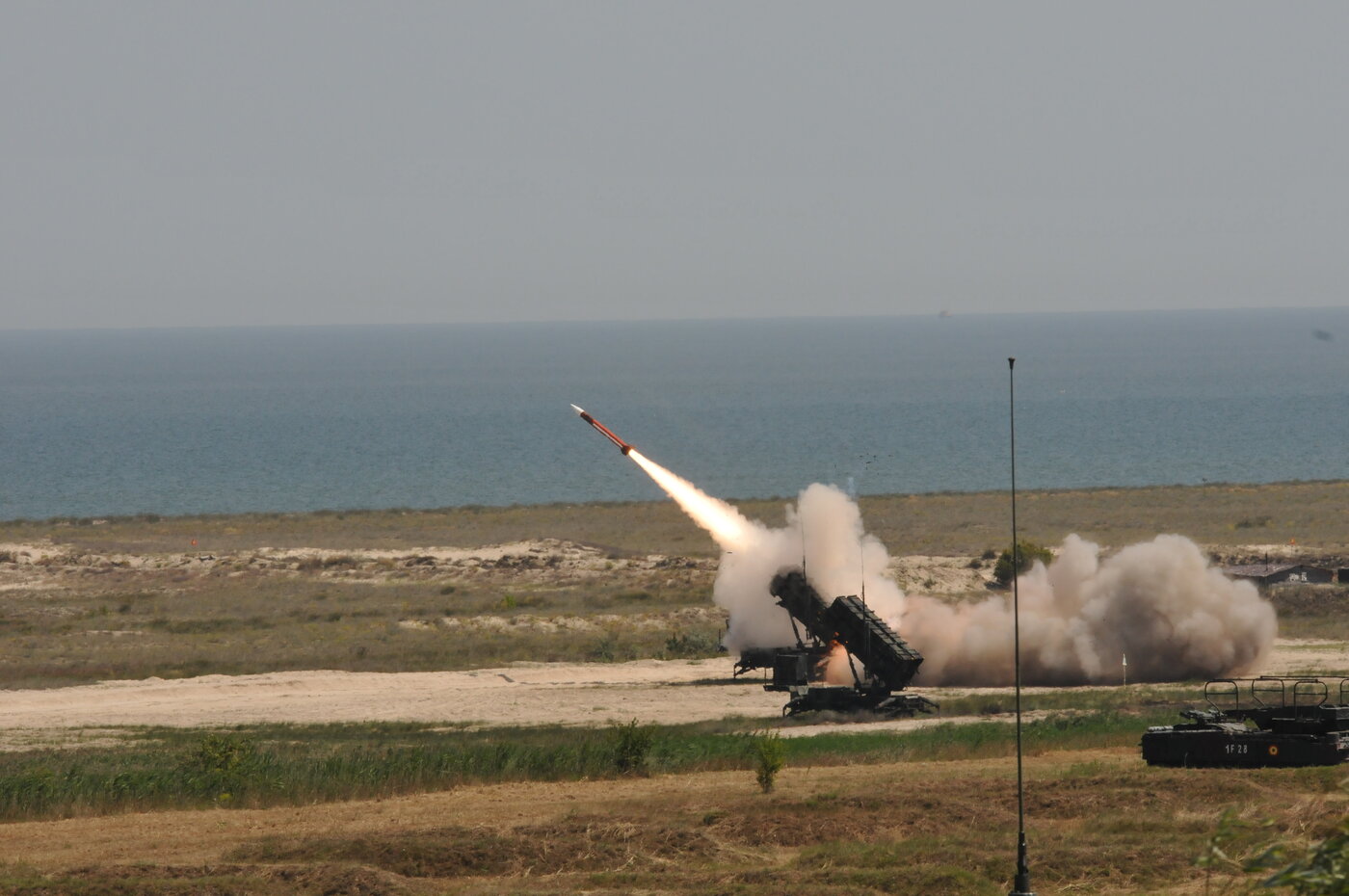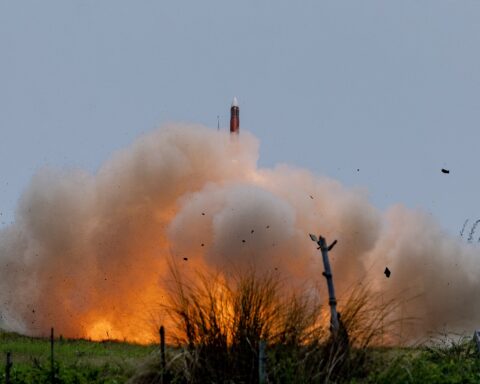

CAIRO — As Iranian ballistic missiles streak across Gulf skies and Saudi air defenses intercept drones over Riyadh, the largest Arab military power has chosen the most dangerous option available to it: silence. Egypt — with 440,000 active troops, the Suez Canal, and $80 billion in Gulf patronage since 2013 — has refused to join the American-led coalition against Iran, refused to condemn Tehran by name in its strongest statements, and refused to open its airspace for strike operations. President Abdel Fattah el-Sisi has instead declared his country in a “state of near-emergency,” offered himself as a mediator, and watched the war he cannot afford unfold on his doorstep.
Egypt’s calculated neutrality is not cowardice. It is a high-wire act born of economic desperation, military pragmatism, and a cold reading of history that tells Cairo exactly what happens to Arab states that follow Washington into Gulf wars. The question is whether Sisi can maintain this position as Saudi Arabia — his most important benefactor — absorbs Iranian missile strikes on its oil infrastructure, its air bases, and its capital. This analysis examines the seven forces pulling Cairo toward and away from the conflict, the economic catastrophe already unfolding along the Suez Canal, and why Egypt’s decision may ultimately determine whether this war stays contained or engulfs the entire region.
Table of Contents
- Why Has Egypt Stayed Silent on the Iran War?
- How Is the Iran War Destroying Egypt’s Suez Canal Revenue?
- The Saudi Patronage Trap — Can Sisi Defy His Biggest Benefactor?
- What Would Egypt Bring to the Fight If It Entered the War?
- The Cairo-Tehran Thaw That Nobody Expected
- Is Washington Pressuring Egypt to Join the Coalition?
- The Sisi Doctrine — Egypt’s Seven-Variable War Calculus
- Can Egypt’s Economy Survive a Prolonged Gulf War?
- Egypt’s Mediation Gambit — Honest Broker or Strategic Stall?
- What History Tells Egypt About Gulf Wars
- Where Does Egypt Stand in the GCC Solidarity Pact?
- The Contrarian Case — Why Egyptian Neutrality Serves Saudi Interests
- Frequently Asked Questions
Why Has Egypt Stayed Silent on the Iran War?
Egypt has not stayed entirely silent — but its statements have been surgically calibrated to avoid committing Cairo to any side of the conflict. Within hours of the US-Israeli strikes on Iran on February 28, Sisi placed emergency calls to five Arab leaders, warning of “regional chaos” and expressing solidarity with Gulf states under Iranian missile attack. He condemned “all acts of aggression against sovereign nations.” He did not specify which acts, or which nations, he was condemning.
This deliberate ambiguity reflects a strategic calculation that has deep roots in Egyptian foreign policy. Cairo’s position can be broken into three distinct components: what Egypt has said publicly, what it has done operationally, and what it has communicated through private channels.
Publicly, Egypt has condemned Iranian missile strikes on Gulf states as a violation of sovereignty. The Egyptian Ministry of Foreign Affairs issued a statement on March 1 expressing “full solidarity with the Kingdom of Saudi Arabia, the United Arab Emirates, Bahrain, and other affected nations.” The statement stopped short of endorsing the US-Israeli operation that triggered Iran’s retaliation — a distinction that Western capitals noticed immediately.
Operationally, Egypt has increased military readiness along its eastern border and in the Sinai Peninsula, according to reporting from The National. Air defense batteries have been repositioned, naval patrols in the Red Sea have been intensified, and leave for senior officers has been cancelled. These are defensive preparations, not offensive ones.
Through private channels, Cairo has communicated to Washington that Egyptian airspace, bases, and logistical infrastructure are not available for offensive operations against Iran. This position was communicated directly to the Pentagon in the days before the strikes, according to analysis from the Foundation for Defense of Democracies, which noted that Egypt’s response was “carefully constructed to position Egypt as a supporter of the Arab nations under attack without tying itself directly to the U.S.-Israeli military operation.”
The calculation behind this three-layered approach is straightforward. Egypt cannot afford to alienate Saudi Arabia and the UAE, which have provided tens of billions in financial lifelines since 2013. It cannot afford to alienate Iran, with which it was cautiously rebuilding diplomatic relations. It cannot afford to alienate Washington, which provides $1.3 billion in annual military aid. And it cannot afford to alienate its own population, which overwhelmingly opposes American military interventions in the Middle East. Silence — or rather, strategically chosen words — is the only position that does not immediately close a door Egypt needs to keep open.
How Is the Iran War Destroying Egypt’s Suez Canal Revenue?
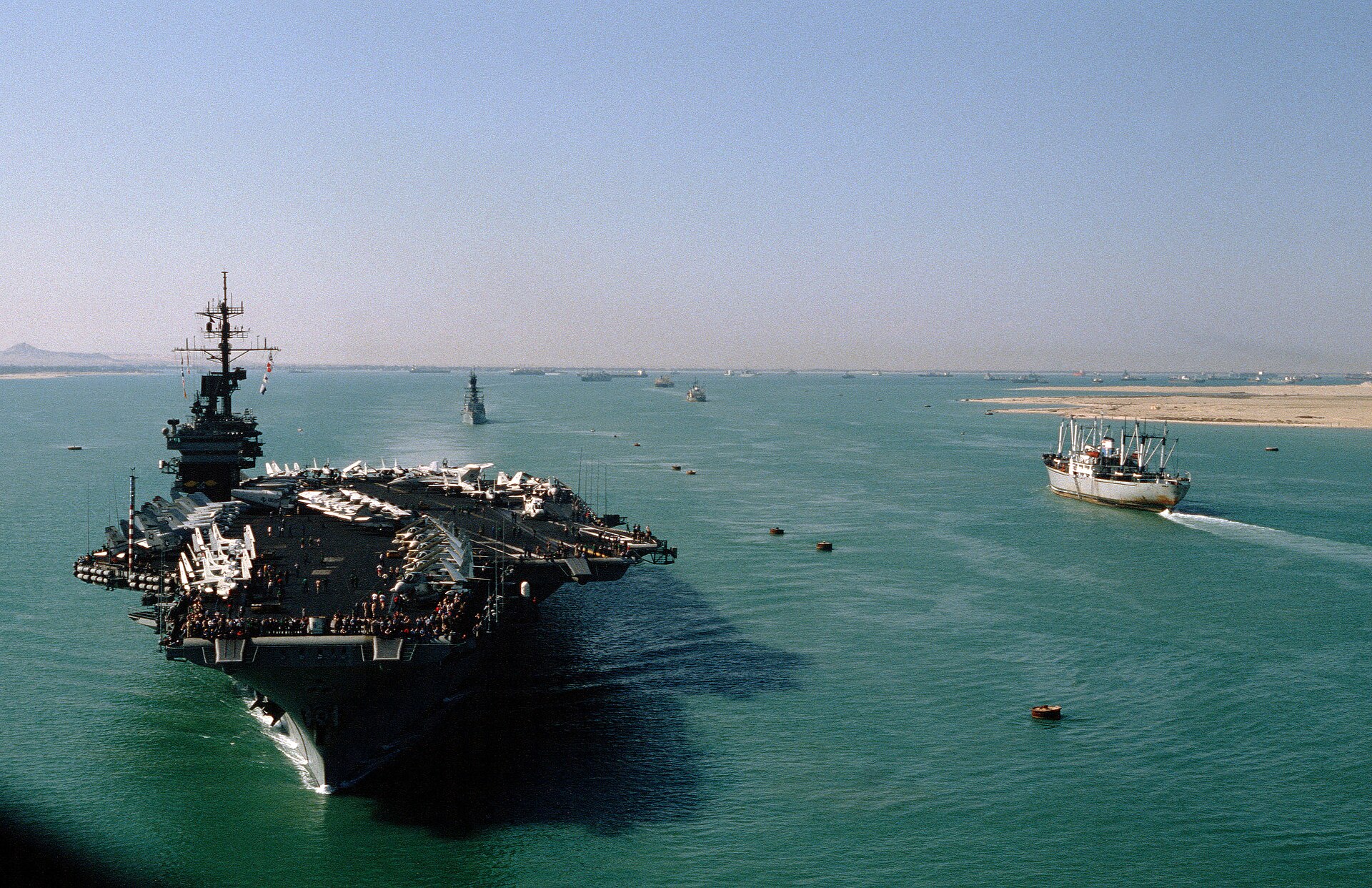
The Suez Canal, which connects the Mediterranean Sea to the Red Sea and onward to the Persian Gulf, is Egypt’s most important strategic and economic asset. It is also the first casualty of Cairo’s proximity to a war it did not start. Since the outbreak of hostilities on February 28, Suez Canal transits have been suspended, with major shipping lines rerouting vessels around the Cape of Good Hope to avoid the combined risks of Iranian naval activity in the Gulf and potential Houthi interference in the Red Sea approaches.
The financial damage is already catastrophic — and it compounds an existing crisis. Suez Canal revenues fell 61 percent in 2024, from $10.25 billion to $3.99 billion, as Houthi attacks on Red Sea shipping forced global carriers to reroute around Africa. A tentative recovery had begun in early 2026: the Suez Canal Authority reported $449 million in revenue in January and February, an 18.5 percent increase over the same period in 2025. That recovery is now dead.
| Year | Revenue (USD) | Change | Primary Disruptor |
|---|---|---|---|
| 2023 | $10.25 billion | — | Baseline (peak year) |
| 2024 | $3.99 billion | -61% | Houthi Red Sea attacks |
| 2025 (est.) | $5.2 billion | +30% | Partial recovery |
| Jan-Feb 2026 | $449 million | +22% YoY | Recovery underway |
| Mar 2026 onward | Near zero | — | Iran war / shipping suspension |
Sisi himself warned on March 2 that a prolonged war “threatens the Suez Canal, the country’s key economic lifeline,” according to Al Arabiya. The canal generated roughly $800 million to $850 million per month at its 2023 peak. Every month of closure costs Egypt nearly a billion dollars in lost revenue — money that was already earmarked for debt repayment.
The cascading effects extend beyond direct canal revenue. Port Said, Ismailia, and Suez — the three cities along the canal corridor — depend on shipping-related commerce, bunkering, and logistics services. An estimated 500,000 Egyptian jobs are directly or indirectly linked to canal operations, according to Suez Canal Authority figures. The broader Egyptian economy relies on the canal for approximately 2 percent of GDP in a normal year, but its importance to foreign exchange reserves is disproportionately large: canal revenue is one of Egypt’s top four sources of hard currency, alongside remittances, tourism, and petroleum exports.
The timing could not be worse. Egypt had just begun stabilizing its economy after a brutal two-year inflation crisis that saw prices rise by 38 percent in September 2023. The Egyptian pound, which lost half its value in 2016 and crashed again in 2024, had finally steadied. Now, with Suez revenue evaporating, the country faces another foreign exchange crisis at precisely the moment it needs dollars to service $153 billion in external debt — equivalent to 40 percent of GDP.
The Saudi Patronage Trap — Can Sisi Defy His Biggest Benefactor?
The relationship between Cairo and Riyadh is not an alliance of equals. It is a patron-client arrangement that began with a bank transfer and has been sustained by strategic necessity on both sides. When the Egyptian military overthrew President Mohamed Morsi in July 2013, Saudi Arabia was the first foreign power to endorse the coup — and the first to write the cheque. Within 18 months, Saudi Arabia, the UAE, and Kuwait collectively deposited $23 billion into Egypt’s economy through grants, central bank deposits, and subsidized fuel shipments.
Saudi Arabia alone has pledged over $15 billion since 2013: $5 billion deposited directly in the Central Bank of Egypt to stabilize foreign exchange reserves, and $10 billion allocated to investments in healthcare, education, agriculture, and financial infrastructure. When Egypt devalued the pound by 50 percent in 2016, Saudi Arabia deposited another $3 billion to prevent a complete currency collapse.
This financial architecture creates a dependency that Egyptian officials understand intimately. The Washington Institute has described the arrangement as an exchange of “aid for security” — Gulf money flows to Cairo, and in return, Egypt provides strategic depth, military cooperation, and political support for Saudi regional objectives. The question now confronting Sisi is whether that implicit contract requires Egypt to enter a war on Saudi Arabia’s behalf.
Three factors complicate a simple answer. First, Saudi Arabia has not asked Egypt to join the war. Riyadh is itself walking a tightrope between public fury and private caution, telling Gulf allies to “avoid any steps that could inflame tensions with Iran,” according to Middle East Eye reporting. Crown Prince Mohammed bin Salman has activated Saudi Arabia’s own direct backchannel to Tehran, according to Bloomberg. If Saudi Arabia is not eager to escalate, it would be contradictory to pressure Egypt to do so.
Second, the nature of Saudi patronage has shifted. The early post-2013 transfers were emergency stabilization grants — money given freely to keep Egypt afloat. More recent Saudi investment has been transactional: PIF investments in Egyptian real estate, infrastructure, and tourism projects that expect returns. Saudi Arabia’s $5 billion purchase of prime development land in the Ras El-Hekma resort project in early 2024 was structured as an investment, not aid. This evolution means Egypt’s obligations to Saudi Arabia are increasingly commercial rather than military.
Third, Egypt’s value to Saudi Arabia extends beyond any single war. Cairo provides Riyadh with something no amount of missile defense can buy: strategic depth. Egypt’s 100-million population, its Mediterranean access, its diplomatic heft at the United Nations and the Arab League, and its role as the cultural centre of the Arab world are assets that Saudi Arabia cannot afford to alienate by demanding military participation Egypt is unwilling to provide.
What Would Egypt Bring to the Fight If It Entered the War?
Egypt possesses the largest conventional military force in the Arab world and the 19th most powerful armed forces globally, according to the 2026 Global Firepower Index. If Cairo chose to enter the conflict, it would bring formidable capabilities across all domains — but also significant limitations that explain why military planners in Cairo are deeply reluctant to deploy them.
| Category | Assets | Notes |
|---|---|---|
| Active Personnel | 440,000 | Largest Arab military |
| Reserve Personnel | 480,000 | Rapid mobilization capability |
| Fighter Aircraft | 220+ F-16s, 24 Rafale, 46 MiG-29M | Fourth-largest F-16 fleet globally |
| Main Battle Tanks | 1,000+ M1A1 Abrams, 500+ T-90S | M1A1 assembled domestically |
| Naval Vessels | 2 Mistral carriers, 6 frigates, 4 submarines | FREMM and MEKO frigates |
| Air Defense | Multiple SAM systems | Separate Air Defense branch |
| Artillery | K9 Thunder SPH, MLRS systems | K9 produced domestically under license |
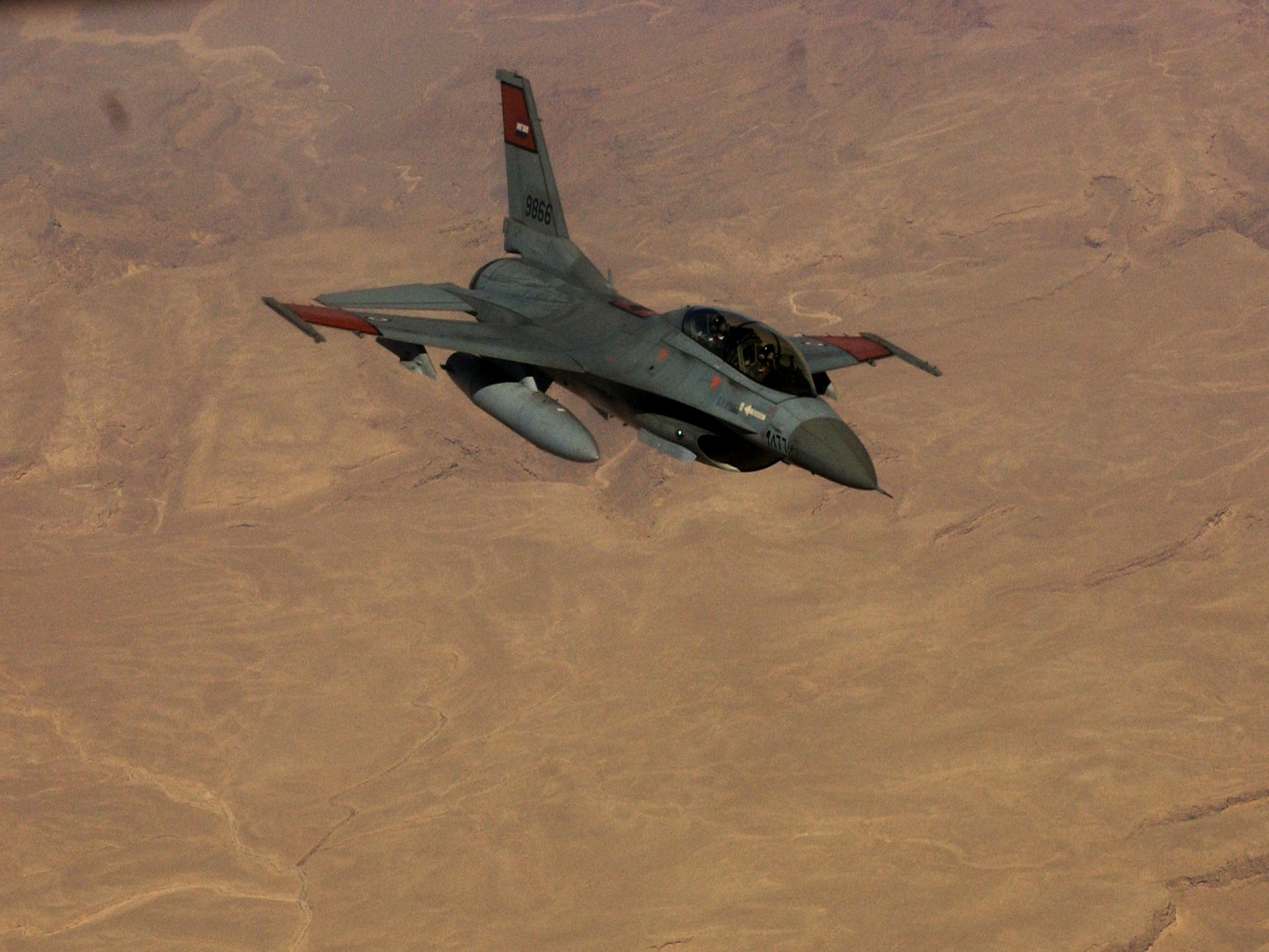
Egypt’s air force is its most deployable asset in a Gulf conflict scenario. With 220 F-16 Fighting Falcons — the fourth-largest F-16 fleet in the world — plus 24 Dassault Rafale multi-role fighters equipped with long-range Meteor air-to-air missiles and 46 Russian MiG-29M/M2 aircraft, Egypt could contribute meaningfully to air superiority operations, strike missions, and air defense patrols. The Rafales in particular, with their SCALP cruise missile capability, represent a genuine power projection tool.
Egypt’s navy, often overlooked in Gulf security discussions, is one of the most capable in the Middle East and North Africa. The two Mistral-class amphibious assault ships — originally built for Russia but diverted to Egypt after the 2014 sanctions — can each carry 16 helicopters and 450 troops, serving as mobile forward operating bases. The FREMM and MEKO A-200 frigates provide anti-submarine and anti-surface warfare capability, while four Type 209 submarines offer undersea interdiction options in the Red Sea and potentially the Arabian Sea.
Yet deploying these assets would expose critical vulnerabilities. Egypt’s military is fundamentally configured for two theatres: the Sinai Peninsula (facing Israel) and the Libyan border (facing instability to the west). Reorienting toward the Gulf would require a strategic rebalancing that military planners have not prepared for and that would leave Egypt’s primary security concerns uncovered. The Egyptian armed forces have not conducted expeditionary operations at scale since the Yemen intervention of the 1960s — a campaign that ended in disaster and is seared into the institutional memory of every Egyptian general officer alive today.
Logistics present an equally daunting challenge. Egypt’s military supply chain is built for defensive operations within its own borders. Sustaining air operations from Saudi bases or naval patrols in the Arabian Sea would require forward logistics hubs, aerial refuelling capability (which Egypt possesses in limited quantities), and maintenance infrastructure for Western-built aircraft operating in extreme Gulf heat conditions. The Egyptian Navy’s two Mistral carriers could theoretically operate in the Red Sea to protect Suez Canal approaches, but extending their patrol zones into the Arabian Sea would stretch maintenance cycles and crew rotations beyond sustainable levels.
There is also the question of interoperability. While Egypt’s American-built equipment is nominally compatible with US and Saudi systems, Egyptian forces have not trained extensively for coalition operations in a Gulf theatre. Joint exercises with Saudi forces have focused on counterterrorism and border security scenarios, not high-intensity conflict against a state adversary with ballistic missiles and anti-ship cruise missiles. The cost asymmetry of Iranian drone warfare further complicates the picture: deploying expensive Egyptian platforms against low-cost Iranian drones and cruise missiles would replicate the same financial bleeding that is already straining Gulf defence budgets.
The Cairo-Tehran Thaw That Nobody Expected
One of the least-understood factors in Egypt’s wartime calculus is the cautious diplomatic rapprochement that had been building between Cairo and Tehran before the bombs fell. Egypt and Iran severed relations in 1979 after the Islamic Revolution, and the rupture endured for over four decades. The reasons were layered: Iran’s fury at Egypt’s Camp David peace with Israel, Egypt’s sheltering of the deposed Shah (who died and was buried in Cairo in 1980), and Cairo’s enthusiastic support for Iraq during the eight-year Iran-Iraq War, during which Egyptian pilots and drafted workers served in the Iraqi military.
The thaw began tentatively after the 2023 Chinese-brokered Saudi-Iranian deal. If Saudi Arabia — Iran’s primary regional adversary — could restore relations, Cairo reasoned, then Egypt’s own diplomatic overture would face fewer obstacles. Multiple rounds of Egyptian-Iranian talks were held in Oman through 2023 and 2024, with both sides exploring the possibility of restoring full ambassadorial relations for the first time since 1979.
The most significant breakthrough came in December 2024, when Iranian President Masoud Pezeshkian attended the D-8 Summit in Egypt — the first visit by an Iranian president to Egyptian soil since 2012. The visit was low-key by design, but its symbolism was unmistakable. For Cairo, it represented an opportunity to position Egypt as a bridge between the Sunni Gulf states and Iran, adding diplomatic value that would reinforce Egypt’s relevance at a time when Saudi Arabia’s own rapprochement with Tehran threatened to make Egyptian mediation unnecessary.
The Iran war has simultaneously destroyed and validated this strategy. Destroyed, because the fragile diplomatic opening has been blown apart by kinetic reality — Iran is now launching missiles at Egypt’s closest allies. Validated, because Egypt’s years of cautious engagement mean that Cairo retains communication channels with Tehran that virtually no other Sunni Arab state possesses. When Sisi announced on March 5 that Egypt was pursuing “honest and sincere” mediation alongside Turkey and Oman, he was leveraging a diplomatic asset that was years in the making.
The Arab Center Washington DC has described Egypt-Iran relations as a “quest for normalized ties amid significant obstacles.” The war has multiplied those obstacles exponentially — but it has also raised the premium on any state that can credibly speak to both sides.
Is Washington Pressuring Egypt to Join the Coalition?
The United States provides Egypt with $1.3 billion in annual military Foreign Military Financing — a sum that has flowed continuously since the 1978 Camp David Accords. Over four decades, this has amounted to more than $50 billion in military aid and $30 billion in economic assistance, making Egypt the second-largest recipient of US security assistance after Israel. The F-16s, M1A1 Abrams tanks, and Apache helicopters that form the backbone of Egypt’s military were all acquired through this pipeline.
This dependency creates theoretical leverage — but leverage that Washington has historically been reluctant to exercise. When the Egyptian military overthrew a democratically elected government in 2013, the Obama administration briefly suspended some military aid before quietly restoring it. When Egypt purchased Russian Su-35 fighters in 2019, the Trump administration threatened CAATSA sanctions before dropping the issue. The consistent pattern is that Washington values the Egypt relationship — particularly Egyptian cooperation on Israeli security, counterterrorism in Sinai, and overflight rights — too much to risk a rupture over any single policy disagreement.
The current war has not changed this dynamic. Reports from multiple outlets indicate that the Pentagon communicated with Egyptian counterparts before the February 28 strikes and received a clear signal that Egyptian facilities and airspace would not be available for offensive operations. Washington accepted this answer. The reason is structural: the US military does not need Egyptian bases to prosecute a war against Iran. American forces operate from Al Udeid Air Base in Qatar (which Iran has already struck), naval assets in the Arabian Sea, Diego Garcia in the Indian Ocean, and aircraft carriers in the region. Egypt’s geographic position is useful for logistics and overflight but not essential for strike operations.
What Washington does need from Egypt is stability. A country of 105 million people on Israel’s western border, controlling the Suez Canal, with a fragile economy and a population deeply hostile to US military interventions in Muslim-majority countries is a far more useful ally when it is stable and cooperative than when it is destabilized by war participation its population opposes. American strategists understand this — which is why the pressure on Cairo has been diplomatic rather than coercive, focused on ensuring Egypt does not actively obstruct the coalition rather than demanding it join.
The Sisi Doctrine — Egypt’s Seven-Variable War Calculus
Egyptian decision-making on the Iran war can be understood through a framework of seven competing variables, each pulling Cairo in a different direction. The relative weight of these variables determines whether Egypt will maintain its neutrality, shift toward the Saudi-American position, or attempt to carve out a mediating role that serves all of its interests simultaneously.
| Variable | Pulls Toward | Weight | Current Assessment |
|---|---|---|---|
| Saudi financial dependency | Supporting Saudi position | High | Mitigated — Saudi Arabia not demanding participation |
| US military aid ($1.3B/year) | Supporting US coalition | High | Mitigated — US not pressuring for military role |
| Suez Canal revenue crisis | Ending war quickly (mediation) | Critical | Active — driving mediation urgency |
| Domestic economic fragility | Avoiding any military expenditure | Critical | Active — “state of near-emergency” declared |
| Iran diplomatic opening | Maintaining neutrality | Medium | Wounded but alive — channels still open |
| Public opinion (anti-intervention) | Staying out of the war | High | Strongly anti-intervention |
| Historical trauma (Yemen 1962-70) | Avoiding expeditionary wars | Medium | Institutional memory strongly against deployment |
The framework reveals why Cairo’s current position — nominal solidarity with Gulf allies, operational neutrality, active mediation — is not indecision but rational optimization. Five of the seven variables pull Egypt toward non-involvement, and the two that pull toward engagement (Saudi patronage and US aid) are both mitigated by the fact that neither patron is currently demanding Egyptian military participation.
The most dangerous scenario for Sisi is one where this equilibrium shifts — where Saudi Arabia suffers a catastrophic attack that changes the political calculus in Riyadh and forces MBS to demand that his allies either stand with Saudi Arabia or against it. The shutdown of the Ras Tanura refinery was serious but not catastrophic. A successful strike on a Saudi population centre, a Saudi royal family member, or a critical desalination plant (as analyzed in the water vulnerability assessment) could change everything.
Until that moment arrives, Sisi will continue to thread the needle. Every statement will be carefully parsed. Every military repositioning will be defensive. And every diplomatic channel will remain open — because in a region where wars start quickly and end slowly, Egypt’s greatest asset is that it has not yet made an irreversible choice.
Can Egypt’s Economy Survive a Prolonged Gulf War?
Egypt entered the Iran war in the worst economic condition of any major regional state. The numbers tell a story of a country that was already on fiscal life support before the first Iranian missile was launched.
External debt stood at $153 billion as of mid-2024, equivalent to 40 percent of GDP. For fiscal year 2025/26, the Egyptian government is projected to spend 65 percent of its annual expenditure on debt servicing — meaning nearly two-thirds of every pound the government collects goes to paying off existing obligations before a single school is built, a single soldier is paid, or a single subsidy is distributed.
The IMF has been Egypt’s financial physician since 2016, prescribing painful reforms in exchange for access to credit. Cairo is currently operating under a 46-month Extended Fund Facility worth approximately $8 billion, with peak repayment obligations hitting in 2026 and 2027 — payments exceeding $2.6 billion per year. An $2.3 billion tranche was recently disbursed after the IMF completed its fifth and sixth reviews, but this money is spoken for: it services existing debt, funds mandated reforms, and maintains the foreign exchange buffer that prevents another currency collapse.
Inflation, which reached 38 percent in September 2023, had finally declined to 11.9 percent by early 2026. This fragile stabilization was the product of enormous sacrifice: a floating currency that halved the purchasing power of ordinary Egyptians, fuel and electricity subsidy cuts that raised household costs, and interest rate hikes that strangled business investment. The war threatens to reverse all of it.
| Indicator | Value | Risk Level |
|---|---|---|
| External debt | $153 billion | Critical |
| Debt-to-GDP ratio | ~40% | High |
| Debt service (% of expenditure) | 65% | Critical |
| IMF repayments (2026) | ~$2.6 billion | High |
| Inflation (Feb 2026) | 11.9% | Moderate (recovering) |
| Suez Canal revenue (annualized pre-war) | ~$5.5 billion | Now near zero |
| Tourism revenue (2025) | ~$13 billion | At risk from regional instability |
| Remittances | ~$22 billion | At risk — 9M Egyptians in Gulf |
The war threatens Egypt’s four primary sources of hard currency simultaneously. Suez Canal revenue has collapsed. Tourism — which recovered to approximately $13 billion in 2025 — faces cancellations as travellers avoid the region. Remittances from the approximately 9 million Egyptians working in Gulf states could decline if the conflict disrupts Gulf economies or triggers evacuations, as analyzed in the expat crisis assessment. And petroleum exports face both disrupted shipping lanes and uncertain pricing.
The Times of Israel reported that Sisi told advisors Egypt is in a “state of near-emergency” — language that signals the depth of economic fear in the presidential palace. Egyptian Prime Minister Mostafa Madbouly had hinted in September 2025 at the possibility of not renewing IMF cooperation after the current programme ends in late 2026. That option has now evaporated. Egypt will need the IMF — and likely additional Gulf bailouts — to survive the economic shockwave of this war.
The food security dimension amplifies these concerns. Egypt is the world’s largest wheat importer, purchasing approximately 12 million tonnes annually — much of it transiting through shipping routes now disrupted by the conflict. Global wheat prices have already risen sharply as the war disrupts Gulf and Red Sea shipping lanes. Egypt’s strategic wheat reserves typically cover four to five months of consumption, but replenishment depends on affordable imports through functioning maritime corridors. A prolonged shipping disruption combined with rising commodity prices could recreate the subsidy crisis that contributed to the 2011 revolution — a scenario that Egyptian security services monitor obsessively and that provides perhaps the most compelling single argument against any Egyptian action that could extend the war’s duration.
The currency is another pressure point. The Egyptian pound’s fragile stability depends on foreign exchange inflows that the war is systematically undermining. If reserves decline below critical thresholds, the Central Bank of Egypt may face another forced devaluation — a politically devastating outcome that would wipe out the purchasing power gains of the past year and potentially trigger the kind of street protests that Egyptian security forces have spent a decade suppressing. For Sisi, economic stability is not merely an economic concern; it is an existential political requirement that overrides every other consideration, including loyalty to Gulf patrons.
Egypt’s Mediation Gambit — Honest Broker or Strategic Stall?
On March 5, Sisi announced that Egypt was joining Turkey and Oman in a mediation initiative aimed at ending the Iran war. The effort, he said, was “honest and sincere” and sought to persuade the warring parties to send representatives to Cairo for preliminary talks. The mediation remains in its preliminary stages, with no confirmed participation from either Washington or Tehran.
The mediation bid serves multiple strategic purposes beyond its stated goal of ending the war. For Cairo, being seen as a mediator provides diplomatic cover for non-participation. It transforms Egypt’s absence from the coalition from a liability into an asset — a mediator must be neutral, after all. It positions Egypt for a role in post-war settlement negotiations, where Cairo’s interests (Suez Canal security, regional stability, continued Gulf patronage) can be embedded in any agreement. And it gives Sisi something to tell Saudi Arabia and Washington: we are not sitting on the sidelines; we are working to end this war through diplomacy.
The choice of partners is revealing. Turkey, like Egypt, has refused to join the coalition despite being a NATO member and a major regional military power. Ankara faces its own version of Cairo’s dilemma: a faltering economy, complex relations with both Iran and the United States, and a public that opposes American military adventures. The Turkish parallel is analyzed in detail in the NATO balancing act assessment. Oman has historically served as the Gulf’s neutral mediator, having facilitated the original US-Iran nuclear talks in 2012 and maintained relations with Tehran throughout the Saudi-Iranian cold war.
The three mediators form a credible coalition precisely because none of them is part of the fighting coalition. Iran would not accept mediation from a combatant. The United States would not accept mediation from a state that had condemned its operation. Egypt, Turkey, and Oman occupy the narrow band of regional states that maintain relations with all parties — a position that is only possible because they have stayed out of the war.
Whether the mediation can succeed is another question entirely. The US-Israeli operation appears to have decapitated Iran’s leadership structure with the killing of Supreme Leader Khamenei and destroyed significant military infrastructure. Iran’s response — the closure of the Strait of Hormuz and retaliatory strikes across the Gulf — has created facts on the ground that neither side can easily walk back. A ceasefire would require Iran to reopen Hormuz and halt missile launches, while Washington would need to pause military operations without having achieved its stated objective of dismantling Iran’s nuclear programme. Neither side has incentive to accept these terms while it believes it can still prevail militarily.
The mediation may therefore be less about ending the war and more about positioning Egypt for what comes after. Every war ends eventually. When this one does, Cairo intends to be at the table — not as a combatant seeking terms, but as a broker setting them.
What History Tells Egypt About Gulf Wars
Egyptian institutional memory of expeditionary warfare is dominated by a single catastrophe: the Yemen intervention of 1962-1970. President Gamal Abdel Nasser deployed up to 70,000 Egyptian troops to support the republican government in North Yemen against royalist forces backed by Saudi Arabia. The campaign, which Nasser expected to last weeks, dragged on for eight years. An estimated 26,000 Egyptian soldiers were killed or wounded. Egypt used chemical weapons — a war crime that stained its military reputation for decades. And the strategic distraction contributed directly to Egypt’s devastating defeat in the 1967 Six-Day War with Israel, when Egyptian forces were split between the Sinai and Yemen.
The lesson that every Egyptian officer absorbs at the Military Academy is explicit: do not fight other people’s wars in the Arabian Peninsula. The Yemen experience is referred to within the Egyptian military as “our Vietnam” — a conflict that consumed resources, destroyed morale, achieved nothing, and left the country weaker than when it started.
The 1990-91 Gulf War offered a contrasting model. Egypt contributed 35,000 troops to the US-led coalition that expelled Iraq from Kuwait — a deployment that was rewarded with approximately $20 billion in debt forgiveness from Gulf states and Western creditors. The critical difference was that the Gulf War had clear objectives (liberate Kuwait), overwhelming force superiority, and lasted six weeks. It was precisely the kind of short, decisive operation that the Egyptian military can support without existential risk.
The current Iran war resembles Yemen 1962 more than Kuwait 1991. There is no clear endgame. Iran has not invaded a sovereign state that can be “liberated.” The conflict could last months or years. And the risk of escalation — Houthi activation, Hezbollah involvement, Iraqi militia operations — means that any Egyptian deployment could be drawn into expanding fronts across multiple theatres. For Egyptian generals who study their own history, these parallels are disqualifying.
There is a third historical parallel that receives less attention but may be the most relevant: Egypt’s experience during the 2003 Iraq War. Cairo publicly opposed the US-led invasion of Iraq, refused to contribute forces, and faced no meaningful consequences from Washington. The Suez Canal remained open to coalition warships — a pragmatic concession that allowed Egypt to appear neutral while quietly facilitating American logistics. The lesson from 2003 is that there is a well-established playbook for Egyptian non-participation in American-led Middle Eastern wars, and that playbook has historically produced acceptable outcomes for Cairo.
The difference in 2026 is proximity. Iraq in 2003 was a distant conflict; American missiles flew over Egyptian airspace but did not land on Egyptian allies. The Iran war is hitting Saudi Arabia directly — sending oil prices above $100, shutting down the Strait of Hormuz, and threatening the stability of the Gulf states that fund Egypt’s survival. The 2003 model worked because the war’s consequences were geographically contained. This war’s consequences are not.
Where Does Egypt Stand in the GCC Solidarity Pact?
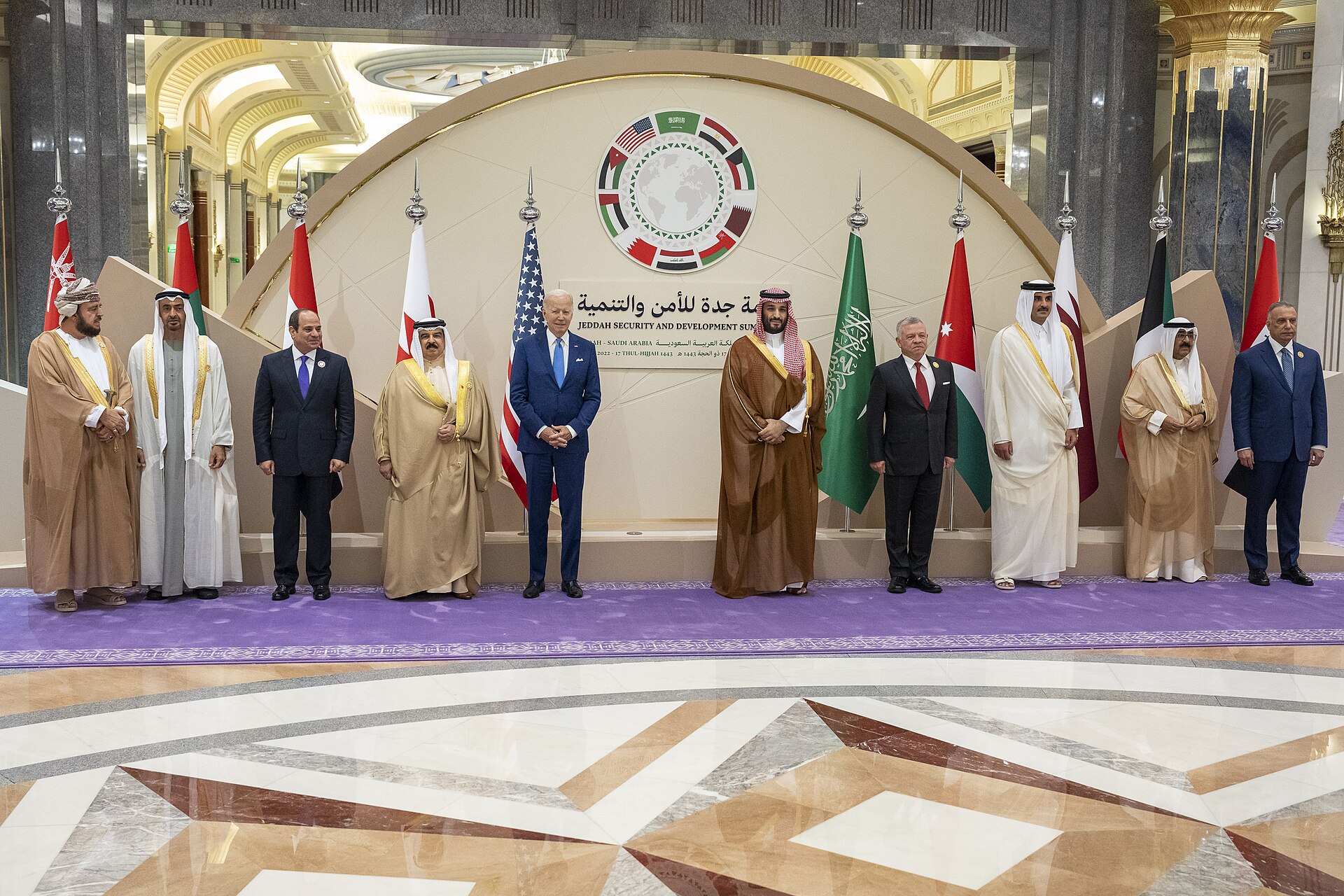
Egypt is not a member of the Gulf Cooperation Council, but it has functioned as the GCC’s strategic reserve force since 2013. Egyptian and Saudi defence cooperation deepened significantly through the 2015 Cairo Declaration, joint military exercises (including the annual “Faisal” and “Tabuk” series), and the 2017 establishment of the Joint Arab Force concept. A 2025 Stimson Center analysis described the Saudi-Egyptian relationship as a “new strategic naval axis” built around shared Red Sea security interests.
The GCC’s response to the Iran war has not been unified, and this fragmentation gives Egypt space to manoeuvre. While Saudi Arabia and the UAE have condemned Iran and affirmed their right to self-defence, the actual level of active military participation varies significantly across the six GCC members. Bahrain, which hosts the US Fifth Fleet, has absorbed direct Iranian strikes. Qatar, home to Al Udeid Air Base, has been targeted but has also maintained communication channels with Tehran. Kuwait and Oman have adopted positions closer to Egypt’s — expressing solidarity while avoiding direct involvement.
The Saudi-UAE joint statement affirming “full solidarity against Iranian aggression” was notable for what it did not say: it did not invoke mutual defence clauses, did not call on allies to contribute forces, and did not specify what “solidarity” entails operationally. This language was chosen deliberately. Riyadh and Abu Dhabi are acutely aware that demanding military contributions from reluctant allies could fracture the very coalition they are trying to maintain.
Egypt’s position within this framework is secure for now. Cairo’s statements of solidarity — condemning attacks on sovereign nations, expressing support for Gulf security — meet the minimum threshold that Saudi Arabia and the UAE require. As long as no GCC member is explicitly demanding Egyptian military participation, Sisi can maintain his neutrality without triggering a rupture in the patron-client relationship that sustains his government.
The longer-term question is whether this wartime dynamic reshapes the Saudi-Egyptian relationship permanently. Before the war, analysts at the Washington Institute for Near East Policy described the arrangement as transactional: Gulf money in exchange for Egyptian strategic depth and political support. If the war demonstrates that Egyptian “strategic depth” does not translate into military solidarity during a genuine crisis, future Saudi investment decisions may reflect that reality. The $5 billion Ras El-Hekma deal and ongoing PIF investments in Egyptian infrastructure may continue — real estate generates returns regardless of military alliances — but the premium that Saudi Arabia places on Egypt as a security partner could diminish. This would not be a dramatic rupture but a quiet recalibration, visible over years rather than months, in which Saudi Arabia increasingly treats Egypt as an economic investment rather than a military ally.
The Contrarian Case — Why Egyptian Neutrality Serves Saudi Interests
The conventional narrative frames Egypt’s neutrality as a betrayal of its Gulf patrons — a failure to reciprocate decades of financial support when Saudi Arabia needs allies most. This framing is wrong, and Saudi strategists in Riyadh understand exactly why.
Egyptian neutrality serves Saudi interests in at least four ways that Egyptian belligerency would undermine.
First, a neutral Egypt is a functional mediator. Saudi Arabia needs the war to end on terms it can accept. It cannot mediate its own ceasefire. Egypt — with channels to Tehran, credibility with Washington, and relationships across the Arab world — is one of a vanishingly small number of states that can broker negotiations. An Egypt that joins the war loses this capability permanently. The failed pre-war diplomacy demonstrated how few diplomatic channels exist between the combatants. Destroying Egypt’s channel to Tehran would narrow them further.
Second, Egyptian military participation would expand the war without changing its outcome. Egypt’s air force and navy could contribute to operations in the Red Sea and possibly the Arabian Sea, but the decisive theatre is the Persian Gulf — where American, Israeli, and GCC forces are already operating with overwhelming superiority. Adding Egyptian assets would marginally increase coalition capability while dramatically increasing the conflict’s geographic scope, raising the risk that Iran or its proxies target Egyptian territory, the Suez Canal, or the estimated 9 million Egyptians working in the Gulf.
Third, a destabilized Egypt would be a catastrophe for Saudi Arabia. If war participation triggered economic collapse, social unrest, or political instability in Cairo — outcomes that are plausible given Egypt’s economic fragility — Saudi Arabia would face a cascading crisis on its western flank. The cost of stabilizing a post-crisis Egypt would dwarf the $23 billion already invested since 2013. Every dollar Saudi Arabia has spent propping up Sisi’s government becomes wasted capital if that government falls because it entered a war its economy could not sustain.
Fourth, Egypt’s neutrality maintains the diplomatic architecture that Saudi Arabia will need after the war. When the missiles stop, the region will need to construct a new security framework. That framework will require participation from states that maintained relationships with all parties during the conflict. A neutral Egypt, alongside Turkey and Oman, provides the diplomatic foundation for post-war regional reconstruction — something that Saudi Arabia will need urgently if it wants to resume the economic modernisation agenda of Vision 2030.
Egypt’s refusal to fight is not disloyalty to its Gulf patrons. It is a strategic service that Saudi Arabia cannot provide for itself — the preservation of a diplomatic off-ramp in a war that has no military exit.
Editorial analysis, March 2026
The counter-argument is straightforward: alliances that are never tested are not alliances. If Saudi Arabia concludes that Egypt will never fight alongside it, the financial architecture that binds Cairo to Riyadh loses its strategic rationale. Future Saudi investment in Egypt may be redirected to more reliable partners — Pakistan, which faces its own impossible choice, or even India, which is trying to protect its Gulf diaspora. This is the risk Sisi is running: that in trying to preserve every relationship, he convinces his most important patron that the relationship is not worth preserving.
The balance of evidence suggests this risk is manageable in the short term. Saudi Arabia’s own reluctance to escalate, its backchannel diplomacy with Tehran, and its explicit messaging to Gulf allies to avoid provocative steps all indicate that Riyadh is not looking for additional combatants. MBS needs Egypt more as a stable western anchor than as an expeditionary partner — and that calculus is unlikely to change unless the war’s trajectory shifts dramatically against Saudi interests. The real danger for Egypt is not a sudden Saudi demand to fight. It is the slow erosion of strategic trust that accumulates when an ally watches from the sidelines as its patron absorbs blow after blow.
Frequently Asked Questions
Has Egypt formally declared neutrality in the Iran war?
Egypt has not issued a formal neutrality declaration. Instead, Cairo has adopted a position of operational non-involvement while expressing diplomatic solidarity with Gulf states under Iranian attack. President Sisi has condemned “all acts of aggression against sovereign nations” without specifying which acts or nations, and Egypt has refused to open its airspace or bases for coalition strike operations. This calculated ambiguity preserves Cairo’s relationships with all parties while avoiding military commitments it cannot sustain economically.
How much money has Saudi Arabia given Egypt since 2013?
Saudi Arabia has provided Egypt with over $15 billion since the 2013 military takeover: $5 billion in central bank deposits to stabilize foreign exchange reserves and $10 billion in investments across healthcare, education, and financial infrastructure. Combined with contributions from the UAE and Kuwait, total GCC support exceeded $23 billion in the first 18 months after the coup alone. Additional investments followed, including a $5 billion Saudi purchase of development land at Ras El-Hekma in early 2024. Ongoing PIF investments bring the cumulative total well above $30 billion.
Could Iran target the Suez Canal directly?
A direct Iranian strike on the Suez Canal would represent a massive escalation that would draw Egypt and potentially NATO into the conflict — an outcome Iran has been careful to avoid. However, the canal is already effectively neutralized as a commercial waterway. Shipping suspensions driven by insurance cancellations, Houthi Red Sea threats, and general regional instability have achieved the same economic effect as a physical attack. Iran does not need to bomb the canal when the war itself has shut it down.
What is Egypt’s relationship with Iran?
Egypt severed diplomatic relations with Iran in 1979 following the Islamic Revolution, the Camp David Accords, and Egypt’s sheltering of the deposed Shah. Relations remained frozen for over four decades. A cautious thaw began after the 2023 Chinese-brokered Saudi-Iranian deal, with multiple rounds of talks in Oman and Iranian President Pezeshkian’s visit to Egypt in December 2024 — the first by an Iranian president since 2012. The war has damaged but not destroyed these channels, which Egypt is now leveraging for its mediation bid.
How many Egyptian workers are in the Gulf?
Approximately 9 million Egyptians live and work in Gulf Cooperation Council countries, with the largest communities in Saudi Arabia (estimated 2.5-3 million), the UAE (estimated 1.5-2 million), and Kuwait (estimated 700,000-1 million). Their remittances — approximately $22 billion annually — are one of Egypt’s top four sources of foreign exchange. A prolonged Gulf war that disrupts these communities threatens both the workers themselves and the Egyptian economy that depends on their earnings.
Is the US pressuring Egypt to join the war against Iran?
Available evidence suggests that Washington communicated with Cairo before the February 28 strikes and received a clear signal that Egyptian facilities would not be available for offensive operations. The US accepted this position. The Pentagon does not need Egyptian bases to prosecute operations against Iran, and American strategists assess that a stable, neutral Egypt is more valuable than a destabilized co-belligerent. US annual military aid of $1.3 billion continues, and there are no public indications of punitive measures related to Egypt’s non-participation.
What happened when Egypt last sent troops to the Arabian Peninsula?
Egypt’s last major Arabian Peninsula deployment was the Yemen intervention (1962-1970), when President Nasser sent up to 70,000 troops to support republican forces against Saudi-backed royalists. The campaign lasted eight years instead of the expected weeks, cost an estimated 26,000 Egyptian casualties, and contributed to Egypt’s catastrophic defeat in the 1967 Six-Day War by splitting its military between two fronts. Egyptian officers refer to it as “our Vietnam,” and its institutional memory is a primary factor in Cairo’s reluctance to deploy forces in the current conflict.